Fokker F.XIV / C-14 / C-15

C-14

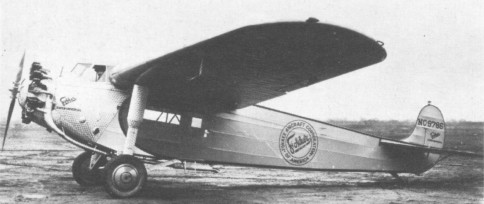
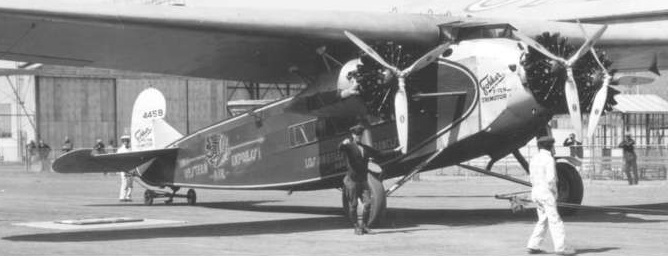
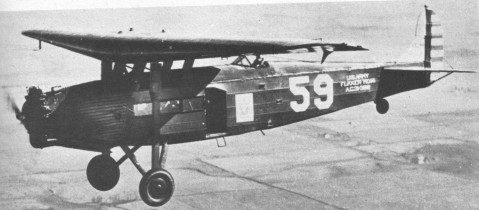
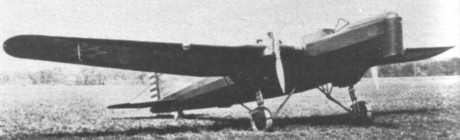
The Fokker F.XIV of 1929 was built at the New Jersey factory as a seven/nine-passenger transport. Fuselage and wings were of normal Fokker design, although the upper fuselage decking was of corrugated duralumin. The major differences between this and other Fokker transports was that it had a parasol-type wing carried on struts above the fuselage, and a pilot’s open cockpit behind the passenger cabin and beneath a cut-out in the wing trailing edge.

The F.XIVA was a modified version with closed cockpit in front of the wing.
The C-14 version was a US Army freighter aircraft.

Engines: 1 x Wright R-1750-3 radial piston engine, 391kW
Max take-off weight: 3266 kg / 7200 lb
Empty weight: 1971 kg / 4345 lb
Wingspan: 18.11 m / 59 ft 5 in
Length: 13.18 m / 43 ft 3 in
Height: 3.76 m / 12 ft 4 in
Wing area: 51.19 sq.m / 551.00 sq ft
Cruise speed: 187 km/h / 116 mph
Ceiling: 4420 m / 14500 ft
Range: 1110 km / 690 miles
Passengers: 9
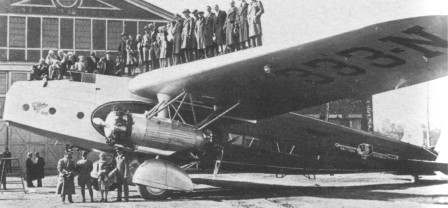
Fokker F.XXXII / YC-20

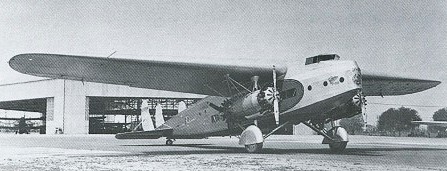
The 32-seat F-32 was a Fokker Aircraft built in the US in 1934. No F-32’s ever landed in The Netherlands. It was a 4 engined aircraft, the engines mounted in tandem under the wing, 2 pusher engines and 2 tractor. Its four 525 h.p. Wasp engines were later replaced by 575 h.p. Hornets.

The F.XXXII was designed for Universal Air Lines, which had ordered five, but after an accident with the prototype, they cancelled their order.
The sleeping cabin of the largest Fokker craft ever built; the F.XXXII. As a night-liner it could accommodate 16 passengers, but in ¬normal configuration it seated 32. Hence the designation F.XXXII.
Five where built for Western Air Express where they flew for several years and the Army Airforce tested a cargo variant called YC 20. No orders where placed however. Fokker himself used a F-32 in the US as private aircraft.
Ten were built in total.

Engines: 4 Pratt & Whitney Hornet aircooled 9 cilinder engines/ 4 Pratt & Whitney Wasp engines
Wingspan: 30.18 m
Length: 21.28 m
Height: 5.03 m
weight: 10.985 kg
Cruise speed: 198 kph
Max speed: 250 kph
Ceiling: 4115 m
range 1191 km
Crew: 2/3
Passengers: 32

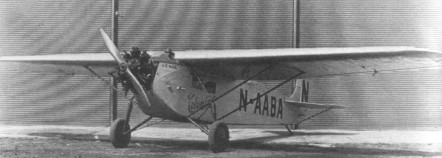
Fokker Super Universal

The Super Universal was an enlarged Universal with an enclosed cockpit and improved undercarriage, built in 1927.
The Japan Air Transport Company imported ten Super Universal aircraft in 1929. Later the type was built under license by the Japanese Nakajima Company, the first Japanese built machine being delivered in March 1931. A total of 47 was built up to October 1936.

Fokker F.X / C-5 / RA-4

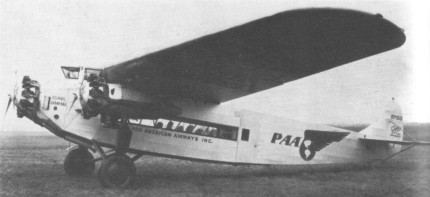
F.XA

The F.X and its variants were developed and built in the Factory at Hasbrouck Heights under the guidance of the chief designer, Mr Alfred Gassner. In April 1927 the first F.X made its debut. Western Air was first to buy, with an order for three of these 12 seat airliners.

Fokker F-10 Western Air Express 1928.

The Fokker F.XA was a bigger version of the 12 seater F.X airliner. It had seats for 14 passengers and was used on American routes. Pan American Airways flew F.XAs between Key West and Havana, Cuba, a route which included 100 miles over the sea.

Fokker F-10 monoplane operated by Western Air Express.

The US Army used obtained one as the C 5 in 1927 and one flew with the USMC as the RA 4, also in 1927.

Fokker Aircraft Corp of America

USA
Antony Fokker’s Atlantic Aircraft Corporation was reorganized on September 16,1925, inheriting premises at Hasbrouck Heights, Teterboro, and the orderbook for the Noorduyn-designed Universal. Factory at Passaic, New Jersey, opened 1927. Glendale, West Virginia, factory opened August 1928. General Motors Corporation acquired a 40 pe cent holding May 1929; Fokker resigned July 1931.
Improved Super Universal six-seater introduced 1927; 123 built. Three-engined 12-passenger F.10 flown April 1927; 65 built, first three for Western Air Express, forerunner of TWA. Followed by 59 14-seat F.IOAs. Fokker 32, first US four-engined airliner, flown 1929, having 32 seats and powered by two pairs of Pratt & Whitney Hornet engines in tandem with tractor and pusher propellers; ten built. Military designs included 1929 0-27 observation aircraft, of which 14 built.

Fokker S-4

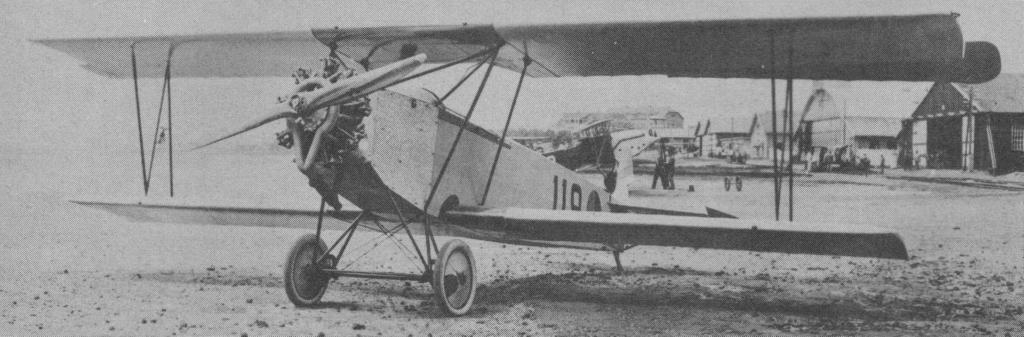
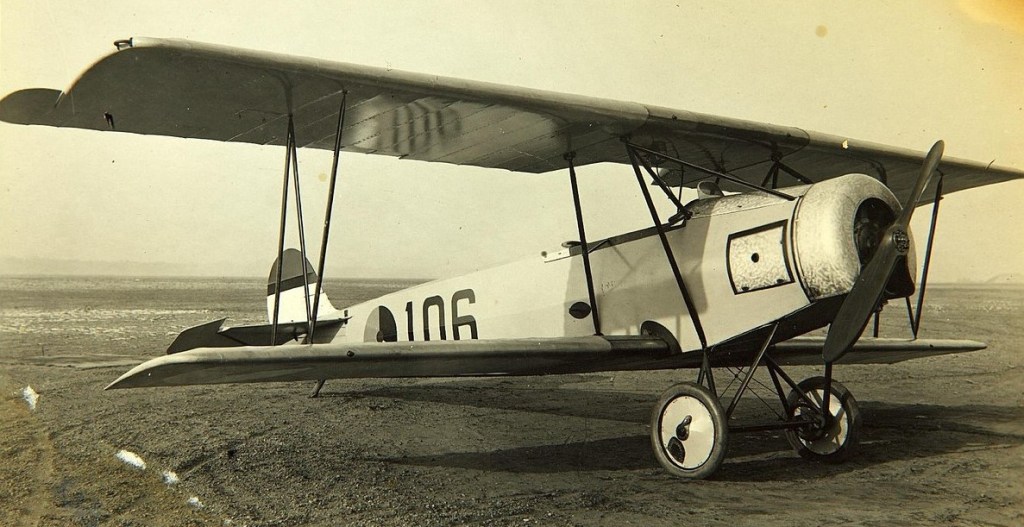
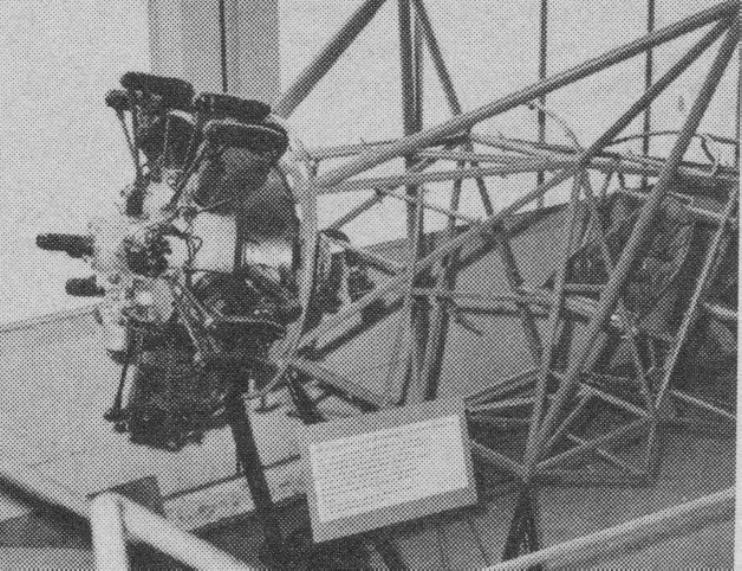
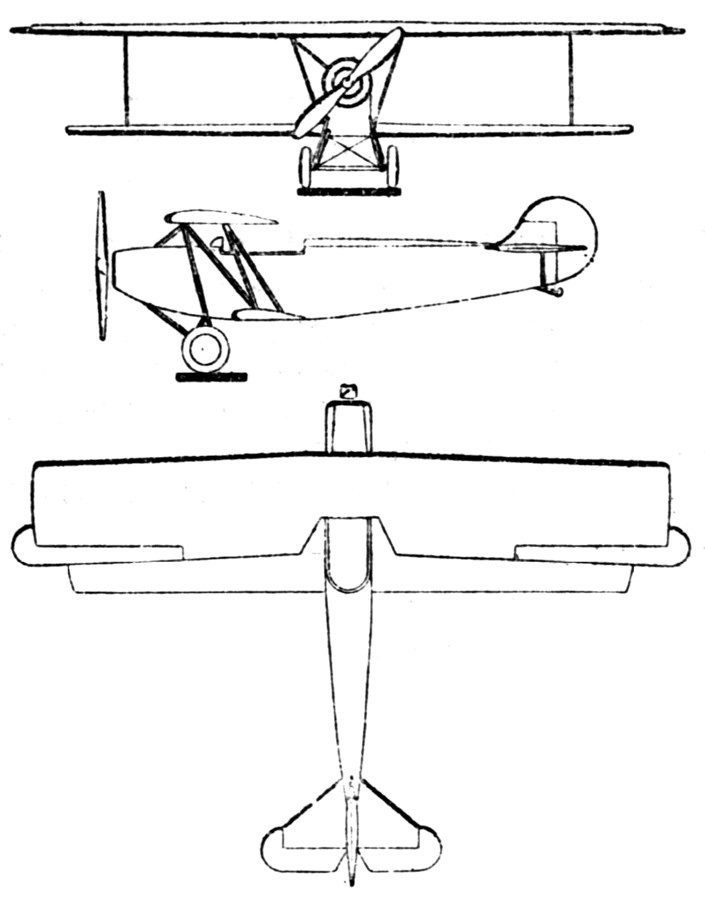
The Fokker S.IV was a military trainer aircraft produced in the Netherlands in the mid-1920s. It was a conventional, single-bay biplane with staggered wings of unequal span braced with N-struts, essentially a radial-engined development of the S.III. The pilot and instructor sat in tandem, open cockpits and the undercarriage was of fixed, tailskid type with a cross-axle between the main units.

The Royal Netherlands Army Aviation Group purchased 30 examples and used them right up to the German invasion of the Netherlands in 1940. On 14 May that year, a few surviving S.IVs escaped to France alongside some S.IX trainers, but never flew again.

The S.IV could be powered by a variety of engines in the 75–97 kW (100–130 hp) range, including 110 hp (82 kW) Siemens-Halske Sh 11, 110 hp (82 kW) Le Rhône 9J, 130 hp (97 kW) Bristol Lucifer, 130 hp (97 kW) Armstrong-Siddeley Mongoose, 110 hp (82 kW) Oberursel UR.II or the 130 hp (97 kW) Clerget 9B.

Fokker S.IV
Powerplant: 1 × Le Rhône 9J, 82 kW (110 hp)
Propeller: 2-bladed fixed pitch
Wingspan: 11.17 m (36 ft 8 in)
Wing area: 27.55 m2 (296.5 sq ft)
Length: 8.55 m (28 ft 1 in)
Height: 3.15 m (10 ft 4 in)
Empty weight: 650 kg (1,433 lb)
Gross weight: 1,000 kg (2,205 lb)
Maximum speed: 160 km/h (99 mph, 86 kn)
Stall speed: 65 km/h (40 mph, 35 kn)
Service ceiling: 4,000 m (13,000 ft)
Time to altitude: 1,000 m (3,300 ft) in 6 minutes
Wing loading: 36.29 kg/m2 (7.43 lb/sq ft)
Power/mass: 0.0830 kW/kg (0.0505 hp/lb)
Crew: 2

Fokker F-100

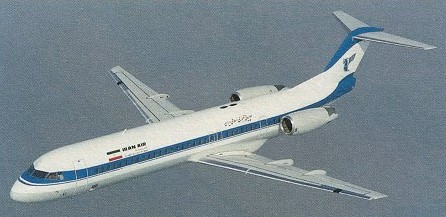
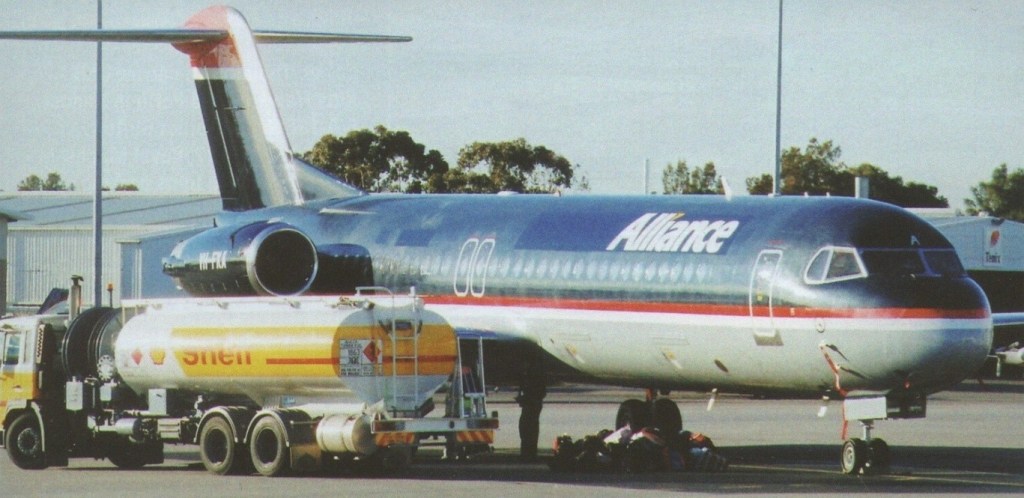
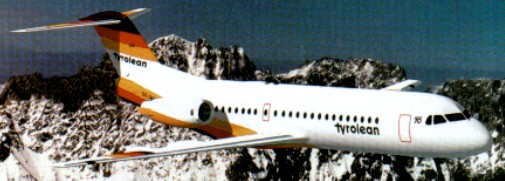
When Fokker announced a successor to the F27 in November 1983, they also launched a similar follow-on to the Fellowship jet airliner. Derived from the proven F28 Mk 4000 airframe, the new aircraft was designated the Fokker 100 roughly reflecting the number of passenger seats offered. Re-engined with new-technology fuel-efficient Rolls-Royce Tay turbofans and with a longer fuselage and redesigned and extended wings, other features include modernised systems incorporating a ‘glass cockpit’ and a revised cabin interior. Production is shared with Deutsche Airbus, Shorts, Grumman, Rolls-Royce and Dowty Rotol, with assembly and flight testing carried out by Fokker at Schiphol. IPTN of Indonesia also supply components.

Fokker F-100 Article

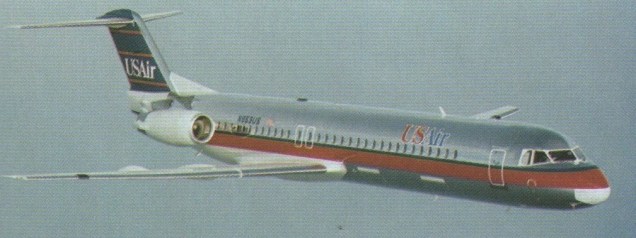
The F100 flight test programme involved two prototypes, the first making its maiden flight on 30 November 1986 followed by the second on 25 February 1987. Certification of the Tay 620-15 powered version was achieved in November 1987 and first customer delivery was made to Swissair in February 1988. The uprated Tay 650 version, ordered by US Air was certificated in July 1989 and delivered to the airline the same month. By mid-1991 Fokker had received orders for 232 F100s and had delivered 70. Options available on Tay 650 aircraft from 1993 include a higher gross weight of 45810kg and an integral wing centre-section fuel tank giving improvements in range between 160 and 450km. Another option available from 1994 will be a quick-change version equipped with a cargo door 3.4 by 1.9m installed on the port side of the fuselage ahead of the wing, together with a specially designed cabin interior. Conversion time (by three men) is claimed to be 20 minutes, enabling 88 passengers to be carried by day and an 11,500kg payload by night over 2800 km.

Alliance Airlines Fokker 100 VH-FKA – ex-US Airways – 1988

On 24 July 1989 USAir was the launch customer for the Fokker 100.

Rekkof Restart was formed with intention of restarting production of the Fokker 50 and 100, having bought tooling and rented the production factory in 1998.

Engine: 2 x Rolls-Royce Tay 650-15 turbofans, 6849kg
Max take-off weight: 43090 kg / 94998 lb
Empty weight: 24375 kg / 53738 lb
Wingspan: 28.0 m / 91 ft 10 in
Length: 35.5 m / 116 ft 6 in
Height: 8.5 m / 27 ft 11 in
Wing area: 93.5 sq.m / 1006.42 sq ft
Cruise speed: 837 km/h / 520 mph
Ceiling; 10670 m / 35000 ft
Range: 2956 km / 1837 miles
Passengers: 107