
Friedrichschafen FF.3
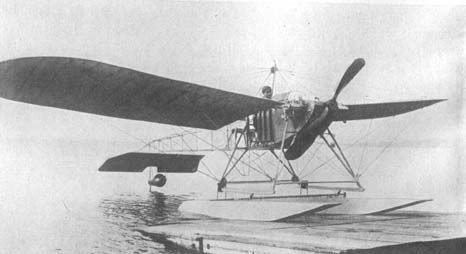
A 1913 development of the floatplane of the Swiss engineer Grandjean, who had patented floats with coils (in German: “Schwimmerabfedering”). Characteristic of this wing warping monoplane is its Orlikon engine of 50 hp, radiators at the fuselage sides and completely open fuselage behind the pilot seat.
Flugzeugbau Friedrichschafen established with factory at Mansell, later at Warnemunde, producing many seaplane designs for German Navy.
FF 29 twin-float reconnaissance seaplane introduced November 1914 for coastal patrol and fighter versions. Replaced by FF 49, with more powerful Benz Bz IV engine, introduced in May 1917. Also built land-based aircraft, including G III long-range bomber with two Mercedes DIV engines, used on Western Front in 1917
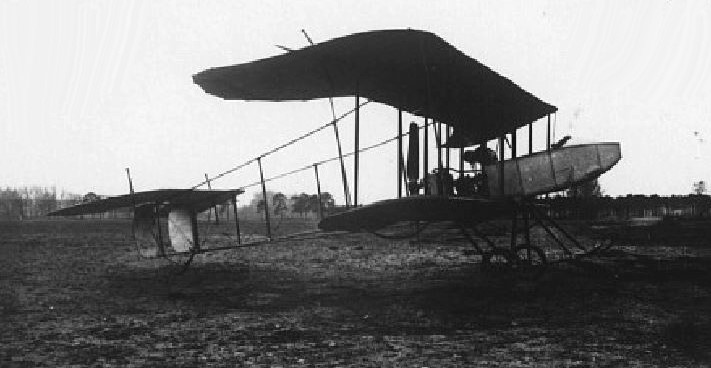
A Farman copy but with Zanonia-shaped upper wing, designed by the young (15) Ernst Friedemeyer. It was built by Flugzeug-Baugesellschaft Osnabrück, Germany, in 1911. It was not very successful, and was destroyed in 1912.
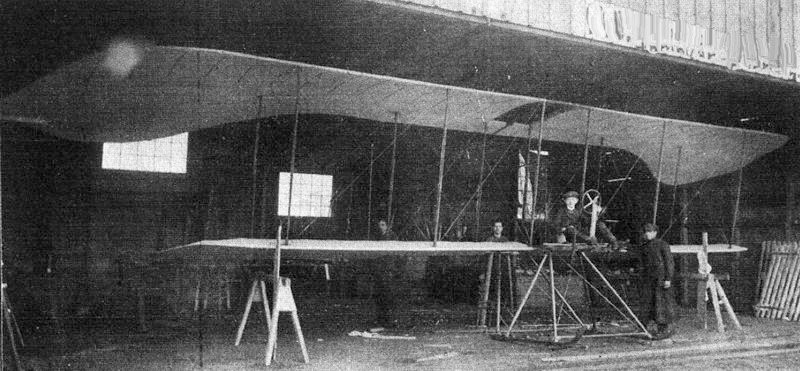
A biplane with Zanonia-inspired upper wings and short lower wings. One of two similar machines built at the Niederreinische Flugzeuganstalt, Hilsmann & Co in Holten, Germany. Made short flights.
Experimental electric driven aircraft from 1976
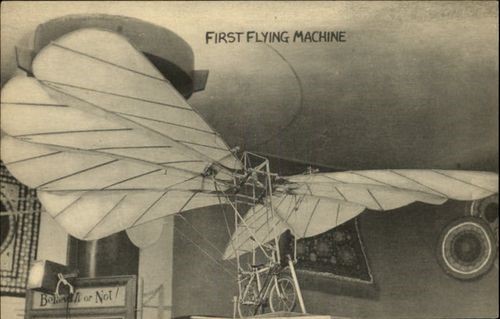
As a youth living in Russia, Oskar Freymann had observed eagles in flight and determined to build a flying machine based on the actions he saw. After emigrating to America in 1895 he worked in a bicycle shop in Brooklyn. Freymann soon built his flying machine, with four wings operated by the pedaling action of a bicycle, and handle bars that moved a rudder at the rear. In November 1896, Freymann and three other men trucked the machine to an open field in Flatbush. He claimed to have pedaled furiously and flown the ornithopter to an altitude of 14 feet – but this is quite doubtful. In any event the machine was damaged during the trial and never rebuilt. Freymann ultimately planned on building a larger, gasoline-powered ornithopter on a tricycle, but ran out of money and abandoned the project. The model – seen here in 1939 on display at the Ripley’s “Believe It or Not!” Odditorium in New York – was built by Freymann in 1895, to help him work out the wing-flapping system. It currently resides at the Cradle of Aviation Museum in East Garden City, New York.
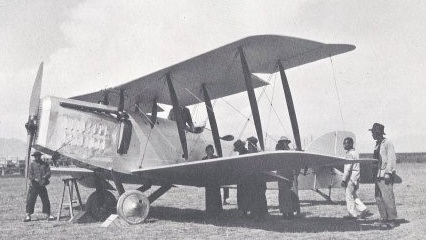
In 1924-25 Governor Yen, the Chinese Governor of Shansi Province, asked Fresson to establish an aircraft factory at Tai Yuan Fu, within the walls of the local Arsenal. This was in an area surrounded by warring local factions and was not particularly safe area to work.
Fresson began designing the Fr.FBI based on the Armstrong-Whitworth FK.8 design and ordered materials from the Aircraft Disposal Company in London. The design was drawn up in Shanghai and construction began in the spring of 1924.
The Fresson design called for two separate cockpits behind the main wings and had a revised Centre of Gravity. He was assisted in the build by a German aero engineer, and English maths expert who worked on the stress aspects and a Chinese carpenter called Loh.
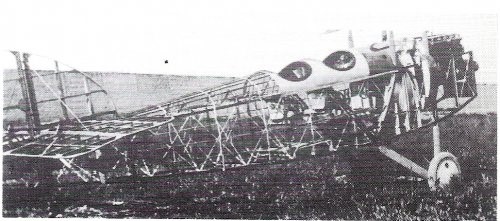
Although built in the Arsenal confines, a separate airfield was built six miles north with an 800 metre runway for testing.
After several successful flights, passengers were carried. There was no further production of the type due to Civil unrest and Fresson returned to Britain to found Highland Airways in Britain.
In 1922 a Chinese War Lord had imported a dismantled Avro 504K and ‘Ted’ Fresson, a former WWI pilot, assembled it for $250 over a period of a fortnight. This was followed by two more years of test flying various Avro’s and Curtiss aircraft in and around Hankow.
In 1924-25 Governor Yen, the Chinese Governor of Shansi Province, asked Fresson to establish an aircraft factory at Tai Yuan Fu, within the walls of the local Arsenal. This was in an area surrounded by warring local factions and was not particularly safe area to work.
Fresson began designing the Fr.FBI based on the Armstrong-Whitworth FK.8 design and ordered materials from the Aircraft Disposal Company in London. The design was drawn up in Shanghai and construction began in the spring of 1924.
A two-seat monoplane with pivoting main wing.
Offers plans to construct Freebird Mk V, a two-seat monoplane with pivoting main wing.

