Riverside IA.
USA
Wingler Aeronautical built the S-2 aircraft in 1931.
Riverside IA.
USA
Wingler Aeronautical built the S-2 aircraft in 1931.
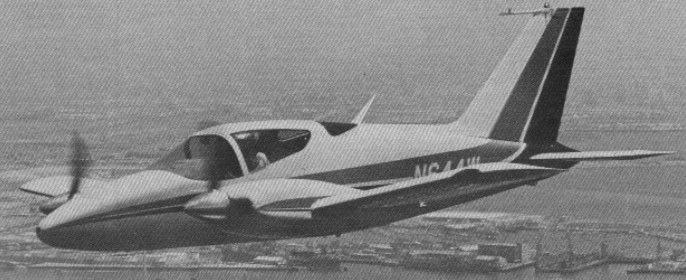
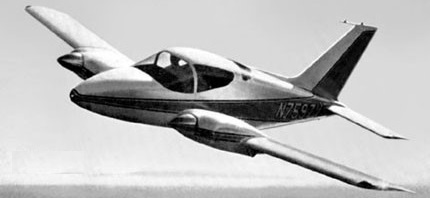
By 1962, George Wing had moved on to the development of John Thorp’s little twin, which eventually became the Wing Derringer. George Wing hired John Thorp to design a high performance two seat twin. Thorp, who had been toying with the idea of hanging two engines on his Sky Skooter (one of which Wing owned), was already primed for the idea. They started with a clean sheet of paper and, using two Continental O 200 engines and fixed pitch props, came up with an airplane that was, for its operating costs, a wonderful performer, first built in 1978. John E Robey designed the major assembly tooling for the Wing Derringer at Olin-Dixon in Coffeyville Ks in the late 1960’s. Derringer project leader was Larry Heuberger.
The prototype carried two special Continental 115 hp IO-200 engines with fuel injection. The cowling was 21.5 inches deep. The prototype N3261G first flew on 1 May 1962, kept throwing prop blades, however, its engine out performance was inadequate, and the tweaked engines were not a realistic choice for a production airplane; and so eventually, production prototypes were equipped with 160 hp Lycoming engines. Originally, the Derringer was equipped with very thin, narrow bladed racing props.
While testing the prototype, the next two units were nearing completion in Torrance, California.
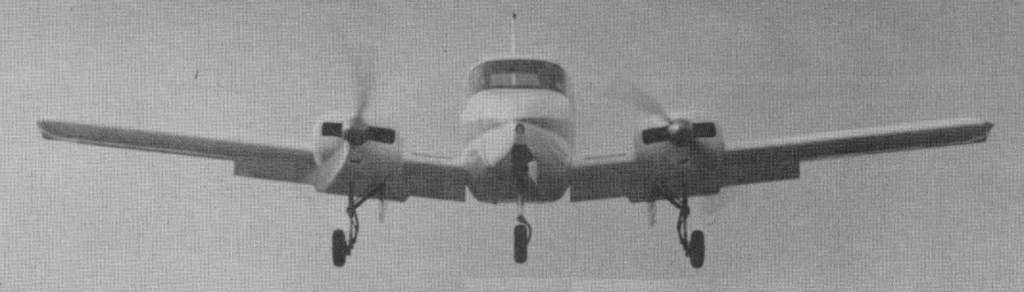
The airplane was a compact two-seater with a huge baggage bay behind the seats, a simple rectangular wing and a fuselage that was all curves from nose to tail. Its structure used stretched chem milled skins throughout. With stretch-formed, chemically-etched skins, the number of metal pieces requied is greatly reduced and labour time is cut accordingly. The Derringer has eight fuselage pieces and there isn’t a flat surface on any of them. There are only 13 major skins in the entire plane with the wing a single wrap-around sheet .064 thich where ribs and attachments occur. Remaining metal is etched away to .032 where no stresses occur. The wing walk for instance is .064. Metal skins start out at .064 or .040, depending on their function, and are etched down to whatever thickness the specs call for.
The flight test and production models, under construction in 1964, were to be equipped with 150 hp Lycoming IO-320 engines that operate on 80/87 octane fuel. The production aircraft would have full-feathering, constant speed, two-blade Hartzell props.
Matched-hole tooling means the Derringer can be assembled with a minimum of jigs and fixtures. All holes were to be in a temperature-controlled room so that the parts for number 2 and 3 aircraft were interchangeable with any others, All skin assembly is butt-jointed and flush riveted.
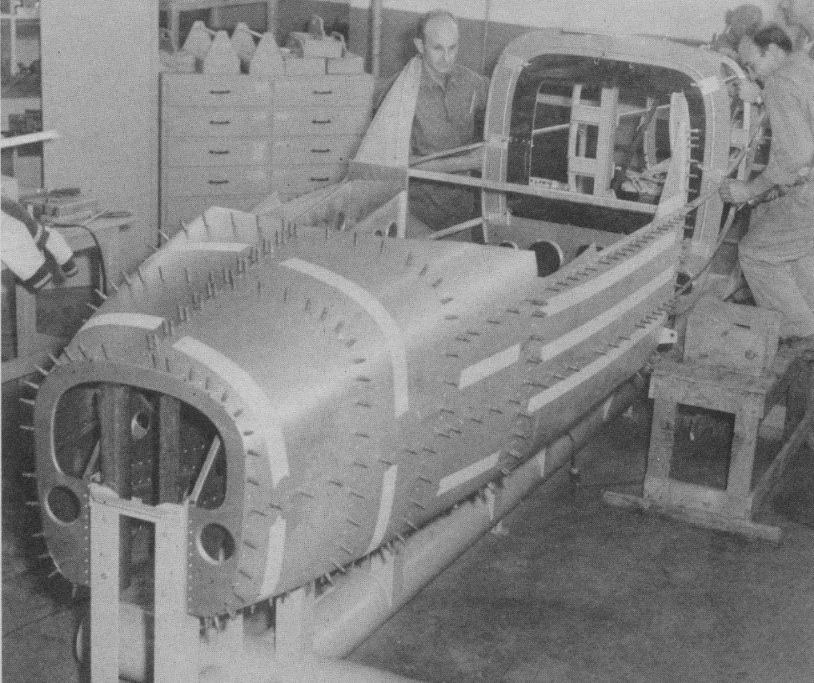
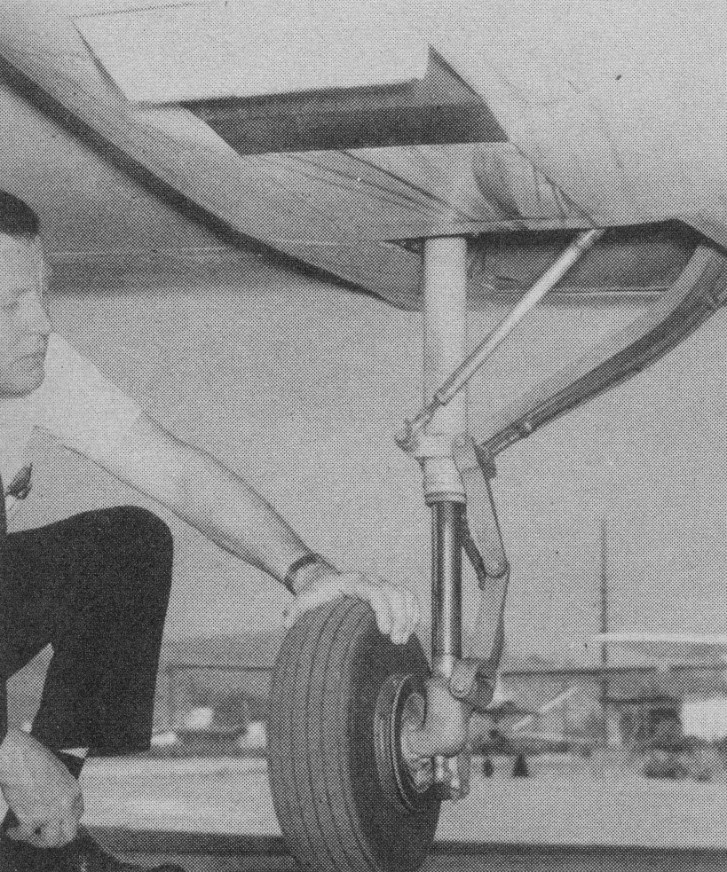
The prototype had a fuselage two inches narrower than the production model and was fitted with a slide-back cover. The prototype had a hand brake while the production craft were to have toe brakes. A simple automotive window motor operates the Saginaw ball and screw system for gear retraction and flap movement.
The Derringer undercarriage is fitted with three oleo struts, each with 9 inches of travel.
It would cruise at 190 knots, climbing at 1,700 fpm and boasting a range of over 1,000 nm with reserves.
There is no steering on the ground except with the engines.
Pre-take off check list
Fuel on
Crossfeed off
Trim set
Mixture rich
Flaps 10 deg
Controls free
Canopy locked
Landing check list
Mixture rich
Gear down and locked
Flaps as desired
First deliveries were expected in the Spring of 1964, priced at $27,500.
Wing spent $3 million of his own money, $5 million all told, in developing and certificating the airplane.
Wing contracted with a Kansas manufacturing firm, Olin Dixon, to manufacture an initial production of five with 150hp, ATC A9WE, in 1966, and a second production with 160hp. Problems developed, which Olin blamed on Wing and Wing blamed on Olin. Litigation followed. The first 3 if the initial production were built by Wing’s Transland company

In 1979 Wing Aircraft’s two seat Derringer twin seemed to be on the verge of entering the general aviation marketplace at $40,500. Company President George Wing said that the first production Derringer were to be delivered in the fall. The aircraft, which is powered by two 160 horsepower Lycomings, has a book cruise speed of 182 knots at 65 percent power. Sea level rate of climb is 1,700 feet per minute, and the empty weight is 2,100 pounds. An IFR equipped Derringer was to sell for about $100,000.
Prototype
Engine: Continental IO-200, 115 hp
Props: fixed pitch
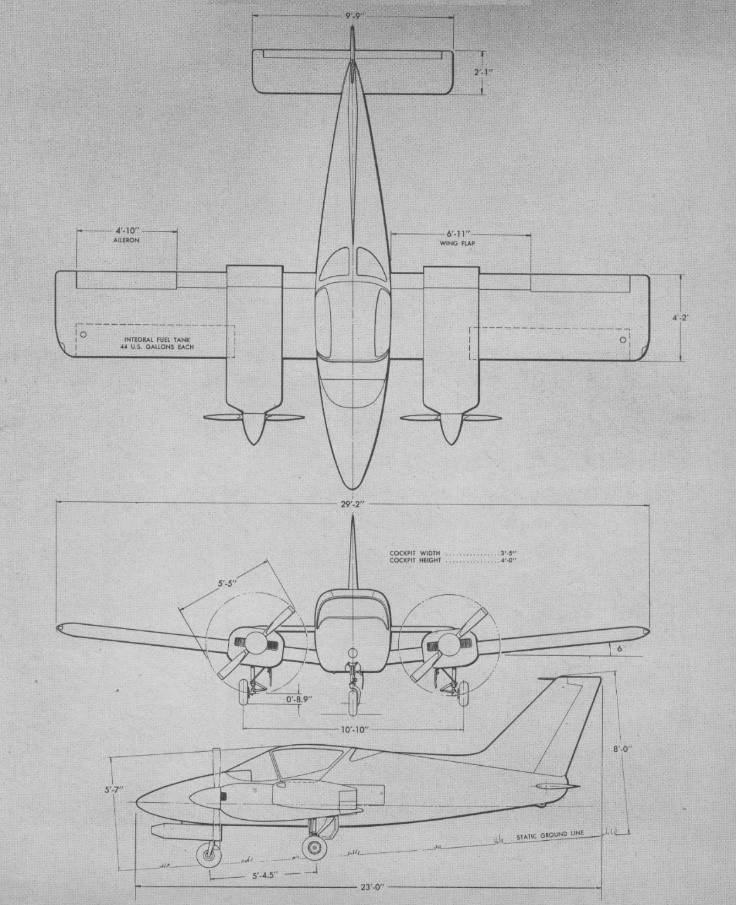
Wingspan: 29 ft 2 in
Cabin height: 5 ft 7 in
Fin top: 8 ft
Fuel capacity: 2 x 44 USG
Wing loading: 22.15 lb/sq.ft
Liftoff speed: 90 mph
TO roll: 700 ft
Cruise climb: 130 mph / 1200 fpm
UC down max: 125 mph
Stall speed: 66 mph
SE critial speed: 77 mph
Cruise speed 75%: 250mph at 20,000 ft
Baggage compartment: 22 cu.ft
Baggage door is 10×30 in on thebleft side of the fuselage.
Cabin height: 48 in
Cabin width: 44 in
Cabin length: 98 in
Seats: 2
Gear cycling: approx 6 sec
Engine: 2 x Lycoming O-320-B1C, 160 hp
TBO: 2000 hrs
Prop: Hartzell, 2 blade, variable pitch 66 in
Seats: 2
Length: 23 ft
Height: 5.8 ft
Wingspan: 29.1 ft
Wing area: 121 sq.ft
Wing aspect ratio: 7
Max ramp wt: 3050 lbs
Max take off wt: 3050 lb
Standard empty wt: 2100 lb
Max useful load: 950 lb
Max landing wt: 2900 lb
Wing loading: 25.2 lbs/sq.ft
Power loading: 9.5 lbs/hp
Max useable fuel: 522 lb
Climb rate: 1700 fpm @ 104 kt
Climb gradient: 981 ft/nm
Rate of climb @ 8000 ft: 1015 fpm
Service ceiling; 19,600 ft
SE climb rate: 420 fpm @ 96 kts
SE climb gradient: 263 ft/nm
SE ceiling: 8,000 ft
Max speed: 202 kt
Cruise @ 65% power @ 8,000ft: 182 kt
Fuel flow @ 65% power @ 8,000ft: 95 pph
Endurance @ 65% power @ 8,000ft: 5.2 hr
Stalling speed clean: 70 kt
Stall speed gear/flaps down: 63 kt
Turbulent air penetration speed: 148 kt
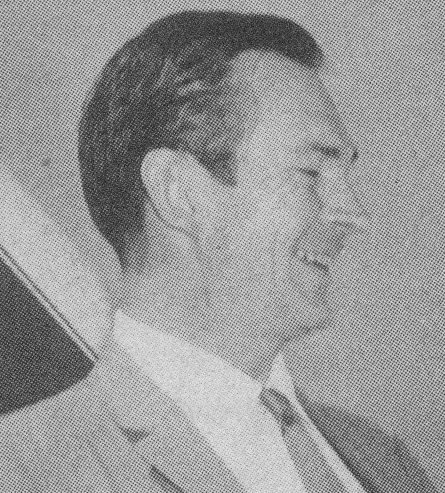
George Wing soloed in an OX-5 American Eagle in 1932 and worked in aviation ever since. He worked as a sheet-metal man at the Glenn Martin company on the China Clipper, at Monocoupe and Sikorsky. He went on the barnstorming circuit, sold rides, and msde a few parachute jumps.
Then he did five years with North American in the preliminary design group of the P-51.
Hi-Shear was a 495-employee corporation that produced specialised hardware and fastening systems for aerospace and other industries.
Subsidiary of Hi-Shear Corporation, Torrance, California. George S. Wing formed company 1960 to develop and market sporting twin-engined executive Wing Derringer. Company became independent 1966.
(George S) Wing Aircraft Co/Hi-Shear Corp,
2660 Skypark Dr,
Torrance CA.
USA
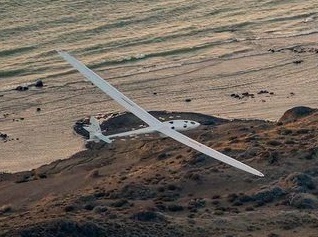
The Windward Performance Perlan 2 (English: Pearl) is an American mid-wing, two-seats-in-tandem, pressurized, experimental research glider that was designed by Greg Cole and built by Windward Performance for the Perlan Project.
The Perlan 2 is a follow-up design to the successful Perlan 1 and has as its design goal a flight exceeding 90,000 ft (27 km) in altitude. The aircraft will be used to study the northern polar vortex and its influence on global weather patterns. The program also hoped to beat the 85,069 ft altitude record set in 1975 by a SR-71.
The original funding for the Perlan Project was provided by Steve Fossett and he flew the Perlan 1, along with test pilot Einar Enevoldson to a glider altitude record of 50,761 ft (15 km) in the mountain waves of El Calafate, Argentina on 30 August 2006. Fossett was killed in a light aircraft crash a year later and the project floundered without funding. Since then, more than US$2.8M has been raised to build the Perlan 2, including a donation from Dennis Tito. In November 2013, a crowd-funding effort was undertaken. In August 2014 Airbus became a partner and major funder in the project.
The aircraft is made from composites. Its 83.83 ft (25.55 m) span wing has a high aspect ratio of 27:1 and is equipped with airbrakes. The pressurization system produces an 8.5 psi differential, and the two-person crew will not wear pressure suits. The landing gear is a non-retractable monowheel gear. Because the aircraft will operate at extreme altitudes, in only 3% of sea level atmospheric pressure, it will also be flying at true airspeeds in excess of 0.5 Mach. The aircraft was designed to minimize flutter and manage shock wave formation.
Perlan 2, benefitting from the lessons learned on Perlan 1’s ascent, incorporates a pressurized cabin to allow its pilots to enjoy unencumbered flight, with full control over stick and rudder, and many small switches. The cabin pressure of 8.5 pounds per square inch (psi) gives a cabin atmosphere equal to flight at about 14,000 feet. With an empty weight of 1,500 pounds, and a wing area of 262 square feet, the 84-foot span machine is amazingly light for the structural strength required for stratospheric flight.
With more wing area than a conventional sailplane, it would stay aloft, but never compete with such craft at lower altitudes. But in the thin air at 90,000 feet, with 98 percent of the earth’s atmosphere beneath it, it will be unrivalled. Because it carries two into a very hazardous realm, it is equipped with specialized equipment, including dual-redundant oxygen rebreathers, a drogue parachute to allow rapid descent in the unlikely emergency, and a ballistic chute for a lower-altitude emergency descent.
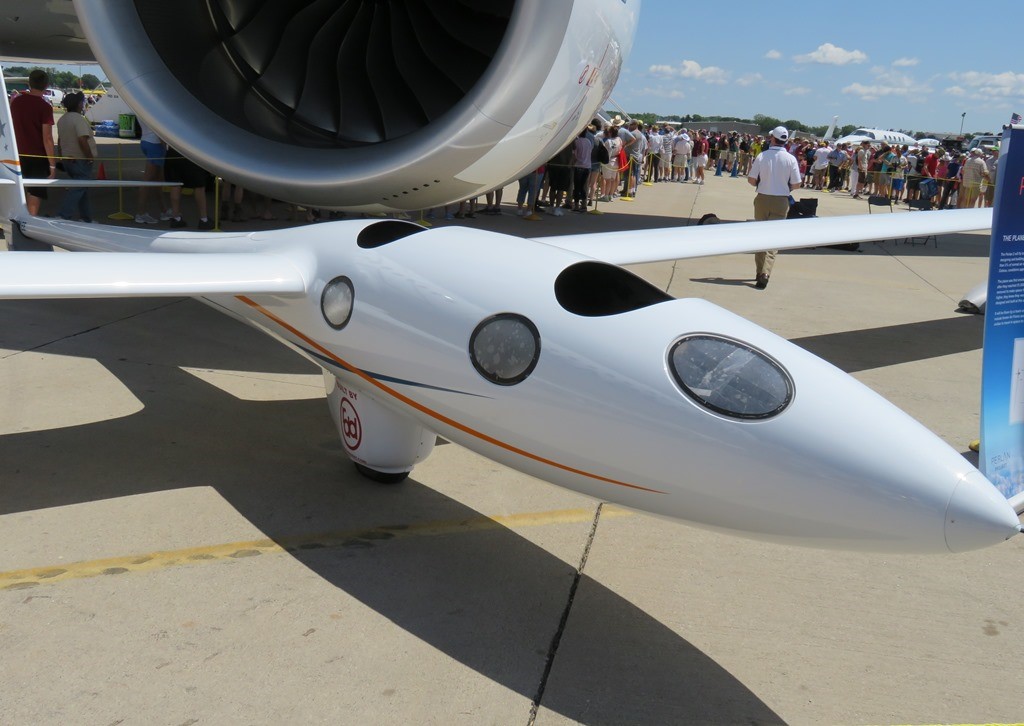
The aircraft first flew on 23 September 2015 at Redmond Municipal Airport, Oregon and started with flights in the U.S. Sierra Nevada mountain wave.
The record setting and research flights started in southern Argentina in 2016, by Einar Envoldson or Perrenod using rebreather oxygen systems. The aircraft was displayed at AirVenture in July 2015.
The first version of the Perlan reached 50,727 feet in 2006 with The Perlan Project’s founder Einar Enevoldson and lead project sponsor Steve Fossett at the controls setting a record.
The Airbus Perlan 2 reached new heights, flown by Jim Payne and Morgan Sandercock, breaking the world record for a glider flight as it soared to 52,172 feet on September 3 2017. An Aero Boero AB-180 tow plane pulled chief pilot Jim Payne and co-pilot Morgan Sandercock off the ground at Comandante Armando Tola International Airport, which sits at an elevation of 669 feet in El Calafate, Argentina.
The area around El Calafate is one of only a few places on Earth where mountain waves combine with a high altitude polar vortex; conditions critical to providing enough lift to bring a glider into the stratosphere.
Analyses by ground crews, which use data from weather balloons and meteorologists, did not indicate favorable conditions for a record flight. However, the pilots felt otherwise. They were right.
The glider was released at 10,500 feet and mountain waves carried the Perlan 2 to approximately 40,000 feet. There is generally a segment of altitude between the lifting layers where the glider can’t continue to gain altitude. An overlap is critical for bringing the glider into the stratosphere. And while the polar vortex did not quite overlap with the mountain waves, the glider was close enough that the pilots could redirect it to an area where they could continue to gain altitude.
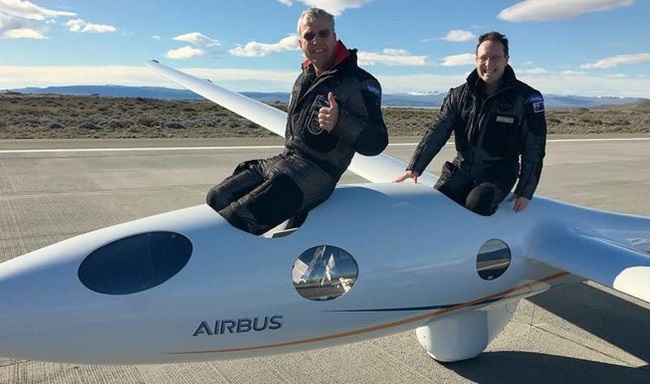
The pilots said the climb rate was about 300 feet on average and the record flight lasted about 6.6 hours.
On 2 September 2018, Jim Payne and Tim Gardner reached an altitude of 76,124 ft (23,203 m), surpassing the 73,737 ft (22,475 m) attained by Jerry Hoyt on April 17, 1989 in a Lockheed U-2: the highest subsonic flight.
Perlan II
Wingspan: 83.83 ft (25.55 m)
Wing area: 263 sq ft (24.4 m2)
Aspect ratio: 27:1
Length: 33.33 ft (10.16 m)
Height: 7.25 ft (2.21 m)
Gross weight: 1,800 lb (816 kg)
Never exceed speed: 377 kn (434 mph, 698 km/h) true airspeed, 56kts indicated
Service ceiling: 90,000 ft (27,000 m)
g limits: +6/-4
Crew: two

The glider, called the Perlan (Norwegian for “pearl”), is modified from a Glaser-Dirks DG-505M manufactured by DG Flugzeugbau in 1995. Its original self-launching Rotax 535C engine was replaced with oxygen tanks, scientific equipment, and non-rechargeable “primary” batteries, oxygen regulators and flight instruments. Because of this, the Perlan had to be towed into the air for release, and since the cockpit was unpressurized, pilots had to wear NASA spacesuits to combat the extreme altitude which presented difficulties in permitting full control movements.
To reach 50,000 feet while keeping the crew safe, the Perlan 1 was equipped with:
High altitude radar transponder by Sandia Aerospace
Instrumentation and lighting to fly at night by Whelen Engineering
Data loggers to validate world record, LX-9000
Scientific instrumentation
Cameras to record meteorological conditions
Lithium-ion rechargeable batteries
Telemetry to communicate with mission control on the ground
On August 29, 2006, Steve Fossett and Einar Enevoldson flew the modified glider to a record-setting altitude of 50,727 feet (15,445 m) over the Patagonia region of Argentina. By capitalizing on stratospheric “mountain waves” and the Polar Vortex that forms around Antarctica each winter, Fossett and Enevoldson were able beat the previous glider altitude record by over 1,500 feet. (The record was subsequently broken by the Airbus Perlan II, which reached 52,172 feet on September 3, 2017.)
The Museum of Flight acquired the aircraft from the late Mr. Fossett’s Marathon Racing Company in 2009.
Wingspan: 59 ft
Wing Area: 179 sq ft
Aspect Ratio: 19.52
Length: 28ft
Height: 6ft
Empty Weight: 860 lb
Gross Weight: 1389 lb
Wing Loading: 7.8 lb/sq ft
Maximum Speed: 168 mph
Service Ceiling: 62 000.00ft
Crew: 2
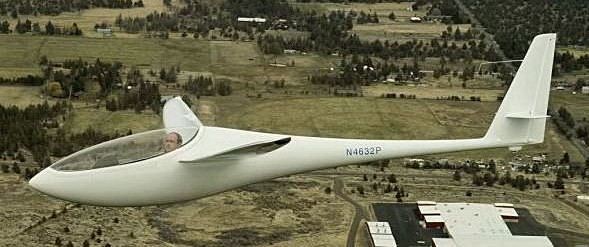
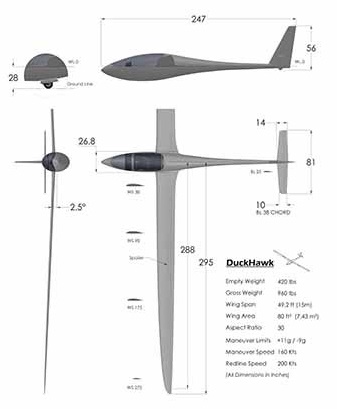
The DuckHawk is a development of the Windward Performance SparrowHawk and is intended as a higher performance glider than its predecessor, with very high structural limits and Vne. The DuckHawk has less than 10% parts commonality with the SparrowHawk. It features a cantilever wing, a single-seat enclosed cockpit under a bubble canopy and retractable monowheel gear.
Designed and produced by Windward Performance of Bend, Oregon, the aircraft is made from pre-impregnated carbon fiber. Its 15 m (49.2 ft) span wing employs a Greg Cole-designed airfoil, has an area of 80 sq ft (7.4 m2) and an aspect ratio of 30:1.
By December 2016 four examples had been registered in the United States with the Federal Aviation Administration, including three “V” models and one “E” model.
Since 2016 the aircraft has been no longer advertised as available by the manufacturer.
Variants:
DuckHawk E
Electric motorglider version, first example registered with the FAA in 2011.
DuckHawk V (Veloce)
Base model with an empty weight of 390 lb (180 kg), a maximum gross weight of 960 lb (440 kg) and load limits of +7/-5g. The first example was registered with the FAA in 2014 and three have been built.
DuckHawk SV (Super Veloce)
Proposed model with a 64% thicker spar, thicker fuselage, an empty weight of 435 lb (197 kg), a maximum gross weight of 960 lb (440 kg) and load limits of +11/-9g. None completed.
DuckHawk VNX
Proposed model with thicker wing skins, an empty weight of 455 lb (206 kg), a maximum gross weight of 1,150 lb (520 kg), maximum speed of 225 kn (417 km/h) and load limits of +11/-9g. None completed.
Specifications:
DuckHawk V
Wingspan: 49.2 ft (15.0 m)
Wing area: 80 sq ft (7.4 m2)
Aspect ratio: 30:1
Airfoil: Greg Cole-designed
Length: 20.6 ft (6.3 m)
Height: 3 ft 8 in (1.12 m)
Empty weight: 390 lb (177 kg)
Gross weight: 960 lb (435 kg)
Wing loading: 12 lb/sq ft (59 kg/m2)
Never exceed speed: 193 mph (311 km/h, 168 kn)
g limits: +7/-5g
Maximum glide ratio: 50:1
Crew: one
The SparrowHawk mid-wing, single-seat glider was designed to fit into the US FAR 103 Ultralight Vehicles category, including that category’s requirement that unpowered aircraft have a maximum empty weight of 155 lb (70 kg). The sailplane achieves this by utilizing a structure that is predominantly made from carbon-fiber-reinforced polymer.
The SparrowHawk’s multi-tapered, 36.1 ft (11.0 m) span wing employs five different airfoils and has an aspect ratio of 18.6:1. The wing features Schempp-Hirth style spoilers on the top surface. The cockpit can accommodate pilots who range in height from 63 to 75 in (160 to 191 cm). The landing gear is a fixed monowheel gear with an auxiliary tail wheel. The glider is finished with a two-part polyurethane paint. The aircraft can be launched by auto-tow, winch-launch, or aero-tow by both light aircraft and ultralight aircraft. Aerobatics are not recommended.
The SparrowHawk achieves a best glide ratio of 36:1 and a minimum sink rate of 119 ft/min (0.60 m/s).
Production ended after 35 were built. Since 2016 the aircraft has been no longer advertised as available by the manufacturer.
Wingspan: 36.1 ft (11.0 m)
Wing area: 70 sq ft (6.5 m2)
Aspect ratio: 18.6:1
Length: 20.6 ft (6.3 m)
Height: 4.5 ft (1.4 m)
Empty weight: 155 lb (70 kg)
Gross weight: 415 lb (188 kg)
Stall speed: 32 kn (37 mph, 59 km/h)
Never exceed speed: 123 kn (142 mph, 228 km/h)
g limits: +5.48/-4.0g
Maximum glide ratio: 36:1 at 50 kn (58 mph; 93 km/h)
Rate of sink: 119 ft/min (0.60 m/s) at 38 kn (44 mph; 70 km/h)
Wing loading: 5.93 lb/sq ft (29.0 kg/m2)
Crew: one
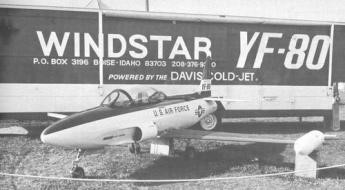
At Oshkosh 1977, Winstar, of Boise, Idaho, showed a half-scale replica of the Lockheed T-33. This small YF-80 is powered by a Davis cold air jet compressed by a compressor producing 220 lb thrust, driven itself by a V8 motor.
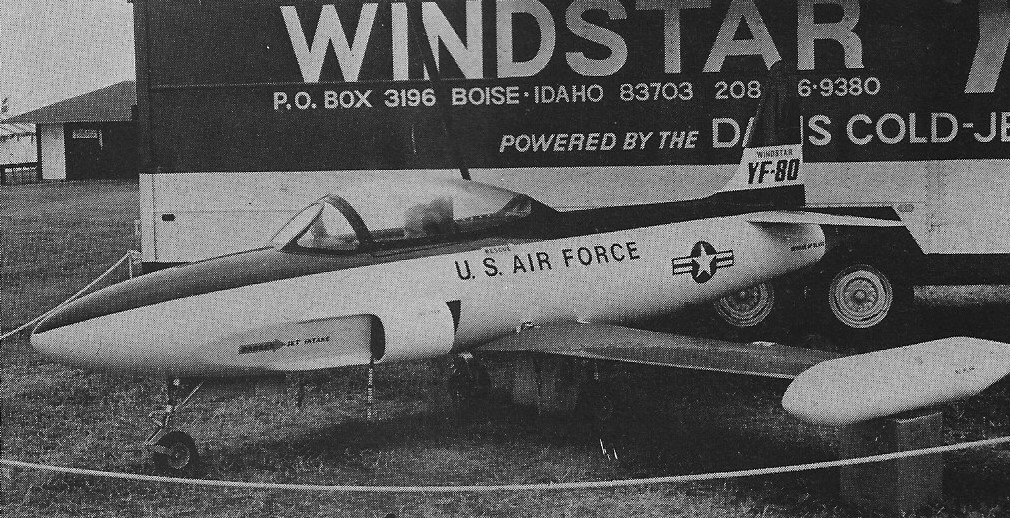
The compressor, designed by Davis, underwent static tests showing that it was possible to obtain 110 Kp at 75% power, consuming less than 65 lt / h.
Wingspan 18’6″
Length: 17’3″
Useful load: 400 lb
Max speed: 300 mph
Stall: 90 mph
Range: 490 mi
Seats: 1
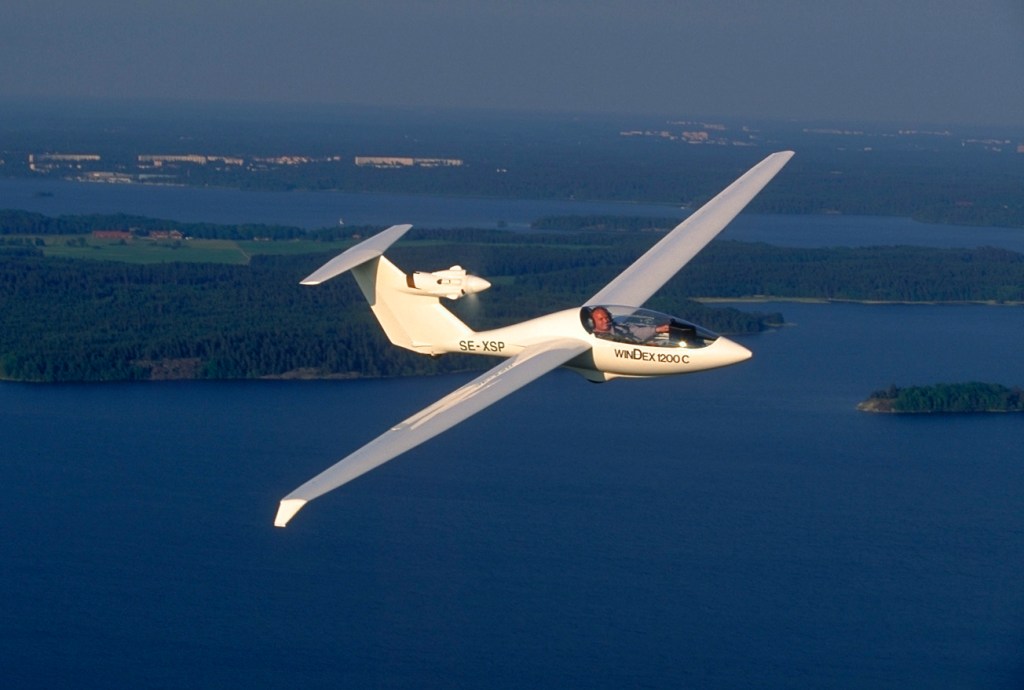
In 1980 Sven-Olof Ridder and Harald Undén start a hobby project which was intended to become a very light self-launching glider. During 1983 the Windex wing section developed and tested in wind tunnel. During 1985 Windex 1100 (unpowered) flies and work have started on moulds for powered version with 12 m. span, Windex 1200 C.
In 1986 all Windex 1200 C moulds burn in a factory fire after only 2 sets of laminates have been produced but during 1987 the Windex 1200 C prototype was shown at the Paris Air show.
During 1990 new moulds were being produced for kit production model, Windex 1200 C, fully aerobatic, with carbon fibre spars.
The Windex 1200 C prototype took part in Aerobatic World Championships 1991 for Gliders in Poland. Bronze medal in 2 categories.
10 “pilot-builders” in Sweden and abroad tested kit parts, drawing, manual etc during 1993. During 1992-1995, intensive kit development work, product testing took place with 2 factory prototypes under construction.
The first amateur-constructed kit Windex 1200C flew in 1996.
In 1999 Windexair AB took over the Windex 1200C project from RADAB.
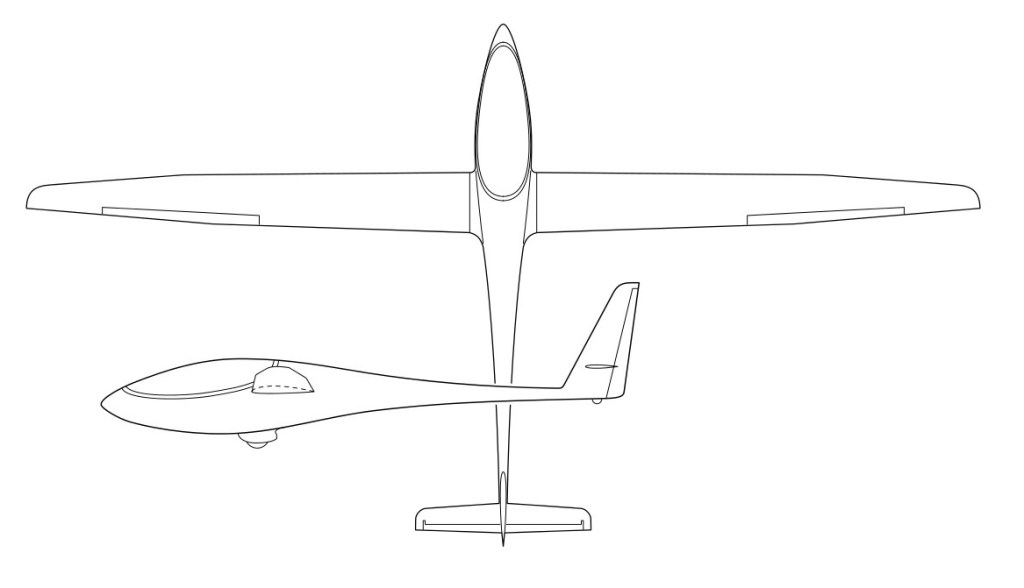
Windex 1200 C is primarily a high-performance sailplane, but has a low-drag fin-mounted engine installation and a variable-pitch propeller turning it into an efficient touring aircraft with a cruising speed of 210 km/h (130 mph) and self-launching capability.
The airframe of Windex 1200 C is stressed for aerobatic manoeuvres and designed to JAR 22 (A). It’s a powered high-performance sailplane that can be easily handled on the ground by one person. Even with engine nacelle, propeller and a 20% smaller span it has a soaring performance equal to or better then a 15-metre Standard Cirrus glider. It also has a climb rate of approximately 2.5 metre/sec (685 fpm), under power.
The specially designed 17% thick airfoil section has comparatively low drag and a wide low drag bucket that is further expanded by a 22.5% chord trailing edge flap. The basic airfoil has very docile stall characteristics in both smooth and rough condition.
The carbon fibre spar has been successfully proof tested at 2175 kgs each side. That gives a useable load factor of +9 g and -7 g (with added safety factor of x 1.725). The König SC-430 3-cylinder engine, used in the Windex 1200C is manufactured in Canada. A displacement of 430 cc gives a take off power of 20 hp at 4200 rpm. Weight of the König engine is 13.8 kg (30.4 lbs). Starting is electric and it uses gasoline of types 100LL, 80UL and mogas98.
The variable-pitch propeller unit for the König engine has been built and
successfully tested to JAR 22 standards. The pilot control pitch from the cockpit, fine pitch to fully feathered.
The JAR tests include 50 hours running and 500 control movements
with engine running. After that the propeller unit is dismantled, searched
for damage, tolerances checked and finally function checked again.
The unit has come through bench testing without problems.
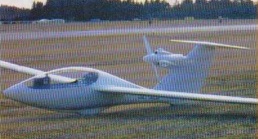
The Windex 1200 C Fuselage kit consist the following:
Laminate parts:
Upper and lower fuselage shells, vertical tail with engine nacelle, left and right, spar for vertical tail, upper and lower stabiliser shells, including spar caps moulded-in, spar web stabiliser, reinforcement module including seat and backrest, cockpit frame left and right, wheel housings for main- and tail wheel fairings, housing, ventilation channel with mechanism mounted, stick mechanism cover, fwd push rod cover aft rudder line covers and rudder pedal assembly.
Plexiglas canopy cut to size with ventilation window (Mecaplex). Main wheel with tire. Tail wheel, complete. Miscellaneous tubing, electrical wiring, switches, fuel lines, etc.
All metal parts are pre made.
All hardware, bolts etc., is AN-quality.
(With a few stainless steel exceptions)
5-Point (aerobatic) harness. Tow hook. Full scale templates for bulkheads, etc. All necessary drawings. Building manual (English language)
Epoxy, fibreglass, adhesives.
NOT INCLUDED: Instrument, paint, abrasive paper and similar materials. Wood, chipboard etc. for building cradle and jigs.
Wing kit
All internal wing fittings, hinges, spoilers, push rods, fuel tanks and wing spars are fitted. Wing is closed to eliminate wing jig and to considerably save building time
Metal parts:
All metal parts are pre-made.
Wing spar pin bolts, bolts for rear and fwd attachment. AN aircraft hardware. Push rods for ailerons and spoiler. 2 x aluminium fuel tanks each 17 litres. Associated couplings and hardware.
All necessary drawings and templates. Building manual. Epoxy, fibreglass, adhesives,
NOT INCLUDED: Paint. Abrasive paper and similar materials. Wood, chipboard etc. for jigs.
The span is 39′ 8″ and best L/D is 38:1. They also offered a fast build kit version for $5l,890 that saves approximately 300 hours from the normal 1000 hour build time. The glider is stressed for aerobatics and has enough fuel capacity and a variable pitch propeller for efficient powered cruising up to 3 hours. The Windex uses preimpregnated composite materials and an autoclave cure process for high strength to weight ratio in the structures. No other current sailplane uses this fairly expensive process. The prize of the kit was US$39,000 in 1997. Windex also offered a building assistance program in Sarasota, Florida for $870 per month and will provide qualified helpers for $40 per hour.
ARACO were the US agents for the Windex.
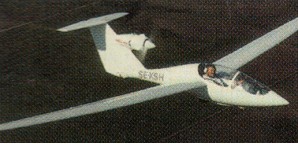
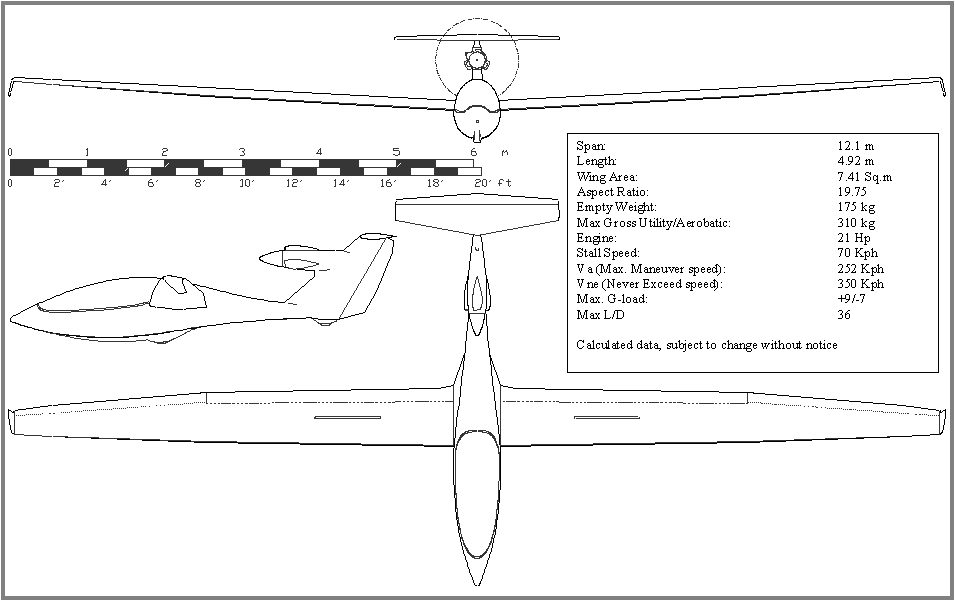
Windex 1200C
Engine: Konig 2 cycle, 24 hp.
HP range: 18-24.
Wing span: 12.1m / 39.7ft
Wing area: 7.41 sq.m / 79.8 sq.ft
Aspect ratio: 19:8.
Height: 3.7 ft.
Length: 16.1 ft.
Empty Weight: 150 kg/331 lb
Payload: 160 kg/352 lb.
Gross Weight: 310 kg/683 lb
Wing Load: 41.83 kg/sq.m / 8.56 lb/sq.ft
Stall: 45 mph.
Seats: 1
L/D max: 38 at 100 kph / 62 kt / 71 mph
Aspect ratio: 19.75
Min sink: 0.70 m/s / 2.3 fps / 1.36 kt
Airfoil: Radab
Structure: CFRP/GFRP
Load limit: +9/ -6g
Landing gear: fixed single wheel and tail.
AB Radab Windex 1200
Engine: Konig 430, 24 hp
Wing span: 12 m
Wing area: 7.34 sq.m
MAUW: 310 kg
Empty weight: 150 kg
Fuel capacity: 34 lt
Max speed: 240 kph
Cruise speed: 200 kph
Minimum speed: 71 kph
Climb rate: 3 m/s
Seats: 1
Kit price (1998): $39,000
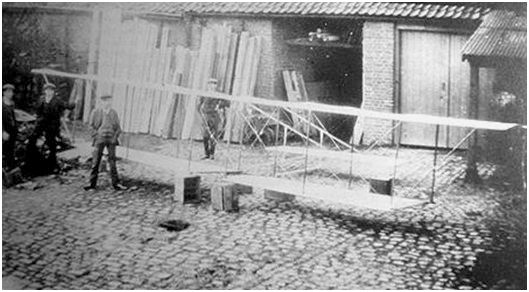
Sydney Camm, one of Britains most distinguished aircraft designers and father of the Hawker Hurricane, was born in 1893. From his schooldays he had shown a keen interest in aviation, founding the Windsor Model Aeroplane Club and constructing many successful model aircraft. Camm and his friends built a full sized Chanute-type glider 1912-1913 with plans to put an engine on it. It is seen with wing extensions that were added after the first experiments. It was used for almost a year, before being wrecked by a hurricane.
 All Aero