
This was J Lester Garbrick’s 90-lb mini-biplane, built in 1941 for and flown by his teen-age son, according to the Oct 1949 Flying.
Engine: Indian Chief motorcycle engine
Cruise speed: 50 mph
Stall: 30 mph
Seats: 1
This was J Lester Garbrick’s 90-lb mini-biplane, built in 1941 for and flown by his teen-age son, according to the Oct 1949 Flying.
Engine: Indian Chief motorcycle engine
Cruise speed: 50 mph
Stall: 30 mph
Seats: 1
The 1929 Garbrick Lark was a single place, open cockpit biplane registered N529.
Repowered in 1930 with an 80hp LeRhône rotary, it continued flying well into the 1960s, with its original fabric.
Stored after Garbrick’s death in 1971, it was finally sold in 1977.
Engine: 60hp Roberts
Wingspan: 28’4″
Length: 23’0″
Seats: 1
Centre Hall PA.
USA
Circa 1929-41 built aircraft
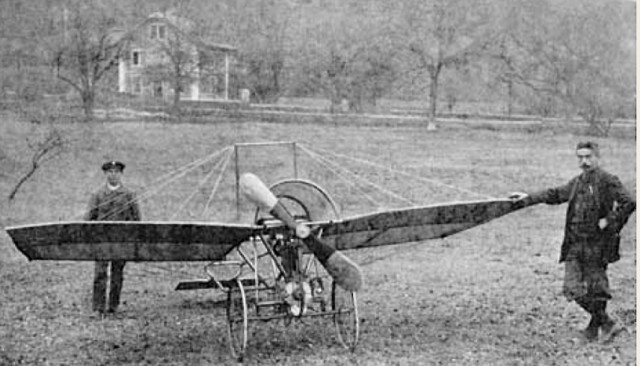
In 1911 François Garbaccio and Pierre Triverio built the first flying machine in the canton of Valais, Switzerland. It was powered by a Mag engine and was apparently never able to fly further than 20 metres.
François Garbaccio and his brother-in-law Pierre Triverio, two Italian emigrants from Piedmont, who in 1908 settled in Sierre, Switzerland. They set up a business for the repair of bicycles, and later manufactured and sold them themselves. In 1911 they built the first flying machine in the canton of Valais.
Hungary
Founded by Ganz Machinery Works Holding Ltd. to develop the GAK-22 Dino.
USA
Formed at Sun Valley, California, in late 1950s to produce modified version of Grumman Widgeon amphibian known as Super Widgeon and powered by two 300 hp Lycoming engines. Company used SCAN 30 airframes (license-built in France) for initial conversions.
Sun Valley CA.
USA
Circa 1955
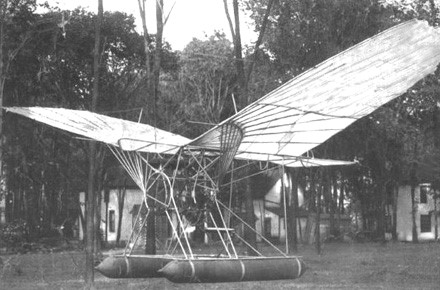
Built by Harry C Gammeter in 1907, the single place Orthopter had bamboo-and-silk flapping wings, double-hinged to the fuselage and flapping 75 strokes per minute. It reportedly “took-off in unmanned tethered flight” after developing a thrust of 24 lb, but was not developed further. “Originally, a horizontal flywheel turning at 1500rpm was used for stabilization but was later removed.”
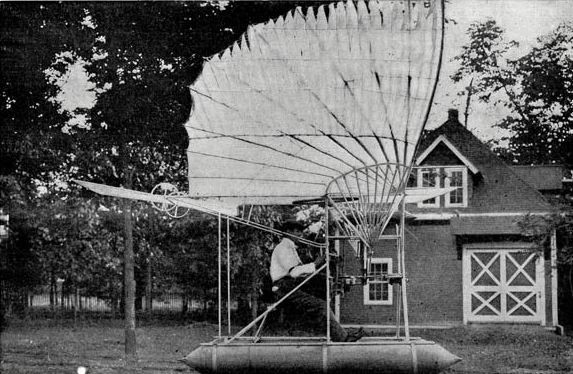
It was listed as an entrant in Flying Machine events at 1907 Intl Aeronautic Tournament in St Louis MO, 21-24 Oct 1907. Gammeter was member of Aero Club of America and president of Aero Club of Cleveland about that time, also invented and patented in 1903 the multigraph duplicating machine (“Ditto machine”).
Engine: Curtiss, 7hp @ 1200rpm
Wingspan: 30’0″
Length: 12’0″
Gross wt: 440 lb
I am trying to find if a Gammeter orthopter or ornithopter still exists in an old barn or hangar somewhere. Harry Gammeter was my greatgreat uncle. Thank you.
Roger Gammeter
rkgam1972@twc.com
17 Mar 18
Cleveland OH.
USA
Circa 1907 built the Gammeter Orthopter
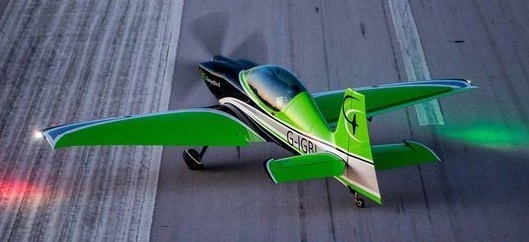
The GameBird was begun in 2013, when aerobatic pilot and designer Philipp Steinbach and a small team started drawing the initial shape of the airplane. The design was created using CAD software in England, where all of the initial development was done.
The GameBird is a versatile aerobatic airplane, with quick handling characteristics, capable of unlimited aerobatics at plus and minus 10 G with a roll rate of 400 degrees per second at 200 kias. However, with the ability to quickly shift its CG with a removable 25-pound weight in the tail section, the airplane can go from an unlimited aerobatic performer to a stable cross-country platform with an impressive 1,000 nm range. There is also a 30-pound baggage compartment for added versatility.
Even with the international move to Bentonville last year, the small team was able to get the airplane certified in 4 years. In August 2017 the team at Bentonville, Arkansas-based Game Composites saw their GB1 GameBird receive its certification. The FAA signed the Part 23 paperwork about four months after the European Aviation Safety Agency gave its approval.

