Since designing the Grasshopper, Col has produced the Jackeroo. The aircraft uses composite construction wings and a fuselage based on a 6 x 4 inch (152 x 102 mm) tube of rectangular section. The Mk2 version of the Jackeroo uses a deep section wing, with depth 20% of chord, which Col chose to lower the landing and take off speeds. However, to his surprise, it also improved the Jackeroo’s cruising speed.
Assembly time for the Mk2 Jackeroo from a trailer is 10min, and the aircraft weighs some 250lb (113kg) empty.
Aircraft
Winton Sapphire
Colin Winton’s sons, Scott and Dean, went on to build the Sapphire.
Winton Grasshopper
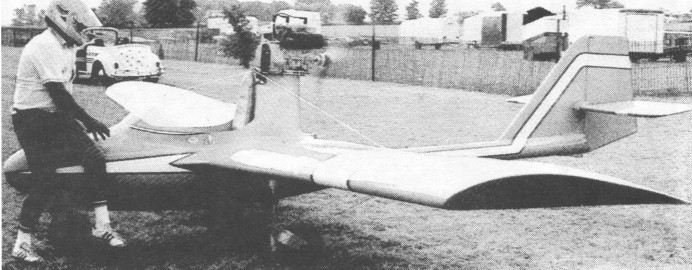
Single seat single engined mid wing mono¬plane with conventional three axis control. Wing has swept back leading and trailing edges, and tapering chord; cruciform tail. Pitch control by fully flying tail; yaw control by fin mounted rudder; control inputs through stick for pitch/roll and pedals for yaw. Wing braced from above by cables; wing profile Karman; 100% double¬ surface. Undercarriage has three wheels in tricycle formation. Push right go right nosewheel steering connected to yaw control. Aluminium tube/glass¬fibre fuselage, partially enclosed. Engine mounted above wing driving pusher propeller.
Col Winton’s Grasshopper won an award for the best foreign ultralight at the 1981 Oshkosh being a sophisti¬cated design, even by 1983 standards. Using Karman aerodynamics for both fuselage and wings, this machine was original¬ly powered by a 432 cc two stroke developing 23 hp. However, following its win at Oshkosh, Pterodactyl Ltd agreed to market the aircraft in the US, using a 30hp Cuyuna, while Col himself had plans to re engine the machine with a 440 cc Robin.
In concept the Grasshopper is a mixture of composite and tube and Dacron construc¬tion. The fuselage is principally made from glass fibre, while the wings are tube and Dacron with glass fibre leading edges and tips. Wings can be removed for transport and storage. The undercarriage has suspension on all three wheels and sometimes wheel spats are fitted.
Tolhurst purchased the moulds and rights from Colin Winton and produced an updated model at Camden, Sydney, Australia.
In 1978 the aircraft was purchased by Mr Juan Humberto Burnett of Perth and used for recreational flying mainly in the Rockingham area from 1978 to 1979. During this time, Burnett made a forced landing on a dry saltlake at Rockingham, due to a blocked fuel line.
Burnett moved to Mt Newman in 1979, and made several long distance flights from that town. One such flight was to Lake Disappointment and return (during which extra fuel was carried), and another flight was made to Port Hedland. The machine crashed on two occasions whilst based at Mt Newman. Once at Newman itself, and once at Marble Bar. In both incidents, damage to the machine was minimal and Burnett was unhurt.
In May 1981 Burnett returned to Perth, and did not get the opportunity to fly the Grasshopper again. The slightly damaged machine was donated to the RAAF Assn. Aviation Museum, where a rebuild was undertaken to bring the machine up to display condition.
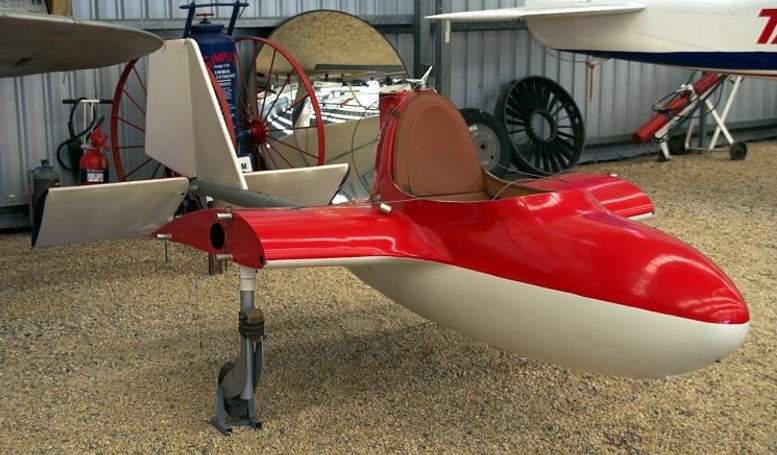
On 25 April 2008 it was purchased from the Aviation Heritage Museum, Bull Creek by Greg Ackman who loaned the aircraft to the Queensland Aviation Museum. On 17 July 2008 it arrived at QAM, Caloundra by road. The aircraft was later donated to QAM.
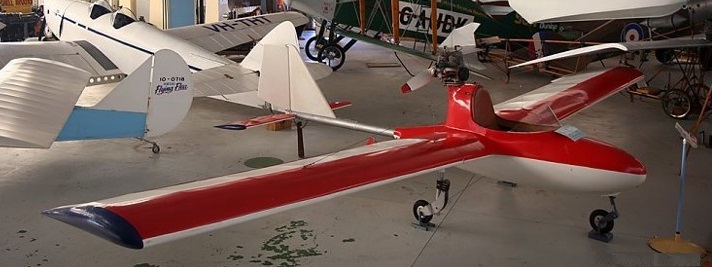
Have acquired and earlier model grasshopper and am seeking to identify what model and year it was constructed, i also wish to get my hands on a construction manual as i want to restore this aircraft back to its original flying state,
Will White
ima224ru12@yahoo.com.au
Engine: Robin EC44PM
Prop: VAC 36 x 50
Wingspan: 27 ft 11.5 in / 8.52 m
Length: 16 ft 4.75 in / 5.0 m
Empty wt: 122 kg
AUW: 249 kg
Cruise: 60 kts
Max level speed: 75 mph, 120 kph
Initial Climb: 192m/min / 630ft/min
Service Ceiling: 3 962m / 13 000ft
Range: 483km / 300mile
Winstead Special
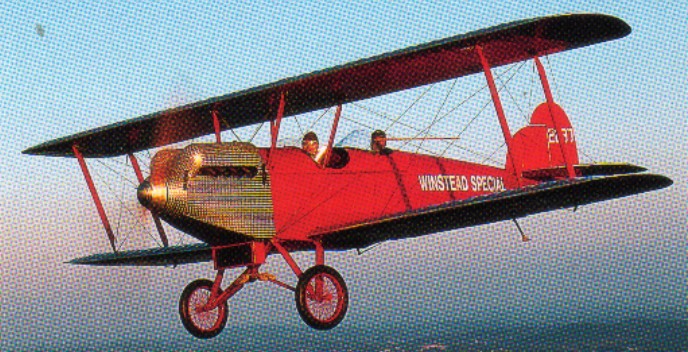
A one off, the Winstead Special was built by Carl Winstead in 1926, and flown in the Flying Aces Air Circus in the late 1920s. It was a hybrid with a Travel Air fuselage and Swallow wings used for sport racing competition as N2297, piloted by J J Davis. The fuselage is believed to be the steel tube fuselage Walter Beech and Lloyd Stearman built while working for Swallow, but their idea of steel tubing was shot down by Jake Moellendick, president of Swallow at that time. The fuselage was set aside, then sold.
Carl flew it with the Flying Aces Air Circus, Jessie Woods walked its wings. Carl also raced it and barnstormed with it. The next owners, the Marvin Mara family, used it for racing and barnstorming. It changed hands several times until the Davis Family of Ary NB purchased it in 1935 and took it apart for a rework in 1937. It was never reassembled until the remains were found c.1975 in storage and purchased by Paul Dougherty Jr in 1994.
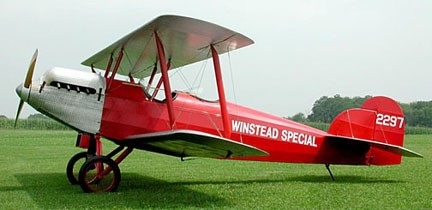
The aircraft was still flying at the Golden Age Air Museum in Bethel, PA, in 2018.
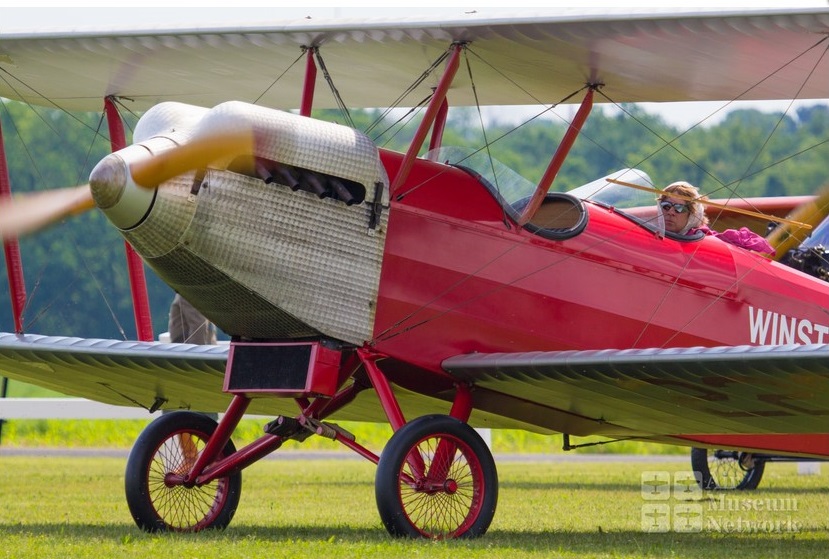
Engine: Curtiss OX-5, 90h
Wingspan 29’6″
Length: 23’0″
Empty weight: 1281 lb
Gross weight: 1800 lb
Seats: 3
Winstead Brothers Airplane Co
Carl Winstead worked at Swallow as a mechanic, then for himself for a while with his brother. Guy Winstead worked with Clyde Cessna in building the prototype Travel Air 5000. Carl also worked for Cessna, and was one of the first hired craftsman at Cessna building the A series. Carl later became Cessna’s chief test pilot; he was killed test flying the 190 series airplanes in the ’40s.
1926
(Carl & Guy) Winstead Brothers Airplane Co Wichita KS.
USA
Winslow 1904 bicycle glider
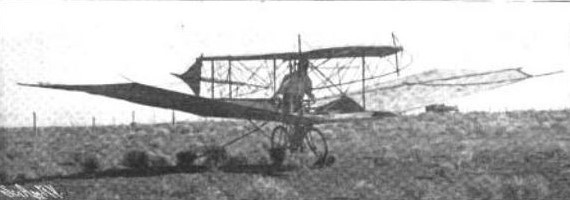
On 30 July 1904 steamship officer Stewart Winslow (1871-1961) tried to fly this self-built machine, in preparation for an effort to fly across Snake River at Lewiston, Idaho. According to reports the wing-equipped bicycle lifted off several times during a test run, before the front wheel failed because of a puncture. Winslow planned to build a wooden runway for the next try, but it never happened.
Wings Unlimited
USA
Provides plans to build the Kingfisher and Super Kingfisher two-seat amphibian; Kingfisher was originally the Anderson Kingfisher, first flown 1969, subsequently marketed by Richard Warner Aviation.
Wings of Freedom Flitplane
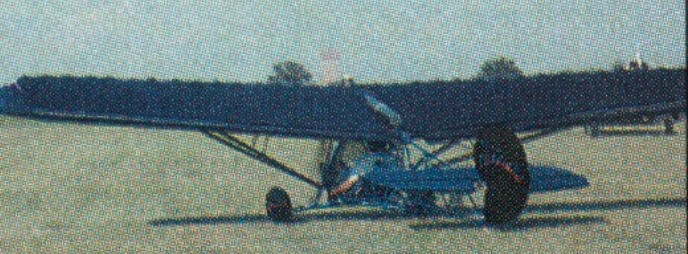
A very low cost, tube and fabric ultralight which was available as plans, kit, or ready to fly. The plans did cost US$100, and ready to fly US$10,500.
Doug Widmar / Dwidmar@comcast.net
Jan 2014
I have one and wonder how many are out there and flying. So Far I’ve just got all three wheels off the ground high speed taxi. Ran out of summer 2013. Looking forward to 2014 actually flying it.

Top speed: 63 mph
Cruise: 45 mph
Stall: 27 mph
Range: 120 sm
Rate of climb: 400 fpm
Takeoff dist: 300 ft
Landing dist: 300 ft
Service ceiling: 8000 ft
Engine: 2si (LAPS), 32 hp
HP range: 25-40
Fuel capacity: 5 USG
Empty weight: 245 lb
Gross weight: 500 lb
Height: 5 ft
Length: 15.8 ft
Wing span: 27 ft
Wing area: 145 sq.ft
Seats: 1
Landing gear: tailwheel
Wing Ship Technology Prototype

Wing Ship Technology Corporation prototype is powered by a turboprop and can carry 50 passengers. It has a catamaran-style hull and a reverse delta wing. Its cruising speed, 180kph (110mph), makes it faster than a jetfoil, its principal rival. And the production version will have a range of 1,000km.
Wingler S-2
Built in 1931, the Wingler Aeronautical S-2, N11192 c/n 14, was a single place, open cockpit biplane, powered by a 35hp Continental.
It crashed at Imlay City MI on 2 August 1931 and the registration was cancelled.
 All Aero