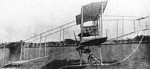
The 1910 Gibson No. 2 biplane was designed and built by J. and G.T. Gibson in the UK.
Span: 29′
Length: 30′
The 1910 Gibson No. 2 biplane was designed and built by J. and G.T. Gibson in the UK.
Span: 29′
Length: 30′
The unique Genesis six-seat twin piston-engined monoplane, featured telescopic wings and a multi-configurational undercarriage to permit operations from land, water, or snow. Construction of prototype began 1998.
USA
Established 1988 to develop the unique Genesis six-seat twin piston-engined monoplane, featuring telescopic wings and a multi-configurational undercarriage to permit operations from land, water, or snow. Construction of prototype began 1998.
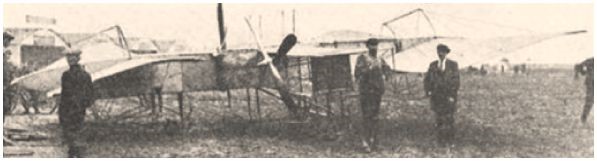
Engineer Alfred Marcel Joachimczyk in 1910, at the Deutsche Flugmaschinenbau Gesellschaft at Berlin-Rummelsberg, designed the “Maikäfer” (“Beetle”), with the construction being completed in the spring of 1911. After several trials and errors, the craft finally flew for 19 minutes, but was seriously damaged in a later flight. The Beetle was a two-seat aircraft with wings in a tandem arrangement, constructed of wood, steel tubes, and canvas. The landing gear consisted of wide wheels, a tail wheel, skids, and at the front of the hull were additional runners. The engine drove two pusher, counter-rotating propellers.
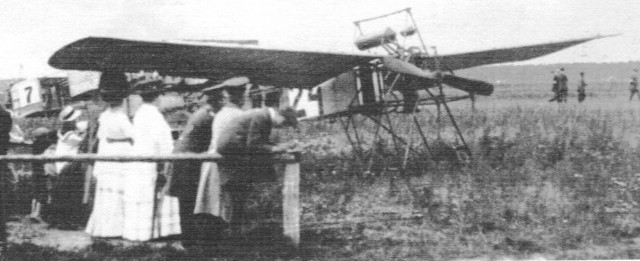
Designed by Willi Schultze-Herfort and built in Rummelsberg, near Berlin, by Deutsche Flugmaschinenbau Gesellschaft (D.F.G) in 1910 the Argus-powered monoplane as flown by Alfred Behrend at the 1. Internationale Flugwoche, 10-16 May 1910 in Johannisthal.
DFG / Deutsche Flugmaschinenbau Gesellschaft
Austria
Established in Vienna, was one of the early builders of heavier-than-air craft. Produced both the Etrich Dove and the Loehner Arrow.
USA
Successor to Vecto Instrument Corp and Vecto Aircraft Engineering Division, having acquired the assets of both companies on their owner’s death in 1965. Based at San Antonio, Texas, Geronimo carried out Vecto-designed conversions on the Piper Apache, fitting bigger engines and improving the aircraft’s internal and external appearance. Company name changed to Seguin Aviation in late 1960s.
Germany
Foundation date not known, but by 1931 had built a two-seat all-steel light aircraft, the G.II.R, powered by BMW or Salmson engine. Later version was G.II.R6 with Hirth H.M.60 engine. Completely taken over in 1934 by specially formed new company, Adlerwerke GmbH of Frankfurt.
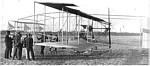
The 1909 Germe biplane was designed and built by Germe in France.
Span: 39’4″
Weight: 880 lb
Reconnaissance and training aircraft, Germany, 1914
Length: 33.465 ft / 10.2 m
Height: 10.499 ft / 3.2 m
Wingspan: 45.932 ft / 14.0 m
Wing area: 322.92 sq.ft / 30.0 sq.m
Crew: 2

