Wittman W-5 Buttercup

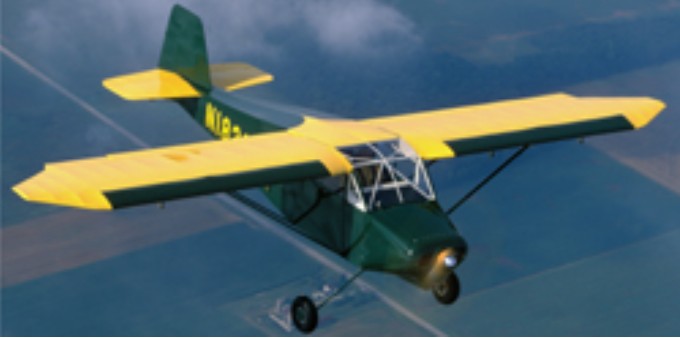
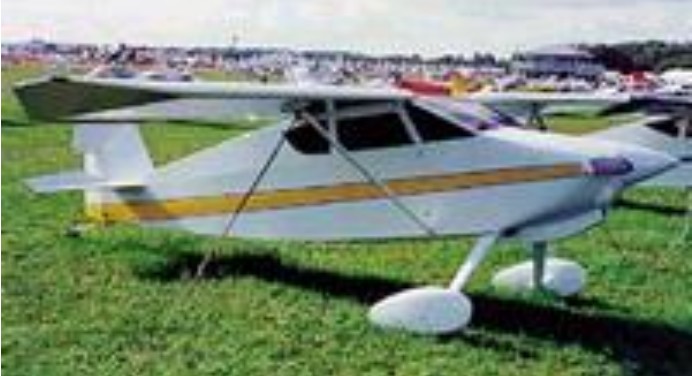
Sylvester “Steve” Wittman built two types of airplanes: Racing machines and Travel machines. The ancestors of these two blood lines were Chief Oshkosh and Buttercup. The Buttercup was built as a utility hauler, and there was only one made, in 1937, NX/N18268. Initially powered by a 50hp Lycoming O-145, then an 85hp Continental A-85, he flew it all over the western hemisphere, from Alaska to Bermuda, Florida to Oregon. The Buttercup almost made it into production (cancelled due to WWII) coming to the interest of Fairchild as a four-place project, called the ‘Big X.’ One plane was built for them by “Witt” – a 4-place, 6 cylinder, 130 HP Franklin powered prototype.

The real genius of the Buttercup design is Wittman’s claim of 38-40 mph (indicated) slow-flight speed and a near 150 mph top speed, and all on 85 hp! The high speed is vintage Wittman, the low speed is due to an ingenius flap-coupled, retracting lead edge design (seen in today’s airliners). Earl Luce of LuceAir, Inc. has ‘revived’ the Buttercup, featured in the April 2003 issue of Sport Aviation. Kits and fabricated assemblies for the Buttercup are available from Aircraft Spruce.

Engine: Continental A-85, 85hp
Wingspan: 28’6″
Length: 21’0″
Useful load: 550 lb
Max speed: 147 mph
Cruise: 135 mph
Stall: 40 mph
Range: 540 sm
Seats: 2

Wittman W.8 Tailwind / W-9L Tailwind / W.10 Tailwind

W.8 Tailwind

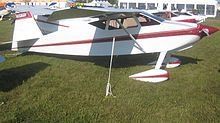
The Tailwind (prototype) W-8C, a two-seat high wing monoplane, built and first flew in 1953. So suc-cessful was this aircraft that plans were made available to amateur builders.

Wittman Tailwind Article

The Tailwind is a side by side, two seat, high wing, strut-braced, cabin monoplane. The wing consists of two separate panels, each incorporating wooden spars and ribs, internal wire bracing and plywood covering. An NACA 4309 aerofoil section is used. The ailerons and flaps are of steel tube construction, and are fabric covered. The fuselage is a chrome molybdenum steel tube structure, and is fabric covered. A cabin door is incor¬porated in each side. The empennage, like the fuselage, is built up of welded steel tube, and is fabric covered. The main undercarriage incorporates round spring steel main legs, and 500 x 5” wheels. The wheel track is 5’ 5”. A 20 Imp. gallon fuel tank is installed in the fuselage behind the firewall.

The W-8L Tailwind, powered by a Lycoming engine, was built in 1954. Revisions have been made to allow the use of the 150-hp Lycoming, 145-hp Continental and the Olds/Buick 215-cu.in. V-8s. The Oldsmobile Tailwind was built in 1974.

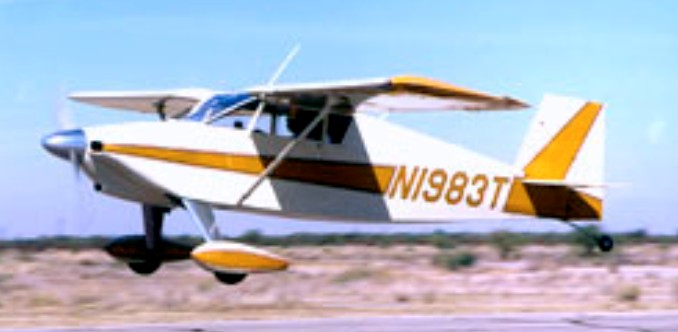
Wittman W-10 Tailwind built by Jim Clement
Wittman W-9 N4JB

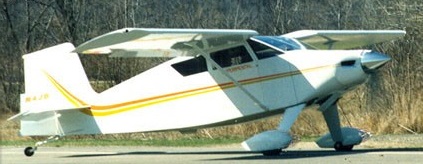
The W-9L Tailwind, with a tricycle landing gear, was built in 1958. Based on the W-8, the prototype N374 was powered by a 160hp Lycoming O-320-B1A.

In 2009 available as kit or plans from Aircraft Spruce & Specialty Co. Plan Price $180.00.
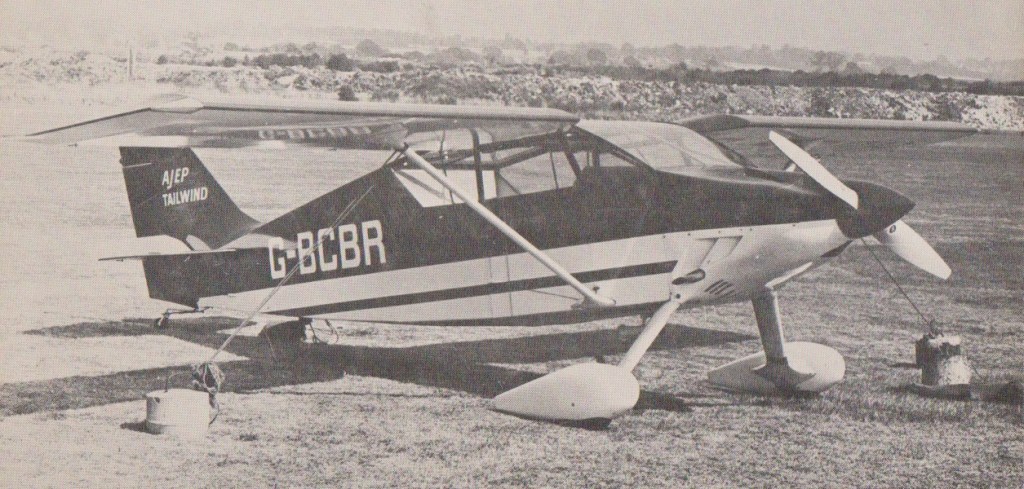
AJEP Developments in the UK offered kits to construct modified version of Whittman Tailwind homebuilt aircraft.

AJEP Tailwind G-BCBR September 1975 at Luton

Aircraft Spruce acquired the rights to the Tailwind in January 1996 and is became the exclusive distributor for plans and materials kits, the W-10 replacing the W-8.

Gallery

Engine: Continental, 100 hp
Gross Wt. 1300 lb
Empty Wt. 700 lb
Fuel capacity 25 USG
Wingspan 22’6’
Length 19’3”
Span: 22’ 6”
Length: 19’ 3”
Wing Area: 90 sq. ft
Empty Weight: 318 kg / 700 lb
Loaded Weight: 590 kg / 1300 lb
Wing Loading: 14.5 lb/sq. ft
VNE: 161 kt / 185 mph / 298 kmh
Max. Speed: 130 kt / 150 mph / 241 kmh
Cruise Speed: 130 mph
Stall Speed: 60 mph
Climb: 900 fpm / 5 m/s
Range: 500 miles
Takeoff run 800 ft
Landing roll 600 ft
Seats: 2

Engine: Lycoming O 290 D2, 135 hp
Wing span: 21 ft. 11 in
Airfoil: NACA 4309
Length: 19 ft 3 in
Height: 5 ft 3 in
Wing area: 82 sq.ft
Wing loading: 17 lb/sq.ft
Seats: 2
Empty weight: 800 lbs
Useful load: 600 lbs
Gross weight: 1,400 lbs
Power loading: 11 lb/hp
Fuel capacity: 26 USG
Baggage capacity: 60 lbs
Rate of climb: 1,200 fpm
VNE: 161 kt / 185 mph / 298 kmh
Max speed: 170 mph
Cruise speed (75% power): 160 mph
Range (at max cruise, no res): 500 sm
Stall speed (flaps down): 65 mph

Engine: Lycoming O-235, 115 hp
Wingspan: 22 ft 6 in
Length: 19 ft 3 in
Height: 5 ft 6 in
Wing area: 90 sq.ft
MAUW: 1400 lb
Empty weight: 318 kg / 700 lb
Fuel capacity; 25 USG
Baggage capacity: 65 lb
VNE: 161 kt / 185 mph / 298 kmh
Max speed: 160 mph
Cruise: 130 kt / 150 mph / 241 kmh
Stall: 70 mph
ROC SL: 1000 fpm
Take off run: 800 ft / 244 m
Landing roll: 600 ft
Ceiling: 17,000 ft
Range: 600 sm

W-9L Tailwind
Engine: Lycoming O-320-B1A, 160hp
Wingspan: 20’0″
Length: 19’3″
Useful load: 650 lb
Max speed: 198 mph
Cruise speed: 180 mph
Stall: 55 mph
Range: 600-700 sm
Undercarriage: tricycle
Seats: 2

W.10 Tailwind
Engine: Cont. 85, 90, 100 or 145 HP Lyc. 108-160 HP
Length: 19′ 6″
Wing Span: 24′
Wing Area: 90 Sq. Ft.
Cruising Speed (Vc): 150 to 190 MPH

W10 Tailwind
Top speed: 200 mph
Cruise: 180 mph
Range: 600 sm
Rate of climb: 1200 fpm
Takeoff dist: 750 ft
Landing dist: 650 ft
Service ceiling: 20,000 ft
Engine: continental O-300, 145 hp
Fuel capacity: 35 USG
Empty weight: 876 lb
Gross weight: 1425 lb
Height: 5.5 ft
Length: 19.6 ft
Wing span: 24 ft
Wing area: 92 sq.ft
Seats: 2
Landing gear: tailwheel

W-10 Tailwind
Engine: 150hp Lycoming O-320 or 145hp Continental O-300 or 130-135hp Oldsmobile F85 or Buick V-8
Max speed: 210 mph
Cruise speed: 180 mph
Stall: 40-43 mph
Range: 466 sm
Seats: 2
Undercarriage: Tricycle

Wittman Witt’s Vee

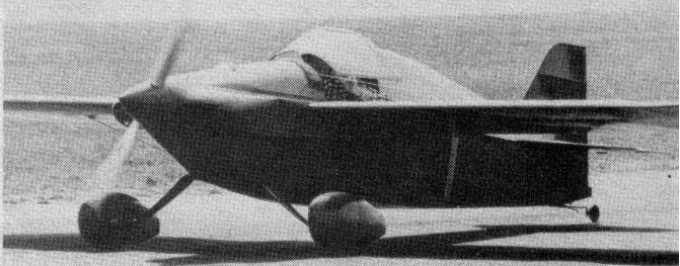
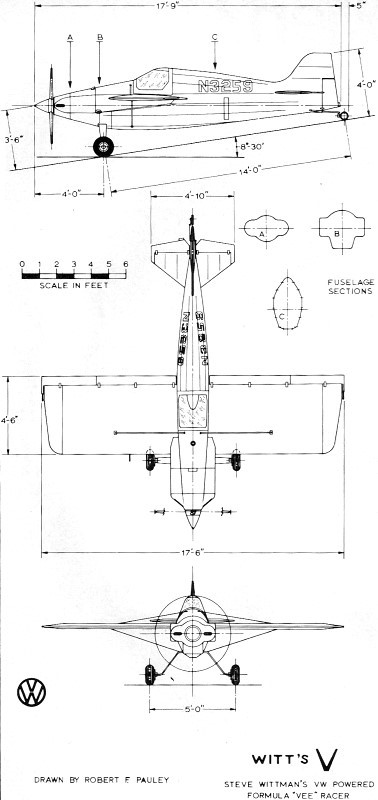
This was a single-seat mid-wing monoplane powered by a 96 cu.in. converted Volkswagen engine, for Formula V air racing. N3259 was built in 1970 and raced 1971-1989. Wittman has had it up to 170-mph.

Steve sold blueprints for this design and about 10 have been built. Aircraft Spruce & Specialty was planning to put the Witt’s V blueprints back on the market.

Engine: VW 1600cc, 60-65hp
Wingspan 16’8”
Length 18’2”
Gross Wt. 700 lb
Empty Wt 430 lb
Fuel capacity 10 USG
Top speed 170 mph
Cruise 150 mph
Stall 48 mph
Climb rate 1000 fpm
Takeoff run 800 ft
Range 400 sm
Seats: 1

Wittman

Sylvester Joseph “Steve” Wittman was born April 5, 1904, at Byron, Wisconsin, and attended Fond du Lac High School.

Wittman gained his pilot’s certificate in 1924 (signed by Orville Wright) in a Standard J-1 and built his first aircraft, the Harley powered “Hardly Abelson” later that same year.

From 1925 to 1927, he had his own flying service, giving joyrides and during this time also became a demonstration and test pilot for the The Pheasant Aircraft Company and Dayton Aircraft Company, flying the Pheasant H-10 in multiple events. He also began his air-racing career, designing, building, and piloting his own aircraft, including Chief Oshkosh in 1931 and Bonzo in 1934. Wittman’s first race in his first aircraft design was in “Bonzo” in the 1935 Thompson Trophy race, where he placed second.

In 1937, piloting his second homebuilt, “Chief Oshkosh”, Wittman placed second in the Greve Trophy Race. Wittman flew “Bonzo” in the Thompson Trophy race, and he led for the first 18 laps of the 20 lap race, at an average speed of over 275 mph (442.57 km/h). Suddenly his engine began to run rough, and Wittman was forced to throttle back to remain in the race, finishing in 5th place. In 1938, he was awarded the Louis Blériot medal by the Fédération Aéronautique Internationale (FAI).

Possibly the Tailwind W-8 had its real beginnings in 1937 as the “Buttercup,” a ship that featured many innovations pioneered by Wittman on his racing aircraft, such as spring steel gear and welded steel frame. A high wing design built to outperform the Cubs, Chiefs, T-Crafts, and Luscombes of the day. The Tailwind bore a striking resemblance to the ’37 Buttercup except for Buttercup’s obvious outward differing features, like the two lift struts and wire braced tail feathers. But the W-5 and W-8 are sister ships, or at the very least, cousins. (At last report, the W-5 is still airworthy.) Another cousin is the Wittman Big-X, the four-place, Franklin-powered machine based on the Buttercup design. The Big-X flew for the first time in 1945 and was another Wittman winner. The Big-X and the Tailwind have all the same things going for them: speed, efficiency and ease of handling. It has recently been restored and is going strong.

Steve’s spring steel landing gear used on the pre-World War II “Bonzo” racer was the last word in simplicity and low drag, ail the while remaining strong and flexible. The Wittman landing gear appeared on all postwar Cessnas another plus for Yankee engineering.

Wittman’s “Buster” racer of the late ’40s was typical of the small postwar racers that were hitting 240 mph with little 85-hp engines. Steve reasoned that you could scale up a racer by widening the cockpit, move the wing topside and only lose about 75 mph in the process. The result was a simple, flat-sided cabin ship whose fuselage resembled an airfoil; it had small, wellbalanced control surfaces, and the only thing sticking out in the wind was the paint job. Steve liked his two-placer that could hit 150 mph cruise so much that he brought out the Tailwind in the early ’50s – not as a projected prototype for-selling plans, but as a peron’al airplane to carry two people comfortably with a Continental C-85 up front. It worked.

During World War II, his Wittman Flying Service was part of the Civilian Pilot Training Program, training pilots for the Army Air Corps.

After the war, Wittman finished eighth in the 1946 Thompson Trophy race with a clipped wing Bell P-63 Kingcobra fighter. In 1947, Bill Brennand won the inaugural Goodyear class race at the National Air Races piloting Wittman’s ‘Buster’. ‘Buster’ was a rebuild of the pre-war “Chief Oshkosh”, went on to win many more Goodyear/Continental Trophy races, and was retired after the 1954 Danville, New York air races. It is now on display at the National Air and Space Museum in Washington, D.C.

Wittman built an entirely new ‘Bonzo’ for the 1948 National Air Races, and flying it himself, finished third. Wittman raced ‘Bonzo’ through the 1950s and 1960s, including the first few Reno National Championship air races, before retiring from Formula One competition in 1973. ‘Bonzo’ is now displayed next to Wittman’s prewar ‘Bonzo’ in the EAA AirVenture Museum along with several other Wittman airplanes.

Wittman was manager of the Oshkosh, Wisconsin airport from 1931 to 1969 – which is now named after him (Wittman Regional Airport). Wittman became involved in the newly formed Experimental Aircraft Association in 1953 and was instrumental in bringing the EAA’s annual fly-in to the Oshkosh Airport in 1970.

He designed and built the Wittman V-Witt to compete in the new Formula V Air Racing class. He competed in races with that aircraft until 1979. Winners of the Formula V National Championship are presented with the Steve Wittman Trophy.

Wittman remained active in aviation his entire life. For Wittman’s 90th birthday a celebration, Wittman demonstrated aerobatic maneuvers in his V-Witt and Oldsmobile powered Tailwind. He also used “Buttercup” to give Young Eagles flights. Letters of appreciation were given by President Bill Clinton and Wisconsin Governor Tommy Thompson.

Steve married Dorthy Rady in 1941. He taught her to fly and she accompanied him to most of his races. Dorthy died in 1991 and Wittman married Paula Muir in 1992. On April 27, 1995, Wittman and Muir took off for a routine cross-country flight from their winter home in Ocala, Florida to their summer home in Oshkosh, Wisconsin. The Wittman “O&O” N41SW (41 for 1941, year of his first marriage, plus SW, his initials) crashed five miles south of Stevenson Alabama, killing both Steve and Paula. The cause was improper installation of the wing fabric, causing it to debond, resulting in aileron/wing flutter.

In 2014, Wittman was inducted into the National Aviation Hall of Fame.

Wittman Designed Aircraft:
Wittman Hardley Ableson
Wittman Chief Oshkosh
Wittman D-12 Bonzo
Wittman DFA Little Bonzo
Wittman Buttercup
Wittman Big X
Wittman Tailwind
Wittman V-Witt
Wittman O & O Special
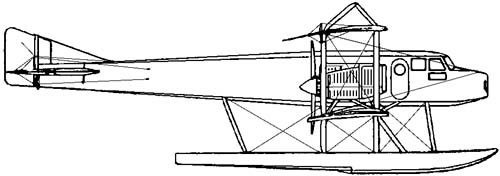
Wittemann Sundstedt-Hannevig / Sunrise

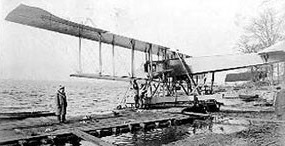
One of the largest seaplanes then in existence, the plane was built by Witteman-Lewis Aircraft Corp in 1923 for an intended transatlantic flight by the two Swedish aeronauts.

Sundstedt-designed, linen-covered balsawood floats of 32′ length, all else was of ash and spruce construction; 750-gallon fuel tanks.

It crashed in a test flight in Feb 1919 and was considered beyond economical repair.

Engines: two 220hp Hall-Scott L-6
Wingspan: (upper) 100’0″ (lower) 71’6″
Length: 50’6″
Speed: 80
Seats: 4

Witteman-Lewis Aircraft Corp

Paul & Walter Wittemann – 1909

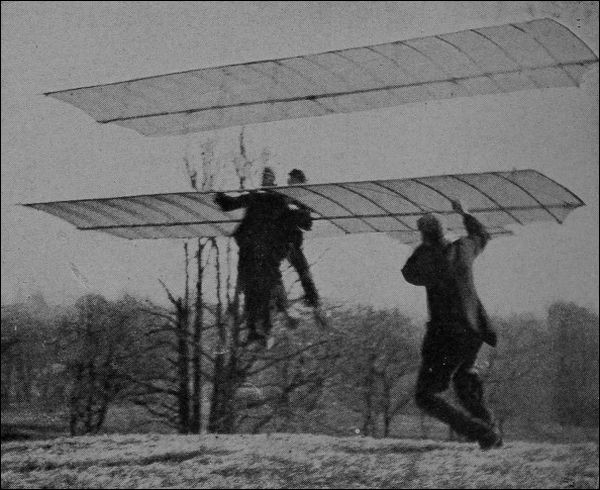
In 1905, Charles, Paul and Walter (1896-1980) Wittemann opened the first airplane manufacturing plant in the United States on their family estate in Staten Islad. After experimenting with gliders, they designed and built their first airplane in 1906 and continued to manufacture a number of experimental planes and models until their ever-increasing production forced their move to a more spacious building on the north edge of the Newark meadows.

(Charles and Adolph) Wittemann Aeronautical Engineers
Ocean Terrace & Little Clove Rd
Staten Island NY.
USA

In 1907 the firm built a single-place, open cockpit biplane, powered by a 40hp Wright pusher. This featured a swivelling tailwheel, which was quite an advance in technology back then.

1907 also saw a single-place open cockpit triplane, powered by a 40hp Wright pusher.

Between 1908 and 1914 the firm built many planes, including Curtiss-type, single-place, open-cockpit biplanes, for notables of the time: Bud Mars, Ruth Law, Capt Thomas Baldwin, Lincoln Beachey, Cecil Peoli, Harold Blakesley, and others.

During 1911 the firm was involved in the construction of the Baldwin Red Devil III.

1916: Newark NJ. Aeronautical construction engineers of Newark, New Jersey. Rebuilt Airco D.H.4s to DH-4B standard for U.S. Army.

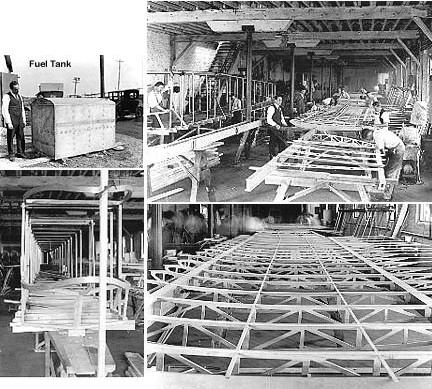
In 1917 they built a new plant at Teterboro Airport where the Wittemanns received the consent of the U.S. Army to convert unused DH-4 aircraft for the Post Office to be used for the first air mail postal service. The planes were modified to carry 400 lbs. of mail and in 1919 further improvements were made to accommodate 1000 lb. payloads. Approximately 75 of these single engine aircraft were produced at Teterboro.

c.1917: Wittemann-Lewis Aircraft Co Inc.

Had produced own-design mail carrier in 1920, when firm moved to Teterboro in 1919 (factory was eventually occupied by Fokker Corp). Contractors to US Post Office and USN for several aircraft.

During 1922-1923 built the Barling six-engined triplane bomber to Walter Barling’s design.

Built twin-engined Sundstedt-Hannevig seaplane 1923, for transatlantic attempt by Capt. Sundstedt.

During 1923, 25 de Havilland DH-4s were modified for mail carrying, powered by a 400hp Liberty 12. The last of the company’s efforts before filing bankruptcy.

In 1923 ended production to concentrate on engineering research. Of interest is that no Wittemann aircraft ever suffered a fatal or serious accident.

After bankruptcy in 1924, the firm property was acquired by Atlantic (Fokker).

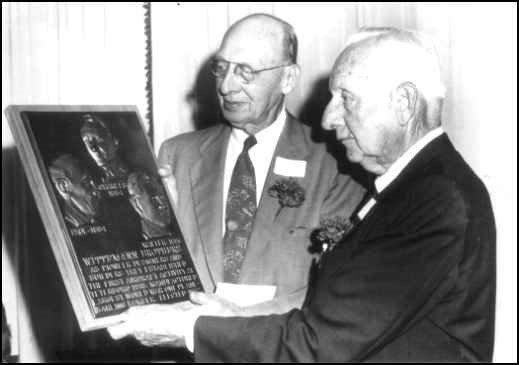
Paul & Walter Wittemann were inducted in the Aviation Hall of Fame & Museum of New Jersey.

Paul & Walter Wittemann

Wittaker MW-2B Special / Buzzabout

Designed by Mike Wittaker in 1974, the MW-2B Special, nick-named Buzzabout, was a single-seat all metal low wing monoplane with a twin boom tail and tricycle undercarriage.

To be powered by a VW engine driving a pusher propeller fitted into a ducted shroud, designed by Dowty-Rotol.

Backed by Charles Robertson (Developments) Ltd, the prototype, G-BDDX. c/n 001, PFA.41-10106, was being built at Bodmin, UK, in August 1975 with a first flight expected in early 1976.