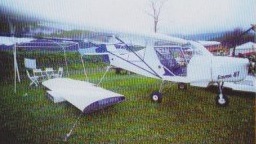
The Willy 100 is a side by side high wing design with welded steel spaceframe fuselage, spars in dural and wooden ribs.
The Willy 100 is a side by side high wing design with welded steel spaceframe fuselage, spars in dural and wooden ribs.
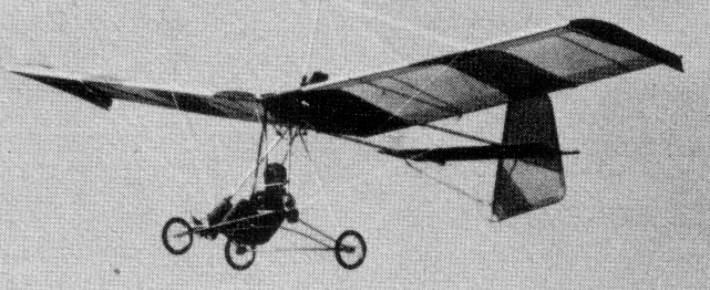
The Wizard W-1 was a single seat single engined high wing mono¬plane with weight shift control. Wing has unswept leading and trailing edges, and constant chord; cruciform tail. Control inputs through weight shift for pitch/yaw/roll. Wing braced from above by kingpost and cables, from below by cables; wing profile; largely single surface. Undercarriage has three wheels in tricycle formation with additional tailskid; torsion bar suspension on all wheels. No ground steering (optional: Steerable nosewheel independent from yaw control). Optional brakes. Aluminium tube framework, without pod. Engine mounted below wing (above wing, optional) driving pusher propeller.
Ultralight Soaring Wizard Article
The basic Wizard W-1 uses purely weightshift control without control surfaces and has a very similar configuration to the early Quicksilvers, though it differs greatly in terms of structure, not least because it was designed from the outset to be an ultralight. Adjustable torsion bar suspension is standard on the W 1; options include floats, steerable nosewheel (the standard nosewheel castors), brakes, and an engine mounting above the wing for certain power packs. It is sold as a kit requiring 45 min assembly and in March 1983 cost $1800 in standard form without engine. The June 1983 price for a complete aircraft with Yamaha engine is $3495. Power packs may be purchased separately at the following prices (all March 1983): Yamaha KT100S $1500, Rotax 277 $1800, Rotax 377 (34 hp) $2050, Rotax 503 (46 hp) $2225, Kawasaki TA440A $2225. Units delivered by June 1981 650.
The Wizard J 2 is identical to the W 1 except that it has control surfaces in two axes to assist the pilot’s weight shift. Linked to the pilot’s swing scat are spoilers for roll control and a trim tab (it is really too small to be called an elevator) for pitch. There is no rudder. Price (March 1983) without engine is $1900. The June 1983 price for a J 2 with Rotax 277 engine is $3895.
The Wizard J 3 was a single seat single engined high wing mono¬plane with conventional three axis control. Wing has unswept leading and trailing edges, and constant chord; cruciform tail. Pitch control by fully flying tail; yaw control by fully flying rudder with additional fin; roll control by spoilerons (Wizard J 3), ailerons (Wizard J 3 Magnum); control inputs through stick for pitch/roll and pedals for yaw. Wing braced from above by kingpost and cables, from below by cables; wing profile; largely single surface. Undercarriage has three wheels in tricycle formation; with additional tailskid; torsion bar suspension on all wheels. No ground steering (optional: push right go right nosewheel steering connected to yaw control). Brake on nosewheel (optional brakes on main wheels). Aluminium tube framework, with optional pod. Engine mounted below wing (above wing, optional) driving pusher propeller.
Though very similar in concept to the W 1 and J 2, the Wizard J 3 has a number of changes compared to these models. Being a conventional three axis model, the pilot’s seat is fixed and a normal centre stick and rudder pedals are fitted. Also, the tail is redesigned making the J 3 easily recognisable by the inverted L shape of its vertical tail surfaces.
The J 3 comes as standard with a nosewheel brake, main wheel brakes being optional. Also optional is the J 3 Magnum specification, which involves replacing the spoilerons with ailerons. Other options are as for the W 1.
Price of the J 3 in kit form requiring 25 h assembly is $2500 without engine (March 1983). The June 1983 price for the J 3 with Kawasaki engine is $4720.
The Wizard Sky Tractor is a crop spraying version of the Wizard J 3. Revealed at Sun ‘n’ Fun in March 1983, the Sky-Tractor is still an ultralight thanks to an empty weight of 222 lb (101 kg) without its special equipment, which means that it can still be flown without a pilot’s licence in the USA. It can be fitted with crop spraying equipment using two atomisers under each wing, but both its specification and its price depend upon the requirements of the client. It is fitted in standard form with the Rotax 503 engine of 46 hp.
The Wizard T 38 was a side by side two seat single engined high wing monoplane with conventional three axis control. Wing has unswept leading and trailing edges, and constant chord; cruciform tail. Pitch control by elevator on tail; yaw control by fully flying rudder with additional fin; roll control by one third span spoilers; control inputs through stick for pitch/roll and pedals for yaw. Wing braced from above by kingpost and cables, from below by cables; wing profile NC; largely single surface. Undercarriage has three wheels in tricycle formation with additional tailskid; torsion bar suspension on all wheels. Push right go right nosewheel steering connected to yaw control. Aluminium tube framework, without pod. Engine mounted below wing driving pusher propeller.
The prototype of the two seat Wizard made its first flights at the end of 1982 and since January ’83 has been sold under the name of T 38. Being a two seater, this aircraft is classed as an experimental aircraft in the USA. The T 38 is sold as a kit requiring 1 h 30 min for assembly and is available in two versions with two separate seats and dual controls for $4800 or with single controls and a bench seat for $4600. The price does not include the engine unit, which for this model is the Rotax 503.
Wizard J-2
Engine: Rotax 277, 28hp at 6000rpm
Propeller diameter and pitch 58 x 30 inch, 1.47 x 0.76 m
Toothed belt reduction, ratio 2.4/1
Max static thrust 185 lb, 84 kg
Power per unit area 0.17hp/sq.ft, 1.9 hp/sq.m
Fuel capacity 4.3 US gal, 3.5 Imp gal, 16.1 litre
Length overall 17.0 ft, 5.18 m
Height overall 10.4 ft, 3.17 m
Wing span 32.3 ft, 9.86 m
Constant chord 5.0ft, 1.52 m
Dihedral 12 deg
Sweepback 0 deg
Total wing area 162 sq.ft, 15.0 sq.m
Wing aspect ratio 6.5/1
Nosewheel diameter overall 16 inch, 41 cm
Main wheels diameter overall 16 inch, 41 cm
Empty weight 175 lb, 79 kg
Max take off weight 450 lb, 204kg
Payload 273 lb, 124kg
Max wing loading 2.79 lb/sq.ft, 13.6 kg/sq.m
Max power loading 30.0 lb/hp, 13.6kg/hp
Max level speed 40mph, 64kph
Never exceed speed 65mph, 105kph
Cruising speed 35mph, 56kph
Stalling speed 19 mph, 31 kph
Max climb rate at sea level 500 ft/min, 2.5 m/s
Wizard J-3
Engine: Kawasaki TA440A, 38.5hp at 6000rpm
Propeller diameter and pitch 58×30 inch, 1.47×0.76m
Toothed belt reduction with centrifugal clutch, ratio 2.4/1
Max static thrust 245 lb, 111kg
Power per unit area 0.24 hp/sq.ft, 2.56 hp/sq.m
Fuel capacity 4.3 US gal, 3.5 Imp gal, 16.1 litre
Length overall 17.0 ft, 5.18 m
Height overall 10.2ft, 3.09m
Wing span 32.3ft, 9.86m
Constant chord 5.0ft, 1.52m
Dihedral 12 deg
Sweepback 0 deg
Tailplane span 9.0ft, 2.74m
Total wing area 162 sq.ft, 15.0 sq.m
Total spoiler¬on area 7.6 sq.ft, 0.70 sq.m
Rudder area 12.0sq.ft, 1.11 sq.m
Tailplane area 18.0 sq.ft, 1.67 sq.m
Total elevator area 8.0 sq.ft, 0.74sq.m
Wing aspect ratio 6.5/1
Wheel track 6.6 ft, 2.00 m
Wheelbase 6.0 ft, 1.83 m
Nosewheel diameter overall 8 inch, 20 cm
Main wheels diameter overall 8 inch, 20 cm
Empty weight 250 lb, 113kg
Max take off weight 550 lb, 249kg
Payload 300 lb, 136kg
Max wing loading 3.39 lb/sq.ft, 16.6 kg/sq.m
Max power loading 14.3 lb/hp, 6.5kg/hp
Max level speed 50 mph, 80 kph
Never exceed speed 65 mph, 105 kph
Max cruising speed 40 mph, 64 kph
Economic cruising speed 35mph, 56kph
Stalling speed 20 mph, 32 kph
Max climb rate at sea level 900 ft/min, 4.6 m/s
Min sink rate 500 ft/min at 30 mph, 2.5 m/s at 48 kph
Best glide ratio with power off 9/1 at 30 mph, 48 kph
Take off distance 50 ft, 15 m
Landing distance 50 ft, 15 m
Service ceiling 12,500 ft, 3800 m
Range at average cruising speed 100 mile, 161 km
Wizard J-3B
Engine: Kawasaki or Rotax, 28-47 hp
Wingspan 32’
Wing area 161 sq.ft
Empty weight 252 lbs
MTOW: 550 lbs
Cruise: 35-40 mph
Stall: 21 mph
Vmax: 45-50 mph
ROC: 600-800 fpm
TO run: 50-100 ft
Ldg roll: 50-100 ft
Wizard T-38
Powerplant: Kawasaki 40 hp
Wingspan 38’4”
Wing area 191.5 sq.ft
Length 17 ft
Empty weight 330 lbs
Payload 375 lbs
Gross weight wet 750 lbs
Wing loading 2.7 lbs/sq.ft
L/D: 8/1
Cruise speed 35mph
Stall speed 26mph
Vmax 46mph
Vne 60mph
Climb rate 800 fpm
Fuel capacity 3.2 USG
Wizard T-38
Engine: Rotax 503
Max power 46hp at 6500rpm
Propeller diameter and pitch 60 x 30 inch, 1.52 x 0.76 m
Toothed belt reduction with centrifugal clutch, ratio 2.4/1
Max static thrust 325 lb, 147 kg
Power per unit area 0.24 hp/sq.ft, 2.6 hp/sq.m
Fuel capacity 4.3 US gal, 3.5 Imp gal, 16.1 litre
Length overall 17.0 ft, 5.18 m
Height overall 10.3ft, 3.14m
Wing span 38.0ft, 11.58m
Constant chord 5.0ft, 1.52m
Dihedral 12 deg
Sweepback 0 deg
Tailplane span 9.0ft, 2.74m
Total wing area 190 sq.ft, 17.7 sq.m
Total spoiler¬on area 7.6 sq.ft, 0.70 sq.m
Rudder area 12.0sq.ft, 1.11 sq.m
Tailplane area 18.0 sq.ft, 1.67 sq.m
Total elevator area 8.0 sq.ft, 0.74sq.m
Wing aspect ratio 7.6/1
Wheel track 6.6 ft, 2.00 m
Wheelbase 6.0 ft, 1.83 m
Nosewheel diameter overall 10 inch, 25 cm
Main wheels diameter overall 10 inch, 25 cm
Empty weight 330 lb, 150kg
Max take off weight 750 lb, 340kg
Payload 420 lb, 190kg
Max wing loading 3.94 lb/sq.ft, 19.2 kg/sq.m
Max power loading 16.3 lb/hp, 7.4kg/hp
Max level speed 45 mph, 72 kph
Never exceed speed 65 mph, 105 kph
Max cruising speed 40 mph, 64 kph
Economic cruising speed 35mph, 56kph
Stalling speed 26 mph, 42 kph
Max climb rate at sea level 600 ft/min, 3.1 m/s
Min sink rate 600 ft/min at 35 mph, 3.1 m/s at 56 kph
Take off distance 150 ft, 45 m
Landing distance 75 ft, 23 m
Service ceiling 10,000 ft, 3050 m
Range at average cruising speed 50 mile, 80 km
Wizard T-38B
Engine: Rotax, 47 hp
Wingspan 38’
Wing area 191 sq.ft
Empty weight 347 lbs
MTOW: 800 lbs
Cruise: 35-40 mph
Stall: 26 mph
Vmax: 50 mph
ROC: 600 fpm
TO run: 125 ft
Ldg roll: 50-125 ft
Wizard W-1
Engine: Yamaha KT100S, 15hp at 10,000rpm
Propeller diameter and pitch 48×20 inch, 1.22 x 0.51 m
Belt reduction, ratio 3.0/1
Power per unit area 0.09 hp/sq.ft, 1.0 hp/sq.m
Fuel capacity 3.2 US gal, 2.7 Imp gal, 12.1 litre
Length overall 17.0 ft, 5.18 m
Height overall 10.4 ft, 3.17 m
Wing span 32.3 ft, 9.86 m
Constant chord 5.0ft, 1.52 m
Dihedral 12 deg
Sweepback 0 deg
Total wing area 162 sq.ft, 15.0 sq.m
Wing aspect ratio 6.5/1
Nosewheel diameter overall 16 inch, 41 cm
Main wheels diameter overall 16 inch, 41 cm
Empty weight 167 lb, 76 kg
Max take off weight 450 lb, 204kg
Payload 283 lb, 128kg
Max wing loading 2.79 lb/sq.ft, 13.6 kg/sq.m
Max power loading 30.0 lb/hp, 13.6kg/hp
Max level speed 42mph, 68kph
Never exceed speed 65mph, 105 kph
Max cruising speed 35 mph, 56 kph
Stalling speed 17 mph, 27 kph
Max climb rate at sea level 300 ft/min, 1.5 m/s
Best glide ratio with power off 9/1
Take off distance 100ft, 30 m
Landing distance 50 ft, 15 m
Service ceiling 12,500 ft, 3800 m
Wizard Sky-Tractor
Engine: Rotax 503
Max power 46hp at 6500rpm
Propeller diameter and pitch 60 x 30 inch, 1.52 x 0.76 m
Toothed belt reduction with centrifugal clutch, ratio 2.4/1
Max static thrust 325 lb, 147 kg
Power per unit area 0.28 hp/sq.ft, 11 hp/sq.m
Fuel capacity 4.3 US gal, 3.5 Imp gal, 16.1 litre
Length overall 17.0 ft, 5.18 m
Height overall 10.3ft, 3.14m
Wing span 32.3ft, 9.86m
Constant chord 5.0ft, 1.52m
Dihedral 12 deg
Sweepback 0 deg
Tailplane span 9.0ft, 2.74m
Total wing area 162 sq.ft, 15.0 sq.m
Total spoiler¬on area 7.6 sq.ft, 0.70 sq.m
Rudder area 12.0sq.ft, 1.11 sq.m
Tailplane area 18.0 sq.ft, 1.67 sq.m
Total elevator area 8.0 sq.ft, 0.74sq.m
Wing aspect ratio 6.5/1
Wheel track 6.6 ft, 2.00 m
Wheelbase 6.0 ft, 1.83 m
Nosewheel diameter overall 10 inch, 25 cm
Main wheels diameter overall 12 inch, 30 cm
Empty weight 300 lb, 136kg
Max take off weight 600 lb, 272 kg
Payload 300 lb, 136 kg
Max wing loading 3.72 lb/sq.ft, 18.1 kg/sq.m
Max power loading 13.0 lb/hp, 5.9kg/hp
This clipped wing, single-engine monoplane has kingpost and cable braced wings and a cruciform tail. Conventional three-axis controls have stick-activated ailerons and elevator, and rudder pedals. POWERPLANT: Twin-cylinder, liquid-cooled Kawasaki 440 with 2.4 reduction is mounted in the center below the wing. Drive shaft runs pusher prop of 50-inch hardwood. LANDING GEAR: Tricycle gear has 16-inch main wheels, wheel pants, a steerable nosewheel and disc brakes. Gear has adjustable torsion bar suspension.
Wingspan, 30 ft
Wing area, 170 sq.ft
Aspect ratio, 8.8
Empty weight, 180 lbs
Wing loading, 2.03 lbs/sq.ft
Fuel capacity, 5 USG
Engine displacement, 215cc
Rated HP, 20 hp
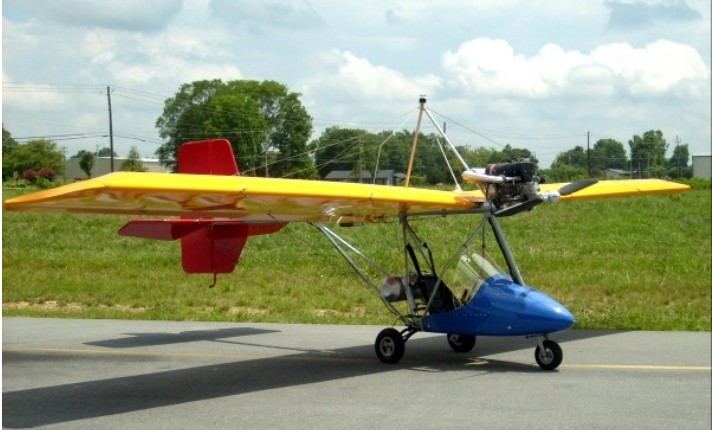
Designed by John Dempsey, the Phantom is a single seat single engined high wing monoplane with conventional three axis control. Wing has unswept leading and trailing edges, and constant chord; cruciform tail. Pitch control by elevator on tail; yaw control by fin mounted rudder; roll control by full span ailerons; control inputs through stick for pitch/roll and pedals for yaw. Wing braced from above by kingpost and cables, from below by cables; wing profile; double surface. Undercarriage has three wheels in tricycle formation with tailskid; bungee suspension on all wheels. Push right go right nosewheel steering connected to yaw control. Optional brakes on main wheels. Aluminium tube framework, with pod. Engine mounted above wing driving tractor propeller.
Conceived under the direction of John Dempsey, the Phantom copied in 1982 the exploits of the Mirage in the previous year at Sun ‘n’ Fun where it carried off the prize for the most outstanding aircraft.

The Phantom is capable of a rate of roll, going from 45 degrees bank to 45 degrees bank the other way in 1.5 s. The wing has been tested as far as + 9.9 and 6.6 g ultimate with the aircraft at a gross of 420 lb (190kg) which would give a flight envelope of +6.6 and 4.4g. These tests were done with 3/32 inch (2.4 mm) cables which on the production aircraft have been increased to 1/8 inch (3.2 mm).
Ultralight Flight Phantom Article
The aircraft is delivered as a kit requiring 35 h for finishing at a price of $5995 in 1983. Options include principally, floats, wheel fairings, an instrument panel and, as with the Mirage MkII, the Cuyuna 430RL engine, since the Phantom is fitted with the Kawasaki TA440A as standard in the United States.
For Europe, the Skyriders company in Britain fits a Robin engine and a larger fuel tank and, since the aircraft thus modified has different performance characteristics etc.
Later marketed as the Phantom Sport Airplane Corp Phantom X1 and X2. The X2 being a two seat adaptation of the X1.
Phantom
Engine: Kawasaki TA440A, 38.5hp at 6000rpm
Propeller diameter and pitch 58×27 inch, 1.47×0.69m
V belt reduction, ratio 2.4/1
Max static thrust 210 lb, 95 kg
Power per unit area 0.27 hp/sq.ft, 2.9 hp/sq.m
Fuel capacity 3.7 US gal, 3.1 Imp gal, 14.0 litre
Length overall 16.5 ft, 5.02 m
Height overall 8.8ft, 2.69m
Wing span 28.5ft, 8.68m
Constant chord 5.0 ft, 1.52m
Dihedral 2 deg
Sweepback 0 deg
Tailplane span 7.9 ft, 2.40 m
Fin height 5.0ft, 1.52m
Total wing area 142 sq.ft, 13.2 sq.m
Total aileron area 19.8 sq.ft, 1.84 sq.m
Fin area 5.8 sq.ft, 0.54 sq.m
Rudder area 8.6 sq.ft, 0.80 sq.m
Tailplane area 11.8 sq.ft, 1.10 sq.m
Total elevator area 9.8 sq.ft, 0.91 sq.m
Wing aspect ratio 5.7/1
Wheel track 3.4 ft, 1.05m
Wheelbase 3.7ft, 1.14m
Nosewheel diameter overall 10 inch, 25 cm
Main wheels diameter overall 10 inch, 25 cm
Empty weight 250 lb, 113kg
Max take off weight 510 lb, 231kg
Payload 260 lb, 118kg
Max wing loading 3.59 lb/sq.ft, 17.5 kg/sq.m
Max power loading 13.8 lb/hp, 6.0kg/hp
Load factors +6.6, 4.4 design; >+9.9, > 6.6 ultimate
Max level speed 61 mph, 98 kph
Never exceed speed 100 mph, 161 kph
Max cruising speed 50 mph, 80 kph
Economic cruising speed 40 mph, 64 kph
Stalling speed 26 mph, 42 kph
Max climb rate at sea level 800 ft/min, 4.1 m/s
Min sink rate 490 ft/min at 35 mph, 2.5 m/s at 56 kph
Best glide ratio with power off 7/1 at 38 mph, 61 kph
Take off distance 100 ft, 30 m
Land¬ing distance 100ft, 30m
Service ceiling 14,500 ft, 4420 m
Range at average cruising speed 130 mile, 209 km
X1
Speed max: 61 mph
Cruise: 55 mph
Stall: 26 mph
ROC: 800 fpm
Take-off dist: 100 ft
Landing dist: 150 ft
Service ceiling: 14,500 ft
Engine: Rotax 447, 40 hp
HP range: 40-70
Fuel cap: 5 USG
Weight empty: 250 lbs
Gross: 510 lbs
Height: 8.17 ft
Length: 16.75 ft
Wing span: 28.5 ft
Wing area: 142 sq.ft
Seats: 1
Landing gear: nose wheel
Cruise on 40hp: 65 mph
Phantom Aircraft Phantom XI
Engine: Rotax 447, 40 hp
HP range: 40-70
Top speed: 61 mph
Cruise: 55 mph
Stall: 26 mph
Rate of climb: 800 fpm
Takeoff dist: 100 ft
Landing dist: 150 ft
Service ceiling: 14,500 ft
Fuel capacity: 5 USG
Empty weight: 250 lb
Gross weight: 510 lb
Height: 8.2 ft
Length: 16.8 ft
Wing span: 28.5 ft
Wing area: 142 sq.ft
Seats: 1
Landing gear: nosewheel
X2
Speed max: 75 mph
Cruise: 68 mph
Range: 175 sm
Stall: 30 mph
ROC: 650 fpm
Take-off dist: 265 ft
Landing dist: 300 ft
Service ceiling: 14,500 ft
Engine: Rotax 503DC, 55 hp
HP range: 53-100
Fuel cap: 10 USG
Weight empty: 475 lbs
Gross: 975 lbs
Height: 8.42 ft
Length: 17 ft
Wing span: 30 ft
Wing area: 160 sq.ft
Seats: 2
Landing gear: nose wheel
Phantom Aircraft Phantom X2
Engine: Rotax 503 DC, 52 hp
HP range: 53-100
Top speed: 75 mph
Cruise: 68 mph
Stall: 30 mph
Range: 175 sm
Rate of climb: 650 fpm
Takeoff dist: 265 ft
Landing dist: 300 ft
Service ceiling: 14,500 ft
Fuel capacity: 10 USG
Empty weight: 950 lb
Gross weight: 425 lb
Height: 8.4 ft
Length: 17 ft
Wing span: 30 ft
Wing area: 160 sq.ft
Seats: 2
Landing gear: nosewheel
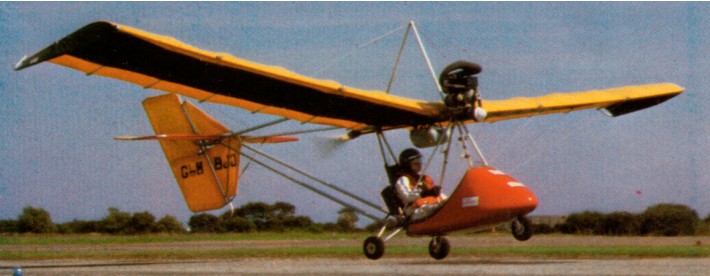
Designed by John Dempsey, the Mirage is another microlight, which holds the distinction of having been an outstanding new design at Oshkosh. Similar in appearance to the Quicksilver, it has a wing with both upper and lower surfaces. Three-axis controls and double-surface wings with droop tips, which are kingpost and cable braced. POWERPLANT: Two-cylinder Cuyuna has 2.0 reduction and is mounted in front below the wing. Drive shaft runs 58×27-inch pusher prop. LANDING GEAR: Tricycle gear has tail skid and 10-inch wheels.
Ultralight Flight Mirage Article
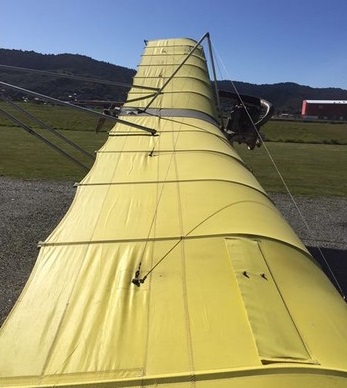
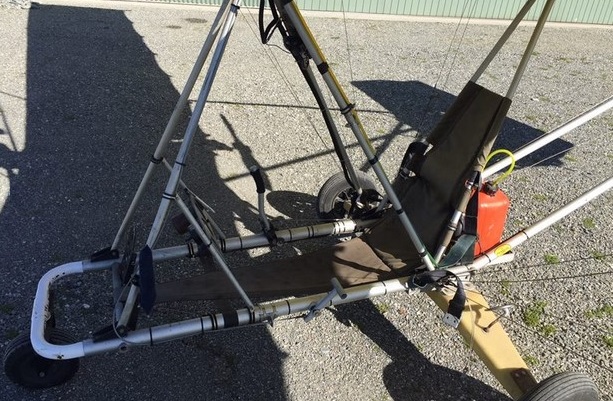
The Ultralight Flight Mirage Mk.II is a single seat single engined high wing monoplane with conventional three axis control. Wing has unswept leading and trailing edges, and constant chord; cruciform tail. Pitch control by elevator on tail; yaw control by fin mounted rudder; roll control by spoilers; control inputs through stick for pitch/roll and pedals for yaw. Wing braced from above by kingpost and cables, from below by cables; wing profile; double surface. Undercarrige has three wheels in tricycle formation, with additional tailskid; suspension on nosewheel and bungee suspension on main wheels. No ground steering (Optional: Push right go right nosewheel steering connected to yaw control). No brakes. Aluminium tube framework, with optional pod. Engine mounted above wing driving tractor propeller. Only certified aircraft grade materials and fittings.
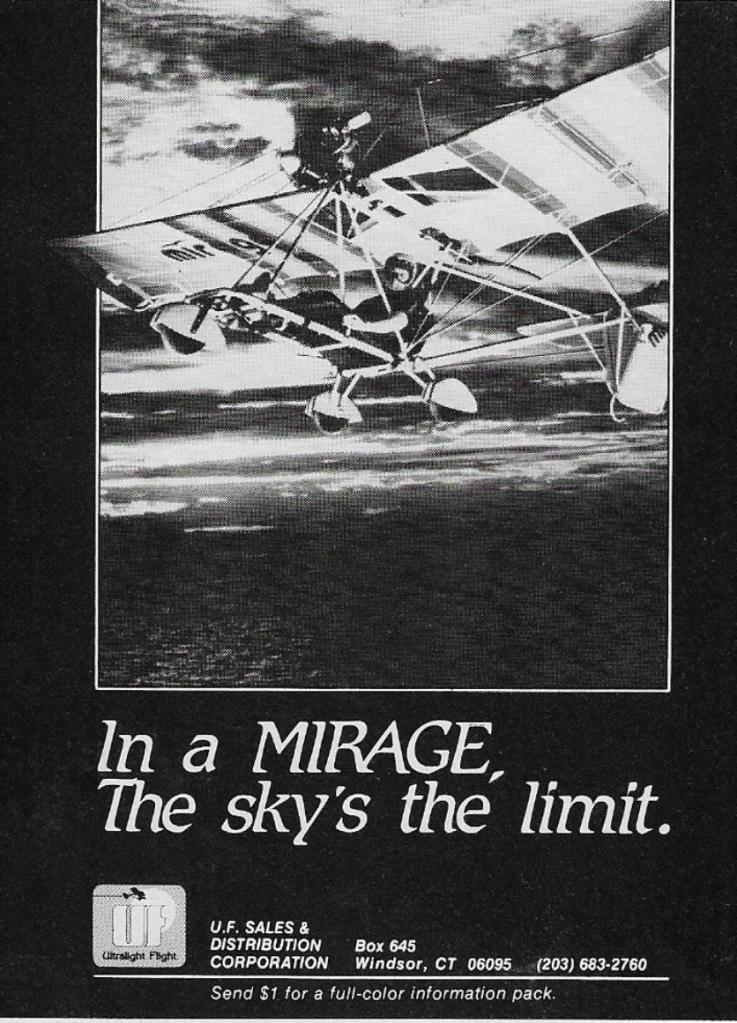
Inspired by the Humbug from Klaus Hill and with a very similar structure to the Vector 600 (on which Franklyn J Riley of Ultralight Flight worked) the Mirage has enjoyed considerable success since its first public presentation at Sun ‘n’ Fun in 1981 at Lakeland, Florida, where it won the prize for the most outstanding design.

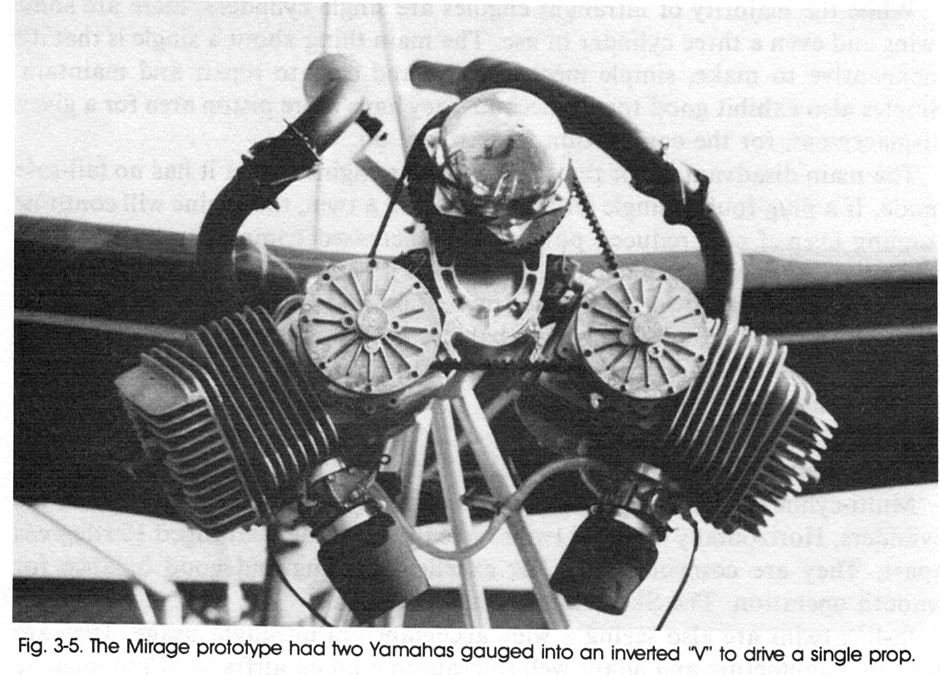
The first Mirage was fitted with two Yamaha KT100S engines of 15 hp each, with their belts forming an inverse V to drive a single twin blade propeller. The aircraft was next fitted as standard with a Cuyuna 430R 30 hp engine, which was replaced on the Mirage MkII, appearing in 1982, by the Kawasaki TA440 of 38.5hp, the Cuyuna 430RL becoming an option. On the MkII, the reduction drive connects to an enclosed drive shaft and the cable controls for the elevators are replaced by Teleflex. Ultralight Flight insists that Mirage uses only certified aircraft grade materials and fittings.
The MkII was sold as a kit requiring 40 h for completion, according to Ultralight Flight, at a price of $4795 in 1983. The options include principally, an instrument panel, floats (Sealord $1095, Spaulding $1295), wheel fairings $117, steerable nosewheel $165, and a pod.
Mk. I
Wingspan, 34 ft
Wing area, 140 sq.ft
Overall length, 17 ft
Empty weight, 219 lbs
Wing loading, 2.5 Ibs/sq.ft
L/D power-off glide ratio, 9:1
Cruise speed, 45-50 mph
Stall speed, 20 mph
Fuel capacity, 4 USG
Engine displacement, 429cc
Rated HP, 30 hp
Mk.II
Engine: Kawasaki TA440A engine
Max power 35 hp at 5600 rpm
Prop¬eller diameter and pitch 58 x 27 inch, 1.47×0.69m
V belt reduction, ratio 2.0/1
Max static thrust 215 lb, 98 kg
Power per unit area 0.24 hp/sq.ft, 2.6hp/sq.m
Fuel capacity 4.0 US gal, 3.3 Imp gal, 15.1 litre
Length overall 19.5 ft, 5.94 m
Height overall 8.6ft, 2.61m
Wing span 32.0ft, 9.75m
Constant chord 4.5ft, 1.37m
Dihedral 8 deg
Sweepback 0 deg
Tailplane span 8.0ft, 2.44 m
Fin height 4.7ft, 1.43m
Total wing area 144 sq.ft, 13.4 sq.m
Total spoiler area 2.3 sq.ft, 0.21 sq.m
Fin area 4.1 sq.ft, 0.38 sq.m
Rudder area 9.5 sq.ft, 0.88 sq.m
Tailplane area 11.7 sq.ft, 1.09 sq.m
Total elevator area 11.7 sq.ft, 1.09 sq.m
Wing aspect ratio 7.1/1
Wheel track 4.0ft, 1.22m
Wheelbase 5.6ft, 1.70m
Nosewheel diameter overall 10 inch, 25 cm
Main wheels diameter overall 10 inch, 25 cm
Empty weight 246 lb, 112kg
Max take off weight 500 lb, 227 kg
Payload 254 lb, 115 kg
Max wing loading 3.47 lb/sq.ft, 16.9 kg/sq.m
Max power loading 14.3 lb/hp, 6.5 kg/hp
Load factors; +5.6, 2.8 ultimate
Max level speed 65 mph, 105 kph
Never exceed speed 70 mph, 113 kph
Max cruising speed 50 mph, 80 kph
Economic cruising speed 45 mph, 72 kph
Stalling speed 25 mph, 40 kph
Max climb rate at sea level 1000 ft/min, 5.1 m/s
Min sink rate 430 ft/min at 29 mph, 2.2 m/s at 46 kph
Best glide ratio with power off 8/1 at 26 mph, 42kph
Take off distance 100ft, 30 m
Land¬ing distance 100ft, 30m
Service ceiling 14,500 ft, 4420 m
Range at average cruising speed 105 mile, 169 km
Engine: Rotax 429cc
Rated hp 30
2.0 reduction
Mmounted in front below the wing
58’ x27” pusher prop
Wingspan 34’
Wing area 140 sq.ft
Overall length 17’
Empty weight 219 lbs
Wing loading 2.5 lbs/sq.ft
L/D power-off glide ratio 9:1
Cruise speed 45-50 mph
Stall speed 20 mph
Fuel capacity 4 USG
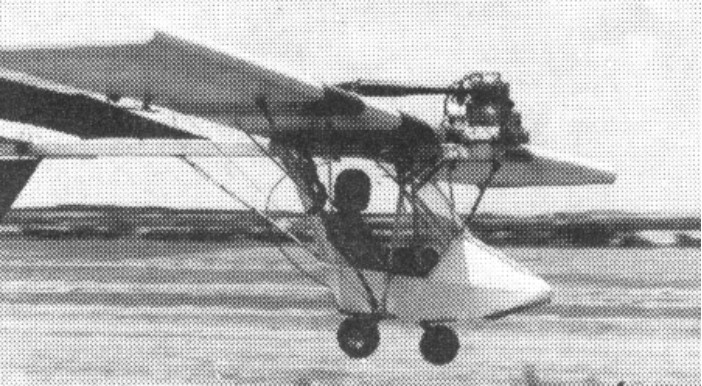
The Wombat, which is available in two basic versions comes with a tricycle undercarriage, but in its Bunyip form is a tail dragger aircraft. Construction is Dacron covered aluminium structure. Development work is continuing and a powerplant change to the English Huntington Field engine is currently being planned.
Bunyip
Engine: Fuji Robin 440
Prop: 144cm x 96cm pitch
Wingspan: 8.41 m
Length: 4.7m
Weight: 150kg
Fuel capacity: 23 ltr
Econ cruise speed: 50 kts
Stall: 27kts
In 1983 ULAC is working on a MX PUL 425 engined single seater of the X-99, called the X 77, but no other details were available.
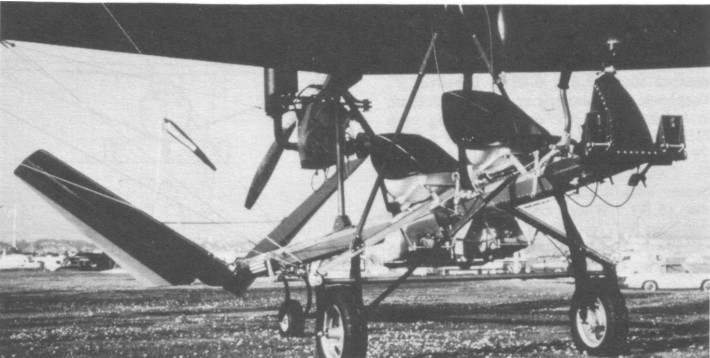
Tandem two seat single engined high wing monoplane with conventional three axis con¬trol. Wing has unswept leading and trailing edges, and constant chord; V tail. Pitch/yaw control by elevon; roll control by one third-span spoilers; control inputs through stick for pitch/roll and pedals for yaw. Wing braced from above by kingpost and cables, from below by cables; wing profile 100% double surface. Undercarriage has three wheels in tail dragger formation; steel spring suspension on tailwheel and suspension on main wheels. Push right go right tailwheel steering connected to yaw control. Brakes on main wheels. Aluminium tube framework, with optional pod. Engine mounted below wing driving pusher propeller.
Georges Borgeaud, the president of ULAC, acquired on the 14 August 1981 the rights to sell in Europe and Africa the Maxair Hummer. Starting with the basic single seater model designed by the late Klaus Hill, ULAC has developed its own tandem two seater, the X 99. The transformation principally in¬volved raising and reinforcing the wing, increasing the track of the undercarriage, the addition of spoilers to change the machine into a conventional three axis control aircraft and finally the adoption of the Hirth motor.
The prototype made its first flights at the beginning of 1982 above the Californian desert near to Salton Sea. For the distribution of this aircraft, George Borgeaud built a factory at Monthey in the Vallais area in Switzerland. Shown at the first European Salon of Microlights at Lyon Bron in Septem¬ber 1982, and later at the microlight assembly at Blois in France, this machine met with considerable success amongst the established pilots at whom it is aimed. Georges has consistently followed an intelligent sales policy, hinged on safety, and will only sell this aircraft in Europe to qualified private pilot’s licence holders.
Ready to fly X 99s cost US$8650 in 1983 ex works for the standard version, trailer included. Standard are compass, ASI, altimeter, rev counter and CHTG. As an option, it can have climb, turn and slip gauges. Its spoilers can be used together as air brakes and the machine can be flown solo (from the front seat) without any modification. The rear seat can be replaced by a large supplementary fuel tank and other options include skis, floats, pod, main wheel fairings, dual controls, a second instrument panel for the rear seat and a three blade propeller.
Georges was working on a new wing design which can be rigged in two different spans 32.8 ft or 45.9 ft (10.00 or 14.00 m), and the larger span would bring the X 99 comfortably within British ultralight law.
Length overall 17.1 ft, 5.75 m]
Height overall 8.8 ft, 2.65 m
Wing span 34.1 ft, 10.40 m
Constant chord 4.4ft, 1.32 m
Sweepback 0 deg
Tailplane span 8.2 ft, 2.50 m
Fin height 2.1ft, 0.90m
Total wing area 147 sq.ft, 13.7 sq.m
Total spoiler area 1.9 sq.ft, 0.18 sq.m
Tailplane area 19.4 sq.ft, 1.8 sq.m
Total elevon area 13.6 sq.ft, 1.3 sq.m
Wing aspect ratio 7.9/1
Wheel track 4.1 ft, 1.24 m
Wheelbase 7.5 ft, 2.25 m
Tailwheel diameter overall 10 inch, 26 cm
Main wheels diameter overall 14 inch, 35 cm
Floats, dimensions 10. 1 x 2.0 ft, 3.30 x 0.59 m
Skis, dimensions 2.1 x 0.6 ft, 0.87 x 0.14 m
Engine: Hirth 272R 438 cc, 40 hp at 7000 rpm
Prop¬eller diameter and pitch 54 x 30 inch, 1.37×0.76m
Toothed belt reduction, ratio 2.2/1
Max static thrust 252 lb, 114 kg
Power per unit area 0.27 hp/sq.ft, 2.9 hp/sq.m
Fuel capacity 3.2 US gal, 2.7 Imp gal, 12.0 litre in main tank
Fuel capacity 21.7 US gal, 18.1 Imp gal, 82.0 litre in reserve
Empty weight 320 lb, 145kg
Max take off weight 662 lb, 300kg
Payload 3421b, 155 kg
Max wing loading 4.501b/sq.ft, 21.9kg/sq.m
Max power loading 16.6 lb/hp, 7.5kg/hp
Load factors; +5.0, 3.0 ultimate
Max level speed 62 mph, 100 kph
Never exceed speed 71 mph, 115 kph
Max cruising speed 53 mph, 85 kph
Economic cruising speed 44 mph, 70 kph
Stalling speed 24 mph, 38 kph
Max climb rate at sea level 350 ft/min, 1.8 m/s
Min sink rate 680 ft/min at 28 mph, 3.5 m/s at 45 kph
Best glide ratio with power off 7/1 at 37 mph, 60 kph
Take off distance 180 ft, 55 m
Land¬ing distance 80ft, 24m
Service ceiling 13,100ft, 4000 m
Range at average cruising speed 75 mile, 120 km
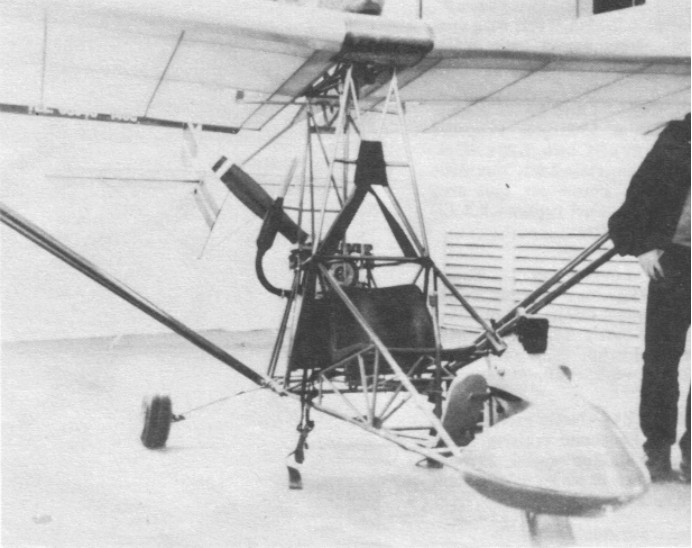
Single seat single engined high wing monoplane with conventional three axis control. Wing has unswept leading and trailing edges, and constant chord; cruciform tail. Pitch control by elevator on tail; yaw control by fin mounted rudder; roll control by half span ailerons; control inputs through stick for pitch/roll and pedals for yaw. Wing braced from below by struts; wing profile Ga 549; double surface. Undercarriage has three wheels in tricycle formation; steel spring suspension on nosewheel and glass fibre suspension on main wheels. Push right go right nosewheel steering connected to yaw control. Brakes on main wheels. Aluminium tube framework, with pod. Engine mounted below wing driving pusher propeller.
Two prototype examples of this machine were on show at Friedrichshafen in March 1983, but the Wildente did not fly for the first time until 16 April. This machine has a welded tubular framework, which appears to have great rigidity and is also claimed to allow derigging and rigging in less than 10 min. It is sold built and ready to fly. Options include wheel fairings and a three blade propeller.
Length overall 19.4ft, 5.90m
Wing span 34.4ft, 10.50m
Constant chord 4.9ft, 1.50 m
Total wing area 166 sq.ft, 15.4 sq.m
Wing aspect ratio 7.2/1
Wheel track 5.1 ft, 1.55 m
Engine: Hirth F263, 22hp at 4000rpm
Propeller diameter 51 inch, 1.30 m
Belt reduction, ratio 1.8/1
Max static thrust 172 lb, 78 kg
Power per unit area 0.13 hp/sq.ft, 1.4 hp/sq.m
Fuel capacity 5.3 US gal, 4.4 Imp gal, 20.0 litre
Empty weight 221 lb, 100kg
Max take off weight 464 lb, 210kg
Payload 243 lb, 110kg
Max wing loading 2.79 lb/sq.ft, 13.6kg/sq.m
Max power loading 21.1 lb/hp, 9.5kg/hp
Load factors; +6.0, 3.0 ultimate
Never exceed speed 62mph, 100kph
Economic cruising speed 47 mph, 75 kph
Stalling speed 26 mph, 42 kph
Max climb rate at sea level 240 ft/min, 1.2m/s
Min sink rate 310ft/min, 1.6m/s
Best glide ratio with power off 9.5/1
Take off distance 130 ft, 40 m
Range at average cruising speed 124 mile, 200 km
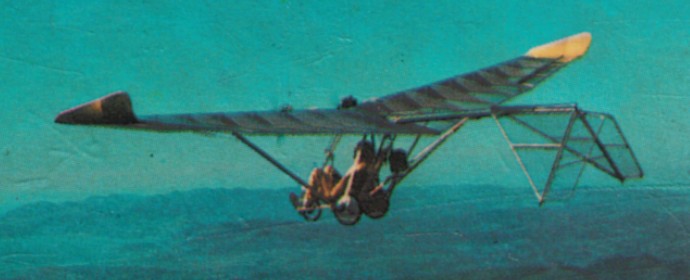
The Lazair is a single seat twin engined high wing monoplane with conventional three axis control (unconventional three axis optional). Wing has unswept leading edge, swept forward trailing edge and tapering chord; inverted V tail. Pitch/yaw control by elevon; roll control by 40% span ailerons; control inputs through stick for pitch/yaw and pedals for yaw (stick for pitch/yaw/roll optional). Wing braced from below by struts; wing profile double surface. Undercarriage has four wheels in double tail dragger formation; no suspension on any wheels. Push right go right ground steering by differential braking (also differential engine output). Brakes on main wheels. Aluminium tube framework, without pod. Engines mounted at wing height driving tractor propellers. Aluminium alloy grades: tubing 6061T6, sheet 2024T3, plate 7075T6. Ribs made from high density plastic foam. Wing covering 2 mm Tedlar.
Ultraflight Manufacturing Lazair Article
By ultralight standards the Lazair could now be considered an old design, having been created by Dale Kramer in 1978, but continuous evolution since then has ensured that it is still a popular and highly competitive aircraft, especially with pilots who appreciate soaring ability rather than sheer power.
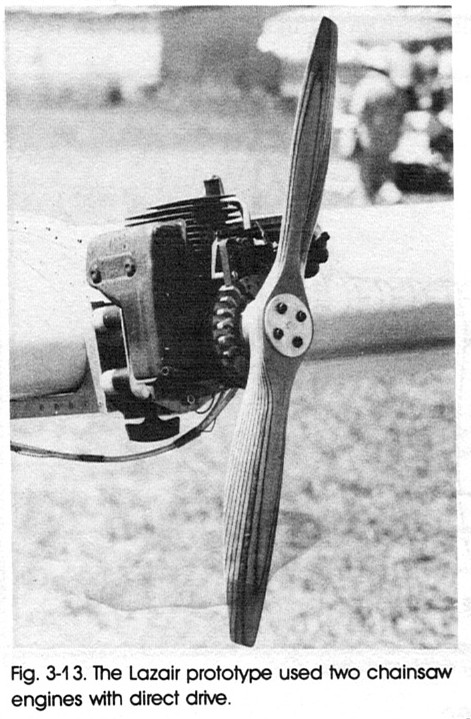
The concept, however, has never changed: an inverted V tail machine with high wing with foam ribs and aluminium alloy leading edge, plus of course the distinctive transparent covering which makes the Lazair look like no other aircraft. Though it still looks the same, that covering has been the subject one change, with Mylar being replaced by Tedlar in the interests of ultraviolet light resistance. The wings come off easily with just a few bolts making it ready to transport.
The more obvious alterations concern the control arrangements, the engines and the undercarriage. Originally the Lazair had a single top mounted stick with a mixer to apportion movement between the elevons and ailerons; separate rudder pedals were optional and, if ordered, could be easily disconnected in flight to bring the aircraft back to stick only control. Now the position is reversed: latest Lazairs have a conventional bottom mounted stick and rudder pedals as standard, with stick only control available to special order.
It has full three axis control. The control stick controls the ailerons and elevators, and separate rudder pedals control the rudders. The rudders and elevators are combined (ruddervators) in the turned down tail which makes the Lazair very controllable in slow flight and taxi because the air blast of the engines is directed into them.
One unique feature of this Lazair is the ability to lock the rudders and ailerons together to fly it using the stick only if you are not used to using rudders or you prefer to fly that way. You can unlock them with the flip of a knob to use rudders separately.
Units delivered by June 1981 300.
Pioneer engines of 100 cc and 5.5 hp each were normal fitment in 1981, but for 1981 these were replaced by the Rotax engines, each mated to an unusual ‘biplane’ propeller. This in turn was discarded for 1983 in favour of an injection moulded composite propeller with centre spinner and most important provision for the pitch to be adjusted on the ground.
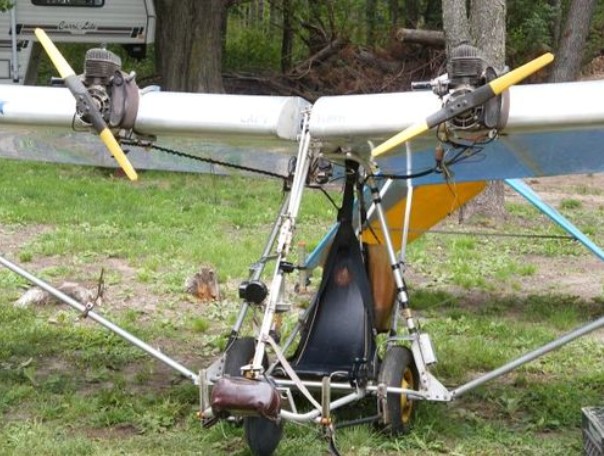
The 1982 model came 6th in that year’s London Paris, with the non swivelling tailwheels, narrow track and additional nosewheel.
This progressive increase in thrust has made drag less critical than before, allowing Ultraflight Sales to fit a more stable, widetrack undercarriage without hurting the performance too much. En route, the additional nosewheel has been discarded and the aircraft turned into a true taildragger. Ground hand¬ling has been further improved by making the tailwheels castor and by fitting an independent disc brake on each main wheel; wheel spats are now standard equipment.
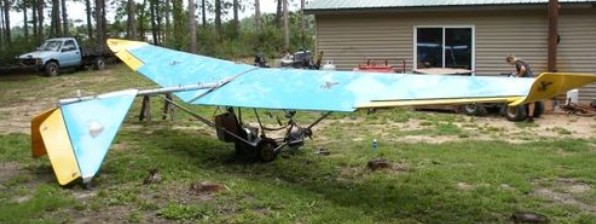
Options include floats and skis made from glass fibre reinforced polyester with a pigmented gelcoat.
The 1983 price: kit requiring 150h to complete C$6450; ready to fly C$8190.
In 1983 the Lazair II was still under development. In concept the aircraft is likely to be similar to the single seat model, again using two direct drive engines mounted on the leading edges of the wings. The engine type chosen was the WAM WAE 342, a horizontally opposed twin which is particularly powerful for its weight. The engine manufacturer’s design to certify the unit for motor glider operation had delayed deliveries and caused the postponement of the Lazair II launch from 1982.
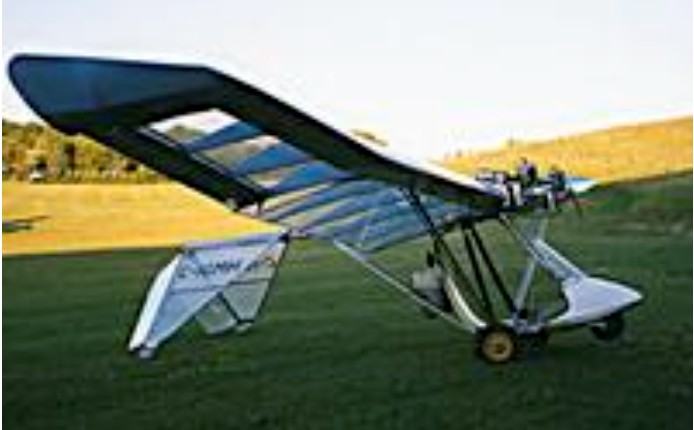
The Lazair III is a high wing strut braced monoplane with twin engines, an inverted V tail and three axis controls. The wing has a constant tapper with upswept wing tips. Tedlar plastic covering gives the wing and tail surfaces its transparant Gossamer look which enables the operator to pre-flight nearly every nut and bolt. Engine off soaring is another feature. The latest model features a cockpit pod. Centre mounted joy stick, rudder pedals, tail wheel steerable through independent braking.
The Lazair Elite features a centre mounted joy stick, rudder pedals, tail wheel steerable through independent braking.
Engines: 2 x AB Partner 185cc, 6 hp
Static thrust, 40 lb
Max pilot wt: 230 lbs
Wingspan, 36 ft 4 in
Wing area, 142 sq.ft
Aspect ratio, 9.3
Overall length, 14 ft
Empty weight, 183 lbs
Usable payload (include fuel), 250 lbs
Wing loading, 2.8
L/D power-off glide ratio, 13:1
Cruise speed, 35 mph
Stall speed, 17 mph
Approach speed, 25mph
Flair speed, 20 mph
Liftoff speed, 20 mph
Takeoff roll distance, less than 100 ft
Rate of climb, 400
Fuel capacity, 2.5 USG
Engines: 2 x Rotax 185, 9.5hp each at 5800rpm
Propeller diameter 35 inch, 0.89 m
No reduction. Max static thrust 140 lb, 64 kg
Power per unit area 0.13 hp/sq.ft, 1.4 hp/sq.m
Fuel capacity 5.0 US gal, 4.2 Imp gal, 18.9 litre
Length overall 14. 0 ft, 4.27 m
Height overall 6.3ft, 1.93m
Wing span 36.3ft, 11.07m
Chord at root 4.8 ft, 1.47 m
Chord at tip 3.1ft, 0.94m
Dihedral 2 deg
Sweepback 0 deg
Tailplane span 6.67 ft, 2.03 m
Total wing area 142 sq.ft, 13.2 sq.m
Total aileron area 4.8 sq.ft, 0.45 sq.m
Total elevon area 8.6 sq.ft, 0.80 sq.m
Wing aspect ratio 9.34
Wheel track 3.9 ft, 1.18 m
Wheelbase 10.0 ft, 3.05 m
Tailwheels diameter overall 4 inch, 10 cm
Main wheels diameter overall 16 inch, 41 cm
Optional floats: length 10.0 ft, 3.05 m; width 25 inch, 0.65 m; height 14 inch, 0.36 in
Weight of pair including mounts 60 lb, 27 kg
Optional skis: length 68 inch, 1.72 m; width 13.5 inch, 0.34 m
Weight each 13 lb, 5.9 kg
Empty weight 2101b, 95kg
Max take off weight 530lb, 240kg
Payload 3201b, 145kg
Max wing loading 3.73lb/sq.ft, 18.2 kg/sq.m
Max power loading 27.9lb/hp, 12.6kg/hp
Load factors +4.0, 2.0 design
Max level speed 50 mph, 80 kph
Never exceed speed 55 mph, 88 kph
Max cruising speed 45 mph, 72 kph
Economic cruising speed 40 mph, 64 kph
Stalling speed 20 mph, 32 kph
Max climb rate at sea level 400 ft/min, 2.0 m/s
Min sink rate 200 ft/min at 23mph, 1.0m/s at 37kph
Best glide ratio with power off 12/1
Take off distance 100ft, 30m
Landing distance 75 100ft, 23 30m
Range at average cruising speed 165 mile, 265 km
Lazair III
Empty wt: 220 lbs
Wing span: 36’4”
Wing area: 144 sq.ft
Height: 6’4”
Length: 14’
Fuel cap; 5 USG
Construction: Aluminium, Tedlar
Engine: 2 x Rotax 185 (370 cc) 38 hp
Prop: 71 cm composite
Max wt: 490 lbs
Stall: 22 mph
Max speed: 60 mph
Vne: 65 mph
Cruise speed: 26 kts, 50% power
Climb rate: 400 fpm @ 30 mph
Design limit: +4, -2g
Glide ratio: 13-1
Wing loading: 3.4 lbs/sq.ft
Power loading: 12.89 lbs/hp
Lazair Elite
Empty wt: 254 lbs
Wing span: 36’4”
Wing area: 142 sq.ft
Height: 6’4”
Length: 14’
Fuel cap; 5 USG
Construction: Aluminium, Tedlar
Engine: 2 x JPX PUL 425 (425 cc) 40 hp
Static thrust: 190 lbs
Max wt: 464 lbs
Stall: 23.8 mph
Max speed: 62 mph
Vne: 70 mph
Climb rate: 700 fpm @ 30 mph
Design limit: +6.6, -2.8g
Glide ratio: 10-1
Wing loading: 3.27 lbs/sq.ft
Power loading: 11.6 lbs/hp
Ultraflight Sales Lazair
Stall: 22 kt / 25 mph / 40 kmh
Cruise: 35 kt / 40 mph / 64 kmh
VNE: 56 kt / 65 mph / 105 kmh
Empty Weight: 95 kg / 210 lbs
MTOW Weight: 240 kg / 530 lbs
 All Aero