Vans RV-1

One Stits SA-3A Playboy builders eventually sold his project to a young aviator who rebuilt the wing, getting rid of the struts and converting it from a fabric covered wooden frame to an aluminum wing in 1965 (and calling it an RV-1). The rebuilder was Dick VanGrunsven and his first airplane has been rebuilt and will be donated to the EAA museum this summer.

VanGrunsven was further inspired to build an airplane of his own design — the RV-3.

Van Lith VI

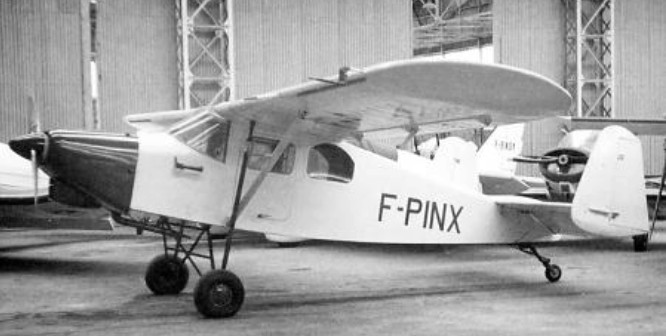
A one-off French-built light civil utility aircraft of the late 1950s, the Van Lith VI was a two/three seat light high-wing cabin monoplane of conventional wooden construction. The wing was a two-spar structure with plywood and fabric covering. The fuselage was of rectangular section with plywood cladding. The main undercarriage with fixed legs, wheels, brakes and tailwheel were adapted from those of the Stampe SV.4. The pilot and passengers were seated in tandem with an access door on each side hinging upward for entry and exit. The slotted ailerons could be drooped together to function as flaps. Designed and built by Jean Van Lith it was initially flown with a single fin, but this was replaced with twin fins.

One example of the design was completed. In original form the Model VI had the main wheels and wing struts of a Stampe (Nord) SV-4 biplane, one 125 hp Lycoming O-290-3 engine and a small third central fin. In this configuration the aircraft flew on 30 August 1958, registered as F-WINX. It completed it test flight program at Toussusle-Nobel on October 6, 1959, and was subsequently reregistered F-PINX.

The aircraft was later re-engined with one 150 hp Lycoming O-320, and also received with a steel sprung cantilever undercarriage, while the central fin was removed. The aircraft remained active well into the 1980s and later went to the RSA Museum, but was destroyed in an accident. This one-of-a-kind aircraft was also nicknamed the Bébé Broussard, because of the external resemblance to the Holste Broussard.

It was flown by the constructor from airfields at Toussus-le-Noble and Guyancourt near Paris. It was still registered to Jean Van Lith in 1964, but is no longer extant.

Engine: 1 × Lycoming O-290-3, 135 hp (101 kW)
Capacity: 1 or 2 passengers
Length: 20 ft 0 in (6.10 m)
Wingspan: 35 ft 5 in (10.80 m)
Height: 6 ft 6 in (1.98 m)
Wing area: 140 sq ft (13 sq.m)
Empty weight: 1,285 lb (583 kg)
Gross weight: 2,127 lb (965 kg)
Maximum speed: 124 mph (200 km/h; 108 kn)
Cruise speed: 106 mph (92 kn; 171 km/h)
Service ceiling: 13,780 ft (4,200 m)
Rate of climb: 785 ft/min (3.99 m/s)
Endurance: 6 hr
Crew: 1

Vanguard 2 Omniplane

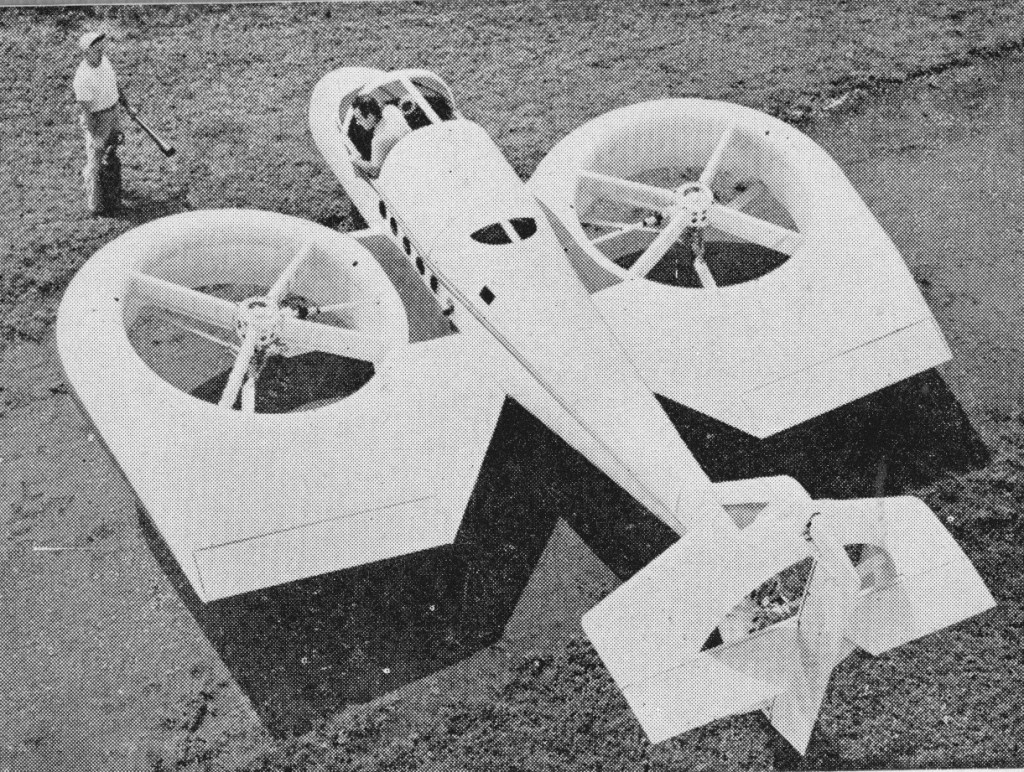
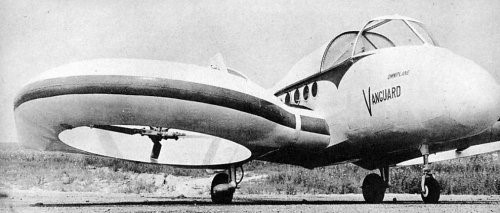
The Vanguard Omniplane was an American approach to vertical operation and high cruise speed. The ducts contained vertical thrust propellers that could be closed by venetian blind shutters to form small wings in forward flight. In forward flight, covers above the rotors and louvers below sealed the wing for aerodynamic lift.

The design, apparently not registered, used a 25-ft long Ercoupe light plane fuselage and weighed 2,600 lb. The round wings each housed a 6 ft diameter three-bladed propeller that was mechanically driven for vertical flight by a 265 hp Lycoming O-540-A1A six cylinder piston engine.

Thrust was produced by a 5′ shrouded prop in the tail, elevator and rudder behind the rear fan-controlled pitch and yaw, while differential propeller blade pitch affected roll in hover.

Ground tests, starting in Aug 1959 and including tethered hover trials, were followed by NASA full-scale wind tunnel testing.

Modifications in 1961, including a 860hp Lycoming YT53-L-1 turboshaft, improved control system, and 5′ nose extension to house a third lifting prop, led to the redesignation 2D. The nose prop improved control in pitch, as well as in yaw through the use of movable exit vanes. 2D completed tethered hover tests, but was damaged by a mechanical failure and discontinued in early 1962.

Engine: Lycoming O-540-A1A, 265hp
Wingspan: 22’0″
Length: 25’6″
Useful load: 500 lb
Max speed: 190 mph
Range: 150 mi
Seats: 2

Vanderford 1923 Experimental

In 1923 William Vanderford of Gladbrook IA. Built a single place, open cockpit, high wing monoplane, powered by a 2-cyl Harley-Davidson engine, which was not the only motorcycle part used. Open frame fuselage.

On the first run of the engine the airplane spun around, ran over a small tree, and almost made it to the neighbor’s porch. Taxiing trials were made, but the airplane would not rise, so it ended up instead as a powered sled.

Vanden Plas Médiaplan

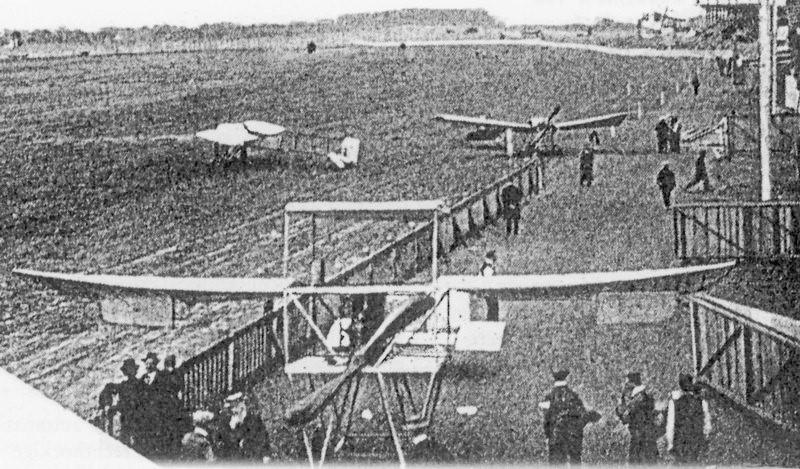
The second try at flying by Vanden Plas was the “Médiaplan”, subject of Belgian Patent 237.925 of 22 July 1911. It was built by the Laurent firm at Leuven, which built propellers and other aviation parts. It was shown at Ans on 15 June 1911, flown successfully by Westerlain, although it is reported it ran out of fuel and had to land in field. It was displayed at the XI Salon in Brussels in January 1912 and it was reported that flying would resume in Kiewit, but nothing was heard of it. It was powered by a Vivinus engine, later by a 50 hp Gnôme.

Vance Flying Wing / Viking Cargo Plane

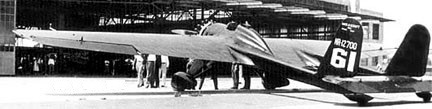
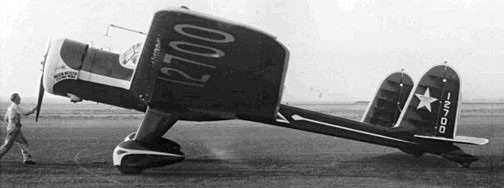
Vance Flying Wing Race NR12700

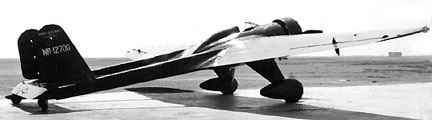
The 1932 Flying Wing, or Viking Cargo Plane, NR12700 was designed by Charles Rocheville and Clare Vance. A flying wing design with twin booms and twin tails, fuel (1200 USgallons) and cargo were carried in the wing.

Its extent in competition is unclear, but is seen in some photos wearing race numbers. Also unresolved is the name “Mason Meteor” on its cowling in the lower picture—possibly Monty Mason was pilot, which would clear up some of the confusion with Mason Greater Meteor type.

Vance Flying Wing Mason Meteor NR12700

The Flying Wing transport was flown in the 1932 Bendix Air Race by Clare Vance from Union Air Terminal (Burbank CA). Winners were Jimmy Haizlip, Roscoe Turner and Lee Gehlback. Wings Feb 2000 shows the flying wing, but IDs it as Vance Viking (NR12700), stating Clyde Pangborn used this plane to better his 41-hour west-to-east flight (in Miss Veedol) and planned to make a global flight in it. It is possible the Flying Wing Transport was race #61 and later became the Viking. They both have the same tail number.

Vance Viking NR12700

Flying Wing / Viking Cargo Plane
Engine: P&W R-1340 Wasp, 660hp
Wingspan: 55’0″
Length: 30’0″
Useful load: 2000 lb
Max speed: 185 mph
Cruise speed: 165 mph
Range: 7200 mi
Seats: 1
No built: 1 – NR12700

VanDellen LH-2

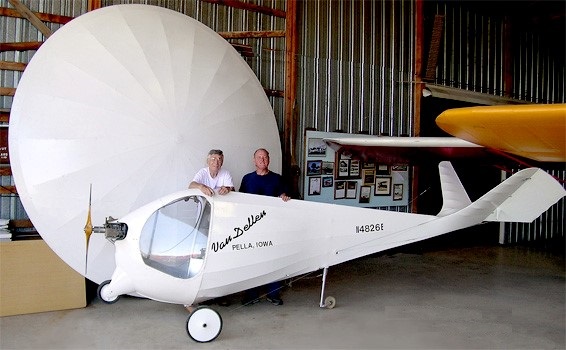
VanDellen LH-2 N4826E

Built by Lubert VanDellen in 1959, the LH-2 was two=place powered by an unknown reciprocating engine. The register classified it as a “rotocraft”—instead of a wing, it had a circular saucer-like disk which was said to rotate. A small engine with a tractor prop was located in the front end, and the opposite end sported a butterfly tail.

Registered N4826E, it was taxi-tested but never flown, donated to AAA’s Airpower Museum.

Gross wt: 900 lb
Seats: 2

VAMP Bat

Frank Van Dersarl was born August 13, 1895 in Denver. He flew a Bleriot airplane on August 10, 1911 at Sable Airstrip located in Aurora at the junction of Sable Blvd. and the Union Pacific railroad tracks. It was a favored location for early flyers and auto racers. This aircraft was assembled by Frank and his brothers, John and Jules, using plans purchased in France from Bleriot. They were 10 and 12 years old at the time. He also flew a glider, which was built at the age of 12 from a booklet ordered from a London company. It crashed on its first flight.

Pioneer aviator Harry Combs (1913-2003), with only 30 hours of flying under his belt, at the age of 16, decided to build his own aeroplane. With the help of Frank Van Dersarl they completed the construction of a sport bi-plane called the VAMP Bat in 1929. The VAMP Bat had a short life, after flying to Pueblo, Combs lost control of the aircraft on the runway, there were no brakes and only a tailskid, caught in high winds the aircraft flipped on its back. Combs said ‘I was hanging upside down inches from the ground. It busted up. I should have known that when you don’t have brakes you have to stay on the grass’.

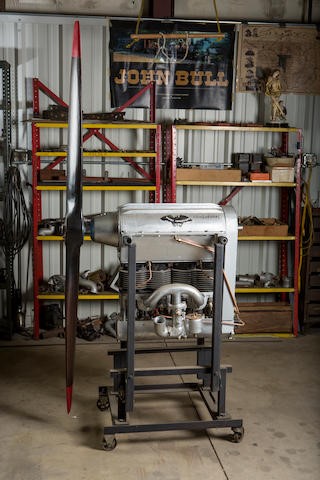
VAMP Bat engine