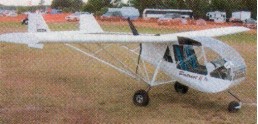
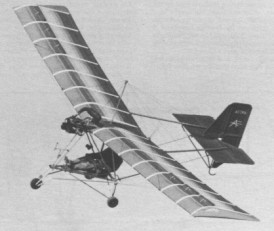
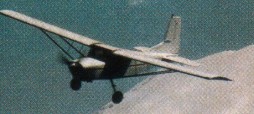
Single seat single engined high wing mono¬plane with conventional three axis control. Wing has unswept leading and trailing edges, and constant chord; cruciform tail. Pitch control by elevator on tail; yaw control by fully flying rudder; roll control by 3 spoilers for each wing; control inputs through stick for pitch/roll and pedals for yaw. Wing braced from above by kingpost and cables, from below by cables; wing profile; single ¬surface. Undercarriage has three wheels in tricycle formation with additional tailskid; steel spring suspension on main wheels. No ground steer¬ing (nosewheel steering optional). No brakes. Aluminium tube framework, without pod. Engine mounted at wing height driving tractor propeller. Despite its participation in Sun ‘n’ Fun in March 1983 and a brief presentation in the May edition of Glider Rider, this interesting single seater is only just going on sale in 1982. The Astra seats its pilot much higher compared with other tube and Dacron single-¬seaters and, according to John Todhunter, the accent has been put on passive safety, with the design of the framework intended to protect the pilot in the case of a crash or too rapid stop. Moreover the Astra has proved itself without doubt to be one of the easiest and fastest ultralights to rig or derig: 17 and 12 min respectively by two people without excessive haste. The final point of note is that each wing carries three small spoilers side by side rather than a single one of equivalent width.
Engine: Rotax 377, 36 hp at 6000 rpm. Propeller diameter and pitch 52 x 34 inch, 1.32 x 0.86 m. Hall planetary reduction, ratio 2.0/1. Max static thrust 230 lb, 104 kg. Power per unit area 0.22 hp/sq.ft, 2.3 hp/sq.m. Fuel capacity 4.4 US gal, 3.7 Imp gal, 16.7 litre. Length overall 13.4 ft, 4.08 m. Height overall 9.4ft, 2.87m. Wing span 33.0ft, 10.05m. Constant chord 5.0 ft, 1.52 m. Sweepback 0 degs. Total wing area 165 sq.ft, 15.3sq.m. Wing aspect ratio 6.6/1. Empty weight 248 lb, 112kg. Max take off weight 550 lb, 249kg. Payload 302 lb, 137kg. Max wing loading 3.33 lb/sq.ft, 16.23kg/sq.m. Max power loading 15.3 lb/hp, 6.9kg/hp. Load factors +6.0. 4.0 ultimate. Max level speed 55 mph, 88 kph. Never exceed speed 55 mph, 88 kph. Cruising speed 45 mph, 72 kph. Stall¬ing speed 22 mph, 35 kph. Max climb rate at sea level 800 ft/min, 4.1 m/s.
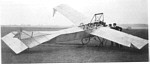
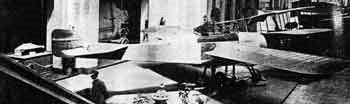
Societa italiana aeroplani – founded in Milan in 1912 by attorney Enrico Luzzatto after the close of the Helios firm – made use of the work of engineer Flaminio Piana Canova, who left the workshops of Somma Lombardo’s Battaglione Aviatori, and briefly assumed the role of technical director for all of Asteria where soon he built an almost identical monoplane to the Sia Italia, called Asteria MB (Monoplano Biposto), and also presented at the 3rd International Exhibition of Aerial Locomotion of Turin (May 17–24, 1913).
The Asso X Jewel is an all – wood, low wing, single engine, two tandem seats ultralight aircraft development of the V Champion, designed by Italian designer Giuseppe Vidor. Laminar flow wing.
This aircraft is one of his many wooden designs, marketed by Vidor’s Asso Aerei company, like the Asso V Champion, Asso IV Whisky and Asso VI Junior. The aircraft kit/plans are specified for the Rotax 912, but it is also one of the very few aircraft reported to be using the Sauer S 2100 ULT engine.
Asso X Jewel I-B427
Variants:
Millennium Master (2006) A composite airplane, evolved from the Asso X Jewel.
Tarragon Pelegrin A composite airplane, evolved from the Millennium Master.
Blackshape Prime (2007) A composite airplane, evolved from the Millennium Master.
X Jewel Engine: Rotax 912 Propeller: 2-bladed with ground-adjustable pitch Wingspan: 8.1 m (26 ft 7 in) Wing area: 9.6 m2 (103 sq ft) Length: 7 m (23 ft 0 in) Height: 2.15 m (7 ft 1 in) Empty weight: 282.5 kg (623 lb) Max takeoff weight: 472.5 kg (1,042 lb) Maximum speed: 300 km/h (186 mph; 162 kn) Cruise speed: 286 km/h (178 mph; 154 kn) Stall speed: 64 km/h (40 mph; 35 kn) Never exceed speed: 330 km/h (205 mph; 178 kn) Range: 1,300 km (808 mi; 702 nmi) Wing loading: 47 kg/m2 (9.6 lb/sq ft) Capacity: 2
Side-by-side 2-seat taildragger built by Vidor based on the Piel Super Emeraude – one built 1980. It is also known as RD 95, after Vidor’s friend and advisor, Robert Denize, who had collaborated with Claude Piel. Another, built by Vidor, first flew in 1984.
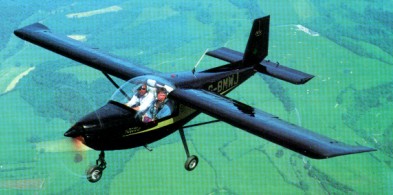
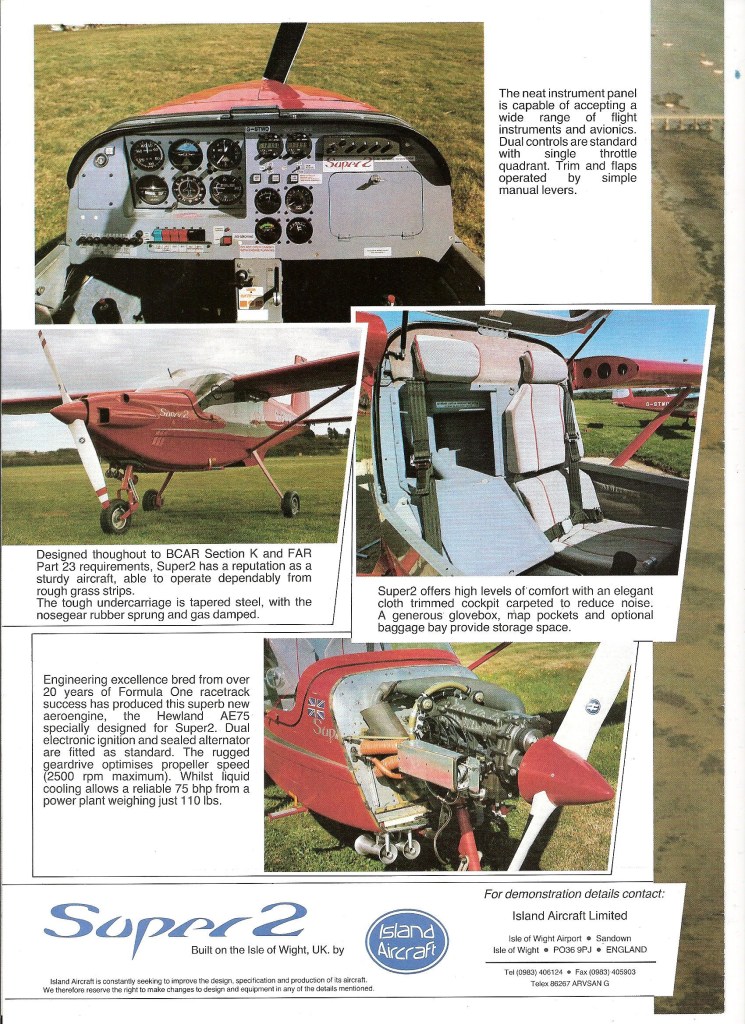
Richard Nobles design team aimed for an aircraft that was inexpensive to fly and buy; have two seats; should have an all-metal airframe; and be available as either factory assembled or as a simply assembled kit. The engine, custom-designed by Mike Hewland, is an inverted, inline three cylinder, 77 hp, water-cooled engine weighs in at 120 lbs with a 14 lb radiator located under the fuselage behind the cabin. It featured electronic ignition. The aircraft has been approved to United States FAR Part 23 requirements. The engine burns a two stroke mixture on a 40-1 ratio although testing has provided satisfactory performance throughout a range of 20-1 to 95-1. Fuel burn is around three gallons an hour, either an avgas or mogas mix with oil. The prototype, G OARV, made its first flight on 1lth March 1985 and was followed into the air by the second aircraft on 12th November. The fourth (004) was delivered in kit form to L.Wensley of Lincoln. The Super 2 was later developed into the Swedish, certificated, Opus 280 by ASL Hagfors. The Super 2 later became the Island Aircraft ARV-1 Super 2, then the Aviation Scotland ARV-1 Super2. Highlander Aircraft Corp offered Highlander two-seat monoplane in kit form circa 1997.
Back of an original sales brochure showing G-POOL – courtesy Martin Southwell
ASL Hagfors Aero AB of Sweden marketed a certificated version of the ARV Super 2 Highlander, as the Opus 280.
ARV Super 2 Engine: Hewland AE75, 77 hp Length: 18.045 ft / 5.5 m Height: 7.546 ft / 2.3 m Wingspan: 28.543 ft / 8.7 m Wing area: 92.57 sq.ft / 8.6 sq.m Max take off weight: 1102.5 lb / 500.0 kg Weight empty: 674.7 lb / 306.0 kg Max. weight carried: 427.8 lb / 194.0 kg Max. speed: 103 kt / 190 km/h Landing speed: 48 kt / 88 km/h Cruising speed: 86 kt / 160 km/h Initial climb rate: 590.55 ft/min / 3.00 m/s Service ceiling: 13123 ft / 4000 m Wing load: 11.89 lb/sq.ft / 58.0 kg/sq.m Range: 367 nm / 680 km Crew: 2