Auster J5 Autocar / Adventurer / Aiglet / J8L Aiglet

J5G

The J5 was a development of the J1 and it differed in having a sloping firewall to accommodate the larger and heavier engine. This reduced the fuel capacity of the main tank though this is overcome by the addition of a 13.75 Imp.G belly tank. It also retained the smaller vertical tail surfaces of the J1. Introduced in 1947, the J/5 range included the Autocar with its distinctive hump-backed fuselage aft of the trailing edge. This proved popular albeit briefly with clubs until the advent of modern US types. The J/5F is the only Auster rated for aerobatics.

Auster J/5 Article

The Adventurer four-seat model of the J/5 was built for the Australian market. Most were shipped to Kingsford Smith Aviation Services of Bankstown, Sydney, for assembly. Six were purchased by the RNZAF (NZ1701-NZ1706) for army and forestry patrol work.

The four-seat J/5 Autocrat was developed into the J/5B Autocrat with the prototype flying in August 1949. Also powered by a 130 hp Gipsy Major I engine, it featured a domed cabin roof, wing fuel tanks and an enlarged horn-balanced rudder.

J/5B Autocar

In 1951 the two-seat J/5F Aiglet Trainer was introduced. It was basically a J/1B converted to a dual control aerobatic trainer with a widened 4in and strengthened fuselage. Horn-balanced rudder and elevator are fitted and wingspan reduced from 36 ft to 32 ft. Approximately 70 of this type were built, including several with a 155 hp Gipsy Major engine, as the J/5K, with a 155 hp Cirrus Major, the J/5L, with a 155 hp Gipsy Major, and the J/5R which combined the Aiglet Trainer fuselage and tail with Autocrat wings.

J/5F Aiglet Trainer

The J.5F Aiglet Trainer was approved by the Air Ministry for A.T.C. flying training. The company stated that the Aiglet is the only aircraft other than ex-military types to obtain this approval.

Aiglet Trainer

The direct-reading fuel gauge on the 14gal front tank was very accurate and they could fly until only two gallons remained, allowing nearly two-hour work stints.

Taylorcraft J Auster 5

Developed from the three-seat J/5 Autocrat, the J/5B Autocar added a 155 hp Cirrus Major III engine and first flew in August 1949. Approximately 100 were built, most being exported.
The J/5G Cirrus Autocar, first flown in July 1951, which was designed with tropical conditions in mind. Around 80 were built. A usual load for the J/5Gs was 7cwt (350kg).

The engine was changed to a 145 hp Cirrus Major II to create the J/5H Autocar.

A 145 hp de Havilland Gipsy Major 10 engine was added, producing the J/5P Autocar 145 in 1955. Approximately 20 were built. The Autocar differed from the Autocrat with raised rear fuselage decking and enlarge fin and rudder assembly.

The J/5Q Alpine incorporated the long-span wings of the J/5B Autocar and the wide fuselage of the J/5F and was powered by a 130 hp Gipsy Major I engine.

The J/5R Alpine was powered by a 145 hp de Havilland Gipsy Major 10 engine.

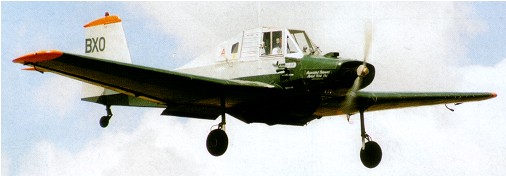
In 1955 Harry Wigley devised retractable skis and installed them on an Aiglet, ZK-BDX. Trials took place on the Tasman Glacier with commercial operations beginning the following year.

In 1955 Saunders-Roe conducted trials of its hydroski concept using an Auster J/5G Autocar. The skis were fitted to a standard aeroplane and were demonstrated successfully. They supported the aircraft down to a fast taxying speed so it could land on water and roll up onto a beach, and start its takeoff from a very short stretch of land or a ramp.

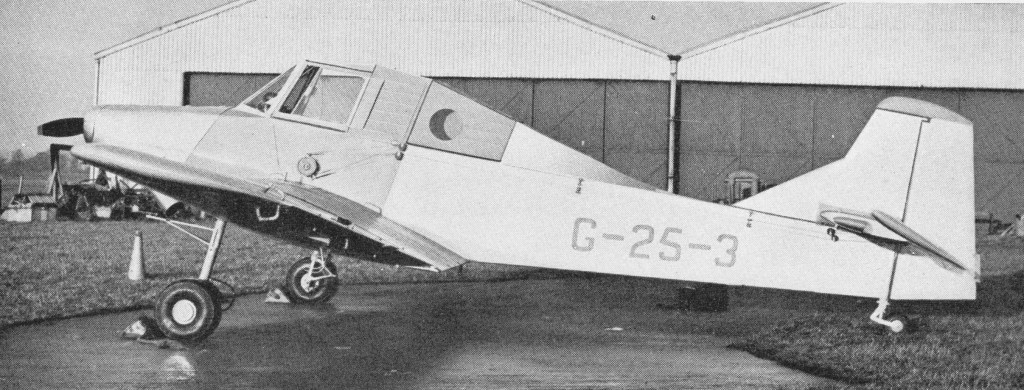
The sole Auster J8L Aiglet Trainer was a J/5K re-engined with a de Havilland Gipsy Major 1 engine.

Auster J8L Aiglet Trainer

The 1954 Auster J8 L Aglet Trainer was located in Queensland, Australia, registered VH-RIE, when it sold for $38,000 on 14 June 2018. It was noted as:
Serial Number 3151
Total Time Airframe 1870 hrs
One of a kind factory modified for the RAF, and never put into service.
145HP, 1/2″ valve stems, dual fuel pumps, and electric stater. Automotive spark plugs and leads conversion. New gaskets and engine mount rubbers.
In very good condition, aerobatic seats and 4 point seat belts, centre flap leaver and 2+2 seating
33′ wingspan (short wing version), larger rudder to aid better spin recovery, as this is an aerobatic approved aircraft

Auster J8 L Aglet Trainer 2018
Auster J.5G Cirrus Autocar which Saunders Roe used for hydro-ski research in 1955

Gallery

Model J Auster 5
790 built
Version with rear fuselage of Autocrat known as Alpha 5

J/5
Engine: de Havilland Gipsy Major I, 130 hp
Wingspan: 36 ft / 11 m
Length: 23 ft / 7 m
Height: 8 ft 8 in / 2.6 m
Empty weight: 1162 lb / 527 kg
Loaded weight: 2100 lb / 952.6 kg
Max speed: 114 mph / 183.4 kph
Max range: 375 mi / 603.55 km
Service ceiling: 12,500 ft / 3810 m
50 built

J/5 Adventurer

J/5B Autocar
Engine: 130 hp Gipsy Major I
Span: 36 ft
Wing area: 185 sq,ft
Length: 23 ft 2 in
Height: 7 ft 6 in
Empty weight: 1413 lb
Loaded wight: 2400 lb
Max speed: 116 mph
Cruise: 100 mph
Service ceiling: 11,000 ft
ROC: 525 fpm
Range: 500 mi
Approx. 100 built

J/5F Aiglet Trainer
Engine: Gipsy Major 1, 130 hp.
Wingspan: 32 ft
Wing area: 164 sq.ft
Length: 23 ft 2 in
Height: 6 ft 6 in
Empty weight: 1323 lb
Aerobatic loaded weight: 1950 lb
Max speed: 125 mph
Cruise: 107 mph
ROC: 650 fpm
Service ceiling: 12,500 ft
Cruise range: 500 mi

J5F Aiglet Trainer / J/5K / J/5L
Engine: DH Gipsy Major 10, 145 hp
Span: 32 ft
Length: 23 ft 2.5 in
Mauw: 1950 lb
Max speed: 127 mph
Seats: 2
Approx. 70 built

J/5G Autocar
Engine: 155 hp Cirrus Major 3
Span: 36 ft
Wing area: 185 sq,ft
Length: 23 ft 2 in
Height: 7 ft 6 in
Empty weight: 1367 lb
Loaded wight: 2450 lb
Max speed: 127 mph
Cruise: 110 mph
Service ceiling: 14,000 ft
ROC: 710 fpm
Range: 485 mi
Approx. 80 built

J/5H Autocar
Engine: 150 hp Cirrus Major 2
Span: 36 ft
Wing area: 185 sq,ft
Length: 23 ft 2 in
Height: 7 ft 6 in
Empty weight: 1367 lb
Loaded wight: 2450 lb
Max speed: 127 mph
Cruise: 110 mph
Service ceiling: 14,000 ft
ROC: 710 fpm
Range: 485 mi

J/5P Autocar
Engine: Gipsy Major 10/2.
Span: 36 ft
Length: 23 ft 2 in
Mauw: 2400 lb
Max speed: 117 mph
Approx. 20 built

J/5R Alpine / J/5Q

T7C
Engine: Gipsy Major

J/5B Autocrat
J/5F Aiglet Trainer

Auster J/4 Archer

With import restrictions on American engines it was decided to fit a 90 hp Cirrus Minor I to an J/2 Arrow airframe. This version, which also flew in 1946, went on to become the J/4 Archer. The fuselage and wings of both types are identical. Accommodation is for two side-by-side.

Only 26 of the two-seat Archers were built.

Auster J/4

Versions not produced were:

J/4S – Model J/4 fitted with a 100 h.p. Blackburn Cirrus Minor 2A powerplant.

J/4T Archer Special – Model J/4 fitted with a 90 h.p. Cirrus Minor 2A powerplant and an experimental tricycle undercarriage.

J/4 Archer Special – Model J/4T reverted to standard tailwheel undercarriage.

J4-100 – Model J/4 fitted with a 100 h.p. Continental 0-200 powerplant.

Engine: Blackburn Cirrus Minor 1
Wing span: 36 ft
Wing area: 185 sq.ft
Length: 22 ft 5.75 ft
Height: 6 ft 6 in
Empty weight: 955 lb
Loaded weight: 1600 lb
Max speed: 108 mph
Cruise: 92 mph
ROC: 746 fpm
Range: 317 mi

Auster J/2 Arrow / J/3 Atom

The Auster J/2 Arrow was designed as a successor to the pre-war Taylorcraft Plus C monoplane. A development aircraft, a side-by-side two-seater first flew in 1946 powered by Lycoming O-145-B3 flat four air-cooled engined.

The J/2 Arrow was similar to the Autocrat but had a shorter fuselage, reduced window area and no flaps.

J/2 Arrow

Import restrictions on the sale in the United Kingdom (UK) of American-built engines resulted in most of the 44 aircraft completed by Auster Aircraft Limited at Rearsby, Leicestershire, England, being exported, mainly to Australia. In later life, examples were re-imported to the UK, where several examples remained active in 2011.

The J/2C Super Arrow was a Model J/2 fitted with a 125 h.p. Continental C-125-2 powerplant with enclosed cowling.

Two special Arrows flying in Rhodesia had 185 hp Continental E185-1 engines.

With import restrictions on American engines it was decided to fit a 90 hp Cirrus Minor I to an J/2 Arrow airframe. This version, which also flew in 1946, went on to become the J/4 Archer.

The J/3 Atom was an attempt to create a lower-powered version of the J-2 Arrow. A modified Arrow was flown with a 65 hp Continental A65-12 engine and designated the J/3 Atom. Only the prototype, registered G-AHSY c/n 2250, first flying in 1946, was built as the aircraft was not developed further. Another example G-AJIJ (c/n 2401) was not completed.

The sole J/3 was dismantled at Rearsby in 1950 and was rebuilt to J/4 standard with a new registration G-AJYX and c/n 2941. It crashed near Melton Mowbray on 22 April 1951 after a pilotless take-off from Rearsby. The Continental A65 engine had been replaced by a 95 hp Blackburn Cirrus Minor II. This aircraft has since been deregistered by the CAA.

J/2 Arrow
Engine: Continental C75-12, 75 hp (56 kW)
Wingspan: 36 ft 0 in (10.97 m)
Wing area: 185 sq ft (17.2 m2)
Length: 22 ft 9 in (6.93 m)
Height: 6 ft 6 in (1.98 m) (tail down, propeller horizontal)
Empty weight: 872 lb (396 kg)
Gross weight: 1,450 lb (658 kg)
Maximum speed: 98 mph (158 km/h, 85 kn)
Cruise speed: 87 mph (140 km/h, 76 kn)
Stall speed: 35 mph (56 km/h, 30 kn)
Range: 320 mi (510 km, 280 nmi)
Service ceiling: 10,000 ft (3,000 m)
Rate of climb: 430 ft/min (2.2 m/s)
Seats: 2

J/2C Super Arrow
Engine: Continental C-125-2, 125 h.p.

J/3 Atom
Engine: 1 × Continental A65
Wingspan: 36 ft (11 m)
Wing area: 185 sq ft (17.2 m2)
Length: 25 ft 3 in (7.70 m)
Height: 6 ft 6 in (1.98 m)
Max takeoff weight: 1,601 lb (726 kg)
Crew: 1
Capacity: up to two passengers

Auster B8 Agricola

The aircraft was designed specifically for aerial topdressing in New Zealand.
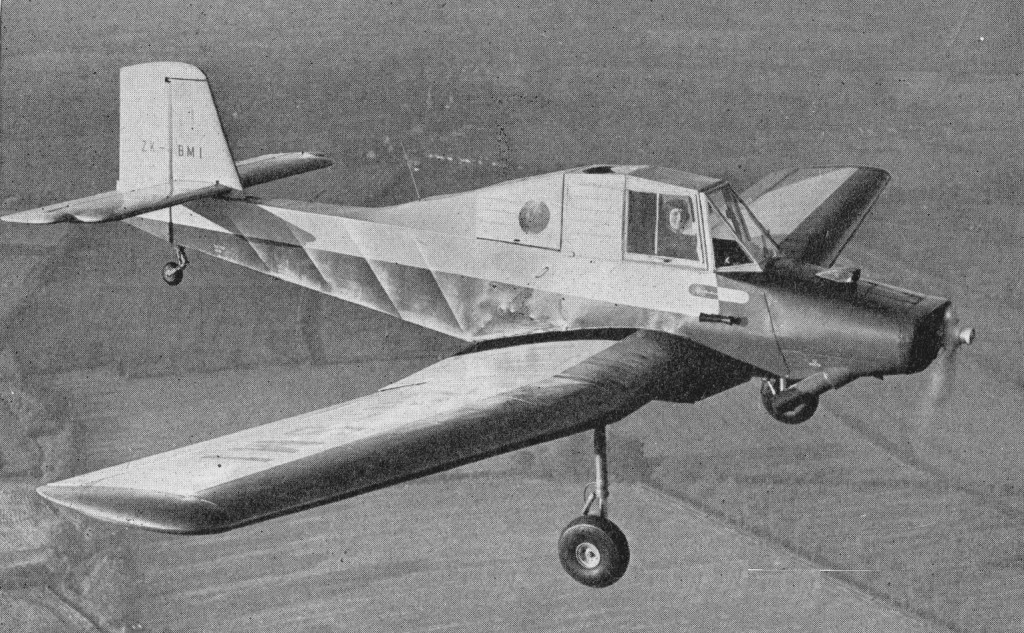
The prototype, ZK-BMI, was first flown by the Auster company from Rearsby in Leicestershire on December 8, 1955; it was the first of 15 Agricolas laid down, although only seven were actually completed. Another three were later built up in New Zealand from spares.

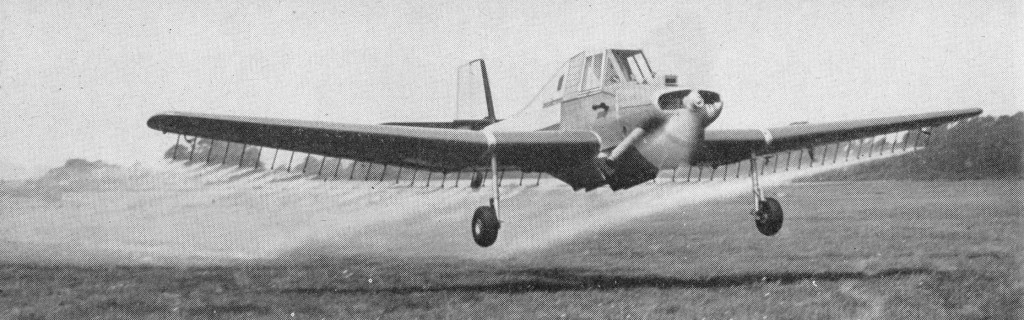
The Agricola is a simple aeroplane, built of welded steel tube with fabric covering aft of the front spar, except for a small portion at the root of the outer wings which is metal to withstand drag loads. A 1,680 lbs capacity hopper is situated behind and below the pilot, with a trunk leading to it from the hopper mouth at the top of the cockpit. A separate 173 US gallon tank located in the starboard wing root was used on the spray version to give a quicker changeover to liquid application. The spray bars were located inside the wing, with the nozzles protruding behind the trailing edge.

New Zealand first saw the Agricola in October 1956 when the local agents, the Bristol Aeroplane Company, imported the second aircraft, ZK-BMJ, for a demonstration tour of the country. But despite an extensive showing of the aircraft there was little enthusiasm for the type, and it faced stiff competition from types such as the FU24 and Cessna 180 which were also just coming onto the market. Its tube and fabric construction, which was intended for ease of repair and maintenance in much the same way as the Tiger Moth it was designed to replace, was seen by many operators as a retrograde step, and they preferred to go the modern, all-metal way.
As well, the Agricola required a number of modifications before it was able to go into commercial use, and topdressing firms were not prepared to wait around until these were sorted out.
One aspect that makes it unique and which considerably eases the pilot workload is the hydraulically-operated hopper doors and flaps. These are run off an engine-driven pump and during the course of the day’s topdressing save the pilot a considerable amount of work by not having to continually pull levers during sowing runs and landings. Originally powered by a 240 hp Continental flat six engine, the remaining Agricolas were re-engined with the 260 hp version.
The single seat enclosed cockpit was originally entered by a door opening over the top of the cockpit, but this was replaced by a forward swinging side door to stop superphosphate entering the cockpit. There is also a side-by-side two-seat cabin just aft of the hopper trunk with a rearward facing bench seat. The rear fuselage is sealed to stop dust and superphosphate getting inside, and special filters are fitted to counter any changes in humidity and atmospheric pressure. The rear fuselage also provides another example of the Agricola’s simplicity, the nylon-coated control cables for the elevator and rudder which ran along the outside of the fabric.
Seven built.

Engine: Continental, 240 hp or 260 hp.
Span: 42 ft 00 in
Length: 28 ft 01 in
Height: 8 ft 5 in
Wing area: 254 sq.ft
Empty weight: 1920 lb
Loaded weight: 3,675 lb
Wheel track: 14 ft 4 in

Auster A.109 Airedale / A.111 / Beagle A.109 Airedale

The four-seat Beagle-Auster A109 Airedale prototype made its first flight on 16 April 1961 and was followed by eight pre-production models. The first production model flew on 24 February 1962 and 33 were sold by March 1964.

The 1963 model featured a 120 lb weight reduction with changes in interior trim and reduced equipment.

Beagle Airedale Brochure

The Airedale followed the same production methods as the Auster series, even to the extent of using some of the existing Auster jigs and tooling as a cost-saving measure. The fuselage was constructed using welded steel tube covered with fibreglass and light alloy at the front, the rear being covered in fabric. The wing construction was also all-metal, consisting of two main spars and a metal leading edge. Apart from fibreglass wingtips, the main covering of the wig was fabric.

Lycoming Airedale

One area that differed from the Austers was the use of an American engine, the 180 hp Lycoming O-360-A1A, although the 175 hp Continental GO-300 was also offered as an option.

The A111 Airedale, introduced in 1963, was essentially the same as the A109 except that 120 lb had been cut from the weight of the aircraft and it was powered by a 175 hp Continental GO-300 engine.

Production of the Airedale ended after only 43 aircraft had been built, and 3 of the 43 were never sold, unable to compete with aircraft such as the Cessna 172.

All production work on Auster designs finally ceased in 1967 when Beagle sold all rights to Hants and Sussex Aviation.

Gallery

A.109
Engine: Lycoming O-360-A1A, 180 hp
Wingspan: 36 ft 4 in / 11.07 m
Length: 26 ft 4 in / 8.02 m
Cabin length: 6 ft 9 in / 2.06 m
Cabin max width: 3 ft 4 in / 1.02 m
Cabin max height: 3 ft 9 in / 1.14 m
Baggage compartment: 5 cu.ft / 0.14 cu.m
Empty weight: 1700 lb / 771 kg
MTOW: 2750 lb / 1247 kg
Max cruise 6000 ft / 1830 m: 116 kt / 133 mph / 214 kph
Max ROC SL: 650 fpm / 198 m/min
Service ceiling: 12,000 ft / 3660 m
Max range 660lb/300kg payload, 50 Imp.G/227 lt, no res: 720 nm / 830 mi / 1337 km
Seats: 4
Under carriage: nose wheel.

Auster Mk.V / J/1 Autocrat / Aiglet / Kingsland / Workmaster

Auster J/1N Alpha

The Auster 5 is a three-seat civil conversion of the (Model J) A.O.P.5, 790 of which were produced during war years. The Auster 5 retains the 130 hp Lycoming O-290-3/1 engine as does the Auster 5A four seat conversion.

The first version of the two-seat Aiglet, the J/1B, appeared in 1949, and was essentially a modified Autocraft with a re-designed fin and rudder assembly and a Gipsy Major engine.
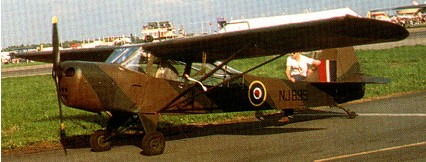
Auster Mk.V / J/1 Autocrat / Aiglet Article

Auster 5

Building and assembling the Autocrat was carried out in two different sections one dealing with the mainplanes, and the other with the fuselage. The fuselage was constructed of welded steel tube. The first stage in its assembly was the rough weld, where the framework was tack welded in such a fashion as to preclude the possibility of frame distortion while it underwent the next process, known as clustering. In this operation the fuselage framework was held in a jig, rotated about its centre line and welded again, this time where several tubes met hence the clustering. Smaller parts of the framework were then tack-¬welded in position and, finally, the fuselage underwent a full weld and cheek before passing on to the sandblasting and paint spraying shops. The fuselage was then ready for the assembly lines.

Stringers were fitted, together with the tanks, floorboards, control torque shaft etc, and then the line moved forward for fabric covering. This was followed by doping and taping.

The Perspex roof and panels, in addition to the inner cabin fittings, such as the seat frames, then the tail surfaces were attached to the main frame.

The wings were of straightforward construction, with nicrol ribs and laminated spruce spars.

Most of the fabric covering on the wings and fuselage was carried out by women, who formed a large proportion of the 350 people then employed by Auster Aircraft at Thurmaston.

The wheels were then installed and, after the instruments had been inserted, the front bulkhead and the windscreen were mounted. The Blackburn Cirrus Minor Series II engine was then installed, and the cowling and doors were fitted, by which time the airframe had been completely doped in its colour scheme. The upholstery was added after doping. The wings were not fitted in the factory, the major sub-assemblies being transported by road to the assembly shops at Rearsby for final rigging and air testing.

Auster Mk.V

With a long range slipper tank, the Mk.V had a range of 600 miles (960 km) at a cruise speed of 85 mph. The Auster J/1 Autocrat, built in 1946 as a three-seater, was powered by 100 HP Blackburn Cirrus II. A lower powered version of the Mk.V AOP the first production model flew in March 1946. The Autocrat seats up to four. Similar to the Mk.V, the most obvious difference was an upholstered interior and basic fixed instrument panel. Structurally, corner braces replaced the rear upper cabin tube, a one-piece moulded windscreen was fitted, and the side and rear cabin windows were shortened.

Only 420 of the three-seat J/1 Autocrats were manufactured by Auster Aircraft before the introduction of the four-seat J/1A. In 1946, was priced at £975.

1949

Also in 1949, Auster completed modifications to the Autocrat for crop dusting and successful demonstrations were carried out near Rearsby.

804 aircraft built, including three floatplanes, based on the Mk IV but with an improved instrument panel for blind and night flying capability.

Auster J1B

Variations included the J/lA with a fourth seat and the J/1N Alpha powered by a 120 HP DH Gipsy Major and the J/1B Aiglet which returned to the Cirrus. A usual load for the Aiglet was 5cwt (250kg). Only one of the Mk.Vc was produced, for the 1950 King’s Cup Race, powered by 140 hp Gipsy Major 1. At least one was fitted with a Lycoming O-290 of 130 hp.
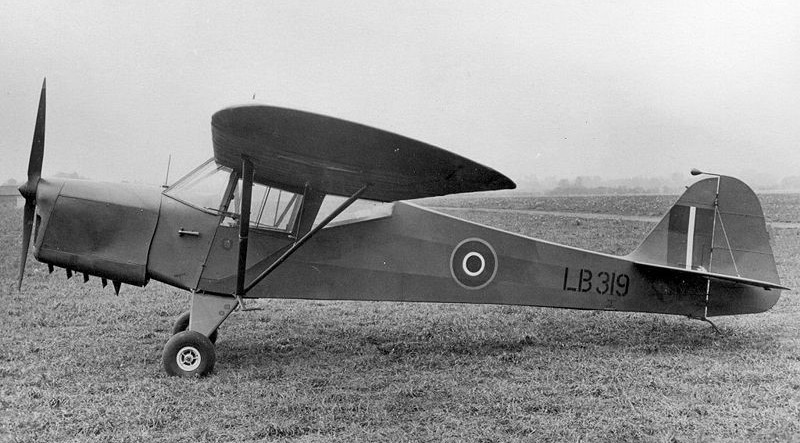
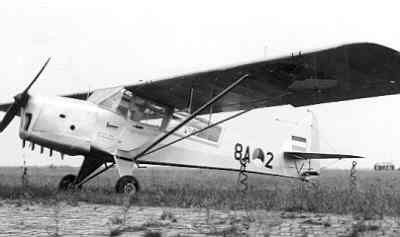
Auster J1B

The J/1B Aiglet introduced in 1950 was originally conceived as a topdressing and agricultural aircraft. It was powered by the same 130 hp Gipsy Major I engine used in the J/5, and was almost identical to the Autocrat with the exception of a revised fuel system, shorter landing gear and a larger horn-balanced rudder.
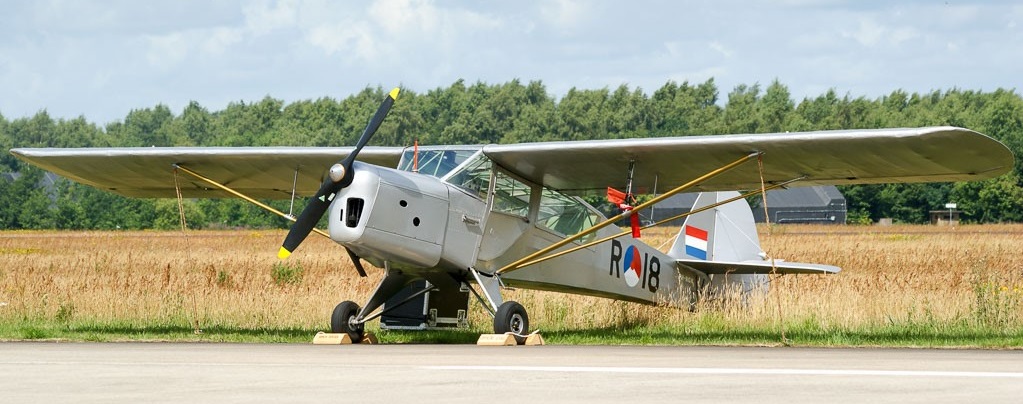
Auster Aircraft at Rearsby developed the J-1U Workmaster for agricultural work. Powered by a 180 hp Lycoming O-360-A, the first flight was on 22 February 1958. The model was in production for 1958.

J-1U Workmaster

Auster Workmaster Article

Auster J1B

By 1955 more than fourteen nations were using the Aiglet Trainer (Gipsy Major 10 engine) for various civil and military duties. A side-by-side two seater, a third seat can be fitted at the rear. The Aiglet Trainer has a relatively short wing span which is four feet less than previous Austers. The fuselage is welded steel tube construction, and the wings have two wooden spars and light alloy and steel ribs. They are fitted with dual controls and wheel brakes.
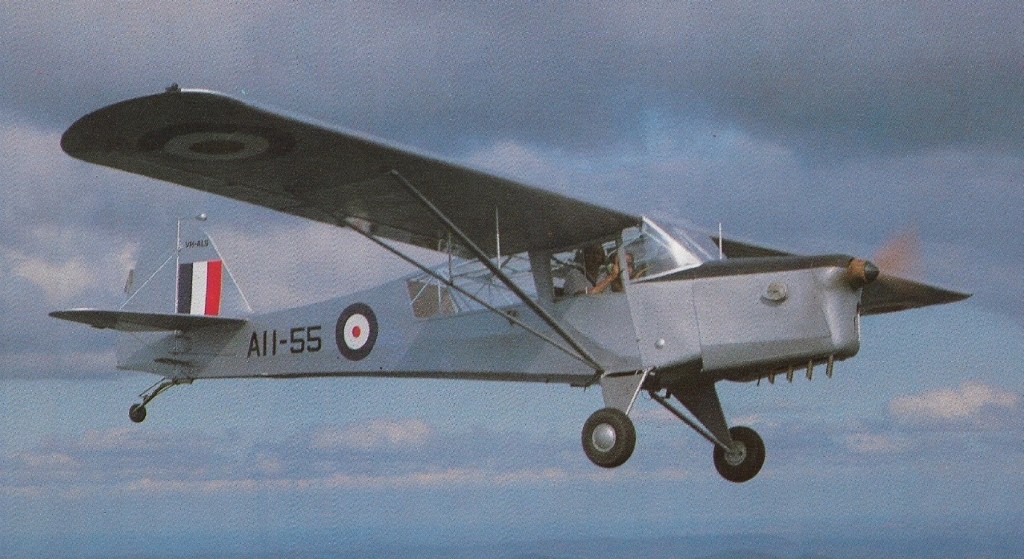
Auster Aiglet Trainer

Five Auster J/1 were modified to two-seater with a Continental O-200, AOP.6 wings, split flaps, Cessna 150 wing mounted fuel tanks and wheel/brake assemblies. These Auster Kingsland received LAA Type Number 815.

Auster Kingsland

The J/1N produced in 1957 was almost identical to the J/1B Aiglet but was equipped with two seats in the front of the cabin and a bench seat in the rear for one adult and two children. It was fitted with the same Gipsy Major engine as the Aiglet but included and oil cooler.
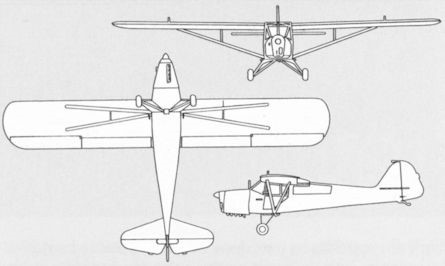
Gallery

Auster 5
Engine: 130 hp Lycoming O-290-3/1
Wingspan: 36 ft
Length: 22 ft 5 in
Height: 6 ft 8 in
Empty weight: 1050 lb
Loaded weight: 1850 lb
Max speed: 130 mph
Cruise: 112 mph
Seats: 3

Mk.V
Engine: Lycoming O-290C, 120 hp.

Auster 5A
Engine: 130 hp Lycoming O-290-3/1
Seats: 4

Auster 5C
Engine: 145 Gipsy Major I
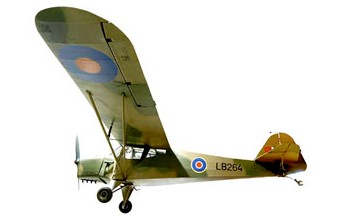
Mk5D
Engine: Lycoming 0320 E2D 150HP
Maximum all up weight 2100lbs
Empty weight 1350lbs
Useful weight 750lbs

J/1
Engine: Cirus Minor.

J/1 Autocrat
Engine: Blackburn Cirrus Minor 2, 90 hp
Wingspan: 36 ft
Wing area: 185 sq.ft
Length: 23 ft 5 in
Height: 6 ft 6 in
Empty weight: 1052 lb
Loaded weight: 1850 lb
Max speed: 120 mph
Cruise: 100 mph
Ceiling: 15,000 ft
Range: 320 mi
Seats: 3
420 built

J/1B Aiglet
Engine: 1 x 145HP Gipsy Major VII
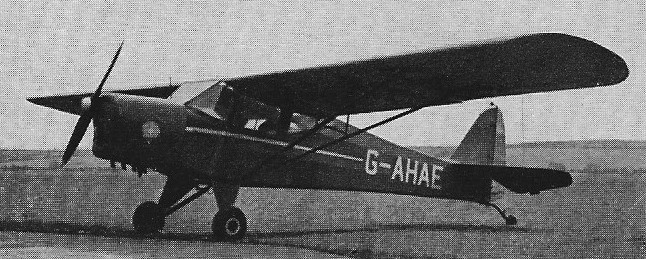
Wing span: 11 m (36 ft)
Length: 7.1 metres (23 ft 5 in)
Fuel capacity top tank 68 litres
Bottom tank 63 litres
Burns 32 litres per hour at 2400 revs
Endurance 3.75 hours
Cruise speed 92 knots
Takes off approx 100 -120 metres solo
Seats: Three or four

J/1N Alpha

J/1U Workmaster

J/1Y
Engine: Lycoming O-320, 160hp.

Kingsland
Engine: Continental O-200, 100 hp
Seats: 2

J/1 Autocrat

Auster / Taylorcraft Aeroplanes Mk.IV

Auster Beagle built over 1600 Mark (Mk) I-V’s for the British Army, which used all but the Mk II in their Air Observation Post (AOP) squadrons. The Auster’s main roles were artillery spotting, supply drops, liaison, casualty evacuation and photographic reconnaissance, for which it was well-suited; its short take-off and landing (STOL) abilities enabled it to operate from small landing fields.

254 Mk.IV were built, based on the Mk II but with a larger cabin for one extra person.

Auster Mk IV
Type: three-seat air observation post.
Engine: one 130-hp (97-kW) Lycoming 0-290-3.
Maximum speed 130 mph (209 kph) at sea level
Range 250 miles (402 km).
Empty weight: 1,100 lb (499 kg);
Maximum take-off weight: 1,850 lb (839 kg).
Wing span 36 ft 0 in (10.97 m)
Length 22 ft 5 in (6.83 m)
Height 8 ft 0 in (2.44 m)
Wing area: 167.0 sq ft (15.51 sq.m).
Armament: none.

Auster III / Model E / AOP.3

Auster III

The Auster II was a re-engined aircraft with an American 130 hp (97 kW) Lycoming O-290 engine. Due to the shortage of American engines that version was not built but led to the two-seat, composite wood and metal structure, fabric covered, Auster III (Model E), which was the same as the Auster I but had a 130 hp (97 kW) de Havilland Gipsy Major engine.

Auster Beagle built over 1600 Mark (Mk) I-V’s for the British Army, which used all but the Mk II in their Air Observation Post (AOP) squadrons. The Auster’s main roles were artillery spotting, supply drops, liaison, casualty evacuation and photographic reconnaissance, for which it was well-suited; its short take-off and landing (STOL) abilities enabled it to operate from small landing fields.

Auster AOP Mk.3

In January 1945 the Dutch Auster squadron RAF became operational. It was equipped with 19 Auster III’s which were mainly used for liaison purposes.

AOP.3

The RAAF Auster AOP Mk IIIs, of which A11-1 was originally a Mk II, were allotted to Nos 16 and 17 AOP Flights, and the official history ‘Air War Against Japan’ describes these aircraft in operations. Somewhat surprisingly, the volume also pictures A11-5 with aggressive “sharks teeth” markings.

Auster III VH-ALS / A11-55 (c/n 293)

In post-war years, Auster continued to operate with No 16 AOP Flight until 24 July 1959 when A11-41 and A11-53 were flown from Canberra to Tocumwal by Captain Doyle and Lieutenant Constable, the latter being the last Auster-trained pilot before the arrival of the Cessna 180As. In all 56 Mk III and two Mk V Austers appeared on the RAAF register.

A small number of these aircraft (23+) were used in Greece by 345, 346 and 347 Reconnaissance Flights from 1945 to 1948, before being replaced by the T-6 Harvard. They were also used as medical transport and liaison airplanes and at least one was used by the Anti-malarial Squadron. They were all withdrawn by 1953.

470 Mk.IIIs were built.

Gallery

Auster AOP Mk III
Engine: 130-hp/97-kW de Havilland Gipsy Major I
Wingspan: 10.97 m (36 ft)
Length: 7.14 m (23ft 5in)
Height: 2.44 m (8ft).
Empty weight: 476 kg (1100lb)
Loaded weight: 771 kg (1,700lb).
Maximum speed: 209 km/h (113 kt)
Cruising speed: 174 km/h (94 kt)
Initial climb: 213 m (700 ft)/min
Ceiling: 15,000ft (4572 m)
Range: 402 km (217 nm)
Armament: None
Crew: 2

Auster Plus Model D / Taylorcraft Aeroplanes Mk.I

This design originated with a pre-war American light cabin monoplane of 1938 built in England under licence. Successful trials with impressed civilian Taylorcraft Plus D aircraft by the Army for artillery spotting duties led to the introduction of the first fully militarised Taylorcraft, the unarmed two-seat Auster I.

One hundred were built, entering service with No 654 Squadron in August 1942 as the first fixed wing aircraft in British Army service and along with the succeeding Auster marks III, IV and V they served in with the Desert Air Force in North Africa, and in Sicily, Italy, and with the 2nd Tactical Air Force from Normandy to Germany in 1944-45, flown by British Army officers trained by the RAF. The survivors were sold out of front-line service by 1946, though the Fleet Air Arm operated a few in second-line units.

Engine: 90-hp/67-kW de Havilland Cirrus Minor I
Wingspan: 36 ft
Length: 22 ft 11 in
Empty weight: 125 mph
Loaded weight: 1400 lb
Max speed: 125 mph
Cruise: 107 mph
ROC: 1000 fpm

Aurore Souris bulle

Designed by Michel Barry, the Souris bulle is built entirely of wood. The company supplied kits in various forms, up to a complete airframe ready to cover.

Engine: JPX 4T60, 60 hp
Wing span: 11.25 m
Wing area: 15.1 sq.m
MAUW: 450 kg
Empty weight: 170 kg
Fuel capacity: 2 x 25 lt
Max speed: 170 kph
Cruise speed: 150 kph
Minimum speed: 65 kph
Climb rate: 5.5 m/s
Pwr off sink: 1.35 m/s
Fuel consumption: 10 lt/hr
Seats: 2
Plan price (1998): 2300 Fttc
Kit price (1998): 110 000 Fttc