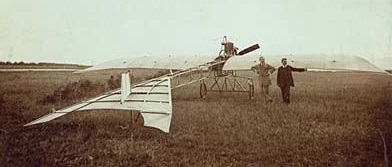
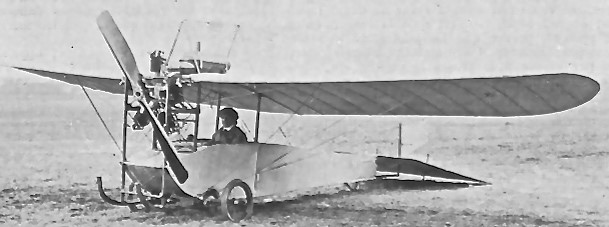
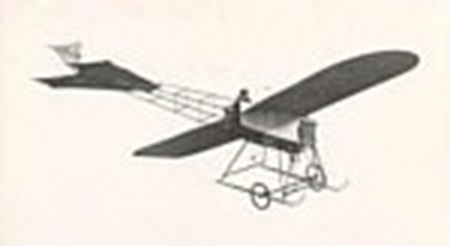
The Vlach No.4 was the first successful Czech aircraft, including its Czech engine, a 38 hp Laurin & Klement type L. Beginning in 1908 Metoděj Vlach was employed as the chief mechanic at Laurin & Klement in Mladá Boleslav where his first airplane, an underpowered biplane, was built. His No.4 was already started in 1911 and together with helpers Vítek and Ševit the new monoplane was finished in the summer of 1912 and exhibited at the Mladoboleslavská severočeská výstava (Northern Czech Mlada Boleslav Exposition), there winning the Gold medal.
In early 1993, Jim Rice and Tom Stark of the fledgling VisionAire Corporation visited Scaled Composites with conceptual designs for a new single-engine business jet. Rice, a successful entrepreneur and general aviation pilot, had a vision that such an aircraft would be a market success; Stark, an experienced aerospace engineer and manager, shared that vision, and got to work making it a reality.
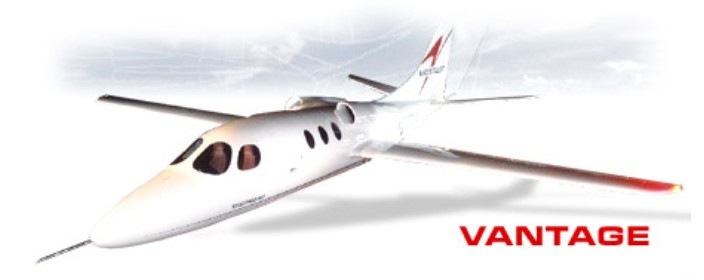
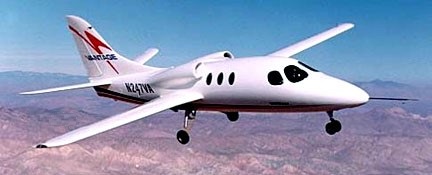
Following a design and feasibilty study performed by Scaled in late 1993, and a bit of time while Rice and Stark put together their financial backing, Scaled was given the go-ahead to build a proof-of-concept (POC) prototype on 8 March 1996. The Vantage differed from contemporary executive jets in that it was powered by a single engine, a Pratt & Whitney Canada JT15D turbofan buried in the rear fuselage, fed by twin air-inlets above the fuselage. It was of all-composite construction, and its wing was forward swept to reduce drag and to allow an unobstructed cabin by mounting the wing spar behind the cabin. It was planned to sell the Vantage for $1.65 million, compared with $3.3 million for the Cessna CitationJet.
Only one problem, though: they wanted to show photographs and films of the airplane flying at the 1996 National Business Aircraft Association (NBAA) convention, scheduled to begin on 19 November.
Under a $2.5 million fixed-price contract, Scaled rolled out the Vantage to a large group of customers and press just 8 months later (8 November), and performed a picture-perfect first flight on 16 November 1996 (piloted by Doug Shane). The photos made it to NBAA, and the Vantage POC got to work in flight testing.
VisionAire Vantage N247VA
Flight testing revealed several handling and aerodynamic problems, which resulted in a redesign of the aircraft in December 1998.
Delays to the program continued, while costs mounted, and in January 2003, with the company having already spent $110 million, requiring another $125 million to complete certification and owing $35 million, a Federal Judge ordered VisionAire liquidated to pay its debts in 2003.
The project was acquired by Eviation Jets, which planned to produce it as the redesigned EV-20 Vantage Jet. Eviation Jets acquired the Vantage technical drawings, trademarks and tooling from bankrupt VisionAire in October 2003 and established a subsidiary in São Paulo to lower its overheads. The Brazilian CTA authority has approved a formal application by Eviation Jets to participate in the certification of the EV-20 twin-turbo¬fan derivative of the VisionAire Vantage business jet. The US Federal Aviation Administration maintains a reciprocal agreement allowing the CTA to certificate aircraft in Brazil and receive dual certification in the USA. Eviation Jets do Brasil was responsible for attracting investment, and managing local subcontracts as well as company’s aerospace engineering team.
Following the purchase of the Vantage by Eviation Jets, the proposed EV-20 was envisioned as a twin-engine design with two 2,100lb-thrust (9.4kN) Williams FJ44-1AP turbofan engines, with a projected cruise speed of 424 knots (785.2 km/h) at 36,000 feet (10,972.8 m) with an approximate range of 1,300 nautical miles (2,407.6 km). In the executive configuration it would have provided room for eight passengers, or ten commuter passengers. It would incorporate Garmin G1000 avionics, and would be made entirely from composite materials. kBky 2006, initial review of the EV-20 design were completed and construction of a prototype aircraft was expected to begin, utilizing an outside fabricator for construction of the prototype.
The redesign of the Vantage from a single- to a twin-engine design proved troublesome; the company failed to progress with the development of the type, and in 2012 the EV-20 was repurchased by VisionAire; the aircraft’s design was returned to a single-engined configuration, and VisionAire stated in early 2013 that they planned to construct the Vantage in a factory in Newton, North Carolina, with the prototype scheduled to fly in 2014. However, at the end of 2015 no further progress has been announced; latest update on the company’s website is dated March 2013.
The Vantage Proof-of-Concept (POC) aircraft was stored at the VisionAire Jets facility at the Hickory Airport, Hickory North Carolina (2013). Only the one was ever built.
Specifications:
VisionAire Vantage Engine: 1 × Williams FJ44-3AP turbofan, 3,045 lbf (13.54 kN) thrust Length: 41 ft 1 1⁄4 in (12.529 m) Wingspan: 47 ft 6 in (14.48 m) Height: 14 ft 4 in (4.37 m) Wing area: 234.0 sq ft (21.74 m2) Aspect ratio: 10.2:1 Empty weight: 4,930 lb (2,236 kg) Max takeoff weight: 8,200 lb (3,719 kg) Fuel capacity: 240 US gal (908 l; 200 imp gal) Maximum speed: 431 mph (694 km/h; 375 kn) (max cruise) Cruise speed: 288 mph (250 kn; 463 km/h) (econ cruise) Stall speed: 80 mph (70 kn; 129 km/h) (power off, flaps down) Range: 1,150 mi (999 nmi; 1,851 km) (max fuel, six occupants) Service ceiling: 41,000 ft (12,497 m) Rate of climb: 4,000 ft/min (20 m/s) Crew: 1 Capacity: 5 passengers
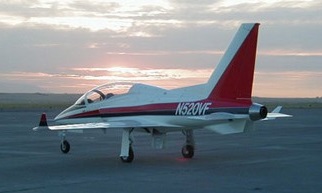
The Scott brothers and Dan Hanchette created the Viper Aircraft Company in 1995.
The ViperJet was the first two seater jet on the kit market in the USA. Originally designed to be equipped with a Continental TS10 520 engine with a 5-blade fan, the Mark I has a Turbomeca Marbore II or IV.
First flight with a Marbore VI was planned for October 1999.
The Marbore was to be eventually replaced by a General Electric J85 (military version of the CJ-610 of the Learjet 23) to give the Viper Mk II.
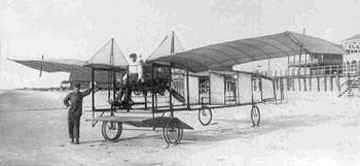
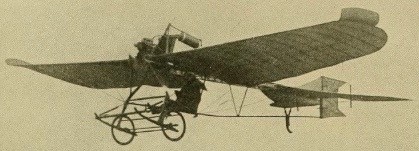
G. Vinet, an automobile and automobile-body builder of Courbevoie, northwest of Paris, started his aviation activities by building the first glider of Archdeacon. He then built several one-off monoplanes in 1910-1913. The type D was designed by P. James and completed in June 1911. It was tested at Chateaufort, but was found unsatisfactory.
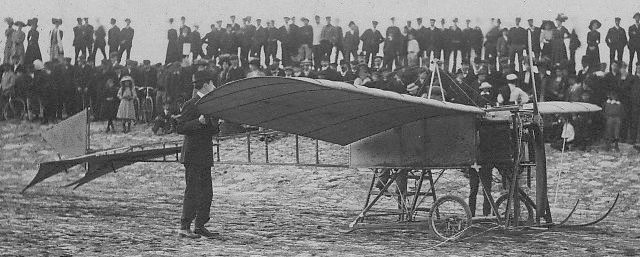
Gaston Vinet was a well-known French car manufacturer and coachwork builder in the 1900s, who became interested in airplanes around 1904. He started with the construction of gliders, then built a series of monoplanes between 1910 and 1913. The first Vinet monoplane (the 1910 type A) was designed after extensive research on the curvature of the wings, resulting in the characteristic upturned tips, and it was extensively tested with different centres of gravity to achieve maximum stability. The pilot was seated in a gondola under the wings. This arrangement lowered the center of gravity and provided good longitudinal and transverse stability.
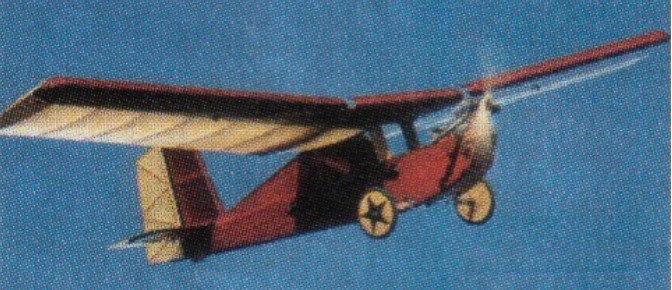
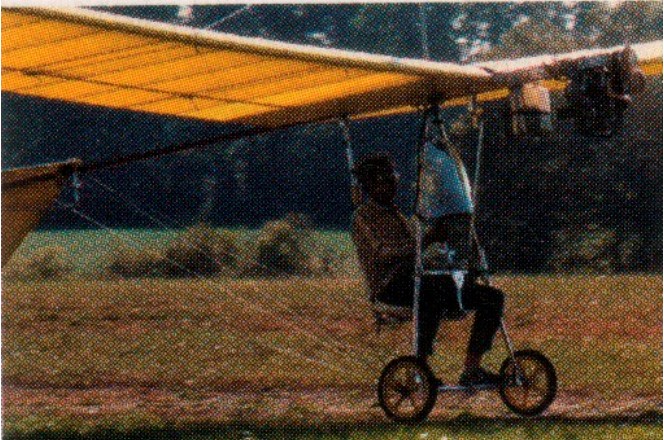
First flown in 1980 and introduced in 1982, the Sky Pup is a single seater designed as an FAR 103 Ultralight Vehicles compliant aircraft with an empty weight within that category’s 254 lb (115 kg) empty weight limit. The aircraft was intended to require the minimum financial investment and the designer intended that the airframe would be able to be completed for US$1000 using locally available materials. In 2001 that Sky Pups had been completed for US$2000, including the engine. A single-seat, high wing, cantilever, single engine, conventional landing gear ultralight aircraft that was designed by Steven K. Wood of Whitewater, Colorado for amateur construction.
The aircraft fuselage and wings are constructed from epoxy-glued Douglas fir, with foam wing ribs all covered in doped fabric or Dacron. The wing is a three-piece design, allowing quick disassembly for transport or storage. The landing gear suspension is made from maple wood. The Sky Pup can be built with an open cockpit or fully enclosed, allowing flying in cooler weather. The Sky Pup is available as plans only (for US$70). The power range specified is 18 to 28 hp (13 to 21 kW), with the largest engine specified the 28 hp (21 kW) Rotax 277. The 20 hp (15 kW) 2si 215, 28 hp (21 kW) Hirth F-33 and 22 hp (16 kW) Zenoah G-25 have also been used. Approxamately 350 were built.
The design was professionally engineered and incorporates a very clean cantilever wing that results in a 12:1 glide ratio. The control system is two-axis, using only elevator and rudder controls, roll being introduced by rudder via a generous dihedral angle. The elevator is stick-controlled, while the rudder is controlled via conventional aircraft pedals. The aircraft is stall and spin proof. Reported construction times are 450-600 hours.
Plans were initially sold direct by the designer and, in the early 2000s, by the Vintage Ultra and Lightplane Association. Later the designer’s son marketed the plans and this is the current source.
Sky Pup Engine: 1 × Zenoah G-25 , 22 hp (16 kW) Propeller: 2-bladed wooden Length: 16 ft 0 in (4.88 m) Wingspan: 31 ft 0 in (9.45 m) Height: 4 ft 4 in (1.32 m) Wing area: 130 sq ft (12 sq.m) Empty weight: 195 lb (88 kg) Gross weight: 400 lb (181 kg) Fuel capacity: 5 US gallons (19 litres) Maximum speed: 69 mph / 111 km/h / 60 kt Cruise speed: 55 mph / 48 kt / 89 km/h Stall speed: 26 mph / 23 kt / 42 km/h Range: 150 mi / 130 nmi / 241 km Rate of climb: 450 ft/min / 2.3 m/s Takeoff dist: 200 ft Landing dist: 100 ft Service ceiling: 5000 ft Lift-to-drag: 12:1 Seats: one Landing gear: tailwheel





 All Aero