Bernard V.1 / SIMB V.1

The Bernard SIMB V.1 (V = Vitesse) was a French single seat racing monoplane designed by Jean Hubert to compete for the 1924 Beaumont Cup requiring a 300 km (186 mi) flight round a 50 km (31 mi) circuit at Istres at an average speed of over 290 km/h (180 mph).

Alternatively known as the SIMB V.1: the Société Industrielle des Métaux et du Bois (SIMB), the V.1 had a cantilever shoulder wing of thin section, built around four spars with plywood and fabric covering. Straight edged beyond the centre section, it tapered only slightly to the oblique tips. The tailplane had curved, swept leading edges and carried split elevators with a cut-out for rudder movement. The fin was almost triangular, with a slightly convex leading edge; it carried a pointed rudder on a vertical hinge extending to the bottom of the fuselage.

The smooth, oval section fuselage was ply and fabric covered, tapering towards the tail. The pilot sat low down in a small open cockpit with narrow streamlined dorsal fairings in front and behind. His view forward was severely restricted by the central inline bank of four cylinders of the W-12 Lorraine-Dietrich 12E water-cooled piston engine. The engine was cooled by radiators in the wings, assisted for the first flight by a bank of radiators mounted between the undercarriage legs. These backward leaning legs were wide chord, faired cantilevers with large, unfaired wheels mounted on individual stub axles. The V.1’s conventional undercarriage was completed by a small tailskid.

The racer was completed in nine months and taken to Istres in May 1924 to prepare for the competition. Its first flight, piloted by Florentine Bonnet, ended in disaster. It was immediately apparent that the V.1 lacked longitudinal stability, oscillating uncontrollably in altitude; these oscillations persisted even as Bonnet reduced speed and attempted to land and the V.1 crashed at 200 km/h (125 mph), sliding on its back. Bonnet was fortunate to escape unhurt. The instability was ascribed to insufficient tailplane area combined with a far forward centre of gravity. With the race only a few days away, there was no time to repair the V.1 and development was abandoned.

Engine: 1 × Lorraine-Dietrich 12E W-12, 332 kW (445 hp)
Propeller: 2-bladed Levasseur (licence built Reed), metal, 2.45 m (8 ft 0 in) diameter
Wingspan: 10.50 m (34 ft 5 in)
Height: 2.50 m (8 ft 2 in)
Wing area: 15.50 sq.m (166.8 sq ft)
Empty weight: 900 kg (1,984 lb)
Gross weight: 1,050 kg (2,315 lb)
Maximum speed: 420 km/h (261 mph; 227 kn) estimated
Berliner-Joyce 29-1

The first product of the new company was the 29 1, a tandem seat cabin monoplane with a high wing, large windows and a 100 hp Kinner engine. It looked a great deal like a Curtiss Robin; not surprising because Henry Berliner had hired some men away from Curtiss. Temple Joyce first flew the 29 1 in August of 1929. Sales prospects looked good. Two and a half months later, the stock market collapsed. Berliner/Joyce set the 29 1 aside and concentrated on a more promising military contract for the XFJ-¬1, a Navy carrier fighter, a contract they had gotten in May of that year.

Berkshire Concept C-70

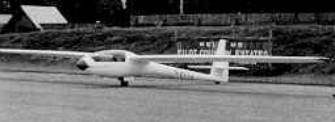
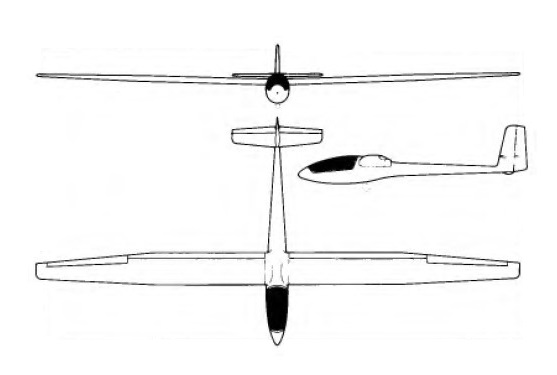
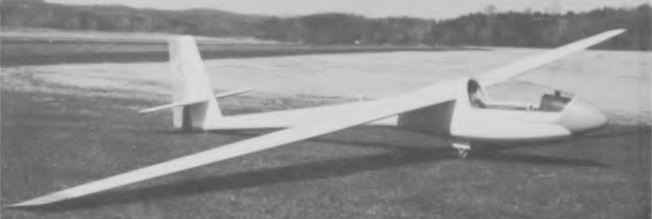
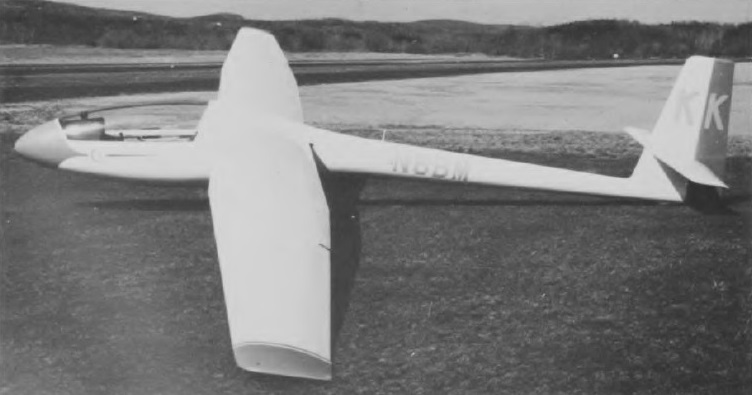
The Berkshire Concept 70, sometimes called simply the C-70, is an American, single seat, high-wing, 15 metre class competition glider that was designed by Arthur Zimmermann and produced by the Berkshire Manufacturing Corporation of Lake Swannanoa, New Jersey between 1971 and 1974.

The first US all-glassfibre sailplane, known as the Concept 70, did not make its first flight until 1970, some 13 years after the Akaflieg Stuttgart FS-24 Phonix had pioneered this material for sailplane structures. The single-seater Standard Class Concept 70 was the responsibility of Arthur Zimmerman and Wolfgang Schaer.

The Concept 70 was intended to be a domestic US fiberglass sailplane that would compete with the best European 15 metre aircraft being produced in the late 1960s.

The cantilever shoulder wings have a constant chord centre section and tapered outer panels, and are of glassfibre/PVC foam sandwich construction, with aluminium flaps lowering to 90°; up to 200lb (91 kg) of water ballast can be carried with optional water ballast tanks. The prototype has an Eppler airfoil and an all-flying horizontal stabilator. Production aircraft featured a Wortmann airfoil, a more conventional tail, and full-span flaps that deploy to 90° for glidepath control.

The glassfibre monocoque fuselage has a steel tube reinforcing frame connecting the retractable monowheel and wing fittings and continuing into the cockpit for greater strength and rigidity. The pilot sits in a semi-reclining seat, recessed for an American type parachute, under a one-piece flush Plexiglas canopy which is hinged and jettisonable. The manually-retractable Tost monowheel has a drum brake.

Differing in a number of respects from the prototype, the production version emerged with a Wortmann airfoil, full-span flaps, no brakes and a conventional horizontal tail.

Production by the Berkshire Manufacturing Corporation got under way in 1973, some 16 Concept 70s having been built by the spring of 1974. Production ceased, when Zimmermann died in 1974, after 21 were built.

The aircraft was never type certified and all aircraft were registered as experimental aircraft in the Racing/Exhibition category.

The Concept-70 molds and tooling were available for about US $35,000 including 40ft container.
ASC kits appear no longer to be in production.

Concept 70
Wingspan: 49 ft 3 in (15.0 m)
Wing area: 132 sq ft (12.3 sq.m)
Aspect ratio: 18.3
Airfoil: Wortmann
Empty weight: 550 lb (249 kg)
Gross weight: 875 lb (397 kg)
Maximum glide ratio: 39:1
Wing loading: 6.6 lb/sq ft (32 kg/sq.m)
Crew: one

Concept 70
Wing span: 15.0 m (49 ft 2.5 in)
Length: 7.31 m (24 ft 0 in)
Height: 1.83 m (6 ft 0 in)
Wing area: 11.52 sq.m (124 sq ft)
Wing section: Eppler/Wortmann
Aspect ratio: 20.0
Empty weight: 226 kg (500 lb)
Max weight: 396 kg (875 lb)
Water ballast: 91 kg (200 lb)
Max wing loading: 34.38 kg/sq.m (7.04 lb/sq.ft)
Max speed: 105 kt (195 km/h)
Stalling speed: 31 kt (58 km/h)
Min sinking speed at 43.5 kt (81 km/h): 0.62 m (2.03 ft)/sec
Max rough air speed: 105 kt (195 km/h)
Best glide ratio at 52 kt (96.5 km/h): 40

Beriev Be-200

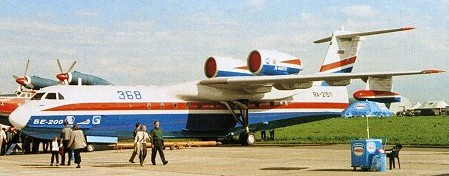
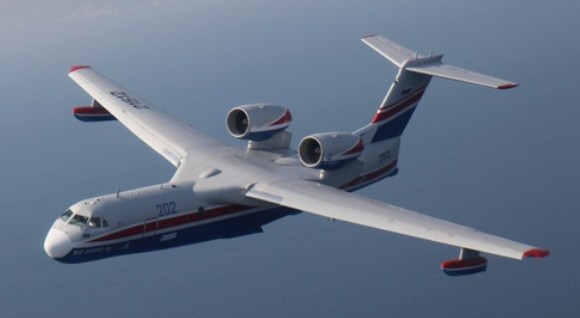
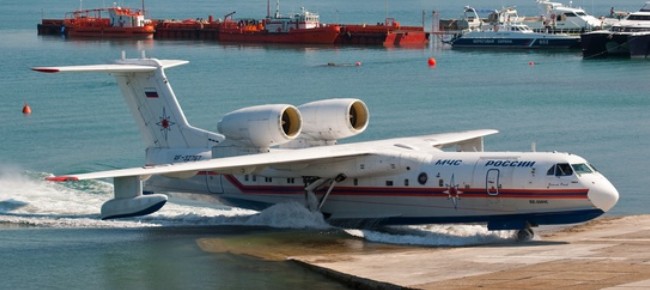
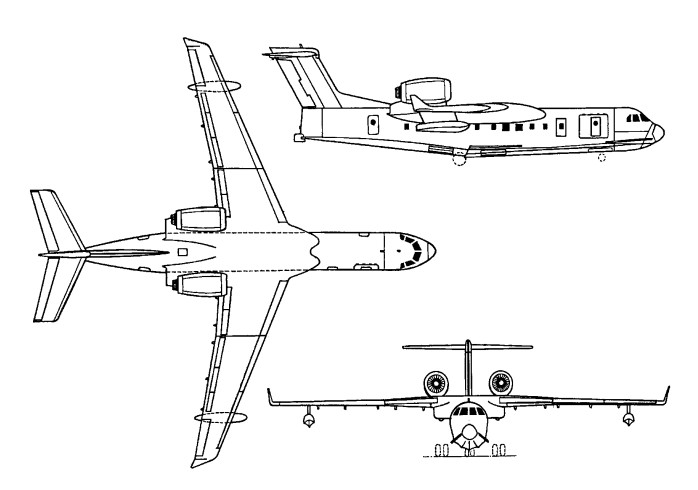
Beriev’s Be-200 multipurpose amhibious aircraft was designed as a further development of the A-40 antisubmarine aircraft. The Be-200 has a 66 passenger or 8000 kg cargo capacity. Six aircraft were launched into production at the Irkutsk Aviation Production Association. The first prototype flew on September 24, 1998.

Beriev Be-200ES multirole amphibious aircraft

Gallery

Engine: 2 x Progress D-436TP turbo-prop, 73.5kW
Wingspan: 31.8 m / 104 ft 4 in
Length: 31.2 m / 102 ft 4 in
Height: 8.7 m / 28 ft 7 in
Take-off weight: 37000-43000 kg / 81571 – 94799 lb
Max. speed: 710 km/h / 441 mph
Cruise speed: 600 km/h / 373 mph
Ceiling: 8000 m / 26250 ft
Range: 2100 km / 1305 miles
Range w/max.fuel: 3850 km / 2392 miles
Payload: 6.5 ton or 64 pax.
Crew: 2

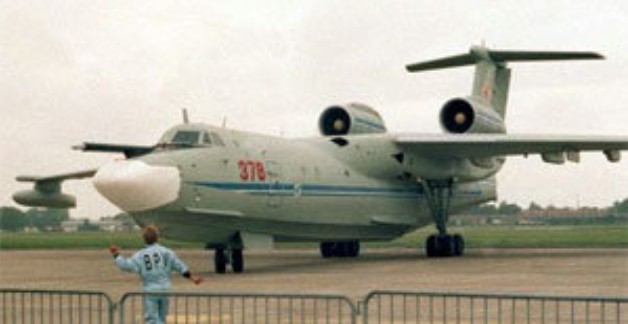
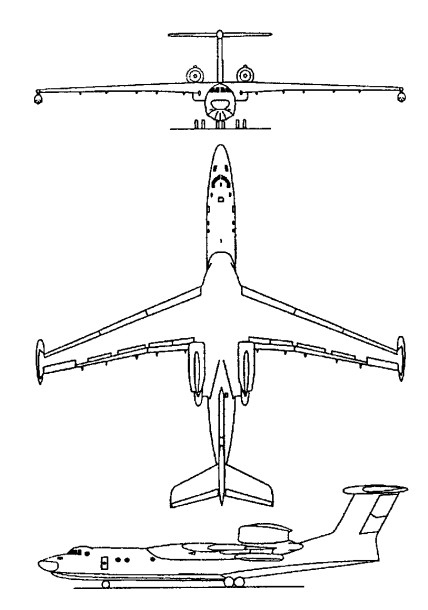
Beriev A-40 / Be-40 Albatross

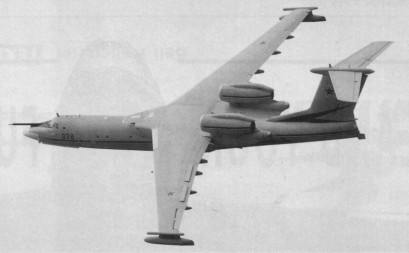
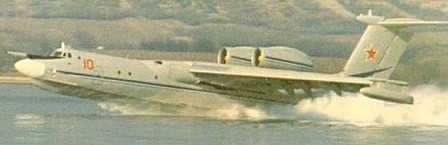
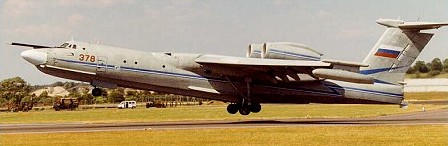
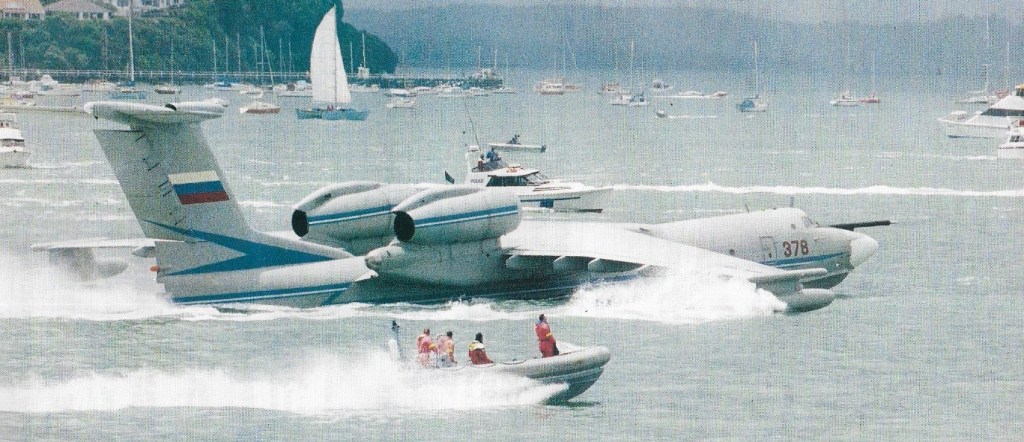
The A-40/Be-40 Albatross Mermaid turbofan-powered intermediate-range antisubmarine, search-and-rescue and patrol amphibian, first flown December 1986 and ordered for the Russian Navy in 1992 but not funded.
The A-40 amphibian aircraft is intended for antisubmarine warfare in the near coastal zone at any time of the day and year, in VFR and IFR weather conditions.
The aircraft is provided with an inflight refueling system.
Its onboard equipment provides for automatic solution of flight/navigation problems, search, detection, tracking and destruction of hostile submarines both in surface and submerged positions and on the sea bottom.
The equipment comprises a search/sighting system, a flight control and navigation complex, communications facilities, and other equipment. The search/sighting system consists of radar, sonar and magnetometric subsystems.

The engines are started by an auxiliary power unit and the cruise turbofans are equipped with a thrust reverser, thereby reducing the landing roll and the abortive takeoff distance.

The type first showed up in US reconnaissance photographs during 1988 satellite passes over Taganrog but the first “closeups” came with the amphibian’s surprise debut at an air show in August 1989. NATO dubbed the aircraft, christened Albatross by the G M Beriev Taganrog Aviation Scientific Engineering Complex, “Mermaid”.

A requirement for the two large 26,455 lb static thrust PERM Soloviev D 30KPV engines to be placed away from ingesting water saw an over wing configuration incorporated in the design. The rear part of the pylon ac¬commodates RD 60 booster engines providing an increase in thrust by 6065 lbs st apiece. In the SAR role the A 40 can cover 1240 nm (2000km) from its base and take on board up to 54 survivors. The crew usually totals five plus a rescue team of around four to six.
An improved search-and-rescue variant became the Be-42 (sometimes referred to in the West as A-45).

Gallery

Engines: 2 x PERM Soloviev D-30KPV turbofan, 117.7 kN (26,455 lb) and 2 x Klimov RD-36-35AFV, 24.5 kN
Take-off weight: 86000 kg / 189599 lb
Wingspan: 41.6 m / 136 ft 6 in
Length: 43.8 m / 143 ft 8 in
Height: 11.1 m / 36 ft 5 in
Wing area: 200.0 sqm / 2152.78 sq ft
Max. speed: 760 km/h / 472 mph
Cruise speed: 720 km/h / 447 mph
Ceiling: 9700 m / 31800 ft
Range w/max.fuel: 5500 km / 3418 miles
Range w/max.payload: 4100 km / 2548 miles
Armament: 6500kg
Crew: 8

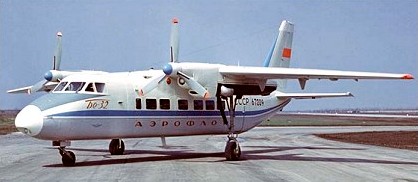
Beriev Be-32

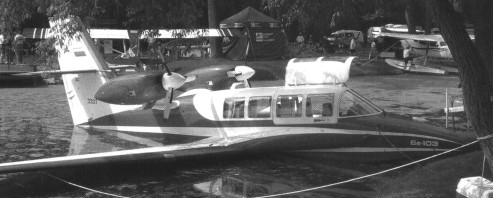
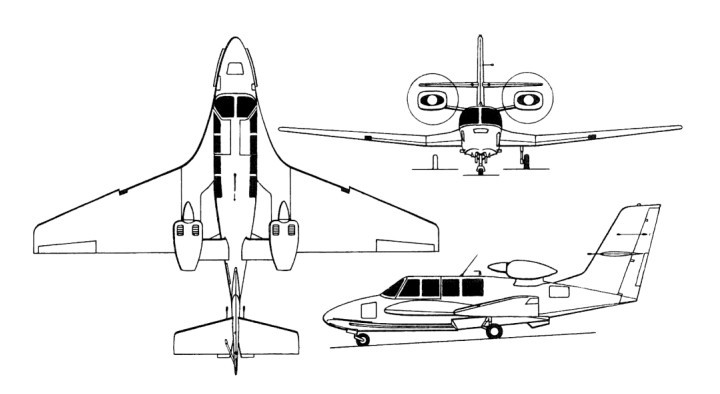
Beriev’s Be-32 were built for the ‘commuter’ programme in the 1970s, first flown in 1976. The LET 410 was selected, ten were built, and the Be-32 was cancelled.

Engine: 2 x Glushenkov TVD-10 turboprops, 708kW
Take-off weight: 5860 kg / 12919 lb
Wingspan: 17.0 m / 55 ft 9 in
Length: 15.7 m / 51 ft 6 in
Height: 5.46 m / 17 ft 11 in
Wing area: 32.0 sqm / 344.44 sq ft
Cruise speed: 480 km/h / 480 km/h
Range: 1300 km / 808 miles
Passenger cap: 16

Beriev Beriev Be-30

The Beriev Be-30 short-haul transport is the first landplane to be designed and developed by the Beriev design bureau. Seen publicly for the first time at the Soviet Aviation Day display at Domodedovo in 1967, it also appeared at the 1969 Paris Air Show. Designated Be-30, and allocated the NATO codename ‘Cuff, it was reported to have flown for the first time on 3 March 1967. A high-wing monoplane, the Be-30 was of all-metal structure and introduced features such as metal bonding, spot welding, and the use of stiffened skin panels of light alloy honeycomb. The retractable tricycle landing gear incorporated stalky main units, retracting into the rear of the engine nacelles. Power-plant of the prototype consisted of two 552kW Shvetsov ASh-21 radial piston engines, but two Glushenkov TVD-10 turboprops were used to power the very small number of production aircraft. Accommodation was provided for a crew of two and 14 passengers, and features included air-conditioning and blind-flying equipment that incorporated an autopilot and an automatic approach system.

Engines; two Glushenkov TVD-10 turboprops
Pax cap: 14

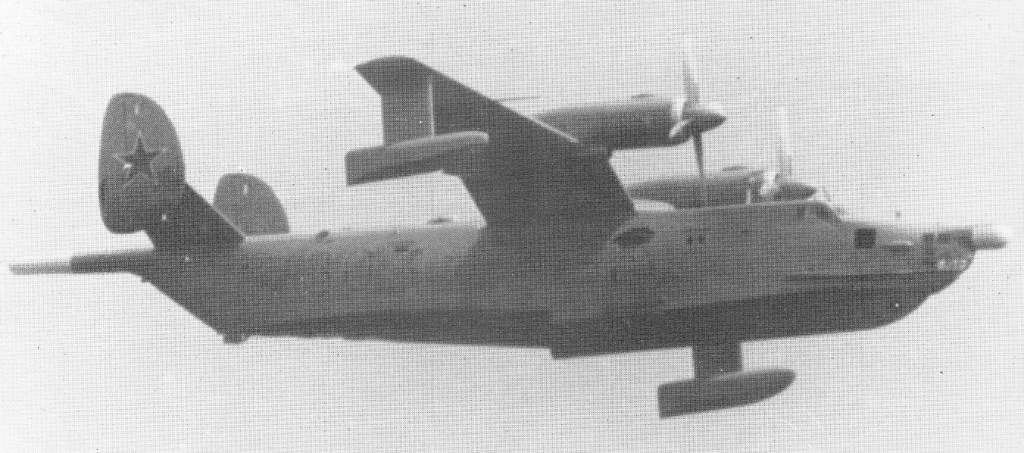
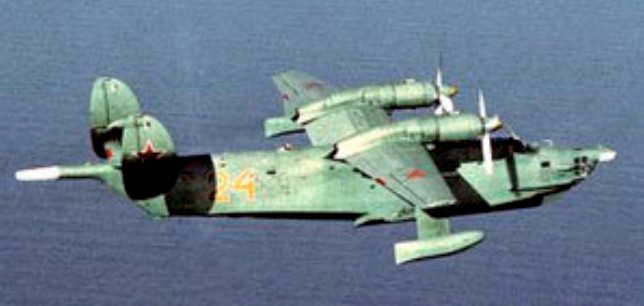
Beriev Be-12 / M-12

The lessons learned in the design of the R-1 and Be-10 were incorporated in the design of a much improved flying-boat based loosely on the Be-6 and identified originally by NATO as a re-engined version of the older type.

Beriev Be-12 Article

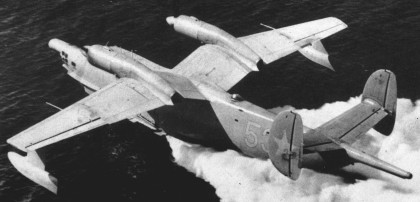
The Be-12 Tchaika (Seagull), designated M-12 in AV-MF service, has the gull-wing layout and twin tail of its predecessor. The greater power and lighter weight of the turboprop engines have permitted a forward extension of the hull, with a new planing bottom. The prominent spray suppressor around the bows of the Be-10 is also a feature of the turboprop aircraft.

The addition of a retractable landing gear makes the Be-12 amphibious. MAD (magnetic anomaly detection) gear extends 15 ft behind the tail. The search and mapping radar projects far ahead of the glazed nose, and much of the hull is filled with equipment and there is a weapon and sonobuoy bay aft of the wing with watertight doors in the bottom aft of the step.

The Be-12 turboprop aircraft, first seen at the 1961 Moscow Aviation Day at the same time as the swept-wing Be-10, has fast become the Soviet Union’s standard large marine aircraft.
The weight-lifting capability of the Be-12 was demonstrated in a series of class records for amphibians set up in 1964, 1968 and 1970, suggesting a normal weapons load as high as 5000kg. The Be-12 can load on the water through large side hatches in the rear fuselage, and stores can be dropped through a watertight hatch in the hull aft of the step.
Be-12s have set many class records for speed, height and load-carrying. They were based all around the Soviet shores and in Egypt and, possibly, other countries.
NATO code name ‘Mail’.
It is also believed to have been used for mapping, geophysical survey and utility transport. By Soviet standards the type was not built in large numbers, only 95 being reported in service in the late 1980s.

Be-12 (M-12) Tchaika
Engines: 2 x Ivchenko AI-20D single-shaft turboprops, 4,190 ehp / 2940kW
Wing span: 97 ft 6 in (29.7 m)
Wing area : 1030.007 sqft / 95.69 sq.m
Wing load : 63.14 lbs/sq.ft / 308.00 kg/sq.m
Length overall: 99 ft (30.2 m)
Height on land: 22 ft 1½ in (7 m)
Empty weight: approx 48.000 lb (21.772 kg)
Max take off weight : 65047.5 lb / 29500.0 kg
Max. speed : 329 kts / 610 km/h / 379mph
Cruising speed 199 mph (320 km/h)
Initial climb rate : 2992.13 ft/min / 15.20 m/s
Service ceiling 38.000 ft (11582 m)
Range with full equipment: 2160 nm / 2.485 miles (4000 km)
Armament: at least 6600 lb (3000 kg) sonobuoys and AS bombs in internal weapon bay; one to three external hard points for stores under each outer wing.
Crew: 6-10