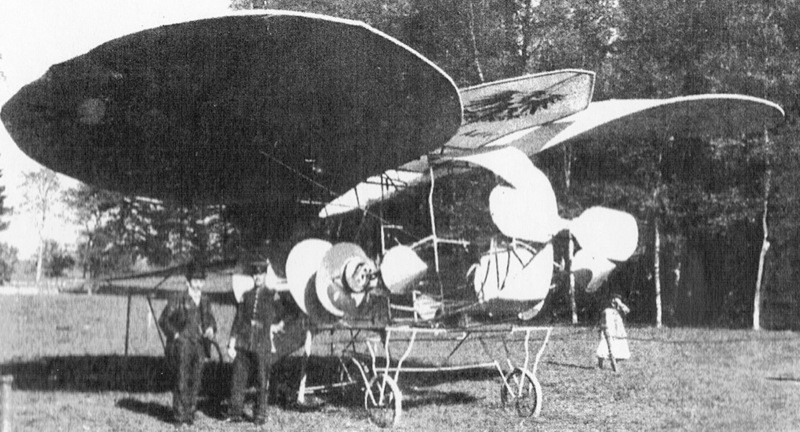
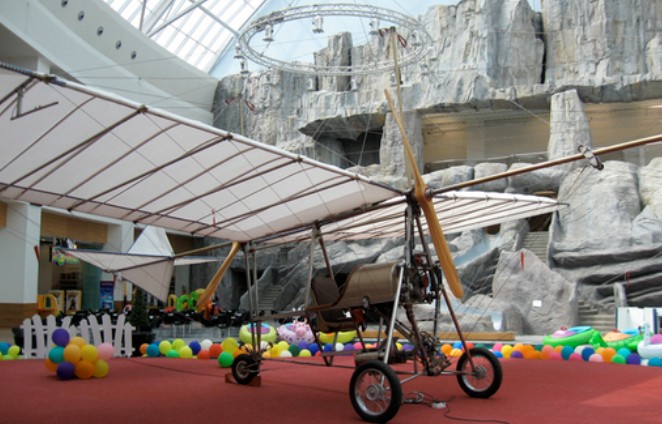
“Der Adler” was a bird-like monoplane designed by Karl Vogt and Johann Stockhausen, displayed at the “Schützenplatz” in Paderborn in October 1909. The 17 m long machine of 9 m span did apparently not fly, not even with the help of a 60 hp Dürkopp engine.
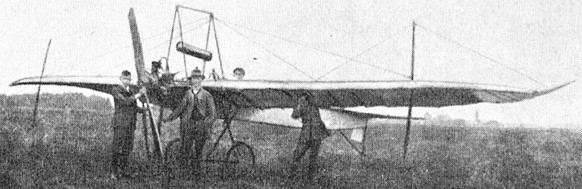
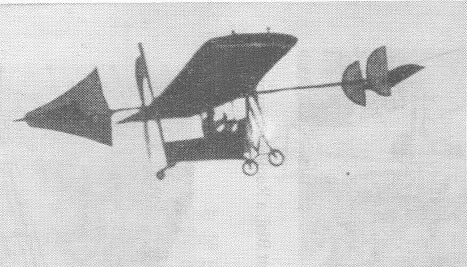
Based on the Taube design and built by Richard Vogt when he was just 16-years old, this machine was test flown on the Mutlanger Heide but unfortunately crashed on its first flight. Vogt designed this 30 hp Anzani-powered monoplane together with an unknown friend during 1911 through early 1912.
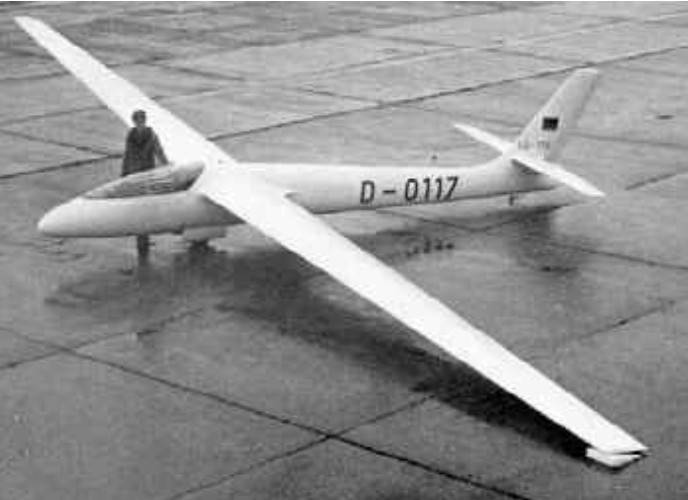
A 1952 aerobatic glider, designed by Alfred Vogt and Wolf Hirth. Forty five were built.
Vogt Lo 100 Zwergreiher Length: 20.177 ft / 6.15 m Wingspan: 32.808 ft / 10.0 m Wing area: 10.9 sq.m Aspect ratio: 9.17 Airfoil: Clark Y 16% Empty Weight: 143 kg Gross Weight: 265 kg Wing Load: 24.3 kg/sq.m Water Ballast: 0 Max. speed: 157 kts / 290 km/h Seats: 1 MinSink: 0.80 m/s 72 kph L/DMax: 25 85 kph
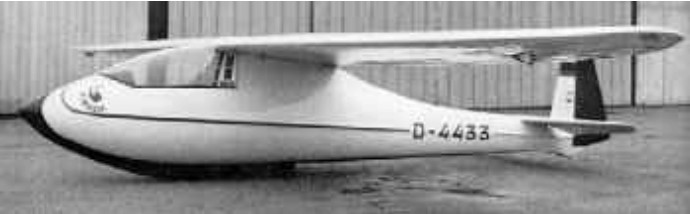
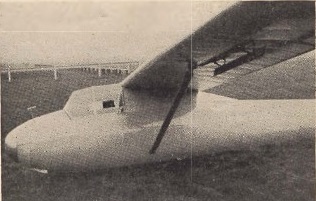
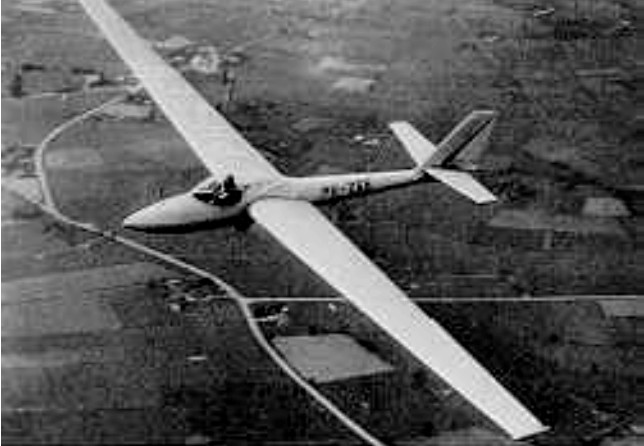
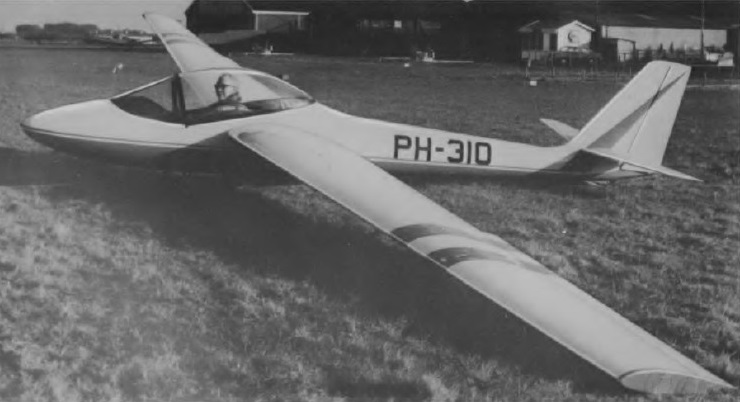
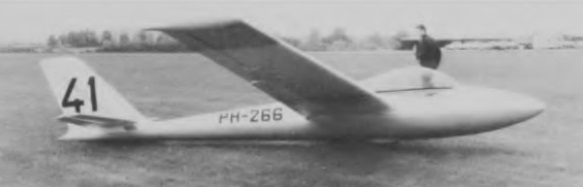
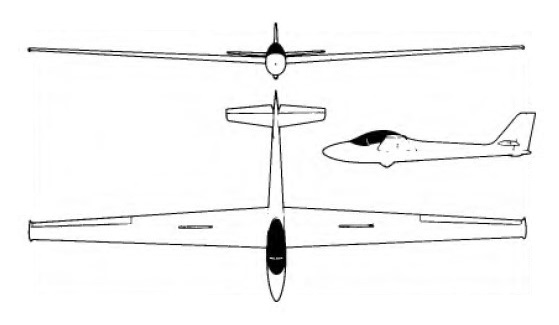
The 15m Standard class Sagitta (Arrow) sailplane was designed and built by Piet Alsema, who formed NV Vliegtuigbouw to put it into production at Teuge airfield, near Apeldoorn, Holland, at a rate of one every two months in 1964. It was issued an airworthiness certificate in the aerobatic and cloud flying category.
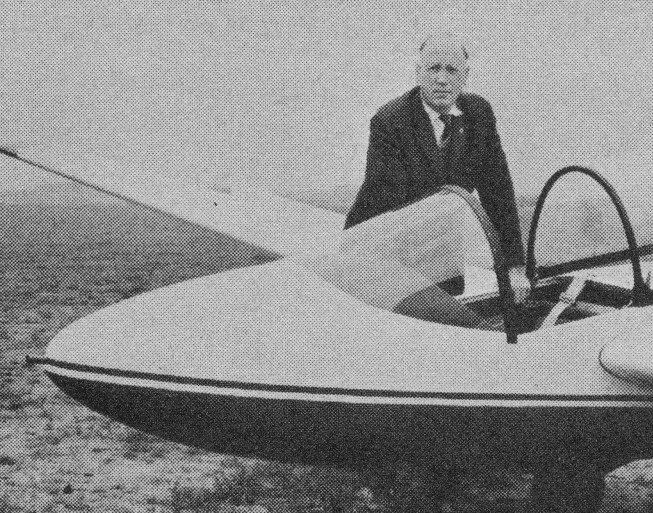
Designer Piet Alsema
The single-seat Sagitta is of conventional all-wood construction with a large, sliding blown canopy giving the pilot, seated over the wing leading edge, all-round visibility. The canopy slides backward and can be fixed open in flight at several positions. The mid-set wooden wings have a single spar and a plywood leading edge torsion box and the plain ailerons are also of wood; the wing is fabric covered over 25% of its area. Air brakes of a special design operate on both the upper and lower wing surfaces. Aluminium spoilers 20 inch long in the upper and lower wing limit top speed to 168 mph (test craft were dived at 193 mph). Fuselage and tailplane are all-wood; fuselage and tail frames are pine and plywood, fittings are steel. Aerolite glue is employed throughout. The fin and rudder is swept and the cantilever tailplane can be folded when the sailplane is towed in a trailer. All control surfaces connect automatically on assembly. A fixed monowheel with brake comprises the landing gear.
The 1964 price was around US$3212.
A special long-wing model of 58.55 ft span was built for championship meets.
The Sagitta first flew in prototype form on 4 July 1960. It was followed on 24 November 1961 by the first of the production aircraft, designated Sagitta 2; some 20 being produced.
A 17m (55 ft 9 in span) development of the Sagitta, known as the Super Sagitta, was reported in the spring of 1964, this being very similar apart from the increase in wing and tail surface areas, but the Super Sagitta remained a project only.
Sagitta Span: 48.5 ft Length: 21 ft 3 in Empty weight: 463 lb Useful load: 243 lb Root chord: 4 ft Tip chord: 1 ft 8 in Tail span: 9 ft 10 in Wing area: 129 sq.ft Aspect ratio: 18.7
Sagitta 013 Wing span: 15m / 49.2ft Wing area: 11.98sq.m / 129sq.ft Aspect ratio: 18.7 Airfoil: NACA 63-618/4412 Length: 6.47 m / 21 ft 2 in Empty Weight: 215kg / 473lb Payload: 105kg / 232lb Gross Weight: 320kg / 705lb Water ballast: None Wing Load: 26.71kg/sq.m / 5.46lb/sq.ft Max speed: 146 kt / 270 km/h Max rough air speed: 108 kt / 200 km/h Stalling speed: 35.5 kt / 66 km/h L/DMax: 34 at 52.3 kt / 97 km/h MinSink: 0.64 m/s / 2.1 fps / 1.24 kt at 42 kt / 78 km/h Structure: wood/ fabric wings and tail, wood fuselage Seats: 1
Sagitta 2 Span: 49 ft 2.5 in Length: 21 ft 2.75 in Height: 3 ft 11 in Wing area: 129.2 sq ft Aspect ratio: 18.7 Empty weight: 478 lb Max weight: 705 lb Max speed: 168 mph Min sinking speed: 2.1 ft/sec at 48 mph Best glide ratio: 37:1 at 60 mph
In 1913 the English Marconi Company commanded Vlaicu to create a two seat aircraft out of metal. After a few months, the Vlaicu III was finished. The Vlaicu III was the first fully functional aircraft in the world built in metal.
In 1911 Vlaicu built a second plane which he flew in several cities in the Kingdom, in major tournaments.
The most distinguishing feature was the now fully enclosed nacelle. In front of the nacelle was a Gnôme 7-cylinder rotary engine delivering 50 hp, driving the two propellers via a chain. This machine participated in the June 1912 competition at Aspern flying field at Vienna.
He participated in the war during the Balkan campaign, where he performed some aerial observation missions.
Supported by the Royal House and the Romanian Army, Vlaicu started building at the workshops of the Army Air Arsenal the Vlaicu I, the first plane built on Romanian territory.
Vlaicu first flew the aircraft on 17 June 1910 above the Cotroceni field.
At the urging of his school friend, the poet Octavian Goga, Vlaicu went to Bucharest, where in front of an audience he demonstrated his prototype aircraft.

 All Aero