Michael Bowlus used the tail of an HP-18 and the wings of an HP-11, reduced to 15 m., to develop his BZ-1, which first flew in 1984. This has an adapted North American F-86 Sabre drop tank for the front end of the fuselage, interconnected flaps and ailerons (the former extending to 90 degrees for approach control) and increased empty and gross weight of 249 kg/ 550 lb and 364 kg/ 780 lb respectively.
Monoplane
Bowlus Dragonfly / Bumblebee BBI / Nelson Bumblebee
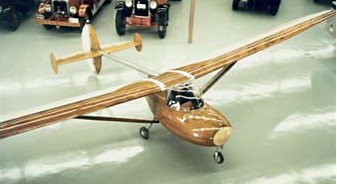
The Bumblebee was designed by William Hawley Bowlus and built in 1946. A powered sailplane with vertical tail and two small stabilizers mounted on a single boom, the Bumblebee was equipped with manually retracting undercarriage and 16 hp pusher engine.
The Dragonfly, NX1955, designed by Hawley Bowlus, was the first auxiliary-powered self-launching glider to be produced in the U.S.A. The designers nicknamed this design the Bumblebee but they sold the powered glider under the official moniker, Dragonfly. Rebuilt from Bumblebee and with tricycle gear, it featured 2-place, side-by-side seating, retractable tricycle landing gear and a Nelson engine. Some were powered by 48hp Nelson H-63CP engine. The marketing was sponsored by the Nelson Engine Company as a vehicle for their two- cycle four cylinder 25hp engine. The cockpit pod was molded plywood, aluminum boom, 2-spar wood wing with plywood D-tube, fabric cover aft of spar.
While the concept was good, the airplane never achieved real success, because it didn’t perform well, and because Nelson took his engine and left the partnership. The beautiful wooden fuselage pod made up of layers of mahogany was very labour intensive and thus very expensive. Some Dragonflys had the engine removed, converting them to pure sailplanes. The Dragonfly features a fully retractable tricycle landing gear with stearable nosewheel, dual control and a ratchet-wire pull starter in the cockpit for engine starts in flight or on the ground.
Of less than 10 built, 2 survived in 2008 at the National Soaring Museum. NX/NC34921 was restored in New York in 1964.
John Hess Auction Service Inc, Manheim, PA 17545, United States, consigned a Nelson-Bowlus BB-1 Dragonfly N33687 Glider and Culver Rigid Midge N215 jr. Racing Glider in May 2015.
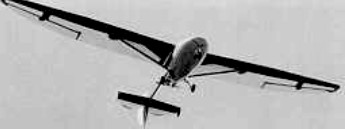
Bumblebee
Engine: 16hp pusher
Wingspan: 41’0″
Length: 23’5″
Useful load: 355 lb
Speed: 75 mph
Range: 110 mi
Seats: 1
Undercarriage: rg (manual)
Dragonfly
Engine: 25 hp Nelson 4 cylinder engine (retractable)
Wing span: 14.42m / 47.3ft
Wing area: 15.7sq.m / 169sq.ft
Empty Weight: 263kg / 580lb
Payload: 163kg / 360lb
Gross Weight: 426kg / 940lb
Wing Load: 27.13kg/sq.m / 5.56lb/sq.ft
Max speed: 50 mph (80 km/h) (originally 70 mph (113 km/h) with power)
Empty weight: 580 lb (263 kg)
Gross weight: 940 lb (426 kg)
Span: 47 ft 4 in (14.4 m)
Height: 6ft 10 in (2.1 m)
Length: 20 ft 4 in (6.2 m)
L/DMax: 18
Seats: 2
No. Built: 7
Aspect ratio: 13.25
Bowlus Paper Wing SP-1
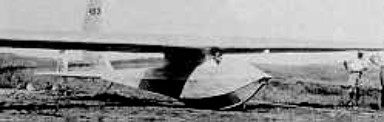
The wood and fabric Paper Wing, so called because it used paper webbed ribs, first flew in 1929. The wingspan was later increased to 14.33 m. / 47.0 ft principally by extending the ailerons. It was first U.S. built sailplane to fly for more than 1 hour. A replica of the Paper Wing belongs to the San Diego (CA) Museum of Flight.
Wing span: 13.4m / 44ft
Wing area: 16.63sq.m / 179sq.ft
Empty Weight: 73kg / 160lb
Payload: 66kg / 145lb
Gross Weight: 139kg / 305lb
Wing Load: 8.36kg/sq.m / 1.7lb/sq.ft
Aspect ratio: 11
Airfoil: 35-A
No. of Seats: 1
L/DMax: 20
Bowlus Super Albatross BS-100
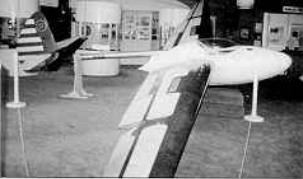
A development of the Baby Albatross, the Super Albatross used the BT-100 Baby Albatross pod and tail, with the boom moved down. The wing is the outer section of the BT-100, mounted in a shoulder position. One belongs to the National Soaring museum.
The BS-100 was constructed with wood and fabric wings and tail, a wood pod, and metal tail boom.
Wing span: 13.72m / 45ft
Wing area: 11.61sq.m / 125sq.ft
Empty Weight: 197kg / 435lb
Payload: 95kg / 210lb
Gross Weight: 292kg / 645lb
Wing Load: 25.15kg/sq.m / 5.25lb/sq.ft
No. of Seats: 1
No. Built: 2
L/DMax: 29 @ 76 kph / 41 kt / 47 mph
MinSink: 0.76 m/s / 2.5 fps / 1.96
Aspect ratio: 15.7
Airfoil: Go 549 tip symmetrical
Bowlus Senior Albatross 1-S-2100
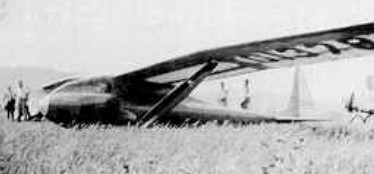
A development of the Bowlus Super Sailplane built by the Curtiss Wright Technical Institute in Glendale, CA in 1932, the senior Albatross had a slightly extended spar and gull wing. No two were completely alike, with flaps on at least one version. The design dominated the U.S. Nationals and held many U.S. records through the 1930’s. Senior Albatrosses were owned and/or flown by notables such as Warren Eaton, Richard du Pont and Chet Decker.
Examples belong to the Smithsonian Air & Space Museum and the National Soaring Museum.
The Senior Albatross has a wood monocoque fuselage, single strut braced wood D-tube wing, wood tail group, and is fabric covered
Wing span: 18.82m / 61.75ft
Wing area: 19sq.m / 204.75sq.ft
Empty Weight: 154kg / 340lb
Payload: 82kg / 180lb
Gross Weight: 236kg / 520lb
Wing Load: 12.42kg/sq.m / 2.54lb /sq.ft
Aspect ratio: 18.72
Airfoil: Go 549 root, symmetrical at tip
No. of Seats: 1
No. Built: 6
L/DMax: 22 @ 64 kph / 35 kt / 40 mph
MinSink: 0.59 m/s / 1.95 fps / 1.56 kt
Bowlus BT-100 / BTS-100 / BA-102 two-place Baby Albatross
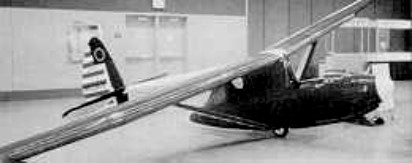
The two-place Baby-Albatross was created by lengthening the molded pod of the BA-100 Baby Albatross approximately two feet for a second seat beneath the monospar strutted wing, with porthole windows on each side. The Baby Albatross was built with an aluminum tube tail boom, wood wing, wood tail group, and fabric covered. The first built had the Bowlus control yokes while the second had conventional sticks. Those built up from BT-100 parts were known sometimes as the BTS-100. There were no approach control devices. One belongs to the National Soaring Museum and the Vintage Sailplane Association has plans.
Wing span: 13.56m / 44.5ft
Wing area: 13.94sq.m / 150sq.ft
Empty Weight: 216kg / 476lb
Payload: 192kg / 424lb
Gross Weight: 408kg / 900lb
Wing Load: 29.27kg/sq.m / 6lb /sq.ft
L/DMax: 20
MinSink: 0.69 m/s / 2.25 fps / 1.33 kt
Aspect ratio: 13.2
Airfoil: modified Go 535
No. of Seats: 2
Bowlus Baby Albatross BA-100
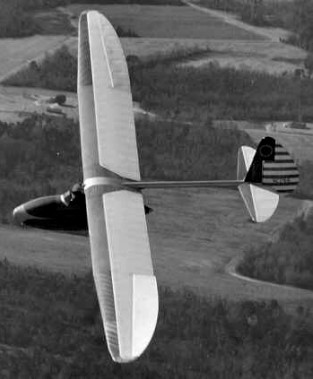
The Baby Albatross, first flown in 1937, was a production design by Hawley Bowlus for both kits and complete sailplanes. Bowlus produced kits until 1942, and in 1944 Laister-Kauffmann bought the rights but produced no aircraft before going out of business. The pod is a molded plywood unit, and no spoilers are provided, but some have been modified by owners. Many other modifications were carried out, including one Baby with a steel tube pod built by Schweizer. Many soaring notables had a Baby Bowlus as their first ship, including Dick Johnson, Dick Schreder and Joe Lincoln, and flights of more than 402 km / 250 miles have been made.
Bowlus Baby Albatross Article 1938
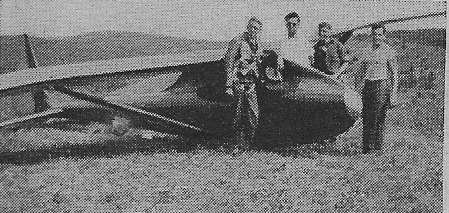
One example belongs to the National Soaring Museum.
The Vintage Sailplane Association has plans and the Baby Albatross is Air Transport Certifie
Wing span: 13.56 m / 44.5ft
Wing area: 13.93sq.m /150sq.ft
Empty Weight: 136kg /300lb
Payload: 93kg /205lb
Gross Weight: 229kg /505lb
Wing Load: 16.44kg/sq.m/ 3.3lb/sq.ft
MinSink: 0.69 m/s / 2.25 fps
L/DMax: 20
Aspect ratio: 13.2
Airfoil: Go 535 (mod)
No. of Seats: 1
No. Built: 156
Bowling X-Wind

The X-Wind was a one-of-a-kind homebuilt of Mr. Jack Bowling and it first flew in 1974. The aircraft had a 80hp Continental A80 engine and featured a corrugated aluminum fuselage and tail covering, not unlike that of early Junkers. The aircraft had wings taken from a Luscombe 8. The registration N6379 was cancelled in 2012.
Bowers Fly Baby 1-A
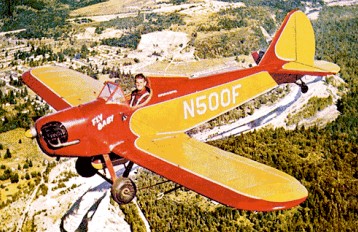
Originally designed in 1960 by former Boeing engineer Peter Bowers to compete in the first EAA design competition, the Fly Baby is a single-seat, open cockpit, folding-wing monoplane powered by engines ranging from 65 to 100 hp. It is built primarily of wood, with fabric covering. It’s got a big cockpit as Peter Bowers is six feet two inches tall.
First flown in 1960 the Fly Baby 1-A single place monoplane won the 1962 EAA competition for the best amateur plane with a C-85 engine. The Fly Baby has the distinction of being one of the most enduring designs in the homebuilt field. It has been tested with floats and in 1968 was fitted with biplane wings which were interchangeable with the single wings. The wings are a wooden structure covered with Dacron fabric, and the fuselage is a conventional plywood-covered wooden structure with a single open-cockpit seat. Plans were made available to amateur constructors.
Most are powered by Continental A-65, C-75, C-85, or O-200 engines. The 100 hp Continental is recommended over the 85 hp engine as it is only 13 pounds heavier, and gives a cruise speed of 92 knots with a two-blade fixed-pitch propeller.
The fully aerobatic aircraft has a 22 foot wingspan and is 19 feet long. It will climb at 700 fpm and weighs 651 lbs empty with a MAUW of 972 lbs.
The prototype Fly Baby 1 B biplane, which first flew in 1969, could be converted from mono¬plane to biplane in around an hour. The two monoplane wing panels are replaced by four smaller ones, plus a center section for the top wing. The biplane wings take longer to build, since there are four panels and a center section, and they’re swept rather than straight. And there are some internal braces and external tangs that have to be added to the fuselage. This can be done after the fuselage is done (The prototype was converted after completion), but it is easier during construction. The biplane is slower, and the wings don’t fold.
In monoplane or biplane configuration, the Fly Baby does meet the US rules for Sport Pilot. In the United States, you do not need an FAA medical to fly a Fly Baby.
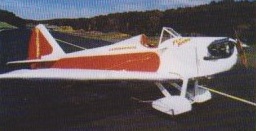
This plane is a structurally simple and easy-to-fly airplane designed to the requirements of the Experimental aircraft Association for home construction and storage in a space 7 x 8 x 20 feet, which is equivalent to the standard home garage. Great emphasis has been placed upon safe flight characteristics and good low speed performance for takeoff and landing at some sacrifice of high speed. The structure has been designed for standard airplane engines from 65 to 85 horsepower and the aerodynamic features are of sizes and proportions suited to obtaining the best all-around performance in this power range. Because of this, there is not enough advantage to be gained from using engines of significantly higher power to offset the cost and weight penalties. Increasing the power to increase the aerobatic capability is not recommended. Fly Baby will do simple recreational aerobatics very well but is not intended for rough air show or competition maneuvers.
Bowers recommends Continentals between 65 and 85 horsepower. The Fly Baby isn’t a fast airplane so bigger engines don’t really give much. A reported Fly Baby which replaced the A-65 with a C-85, increased the cruise from 80 to 95 mph and his rate of climb from 500 to 1000 fpm.

Engine: Continental C-85, 85 hp.
HP range: 65-100.
Speed max: 120 mph.
Cruise: 100 mph.
Range: 240 sm.
Stall: 45 mph.
ROC: 1050 fpm.
Take-off dist: 350 ft.
Landing dist: 400 ft.
Service ceiling: 14,000 ft.
Fuel cap: 12-16 USG.
Weight empty: 605 lbs.
Gross: 925 lbs.
Height: 7 ft.
Length: 18.9 ft.
Wing span: 28 ft.
Wing area: 120 sq.ft.
Seats: 1.
Landing gear: tail wheel.
Engine: Continental O-200, 100 hp
Ground run: 265 ft/81 m
Dist to 50 ft: 715 ft/218 m
Landing dist from 50 ft: 1300 ft / 397m
Best rate of climb speed: 57 mph /50 kts IAS
Cruise climb speed: 69 mph/60 Kts IAS
Maximum level speed: 112 MPH/97 knots IAS
maximum climb rate: 1300 fpm at 50 KIAS
normal climb rate: 1000 fpm at 60 KIAS
Engine: Continental
Wing span: 8.53 m
Wing area: 11.04 sq.m
MAUW: 420 kg
Empty weight: 274 kg
Fuel capacity: 45 lt
Max speed: 177 kph
Cruise speed: 160 kph
Minimum speed: 72 kph
Climb rate: 5 m/s
Seats: 1
Plan price (1998): $65
Bowers Namu II
Peter Bowers designed and built the prototype of the Namu II two seat aircraft, which first flew on 2 July 1975.
The Namu, named after the famous whale, first flew in 1975. The side-by-side two-seater features an enclosed canopy, dual controls and conventional tailwheel type gear. Its low-wing configuration is constructed from wood, with Dacron fabric covering the wings and tail section and plywood covering the fuselage except for the rear decking. Fuel is carried in one main tank just aft of the firewall, and baggage is carried under and behind the seats.
The Namu II has a three piece single-spar with spruce flanges and plywood webs. The leading edge torsion box is a sandwich of two sheets of aluminium with glassfibre cloth between, epoxy-cemented together and formed over plywood nose ribs. With a fixed undercarriage and wooden tail unit, all fabric covered.
Another Namu II, with a different canopy, has been completed by Richard Lower and Tom Godbey of Seattle.
Engine: Lycoming O-290G, 125 hp, 93 kW
Wingspan: 33 ft / 10.06m
Wing area: 150 sq.ft / 13.9 sq.m
Length: 21 ft 6 in / 6.55m
Max tak off weight: 1850 lb / 839 kg
Empty weight: 1200 lb / 544 kg
Fuel capacity 32 USG.
Max level speed: 140 mph / 225 kph / 122 kt
Cruise speed: 126 mph / 225 kph / 109 kt
Stall: 50 mph.
Climb rate 950 fpm
Service ceiling: 15,000 ft / 4570m
Range max fuel: 500 miles / 434 nm / 804 km
Baggage capacity: 45 kg / 100 lb

