
In 1943 two Vought V-326 were built for P&W as a high-altitude test bed using some components from F4U Corsair.
Engine: turbocharged P&W Wasp Major
Seats: 2
In 1943 two Vought V-326 were built for P&W as a high-altitude test bed using some components from F4U Corsair.
Engine: turbocharged P&W Wasp Major
Seats: 2
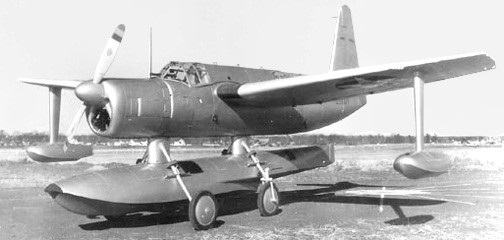
One XSO2U-1 was built, 1440, in 1939.
Engine: 550hp Ranger XV-770
Wingspan: 38’2″
Length: 34’2″
Speed: 201 mph
Gross wt: 5186 lb
Seats: 2
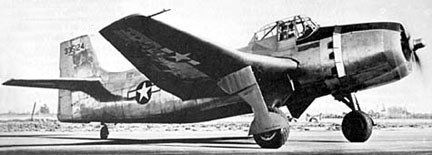
The Vultee XA-41 (Model 90) of 1944 was the last of the two A-type designations, the other being Beech XA-38.
First flying on 11 February 1944 piloted by Frank Davis, one XA-41 prototype was built, 43-35124, for testing as ground-attack by USAAF and USN, then civil re-registered NX60373 by Pratt & Whitney for supercharger testing.
It was scrapped 1950.
Engine: P&W XR-4360, 3000hp
Wingspan: 54’0″
Length: 48’8″
Useful load: 5400 lb
Max speed: 353 mph
Cruise speed: 270 mph
Stall: 74 mph
Range: 950 mi
Seats: 1

An anti-sub aircraft design as XS2U-1W in competition with the Grumman S2F and was later re-designated as XWU-1 (c.1955). Work began on 25 January 1950 and a contract was awarded for two prototypes with s/ns [133780/133781]. A mock-up was built but, during construction, difficulties were encountered with the folding wings. The contract was cancelled before the aircraft could be completed and USN selected the S2F instead.
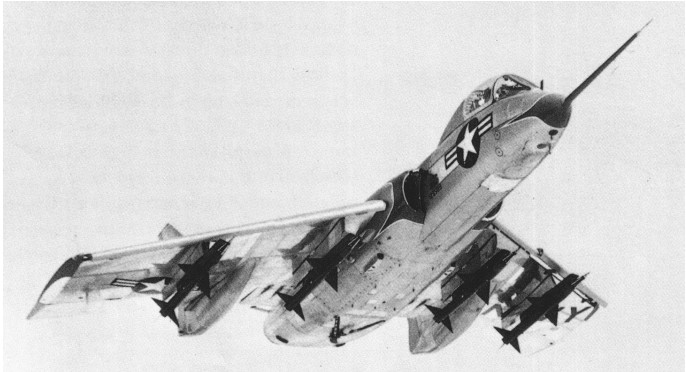
The Vought F7U Cutlass swept flying wing design had a large central nacelle and two substantial vertical tail surfaces. The first U.S. fighter designed from the start to use afterburners. Three prototype XF7U-1 (122472-122474) were built. The first flying on 29 September 1948.
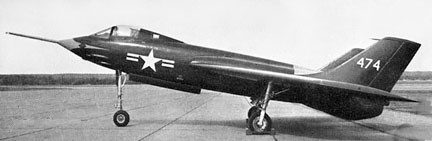
1950 production was 20 F7U-1 (124415-124434) as trainers.

S/ns 125322-125409 were assigned for F7U-2s, but production was cancelled.
After 14 F7U-1’s, the Cutlass was in production for the U.S. Navy in 1951 as the F7U-3 interceptor and F7U-3P photo-reconnaissance aircraft with lengthened nose containing cameras. 288 F7U-3 (128451-128478 and 139868-139917 et al) were built, with a redesign, radar gunsight, four 20mm cannon; and two 4600 lb J46-WE-8A engines.
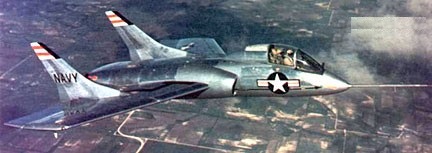
Built in 1954 were the F7U-3M missile platform and F7U-3P photo-recon version.

F7U-1 Cutlass
Engines: 2 x Westinghouse J34-WE-32, 3000 lb
Wingspan: 38’8″
Length: 39’7″
Speed: 672 mph
Range: 1170 mi
Ceiling: 41,400 ft
Armament: 6×20 mm. cannon
Seats: 1
F7U-3
Engines: 2 x J46-WE-8A, 4600 lb / 6100 lb afterburn
Wingspan: 38 ft 8 in
Length: 40 ft 10.5 in
Height: 11 ft 6.5 in
Empty weight: 13,100 lb
Normal loaded weight: 20,000 lb
Max weight: 23,000 lb
Max speed: 670 mph / 705 mph afterburn at SL
Max ROC: 13,000 fpm
Range: 660 mi
Ceiling: 40,000 ft
Armament: four 20m cannon
Bombload: 5400 lb
F7U-3P
Naval photo- reconnaissance aircraft
Engines: 2 x Westinghouse J46-WE-8A turbojets, 4,800 lb. thrust
Wingspan: 38 ft. 8 in.
Loaded weight: 20,000 lb
Max speed: 670 m.p.h.
Ceiling: Over 45,000 ft.
Crew: 1
Armament: None


The Vought XF6U Pirate first flew on 2 October 1946. The Pirate was conceptually a less advanced aeroplane, although it did provide its pilot with excellent fields of vision from a bubble canopy very close to the nose. This cockpit position was made possible by the use of wing-root inlets for the 3000-lb (1361-kg) thrust Westinghouse J34-WE-2 2 turbojet. Three XF6U-1 were built (33532 to 33534) of which one was fitted with afterburner in Apr 1948, the first USN aircraft so equipped.
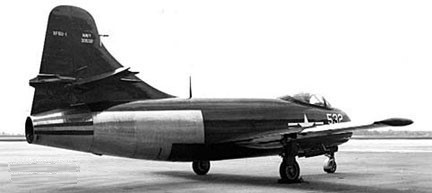
Additional power was provided later by the 4200-lb (1905-kg) thrust J34-WE-30A engine, and this improved performance to the level at which 30 production aircraft were ordered.
The thirty F6U-1 were 122478 to 122507, of which 122483 was modified as an F6U-1P.
It took 18 months for these to reach the navy, and in this time the pace of development had been such that more modern types such as the Grumman F9F Panther and McDonnell F2H Banshee were offering much improved performance.

Engine: 1 x Westinghouse J34-WE-22
Wingspan: 32’10”
Length: 35’8″
Speed: 600 mph
Range: 730 mi
Ceiling: 49,000 ft
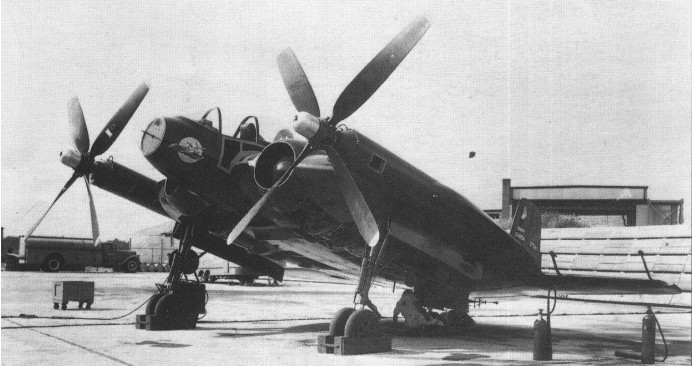
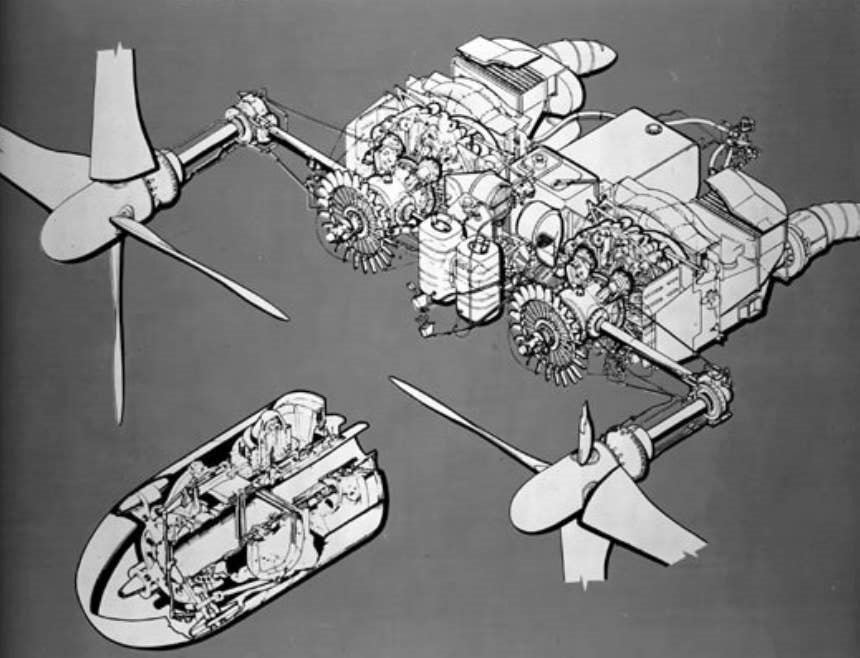
The Vought XF5U based on the V-173 aerodynamic research aeroplane. The XF5U had a basically circular wing with twin vertical surfaces at its rear ‘corners’ outside two stability flaps and inside two projecting ‘ailavators’ for pitch and roll control. The primary structure was of Metalite, a material of bonded aluminium and balsa that offered exceptional strength with great lightness. The powerplant comprised two 1600-hp (1193-kW) Pratt & Whitney R-2000-7 radials buried in the thick inner portions of the wings and driving, via a complex double right angle transmission system of shafts and gearboxes, two 4.88 m (16 ft) four-blade propellers located on the forward ‘corners’ of the wing. The propeller blades were articulated and could be moved fore and aft on their shafts in the manner of a helicopter’s rotors, permitting the craft to ‘hang’ on its propellers in a semi hover at low airspeed.
Vought’s specification for the Flapjack called for a maximum speed of 811 kph (504 mph) at 6100m (20,000 ft), while the landing speed was to be as low as 32 kph (20 mph). A proposed turbine engined variant would have been even faster. The aircraft was to have been armed with six 12.7 mm (03 in) machine guns or four 20 mm cannon, or two 454 kg (1000 lb) bombs.

The prototype XF5U 1 33958 first began engine tests in August 1945, but it was not until 1947 that the articulating propellers became available and the Flying Flapjack began taxying trials at Vought’s Stratford, Connecticut plant.
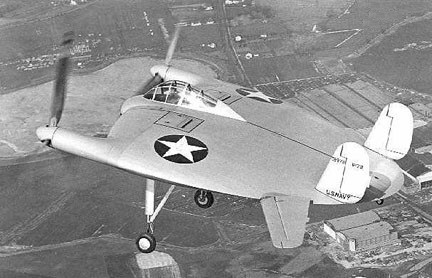
On 17 March 1947 the US Navy had cancelled the programme in favour of jet powered fighters, and the prototype, the sole XF5U was ordered scrapped, but a crane’s wrecking ball merely bounced off the tough little prototype, and it finally took workers with blowtorches to reduce it to salvageable scrap.
Engines: 2 x Pratt & Whitney R-2000-7 radials, 1600-hp (1193-kW)
Wingspan: 32’0″
Length: 27’10”
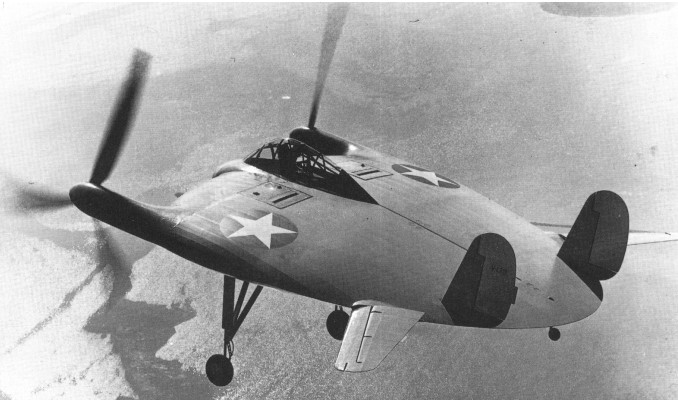
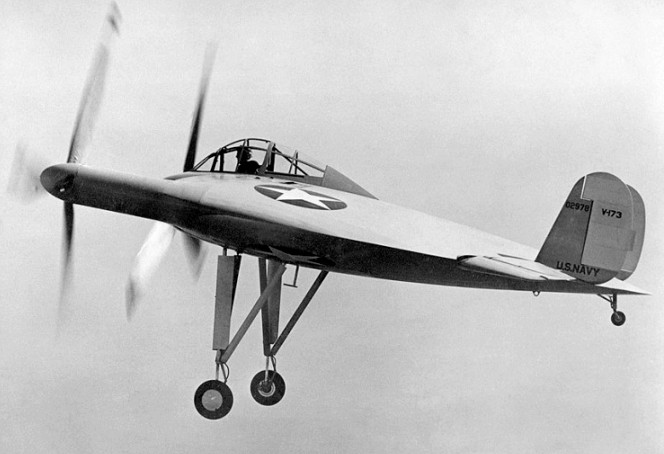
Navy chiefs ordered a full-size flying model to be built to evaluate the flying characteristics of the proposed fighter, and this aircraft, the Vought V 173 designed by Charles H Zimmerman, made its first flight on 23 November 1942 piloted by Boone T Guyton. The V 173 (unofficially dubbed Flying Pancake or Flying Flapjack) was constructed of wood with fabric covering, and had two wingtip-mounted 80 hp Continental engines driving a pair of 5.03 m (16 ft) three-blade, laminated-wood propellers.
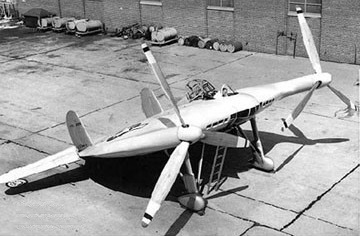
Compared to a typical taildragger’s resting deck angle of around 5 degrees, the V-173 sat at an extreme 22 degrees. This would eliminate all forward vision if not for the addition of windows on the underside of the nose by the pilot’s feet. When on the ground, the pilot simply looked downward, past his feet, and could see the path ahead.
To further reduce takeoff and landing distances, two enormous propellers bathed the entire airframe in propwash, generating lift even at a standstill. The result was a landing speed of only 22 mph and the capability of taking off nearly vertically with typical wind over a ship’s deck.
The V-173 prototype would ultimately weigh just over 3,000 pounds fully loaded, with a massive 427 square feet of wing area. The V-173’s wing loading was just over 5 pounds per square foot.
With such ample lift, only modest power would be required. Zimmerman chose two small and light 4-cylinder Continental A80 piston engines. Their small size enabled them to be buried within the saucer-like fuselage.
Zimmerman had US patent #2,431,293 of 18 November 1947.
The engines of the V 173 were barely adequate, but the Flying Pancake took off in 15 m (50 ft), or much less with a steady wind, and could cruise at 222 kph (138 mph) despite its low power. Guyton and other pilots who flew the aircraft (including Charles Lindbergh) found it impossible to stall or spin, and full control could be maintained even at a 45 degree angle of attack.
The V-173 confirmed that the type offered viceless handling characteristics as well as an exceptional speed range between 20 mph (32 km/h) and 460 mph (740 km/h). The Vought XF5U was based on the V-173.
At one point, a vapor lock resulted in a forced landing on a beach. While the airplane flipped over onto its back, neither the airplane nor test pilot were significantly harmed.
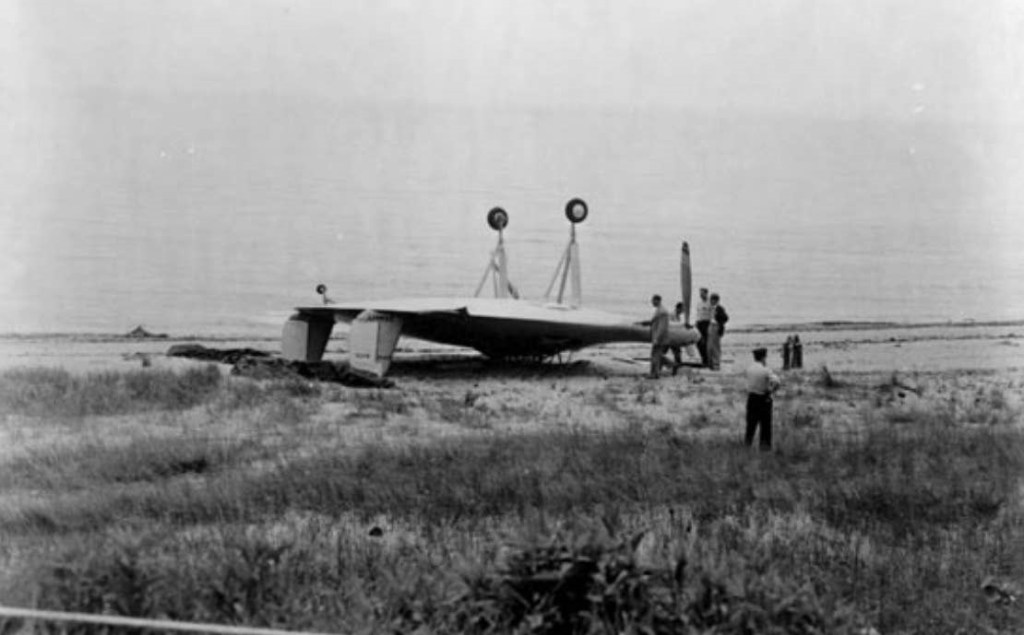
The one V-173 built, 02978 in 1942, completed 171 flights for 131.8 hours flight time.
The V-173 placed into long-term storage. Charles Zimmerman went on to become a division chief for Project Mercury at NASA.
In 2003, the Vought Aircraft Heritage Foundation began a nearly 10-year-long restoration of the aircraft, stripping it down to its wooden airframe and replacing the fabric entirely. Today, the resplendent V-173 stands proudly on display at the Frontiers of Flight Museum in Dallas.
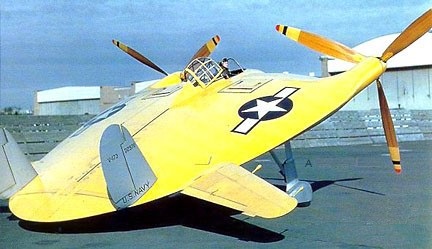
Engines: 2 x 80hp Continental
Wingspan: 23’1″
Length: 26’0″
Wing area: 427 sq.ft
Speed: 138 mph
Landing speed: 22 mph
TO distance: 200 ft
Landing distance: 50 ft
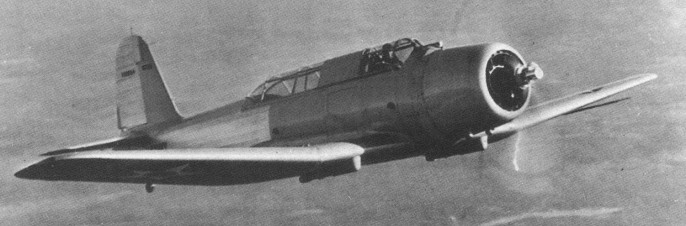
The Vought V-156 / SB2U was designed to meet a US Navy requirement for a carrier aircraft based scout‑bomber and first flew in 1936. At the time it represented a major leap forward, being the first low wing monoplane to have both foldable wings and retractable undercarriage in US Navy service. Such were Navy concerns at the time, that Vought was asked to develop a competing biplane scout‑bomber ‑ the XSB3U‑1 ‑ as ‘insurance’.
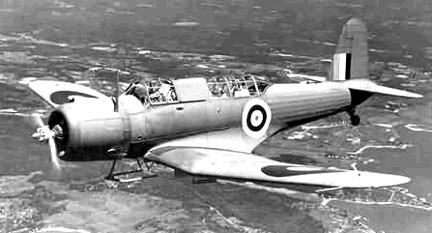
Powered by a 825hp (615kW) Pratt & Whitney R 1535 Twin Wasp Junior, the SB2U was ordered into production as the Vindicator, with 169 being built in three versions.
The V-156 SB2U was the USN’s first monoplane scout-dive bomber. Exports to the British Navy were as V-156 Chesapeake.
The 1936 XSB2U-1 prototype 9725 first flew on 4 January 1936 but crashed during testing on 20 August 1936.
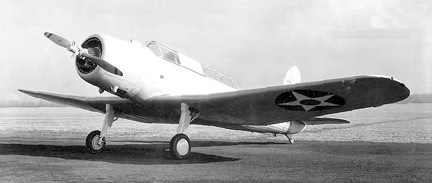
The SB2U-1 was the first production model and the first flew on 21 May 1937. Fifty-four were built, 0726-0779, the last of which became XSB2U-3.
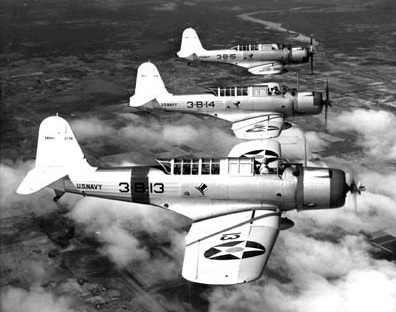
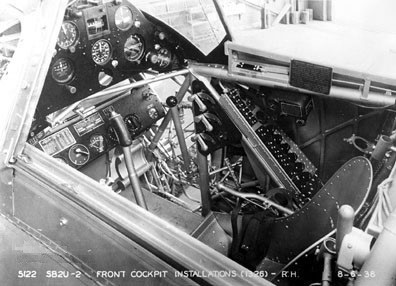
The first flying on 11 August 1938, fifty-eight SB2U-2 were built, 1326-1383.
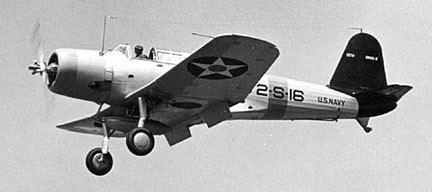
One SB2U-1, 0779, was converted to the XSB2U-3 in 1939, powered by a 825hp R-1535-102, and fitted with extra fuel tanks.
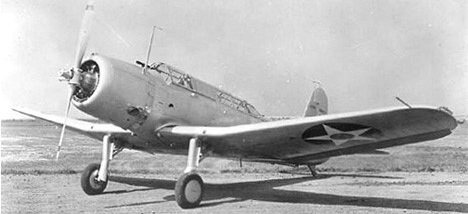
XSB2U-3 0779 was experimentally fitted with twin EDO pontoons. Results were not impressive and the ship was returned to wheels.
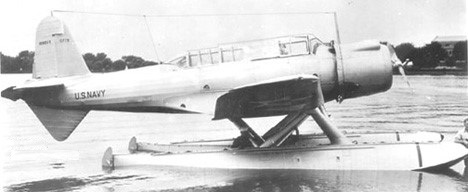
The SB2U-3 Vindicator first flew on 10 January 1941. Fifty-seven were built, 2044 to 2100.
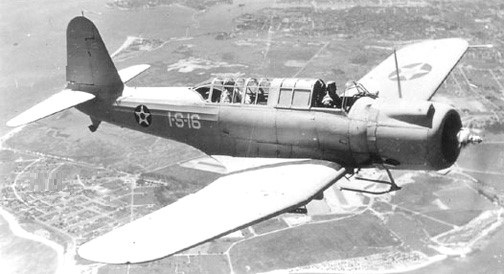
Vindicators saw action during the Battle of Midway in 1942, but after this were retired to second line duties.
Orders for a version for the French Air Force the V 156B were partially met before the fall of France. Fifty V 156B 1s were ordered by the British Fleet Air Arm and entered service as the Chesapeake I advanced trainers.
Some SB2U types made it into civilian dress, including SB2U-1 NC30447, which was WW2 surplus.
XSB2U-1
Engine: 750hp P&W R-1535-78
Wingspan: 42’0″
Length: 33’2″
Max speed: 230 mph
Cruise: 222 mph
Stall: 66 mph
Range: 532 mi
Ceiling: 26,600′
Seats: 2
SB2U-1
Engine: 825hp R-1535-96
Wingspan: 42’0″
Length: 34’0″
Max speed: 250 mph
Cruise: 143 mph
Stall: 66 mph
Range: 635 mi
Ceiling: 27,400′
Seats: 2
SB2U-2
Engine: 825hp R-1535-96
Wingspan: 42’0″
Length: 34’0″
Max speed: 250 mph
Cruise: 150 mph
Stall: 66 mph
Range: 630 mi
Ceiling: 27,500′
Seats: 2
XSB2U-3
Engine: 825hp R-1535-102
SB2U-3 Vindicator
Max speed: 243 mph
Cruise: 152 mph
Stall: 71 mph
Range: 1120 mi
Ceiling: 23,600′
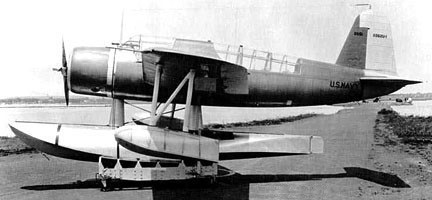
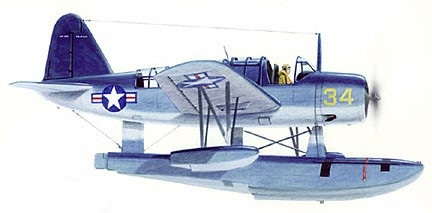
Built in 1938, the first of two Vought XOS2U-1 (0951 and 1440), the first converted from an O3U-6, were prototypes of the two-place OS2 Kingfisher scouting aircraft. The first to fly was on 1 March 1938, powered by a 450hp P&W R-985-4 engine.
Fifty-four OS2U-1 were built in 1940; 1681-1734, powered by a 450hp P&W R-985-48 engine.
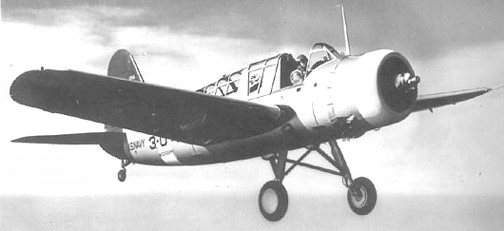
The OS2U-2 of 1941 had armour and self-sealing fuel tanks One hundred and fifty-eight were built, 2189-2288 and 3073-3130, of which 45 were floatplanes. They were powered by P&W R-985-50 engines.
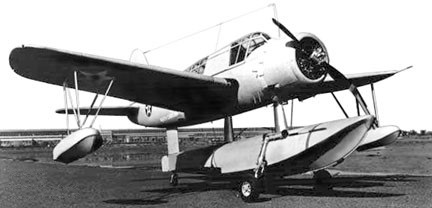
In 1941 1006 OS2U-3 were built for the USN and USCG, 5284-5989 and 09393/09692, with 300 additional production by Naval Aircraft Factory as OS2N.

Despite its role in scouting and rescue missions, OS2U did have its moments. Two of them dive-bombed Japanese troops in the Aleutians and helped sink an enemy submarine there on 15 July 1942, and one was credited with shooting down an attacking Zero over Iwo Jima.
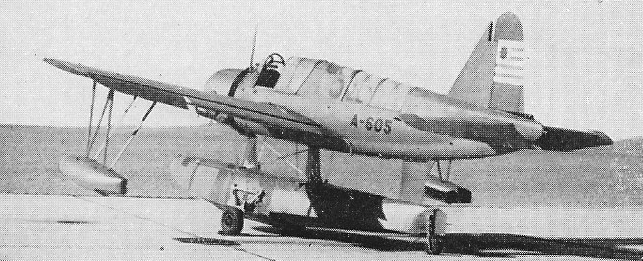
One OS2U-2, 3074, was converted to an XOS2U-4 with wings of narrow chord and high aspect ratio.
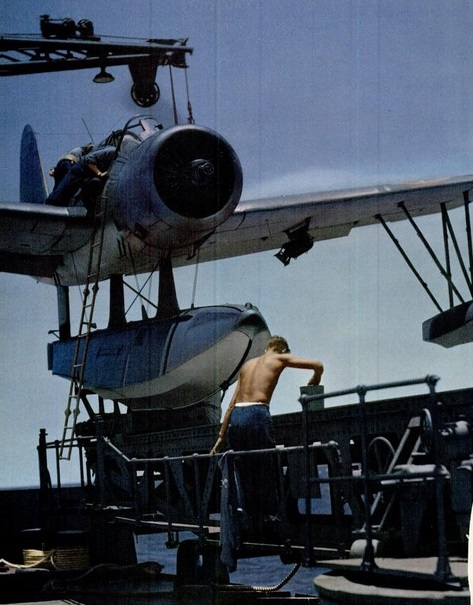
The Vought designation for export models was VS-310.
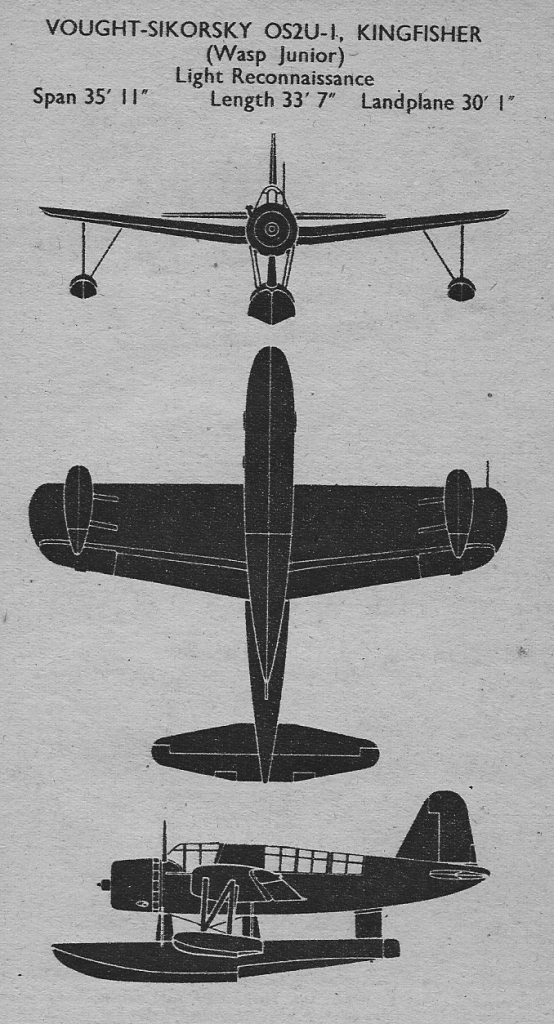
OS2U Kingfisher
Wingspan: 35’11”
Length: 33’7″
single-float or wheels
XOS2U-1
Engine: 450hp P&W R-985-4
OS2U-1
Engine: 450hp P&W R-985-48
Wingspan: 35’10”
Length: 33’10”
Speed: 184 mph
OS2U-2
Engine: P&W R-985-50
OS2U-3
Engine: P&W R-985-AN-2
Wingspan: 35 ft 10.75 in
Length: 33 ft 7.5 in
Height: 14 ft 8 in
Wing area: 261.9 sq.ft
Empty weight: 3335 lb
Loaded weight: 4980 lb
Useful load: 1890 lb
Max speed: 171 mph at 5000 ft
Cruise: 152 mph
Service ceiling: 18,200 ft
Range: 908 mi
 All Aero