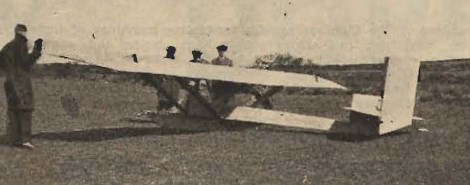
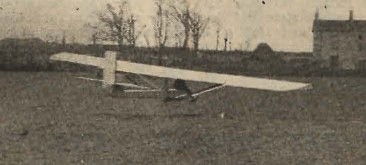
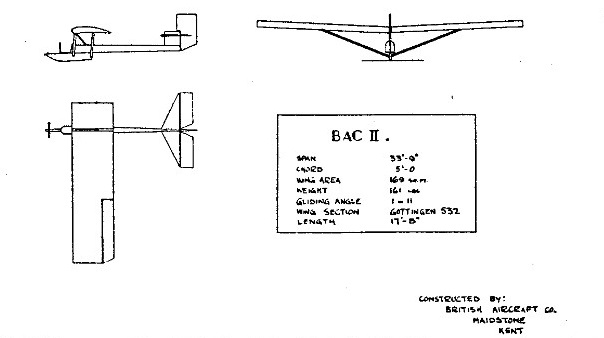
The 1930 B.A.C. II was also a primary, but instead of an open girder-type frame, it had a box spar fuselage, with a strut braced wing.
The undercarriage was a main skid only, and no air brakes or flaps were fitted.
This first flew at Lenham, Kent, on 21 September 1930 and about fifteen were sold, including one in Jamaica. Lowe-Wylde would deliver the gliders personally and demonstrate them at the club’s site (and if necessary. take the pieces home for repair the same day).
Wingspan: 10.28 m / 33 ft 9 in Length: 5.64 m / 18 ft 6 in Wing area: 15.7 sq.m / 169 sq.ft Aspect ratio: 6.75 Wing section: Gottingen 532 Tare weight: 73.03 kg / 161 lb Max L/D: 11
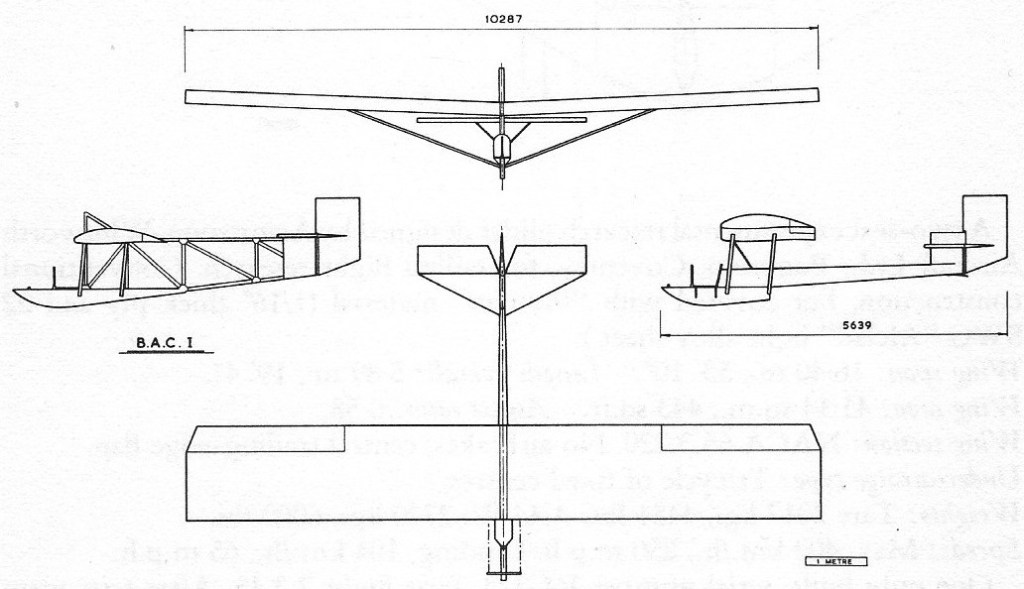
The first true B.A.C. aircraft was the one seat 1930 B.A.C. I primary glider. Designed by C.H. Lowe-Wylde and built by members of the Kent Gliding Club, it was similar to the German S.G.38, with wire braced wings, but two struts were later added each side.
One only was built, named Columbus, and its first flight was on 23 February 1930. It survived until the war when it was impressed into the RAF, serial NF746, and was still flying in 1953 at No. 162 G.S. Hamsey Green.
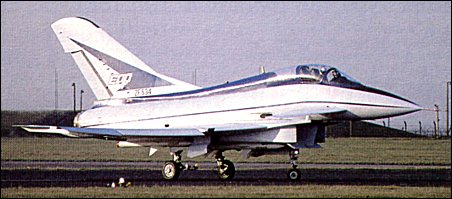
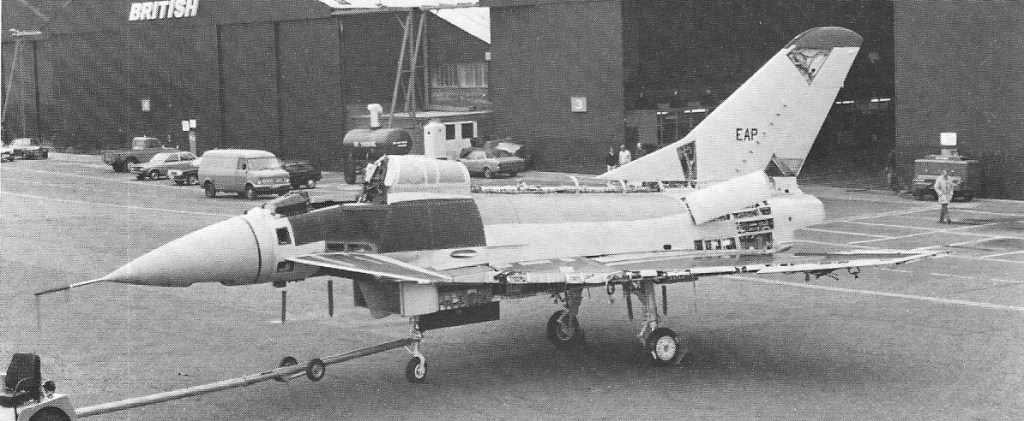
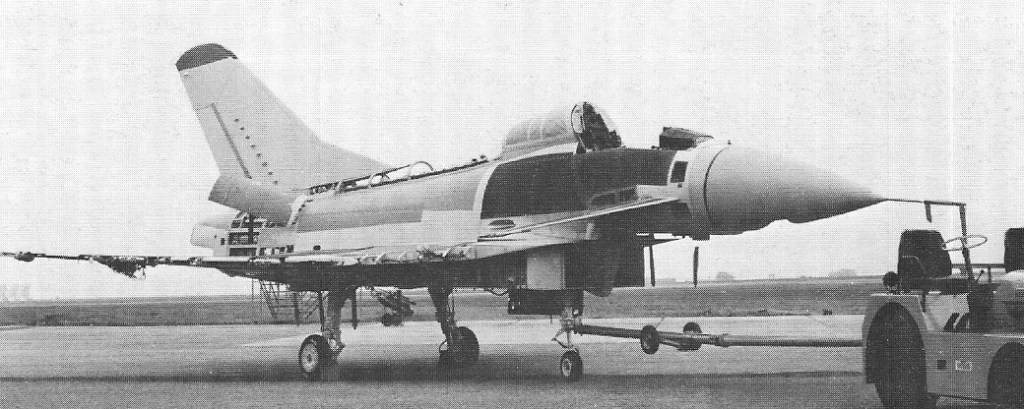
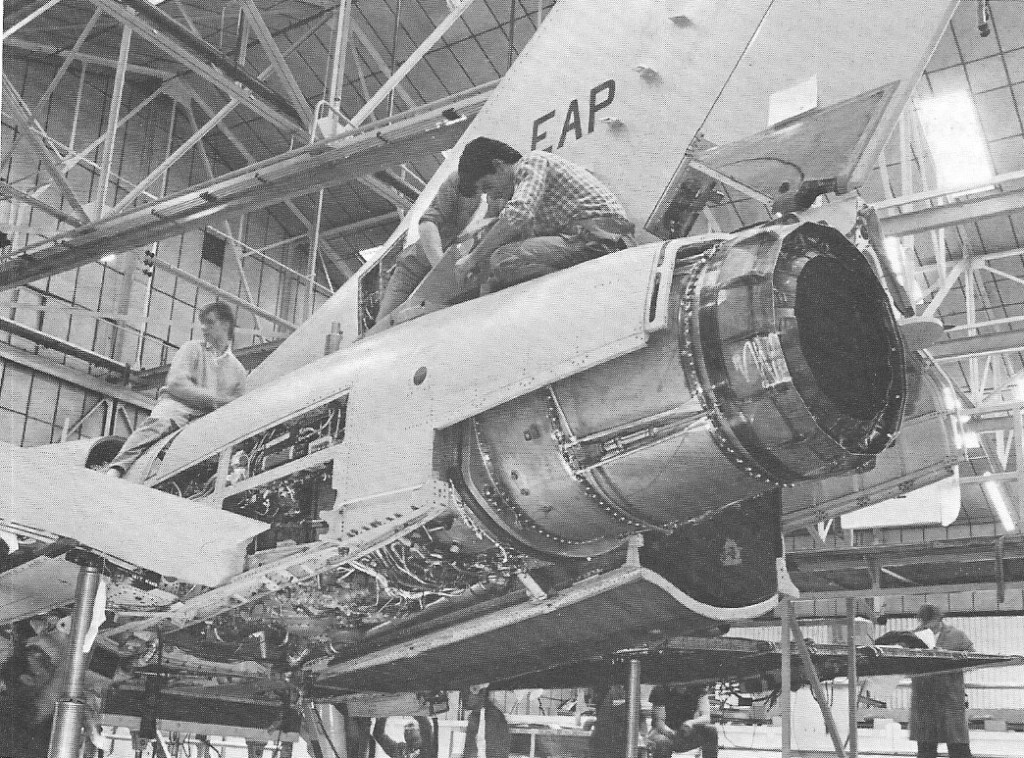
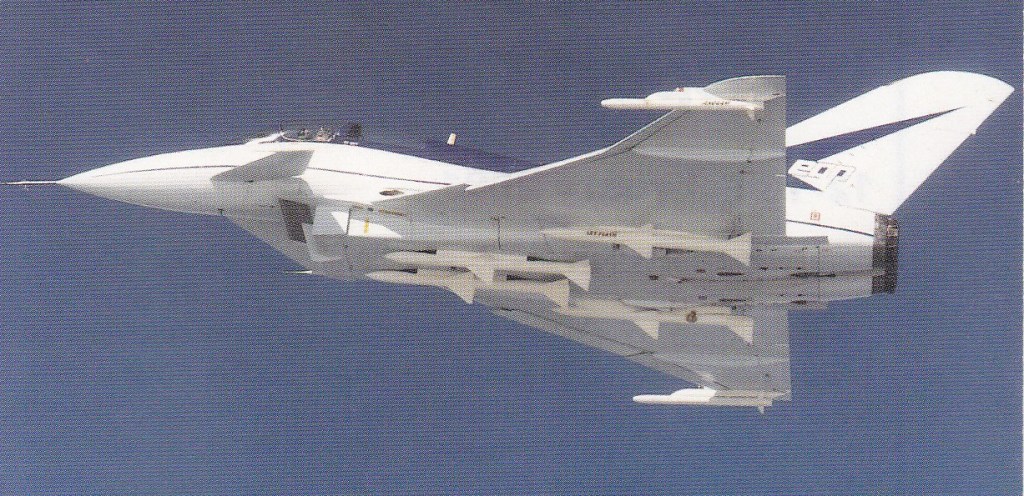
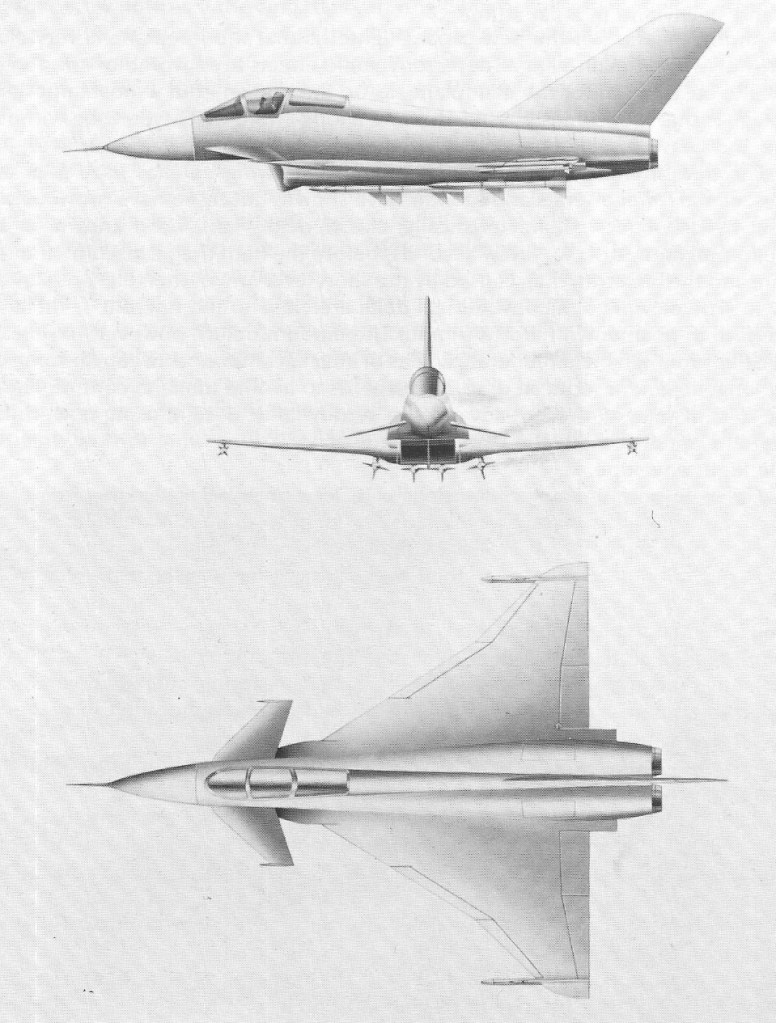
EAP is a single-seat aircraft with a compound-sweep delta wing and an all-moving canard. Power is provided by twin reheated RB.199 turbofans fed by chin intakes. The contract for the design, development, and construction of the demonstrator was signed in May 1983.
Prototype EAP October 1985
Prototype EAP October 1985
The EAP technology demonstrator aircraft exceeded Mach 1.1 on its first flight on August 8, 1986. Produced by British Aerospace in collaboration with several industrial partners, including Aeritalia, MBB, Rolls-Royce, Dowty, Ferranti, and GEC, the EAP has received financial support from the UK Government. Intended to demonstrate a complete weapons system for the 1990s, the EAP incorporates many advanced-technology features, including the extensive use of carbon-fibre structures, advanced aerodynamics, digital fly-by-wire with relaxed stability, a digital databus, and an integrated electronic cockpit.
EAP Engines: 2 x Turbo-Union RB 199-34R Mk, 40.0-75.7kN Take-off weight: 14515 kg / 32000 lb Empty weight: 10000 kg / 22046 lb Wingspan: 11.77 m / 38 ft 7 in Length: 17.72 m / 58 ft 2 in Height: 5.70 m / 18 ft 8 in Wing area: 51.66 sq.m / 556.06 sq ft Max. speed: 2M Crew: 1
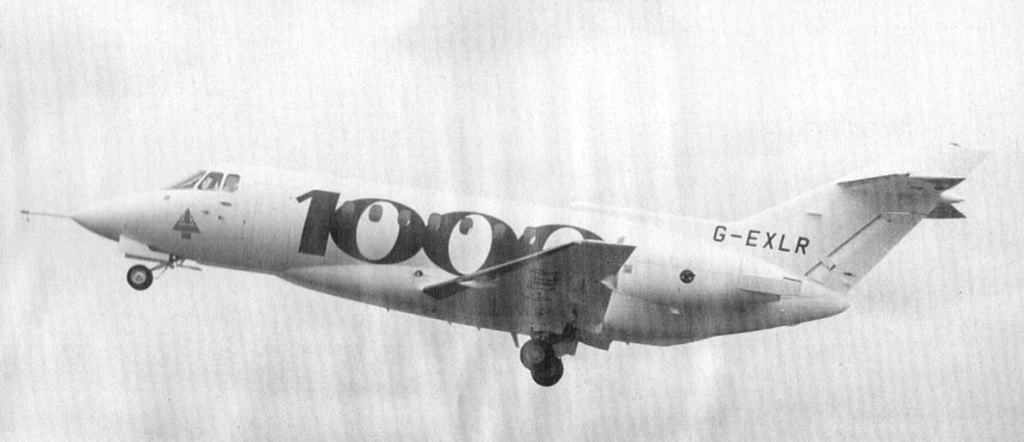
British Aerospace’s new BAe 1000, derived from the BAe 125 800, made its first flight in June 1990 from Chester. The BAe 1000 is billed as an intercontinental range, mid sized, corporate jet. The most obvious visual difference compared with the 125 Srs 800 is the lengthened fuselage with a more prominent external ventral fairing containing more fuel, stretched in size (84cm) as well as range (by 21 percent to 3635 nm). The cabin is deeper and there is space for a maximum of 15 in high density seating.
Engines: 2 x Pratt & Whitney Canada PW305 turbofans, 5,200 lb st (23,13 kN).
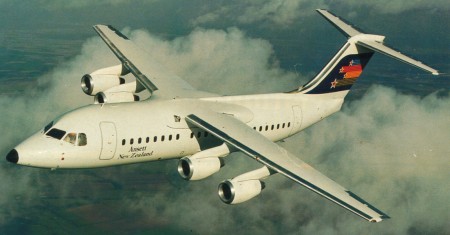
Hawker Siddeley announced their plans for a short-range, quiet airliner powered by four small turbo-fans in August 1973, the 146. But, with the economic recession in Britain that fol¬lowed shortly after, the HS. 146 project became “unjusti¬fiable” and was dropped. It was re-launched five years later when Hawker Siddley became British Aerospace (BAe).
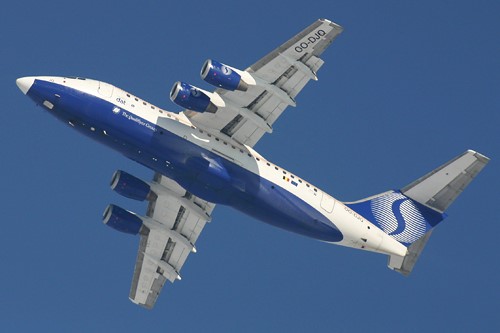
Design of the BAe-146 included 15 rows of five-abreast seating, and it was powered by four Textron Lycoming ALF502R-5 high bypass turbofan engines of 6,970 lbs of thrust. The British Aerospace 146 first flew at Hatfield on 3 September 1981, flown by chief test pilot Michael Goodfellow and Peter Sedgwick, and two flight test observers. At the time of the first flight, which lasted 95 minutes, BAe reported that it had 35 aircraft “earmarked for customers”.
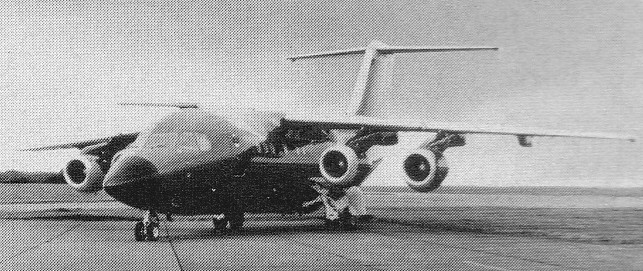
BAe 146-100 VH-NJA – the fourth built
The -200 development production model flew on 1 August 1982. The main point of difference between the -200 and the-100 was the increased fuselage length of the -200 by 2.40m to 28.60m. The type was granted certification on 4 February 1983, and production went ahead, with assembly of the BAe-146 beginning at Hartford and later expanding to Woodford. Annual production of the airliner reached 40 aircraft, and one of the first operators of the type was Dan-Air in Britain, which began operations with it in May 1983. QT Quiet Trader and QC convertible versions with side-opening freight doors were also available. The QT suffix under¬lines a marketing ploy; “Quiet Trader”. The 200QT combines the wide door introduced on the freighter versions with interior trim appropriate to the passenger role and has a within one hour turnaround between roles; providing either 94 seats or room for six freight pallets. The prototype QC had made its debut at the 1989 Paris Air Show. With a strengthened floor that enable pallets of up to 4000 lbs (1.815 tonnes) providing a possible gross payload of 10.05 tonnes to be shifted, with a 42.184 tonne MAUW permitted. The name Statesman refers to VIP-furnished variants for military or civil customers. The 146STA was the first dedicated military variant to reach demonstrator status, in the form of the original Srs 100 No 2 modified, by Hayes International, to incorporate a 131in/3.33m by 76in / 1.93m side-loading cargo door. The 146STA made its first flight in the USA on 8 August 1988 and featured a single air-openable (outwards and forward) parachuting door immediately behind the main freight door. A strengthened floor can take up to 7000 lb / 3175 kg single pallets and a total load of 22,300 lb / 10,115 kg.
BAe-146STA
A further development, the BAe 146-300, made its first flight on 1 May 1987 and certification was granted on 6 September 1988. This had its fuselage lengthened again to 30.99m, seating around 90 passengers five abreast, and an upgraded “glass” cockpit, but the power plant remained the same.
The -300 prototype was a modification of the original -100 prototype, then followed by a development aircraft, G-OASF, that first flew on 22 June 1988. Flight testing led to the development of a flap/trim compensation unit to cater for the increased tail arm of the -300, and an increase in max operating speed to M 0.72, but M 0.73 in the USA. Limiting airspeed remained at 295 kt / 546 kph IAS. It was certified at 93,000 lb / 42, 185 kg, like the Srs 200, but was likely to increase.
Late in 1990, BAe offered the first of an improved series called the RJ70, and this was followed over the next two years with the RJ80, the RJ85 and, in May 1992, the RJ100. The RJ-100 (G-IRJX) first flying on 23 Sept 2001. However, the RJX programme was eventually closed, marking the end of commercial jet airliner production in Britain. In all, a total of 380 BAe-146s were produced and the type has been in worldwide service.
BAe 146-100 Engines: Four Avco Lycoming ALF 502R-3 turbofans, 6,700 lb st (3 040 kgp) for take-off. Fuel capacity: 2,540 Imp gal (11540 lt) Optional fuel: 300 Imp gal (1364 lt) Design Vmo/Mmo, 310 kts (574 km/h) CAS, M0.70 above 22,000 ft (6 705 in) Typical high cruise speed, 419 kts (775 km/h) Still air range with basic 82-pax payload, 730 nm (1352 km) Range with max payload and std fuel, 510 nm (946 km) Range with max payload and increased gross weight 1,100 nm (2037 km) Range with optional increased tankage, 1,550 nm (2871 km) with 13,000 lb (5 900 kg) payload Balanced take-off field length, 3,600 ft (1097 m), ISA at sea level. Typical operating weight empty, 45,570 lb (20 670 kg) Max take-off weight, 74,600 lb (33840 kg) Optional (-00RR) increased gross weight version, 80,750 lb (36628 kg) Max landing weight, 71,850 lb (32590 kg) Max zero fuel weight, 63,250 lb (28 690 kg). Span, 86 ft 5 in (26,34 m) Length, 85 ft 10 in (26,16 m) Height, 28 ft 3 in (8,61 m) Gross wing area, 832 sq ft (77,3 sq.m) Aspect ratio, 8.97:1 Sweepback, 15 deg at quarter chord Undercarriage track, 15 ft 6 in (4,72 m) Wheelbase, 33 ft 11 in (10,1 m) Flight crew: two Max seating, one-class, 93 pax six abreast at 29-in (74-cm) pitch Standard seating, 82 at 33-in (84-cm) pitch Underfloor baggage/cargo compartments volumes 258 cu ft (7,30 cu.m) front / 242 cu ft (6,85 cu.m) rear
BAe 146-200 Engines: Four Avco Lycoming ALF 502R-3 turbofans, 6,700 lb st (3 040 kgp) for take-off. Fuel capacity, 2,540 Imp gal (11540 lt) Optional fuel 300 Imp gal (1364 lt) Design VMO/MMO, 300 kts (557 km/h) CAS, 100M = 0. 70 above 23,750 ft (7 240 m) Typical high cruise speed, 419 kts (775 km/h) Sill-air range with basic pax payload, 1200 nm (2 223 km) Range with max payload and std fuel, 1,080 nm (2 000 km) Range optional fuel and 19,000-1b (8 618-k.g) payload, 1380 nm (2 556 km) Balanced take-off field length, ISA at sea level, 5,000 ft (1520 m) Typical operating weight empty, 45,570 lb (20 670 kg) Max take-off, 88,250 lb (40030 kg) Max landing weight, 77,000 lb (34927 kg) Max zero fuel weight, 69,250 lb (31411 kg) Span, 86 ft 5 in (26,34 m) Length, 93 ft 8 in (28,55 m) Height, 28 ft 3 in (8,61 m) Gross wing area, 832 sq ft (77,3 cu.m) Aspect ratio, 8.97:1 Sweepback, 15 deg at quarter chord Undercarriage track, 15 ft 6 in (4,72 m) Wheelbase, 36 ft 9 in (11,20 m) Flight crew: two Max seating, one-class, 109 pax six abreast at 29-in (74-cm) pitch Standard seating, 100 at 33-in (84cm) pitch. Underfloor baggage/cargo capacity, 660 cu ft (18,69 cu.m).
BAe 146 200 II QC Engines: 4 x Avco Lycoming ALF502R-5, 6970 lb thrust. MAUW: 42.184 tonne.
BAe 146 III Engines: 4 x Textron Lycoming LF507, 7000 lb thrust.
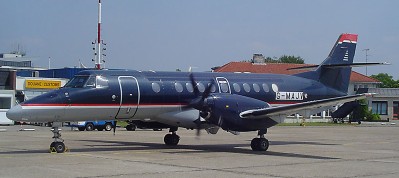
Development work on the Jetstream 41 was announced in mid-1989. A stretched development of the Jetstream 31/32 regional aircraft family by BAE Systems, the J41’s structural changes included an increase of 4.88m in length of the semi-monocoque aluminium alloy fuselage. The fuselage stretch is througha 2.51-m forward plug and a 2.36-m stretch behind the wing. The increase in length allows for 29 passenger seats, compared with the 19 typically fitted to the J31. The wingspan has been increased to 18.29 m, the ailerons and flaps have been reworked, and the entire wing has been mounted lower on the fuselage to remove the spar from the interior cabin floor. This led to a redesign of the engine mounts to increase ground clearance for the McCauley propellers, and the distance between the fuselage and the engines has also been increased. As a result, the cabin is quieter than the J31. The fuel system consists of two integral wing tanks and has the capacity for 5,818 lb (2,639 kg) of Jet Al. Both the main undercarriage and the nose gear are forward retracting and are fitted with twin wheels. Anti-skid three-rotor steel brakes are also installed.
The J41 is designed to operate to and from runways as short as 1219m. The aircraft can operate from a runway at 5,000 ft elevation at temperatures of ISA +20 with a full load for at least a one-hour sector with IFR reserves. Four “glass” screens of the Honeywell EDZ-805 EFIS (electronic flight instrument system) grace the cockpit and the flight deck instrumentation also includes a Honeywell SPZ-4500 fully digital automatic flight control system with an AH-600 attitude and heading reference system (AHRS), an AZ-810 air data computer and a Honeywell Primus II digital radio communications system with dual transponders. The J41 first flew on 25 September 1991 and 104 J41 aircraft were built before production was terminated in May 1997. Over 90 Jetstream 41s world¬wide remained operational in 2003.
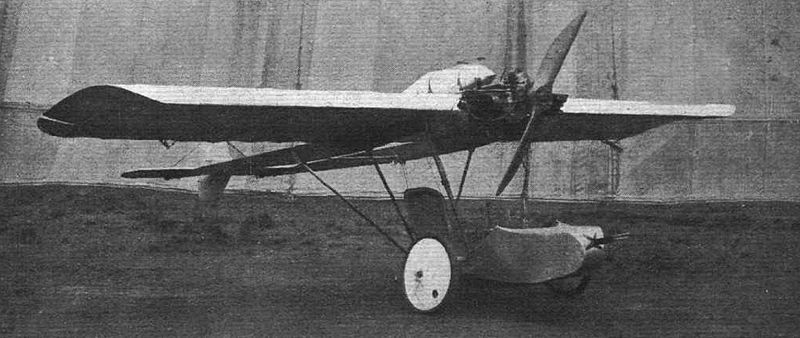
The smallest of designs from Frederick Koolhoven when he worked for the British Aerial Transport Company was the F.K.28 Crow.
The B.A.T. Crow monoplane was built in 1919. It was very small and light. Its tail surfaces were carried by two slim booms. An ABC Gnat 2-cylinder horizontally-opposed engine – together with fuel and oil tanks – was mounted in a pusher configuration on the wing centre section. The pilot’s seat was set between the landing gear suspended below the wing. It was designed to be dismantled for road-transport with the removal of twelve bolts. It was displayed at the First Air Traffic Exhibition in Amsterdam, but it did not fly until some time later. It only flew once and proved to be underpowered. It was scrapped in 1920.
Powerplant: 1 × ABC Gnat, 40 hp (30 kW) Propeller: 2-bladed fixed-pitch Wingspan: 15 ft 0 in (4.57 m) Length: 14 ft 0 in (4.27 m) Height: 4 ft 6 in (1.37 m) Empty weight: 220 lb (100 kg) Gross weight: 400 lb (181 kg) Maximum speed: 75 mph (121 km/h, 65 kn) Range: 150 mi (240 km, 130 nmi) Endurance: 2 hours Crew: 1
Belite Aircraft has developed the single-seat Sealite amphibious floatplane that weighs less than 338 pounds empty and meets FAR 103 requirements for ultralight float-equipped “vehicles,” as the FAA calls them.
The Sealite flew in December 2013, the 110th anniversary of the Wright brothers’ first flight at Kitty Hawk. Belite President James Wiebe made the first flight – “I was pleased with this test flight. It demonstrated the performance and utility possible with a single-place amphibious aircraft. The ground roll was very short, the climb rate was impressive, and the landing manners were easy and benign”.
The first flight was from a grass strip but water tests are planned. The vehicle is an adaptation of the company’s UltraCub model. It made the weight with extensive use of carbon fiber in the floats and wing spars. The wings and floats weigh only 20 pounds each.
Military school eindecker built in 1913, powered by a 100 hp Mercedes DI engine. Its four-wheeled undercarriage was copy of the undercarriage employed by Bristol aeroplanes
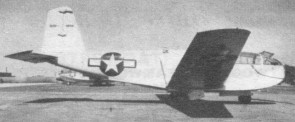
During 1942 the U.S. Navy let contracts for the development of several amphibious transport gliders. Two of the contracts called for twelve¬-seaters manufactured primarily from non¬-strategic materials, these being the Allied XLRA 1 and the Bristol XLRQ 1. The Bristol XLRQ 1 produced by the Bristol Aeronautical Company of New Haven, Conn., was a low wing cantilever monoplane. Its overall span and length were 72 ft (21.94 m) and 40 ft (12.2 m) respectively, and there were four prototypes (BuAer Nos. 11651 54), although it is not certain that all of these gliders were completed. A production order was placed for one hundred LRQ 1 gliders (BuAer Nos. 33715 814), but this was cancelled in 1943.
Wing span: 72 ft (21.94 m). Length: 40 ft (12.2 m).