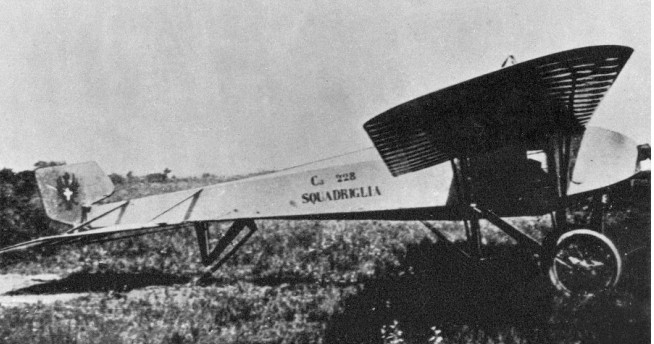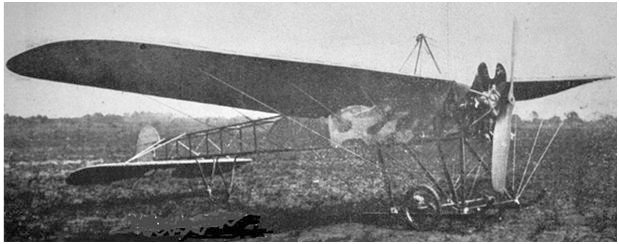
Caproni Ca.22 Parasol / BH

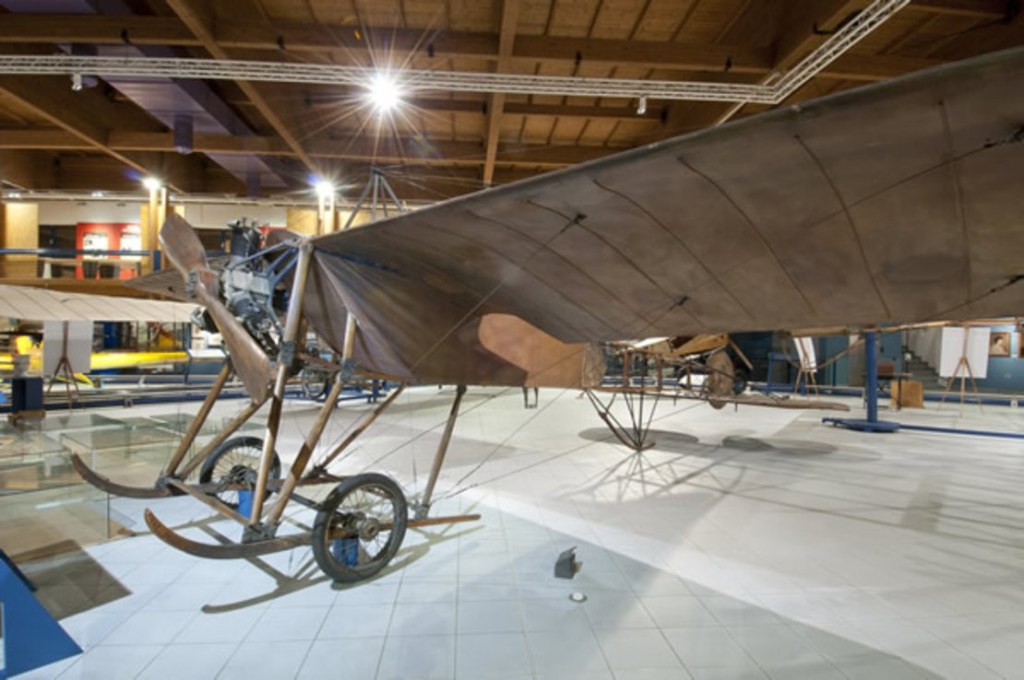
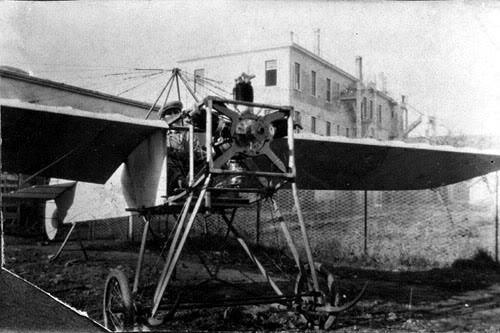
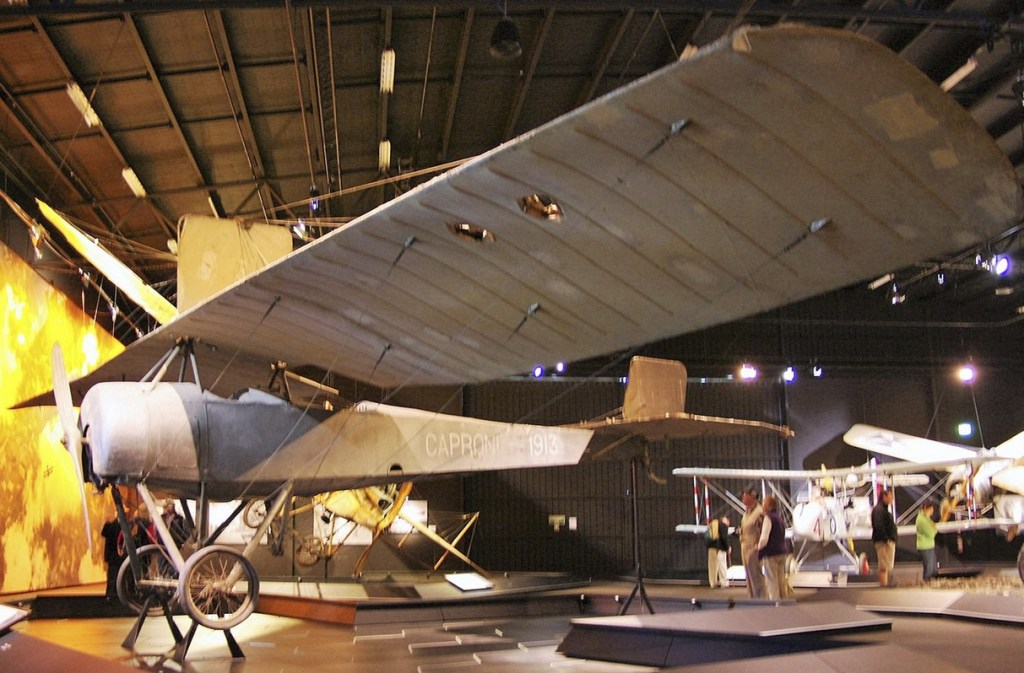
Caproni Ca.22 1913 at the Omaka Heritage Centre, New Zealand in April 2009

Development of the Caproni Ca.20 led to the Ca.22, a two-seat reconnaissance fighter of parasol wing configuration similar in appearance to the earlier type with a larger propeller spinner and a Le Rhone rotary engine, being either the 60 kw (80 hp) or 75 kw (100 hp) variants, but this was later replaced by a 104 kw (140 hp) Hispano Suiza.

The fin and rudder were of triangular type and were first introduced on the type L. One innovative feature of the design was the ability to tilt the wing to increase or decrease the angle of attack, varying the angle at which the wing surface met the oncoming air and thus varying the amount of lift produced. The machine was otherwise conventional for the time.

The CA.22 served as a two-seat observation aircraft with the Italian Army’s No 15 Squadron, which had used Bleriot monoplanes before the introduction of the Ca.22 in April 1915. It is known seven examples were issued to that unit, and it would appear that this was the complete production of the type. This unit operated near Piacenza with No III Group, being commanded by Captain Umberto Rossi and was involved in the reconnaissance role. On 30 June that year the Squadron’s aircraft were dis-assembled and conveyed to Pordenone near the Austrian border from where further reconnaissance flights were made, as well as commencing bombing operations over enemy territory.

The CA.22 became known as the BH when fitted with the Hispano engine. This engine had a water jacket surrounding the crank case. The Caproni BH was replaced in service by the Model P which was supplied to both the Royal Air Force and French Air Force.

Although not built in large numbers, one example has survived and has been imported to New Zealand, joining the collection of World War I aircraft on display at the Aviation Heritage Centre at Omaka. This example was held in storage by the Caproni Museum in Italy, which was set up by Gianni and Timina Caproni, from about 1929 until imported to New Zealand and is believed to be the only survivor. This machine has been described as a virtual ‘time capsule’ as it has changed very little in the 85 years it was held in storage.

Engine: 60 kw (80 hp) Gnome Rhone
Wingspan: 14.14 m (46 ft 4 in)
Length: 8 m (26 ft 3 in)
Height: 3.5 m (11 ft 6 in)
Wing area: 13.57 m² (144 sq ft)
Max speed: 125 km/h (76 mph)
Empty weight: 480 kg (|1,056 lb)
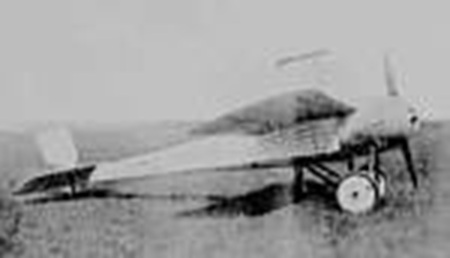
Caproni Ca.20

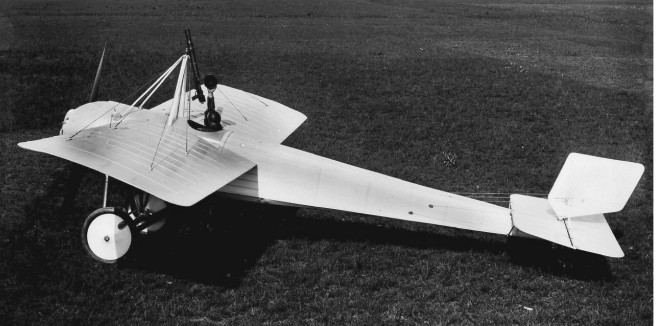
One of his early fighter aircraft was the Ca.18 reconnaissance aircraft which was developed to the Ca.20, the latter incorporating a larger engine mounted under a stream-lined cowling, with shorter wings and fitted with a machine-gun for offensive operations. The Ca.20 developed in 1914 was described as an exceptional fighter and ahead of its time. It was a single-seat fighting scout of mid-wing monoplane configuration and had a fixed forward firing machine-gun above the propeller arc. Only one example was produced and for many years it was stored in Italy before being acquired by the Museum of Flight in Seattle in 1999, preserved and placed on display but keeping its original fabric covering.

Caproni Ca. 13 Milano I

The thirteenth airplane model designed and built by aviation pioneer Gianni Caproni in Vizzola Ticino. It was a two-seat, rather conventional tractor wing-warper monoplane, generally of Blériot lines, which flew for the first time in June 1912. Two examples were built, powered by 70 hp Anzani radials, which proved problematic. The “Milano I” was the second, donated by Caproni to the Società Italiana Aviazione in July 1912.

Caproni Ca.9

The Caproni Ca. 9, from 1911, has a structure entirely in wood, with a latticework fuselage braced with steel cables, wooden wings and tailpieces with canvas covering. The engine is a 35 hp three-cylinder Anzani Y. The landing gear features the typical anti-tip skids, characteristic of many aircraft of the pioneering period.

To commemorate the hundredth anniversary of the birth of the Trentino pioneer in 1986, the prestigious National Air and Space Museum in Washington exhibited Ca. 9 of the Caproni Museum in the “Early Flight” pavilion, models, drawings, relics, medals won by Caproni devices and a series of illustrative panels.

Having returned to Italy in 1988 and temporarily hosted by the AerSud, in 1989 the Ca.9 was exhibited in the Palazzo della Regione on the occasion of the official announcement of the project to build the new Caproni Museum in Trento. It then became a symbol of the initiative, and was again exhibited on the occasion of the laying of the first stone. Subjected to conservative interventions in America and Italy, with the inauguration of the Museum, it found its permanent home in the pioneering aircraft sector of the Gianni Caproni Museum of Aeronautics.

Engine: 35hp Anzani
Wingspan 8.88 m
Length 7.80 m
Height 3.00 m
Empty weight 220 kg
Maximum speed 90 km / h

Caproni Ca.8      

The success reported by Louis Blériot with his monoplane at the end of July 1909 in crossing the English Channel impressed a vigorous change in the tendencies of the builders of the time towards the monoplane, justified by the greater structural simplicity and better aerodynamics compared to contemporary biplanes.

Gianni Caproni joined this new trend starting from 1911 and up to the end of 1913, dealing exclusively with the construction of monoplane for school and training, in both single and two-seater versions, making more than seventy.

The first of these, the Ca. 8 single-seater, also known as the “Caproni monoplano 25hp”, flew to Vizzola on June 13, 1911 powered by a 25 hp three-cylinder fan-shaped Anzani engine.

Capella Javelin / T-Raptor

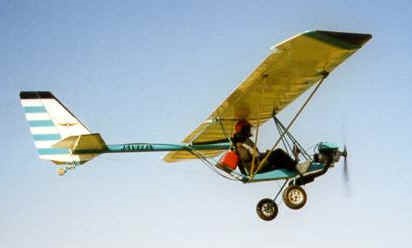
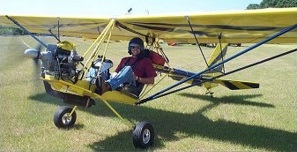
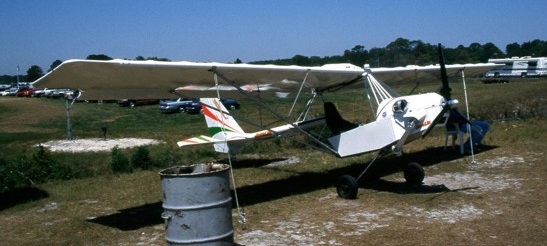
The Capella Javelin is a family of American open cockpit, high wing, tractor configuration, conventional landing gear-equipped ultralight aircraft that were designed by J. Reid Howell and produced in kit form by Capella Aircraft of Austin, Texas and intended for amateur construction.

First flying in 1998, the single seat Javelin I was designed to comply with the American FAR 103 ultralight regulations, including that category’s maximum 254 lb (115 kg) empty weight. The 2001 cost was US$6000 without engine, propeller, instruments or covering supplies.

The design features an open frame fuselage of welded 4130 steel tubing, with the pilot’s and passenger’s seats bolted to the frame. The horizontal stabilizer and tail fin are also constructed of welded steel tubes. The wing is framed from riveted aluminium tubing with all flying surfaces covered in doped aircraft fabric. The wing is equipped with full span ailerons.

The conventional landing gear includes sprung-steel main gear and a similarly sprung steerable tail wheel. The open cockpit design provides good visibility while taxiing.

The standard engine supplied by the manufacturer for the single seat version was the 28 hp (21 kW) Rotax 277, but it was reported that the aircraft was underpowered with that engine installed. The throttle control is of a unique motorcycle grip type.

Original factory kit options included a cockpit pod and windshield, brakes and steel tube powder coating.
The single-seat Javelin was developed into a tandem two-seater, designated the Javelin II and then further developed into the T-Raptor ultralight trainer. The T-Raptor uses a wider and more enclosed fuselage, with optional bubble-windowed doors, to allow cool weather flying and was intended to be marketed to ultralight schools.

Capella Aircraft went out of business in late 2007, and the type is no longer in production.

Variants:

Javelin I
Single seat open cockpit ultralight
Engine: 1 × Rotax 277, 28 hp (21 kW)
Wingspan: 28 ft 0 in (8.53 m)
Wing area: 112 sq ft (10.4 sq.m)
Length: 18 ft 0 in (5.49 m)
Height: 6 ft 0 in (1.83 m)
Empty weight: 240 lb (109 kg)
Gross weight: 575 lb (261 kg)
Fuel capacity: 5 US gallons (19 litres)
Maximum speed: 63 mph (101 km/h, 55 kn)
Cruise speed: 60 mph (97 km/h, 52 kn)
Stall speed: 26 mph (42 km/h, 23 kn)
Range: 140 mi (220 km, 120 nmi)
Service ceiling: 12,500 ft (3,800 m)
Rate of climb: 400 ft/min (2.0 m/s)
Seats: one

Javelin II
Two seats-in-tandem open cockpit ultralight trainer powered by a 50 hp (37 kW) Rotax 503 engine. It was reported as being in development in 1998 and forecast to be available at the end of 1998.

T-Raptor
Two seats-in-tandem ultralight trainer powered by a 50 hp (37 kW) Rotax 503, 64 hp (48 kW) Rotax 582 or 60 hp (45 kW) HKS 700E four stroke engine. The T-Raptor has an expanded-width steel cage to provide a more enclosed cockpit and is a development of the Javelin II.

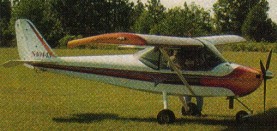
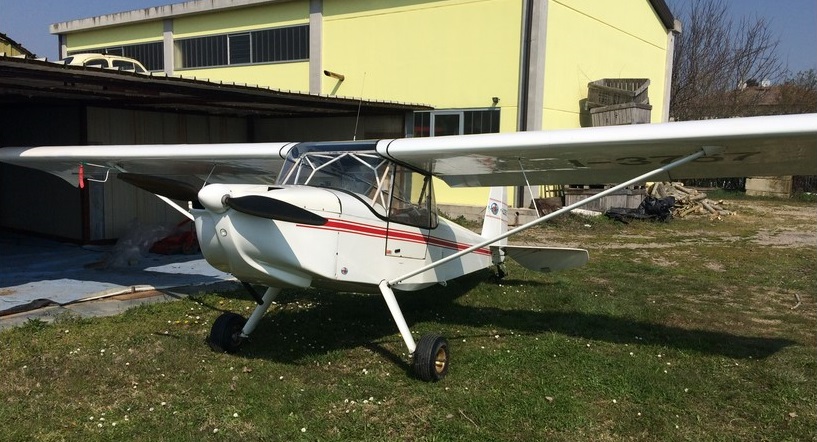
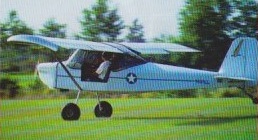
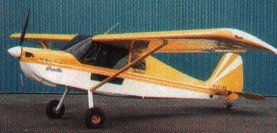
Capella Aircraft Corp Capella

Capella Single Seat

Desined by J. Reid Howell
The Capella SS first flew in 1988.
Folding wing optional.

The FW2T has a dacron covered spaceframe fuselage, while the strut braced wings are fabricated from sheet dural, pop riveted.

FW2T

The Capella XLS first flew in 1990.
Capella Aircraft Corp received certification in Germany for the Capella XLS model FW2C80 and Capella SS model FW1C50.
The Capella XS first flew in 1990.
The Capella Fastback first flew in 1995.

Capella Fastback

Capella SS
Engine: Rotax 503, 50 hp.
HP range: 40-50.
Speed max: 112 mph.
Cruise: 102 mph.
Stall: 34 mph.
ROC: 980 fpm.
Take-off dist: 130 ft.
Landing dist: 130 ft.
Service ceiling: 10,000 ft.
Fuel cap: 7 USG.
Weight empty: 360 lbs.
Gross: 650 lbs.
Height: 5.67 ft.
Length: 17.33 ft.
Wing span: 27.5 ft.
Wing area: 110 sq.ft.
Seats: 1.
Landing gear: nose or tail wheel.

Capella XLS
Engine: Rotax 912, 80 hp.
HP range: 65-80.
Speed max: 121 mph.
Cruise: 119 mph.
Stall: 41 mph.
ROC: 1450 fpm.
Take-off dist: 200 ft.
Landing dist: 150 ft.
Service ceiling: 10,000 ft.
Fuel cap: 22 USG.
Weight empty: 560 lbs.
Gross: 1100 lbs.
Height: 5.67 ft.
Length: 18.4 ft.
Wing span: 28.5 ft.
Wing area: 114 sq.ft.
Seats: 2.
Landing gear: nose or tail wheel.

Capella XS
Engine: Rotax 582, 65 hp.
HP range: 65-80.
Speed max: 116 mph.
Cruise: 111 mph.
Stall: 41 mph.
ROC: 1200 fpm.
Take-off dist: 175 ft.
Landing dist: 115 ft.
Service ceiling: 10,000 ft.
Fuel cap: 10 USG.
Weight empty: 480 lbs.
Gross: 1100 lbs.
Height: 5.67 ft.
Length: 18.4 ft.
Wing span: 28.5 ft.
Wing area: 114 sq.ft.
Seats: 2.
Landing gear: nose or tail wheel.

Capella Fastback
Engine: Rotax 912, 80 hp.
HP range: 65-80.
Speed max: 121 mph.
Cruise: 120 mph.
Stall: 36 mph.
ROC: 1450 fpm.
Take-off dist: 200 ft.
Landing dist: 150 ft.
Service ceiling: 10,000 ft.
Fuel cap: 10/22 USG.
Weight empty: 560 lbs.
Gross: 1100 lbs.
Height: 5.7 ft.
Length: 18.5 ft.
Wing span: 28.5 ft.
Wing area: 114 sq.ft.
Seats: 2.
Landing gear: tail wheel.

Capella FW2T
Engine: Rotax 912, 80 hp
Wing span: 8.63 m
Wing area: 10.62 sq.m
MAUW: 450 kg
Empty weight: 265 kg
Fuel capacity: 52 lt
Fuel consumption: 14 lt/hr
Max speed: 180 kph
Cruise speed: 155 kph
Minimum speed: 58 kph
Climb rate: 3.8 m/s
Certification: VZ
Seats: 2
Kit price (1998): $13,795

Capelis XC-12   

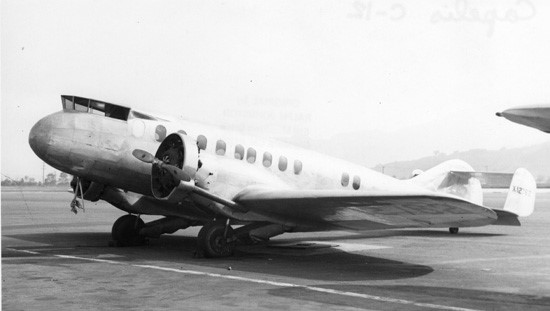
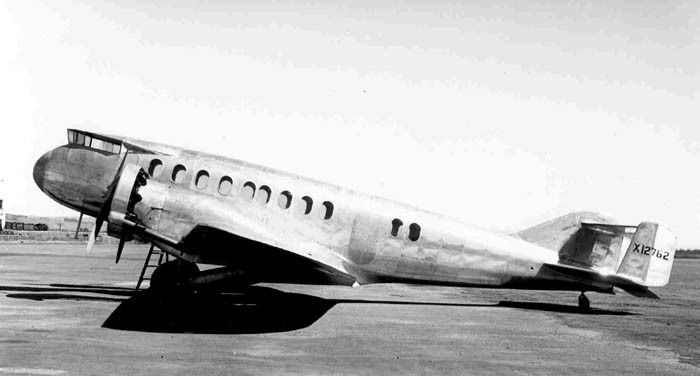
The Capelis Safety Airplane Company Ltd XC-12 was a 1933 aircraft design that most notably was used as a prop in the films Five Came Back, The Flying Tigers, The Falcon in Danger, and Immortal Sergeant. The aircraft featured unusual twin horizontal tail structures supported by three vertical tail surfaces. Construction and finishing methods involved using sheet metal screws which ultimately led to the abandoning of the project.

The original design by Socrates H. Capelis was issued U. S. patent #1,745,600 in 1930. The patent comprised a modified application with a half-span dorsal wing mounted rearward on top of the cabin and two additional engines mounted on the wings. The project was funded by local Greek restaurateurs as a promotional aircraft; it was constructed with help from University of California students.

A less radical design by Dr. John E. Younger featured all-metal construction; the aircraft was built as an all-metal, low-wing, retractable gear, twin engine transport with a triple vertical tail supporting a dual (biplane arrangement) horizontal stabilizer. The wing used a large box-spar construction with corrugated skin panels. The partly retracting landing gear extended automatically when the throttle was closed.

Following a 1938 incident, the XC-12 was modified at Glendale, California: The forward slanting eight-piece windshield was modified to a four piece that slanted rearward, and the passenger windows were squared off to look more like a Douglas DC-3.

On April 15, 1938, the XC-12 suffered minor damage from a forced landing after running out of fuel while flying over Fresno, California. The main wing spar construction was bolted together, and many of the metal skin panels were attached with P-K sheet metal screws rather than with permanent rivets. These tended to vibrate loose, requiring tightening or replacing every few flights, constituting a safety hazard that would later ground the aircraft. With promotional tours abandoned after the 1938 crash, the aircraft’s flying career was over.

The aircraft was purchased by RKO in March 1939, after which the studio’s insurance company permanently grounded the aircraft. Used as a full-size prop, the transport appeared only in ground roles in RKO’s feature films made during World War II; flying sequences used a scale XC-12 shooting miniature. The aircraft became an RKO back lot relic, falling into worse repair during the 1940s until it was completely scrapped some time around 1950. The XC-12 miniature continued to be used in later feature films.

The aircraft was featured as a prop in Five Came Back (1939), The Flying Tigers (1942), and Immortal Sergeant (1943). In RKO’s Dick Tracy’s Dilemma (1947) the XC-12 was shown somewhat dismantled, and in Daredevils of the Clouds (1948), after which it was apparently scrapped.

Filmography:

Five Came Back (RKO) 1939 (aircraft and model)

Flying Blind (Paramount) 1941 (model)

King of the Zombies (Monogram) 1941 (model and disassembled fuselage)

Flying Tigers (Republic) 1942 (aircraft and model) John Wayne guides in a crippled XC-12 with an engine on fire, and later uses it as an improvised bomber

Invisible Agent (Universal) 1942

Immortal Sergeant (20th Century Fox) 1942/1943 (aircraft and model)

Adventures of the Flying Cadets (Universal) 1943 (model)

Night Plane from Chungking (Paramount) 1943

The Falcon in Danger (RKO) 1943 (while a Lockheed Model 10 Electra aircraft model is used for the in-flight scenes, the full-size aircraft appears as a wreck)

Wings Over the Pacific (Monogram) 1943 (model)

The Purple V (RKO) 1943

Action in Arabia (RKO) 1944

Passport to Destiny (RKO) 1944

Jungle Queen (serial) (Universal) 1945; re-edited into Jungle Safari a 1956 feature film

Dick Tracy’s Dilemma (RKO) 1947 The aircraft is shown somewhat dismantled in this movie, but not scrapped

Daredevils of the Clouds (Republic) 1948 (model)

Jungle Goddess (Lippert Pictures) 1948 (model)

Tarzan’s Magic Fountain (RKO) 1949 (model)

On the Isle of Samoa (Columbia) 1950 (model)

China Gate (Globe Enterprises) 1957 (model)

Specifications:
Powerplant: 2 × Wright Cyclone R-1750, 525 hp (391 kW) each
Propeller: 2-bladed
Wingspan: 55 ft (17 m)
Wing area: 500 sq ft (46 m2)
Airfoil: Modified USA 45
Length: 42 ft (13 m)
Height: 12 ft (3.7 m)
Empty weight: 6,500 lb (2,948 kg)
Gross weight: 9,500 lb (4,309 kg)
Fuel capacity: 145 gal
Maximum speed: 190 kn (220 mph, 350 km/h)
Cruise speed: 170 kn (190 mph, 310 km/h)
Stall speed: 53 kn (61 mph, 98 km/h)
Service ceiling: 28,000 ft (8,500 m)
Capacity: 12