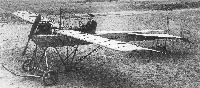
The 1911 Chazal monoplane was designed and built by Henry Chazal in France.
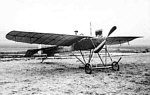
The 1911 Chazal monoplane was designed and built by Henry Chazal in France.
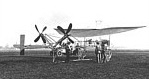
The 1909 Chauviere No. 1 monoplane was designed by Saulniers and built by Chauviere in France.
Span: 21’4″
Length: 26’3″
Empty weight: 947 lb

The AC-5 Bijou was one of several original homebuilt aircraft designed and built by Armand Châtelain in the 1950s and 1960s.
The sole AC-5 was initially powered by a 75 hp Minié 4DC-32 Horus engine, and was registered F-PHQO. It first flew on September 10, 1956. Later it was re-engined with one 65 hp Continental A65, the aircraft was still active in 2012.
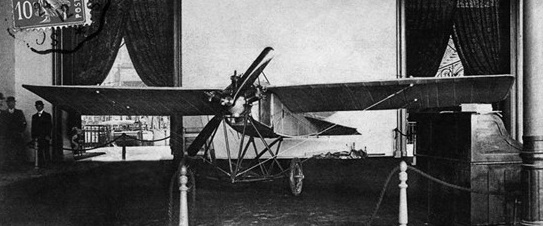
Chassany built his Monoplane in France in 1910.

This Nieuport-like monoplane was displayed at 1910 Paris “Exposition de la Locomotion Aérienne”. It’s recognisable by the three-cylinder Viale engine and the arrangement of landing gear struts.
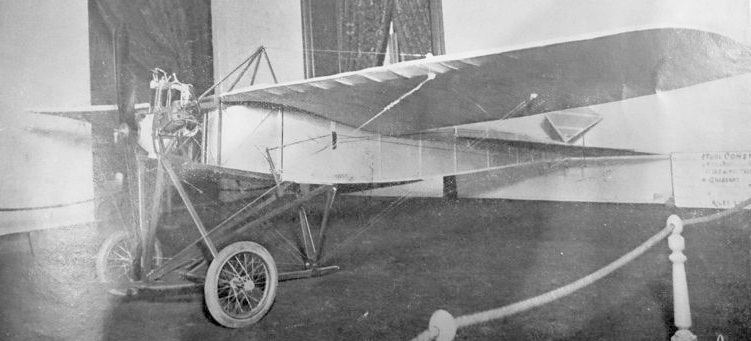
It was claimed to be the lightest plane at the show, having reached 90 km/h with only a 32 hp engine. It was also the cheapest, costing only 7,000 francs without engine.
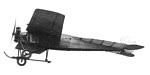
The 1910 Chassagny monoplane was designed by Chassagny and built by Labaudie et Puthet in France.
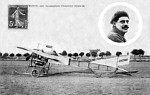
Span: 26’3″

The Tourbillion (Whirlwind) is a single seat, amateur-built, light low-wing plane that comes from France.

Designed by Yves Chasle in 1964, the wooden prototype F-PMXQ first flew on 9 October 1965.
It is available in several models that differ only in their engine size. Most common is the 65-hp Continental. Airframe construction includes wood and fabric wings and a plywood-covered fuselage structure.
Plans no longer available.
Variants:
YC-12
prototype with Continental A65 engine
YC-121
similar to prototype with enlarged tailfin for limited certification
YC-122
similar to YC-121 but with Continental C90 engine
YC-123
similar to YC-121 but with Potez 4E-20b engine
YC-121
Powerplant: 1 × Continental A65, 48 kW (65 hp)
Propeller: 2-bladed EVRA fixed pitch wooden propeller, 1.75 m (5 ft 9 in) diameter
Wingspan: 6.7 m (22 ft 0 in)
Aspect ratio: 6
Airfoil: NACA Srs.7
Length: 5.95 m (19 ft 6 in)
Empty weight: 285 kg (628 lb)
Max takeoff weight: 432 kg (952 lb)
Fuel capacity: 60.5 l (16.0 US gal; 13.3 imp gal)
Maximum speed: 235 km/h (146 mph, 127 kn) at sea level
Cruise speed: 205 km/h (127 mph, 111 kn) at 70% power
Stall speed: 75 km/h (47 mph, 40 kn)
Range: 800 km (500 mi, 430 nmi)
Rate of climb: 4.6 m/s (910 ft/min)
Wing loading: 57.5 kg/sq.m (11.8 lb/sq ft)
Power/mass: 0.112 kW/kg (0.068 hp/lb
Takeoff run 855 ft
Landing roll 900 ft
Range 500 miles
Crew: 1
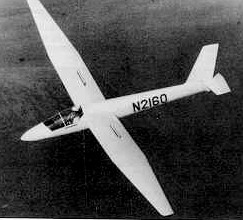
Designed by Robert Chase, the C100-S made its first flight in 1968. It uses a 3-piece wing with an airfoil 15% thick and no aerodynamic twist. Wood and Styrofoam are used in the construction of the wing (as well as the tail), but the entire surface and the stress- bearing material is fiberglass. The fuselage is of all-metal stress-skin construction, with a skid and fixed wheel.
Wing Span: 16.76 m / 55 ft
Wing Area: 12.82sq.m / 138sq.ft
Empty Weight: 240kg / 530lb
Payload: 91kg / 200lb
Gross Weight: 331kg / 730lb
Wing Load: 25.82kg/sq.m / 5.3 lb/sq.ft
L/DMax: 38 @ 88 kph/ 46 kt/ 55 mph
Aspect ratio: 22
MinSink: 0.61 m/s / 2.0 fps / 1.18 kt
Airfoil: NACA 4(3)-165
No. of Seats: 1
No. Built: 1
Structure: aluminum, fiberglass, wood
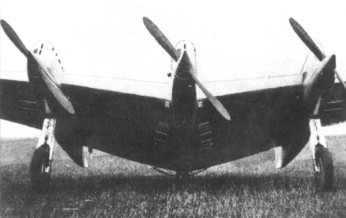
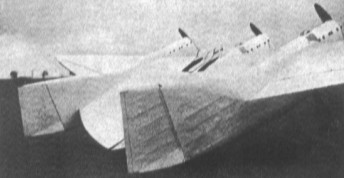
In April 1929, French engineer Jean Charpentier deposited a patent for a twin-engine craft he had named ” plane-aile”. This was followed by a second patent in June 1931, for a twin-engine of transport. These machines remained projects, unlike the following C-1, whose prototype was construct. Having obtained an order from the French government, Charpentier began building the C-1 at the Caudron establishments, in Issy-Les-Moulineaux. The craft was powered by three 6-cylinders Hispano-Suiza line of 100 hp, each with a fixed two-bladed propeller. The C-1 was two-seater, each pilot in a separated open cockpit. The C-1 was damaged during taxy tests at Stamps-Mondésir, in October 1933. Repaired, it took off for the first time in January 1935 with the hands of the Poivre staff sergeant, but crashed almost at once. Extensively damaged, it was not rebuilt.
Wing span: 15.00 m
Length: 5.30 m
Wing area: 24.00 sq.m
Max. gross weight: 2000 kg
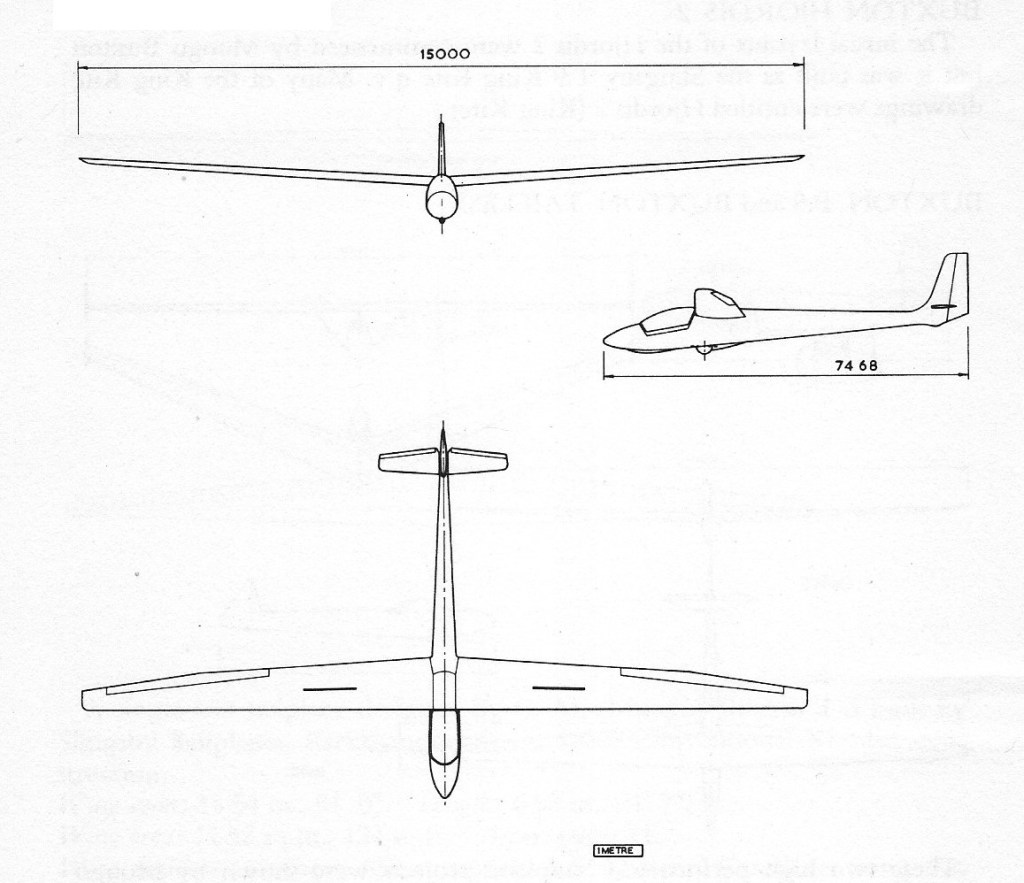
The Chard Osprey standard class glider was designed and built of conventional wooden construction by Keith Chard at Lasham, UK, using a Slingsby T.51 Dart 15 fuselage and tail, c/n 1457. The wings were designed and built by Chard. No flaps or airbrakes were fitted.
The wing sections were Chard KC-24 at root, Chard KC-29 at mid-point, and KC-30 at tip.
It was first flown on 15 May 1966.
Wingspan: 15.0 m / 49 ft 2.5 in
Length: 7.47 m / 25 ft 5 in
Wing area: 12.35 sq.m / 133 sq.ft
Aspect ratio: 18.3
Empty weight: 249.02 kg / 549 lb
AUW: 358.34 kg / 790 lb
Wing loading: 29.04 kg/sq.m / 5.95 lb/sq.ft
Max L/D: 34
Min sink: 0.64 m/sec at 85 kph / 2.1 ft/sec at 53 mph
The Chandelle Mk IV is an American ultralight aircraft that was designed by Nile Downer and produced by Chandelle Aircraft. The aircraft was supplied as a kit for amateur construction.
The aircraft was designed to comply with the US FAR 103 Ultralight Vehicles rules, including the category’s maximum empty weight of 254 lb (115 kg). The aircraft has a standard empty weight of 243 lb (110 kg). It features a strut-braced high-wing, a single-seat, open cockpit, tricycle landing gear and a single engine in pusher configuration.
The aircraft is made from bolted-together aluminum tubing, with the wings and tail surfaces covered in Dacron sailcloth. Its tapered planform, single-surface, 30.5 ft (9.3 m) span wing is supported by both lift struts and jury struts. The wing features 3/4 span ailerons. The pilot is accommodated in an open seat without a windshield. The tail surfaces are mounted on tubes that travel beside and below the pusher engine and propeller. The tricycle landing gear features main gear suspension.
The Mark IV appeared just before the collapse of the US ultralight market in 1984 and so few were produced or sold.
Chandelle Aircraft Mk IV
Engine: 1 × Cuyuna UL II-02 twin cylinder, two-stroke, 30 hp (22 kW)
Propeller: 2-bladed wooden
Wingspan: 30 ft 6 in (9.30 m)
Length: 17 ft (5.2 m)
Height: 8 ft 7 in (2.62 m)
Wing area: 153 sq ft (14.2 sq.m)
Empty weight: 243 lb (110 kg)
Gross weight: 500 lb (227 kg)
Fuel capacity: 5 U.S. gallons / 19 lt / 4.2 imp gal
Maximum speed: 59 mph / 95 km/h / 51 kt
Cruise speed: 45 mph / 39 kt / 72 km/h
Stall speed: 23 mph / 20 kt / 37 km/h
Never exceed speed: 75 mph / 65 kt / 121 km/h
Rate of climb: 700 ft/min / 3.6 m/s
Crew: one

