The Civil Aviation Department Revathi was a light civil utility aircraft designed in India principally for use by that country’s flying clubs.
The Revathi was a conventional, low-wing monoplane with fixed tailwheel undercarriage and two seats side-by-side with an optional third seat behind them. The fuselage construction was of welded steel tube, with the forward section skinned in aluminium and the tail section in fabric. The wings were of all-metal construction and originally fitted with wooden flaps and ailerons that were later replaced with metal surfaces. The tail surfaces were also originally wooden but later replaced with metal.
The Revathi first flew on 13 January 1967 and received Indian type certification in January 1969.
The prototype’s wings and fuel system were later revised, and the resulting configuration was designated the Revathi Mk.II. It first flew in this configuration on 20 May 1970. It received its Indian type certificate on 31 October 1972.
Revathi Mk.II Crew: One pilot Capacity: 1-2 passengers Length: 24 ft 10 in (7.58 m) Wingspan: 30 ft 10 in (9.40 m) Height: 9 ft 9 in (2.97 m) Wing area: 152 ft2 (14.1 m2) Empty weight: 1,408 lb (639 kg) Gross weight: 2,120 lb (962 kg) Engine: 1 × Rolls-Royce Continental O-300-C, 145 hp (108 kW) Maximum speed: 120 mph (193 km/h) Range: 400 miles (643 km) Service ceiling: 11,500 ft (3,505 m) Rate of climb: 600 ft/min (3.0 m/s)
The Technical Centre of the Indian Civil Aviation Department began Design work on the MG-1 motor glider in October 1981. It was a low wing monoplane with spruce and plywood wings with a forward sweep of 1.5° at quarter chord mounted with 3.25° of dihedral. The ailerons were fabric covered; there were no flaps but wooden airbrakes extended above and below the wing. The cantilever, unswept empennage was similarly constructed and the low set tailplane carried elevators with a trim tab on the starboard side.
The fuselage of the MG-1 was steel framed and fabric covered with the exception of a glass fibre engine cowling. This housed a conventionally nose mounted, 74.5 kW (100 hp) flat four Continental O-200 piston engine driving a non-retractable propeller. Its cockpit seated two side by side under a rearward sliding canopy. The conventional undercarriage had main wheels with rubber cord shock absorbers and brakes, assisted by a steerable tailwheel.
Only one MG-1 was built. It made its first flight on 30 May 1983 and gained certification in December 1985. Specifications
Engine: 1 × Rolls Royce Continental O-200-A, 75 kW (100 hp) Propeller: 2-bladed Hoffmann V62R/170Y, 1.70 m (5 ft 7 in) diameter adjustable pitch Length: 8.00 m (26 ft 3 in) Wingspan: 16.50 m (54 ft 2 in) Height: 2.50 m (8 ft 2 in) in flying attitude Wing area: 21.83 m2 (235.0 sq ft) Airfoil: Wortmann FX-61-184 Empty weight: 560 kg (1,235 lb) equipped Max takeoff weight: 748 kg (1,649 lb) Fuel capacity: 60 L (13.2 Imp gal; 15.8 US gal) Maximum speed: 245 km/h (152 mph; 132 kn) power off, smooth air Cruising speed: 160 km/h (99 mph; 86 kn) economical, 75% power Stall speed: 62 km/h (39 mph; 33 kn) powered; 70 km/h (44 mph; 38 kn) power off Range: 500 km (311 mi; 270 nmi) maximum fuel Service ceiling: 4,575 m (15,010 ft) service g limits: 5.3/-2.65 power off Maximum glide ratio: 26:1 at 105 km/h (65 mph; 57 kn), power off Rate of climb: 6.0 m/s (1,180 ft/min) Rate of sink: 1.0 m/s (200 ft/min) minimum, at 90 km/h (56 mph; 49 kn), power off Wing loading: 34.3 kg/m2 (7.0 lb/sq ft) maximum Take-off run: 170 m (558 ft) Landing run: 135 m (443 ft) Crew: 2
Starting with an open-cockpit primary type glider first flown in November 1950, the Technical Centre built six Model IT-G intermediate trainers based on the Grunau Baby.
Starting with an open-cockpit primary type glider first flown in November 1950, the Technical Centre built two Model PT-G open cockpit primary single-seaters based on the ESG design, six Model IT-G intermediate trainers based on the Grunau Baby.
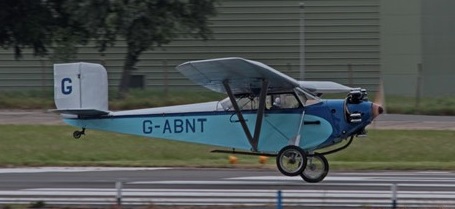
Designed by H.D.Boultbee in 1928 the C.A.C. Mk I Coupe, a two-seat, high-wing cabin monoplane tourer, was built at Burton-on-Trent, near Hull. Initially powered by an 85 hp ABC Hornet engine, the prototype G-AAIL was first flown in July 1929 and was demonstrated publicly at Heston that same month.
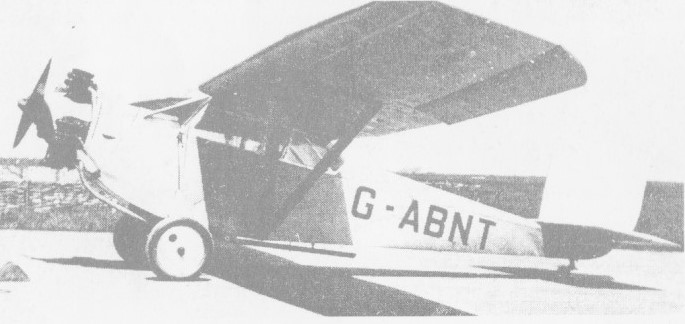
A factory was set up at Hedon to produce the improved Coupe II powered by a 100 hp Genet major radial engine. Two aircraft were built in 1930, G-ABFI and G-ABFJ, and two more, G-ABNT and G-ABPW, in 1931. Customers were hard to find and a sixth was never completed.
Coupe II
G-ABNT cn 0.2.3 was first registered to Civilian Aircraft on 10 September 1931. It was not sold until February 1933 when it was delivered to S.B.Cliff at Woodley. After moving to Whitchurch it was re-sold to G.O.Rees at Pengham, Cardiff in October 1933. G-ABNT was stored at Carmarthan from 1939 until early 1978 when it was purchased by P.A.Mann, who moved it to Biggin Hill for restoration.
Coupe II Engine: Armstrong Siddeley Genet Major I, 100 hp Wingspan: 35 ft 6.5 in Length: 19 ft 4 in AUW: 1500 lb Max speed: 110 mph
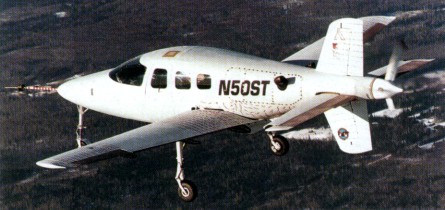
Contracted by Israviation to develop, design and build the “proof of concept” prototype of the turboprop ST50, the Cirrus ST50 engineering prototype first flew on December 7, 1994. The all new five seater is being developed by Cirrus Designs in the US and Israviation in Israel. Cirrus is responsible for the design while Israviation will manufacture the aircraft.
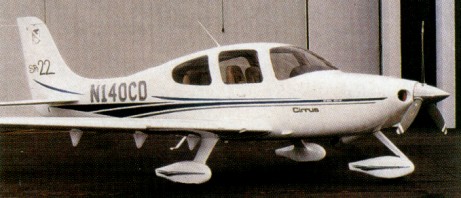
The product line was expanded in 2000 with certification of the SR22, a growth product of the SR20, with a more powerful engine and longer range. A new aircraft, the Cirrus SR22-G2 (Generation 2), replacing the SR22, features all leather seats, feather wrapped side yoke, throttle and grab handles, as well as new large gull wing doors. The type also has a full colour 10.4 inch primary flight display (PFD), and a 10.4¬inch colour display displaying engine monitoring, checklists, weather, terrain, and route flight planning information.
The first Australian-assembled Cirrus SR22 was handed over to its owner at Archerfield, Queensland, in May 2006. The aircraft are assembled from knocked-down kits from Cirrus in the USA.
In April 2007, Cirrus Design introduced its third generation of aircraft – the SR22-G3. The G3 is a continuing evolution to refine the aircraft structure and systems, and reduce unnecessary weight using the best new materials and engineering methods available. Cirrus introduced the SR22-G3 with a lighter wing thanks to a new carbon fibre spar with increased dihedral, increased fuel capacity, improved ice protection, expanded centre of gravity envelope and taller undercarriage for greater prop clearance. Without adding to the aircraft’s weight, Cirrus has increased new equipment options, payload, safety features, and aircraft usefulness. With nearly 700 changes and systems improvements, the SR22-G3 represents the culmination of virtually everything Cirrus has learned about engineering and design.
2001 Cirrus SR22 Base price: $276,000 Engine: TCM IO-550-N, 310 hp@SL TBO: 2000 hrs. Fuel type: 100/100LL Propeller type/diameter: Hartzell CS / 78 in Landing gear type: Tri/Fixed Max ramp weight (lbs.): 3400 Gross weight (lbs.): 3400 Landing weight (lbs.):3400 Empty weight, std. (lbs.): 2250 Useful load, std. (lbs.): 1150 Payload, full std. fuel (lbs.): 664 Usable fuel (USgals.): 81 Oil capacity (qts.): 8 Wingspan: 38 ft. 3 in. Overall length: 26 ft. Height: 8 ft. 9 in. Wing area (sq. ft.): 144.9 Wing loading (lbs./sq. ft.): 23.5 Power loading (lbs./hp.): 11.0 Wheel track (in.): 10 ft. 9 in. Wheel size (in.): 6.00 x 6 Seating capacity: 4 Cabin width (in.): 49 Cabin height (in.): 50 Baggage capacity (lbs.): 130 Cruise speed (kts) 75% power @ 10,000 ft.: 180 Cruise speed (kts) 65% power @ 10,000 ft.: 175 Cruise speed (kts) 55% power @ 12,000 ft.: 171 Max range (w/ reserve) (nm) 75% power at 17.000 ft: 744 Max range (w/ reserve) (nm) 65% power at 17.000 ft: 827 Max range (w/ reserve) (nm) 55% power at 17.000 ft: 939 Fuel consumption (USgph) 75% power: 16.4 Fuel consumption (USgph) 65% power: 15.0 Fuel consumption (USgph) 55% power: 13.9 Stall speed (flaps up) (knots) :69 Stall speed (flaps down) (knots): 59 Best rate of climb (fpm): 1400 Best rate of climb, 8000 ft. (fpm): 843 Service ceiling (ft.): 17,500 Takeoff ground roll (ft.): 1058 Takeoff over 50-ft. obstacle (ft.): 1629 Landing ground roll (ft.): 1161 Landing over 50-ft. obstacle (ft.): 2352
2007 Cirrus SR22 Turbo Base price: $544,295 Engine: TCM IO-550N TBO (hrs.): 2000 Horsepower@altitude: 310@SL Fuel type: 100LL Propeller type: Hartzell ACSII/3-blade Landing gear type: Fixed/Tri. Max ramp weight (lbs): 3400 Gross weight (lbs.): 3400 Landing weight (lbs.): 3400 Empty weight, std. (lbs.): 2418 Useful load, std. (lbs.): 982 Useful fuel (USgals.): 81 Wingspan: 38 ft. 6 in. Cabin doors: 2 Cruise Speed, 75% power (KTAS): 203 Fuel Consumption, 75% power (gph): 17.5 Vso (kts.): 61 Best rate of climb SL (fpm.): 1304 Takeoff ground roll (ft.): 1574 Landing ground roll (ft.): 1141 Landing over 50 ft. obstacle (ft.): 2325
2004 Cirrus SR22-G2 Base price: $334,700 Engine: TCM IO-550-N Horsepower@rpm@altitude: 310@2700@SL Horsepower for takeoff:310 TBO hrs.: 2000 Fuel type:100/100LL Propeller type/diameter (in.): Hartzell CS/78 Landing gear type: Tri./Fixed Max ramp weight (lbs.): 3400 Gross weight (lbs.): 3400 Landing weight (lbs.): 3400 Empty weight, std. (lbs.): 2250 Useful load, std. (lbs.): 1150 Payload, full std. fuel (lbs.): 664 Usable fuel (USgals.): 81 Oil capacity (qts.): 8 Wingspan: 38 ft. 6 in. Overall length: 26 ft. Height: 8 ft. 7 in. Wing area (sq. ft.): 144.9 Wing loading (lbs./sq. ft.): 23.5 Power loading (lbs./hp.): 11 Wheel track: 10 ft. 9 in. Wheel size (in.): 6.00 x 6 Seating capacity: 4 Cabin doors: 2 Cabin width (in.): 49 Cabin height (in.): 50 Baggage capacity (lbs.): 130 Cruise speed, best economy (kts.) 75% power: 180 Cruise speed, best economy (kts.) 65% power: 175 Cruise speed, best economy (kts.) 55% power: 171 Max range (w/ 45-min. reserve) (nm) 75% power: 720 Max range (w/ 45-min. reserve) (nm) 65% power: 770 Max range (w/ 45-min. reserve) (nm) 55% power: 821 Fuel consumption, best economy (USgph) 75% power: 16.4 Fuel consumption, best economy (USgph) 65% power: 15.0 Fuel consumption, best economy (USgph) 55% power: 13.9 Vs (knots) :69 Vso (knots): 59 Best rate of climb (SL fpm): 1400 Best rate of climb,8,000 ft. (fpm): 842 Service ceiling (ft.): 17,500 Takeoff ground roll (ft.): 1020 Takeoff over 50-ft. obstacle (ft.):1575 Landing ground roll (ft.): 1140 Landing over 50-ft. obstacle (ft.): 2325
Cirrus SR22-G3 Engine: Continental IO-550-N, 310 hp@SL Gross weight (lbs.): 3400 Landing weight (lbs.): 3400 Empty weight, std. (lbs.): 2230 Useful load, std. (lbs.): 1170 Useable fuel, std. (gals.): 92 Wingspan: 38 ft. 4 in. Overall length: 26 ft. Height: 8 ft. 9 in. Cabin width (in.): 49 Cabin height (in.): 50 Max cruise speed (kts.): 185 Range, 65% power (nm): 1049 Range, 55% power (nm):1170 Vso (kts.): 60 Best rate of climb, SL (fpm): 1400 Service ceiling (ft.): 17,500 Takeoff ground roll (ft.): 1028 Takeoff over 50-ft. obstacle (ft.): 1594 Landing ground roll (ft.): 1141 Landing over 50 ft. obstacle (ft.): 2344
2009 CIRRUS SR22 X EDITION Engine: Continental IO-550-N Turbonormalizing system: Tornado Alley Horsepower 310@SL Gross weight (lbs.): 3400 Empty weight, std. (lbs.): 2517 Useful load, std. (lbs.): 883 Usable fuel, std. (USgals./lbs.): 92/552 Wingspan: 38 ft. 4 in. Overall length: 26 ft. Overall length: 8 ft. 11 in. Cabin width (in.): 49 Cabin height (in.): 50 Vso (kts.): 60 Best rate of climb (fpm): 1400 Service ceiling (ft.): 25,000 Max cruise speed (KTAS): 219 Cruise range with reserve, 75% power (nm): 925 Max range with reserves, 55% power (nm): 1000 Takeoff ground roll (ft.): 1028 Takeoff over 50 ft. obstacle (ft.): 1594 Landing ground roll (ft.): 1141 Landing over 50 ft. obstacle (ft.): 2344
In the summer of 1994, Cirrus Design introduced the SR20 at the Experimental Aircraft Association (EAA) Convention in Oshkosh, Wisconsin. Cirrus Design continued development and testing of the SR20 and received FAA certification in October 1998.
The Cirrus SR20 is constructed with strong, composite materials. It delivers a 160 knot cruise speed and sips only 10.5 gallons of fuel per hour as it covers an 800 nautical mile range. It is powered by a Teledyne Continental IO 360 ES 200 hp engine and the propeller from Hartzell, and fitted with a side-stick controller. The first customer delivery was on 20 July 1999. At that point, Cirrus has orders for 324 SR20s. Shortly after delivering their 200th SR20, Cirrus Design unveiled thew SR20A, with an increase of 45 kg in take-off weight, a redesigned engine cowling and other minor refinements.
SR20 Engine: Teledyne Continental IO-360ES, 200 hp. TBO hrs.: 2000 Propeller: Const. spd. Landing gear type: Tri/Fixed Length 26 ft 7.92 m Height 8 ft 11 in 2.71 m Wingspan 38 ft 4 in 11.68 m Cabin Length 130 in 330 cm Cabin Width 49 in 124 cm Cabin Height 50 in 127 cm Maximum Gross Weight 3050 lbs 1386 kg Standard Empty Weight 2080 lbs 945 kg Useful Load 970 lbs 441 kg Usable Fuel Capacity 56 gal/336 lbs 212 litre/153 kg Full Fuel Payload 634 lbs 288 kg Takeoff 1478 ft 450 m Takeoff Over 50 ft Object 2221 ft 677 m Climb Rate 828 ft/min 252 m/min Stall Speed with Flaps 56 KCAS 56 KCAS Max cruise: 160 kt Cruise Speed (75% Power) 155 KTAS Cruise Range with Reserve 627 nm 1161 km Maximum Range with Reserve (55% pwr) 785 nm 1454 km Landing Ground Roll 853 ft 260 m Landing Over 50 ft Object 2636 ft 803 m
SR20 Engine: Teledyne Continental IO-360ES, 200 hp. TBO hrs.: 2000 Propeller: Const. spd. Gross weight (lbs.): 2900 Empty weight, std. (lbs.): 1875 Useful load, std. (lbs.): 1025 Fuel (gals.): 60 Wingspan: 35 ft. 7 in. Overall length: 28 ft. 3 in. Height: 9 ft. 3 in. Wing area (sq. ft.): 135 Seating capacity: 4 Cabin width (in.): 49 Cabin height (in.): 50 Baggage capacity (lbs.): 120 Cruise speed (kts.) 75% power: 160 Cruise speed (kts.) 65% power: 155 Max range (w/ reserve) (nm) 75% power: 686 Max range (w/ reserve) (nm) 65% power: 801 Fuel consumption (USgph) 75% power: 10.4 Fuel consumption (USgph) 65% power: 9.4 Stall speed (gear, flaps down) (knots): 57 Best rate of climb (fpm): 961 Service ceiling (ft.): 16,000 Takeoff ground roll (ft.): 1310 Landing ground roll (ft.): 1000
Cirrus SR20 Engine: Continental IO-360-ES, 200 hp@SL TBO hrs.: 2000 Fuel type:100/100LL Propeller type/diameter: Hartzell CS / 76 in Landing gear type: Tri/Fixed Gross weight (lbs.): 2900 Empty weight, std. (lbs.): 1875 Useful load, std. (lbs.): 1025 Payload, full std. fuel (lbs.): 665 Usable fuel, std. (USgals.): 60 Oil capacity (qts.): 8 Wingspan: 35 ft. 7 in. Overall length: 28 ft. 3 in. Height: 9 ft. 3 in. Wing area (sq. ft.): 135 Wing loading (lbs./sq. ft.): 21.5 Power loading (lbs./hp.): 14.5 Wheel size (in.): 6.00 x 6 Seating capacity: 4 Cabin doors: 2 Cabin width (in.): 49 Cabin height (in.): 50 Baggage capacity (lbs.): 120 Cruise speed (kts.) 75% power @ 6,500 ft.: 160 Cruise speed (kts.) 65% power @ 10,000 ft.: 155 Cruise speed (kts.) 55% power @ 14,000 ft.: 149 Max range (w/ reserve) (nm) 75% power: 686 Max range (w/ reserve) (nm) 65% power: 801 Max range (w/ reserve) (nm) 55% power: 878 Fuel consumption (USgph) 75% power:10.4 Fuel consumption (USgph) 65% power:9.4 Fuel consumption (USgph) 55% power: 8.1 Stall speed (gear, flaps up) (knots):63 Stall speed (gear, flaps down) (knots):57 Best rate of climb (fpm): 961 Service ceiling (ft.): 16,000 Takeoff ground roll (ft.): 1310 Takeoff over 50-ft. obstacle (ft.): 1865 Landing ground roll (ft.): 1000 Landing over 50-ft. obstacle (ft.): 1960
2008 Cirrus SR20-G3 Base price: $276,690 Engine:Continental IO-360-ES, 200 hp Max gross weight (lbs.): 3050 Landing weight (lbs.): 3050 Empty weight, std. (lbs.): 2080 Useful load, std. (lbs.): 970 Usable fuel, std. (gals.): 56 Wingspan: 38 ft. 4 in. Overall length (ft.): 26 Overall height: 8 ft. 11 in. Cabin width (in.): 49 Cabin height (in.): 50 Vso (KIAS): 61 Service ceiling (ft.): 17,500 Climb rate (fpm):828 Max cruise speed, 75% power (KTAS): 155 Range, 75% power (nm): 627 Range, 55% power (nm): 785 Takeoff roll@3050 pounds, SL (ft.): 1478 Takeoff over 50 ft. obstacle (ft.): 2221 Landing ground roll (ft.): 853 Landing over 50 ft. obstacle (ft.): 2636
Alan and Dale Klapmeier offered the VK30 kit aircraft in 1987. The five-seater was powered by a 300-hp Continental pusher engine and had a cruise speed of over 200 mph. The Klapmeiers sold the rights to an Israeli company with intentions to certify the design, but the plan never moved forward. The kit is no longer available and only 5 models were ever built. A pusher designed to cruise at 250 mph, the VK30 is a four place, long range cross country aeroplane first flown in 1988.
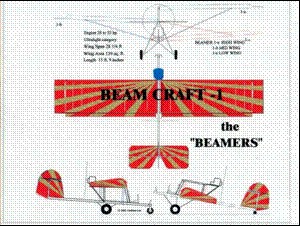
The ONW/ Beamcraft I is a version of a design built in the 1960s. It uses commercial window frame “Beams” for the body, and simple 1 inch tubes for the tail. The wings are a simple ladder structure with strut bracing. It can be built in High wing, Mid wing or Low wing configuration, and nose or tail wheel. It is intended for engines ranging from 16 Horse Kohler or Briggs to the 447 rotax and will fly delightfully in the US UL range.
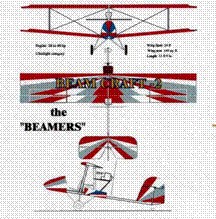
The TNW/ Beamcraft II is a biplane version of the Beam Craft: Same structure, same wheel arrangements, same rough weights and performance. You can have 2 ailerons or 4.
Beamcraft II
Beamcraft I Wingspan: 28 ft Wing Area: 126.5 sq. ft. Length: 15 ft 66 in Height: (various) Weight: 250 lbs Fuel Tank: 5 US gal. Stall: 25 mph Cruise: 50-65 mph Top Speed: 65 mph Never Exceed: 75 mph Gross wt: 500 lbs G Factor: 5.7+ 2.8-
Beamcraft II Wingspan: 24 ft Wing Area: 144 sq. ft.