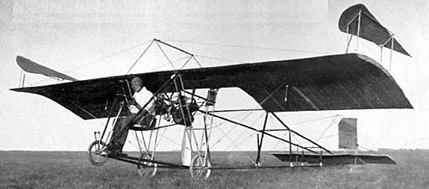
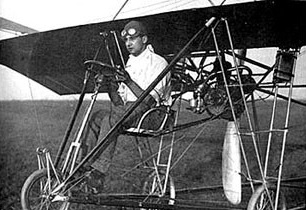
Walden III with Henry Walden, c.1910 (Henry Walden coll)
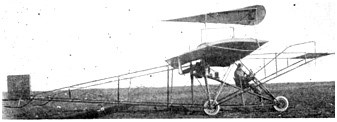
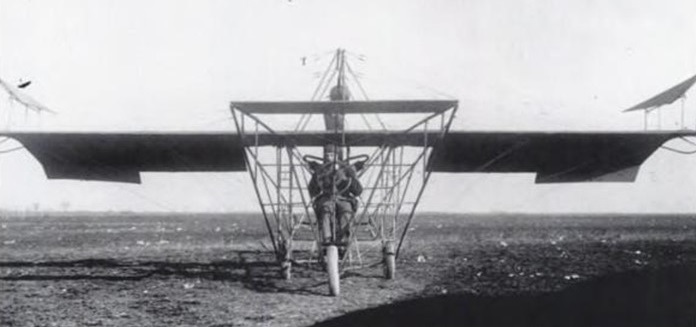
The Walden III had vane-like fins over the wingtips for “lateral balance”. Powered by a 25hp Anzani pusher engine, the single seater rose a few feet off the ground and travelled just over 10 yards before the plane’s one-gallon gas tank ran dry, becoming the first American monoplane to fly. However, this flight was discounted because of its brevity.
On August 3, 1910, with a 10-gallon tank installed, he tried again and became airborne for about 10 yards at a few feet altitude, albeit still brief, flight that ended in a crash beyond economic repair, breaking several ribs and fracturing his collarbone. This epic flight made headlines in a NYC newspaper and the record book.
Reportedly III and IV went to Dyott when the partnership broke up in 1911 and were sold in South America; Walden retained the hangar and inventory.
There were claims of 6 more IIIs under construction, but if they were ever completed, flown, or sold is unknown.
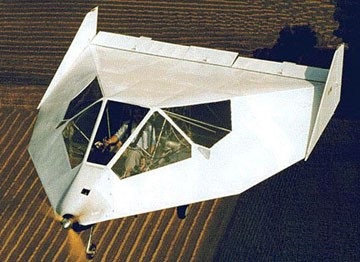
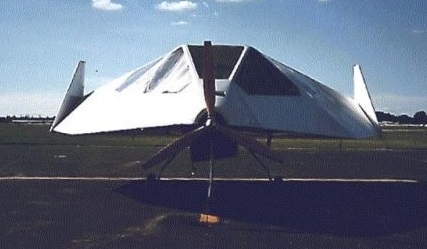
An “experimental lifting-body sportplane,” creation of Barnaby and Lynne Wainfan, and Rick Dean, took 2.5 years to develop and build. First flown on 22 April 1993, after 130 hours flight time, registered N117WD, it was damaged in a forced landing after the 2-stroke 46 horsepower engine malfunctioned at 500 agl. The plane landed at 28 mph and Barnaby walked away.
It was in reconstruction in 1999 with a Jabiru 4-cylinder replacement engine.
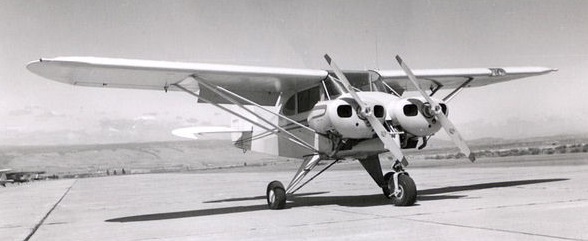
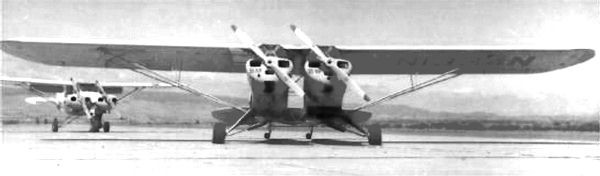
Built in 1952 by Harold A Wagner, the Twin 3 was a Piper PA-18 with a second 125hp Lycoming O-290 mounted in a nacelle above the cabin. Although it flew acceptably, there were vibration problems with the tail and the project was dropped. The one built was restored to single-engine after 10 hrs, then sold.
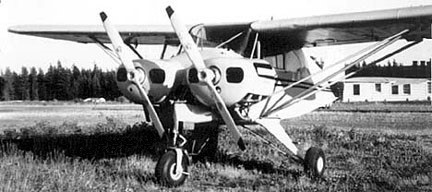
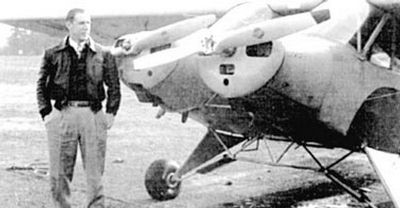
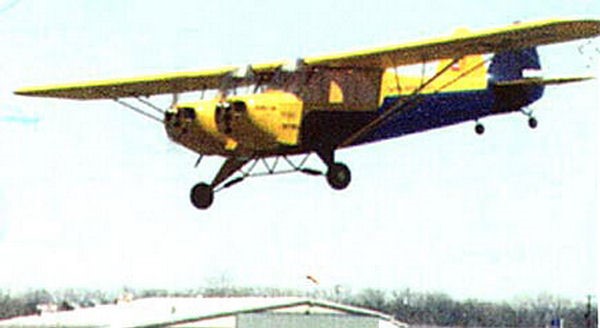
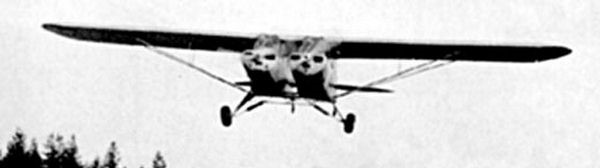
In 1951 Harold A Wagner built a 1946 Piper J-3C and 1947 PA-11 fuselages mounted side-by-side for twin performance. Built in five days, despite having unequal motors and props (42″ wood and 45″ metal), it demonstrated negligible balance problems, the motors were later matched as 85hp with metal props. The overlapping prop clearance came from a 4.75″ spacer on the left motor’s propeller shaft. Flown from the right fuselage only, the added horsepower would in theory support four passengers, but the increased wing loading in reality wouldn’t.
The outer wing panels and tailplane were standard components. The resulting aircraft looked so odd that even Mr.Wagner called it “The Thing”. Because of the close proximity of the fuselages, only the righthand one could be occupied by a pilot and passenger, the lefthand fuselage serving only the purpose of engine mounting. No propeller synchronizing was envisaged, the props rotating in different planes instead. This was accomplished by a ‘distance piece’ on the lefthand engine/prop combination.
First flown on 6 December 1951, it had STOL take-off, 1500fpm climb rate and would take-off and fly on one motor. It is claimed that flight qualities were just great, even with one engine out. The one built, NX1334N, was dismantled after 150hrs of flight.
Engines: 65hp Continental C-65 and 85hp C-85 Max speed: 160 mph Cruise speed: 120 mph Stall: 35 mph
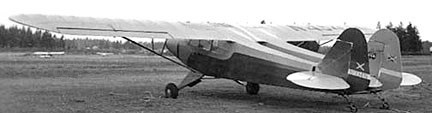
In 1932 Harold A Wagner built a single place open cockpit high wing monoplane powered by a 30hp Szekely and registered N12738 c/n 1.
It was sold to Marvin Wright (Beaverton) for $200 on 16 November 1936, sold then to L S Wilson (Beaverton) on 13 February 1937, then to C M Smock & N E Day (Portland) on 8 June 1938, who wrote CAA on 22 August 1939 that “it was necessary to discontinue flying our aircraft due to natural depreciation of materials used in its construction.” It was dismantled and the registration canceled on 15 June 1939.
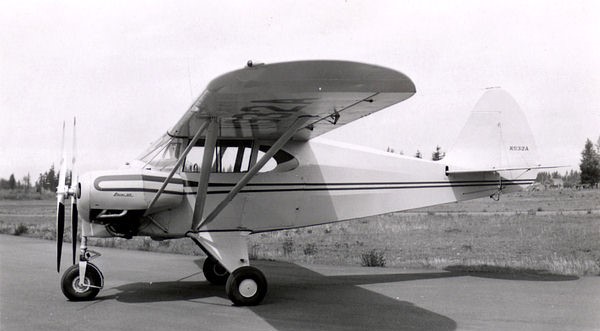
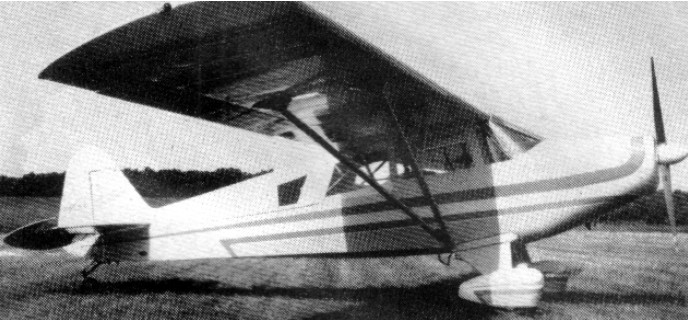
The Wag-A-Bond can be built in either of two versions — the Classic or the Traveler. The Classic is a replica of the Piper PA-15 Vagabond, and the Traveler is a modified and up¬dated version of the Vagabond with port and starboard doors, overhead skylight window, extended sleeping deck, extended bag¬gage area and provisions for engines up to 115 hp. The wings are strut-braced, high-wing, all-wood structures covered with fabric. The spar and ribs are spruce with mahogany plywood gussets. The ailerons are fabric-covered aluminum. The fuselage is welded steel tube. The Wag-A-Bond Builder’s kits includes drawings for both options, with many parts preformed and many assemblies pre-welded. The Builder kits feature predrilled spars and precut nose ribs in the wing kit. This same detailing follows through to all of the other kits with items such as the tail group, including elevators, and stabilizers and the rudder and vertical fin finish welded. The landing gear is available completely finished, ready to attach to the fuselage structure. When Dick Wagner developed his Cuby, Wagabond and 2+2 kits, all were fitted with J-3 rudders. Reason: Dick had purchased all the J-3 inventory left at Piper’s old Ponca City, OK plant, which included a barn full of J-3 elevators, stabilizers, gear legs and rudders.
Engine: Lycoming O-235, 115 hp Wing span: 8.93 m Wing area: 13.57 sq.m MAUW: 658 kg Empty weight: 329 kg Fuel capacity: 98 lt Max speed: 217 kph Cruise speed: 169 kph Minimum speed: 88 kph Climb rate: 3 m/s Seats: 2 Fuel consumption: 25 lt/hr Plan price (1998): $65
Classic Engine from 65 hp to 100 hp Top speed 105 mph Cruising speed 95 mph Stalling speed 45 mph Rate of climb 625 fpm Gross Weight 1250 lb Empty weight 700 lb Wing Span 29 ft 3.5 in Wing area 147.5 sq. ft Length overall 18 ft 8.5 in Height overall 6.0 ft Baggage capacity 40 lb Fuel capacity 12 Usgal Seats: 2 LSA: yes
Traveler Engine Lycoming 108 hp Top speed 122 mph Cruising speed 115 mph Stalling speed 45 mph Rate of climb 850 fpm Gross weight 1450 lb Empty weight 800 lb Wing Span 29.3 ft Wing area 147.5 sq. ft Length overall 18.7 ft Height overall 6.0 ft Baggage capacity 60 lb Fual capacity 26 USgal LSA: yes
Traveler Engine: Lycoming O-235, 115 hp Speed max: 136 mph Cruise: 124 mph Range: 620 sm ROC: 850 fpm Take-off dist: 390 ft Landing dist: 760 ft Service ceiling: 14,000 ft Fuel cap: 26 USG Weight empty: 725 lbs Gross: 1450 lbs Height: 6 ft Length: 18.7 ft Wing span: 29.3 ft Wing area: 147.5 sq.ft Seats: 2 Landing gear: tail wheel Cockpit width: 40 in LSA: yes
The Sportsman 2 + 2 is a replica of the PA-14 family Cruiser. This is a four-place aircraft designed for the recreational pilot. It has extended wings and such features as extra baggage area and additional fuel. Utilizes large tires for off-airport operation. Accepts engines from 125 to 200 hp When Dick Wagner developed his Cuby, Wagabond and 2+2 kits, all were fitted with J-3 rudders. Reason: Dick had purchased all the J-3 inventory left at Piper’s old Ponca City, OK plant, which included a barn full of J-3 elevators, stabilizers, gear legs and rudders.
Engine: Lycoming O-320, 150 hp HP range: 125-200 Height: 6.75 ft Length: 23.36 ft Wing span: 35.9 ft Weight empty: 1080 lb Gross: 2200 lb Fuel cap: 39 USG Speed max: 129 mph Cruise: 124 mph Range: 670 sm ROC: 800 fpm Take-off dist: 230 ft Landing dist: 340 ft Service ceiling: 14,800 ft Seats: 4 Landing gear: tail wheel Cockpit width: 39 in
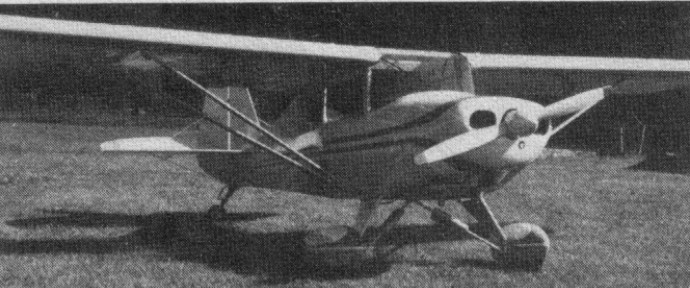
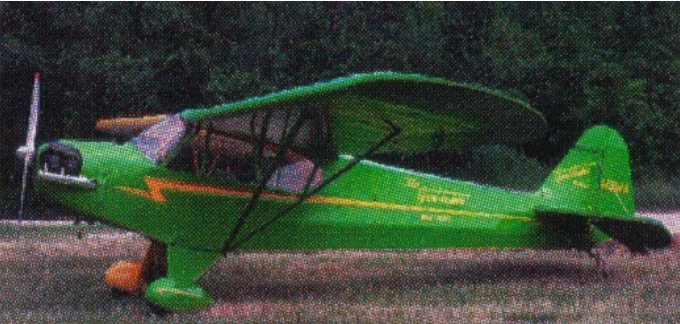
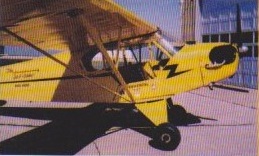
The CUBy is a replica of the Piper J-3 Cub with numerous design improvements – Higher gross with more useful load, increased cruise speed, and utilizing Continental engines from 65 thru 100 hp. It was designed by Dick Wagner, president of Wag-Aero of Lyons, Wisconsin. There is very little difference between the CUBy and the original J-3, except for a crank-operated elevator trim tab instead of the jackscrew adjustment that moved the stabilizer plane. When Dick Wagner developed his Cuby, Wagabond and 2+2 kits, all were fitted with J-3 rudders. Reason: Dick had purchased all the J-3 inventory left at Piper’s old Ponca City, OK plant, which included a barn full of J-3 elevators, stabilizers, gear legs and rudders.
The CUBy can be made in four different versions: Standard CUBy, Super CUBy (a replica of the PA-18 allowing for larger engine). CUBy Observer (replica of the L-4), and the Acro Trainer (which is a special shortened-wing version for aerobatics).
Later marketed as the Wag-Aero Sport Trainer. The Quick Build Kit will produce a complete aircraft less the engine, propeller, and finish paint. Fits the Light Sport Aircraft category and will only take a Builder 700-1000 hours to complete with a fully welded fuselage.
Engine: Continental, 85 hp HP range: 65-150 Length: 22.3 ft Wing span: 35.2 ft Weight empty: 720 lb Gross: 1400 lb Fuel cap: 12 USG Speed max: 102 mph Cruise: 94 mph Range: 270 sm ROC: 220 fpm Take-off dist: 375 ft Landing dist: 420 ft Service ceiling: 12,000 ft Seats: 2 Landing gear: tail wheel
Sport Trainer Cruise: 85 mph Stall: 38 mph Range: 310 sm Rate of climb: 450 fpm Takeoff dist: 375 ft Landing dist: 420 ft Engine: Continental C-85, 85 hp HP range: 68-85 Fuel capacity: 12 USG Empty weight: 720 lb Gross weight: 1220 lb Length: 22.3 ft Wing span: 35.2 ft Seats: 2 tandem Cockpit width: 24 in Landing gear: tailwheel LSA: yes



 All Aero