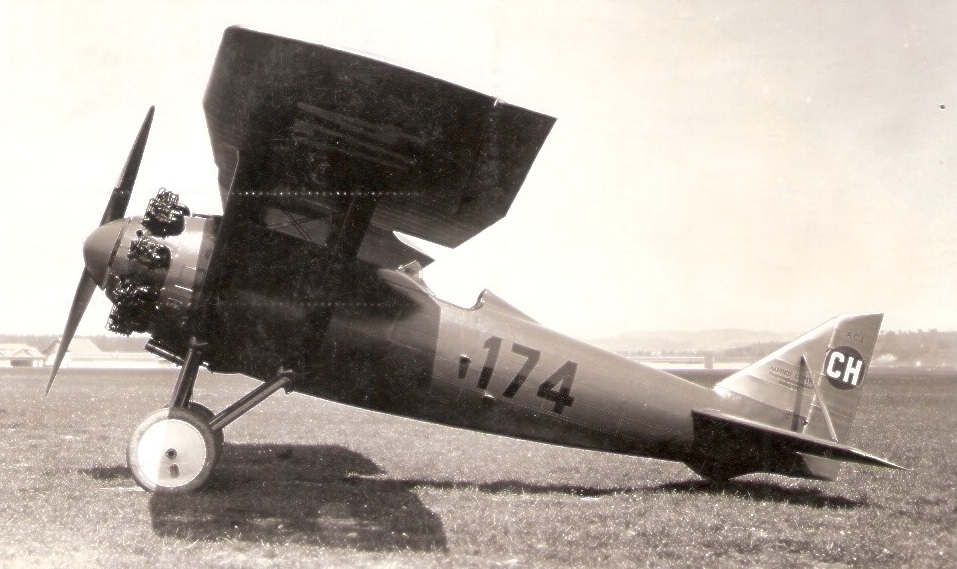
fighter prototype of 1927
fighter prototype of 1927
An eight-seat executive and multipurpose aircraft, with rear-mounted wings, canards, and twin piston or turboprop engines.
A four-seat kit monoplane
USA
Markets kits to construct CADI 2001 four-seat monoplane.
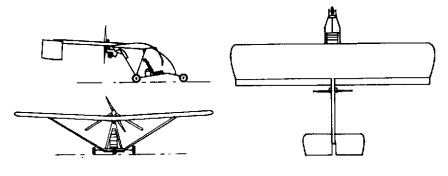
Single seat single engined high wing monoplane with hybrid control. Wing has unswept leading and trailing edges, and constant chord; inverted V tail. Pitch/yaw control by elevon; roll control by full span ailerons; control inputs through stick for pitch/yaw/ roll. Wing braced from below by struts; wing profile; double surface. Undercarriage has three wheels in tricycle formation; suspension on all wheels. Nosewheel steering independent from yaw control. No brakes. Aluminium tube framework, without pod. Engine mounted below wing driving pusher propeller.
In 1983 this machine was still in its prototype stage and therefore its characteristics and performances are not fully known. However, R J Davies has two original ideas in this new design. Firstly, the full span ailerons can be operated together to serve as flaps. Secondly, the motor on the Firebird Flyer (a Spitfire 250FA of 28hp or possibly later a water-cooled 220LC of 35 hp) drives a two bladed pusher propeller, which rotates about the axis of the tubular metal boom which carries the tail.

The Comper Streak was a single-engined, single-seat racing monoplane built in the UK in the mid-1930s. It was not successful as a racer and only one was produced.

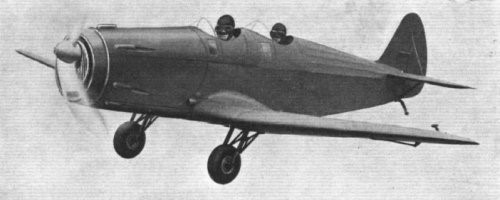
The Comper Kite was a single-engine, two-seat touring monoplane built in the UK, derived from the contemporary Comper Streak racer. Only one was built.
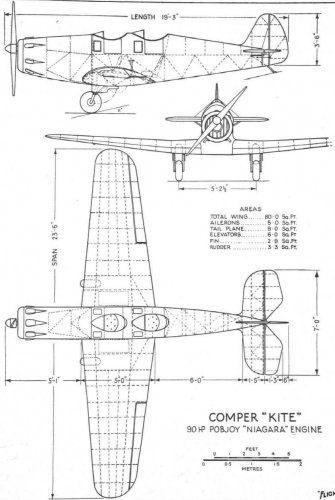
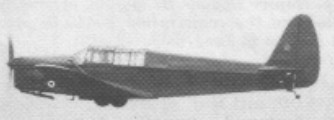
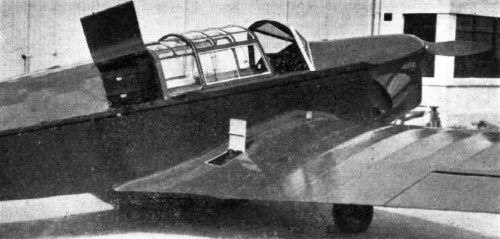
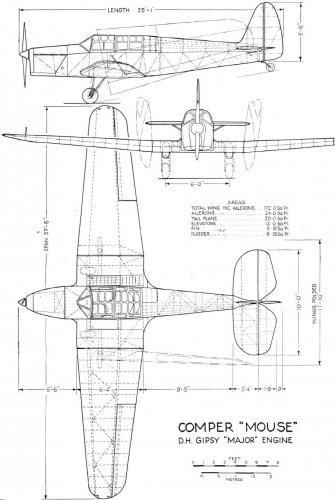
The Comper Mouse was a 1930s British three-seat cabin monoplane designed by Nicholas Comper, and built by the Comper Aircraft Company at Heston Aerodrome in 1933.
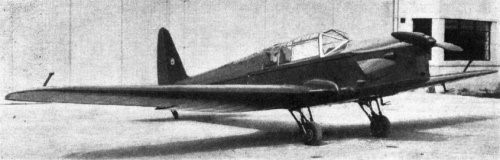
Only one Mouse was built; G-ACIX.
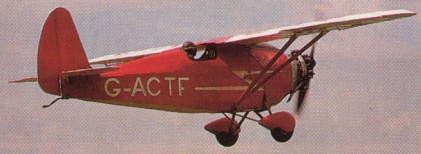
The company’s first product was the C.L.A. 7 Swift, a single-seat high-wing sporting aircraft, which was first flown in spring 1930 and built between 1930 and 1934 (one was owned by the Prince of Wales, later Edward VIII).
Teething problems necessitated fitting early production Swifts with the Salmson A.D.9 radial, the prototype having flown with a 40 hp ABC Scorpion.
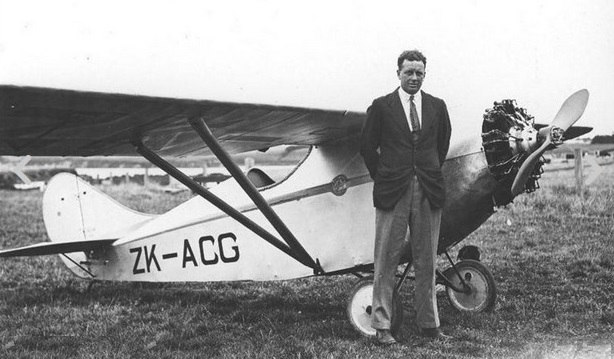
Production commenced in 1930, thirty-seven Swifts being built. The majority powered by the 75 hp Pobjoy R, but three were fitted with 120 hp DH Gipsy III.
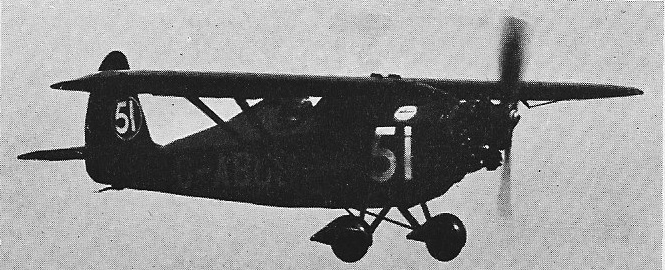
Engine: Pobjoy R, 75 hp
Wingspan: 24 ft
Length: 17 ft 8.5 in
Height: 5 ft 3.5 in
Empty wight: 540 lb
Loaded weight: 985 lb
Max speed: 140 mph
Cruise: 120 mph
ROC: 1400 fpm
Service ceiling: 22,000 ft
Range: 600 mi
A 60-seat four-turboprop CAC-100 airliner.

