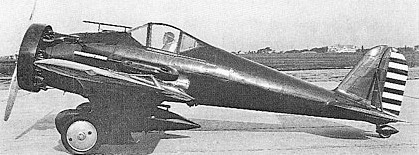
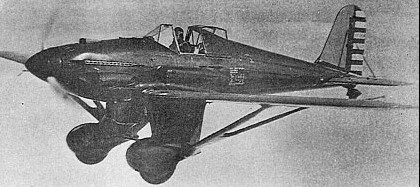
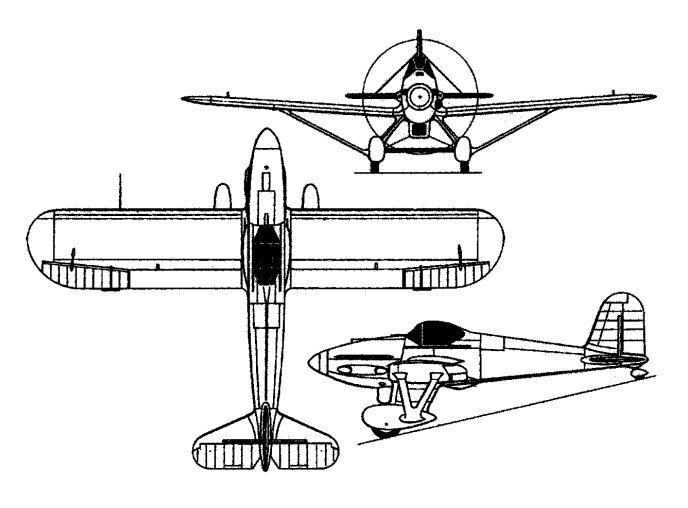
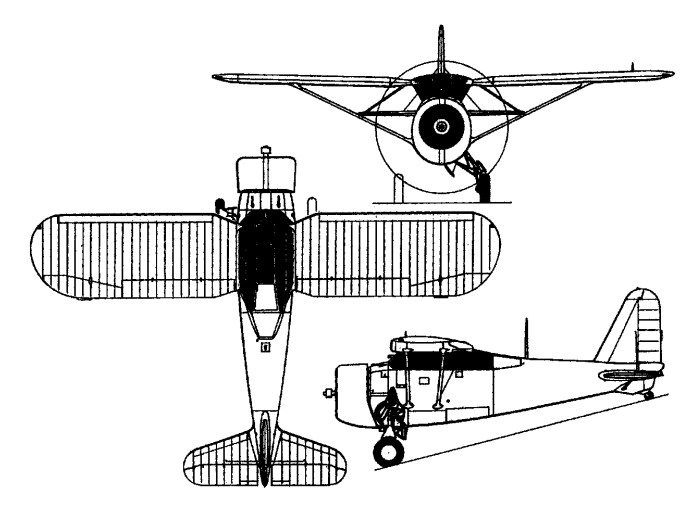
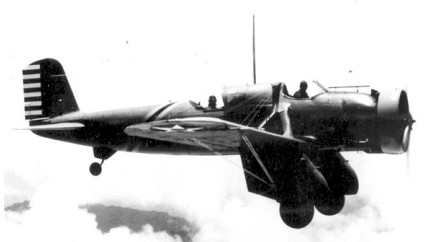
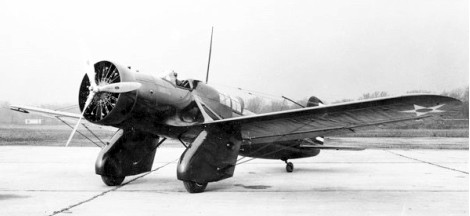
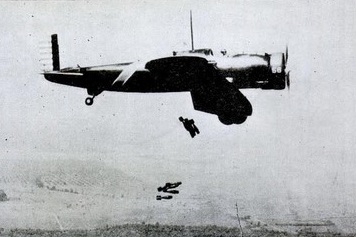
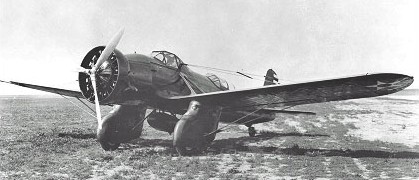
The XP-31 or Curtiss Shrike of 1932-3 was an all-metal, low wing, strut-braced fighter design which drew heavily upon the characteristics of the manufacturer’s A-8 Shrike (enclosed cockpit, trailing edge flaps and leading-edge slots), but failed to attain the A-8’s production status. The sole prototype XP-31, at first designated XP-934, arrived on the scene just when the comparable Boeing P-26 ‘Peashooter’ had already proven itself superior in most aspects of performance.
First flown in July 1932 with a 522kW Wright R-1820-4 Cyclone engine, the XP-31 was immediately found to be underpowered. Though the purpose seems unclear, the sole airframe was re-engined with a 447kW Curtiss V-1570 Conqueror powerplant which, in 1933 flight tests, offered no improvement of any kind. Slower than the P-26, and with a 595km range, the XP-31 helped Curtiss to upgrade its design and structural thinking at a time when the monoplane was clearly the aircraft of the future. Its non-retractable landing gear and drag-inducing wing struts were the last to appear on a USAAC fighter, but the XP-31, although very small by comparison with other pursuit ships of its day, was unduly heavy. The XP-31 was rigorously tested and underwent various minor modifications in the early 1930s, but it was not chosen for production and did not, directly, lead to any later designs. The existing XP-31 is understood to have been scrapped in 1935.
Engine: 522kW Wright R-1820-4 Cyclone Take-off weight: 1879 kg / 4143 lb Empty weight: 1512 kg / 3333 lb Wingspan: 10.97 m / 35 ft 12 in Length: 8.00 m / 26 ft 3 in Height: 2.36 m / 7 ft 9 in Wing area: 18.86 sq.m / 203.01 sq ft Max. speed: 334 km/h / 208 mph Ceiling: 7430 m / 24400 ft Range: 595 km / 370 miles Armament: 4 x 7.62mm machine-guns
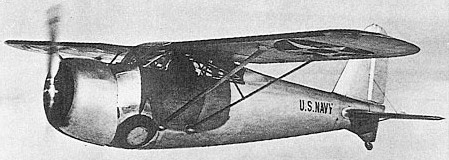
Perhaps the most unusual single-seat fighter developed by Curtiss was the Model 70, which was designed from the outset to be flown either as a monoplane or as a biplane with the minimum of structural change. A metal semi-monocoque aircraft with fabric-covered wings, it was ordered on 23 November 1932 as the XF13C powered by a Wright SGR-1510-2 two-row radial rated at 600hp at 3050m. The designation XF13C-1 was assigned to it for test in monoplane form and XF13C-2 in biplane (or more strictly, sesquiplane) form. It was initially flown in December 1933 as a biplane, flying in monoplane form on 7 January 1934, and being delivered to the US Navy as the XF13C-1 on the following 10 February. Featuring a manually-operated retractable undercarriage, an enclosed cockpit, retractable upper wing leading-edge slats and trailingedge flaps, the XF13C-1 did not revert to biplane standard, but, in February 1935, was returned to Curtiss for various modifications, including installation of an XR-1510-12 engine affording 700hp at 2135m. With these changes it was redesignated XF13C-3. In biplane configuration, the XF13C was 30km/h slower than as a monoplane, but possessed a shorter take-off run and better low-speed characteristics. Trials were terminated in October 1935, primarily owing to lack of engine spares.
XF13C-3 Engine: Wright SGR-1510-2 two-row radial, 600hp at 3050m Take-off weight: 2142 kg / 4722 lb Wingspan: 10.67 m / 35 ft 0 in Length: 7.86 m / 25 ft 9 in Height: 3.88 m / 12 ft 9 in Wing area: 19.04 sq.m / 204.94 sq ft Max. speed: 373 km/h / 232 mph
Curtiss won a contract for five service test YA-8 (Model 59A) aircraft on 29 September 1931, and one YA-8 was reworked as the experimental YA-10 (Model 59B) with a 466kW radial engine. The liquid-cooled Curtiss “Conqueror” engine was removed and replaced with a Pratt & Whitney air-cooled radial engine. The conversion was completed by September 1932 with comparable performance statistics to the original A-8 platform, and the aircraft was re-designated YA-10 because of the engine change.
All remaining A-8B’s on order (some 46 total) with their Conqueror liquid-cooled engines were now changed to include the replacement Pratt & Whitney radial powerplant. The new production designation of A-12 (Model 60) was then assigned to mark these models. Though often designated with the “Shrike” name, the aircraft was formally known simply as the “A-12” in USAAC nomenclature. Shrike was an official Curtiss company name assigned to its A-12 product.
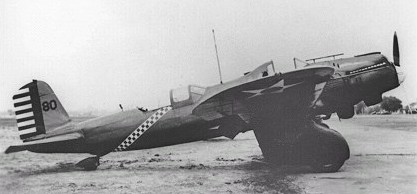
First appearing in 1933, these aircraft retained the open pilot’s cockpit with faired headrest which had been introduced on the A-8 production batch, and carried the same machine-gun armament and bombload. In an attempt to improve co-operation between pilot and observer a major modification had been introduced, the rear cockpit being moved forward with its glazed covering forming a continuation of the fuselage decking immediately behind the pilot’s cockpit.
An antenna structure rose high atop the fuselage, above and between the two cockpit positions. The pilot sat behind angled windscreens, complete a forward instrument panel and open sides revealing wiring, cables and piping. The fuselage itself was of tubular design and was made up of all-metal construction. With a fixed undercarriage with faired-over main landing gears – one positioned under each wing – and a conventional tail wheel, the wings were low-mounted monoplane assemblies with noticeable cable bracing and struts with slight dihedral. Wings were also of all-metal construction though the ailerons were covered over in fabric. The Wright R-1820-21 Cyclone radial piston engine of 690 horsepower powered a three-bladed propeller. Tail surfaces were also of all-metal construction but the rudder and elevator components were covered over in fabric.
Standard armament for the A-12 Shrike included a battery of 4 x .30 caliber machine guns in a fixed forward-firing set up with two guns fitted into each landing gear spat (600 rounds of .30 caliber ammunition allotted to each gun). A C-4 gunsight was afforded the pilot. The rear gunner had access to a .30 caliber machine gun on a flexible mounting to protect the aircraft’s “six”. Aside from the machine gun armament, the A-12 was cleared for light bombing duty and could field up to four 122lb conventional drop bombs under the wings. In place of these munitions, the Shrike could also utilize up to 10 x 30lb fragmentation bombs or flares for marking targets at night. A 52-gallon external fuel tank could be used in place of the bombs and could be jettisoned when empty. Interestingly enough, the main fuel tank aboard the A-12’s fuselage could also be jettisoned via a hand crank.
The A-12 was delivered to the USAAC in 1933. Initial examples became a single production model and two service test aircraft. A-12’s eventually made up the mount of choice for the 3rd Attack Group and 37th Attack Squadron of the 8th Pursuit Group. The aircraft was eventually shipped off the mainland and ended up in Hawaii via Wheeler Field and then later at Hickam Field. Incidentally, Hickam Field itself was named after Lieutenant Horace Meek Hickam whom died while attempting to land his A-12 Shrike at Fort Crockett in Texas.
Operationally, the A-12 was never used in anger by American forces. Though nine A-12s still remained in service at the attack on Pearl Harbor, the aircraft never went airborne in defense of the island and the type was dropped from service soon afterwards. A-12’s maintained a limited capacity as reconnaissance platforms as well and could be modified for the role through the use of onboard cameras.
The Chinese nationalist government bought at least 20 of an export version of the A-12 in 1936. These A-12’s sported a more powerful version of the air-cooled engine in the Wright SR-1820F-52 of 775 horsepower supplying a better maximum speed of 182 miles-per-hour. These saw some action against the Japanese in 1937-8.
Some A-12’s underwent further periods of notable development. One such conversion involved the addition of ski-like implements in place of the landing gear fairings to make the A-12 more “bad-weather friendly”. Not only did this allow the Shrike to operate from icy or snowbound airstrips, it provided for viable landings and take-off operations from dirt, grass and paved-over runways as well. Another such development involved adding inflatable air bladders to the sides of the fuselage. Should the crew and aircraft be forced into an emergency landing over water, the air bladders could be filled to allow the A-12 to stay above water until help arrived. These implements were never put into production A-12s.
Curtiss A-12 (Shrike) Engines: 1 x Wright R-1820-21 Cyclone radial, 690 hp (515-kW) Length: 32 ft 3 in (9.83m) Wing span: 44 ft 0 in (13.41m) Wing area 284.0 sq ft (26.38 sq.m) Height: 9 ft 4 in (2.84m) Maximum Speed: 177mph (285kmh; 154kts) at sea level Maximum Range: 521miles (838km) Service Ceiling: 15,157ft (4,620m) Iinitial climb rate: 1170 ft (357 m) per minute Armament: 4 x .30 caliber machine guns in fixed-forward positions. 1 x .30 caliber machine gun in rear flexible mounting. Optional: 4 x 122lb bombs 10 x 30lb fragmentation bombs 1 x 52 gallon external fuel droptank Accommodation: 2 Hardpoints: 4 Empty Weight: 3,898lbs (1,768kg) Maximum Take-Off Weight: 5,756lbs (2,611kg)
Curtiss won a contract for five service test YA-8 (Model 59A) aircraft on 29 September 1931, and one YA-8 was reworked as the experimental YA-10 (Model 59B) with a 466kW radial engine. The liquid-cooled Curtiss “Conqueror” engine was removed and replaced with a Pratt & Whitney air-cooled radial engine. The conversion was completed by September 1932 and the aircraft was re-designated YA-10 because of the engine change. The performance of the YA-10 was about the same as the A-8, but the air cooled radial engine was favoured over a liquid cooled engine. After testing was complete, the Army changed the order for 46 A-8Bs (with geared “Conqueror” engines) to A-12s. The Curtiss A-12 was equipped with a Pratt & Whitney radial engine and was essentially a production version of the YA-10. The YA-10 remained in service through the late 1930s. After service testing, the aircraft was assigned to the 3rd Attack Group for operational service. In the summer of 1934, the YA-10 was assigned to the Command and General Staff School. It was scrapped in early 1939.
Engine: 1 x 470kW Pratt & Whitney R-1690-9 (R-1690D) Hornet radial Take-off weight: 2783 kg / 6135 lb Wingspan: 13.5 m / 44 ft 3 in Length: 9.9 m / 32 ft 6 in Height: 2.75 m / 9 ft 0 in Max. speed: 280 km/h / 174 mph Cruise speed: 238 km/h / 148 mph Ceiling: 4570 m / 15000 ft Range: 800 km / 497 miles
To find a successor to its attack biplanes, the US Army Air Corps issued a 1929 requirement for a high-speed monoplane, and Curtiss responded with its Model 59 design that first flew in proto¬type form during June 1931 with the 600-hp (447-kW) Curtiss V-1570-C inline engine with a radiator beneath the nose, slightly forward of the wing leading edge. The first Curtiss all-metal low-wing monoplane, with such advanced features as automatic leading-edge slots and trailing-edge flaps. The wing was strut-and wire-braced, and the main landing gear comprised two fully-enclosed trousered units, these fairings housing also two 7.62mm machine-guns. Pilot and observer-gunner were accommodated in widely separated cockpits, the former under a fully enclosed canopy and the latter protected by an extended windscreen. Power was provided by a 447kW Curtiss V-1570C inline engine.
These entered service with the 3rd Attack Group in April 1932 as the US Army’s first monoplanes. Another 46 Shrikes were ordered with the designa¬tion A-8B, but because of maintenance difficulties with the A-8s’ inline engines, the aircraft were recast as radial-engined A-12s. Curtiss won a contract for five service test YA-8 (Model 59A) aircraft on 29 September 1931, and these were followed by eight Y1A-8 machines in 1932. Both YA-8s and Y1A-8s had open pilot’s cockpits. All were later redesignated A-8 except for one YA-8 which was reworked as the experimental YA-10 (Model 59B) with a 466kW radial engine and one Y1A-8 which became the Y1A-8A with a 503kW V-1570-57 geared engine and a redesigned wing. The A-8s, powered by Prestone-cooled V-1570-31 engines each of 447kW, went into service with the 3rd Attack Group at Fort Crockett, Texas in April 1932. That eight months before the Boeing P-26A Peashooter. The US Army had ordered a further 46 Shrikes under the designation A-8B, but maintenance problems with the liquid-cooled engines of the A-8s led to the new aircraft being powered by Wright R-1820-21 radial air-cooled engines of 500kW, resulting in the new designation A-12 (Model 60). After long service with the US Army’s attack groups the Shrikes were relegated to second-line units in 1939, but nine A-12s still remained in service in Hawaii when Pearl Harbor was attacked in December 1941.
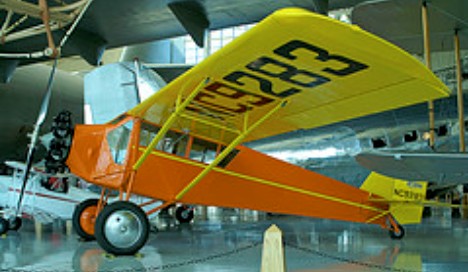
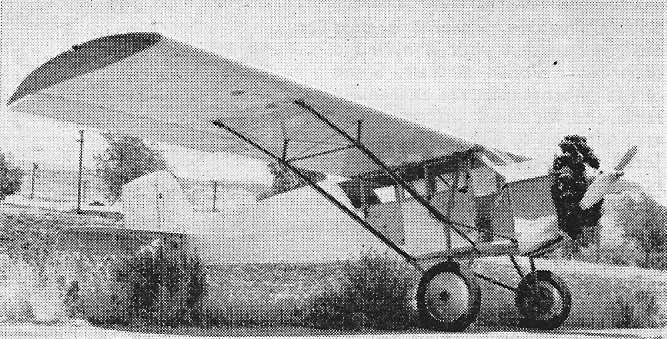
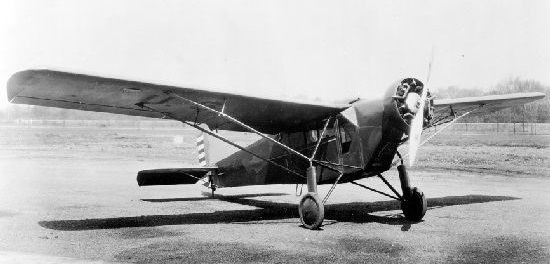
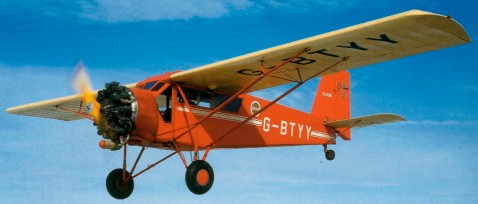
The Robin, was a cabin monoplane with a wooden wing and steel tubing fuselage. The cabin accommodated three persons; two passengers were seated side-by-side behind the pilot. First flowm on August 7, 1928, early Robins were distinguished by large flat fairings over the parallel diagonal wing bracing struts; the fairings were abandoned on later versions, having been found to be ineffective in creating lift. The original landing gear had bungee rubber cord shock absorbers, later replaced by an oleo-pneumatic system; a number of Robins had twin floats added.
The Curtiss Robin, introduced in 1928 at US$7,500, was a high-wing monoplane with a 90 hp (67 kW) V8 OX-5 8-cylinder engine built by the Curtiss-Robertson Airplane Manufacturing Company. Production was centred on the Curtiss factory at St.Louis, Missouri, and by the summer of 1929 there were 17 aircraft a week being produced.
The first Robin was designed to use World War I surplus OX-5 engines. It was later fitted with the more powerful Challenger engine, which developed between 170 and 185 hp (127 and 138 kW). The Model B (90 hp/67 kW Curtiss OX-5 engine), Model C-1 (185 hp/138 kW Curtiss Challenger engine), and Model J-1 (165 hp/123 kW Wright J-6 Whirlwind 5 engine).
Curtiss-Wright Robin C1 N325K
The plane’s payload with 50 gal (189 l) of fuel was 452 lb (205 kg); it had a cruising speed of 102 mph (164 km/h), a landing speed of 48 mph (77 km/h), a gas capacity of 50 gal/189 l (25 gal/95 l in each wing tank), its oil capacity was 5 US gal (19 l; 4 imp gal).
Cuba’s national airline, Compañía Nacional Cubana de Aviación Curtiss, was founded in 1929 with Curtiss Aircraft serving as its co-founder and major investor. The airline’s first aircraft was a Curtiss Robin; it flew domestic routes as a mail and passenger transport.
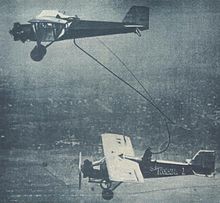
From September 1929 to May 1930, a Robin C-1 was used to deliver the McCook, Nebraska Daily Gazette to communities in rural Nebraska and Kansas. The airplane flew a nonstop route of 380 miles (610 km) daily, dropping bundles of newspapers from a height of 500 feet (150 m) to local carriers.
Dale Jackson and Forest O’Brine used Curtiss Robin “St. Louis” (right) during a record flight July 13–30, 1929, St. Louis, Missouri. A Flight endurance record of 17 days, 12 hours, 17 minutes (460 hr 17 min) was set. The Robin C-1 was used to set another world endurance record in 1930 of 647 hours (27 days).
A Curtiss Robin C was purchased by the Paraguayan government in 1932 for the Transport Squadron of its Air Arm. It was intensively used as a VIP transport plane and air ambulance during the Chaco War (1923–1935).
The J-1 version was flown by Douglas Corrigan (nicknamed “Wrongway Corrigan “). In 1938 Corrigan flew from NYC to Ireland after stating he would fly to California.
A single modified Robin (with a 110 hp (82 kW) Warner R-420-1) was used by the United States Army Air Corps, and designated the XC-10. This aircraft was used in a test program for radio-controlled (and unmanned) flight.
Challenger Robin An early version of the Robin, powered by a 165 hp (123 kW) Curtiss Challenger radial piston engine.
Comet Robin One Robin was converted by its owner in 1937, it was fitted with a 150 hp (112 kW) Comet radial piston engine.
Robin B A three-seat cabin monoplane, fitted with wheel breaks and a steerable tailwheel; about 325 were built.
Robin B-2 This was a three-seat cabin monoplane, powered by a number of Wright piston engines.
Robin C Three-seat cabin monoplane, powered by a 185 hp (138 kW) Curtiss Challenger radial piston engine; about 50 built.
Robin C-1 An improved version of the Robin C, powered by a Curtiss Challenger radial piston engine; over 200 built.
Robin C-2 A long-range version fitted with an extra fuel tank, it was powered by a 170-hp (127 kW) Curtiss Challenger radial piston engine; six built.
Robin 4C The four-seat version, powered by a Curtiss Challenger radial piston engine; one built.
Robin 4C-1 Three-seat version with an enlarged forward fuselage section; three built.
Robin 4C-1A Another four-seat version with an enlarged forward fuselage section; 11 built.
Robin CR One-off experimental version, fitted with a 120 hp (90 kW) Curtiss Crusader engine; one built.
Robin J-1 It was powered by a 165 hp (123 kW) Wright Whirlwind J-6-5 radial piston engine; about 40 built.
Robin J-2 A long-range version, fitted with an extra fuel tank; two built.
Robin M The Robin B aircraft, fitted with the 115 hp (86 kW) V-502 engine.
Robin W It was powered by a 110 hp (32 kW) Warner Scarab radial piston engine. Only a small number were built in 1930.
XC-10 One Robin W was sold to the United States Army Air Corps, it was converted into an unmanned pilotless radio-controlled test aircraft.
Specifications:
Robin OX-5 Engine: 1 × Curtiss OX-5, 90 hp (67 kW) Length: 25 ft 8½ in (7.83 m) Wingspan: 41 ft 0 in (12.49 m) Height: 7 ft 9½ in (2.37 m) Wing area: 223 ft² (20.71 m²) Empty weight: 1,472 lb (668 kg) Loaded weight: 2,440 lb (1,107 kg) Maximum speed: 100.5 mph (87 knots, 135 km/h) Cruise speed: 84 mph (73 knots, 135 km/h) Range: 480 mi (432 nmi, 772 km) Service ceiling: 10,200 ft (3,109 m) Rate of climb: 400 ft/min (2.0 m/s) Crew: one Capacity: two passenger
Robin C1 Wing span: 41 ft Length: 25 ft 6 in Height: 8 ft Wing area: 224 sq.ft Empty weight: 1675 lb Loaded weight: 2523 lb Max speed: 118 mph Cruise: 100 mph ROC: 750 fpm Service ceiling: 13,200 ft Range: 338 mi
Robin J-1 Engine: one 165 hp (123 kW) Wright J-6 Whirlwind radial Seats: 3 (one pilot and two passengers)
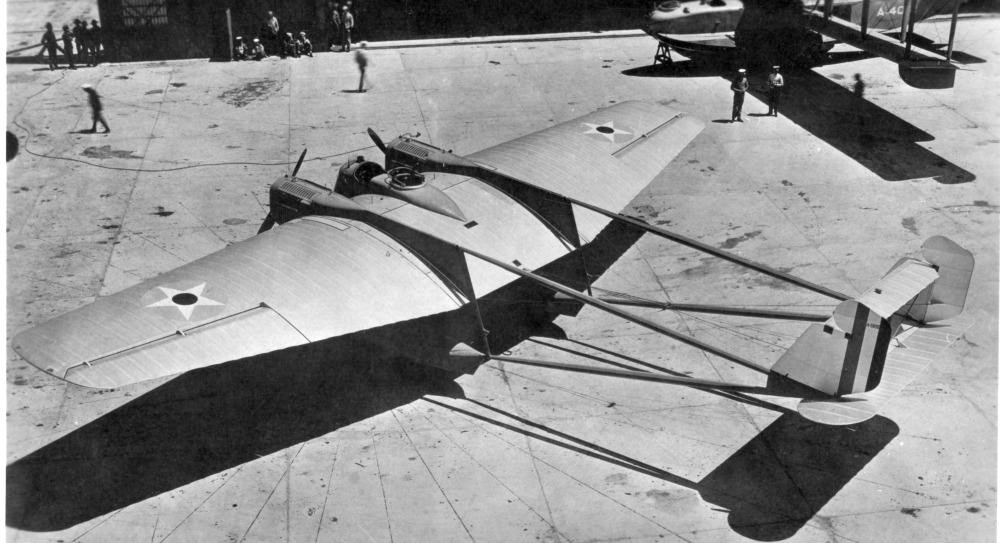
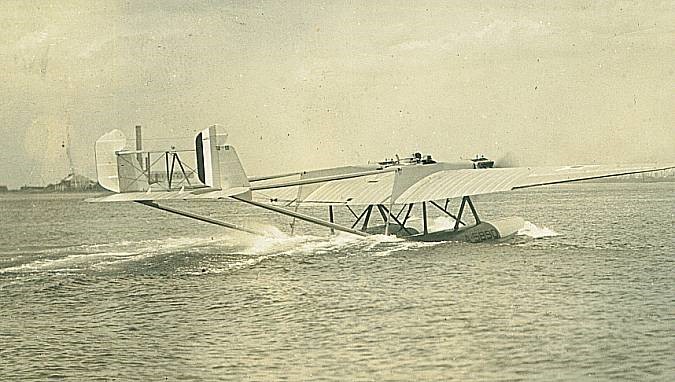
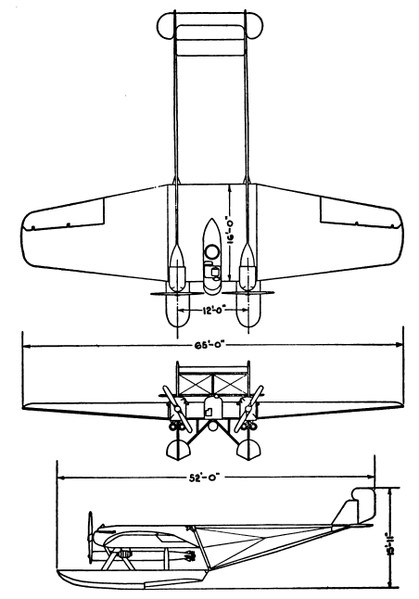
The US Navy was looking for a new torpedo bomber following a demonstration of sinking a battleship with an aircraft. A specification was announced requiring a twin floatplane that could be sled launched and crane recovered at sea. The aircraft had a maximum span of 65 feet (20 m) which could be broken down into 25 feet (7.6 m) sections for shipboard storage.
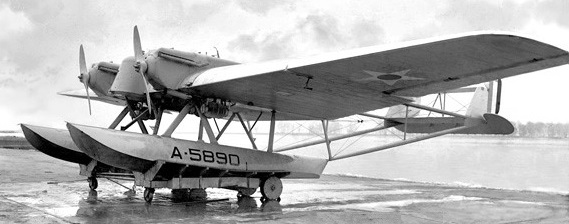
Designed by Wilbur Gilmore, the Curtiss CT-1 aircraft had twin booms, twin tails, twin floats and a single cockpit. A turret was placed high above and behind the pilot to have a full 360 degree firing arc. The thick airfoil wings were cantilevered without struts or wires using three spars. The fuselage was made of traditional welded tube frame with the-then new technology of an aluminum skin. The rest of the aircraft was of welded tube with a fabric covering. The engine nacelles were deeply recessed into the wings. Two under-wing Lamblin radiators provided cooling. Engine stands were located for mechanics to work on the aircraft. Single-engine operation resulted in a height loss of 100 ft per minute.
The first water taxi tests were performed by Bert Acosta on 2 May 1921 at NAS Rockaway, resulting in larger rudders added for stability. The sheet metal formed motor mounts and tail structure required reinforcement. The engines overheated, and could only fly for 20 minutes at a time.
Prototypes of the Curtiss CT-1, Stout ST-1, Fokker FT-1 and Blackburn Swift F were evaluated at the Annacostia Naval Yard. The CT-1 was demonstrated to the US Navy at the Annacostia Naval Yard and at the war college at Fort McNair, Washington, D.C. The aircraft was given the serial number A-5890, and the navy designation CT-1, for “Curtiss” “Torpedo bomber (number one)”-“variant one”. Curtiss won an initial contract to build nine torpedo bombers on June 30, 1920, but the order was cancelled and only one acceptance prototype was built. The aircraft was constructed in Rockaway, New York.
Engines: 2 × Curtiss D-12, 350 hp (260 kW) each Propellers: 2-blade Wingspan: 65 ft (20 m) Airfoil: Curtiss C-32 Length: 52 ft (16 m) Height: 15 ft 5 in (4.70 m) Gross weight: 11,208 lb (5,084 kg) Cruise speed: 93 kn; 172 km/h (107 mph) Range: 304 nmi; 563 km (350 mi) Service ceiling: 5,300 ft (1,600 m) Crew: 3 Pilot, Assistant Pilot, Gunner
In August 1920, Curtiss the company was forced into receivership. Clement Keys, a Canadian financier, obtained funds to manage the company’s debt and led it again to sound financial status. The Buffalo facility became the major facility, and the company remained the largest U.S. aircraft company through the 1920s. Its racing planes, including the CR-1 and CR-3, won several competitions.
The active cooperation between Curtiss and the military on racers began in 1921, with the appearance of the R-1 (No. A-6080). This biplane was powered by a 400 hp Curtiss D-12 engine which enabled Curtiss test pilot Bert Acosta to win the 1921 Pulitzer Trophy Race at 177 mph. For 1922, the Navy was ready with that airplane and its sister-ship-the R-2 (No. A-6081), Lt. Harold Brow placed third in the 1922 Pulitzer Race in the new airplane, while Lt. AI Williams was fourth in the older ship. Both airplanes were then converted into seaplanes by the addition of twin pontoons; as R-3s they captured the Schneider Trophy. Lt. David Rittenhouse was the winner of the prestigious event in A-6081 at 177 mph, and Lt. Irvine was second at 173 mph.
The single CR-1 of 1921, A6080, had conventional gear. It later became a CR-3.
The single CR-2 (original designation for CR-4) of 1921, A6081, was flown by USN Lt Harold Brow to third place in the 1922 Pulitzer race, in which Curtiss ships took the first four places. It later became a CR-3.
The Schneider Trophy never experienced any casualties during competition, but several pilots were killed training for the races. U.S. citizens Harmon J. Norton in 1923 were killed in a Curtiss CR-3 and Franck Connaut in 1926.
A CR-3 was winner of the 1921 Pulitzer trophy race piloted by Bert Acosta, at 176.7 mph.
In 1923 the Schneider Trophy Contest at Cowes, Isle of Wight was won by an American Curtiss CR-3 racing seaplane at a speed of 285km/h, piloted by Lieut David Rittenhouse. Close behind was a second CR-3 flown by Lieut Rutledge Irvine with a speed of 279.16km/h. The only other aircraft to complete the 344.69km course was Britain’s Supermarine Sea Lion III, powered by a Napier Lion engine which was almost 19% more powerful than the Curtiss D-12 carrying the CR-3 to victory. Richard Fairey realised that the Curtiss engine, in combination with a Curtiss-Reed propeller, was a most significant factor in this American success.
The CR-4s of 1923 were CR-1 with pontoons and CR-2 redesignated and modified to an unknown extent. The two were A6080/6081. A CR-4 set seaplane speed record of 188mph in 1924.
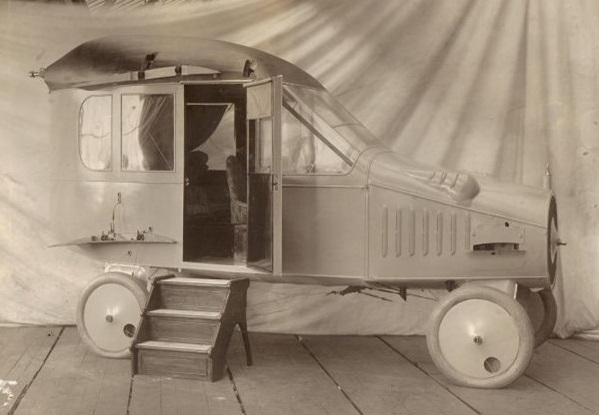
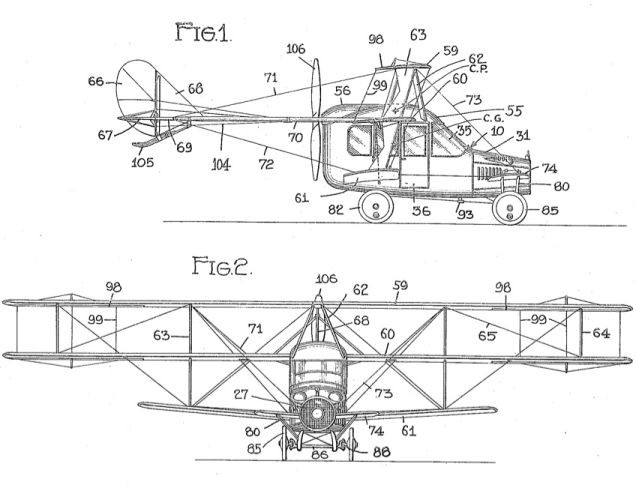
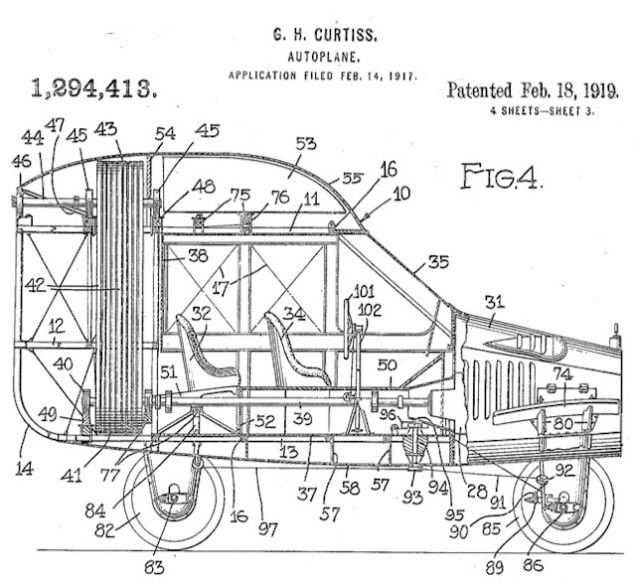
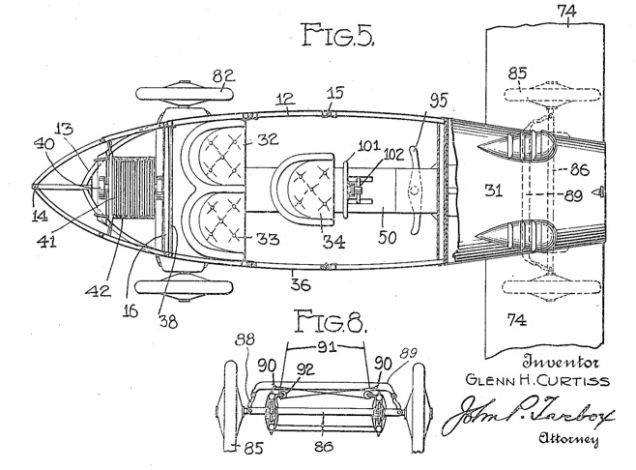
The Curtiss Autoplane offered limousine luxury in its aluminium bodied ‘car’: comfortable leather seats for an aerial chauffeur and two passengers, tasteful trimming in plush brocade, tapestries, even velvet drapes for the celluloid windows. Exactly how its triplane wings and outrigger mounted tail unit detached for road use is not clear, but with a mass of rigging wires needing careful adjustment it can scarcely have been an easy or quick process. The 100 hp Curtiss OXX engine drove a four blade pusher propeller by means of a shaft and chain mechanism. A clutch took care of power transmission to the road wheels.
The Curtiss Autoplane was ceremonially unveiled at the New York Pan American Aeronautical Exposition in Grand Central Palace, New York, on 8 February 1917.The machine only flew once or twice from the Atlantic Coast Aeronautical Station at Newport, Rhode Island, before America’s entry into World War I intervened and curtailed further development in favour of weapons of war.