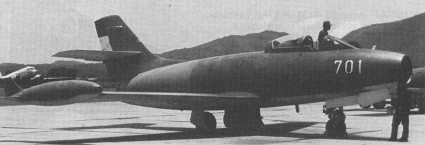
Dassault MD.450 Ouragan

The MD.450 Ouragan (Hurricane) was designed by engineers Deplant, Cabriere and Rouault as the first fighter developed by Avions Marcel Dassault and the first jet fighter of French design to attain series production.
The Ouragan began full-scale development after the end of World War II, a prototype flying for the first time on 28 February 1949 powered by a 2267kg Rolls-Royce Nene Mk 102. The second and third following on 20 July and 2 June. Twelve (later increased to 14) pre-series aircraft were followed by 350 production Ouragans.

Dassault MD.450 Ouragan Article

The Ouragan has a low wing, swept back at 14 degrees, and slightly swept tail surfaces, with the tailplane mounted part-way up the fin. Conventional ailerons, elevators, rudder, and split flaps are fitted. Airbrakes are on each side of the rear fuselage. A tricycle undercarriage has a single wheel on each unit. The mains retracting inwards into the fuselage, and nose wheel retracts forward.
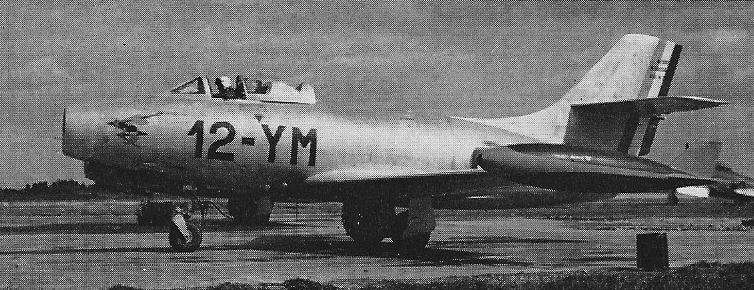
Of the production Ouragans, the first 50 were completed to an interim standard as MD.450As, subsequent aircraft embodying modifications and equipment changes as MD.450Bs. Changes included replacement of the Nene 102 by the lighter Nene 104B of 2300kg. Armament was four 20mm cannon which could be augmented by 16 Matra T-10 rockets externally.

The 352 produced for the Armêe de l’Air, mainly serving as a fighter-bomber, were superceeded by the Dassault Mystêre IVA in the later 1950s.
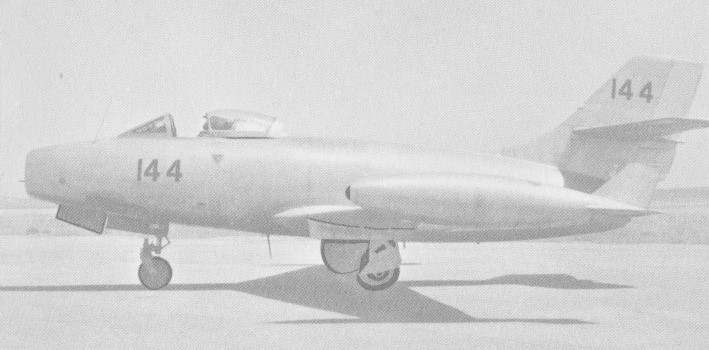
An Indian Air Force order for 71 MD.450Bs was placed on 25 July 1953, these having the Nene 105A of 2350kg and British Mk V versions of the French 20mm Hispano-Suiza cannon. Named Toofani in Indian service (the Hindi equivalent of Ouragan), the Dassault fighter remained in first-line use until 1967, a further 33 having been procured from the Armee de l’Air (including 20 unused machines from storage) in March 1957.

Twenty-four MD.450BS were ordered by Israel in January 1955, these being supplied from Armee de l’Air stocks in the following October-November and a further 46 (including one MD.450A) being delivered subsequently. Eighteen ex-Israeli Ouragans were delivered to El Salvador in 1975, remaining in service into the late 1980s.

Engine: 1 x Hispano-built Rolls-Royce Nene Mk104B turbojet, 2270kg / 5,000-lb
Wingspan: 13.16 m / 43 ft 2 in
Length: 10.74 m / 35 ft 3 in
Height: 4.14 m / 13 ft 7 in
Wing area: 23.8 sq. m / 256.18 sq ft
Max take-off weight: 7900 kg / 17417 lb
Empty weight: 4140 kg / 9127 lb
Max. speed: 940 km/h / 584 mph at SL
Initial climb rate: 2400 m (7,874 ft) /min
Ceiling: 13000 m / 42650 ft
Absolute ceiling: 49,213 ft
Range w/max.fuel: 920 km / 572 miles
Endurance: 72 min
Armament: 4 x Hispano 404 20mm canon
Hardpoint capacity: 2 x 434kg
Seats: 1

Toofan
Engine: 5070 lb Hispano-Suiza Nene 105
Wingspan: 40 ft 3.5 in
Length: 35 ft 2.25 in
Height: 13 ft
Wing area: 256.18 sq.ft
Armament: 4 x 20 mm Hispano 404 model 50 canon
Seats: 1
Bombload: 2 x 1100 lb
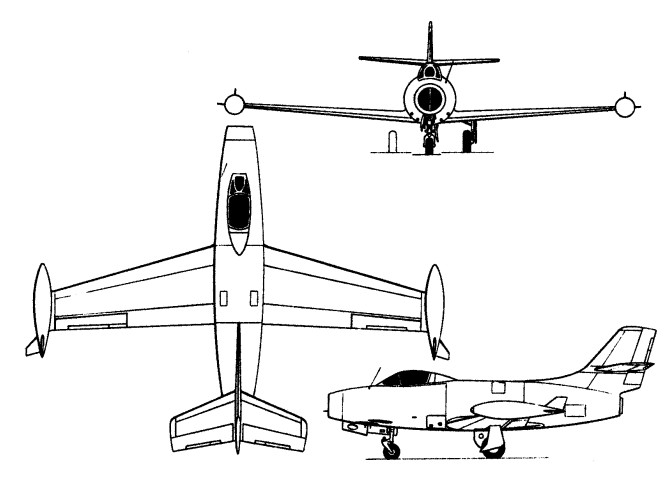
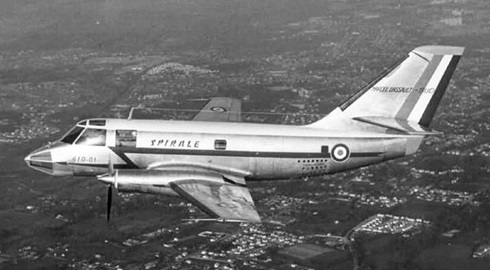
Dassault MD.410 Spirale / MD.415 Communauté     

M.D.410 Spirale

The Dassault M.D.410 Spirale was one of two nearly identical prototypes produced for the French Air Force – the M.D.410 Spirale and M.D.415 Communauté. The M.D.410 was to be the ground-attack variant of the M.D.415 which was a liaison and general duty aircraft (training, command liaison and ambulance), with the M.D.410’s windows removed and a glazed nose installed along with hardpoints and provisions for cannons.

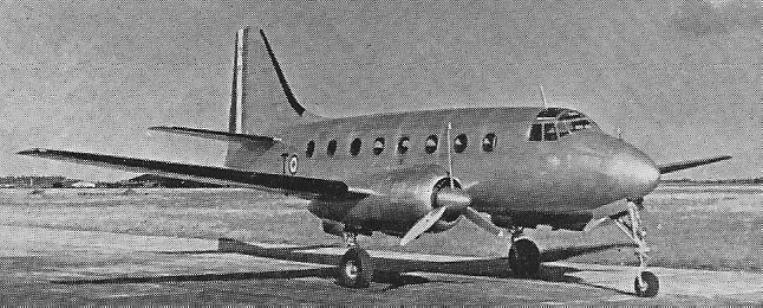
MD.415 Communauté

Designed as a military communications and staff transport, the Dassault MD.415 Communauté made its first flight on 10 May 1959. Power was by two Turboméca Bastan turboprops.

Neither variant generated any interest and the project was abandoned.

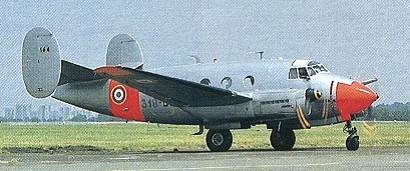
Dassault MD.303 / MD.311 / MD.312 / MD.315 / MD.316 Flamant

MD.315

The Dassault M.D.315 Flamant (Flamingo) utility transport and aircrew trainer prototype made its maiden flight on 10 February 1947. Engines were two 580 hp SNECMA 12S 201 inverted V 12 air¬cooled, previously known as the Renault 12S and before that the German Argus As 410. This had the designation M.D.303, and was evaluated successfully at the Centre d’Essais en Vol at Bretigny later that year.

Production Flamants, the first of which was flown in January 1949, were intended for service with the Armee de I’Air in France’s overseas territories, and deliveries to AOF (Afrique Occidentale Francaise) squadrons began in October 1950.

Dassault Flamant Article

The Flamant was produced in three main versions, the first, the M.D.311, was a bombing, navigation and photography trainer of which 39 were built.

MD.311

The six-seat M.D.312 military liaison/communications aircraft (142 built) and the 10-seat M.D.315 light utility transport (137 built), were used over a long period by the Armee de I’Air and, in the case of the M.D.312, by the Aeronavale. The production continued 1949 52.

The first production version was the MD.315 Flamant with a crew of two and up to ten passengers or a tonne of freight. The MD.312 was furnished for only six VIP passengers and the MD.311 was a crew trainer, with glazed nose for visual bombing. Most Flamants could be equipped as casevac stretcher (litter) ambulances.

Over 200 were still in service in the mid-1960s, a few were still in use in 1978, though retired by the French armed forces by the 1990s.

Convertible from passenger to cargo or aero-medical transport, several were passed on to other air forces such as those of Cambodia, Madagascar, Tunisia and Vietnam, as they were withdrawn from French service.

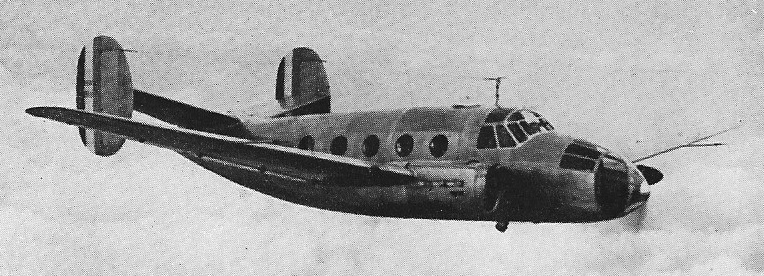
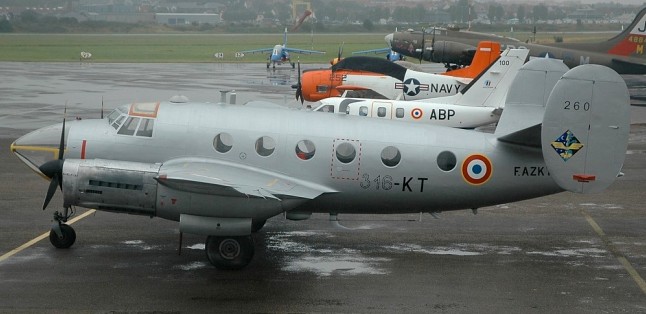
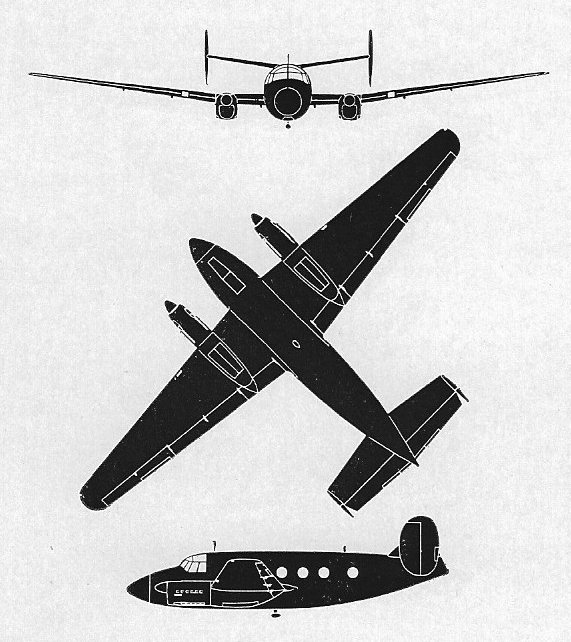
One M.D.315 was converted as the M.D.316, with 611kW SNECMA 14X Super Mars radial engines, first flying on 17 July 1952.

MD.316 number 2

A single-finned second prototype, the M.D.316T, had 597kW Wright R-1300-CB7A1 Cyclone radials. These were intended for crew training and commercial transport operation, but neither entered production.

Dassault MD.311 Flamant

Gallery

Avions Marcel Dassault MD 315 Flamant
Engines: 2 x SNECMA-Renault 12S 02-201 inline, 433kW / 572 hp
Wingspan: 20.7 m / 67 ft 11 in
Length: 12.6 m / 41 ft 4 in
Height: 4.5 m / 14 ft 9 in
Wing area: 47.2 sq.m / 508.06 sq ft
Max take-off weight: 5800 kg / 12787 lb
Empty weight: 4250 kg / 9370 lb
Max. speed: 380 km/h / 236 mph
Cruise speed: 300 km/h / 186 mph
ROC: 984 fpm
Service ceiling: 8000 m / 26250 ft
Range: 656 nm / 1215 km / 755 miles
Crew: 2+10
137 built

MD.316T
Engines: 2 x Wight R-1300 Cyclone C7BA1, 800 hp
Max speed: 255 mph at 7218 ft
Cruise: 243 mph
ROC: 1181 fpm
Empty weight: 12,566 lb
Loaded weight: 16,755 lb
Wingspan: 66 ft 11 in
Length: 51 ft 8 in
Height: 21 ft 4 in

MD.315

Dart Manufacturing Dart / Lambert Aircraft Corporation Monoprep G / Monosport G / Mono Aircraft Corp Monoprep G / Monosport G

Dart GK

Dart Manufacturing Co was formed 1937 at Columbus, Ohio, to manufacture Dart G two-seat light aircraft. This was a version of the aircraft known originally as the Monosport, designed and built by the Mono Aircraft Corporation. Taken over by Culver Aircraft Company of Columbus in 1939.

Mooney, while working for Monocoupe, designed the Monoprep G which was a low wing monoplane with an open cockpit, seating two side by side. Given a cabin enclosure it became the Monosport G and was to have gone into production in October 1935, but financial problems prevented this.

One was built in 1935, registered NX11791. Power was a 90 Lambert.

Al Mooney left Monocoupe and bought the design and production rights from Lambert Aircraft. He teamed up with K K Culver and they formed the Dart Aircraft Co at Port Columbus, Ohio, in 1939. Several uncompleted airframes were modified to produce an improved version to be known as the Dart. This was certificated in April 1938 as ATC 674.

About fifty Dart Aircraft Co Darts were produced before the war, using one of three engines, the 90hp Lambert R 266 in the model G, the 90hp Ken Royce in the model GK and the 90hp Warner Scarab Junior in the model GW.

Model G

Production of the Model G commenced in 1938 powered by a 90 hp Lambert R-266 radial, and the Model GC was produced in 1939 by a 100 hp Continental engine.

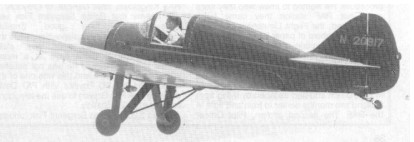
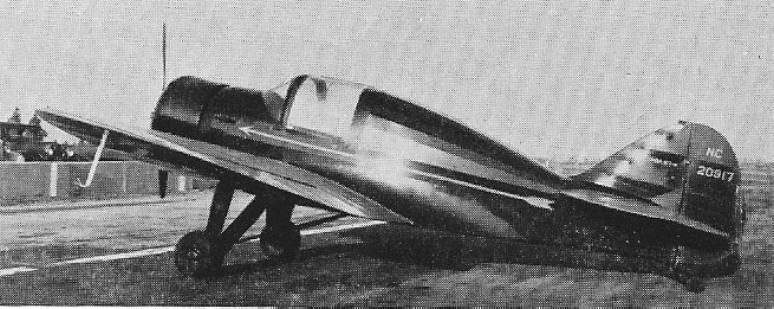
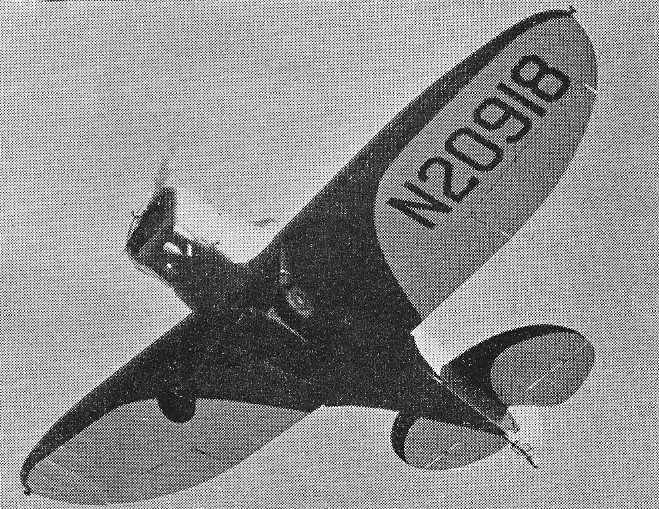
Dart GW N20918

In 1939 the company became the Culver Aircraft Co, and produced the new Culver Cadet. The Dart was not finished, however as rights were acquired by Applegate & Weyant in 1946 and the Dart DC with a 100hp Continental was built. Competition from newer models was too great and only about twelve were sold.

Model G
Engine: 90 hp Lambert R-266
Wing span: 29 ft 6 in
Length: 18 ft 6 in
Height: 7 ft 9 in
Empty weight: 922 lb
Loaded weight: 1550 lb
Max speed: 130 mph
Cruise: 115 mph
ROC: 900 fpm
Range: 500 mi

Model GC
Engine: 100 hp Continental

Model GK
Engine: 90hp Ken Royce

Model GW
Engine: 90hp Warner Scarab Junior

Dart Totternhoe

A single-seat secondary glider designed and built by Dart Aircraft Ltd, Dunstable. Of conventional wooden construction, the braced wing had two struts on each side, and no air brakes or flaps were fitted.

The first glider had its test flights in May 1936.

Wing span: 11.8 m / 38 ft 8.5 in
Length: 6.55 m / 21 ft 6 in
Wing area: 17.84 sq.m / 192 sq.ft
Aspect ratio: 7.75
Wing section: Gottingen 532
Empty weight: 117.94 kg / 260 lb
AUW: 208.66 kg / 460 lb
Wing loading: 11.71 kg/sq.m / 2.4 lb/sq.ft
Max L/D: 23 at 42 kph / 26 mph

Dart Cambridge

A single-seat sailplane designed and built by Dart Aircraft Ltd, Dunstable, of conventional wooden construction.

It was similar to the German designed Grunau Baby but with a rounded monocoque fuselage. It featured strut-braced wings, with no flaps or airbrakes. The undercarriage was a main and tail skid.

The first flight of the prototype was at Dunstable, on 1 December 1935.

The Cambridge 2 was slightly lighter in weight, but with larger ailerons.

Wing span: 14.12 m / 46 ft 4 in
Length: 6.50 m / 21 ft 4 in
Wing area: 14.86 sq.m / 160 sq.ft
Aspect ratio: 13.24
Wing section: Gottingen 535
Empty weight: 111.13 kg / 245 lb
AUW: 204.12 kg / 450 lb
Wing loading: 13.71 kg/sq.m / 2.81lb/sq.ft
Max L/D: 19
Stall: 42 kph / 26 mph
Min sink: 0.91 m/sec / 3 ft/sec

Dart Kitten

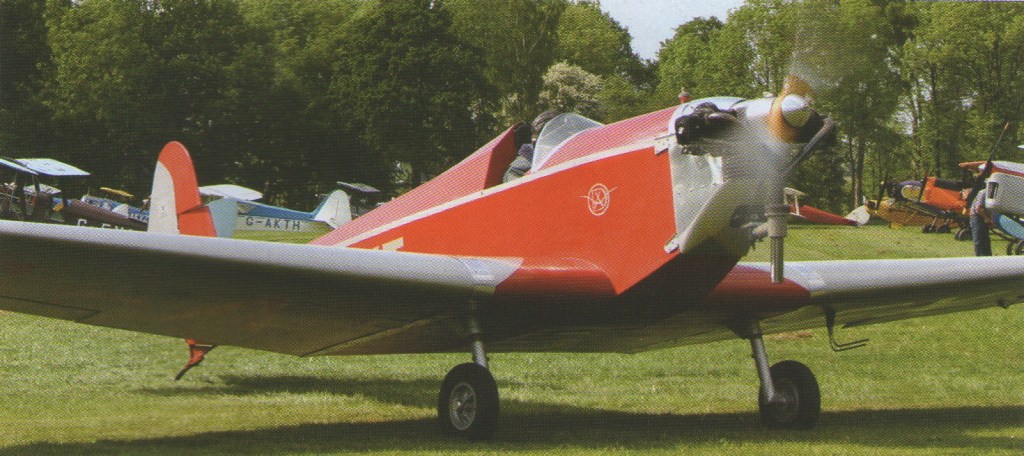
The Dart Kitten Mk.I was a low wing, single seater, powered by a 27 hp Ava 4a-00 engine.

Dart Kitten Article

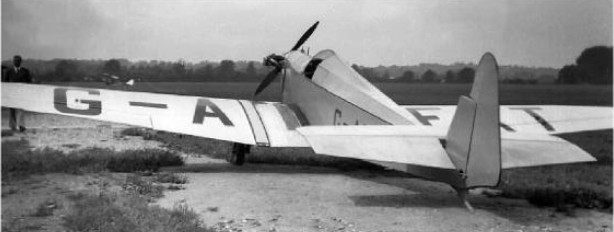
An improved Mk.II version, G-AEXT, was powered by a 36 hp Aeronca JAP J-99. Awarded an Authorisation to Fly in April 1937. The Kitten II passed through many owners and survived the war. G-AEXT crashed at Willindale in November 1964, killing the pilot. It was rebuilt and restored to the register in 1976.

Kitten II G-AEXT – 27 August 1939