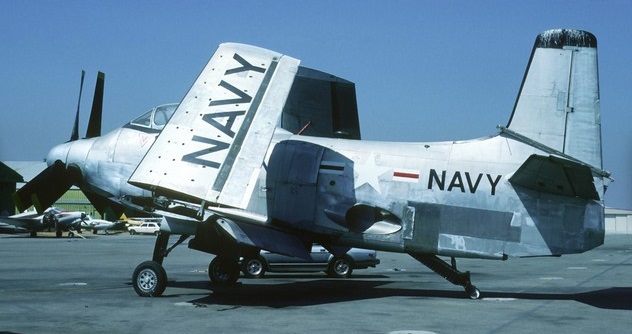
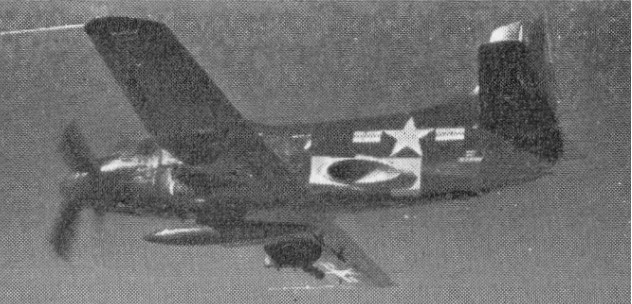
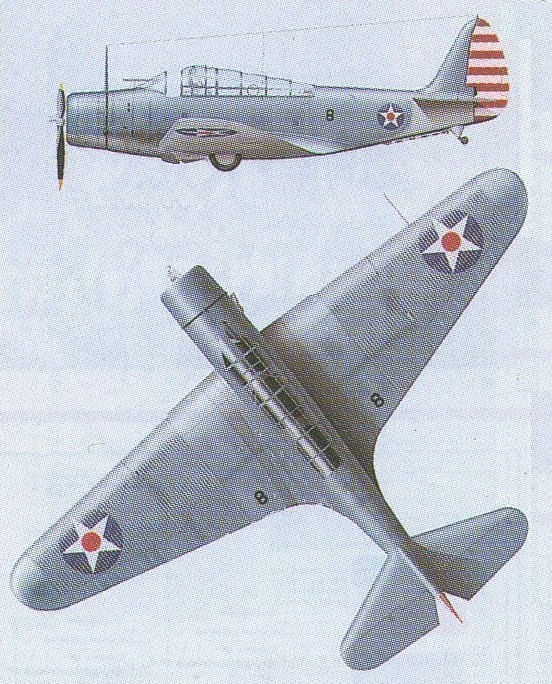
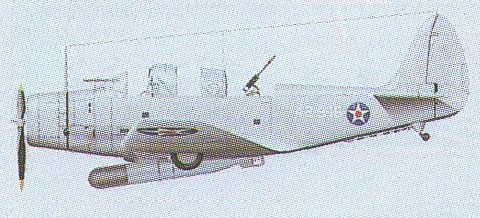
Douglas A3D / A-3 Skywarrior

TA-3B Skywarrior

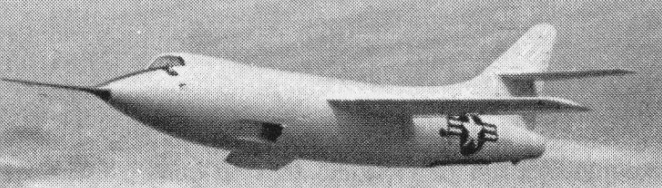
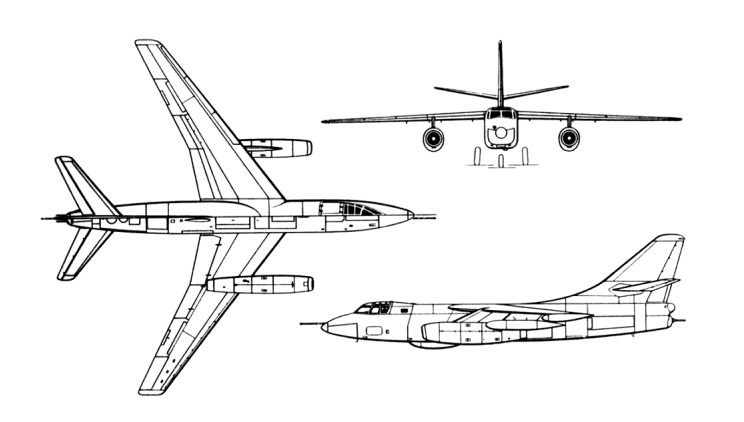
The Douglas A3D Skywarrior originated from a US Navy requirement of 1947. An attack bomber with strategic strike capability was envisaged for the new ‘Forrestal’ class aircraft-carriers.

Douglas A3D / A-3 Skywarrior Article

The design was a high-wing monoplane, with retractable tricycle landing gear, two podded turbojets beneath the wing, and a large fifteen foot internal weapons bay to accommodate up to 5443kg of varied weapons. The wings were swept back 36° and had high-aspect ratio for long range, all tail surfaces were swept, and the outer wing panels and vertical tail folded.
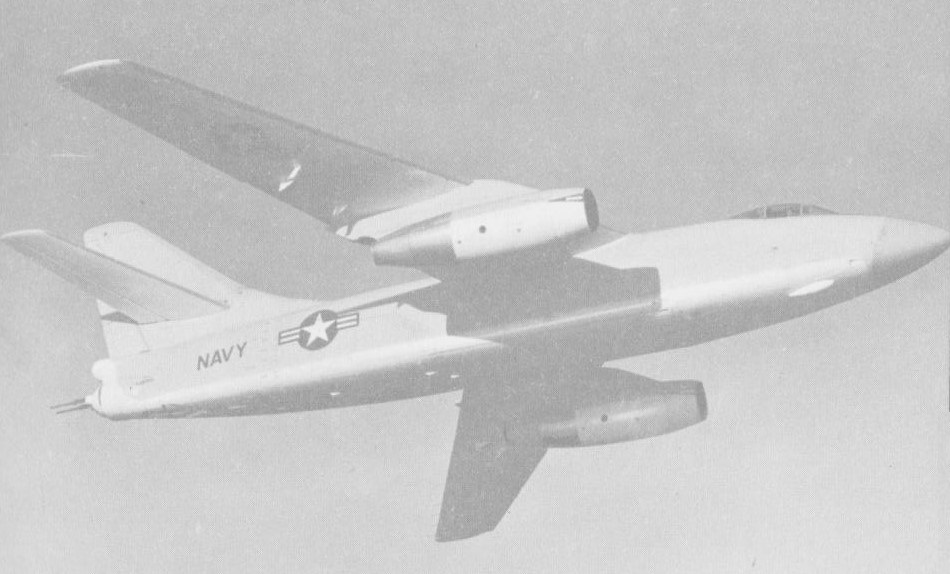
Lateral control is by ailerons and spoilers on the outer wings. The wings are equipped with automatic leading-edge slats outboard of the engines, slotted trailing-edge flaps, and all-moving tailplane. Sideways opening airbrakes are on each side of the rear fuselage. Provision was made for twelve 4500 lb thrust jettisonable JATO rockets mounted on the side of the rear fuselage.

The first of two prototypes made its maiden flight on 28 October 1952, powered by 3175kg Westinghouse XJ40-WET3 engines, but the failure of this engine programme meant that the 4400kg thrust Pratt & Whitney J57-P-6 powered the production A3D-1. The first of these A3D-1s flew on 16 September 1953, and deliveries to the US Navy’s VAH-1 attack squadron began on 31 March 1956.

In 1962 the designation was changed to A-3, the initial three-seat production version becoming A-3A. Five of these were modified subsequently for ECM missions under the designation EA-3A. The A-3B (previously A3D-2) which entered service in 1957 had more powerful J57-P-10 engines and an inflight-refuelling probe. A reconnaissance variant with cameras in the weapons bay was designated RA-3B (A3D-2P), and EA-3B (A3D-2Q) identified ECM aircraft with a four-man crew in the weapons bay.

The EA-3B flew for the first time on 10 December 1958 as A3D-2Q and a year later the first batch of 24 production aircraft was delivered to the US Navy. Operated by VQ-1 and VQ-2 Squadrons, accidents reduced the number to about 12. The EA-3B, weighing around 33 tonne, operated regularly from aircraft carriers, fitted with hook for arrester cables and catapult.
Behind the three cockpit crew members, a pressurised cabin holds four electronics specialists. The Skywarrior’s antennae are located in a wedge-shaped ventral pod under the fuselage and in the tail. Some VQ aircraft stationed at Guam had antennae on top of the fin and on either side of the cockpit.

EA-3B Seawing from VQ-2 at Rota

Apart from the American national insignia and the word NAVY, the registration number consists of one or two digits. Sometimes the identification letters PR from VQ-1 or JQ from VQ-2 were affixed, but sometimes nothing at all.
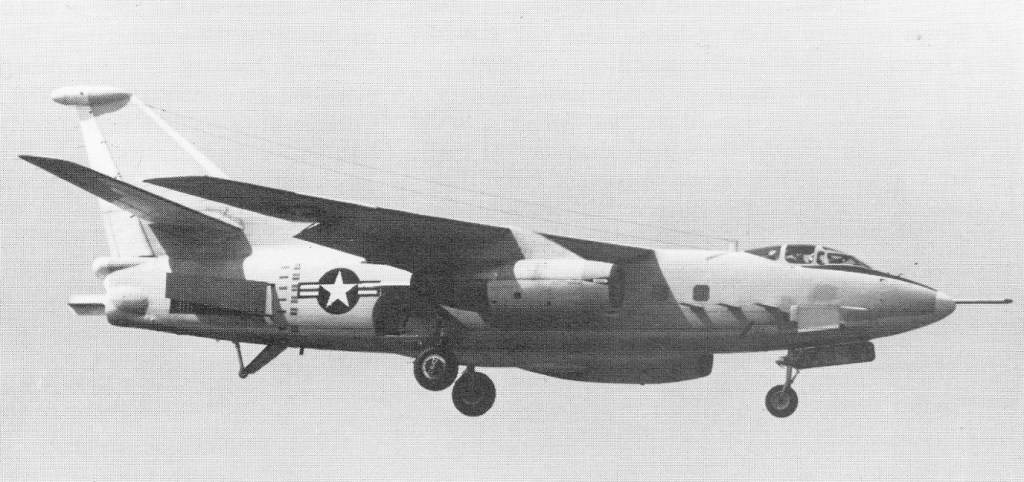
EA-3B from VQ-1

Other designations include 12 TA-3B (A3D-2T) trainers for radar operators, one VA-3B (A3D-2Z) executive transport, and the final variants in front-line US Navy service were KA-3B inflight-refuelling tankers and 30 EKA-3B tanker/counter-measures/strike aircraft. Skywarrior variants serving included TA-3B crew trainers, EKA-3B early-warning ‘aggressor’ trainers, and KA-3B tankers with Squadrons VAQ-33 at Key West and VAQ-34 at NAS Point Mugu, together with an NA-3B test aircraft operated by the Naval Weapons Test Center and NRA-3Bs with the Pacific Missile Test Center.

Of the 12 TA-3B Skywarrior built, three were converted to VIP transports with cabin windows in the forward fuselage.
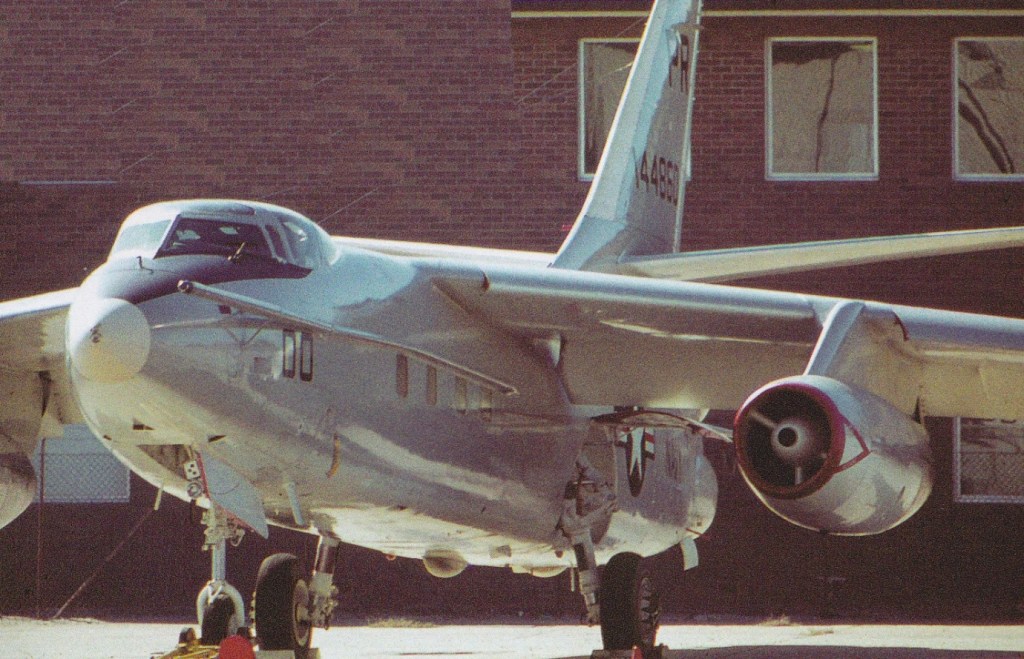
TA-3B Skywarrior BuAer 144860 VIP transport
Douglas A3D-2 Skywarrior

An A3D-2 Skywarrior set a record takeoff weight from an aircraft carrier when it took off three times at 38,102 kg on 25 August 1959 from the USN’s newest aircraft carrier, the USS Independence, during suitability trials prior to the ship’s commissioning.

Gallery

XA3D-1
Engines: 2 x Westinghouse J-40 turbojets.

A3D-2 Skywarrior
Naval attack bomber
Engines: 2x Pratt & Whitney J57-P-2 turbojets, 10,000 lb. (approx.) thrust
Wingspan: 72 ft. 6 in
Length: 75 ft. 2 in
Loaded weight: 67,000 lb
Max. speed: nearly 700 m.p.h.
Ceiling: 45,000 ft.
Range: 1,500-2,000 miles.
Crew: 3
Armament: 2 x 20 mm. tail guns.

A-3B
Engine: 2 x Pratt & Whitney J57-P-10 turbojets, 4763kg / 10,500 lb each
Max take-off weight: 37195 kg / 82001 lb
Empty weight: 17876 kg / 39410 lb
Wingspan: 22.10 m / 72 ft 6 in
Length: 23.27 m / 76 ft 4 in
Height: 6.95 m / 22 ft 10 in
Wing area: 75.43 sq.m / 811.92 sq ft
Max. speed: 982 km/h / 610 mph
Cruise speed: 837 km/h / 520 mph
Ceiling: 12495 m / 41,000 ft
Range: 1690 km / 1050 miles
Armament: 2 x 20mm rear-firing cannon, 5500kg / 12,000 lb of bombs

Douglas DB-7 Boston / A-20 Havoc / P-70

A-20G Havoc

In 1936 Douglas began its Model 7 as a light attack bomber as a private venture, produced to the order of the French government. Begun by Jack Northrop and completed by Ed Heinmann, after considerable refinement this flew on 26 October 1938 as the Model 7B private-venture prototype with 1,100-hp (820-kW) Pratt & Whitney R-1830 radials. The type was maneuverable and fast, and soon elicited a French order for 100 somewhat revised DB-7s.

Douglas DB-7 Boston / A-20 Havoc Article

The first production DB-7 flew on 17 August 1939. When France fell the undelivered aircraft outstanding from French contracts were taken over by the British government and given the name Boston. Only 60 were delivered, and 20 more passed to Great Britain.

Further French orders covered 100 DB-7As and 481 DB-7Bs. Most of these served with the Royal Air Force as Havoc Mk II night fighters and Boston Mk II bombers respectively. Later Bostons were patterned on A-20 aircraft for the US Army Air Forces, and served mainly over North-West Europe.
As delivered to the RAF from the French contracts, the Boston I was powered by two Pratt & Whitney R-1830-S3G-4G engines. It was used mainly for training duties, although some were converted for night fighting and given the British name Havoc. The A-20 was the first of the series built to a US Army specification and was powered by two 1,112kW Wright R-2600-7 Cyclone engines with exhaust-driven turbo-superchargers. It was fitted with American armament and equipment.
As the Boston II for the RAF, the A-20 had R-2600-A5B engines and British armament. Those converted into night fighters became Havocs each with a lengthened nose fitted with 12 forward-firing 7.62mm guns, AI radar and other special equipment depending on the sub-variant – one carried a high-power searchlight in the nose. As an intruder it carried a crew of three and full armament and bombs.
The A-20A for the USAAC/USAAF was powered by two 1,192kW Wright R-2600-11 engines with integral two-speed superchargers. The A-20B was an experimental development of the A-20A, armed with two 12.7mm guns firing forward, one 12.7mm upper flexible gun, one 7.62mm lower flexible gun, and one 7.62mm gun in the tail of each engine nacelle, firing aft. Nacelle guns were remotely controlled by a foot trigger in the rear compartment. The A-20C was powered by two similarly rated R-2600-23 engines. Armament comprised four fixed guns (two on each side of the transparent nose), two on a flexible mounting in the rear cockpit, and one in the lower rear-firing position – all 7.62mm (A20G) or 7.69mm (British Boston Ill). Ejector-type exhaust stacks replaced the collector rings used on the earlier models and range was increased by the addition of a self-sealing fuel tank in the forward and rear bomb-bay compartments. Provision was also made on some aircraft to carry a 900kg naval torpedo.

Douglas A-20 Havocs, 1939

The observer (not only bomb aimer) was completely cut off from the pilot. Because of this the gunner had at the back a duplicate joystick. On high level operations a Vickers K gun was mounted in the rear entrance hatch. A camera was also carried mounted in this hatch.

It may be of interest that the very first operation carried out by the USA against Europe was on July 4, 1942, when six of their Bostons were led by six 226 Squadron Bostons.

A-20 Havoc

The Boston III was powered by R-2600-A5B engines and carried a crew of four as a bomber. The Boston IIIA was similar but built by Boeing. Some Boston III/IIIA were fitted as intruders with four 20mm cannon under the forward fuselage, four 7.69mm guns in the nose, and two 7.69mm guns in the upper flexible position.

Following the experimental XA-20E, with a 37mm nose cannon and General Electric turrets, the A-20G appeared. This was similar to the A-20C except that the transparent bombardier nose was replaced by a solid nose fitted (in earlier versions) with four 20mm cannon and two 12.7mm machine-guns and ultimately with six 12.7mm guns. A few also had a single 12.7mm upper flexible gun, but this was soon replaced by a power-driven turret armed with two 12.7mm guns. Thicker armour for increased crew protection on ground-attack missions was also added.
The A-20H was powered by two 1,267kW R-2600-29 engines and incorporated minor improvements. The A-20J was identical to the later version of the A-20G except that the attack nose was replaced by a moulded-plastic bombardier’s nose incorporating bombing controls and flight navigation instruments. One in ten A-20G were completed as A-20J to serve as squadron lead planes. Armament consisted of two 12.7mm machine-guns (one in each side of the transparent nose), two in the power-operated dorsal turret and one in the lower rear firing position.
The A-20K was identical to the A-20H except that the attack nose was replaced by a bombardier’s nose, as with the A-20J. The British Boston V was similar. Special US versions of the A-20 appeared as the P-70 night fighter with R-2600-11 engines and armed with four 20mm cannon mounted in a fairing beneath the fuselage bomb bay; the P-70A conversion of the A-20G with R-2600-23 engines and six 12.7mm machine-guns in a solid nose and dorsal and lower guns; the P-70B development of the P-70A for training, with six 12.7mm ‘package’ guns and special radar (converted A-20G/J); the F-3A night photographic-reconnaissance conversion of the A-20J/K; and BD-1/2 target tugs for the US Navy.

Production for the RAF, USAAF, US Navy and Russia ceased on 20 September 1944 after 7,478 had been built (7008 by Douglas and 380 by Boeing). Russia received twice as many as the RAF and only some 800 less than the US Army.

A-20

Gallery

Principal versions
DB-7 (R-1830)
DB-7A (Wright R-2600, many passed to Great Britain as Havoc Mk Is)
DB-7B (revised systems and larger vertical tail)
Boston Mk I (taken-over DB-7s)
Boston Mk II (taken¬over DB-7Bs converted to Havoc Mk I)
Boston Mk III (British DB-7Bs)
Boston Mk IIIA (200 Lend-Lease A-20Cs with British equip¬ment)
Boston Mk IV (169 Lend-Lease A-20Js with heavier fixed armament)
Boston Mk V (90 Lend-Lease A-20Ks with more power).
P-70 version of the A-20 became an early night fighter.

DB-7B / Boston Mk III
Engines: two 1,500-hp (1,119-kW) Wright R-2600-A5B Cyclone radial
Maximum speed 311 mph (500 km/h) at sea level
Initial climb rate 2,000 ft (610 m) per minute
Service ceiling 25,170 ft (7,670 m)
Range 525 miles (845 km)
Empty weights: 15,051 lb (6,827 kg)
Maximum take-off 21,580 lb (9,790 kg)
Wingspan 61 ft 4 in (18.69 m)
Length 47 ft 3 in (14.40 m)
Height 18 ft 1 in (5.51 m)
Wing area 464.0 sq ft (43.11 sq.m)
Armament: seven 0.303-in (7.7-mm) machine guns, and up to 2,000 lb (907 kg) of bombs.

A-20G Havoc
Engines: 2 x Wright R-2600-23 Cyclone 14, 1578 hp / 1193kW
Max take-off weight: 12338 kg / 27201 lb
Empty weight: 7250 kg / 15984 lb
Wingspan: 18.69 m / 61 ft 4 in
Length: 14.63 m / 47 ft 12 in
Height: 5.36 m / 17 ft 7 in
Wing area: 43.20 sq.m / 465.00 sq ft
Wing loading: 58.63 lb/sq.ft / 286.00 kg/sq.m
Max. speed: 275 kts / 510 km/h / 317 mph
Cruise speed: 200 kts / 370 km/h / 230 mph
Service ceiling : 25000 ft / 7620 m
Range: 891 nm / 1650 km / 1025 miles
Crew: 4
Armament: 9 x 12.7mm 50 MG (12,7mm) machine-guns, 1800kg of bombs
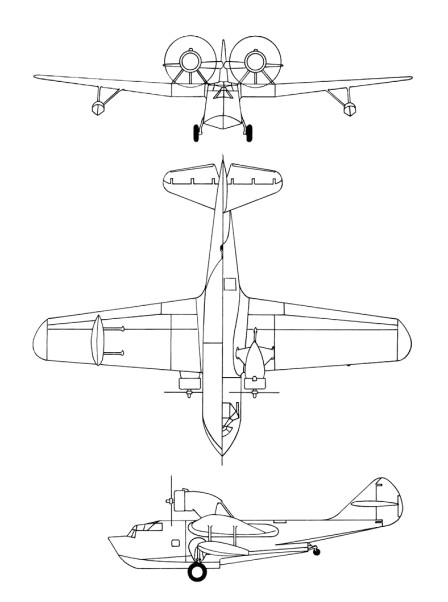
A-20K

P-70

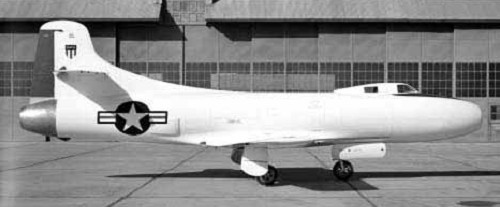
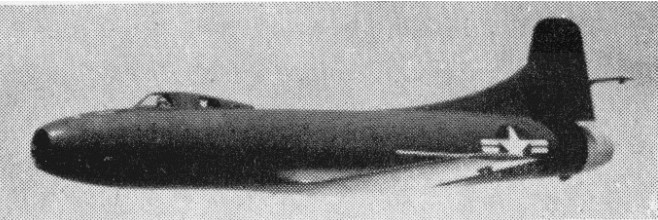
Douglas D-558 Skystreak / Skyrocket

D-558-1 Skystreak

The Douglas company’s initial essay into high-speed research aircraft was the D-558-1 Skystreak which first flew on 14 April 1947 at the beginning of a programme to investigate free-flight air load measurements of the type that were then unobtainable in wing tunnel tests. The D-558-1 was fitted with a pressure-recording system connected to 400 points on the aeroplane’s surface, and powered by a 4,000-lb (1814-kg) Allison J35-A-23 turbojet yielded invaluable research data. The type was later re-engined with the 5000-lb (2 268-kg) thrust J35-A-11, and secured two world air speed records during 1947. The Skystreak set two speed records in 1947. Pilot on the second attempt was Major Marion Carl USMC who averaged 650.92 mph in two runs over a 3 km course.

Douglas D-558 Skystreak Article


The three D-558-I Skystreaks were turbojet-powered aircraft that took off from the ground under their own power.
The D-558-1 Skystreak broke sound barrier in 1948. Of the three built, the first aircraft is on display at the Naval Aviation Museum in Pensacola, Florida. The second D-558-I crashed on3 May 1948, killing NACA pilot Howard C. Lilly. The third Skystreak is owned by the Carolinas Historical Aviation Museum located at the Charlotte International Airport in North Carolina.

Developed from D-558-1 the Skystreak, the D-558-II Skyrocket (first flown 4 February 1948) was built primarily to investigate the properties of swept wings for high-speed flight. The D-558-2 Skyrocket was in essence a swept-wing version of the straight-winged D-558-1 powered by a 3000-lb (1361-kg) thrust Westinghouse J34-WE-22 turbojet supplemented by a 6000-lb (2722-kg) thrust Reaction Motors XLR-8 rocket motor. The type first flew in February 1948 and the rocket engine enabled the Skyrocket to exceed Mach 1 in October 1947 and later, on 20 November 1953, piloted by NACA test pilot A. Scott Crossfield with the turbojet removed and the rocket fuel capacity doubled, it reached Mach 2.01 (1327 mph) at a height of 65,000ft after being released from a Superfortress mother-plane. Three months earlier it had reached 83,235 ft after a similar launch. The D-558-II last flew on 12 December 1956.

D-558-2

The rocket-powered air-launched D-558-II Skyrocket became the first aircraft to exceed Mach 2. The first
D-558-II is on display at the Planes of Fame Museum in Chino, California. The number two Skyrocket, the aircraft used by Scott Crossfield to first break Mach 2, is on display at the National Air and Space Museum in Washington DC. The last D-558-II is displayed on a pedestal at Antelope Valley College, Lancaster, California.

Gallery

D-558-1 Skystreak
Engine: 1 x Westinghouse J34-WE-22 turbojet, 3200 lb thrust.
Length: 35.105 ft / 10.7 m
Wingspan: 25.098 ft / 7.65 m
Wing area: 150.696 sq.ft / 14.0 sq.m
Max take off weight: 9812.3 lb / 4450.0 kg
Top speed: 650.92 mph / 562 kt / 1040 km/h
Wing loading: 65.19 lb/sq.ft / 318.0 kg/sq.m
Crew: 1
Total Flights: 228.
Highest Flight: 83,235 feet

D-558-II Skyrocket
Engine: 1 x Westinghouse J34-WE-22 turbojet, 3200 lb thrust, & 1 x Reaction Motors XLR-8 bi-fuel rocket, 6000 lb thrust.
Wing span: 25 ft (7.62m)
Length: 45 ft 3 in (13.79m)
Height: 3.51 m / 11 ft 6 in
Wing area: 16.26 sq.m / 175.02 sq ft
Crew: 1.
Fastest Flight: 1,291 mph
Total Flights: 161
Highest Flight: 83,235 feet

Douglas C-133 Cargomaster

C-133A-5-DL

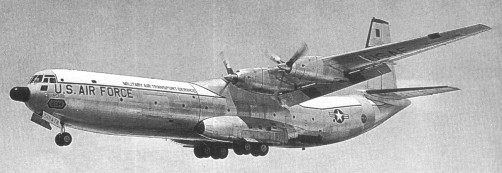
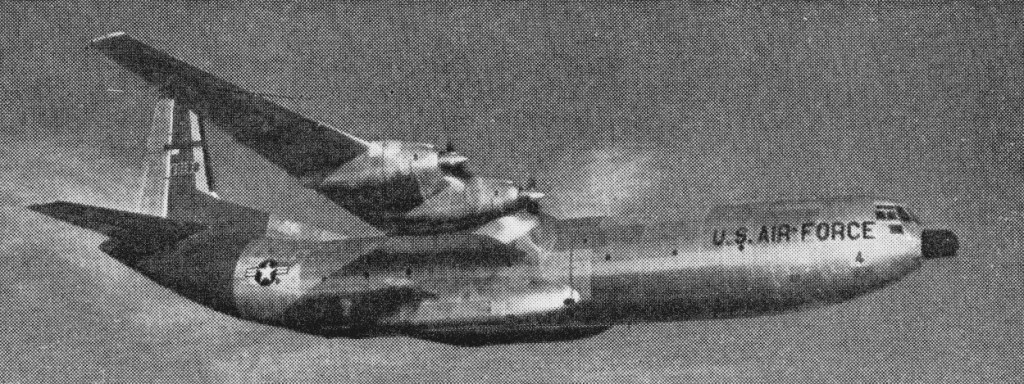
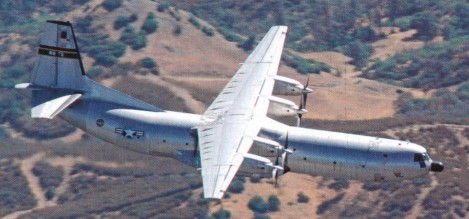
Resulting from studies aimed towards a successor to the Globemaster II, the C-133 Cargomaster was worked up by Douglas’ designers beginning in February 1953, and the first aircraft was rolled out on 27 March 1956.

Douglas C-133 Cargomaster Article

C-133A

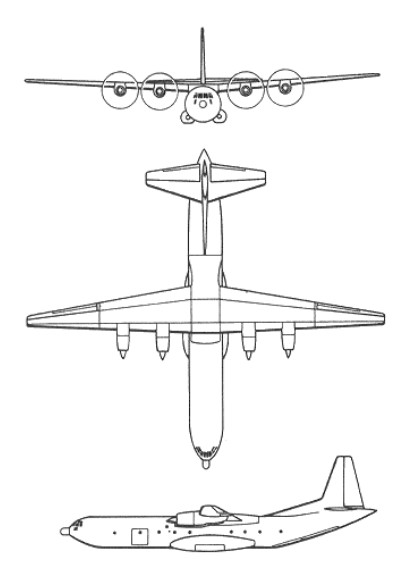
A huge airlifter with high-mounted wings powered by four 5,700-shp Pratt & Whitney T34-P-3 turboprop engines, the C-133 had its cargo-loading door in the rear fuselage. It was designed to carry heavier and bigger loads than the Lockheed C-130 Hercules, although its internal capacity did not represent a significant increase over the C-124 Globemaster II. First flown on 23 April 1956 and delivered to MATS on 1 August 1957, 35 C-l33As were followed by 15 C-l33Bs powered by 7,500 hp / 5,589kW T34-P-9W turboprops, the latter with an improved cargo door and increased payload. Some Cargomasters were used to transport the first generation of intercontinental ballistic missiles (ICBMs) and intermediate-range missiles such as Atlas, Thor and Redstone. Production ended in April 1961.

The Cargomaster fleet served for a decade and the aircraft were seen everywhere, including in Vietnam in the early days. They were stressed for a limited airframe life and could not be kept in service longer. In service until 1971.

Gallery

C-133A
Engines: 4 x Pratt & Whitney T34-P-3 (later -7WA), 6500 shp.
Wing span: 179 ft 7.75 in.
Length: 157ft 6.5 in.
Height 48ft 3in.
Wing area: 2,673sqft.
Empty weight: 120,263 lb.
Loaded weight: 275,000lb.
Max speed: 359 mph.
Ser¬vice ceiling: 29,950ft.

C-133B
Engines: 4 x Pratt & Whitney T34-P-9W, 7500 shp / 4410kW
Max take-off weight: 129700-136000 kg / 285941 – 299830 lb
Empty weight: 54600 kg / 120373 lb
Wingspan: 54.8 m / 179 ft 9 in
Length: 48.0 m / 157 ft 6 in
Height: 14.7 m / 48 ft 3 in
Wing area: 248.3 sq.m / 2672.68 sq ft
Max. speed: 558 km/h / 347 mph
Cruise speed: 500 km/h / 311 mph
Ceiling: 6125 m / 20100 ft
Range w/max.fuel: 7000 km / 4350 miles
Range w/max.payload: 3600 km / 2237 miles
Crew: 4
Passengers: 200

Douglas XA2D-1 Skyshark

A2D

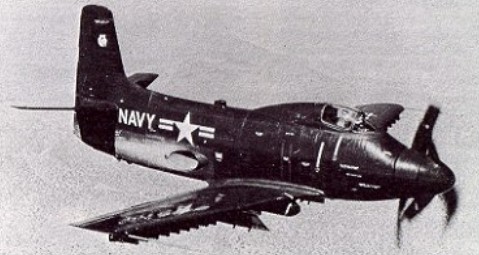
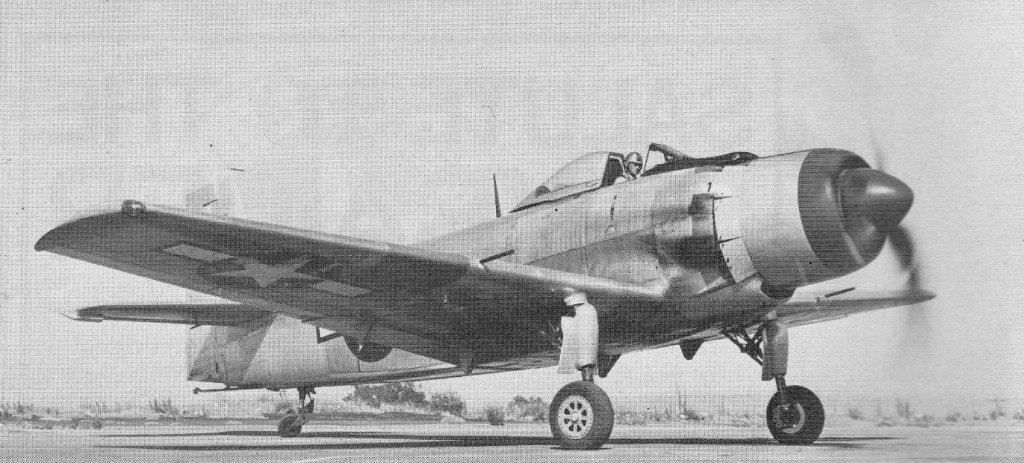
While the Navy was planning its turboprop aircraft to replace the Skyraider, Douglas was developing the XA2D 1 Skyshark powered by a 5,332 shp turboprop and the pilot was equipped with an ejection seat.
The A2D was armed with four 20 mm cannon, was fitted with an ejection seat and grossed 22,000 lb (10 000 kg). The first of two prototypes made its maiden flight on 26 May 1950. It demonstrated a climb rate of 7,200 ft/min (36,6 m/sec) and a level speed of up to 435 kt (806 km/h). In 1955, an A2D carried out a speed run from Indianapolis to Florida, covering 1,086 mls (1738 km) in an elapsed time of 2 hr 33 min, which was quite commendable for a turboprop. However, the engine and gearbox gave endless problems. The propeller control mechanism consisted of 25 unreliable vacuum tubes in a black box about the size of a suitcase and gave constant trouble. Other problems included bearing failures and overheated skin around the exhausts.

One prototype crash landed on 14 December 1950, killing the pilot, while, in June 1953, the second aircraft shed its propellers in flight. Development continued, marred by the loss of gearboxes or props on three of the five Douglas test aircraft. Twelve Skysharks were built, but only eight ever received engines. Meanwhile, jets had overtaken the turboprop and, by 1954 Douglas was testing the XA4D Skyhawk, and the A2D was abandoned.

A2D-1 Skyshark

Engine: 1 x Allison XT-40-A-2 turboprop, 3803kW
Max take-off weight: 10417 kg / 22966 lb
Empty weight: 5871 kg / 12943 lb
Wingspan: 15.24 m / 50 ft 0 in
Length: 12.56 m / 41 ft 2 in
Height: 5.20 m / 17 ft 1 in
Wing area: 37.16 sq.m / 399.99 sq ft
Max. speed: 805 km/h / 500 mph
Cruise speed: 443 km/h / 275 mph
Ceiling: 14660 m / 48100 ft
Range: 1025 km / 637 miles
Armament: 4 x 20mm cannons, 2500kg of bombs
Crew: 1

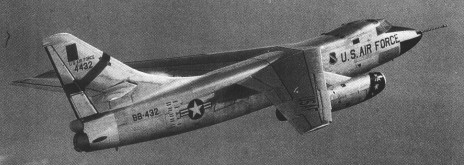
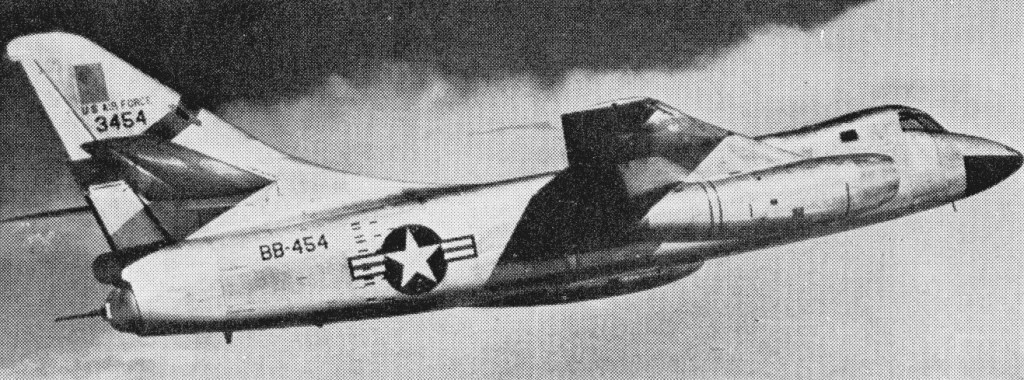
Douglas A3D / B-66 Destroyer

RB-66B

US Air Force involvement in the Korean War highlighted an urgent need for a high performance day/night tactical bomber. To speed the availability of such an aircraft it was planned to procure a land-based version of the A3D Skywarrior then being developed for the US Navy. To this end Douglas was given a contract for five pre-production Douglas RB-66A all-weather/night photo-reconnaissance aircraft, the first of which was flown on 28 June 1954 at the Long Beach plant. Although retaining the basic overall configuration of the A3D Skywarrior, the USAF’s RB-66A Destroyer dispensed with the arrester gear, strengthened landing gear and wing-folding of the naval version; it introduced aerodynamic changes in the wing design, revised accommodation for the three-man crew who were provided with ejection seats, and detail changes in equipment, including a multiple-camera installation and the provision of bombing and navigation radar. Power for this initial version was provided by two 4341kg thrust Allison YJ71-A-9 turbojets.

Douglas A3D / B-66 Article

Successful testing of the RB-66As led to a contract for the first production version, the RB-66B powered by 4627kg thrust Allison J71-A-11s or J71-A-13s. The first of 145 RB-66Bs was flown in March 1955 and deliveries to the USAF began on 1 February 1956.

Deliveries of RB-66 were made to the USAF 19th Tactical Reconnaissance Squadron at RAF Sculthorpe, Norfolk, in 1957 to replace North American RB-45 Tornado.

RB-66

Douglas RB-66s in Europe Article

Production versions included also the B-66B bomber (72 built), which had the same powerplant as the RB-66B and could carry up to 6804kg of bombs in place of reconnaissance equipment.
The new Douglas factory at Torrance (Plant B-6) in May 1954 was in volume production with both the AD-5 and 6 Skyraider and the F4D-1 Skyray, the latter with the J57 turbojet with afterburner. This leaves the El Segundo division almost clear to turn out twin-jet Skywarriors. The U.S.A.F. version of this machine (B-66) is made at Long Beach, and the main factory, at Santa Monica, makes Globemasters and DC-7s.

The RB-66C (36 built), was an electronic reconnaissance and ECM-aircraft with J71-A-11 or J71-A-13 turbojets and a crew of seven including five specialist radar operators, four of them accommodated in what had initially been the bomb bay. The WB-66D (36 built) was a combat-area weather reconnaissance aircraft with J71-A-13 engines and a crew of five (two plus equipment in the bomb bay).

B-66B

ECM versions of the B-66/RB-66 proved of great value during operations in Vietnam, locating, classifying and jamming enemy radars, but withdrawal of US forces from Southeast Asia brought retirement of these aircraft.

Gallery

Douglas WB-66D Destroyer
Variation: Northrop X-21

RB-66A
Reconnaissance-bomber
Engines: 2x Allison J71-A-9 turbojets, 10,000 lb (approx) thrust.
Loaded weight: about 75,000 lb.
Max. speed: over 650 m.p.h.
Ceiling: over 45,000 ft.
Range: over 1,500 miles
Crew: 3
Armament: 2 x 20 mm. tail guns.

RB-66B
Engines: 2 x 4627kg / 10,200 lb thrust Allison J71-A-11s or J71-A-13s
Wingspan: 22.1 m / 72 ft 6 in
Wing area: 72.46 sq.m / 779.95 sq ft
Length: 22.9 m / 75 ft 2 in
Height: 7.19 m / 23 ft 7 in
Max take-off weight: 37648 kg / 83,000 lb
Empty weight: 19720 kg / 43475 lb
Internal fuel: 3738 USG
Max. speed: 1015 km/h / 631 mph at 10,000 ft
Cruise speed: 845 km/h / 525 mph
Ceiling: 11855 m / 38900 ft
Range: 3000 km / 1864 miles
Crew: 3.
Armament: 2 x 20mm M-24A-1 cannon.

RB-66C
Engines: 2 x 4627kg thrust Allison J71-A-11 or J71-A-13 turbojets

Douglas XBT2D-l Destroyer II / AD / A-1 Skyraider

AD

In a meeting at the Navy Department, Ed Heinemann got an idea, and during a coffee break, he approached some of the brass with it: let Douglas cancel the BTD 1 and design a dive bomber the way it ought to be built. Heinemann knew he had stirred some interest, and when the meeting reconvened, a Marine colonel spoke up and asked that Heinemann be allowed to present an idea “that has a lot of merit.” When Heinemann was finished, he sat back and waited. Only one part of his proposal would cause a problem: he had specified a Pratt & Whitney engine. The Navy had already contracted to buy a large number of Curtiss Wright engines, and if he wished to get the job, he would have to use the Wright.

Douglas A-1 Skyraider Article

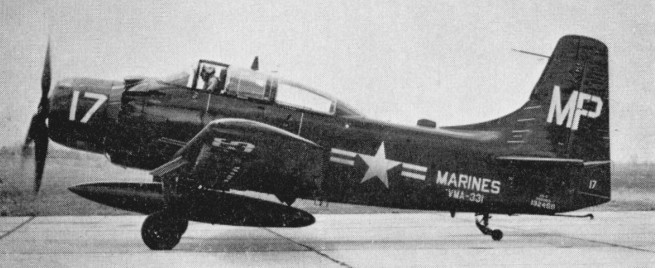
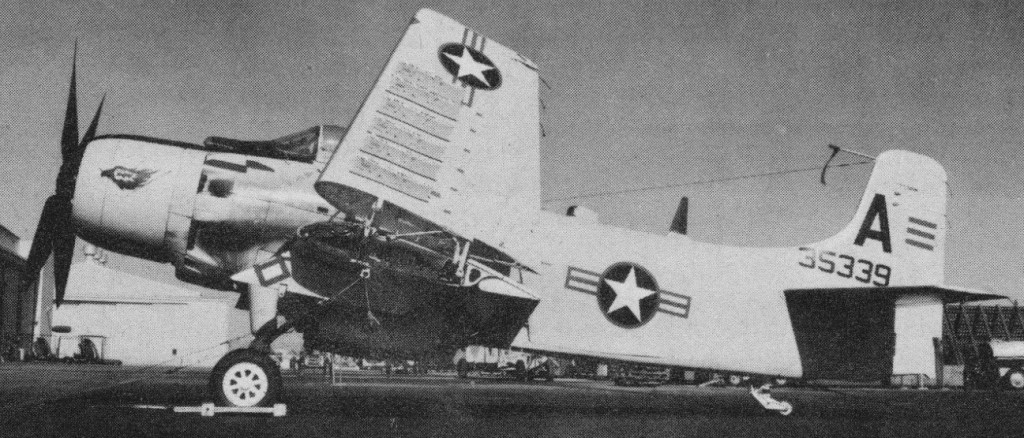
Flown for the first time in prototype form, BuNo 09085, as the XBT2D-l on 18 March 1945, the type was ordered into production just one month later. At first the 25 prototypes were named Destroyer IIs but this was changed to Skyraider shortly before nearly 600 were ordered.

XBT2D-1 Dauntless II

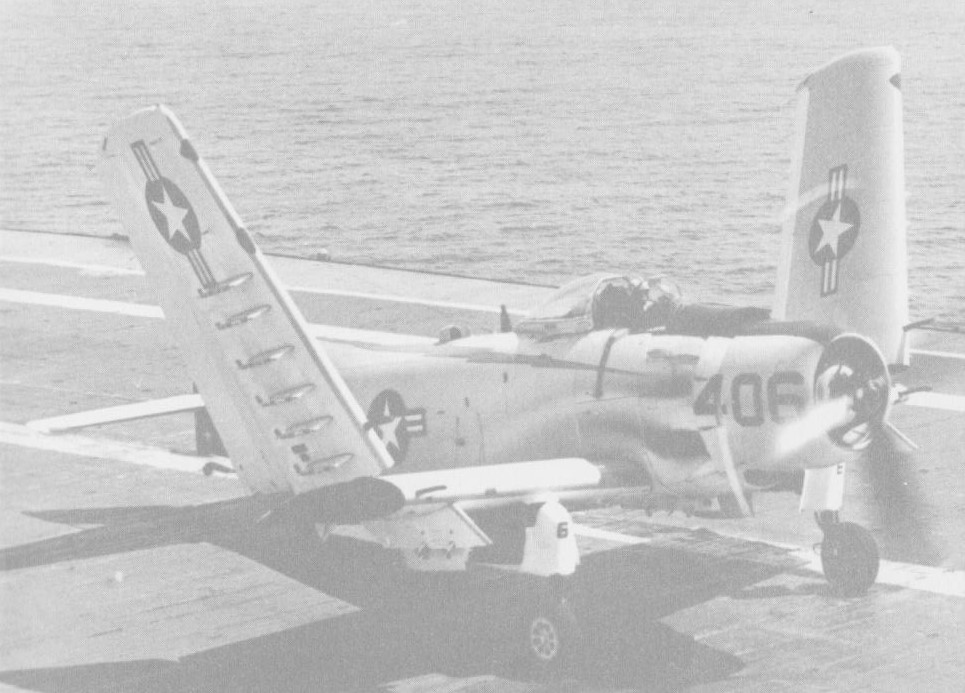
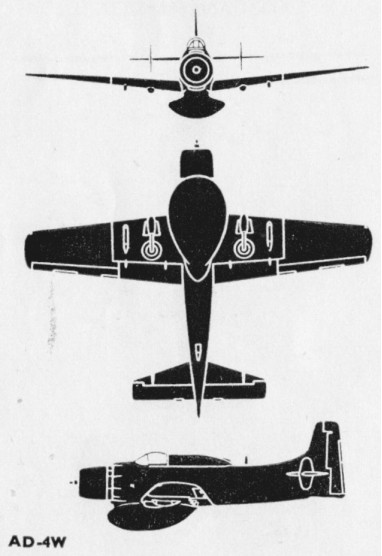
At the end of the war with Japan the 600 ordered was reduced to 242 AD 1s (as it was now redesignated) with 35 AD 1Qs. Radar equipped machines were designated AD 1W whilst the strike version the AD 2 was also built. There then followed other versions such as the AD 2Q, AD 2QU, AD 3, AD-3N, AD 3Q, AD 3w, AD 4, AD 4B, AD 4n, AD-4Q and AD 4W. The AD 2Q carried radar countermeasures equipment and the AD 3 was something quite different with a turboprop engine. The AD-4W was supplied to the Royal Navy and served as the AEW 1. The side by side seating of the AD 5 (redesignated A 1E) and EA 1E (formerly the AD 5W) were for many purposes. The single seater AD-6/A-1H and the final AD 7, A-1J were delivered in 1957.

The Skyraider entered service with Attack Squadron VA-1B in 1947. A total of 3,180 Skyraiders were completed between 1945 and February 1957, when the assembly line finally closed. These aircraft saw service with the US Air Force, the US Navy and the US Marine Corps as well as overseas air arms including those of France, South Vietnam and the UK.

Skyraiders were supplied to the Royal Navy under MDAP during the Korean Emegency for radar picket duties, until replaced by the Fairey Gannet AEW.3.

Royal Navy Douglas Skyraider
Douglas AD-5 Skyraider

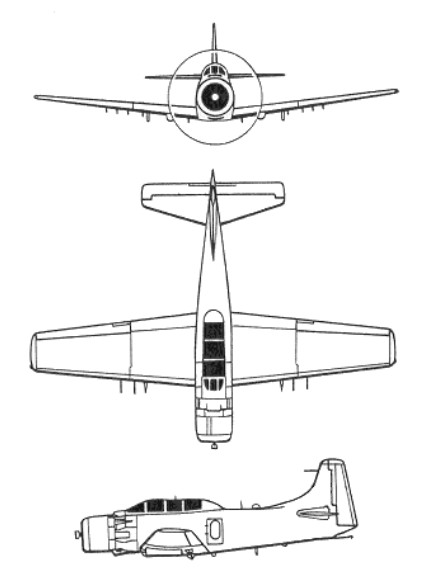
Single-seat attack aircraft such as the AD-1, AD-6 and AD-7, there was also the multi-place AD-5 of 1951.The AD-5 introduced larger tail surfaces and side-by-side seating for two. Flown for the first time in Au¬gust 1951, variants of the AD-5 subsequently performed AEW (AD-5W), ECM (AD-5Q), day attack (AD-5) and night attack (AD-5N) missions amongst other tasks, making it easily the most versatile model of this remarkable warplane. The AD-5 could be equipped for twelve different roles including transport with eight passengers or four stretchers in the fuselage. The AD-6 reverted to single-seat attack configuration.

AD-6

The AD-7 was strengthened. In 1962 the type was re-designated A-1.

The new Douglas factory at Torrance (Plant B-6) in May 1954 was in volume production with both the AD-5 and 6 Skyraider and the F4D-1 Skyray, the latter with the J57 turbojet with afterburner. This leaves the El Segundo division almost clear to turn out twin-jet Skywarriors. The U.S.A.F. version of this machine (B-66) is made at Long Beach, and the main factory, at Santa Monica, makes Globemasters and DC-7s.

The Skyraider went out of USN service in 1969 with the last actually leaving in 1971. During the period awaiting the arrival of the Gannet the Royal Navy used Skyraider AEW 1 and Avenger aircraft to bridge the gap in November of 1951. 50 machines started arriving, and these ex AD 4Ws formed 778 Squadron at RNAS Culdrose. During 1953 the squadron had five flights with a total of 39 Skyraiders having by then been delivered – the remainder coming during 1956. By 1959, they were being phased out, but 12 of them were sold to Sweden as target tugs and remained in service until the late 70s.

It was the conflict in Vietnam which saw the aircraft that the USN had withdrawn in 1968 being purchased by the USAF and a number of A 1E/AD 5, A 1H/AD 6 and A 1J/AD-7 saw active service after what was supposed to be the end of their career. Others were supplied to the South Vietnam air force.

Refurbished AD-6 for South Vietnam Air Force 1964

A 1s were in Africa with the French as late as 1973 and many of these machines were transferred to the forces of Chad, Khmer and The Central African Republic.

When the US tri-service designations were rationalised in 1962, AD-1 to AD-7 versions became re-designated from A-1A to A-1J. Eventually Douglas built 3,818 of the AD Skyraider at El Segundo, California, prior to production termination in 1957.

Gallery

AD 1
Max gross wt: 18,030 lb (8177 kg).

AD-5
Engine: Wright R3350-26W, 3,150 h.p.
Wingspan: 50 ft
Length: 39 ft. 3.75 in.
Loaded weight: 16,667 lb
Max. speed: 365 m.p.h.
Ceiling: 25,000 ft.
Range: over 1,500 miles.
Armament: 2×20 mm cannon
Bombload: 6,000 lb
Crew: 1-3.

AD-6
Engine: Wright R-3350-26W, 2700 hp
Wingspan: 50 ft 0.25in
Wing area: 400 sq.ft
Length: 38 ft 10.5 in
Height: 15 ft 8 in
Empty weight: 11,968 lb
MTOW: 25,000 lb
Fuel capacity: 316 Gal
External fuel: 3 x 125 Gal
External stores: 10,000 lb
Max speed: 365 mph at 15,000 ft
Max range: 3000 miles
Armament: 4 x 20 mm guns

AD-7 Skyraider
Powerplant: one 3,050-hp (2274-kW) Wright R-3350-26WB radial piston.
Maximum speed 552 krn/h(343 mph) at 6095 m (20,000 ft)
Service ceiling 7740 m (25,400 ft)
Range 2092 km (1,300 miles)
Empty weight 5486 kg (12,094 lb)
Max take-off weight 11340 kg (25,000 lb)
Span 15.25 m (50 ft 0.25 in)
Length 11.84 m (38 ft 10 in)
Height 4.78 m(15 ft 8.25 in)
Wingarea 37.2 sq.m (400.33 sq ft)
Armament: four 20-mm cannon
Hardpoints: 15 up to 3629 kg (8,000 lb)

A-1
Seats: 1

A-1E
Seats: 2

EA 1F Skyraider

A-1G
Seats: 4.

A 1 J Skyraider
Length : 38.845 ft / 11.84 m
Height : 15.682 ft / 4.78 m
Wingspan : 50.755 ft / 15.47 m
Wing area : 402.574 sq.ft / 37.4 sq.m
Max take off weight : 25004.7 lb / 11340.0 kg
Weight empty : 12550.9 lb / 5692.0 kg
Max. speed : 276 kt / 512 km/h
Cruising speed : 164 kt / 303 km/h
Service ceiling : 31168 ft / 9500 m
Cruising altitude : 5906 ft / 1800 m

AD-7 (AD-1J)
Engine: 1 x Wright R-3350-26WA, 1985kW
Max take-off weight: 11340 kg / 25001 lb
Empty weight: 4785 kg / 10549 lb
Wingspan: 15.47 m / 50 ft 9 in
Length: 11.84 m / 38 ft 10 in
Height: 4.78 m / 15 ft 8 in
Wing area: 37.16 sq.m / 399.99 sq ft
Max. speed: 515 km/h / 320 mph
Ceiling: 7740 m / 25400 ft
Range: 1448 km / 900 miles
Armament: 4 x 20mm cannon, 3629kg of bombs
Douglas YB-11 / YO-44 / YOA-5

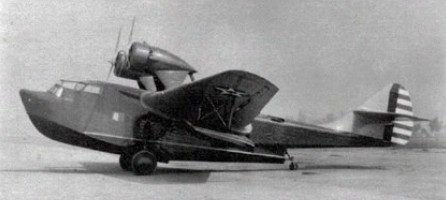
Powered by two Wright R-1820-45 Cyclones rated at 930hp, the YB-11 was to have a crew of five and carry three 7.62mm machine guns. One gun was located in the plexiglas nose turret, and one each in waist positions which were covered by sliding hatches when not in use. The forward part of the wing was of corrugated aluminum with fabric covering from the rear spar back. The fuselage was all metal and the landing gear retracted into depressed wells on the sides.
Before completion, the design was reclassified as an observation type and given the designation YO-44. However, the finished product was delivered with the Air Corps serial number 33-17 as the YOA-5 amphibian. It bore this identification throughout its life.

YOA-5
Max take-off weight: 9080 kg / 20018 lb
Wingspan: 27.36 m / 89 ft 9 in
Length: 21.26 m / 69 ft 9 in
Height: 6.71 m / 22 ft 0 in
Max. speed: 272 km/h / 169 mph

Douglas TBD Devastator

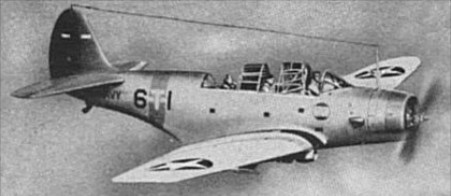
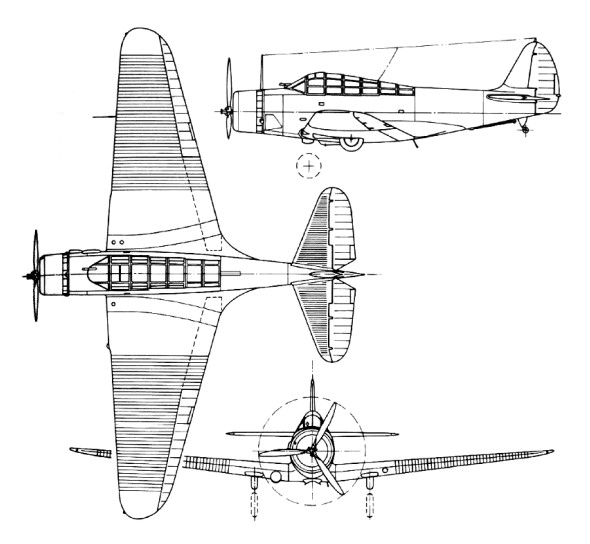
The prototype of the Devastator torpedo bomber flew for the first time on 15 April 1935. It was the first monoplane selected for aircraft-carrier operations, the first of 129 ordered by the US Navy entering service in 1937.

For the first time in a Navy bomber the TBD featured an enclosed cockpit and all-metal construction.

Douglas TBD Article

Armed with only one forward-firing and one rear-mounted machine-gun (plus a 533mm torpedo or 450kg bomb), it was vulnerable to enemy attack and a lack of self-sealing fuel tanks contributed to the Devastator’s failure in combat. Heavy losses were suffered in action against the Japanese during the early part of World War II, especially during the Battle of the Coral Sea when the type operated from USS Lexington and Yorktown. The Battle of Midway, fought between 4 and 7 June 1942, was the Devastator’s last major action: it was relegated to non-combat duties after suffering heavy losses during the battle.

Gallery

Engine: 1 x 900hp Pratt & Whitney R-1830-64 Twin Wasp
Wingspan: 15.24 m / 50 ft 0 in
Length: 10.67 m / 35 ft 0 in
Height: 4.60 m / 15 ft 1 in
Wing area: 421.949 sqft / 39.2 sq.m
Max take-Off Weight: 4624 kg / 10194 lb
Weight empty: 6182.8 lb / 2804.0 kg
Wing loading: 24.19 lb/sq.ft / 118.0 kg/sq.m
Max. Speed: 179 kts / 332 km/h / 206 mph
Cruising speed: 111 kts / 206 km/h
Range (max. weight): 361 nm / 669 km
Service ceiling: 19701 ft / 6005 m
Crew: 3
Armament: 2xMG 0.3cal (7,62mm), Torp/Bomb 454kg