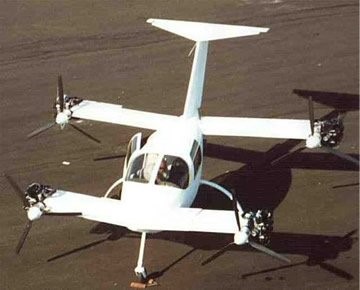
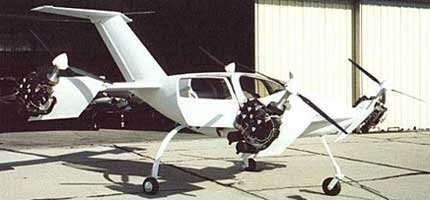
In the late 1990s Duncan Aviation of Michigan developed its Xantus V/STOL design N44CX, named after a species of hummingbird and designed by Terry Duncan, a lead engineer for Williams International.
It featured four 80 hp Hirth F30 engines placed at wingtips fore and aft of the fuselage, and was unveiled to the public for the first time at AirVenture ’99.
The company predicted that the four-passenger tilt-prop aircraft would take off and land vertically, and cruise at 290 mph with a range of up to 800 nm.
After receiving an airworthiness certificate from the FAA on July 7, 1999, the aircraft made its first tentative hovering flight on July 11. Its current disposition is unknown.
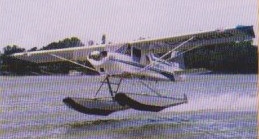
The Aerocruiser 2+2 has the same shape as the two seat version, with has identical dimensions but a redesigned cabin layout in which the rear bench seat folds back. The fuselage is fabric covered and the wings are all aluminium.
Aerocruiser 2+2 Engine: Lycoming O-360, 180 hp Wing span: 9.75 m Wing area: 16 sq.m MAUW: 997 kg Empty weight: 494 kg Fuel capacity: 265 lt Max speed: 260 kph Cruise speed: 195 kph Minimum speed: 65 kph Climb rate: 5 m/s Seats: 4 Fuel consumption: 38 lt/hr Price (1998): Can$95,000
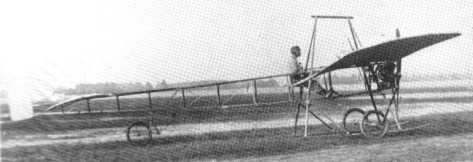
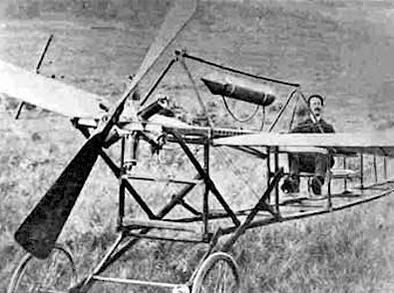
First airplane designed and constructed in Brazil – 100% made by Dimitri Sensaud de Lavaud; even the propellers and the engine were manufactured by him. It first flew on January 7, 1910 at Osasco: 6 seconds for 103 meters; also considered to be the first flight by an aircraft of complete South America design and construction.
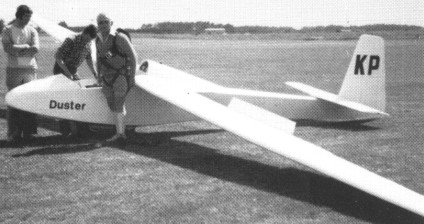
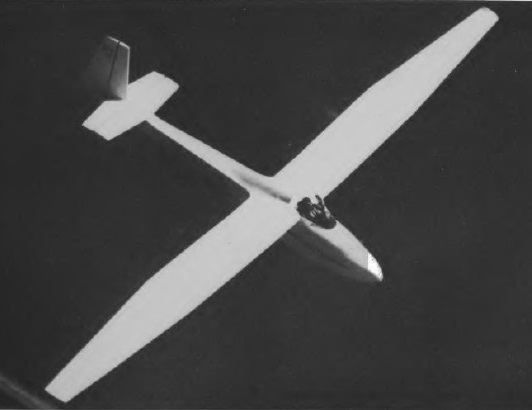
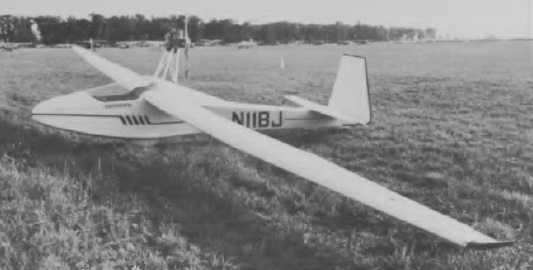
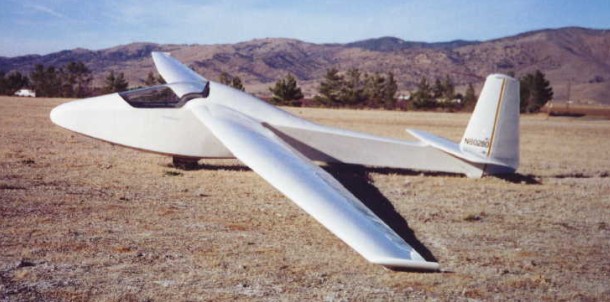
The BJ-1b Duster is a development of the earlier 41.5 ft. span BJ-1 Dynamite (designed by Ben Jansson and Hank Thor). Intended for pleasure flying rather than contests or competitions, the BJ-1 Duster single-seater is specifically designed for homebuilt construction from plans and/or component kits. No component of the simple wooden structure exceeds 18ft in length so that it can be built at home and in the garage; the average construction time is approximately 600-700 hours.
Designed by Ben Jansson, an aerodynamicist who captained the Swedish teams in the 1968 and 1970 World Gliding Championships, and H.Einar Thor, the Duster is marketed by the DSK Aircraft Corporation of Van Nuys, California.
BJ-1
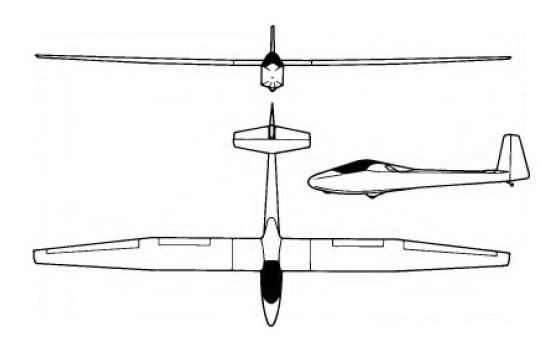
Design work began in early 1964 and the prototype BJ-1 first few in August 1966. The cantilever shoulder wing is built in three pieces – a 7ft span centre-section integral with the fuselage and two outer panels – and there is a single spruce main spar with plywood ribs and covering. The trailing edge flaps also act as air brakes. The straight-sided fir plywood fuselage has an elongated hexagonal cross-section in the cockpit area changing to a triangular cross-section aft of the wings. There is a ventral plywood keel reinforced by two bulkheads shaped to the seat contour and supporting a floor-mounted seat. There is a nonretractable semi-recessed monowheel beneath the keel, as well as a tailwheel; the fuselage nose cone and fairings are of glassfibre. The tailplane is mounted on top of the fuselage and the tail unit is of similar construction to the wings, all tail surfaces being plywood-covered.
The BJ-lb differs from the BJ-1 in having a slightly increased wing span, a reduced weight and a Plexiglas canopy reduced in height to allow the pilot to sit in a semi-reclining position; it can be flown with this one-piece flushfitting canopy or with an open cockpit and just a windscreen.
An auxiliary power package for the Duster was under development in 1977 using a 26hp engine mounted dorsally, and the plans provided give details of all the changes necessary to support an engine mounting, which can then be added when the builder so desires without further alteration of the airframe. Previously, a version of the BJ-1b powered by a 35hp Rockwell JLO-600LM ‘flat twin’ engine mounted behind the cockpit on struts and driving a two-blade fixed-pitch wooden pusher propeller was flown in 1973. This powered version was produced by the Duster’s co-designers, Hank Thor and Ben Jansson, and the engine is not retractable into the fuselage.
DSK BJ-1 Duster
Approximately 400 sets of plans and 150 component kits have been sold to homebuilders. In accordance with former OSTIV rules it has terminal-velocity-limiting dive brakes (216 kph/ 116 kt./ 134 mph. The Duster has been built in Canada and 10 other countries, and is type-certified in New Zealand. It is relatively simple to build but the 2.13 m/ 7 ft fixed center section provides a challenge for trailer design.
Duster BJ-1B
BJ-1 Dynamite Wing span: 41.5 ft.
BJ-1 Duster Wing span: 13.0 m (42 ft 7 in) Length: 6.1 m (20 ft 0 in) Wing area: 9.60 sq.m (103.3 sq ft) Wing section: NACA 4415 Aspect ratio: 17.7 Empty weight: 159 kg (350 lb) Max weight: 263 kg (580 lb) Water ballast: None Max wing loading: 27.4 kg/m 2 (5.61 lb/sq ft) Max speed: 111 kt (206 km/h) Stalling speed: 34.5 kt (64 km/h) Min sinking speed at 67 kt (124 km/h): 1.8 m (5.9 ft)/sec Max rough air speed: 80 kt (148 km/h) Best glide ratio at 47 kt (87 km/h): 29
Thor BJ-1B Duster Span 13.0 m / 42.7 ft Wing Area 9.72 sq. m. / 104.65 sq.ft. Aspect ratio 17.4 Airfoil NACA 4414 modified Length: 20 ft 0 in Empty weight 177 kg. / 390 lb. Payload 104 kg. / 230 lb. Gross weight 281 kg. / 620 lb. Wing loading 28.91 kg. / sq. m. / 5.92 lb. / sq. ft. Structure all wood Max speed: 128 mph L/D max. 28 85 kph / 46 kt / 53 mph Best glide ratio: 29:1 at 54 mph Min. sink 0.76 m/s / 2.5 fps / 1.48 kt at 72 kph / 39 kt / 45 mph Min sinking speed: 5.9 ft/sec at 77mph Seats: 1
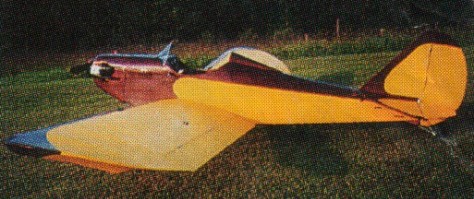
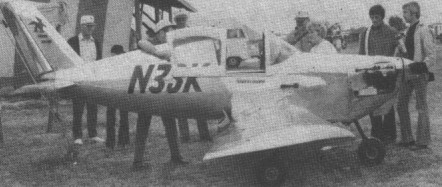
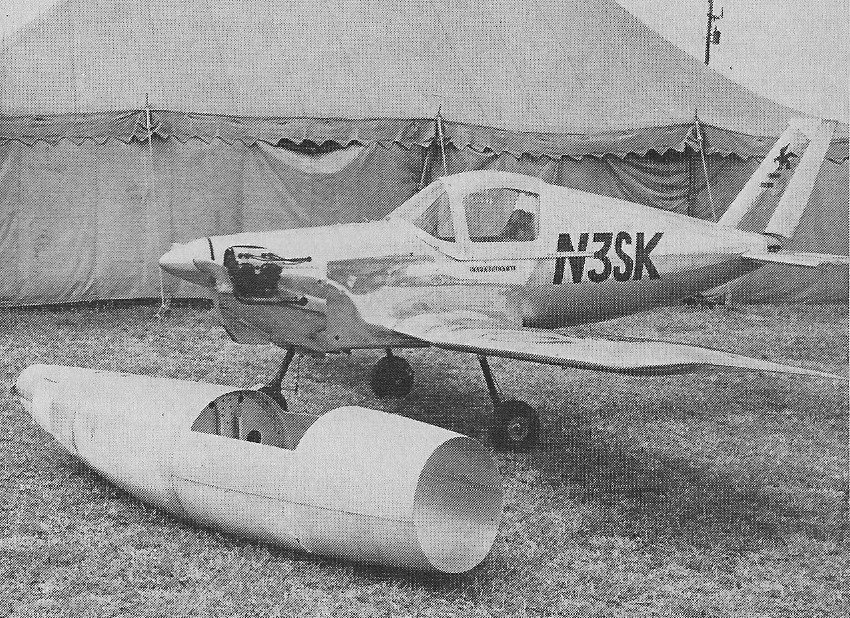
The Hawk is a single-seat, low-wing monoplane stressed to 9G’s. Originally it was designed by Dick Killingsworth to be built around a surplus 200-gal drop-tank, but plans also provide for a bulkhead and stressed skin structure, The wings are built with twin light-alley spars and the landing gear is the non-retractable tricycle type. Fuel is carried in a forward tank with the capacity of nine gallons, but an optional 14-gallon tank can be added in the aft section.
Powered by a Lycoming O-145B-2, the Hawk was designed to be built with ordinary hand tools, pop rivets and very little welding or machine work. By 1974 over 250 sets of plans had been sold, at $50 each.
Gross Wt. 893 lbs. Empty Wt. 525 lbs. Fuel capacity 9-23 USG. Wingspan 20’4”. Length 15’. Engine 65-hp Lycoming. Top speed 156 mph. Cruise 141 mph. Stall 50 mph. Climb rate 1500 fpm. Ceiling 12,000 ft. Takeoff run 600 ft. Landing roll 550 ft. Range (14 gals) 480 sm.