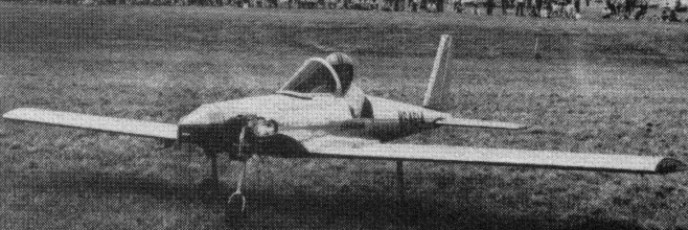
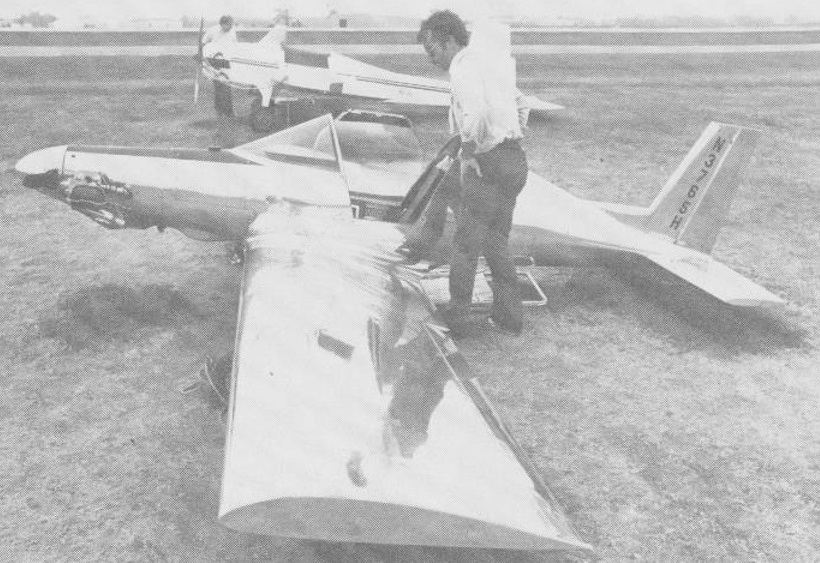
The original Wind Wagon was built in Texas by Gary Wilson and was based on the Teenie Two and used the similar wing ribs that slipped onto the “C” spar. The fuselage was a tapered tube from the seat backward and from the seat to the firewall. The aircraft was equipped with tricycle undercarriage and a ½ VW.
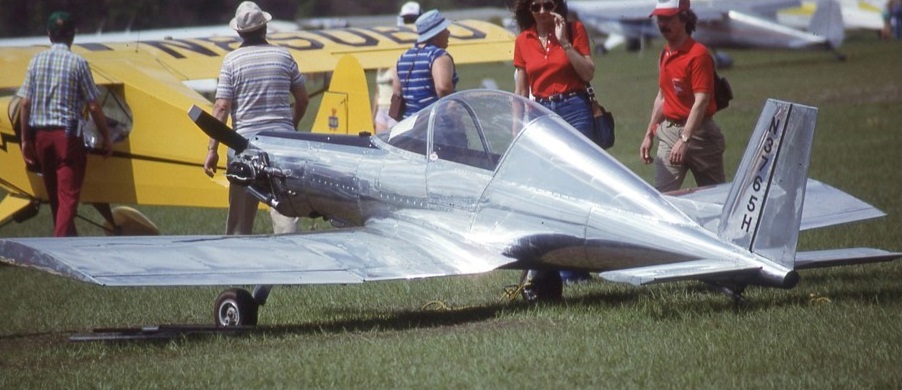
1981 Watson Windwagon N3765H C/N 147
First flown on 19 April 1977 (N64614), the Windwagon measures 18 feet from wingtip to wingtip and it features all-aluminum construction with pop rivets. The tricycle gear are nonretractable, but the wings are removable for storage or transportation. The powerplant is a 900 cc half-Volkswagen modified engine and drives a four-blade propeller. On just two cylinders tip speed is 110 mph, and climb rate is 450 to 500 fpm. The wing features a Clark Y wing section with constant chord. There are conventional ailerons and no flaps. The fuselage is a conventional semimonocoque structure made from pop-riveted aluminum. Morry Hummel introduced a few changes.
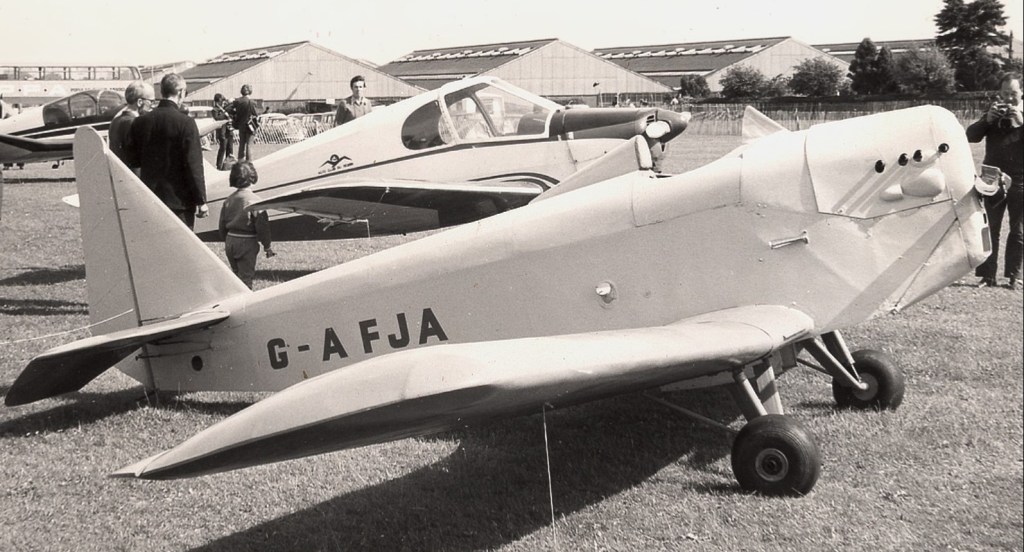
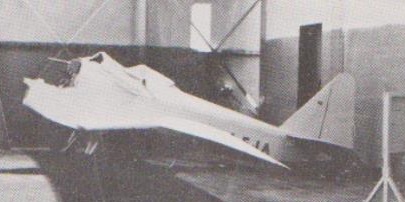
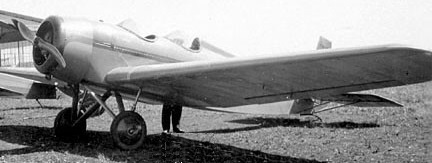
The Dingbat, otherwise known as the Taylor Watkinson Ding-Bat, was a low-wing monoplane powered by a 30 hp (22 kW) Carden-Ford engine. It had a single-seat open cockpit and a fixed conventional landing gear. It was built at Teddington in Middlesex and registered G-AFJA snDB.100 it was first flown at Heston Aerodrome in June 1938.
It was stored during the Second World War, but rebuilt to flying condition by J.H.Pickrell and D.O.Wallis in 1959.
Taylor-Watkinson Dingbat G-AFJA 22 May 1961
It lapsed again into disuse and was stored at Overton Strip, Hannington, until restored by A.J.Christian, First flying again in early 1974.
After a crash at Headcorn on 19 May 1975, it was rebuilt, and was still registered in 2010.
Powerplant: 1 × Carden Ford water-cooled 4-cylinder piston engine, 32 hp (24 kW) Wingspan: 28 ft 0 in (8.53 m) Wing area: 125 sq ft (11.6 m2) Length: 16 ft 0 in (4.88 m) Height: 6 ft 3 in (1.91 m) Empty weight: 460 lb (209 kg) Gross weight: 700 lb (318 kg) Maximum speed: 90 mph (140 km/h, 78 kn) Cruise speed: 80 mph (130 km/h, 70 kn) Stall speed: 39 mph (63 km/h, 34 kn) Range: 200 mi (320 km, 170 nmi) Crew: 1
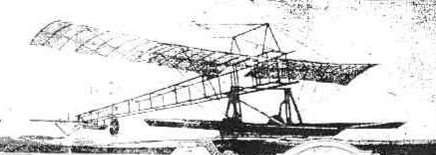
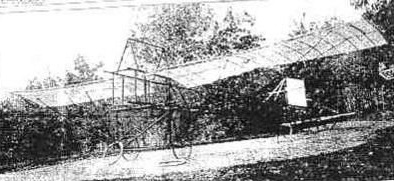
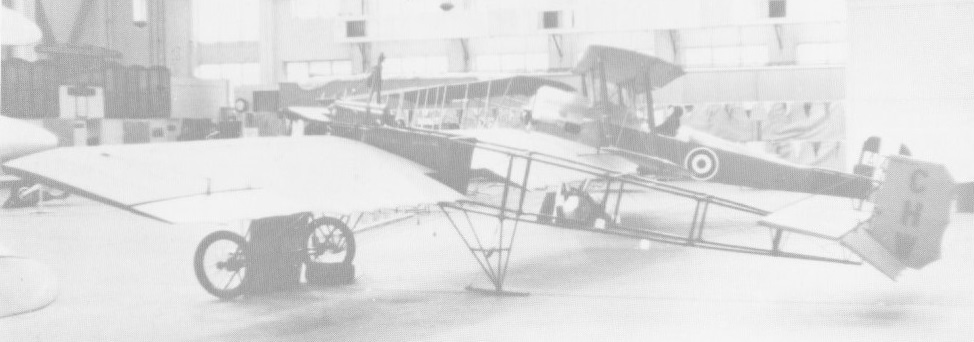
Designed by Charles Horace Watkins in 1907 the Monoplane was built at Mynachdy Farm, Maendy, Cardiff, Wales, over the following couple of years. Although it made ts first hops from the farm probably early in 1910 its first real flights came later in the year when it is reported to have flown over Whitchurch, Glam, and in the same year its first cross-country was made to a ridge on the Caerphilly Mountain and back. It was powered by a 40 hp three cylinder engine modified from an Anzani and cast in the Cardiff Railway Works. It is claimed that this aircraft, named the ‘Robin Goch’, made the first night flight over Wales in 1910.
It was flown until about 1918 when it was grounded by a cracked cylinder head. It was stored at Mr Watkins garage until 1959 when it was moved to St.Athan for display where it has since remained.
Mr Watkins died in December 1976 aged 92.
In November 2025 the Watkins monoplane is displayed at the Waterside Museum Swansea.
Engine: modified Anzani, 40 hp Wingspan: 32 ft Length: 21 ft 6 in All up weight: 600 lb Max speed: 60 mph Range: 180 miles
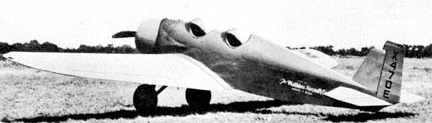
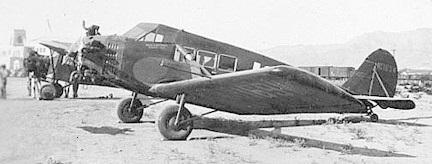
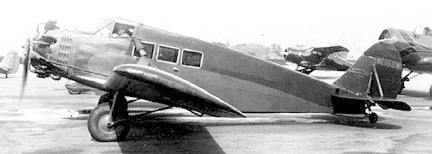
The 1929 SL-1 was designed by Wallace “Chet” Cummings featuring a laminated plywood-clad, steel-tube, monocoque fuselage. Originally tried with 55hp Velie M-5, the price was $2,950.
The one prototype, NX470E c/n 1, received ATC 2-182 and at least five production models were as built as SL-2: NC102V c/n 102, N460W c/n 106, N461W c/n 103, NC487N c/n 101, NC11950 c/n 105, maybe c/n 104.
Watkins SL-1 NX470E
The sport design failed to make it in a slumping market.
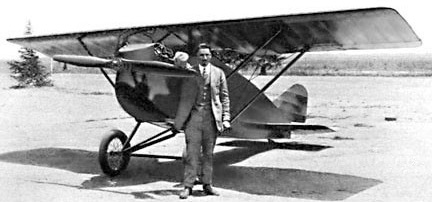
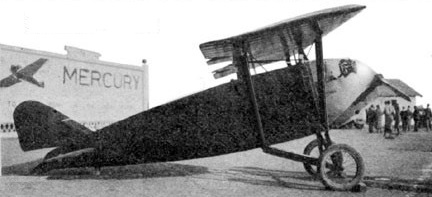
The 1921 Gosling, or Mercury Gosling, was a parasol-wing racer with bass/birch veneer fuselage, sponsored by film director and air enthusiast Cecil B de Mille for local competitions (piloted by Eldred Remelin) at his Mercury Air Service field.
First flying on 6 June 1921, it was sold to Art Goebel for promotion of Julian Oil Co Lightning in 1925, then to a film studio, where it was deliberately destroyed in a fire scene.
The Flex-Wing aka CLM Special and Variable Wing Monoplane of 1930 was a four place monoplane powered by a 125hp Kinner, and registered NX169W.
Waterman Flex-Wing NX169W
Flexible wings hinged at the fuselage allowed the pilot to vary dihedral and angle of attack for controlled performances. Struts contained shock absorbers with air pressure supplied by compressed air tanks fed by the motor. Also had a 6′ central skid acting as an arresting gear after landing.
Only the one was built, becoming the W-1.
The 1931 W-1 (NC169W) and W-1 Special (NC172M) (ATC 2-325) was a continuation of the Flex-Wing experiments; nicknamed “Rubber Duck.” The W-1s feaured ddjustable-incidence and -dihedral wings with shock-absorbing struts. Lack of funding canceled the project after the two.
Flex-Wing / CLM Special / Variable Wing Monoplane Engine: Kinner, 125 hp Seats: 4
W-1 / W-1 Special Engine: Kinner C-5, 210 hp Wingspan: 39’0″ Length: 27’2″ Useful load: 1164 lb Max speed: 135 mph Cruise speed: 110 mph Stall: 48 mph Range: 600 mi Seats: 4
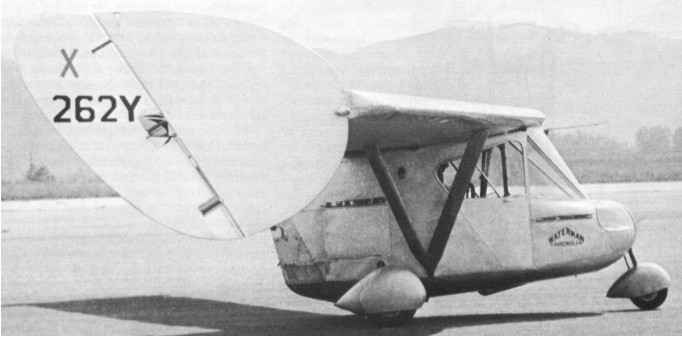
In 1967 Waterman produced the W-11 Chevy Bird N262Y, his 11th design, as test bed for Chevrolet Corvair motor car engine. An open cockpit high wing monoplane, power was a 140hp Corvair engine. It was open frame fuselage; wings and tail from a Cessna 140.
The Chevy Bird was later fitted with floats and promptly christened Chevy Duck N262Y.
The W-11 designation wasn’t changed when it became a seaplane.
The NTSB website mentions the W-12 as N6039, an airplane that was damaged during tests in 1971 with Waterman himself on board.
There is clear mention of the W-12 as a landplane:
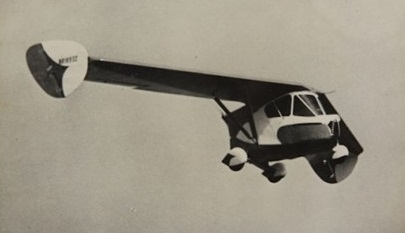
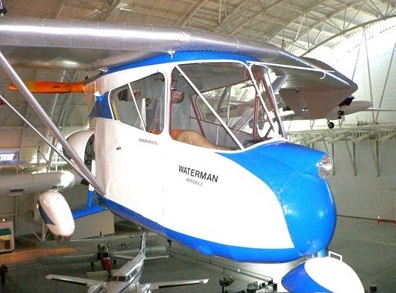
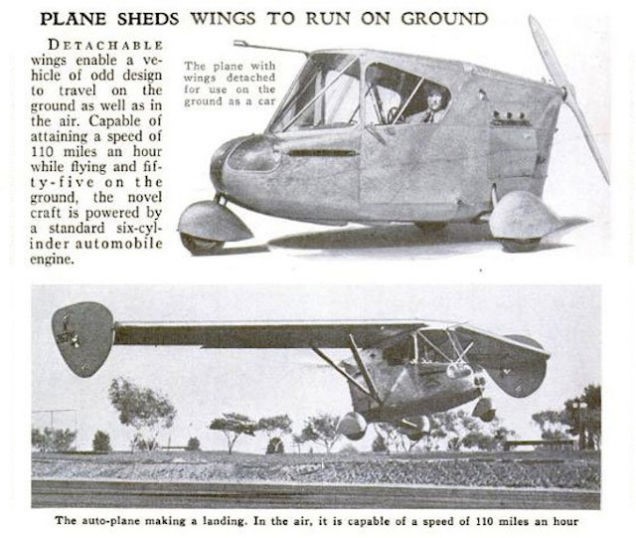
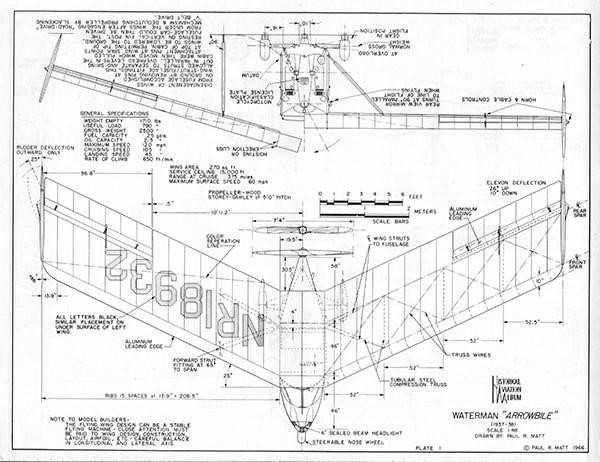
Waterman had worked with Glenn Curtiss on the Autoplane in his early days, and the notion of roadable aircraft had stuck with him. The W-4 Arrowplane was not intended for production or to be roadable, but its success in the Vidal competition encouraged Waterman to form the Waterman Arrowplane Co. in 1935 for production of a roadable version. The resulting Arrowbile, referred to by Waterman as the W-5, was similar both structurally and aerodynamically to the Arrowplane, though the fins differed in shape, with rounded leading edges and swept-back rudder hinges. For road use the wings and propeller could be quickly detached. The main other differences were in engine choice, the need to drive the wheels and to use conventional car floor-type controls on the road. The air-cooled Menasco was replaced by a water-cooled 6-cylinder engine as used by most cars. Waterman modified a 1937 Studebaker Commander 6 upright, 100 hp (75 kW) Studebaker unit and placed it lower down in the pod, driving the propeller shaft at the top of the fuselage. The water cooled 100 hp engine was mounted above the rear wheels, which it drove through chain belts with a 1.94:1 speed reduction for forward movement and a friction clutch in reverse, while a pusher propeller was driven via six vee belts which were tightened for flight by a clutch pulley. The radiator was in the forward fuselage, fed from a duct opening in the extreme upper nose. On the ground the engine drove the main wheels through a differential gear, as normal, and the car was steered by its nosewheel. The wheels were enclosed in fairings, initially as a road safety measure. Instead of removing the propeller for the road, it could be de-clutched to prevent it windmilling the engine at speed.
Waterman built a compact, two seat, tricycle wheeled car/fuselage of steel tube and aluminium alloy. The wheel in the two-seat cabin controlled the Arrowbile both on the road and in the air. Outer wing elevons moved together to alter pitch and differentially to bank. The rudders, interconnected with the elevons when the wheel was turned, moved only outwards, so in a turn only the inner rudder was used, both adjusting yaw as normal and assisting the elevon in depressing the inner wing tip. This system had been used on the Arrowplane as a safety feature to avoid the commonly fatal spin out of climb and turn from take-off accident but the raked rudder hinge of the Arrowbile provided the banking component even from a nose-down attitude. There were no conventional flaps or wing mounted airbrakes but the rudders could be operated as brakes by opening them outwards together with a control independent of the wheel. The cabin interior was designed to motor car standards, with easy access and a baggage space under the seats.
He named his machine the Arrowbile, and to make it more attractive and familiar to non-flying drivers he further cannibalized the Studebaker for the dashboard, seats and steering wheel, the last of which hung from the roof and controlled the aircraft’s wingtip mounted elevons, rudders and the steerable nosewheel.
The Arrowbile’s wings housed all the machine’s control mechanisms and could be detached or hooked up for flight in just three minutes. During tests it cruised at speeds in excess of 160 kph (100 mph) in the air and 72.5 kph (45 mph) on the ground. The Studebaker Corporation with an offer to sell Arrowbiles through their dealer network at $3,000 apiece. Waterman set up a factory in Santa Monica and started building five examples for Studebaker’s salesmen to demonstrate throughout the United States. After the success of the Arrowplane (W-4), the engineer built the W-5, which had easily detachable wings, and a propeller. It could fly at 112 mph (180 kph) and drive at 56 mph (90 kph), thanks to its 100 hp Studebaker engine.
The Arrowbile first flew on 21 February 1937, making it a close contemporary of the Gwinn Aircar, and a second prototype with a number of minor modifications followed. Studebaker were interested in the Arrowbile because of the use of their engine and ordered five. The third Arrowbile was the first of this order. The Arrowbile euphoria faded with the 1938 recession with no more production aircraft completed. The production aircraft had several changes, some of which aimed to emphasise the similarities with cars; there was a radiator grille with a single headlight centrally above it and also car type doors and petrol filler cap.
Stall- and spin-proof, its simplicity of operation was underscored when DoC’s John Geisse, with only 35 hours’ flight experience, flew one back to Washington DC in his business suit.
Waterman found that each aircraft planned to sell for $3,000 was cost¬ing him $7,000 to build, and Studebaker pulled out of the deal. Before another backer could be found the Japanese attack¬ed Pearl Harbor, and it was not until 1948 that Waterman began work on his seventh, and final Arrowbile N54P. He replaced the Stude¬baker engine with a Tucker auto engine (Franklin converted to liquid-cooled), renamed it Aerobile, and donated the craft to the Smithsonian Institution in Washington, D.C., where it remains.
The three built were NX262Y, NR16332, and NR18932, and three more were finished in 1939. Waldo Waterman built six W-5 Arrowbiles and called them #1 through #6, which did not correspond with their c/ns. Waterman tells in his memoirs that #1, #2, and #3 were completed in 1937 and flown to Cleveland for an appearance during the races. On the way, #1 was damaged in a forced landing in Arizona and was transported back to the Santa Monica, but the others made it.
Arrowbile #4 was modified, probably on Waldo’s “assembly line,” to a non-roadable version with the wing from #1, and retaining the Studebaker engine. Called #4/1, it was probably N262Y..
In July 1938, Waterman was hospitalized with a ruptured appendix, and it took him a year to fully recover. In 1940, he bought back #4/1 from Studebaker, who owned it. Register of 2/15/41, has: NX262Y Waterman W-6; Waterman Studebaker 81G 100hp. No c/n.
In 1941, he installed an air-cooled 120hp Franklin in #4/1 and, in 1943, fitted slotted flaps. Later he revised the #5 wings into a one-piece cantilever wing and fitted that to old faithful #4. The #5 fuselage became a test rig to try out a tail rotor system for a Convair helicopter. The parts for #6 were re-worked after the war to become Aerobile N54P with a water-cooled Tucker-Franklin engine.
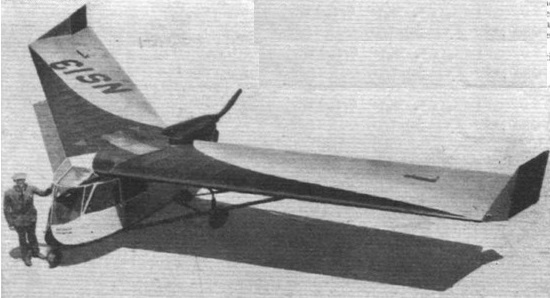
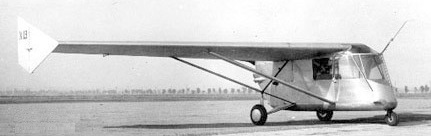
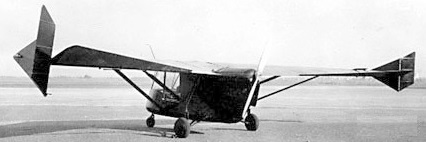
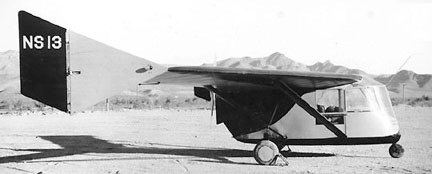
In May 1935 Waterman completed a submission to the government funded Vidal Safety Airplane competition. This was the Arrowplane, sometimes known as the W-4. Built with WPA subsidy established by CAA head, Eugene Vidal (father of author Gore Vidal), this adopted a similar layout to the Whatsit but had a strut-braced high wing on a blunt-nosed, narrow fuselage pod with a tricycle undercarriage mounted under it. Its wings had wooden spars and metal ribs and were fabric covered, with triangular endplate fins carrying upright rudders. Its fuselage was steel framed and aluminium covered. It was powered by a 95 hp (71 kW) inverted inline 4-cylinder Menasco B-4 Pirate pusher engine mounted high in the rear of the fuselage.
First flying on 21 Febuary 1936, the Arrowplane NX/NS13 was not intended for production or to be roadable, but its success in the Vidal competition encouraged Waterman to form the Waterman Arrowplane Co. in 1935 for production of a roadable version. The resulting Arrowbile, was referred to by Waterman as the W-5.
The W-4 accumulated more than 100 hours flight time before being intentionally (if not mysteriously) destroyed by a CAA official in 1937.
Engine: Menasco B-4 Pirate, 95 hp / 71 kW Stall: 40 mph Landing run: 30 ft Seats: 2



 All Aero