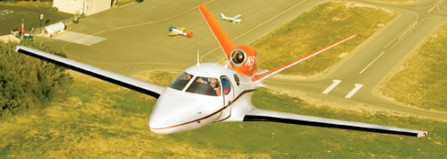
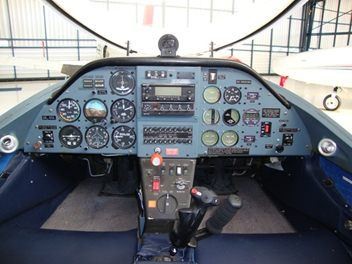
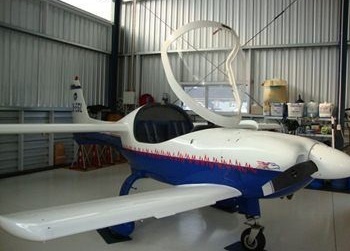
The Eclipse 400 seats four and cruises at 41,000 feet, three miles above its closest competition. Its robust v-tail design provides superior handling and its gold standard Pratt & Whitney Canada PW615F engine produces exceptional thrust and envious fuel economy.
Engines: 1 x Pratt & Whitney Canada PW615F Length; 29.0 ft Height; 8.8 ft Wingspan; 36.0 ft Max cruise speed (FL350); 330 ktas Long range cruise speed (FL400); 290 ktas Max range (FAA IFR + 45-min reserve); 1,250 nm Service Ceiling; 41,000 ft Time to Climb to FL250; 13 min Time to Climb to FL350; 22 min Stall Speed (VSO); 61 kt Takeoff Distance to 50 ft. (Sea level, ISA, MGTOW); 2,045 ft Landing Distance (Sea level, ISA, Max landing weight); 2,100 ft Seats: 1 + 3 Baggage Capacity, Interior; 18 cu ft Baggage Capacity, Exterior; 14 cu ft
The Technological Research Institute constituted the technical base on which Companhia Aeronáutica Paulista emerged. The Institute designed two aircraft that came to be manufactured in series by this company, in addition to designing the Paulistinha aircraft, it was the Paulistinha project, passed on to Companhia Aeronáutica Paulista (CPA) together with the Planalto plane that generated the first royalties paid to the IPT.
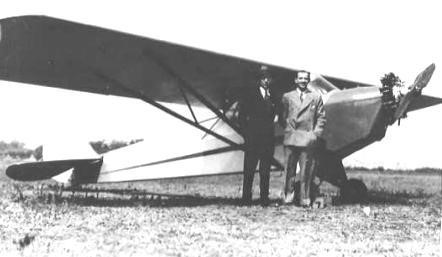
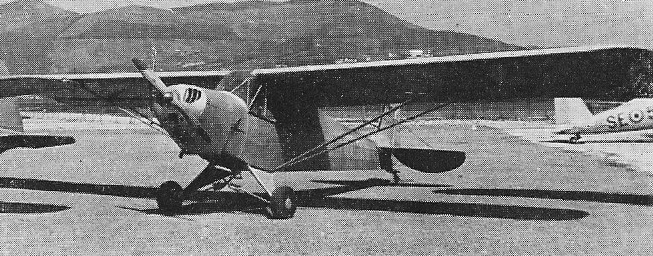
Originally developed by Empresa Aeronáutica Ypiranga (EAY) as an unlicensed copy of the Taylor Cub powered by a Salmson 9Ad radial engine, the EAY-201 featured a high strut-braced wing, two enclosed tandem seats, and a steel-tube fuselage with fabric covering. Its tailwheel undercarriage was not retractable.
Empresa Aeronáutica Ypiranga EAY-201
First flown in 1935, EAY had built five examples by the time that the firm was purchased by Companhia Aeronáutica Paulista (CAP) in 1942. CAP continued manufacturing the type under the designation CAP-4 with a 65 hp Franklin engine.
The Paulistinha was produced in three versions. The CAP 4 Tourer, the CAP 4B ambulance aircraft, and the CAP 4C military observation monoplane. The CAP 4C had a cut-down rear fuselage with the side windows extended aft.
Production of the Paulistinha was stopped in 1948, when the Paulistta company experienced financial difficulties, and resumed in 1956 by the Sociedade Construtora Aeronautica Neiva as the Pulistinha 56 (90 hp Continental C90-8F) and 56-B (100 hp Lycoming). The Paulistinha 56-C appeared in 1958, and 210 had been delivered by mid-1963. The Paulistinaha L-6 (100 hp Lycoming) was a liason version for the Brazilian Air Force, 19 being delivered in 1959.
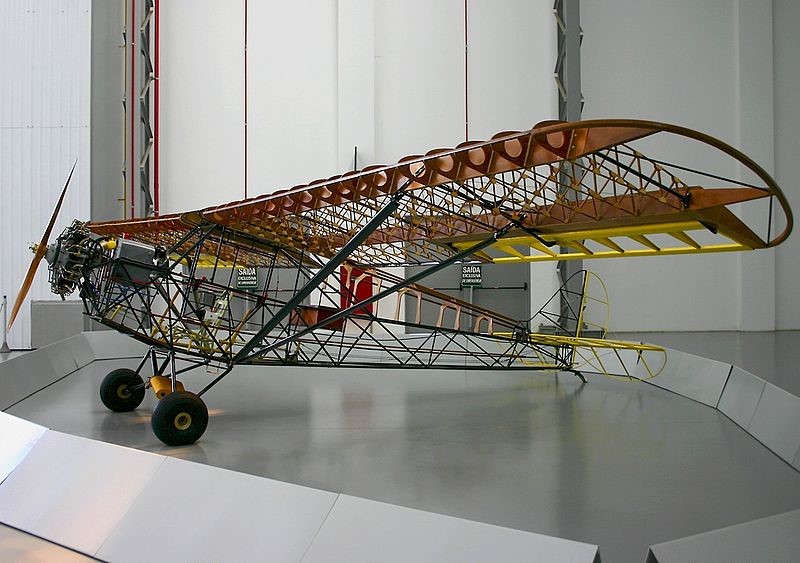
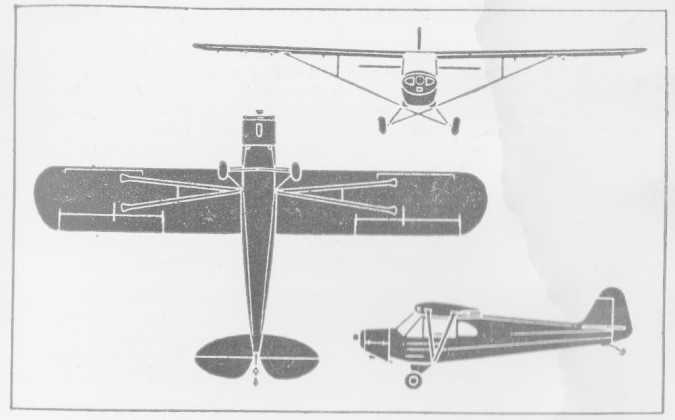
CAP 4
The type was widely successful, with nearly 800 units being produced for Brazil’s flying clubs and armed forces, as well as for export to Argentina, Paraguay, Chile, Uruguay and Portugal. At the time of peak production in 1943, a new CAP-4 left the factory every day, and production continued until 1948 when the company enter financial difficulties.
Brazilian Navy CAP-4 preserved at the Museu Asas de um Sonho
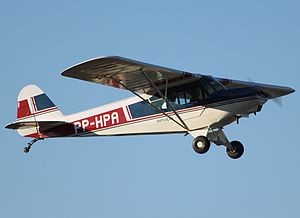
In 1956, Sociedade Aeronáutica Neiva (Neiva) acquired the rights renaming it to P-56 Paulistinha, the design was used as the basis for an agricultural aircraft, the P-56 Agricola, adding a fibreglass chemical hopper and spraybars, but this was unable to compete with imported, purpose-built agricultural aircraft.
In dimensions and characteristics, it is similar to the last series of the Paulistinha CAP-4 produced by Companhia Aeronáutica Paulista , from which Neiva acquired the rights, launching a new version, named Paulistinha 56 or Neiva 56.
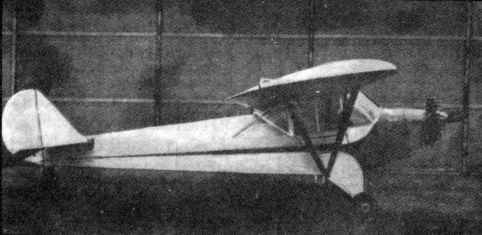
First flying in 1955, the Neiva P-56 Paulistinha could be equipped with a Continental C-90-8F or C90-12F engine, which could develop up to 115hp at 2625 RPM. A total of 256 were built
Its fuel system consists of two gas tanks, one at the top of the cabin and the other between the instrument panel and the engine fire wall, before entering the carburetor the gasoline passes through a filter and decanter type “cup” “.
Neiva P-56 Paulistinha
The Brazilian Air Force operated this aircraft between 1959 and 1967, with the military designation L-6 . It was used in bombing connection, observation and calibration missions. Paraguayan Military Aviation bought four aircraft in the early 1960s. The Paraguayan Aeroclub bought four aircraft in the 1950s
In total about 840 were built.
Variants:
EAY-201 original version Engine: Salmson 9Ad Seats: 2
CAP-4 Paulistinha main production version Engine: 1 × Franklin 4AC, 48 kW (65 hp) Wingspan: 10.10 m (33 ft 2 in) Wing area: 17.0 m2 (183 sq ft) Length: 6.65 m (21 ft 10 in) Height: 1.95 m (6 ft 5 in) Empty weight: 320 kg (705 lb) Gross weight: 540 kg (1,190 lb) Fuel capacity: 58 L (15 US gal; 13 imp gal) Maximum speed: 155 km/h (96 mph, 84 kn) Cruise speed: 140 km/h (87 mph, 76 kn) Range: 500 km (310 mi, 270 nmi) Service ceiling: 4,000 m (13,000 ft) Rate of climb: 3.1 m/s (610 ft/min) Crew: Two, pilot and instructor
CAP-4B air ambulance version (2 prototypes built) Engine: 1 × Franklin 4AC, 48 kW (65 hp) Wingspan: 33 ft 2 in Length: 21 ft 10 in Height: 6 ft 4.75 in Empty weight: 706 lb Loaded weight: 1190 lb Max speed: 96.5 mph Cruise: 87 mph ROC: 610 fpm Range: 311 mi
CAP-4C artillery-spotting version, (Paulistinha Rádio or Paulistinha Observação) Engine: 1 × Franklin 4AC, 48 kW (65 hp) Wingspan: 33 ft 2 in Length: 21 ft 10 in Height: 6 ft 4.75 in Empty weight: 706 lb Loaded weight: 1190 lb Max speed: 96.5 mph Cruise: 87 mph ROC: 610 fpm Range: 311 mi
P-56 Agricola agricultural version by Neiva 60 built
Neiva P-56 Paulistinhab Engine: Continental C90-8F, 90 hp Wingspan: 10.8 m (35 ft 4 in) Wning area: 183 sq.ft Length: 6.90 m (22 ft 2 in) Height: 1.95 m (6 ft 5 in) Empty weight: 882 lb MTOW: 1455 lb Max speed: 100 mph at SL Cruise: 90 mph ROC: 875 fpm Ceiling: 19,685 ft Range: 560 mi Endurance: 4 hrs
Neiva Paulistinha 56-C Engine: Continental C-90-8F/12F, 90 hp (67 kW) Seats: 2 256 built by between 1958 and 1964.
P56C-1 Paulistinha Rebocador
Paulistinha 56-D Engine: Lycoming O-320-A1A, 150 hp (110 kW) Single prototype built Brazilian Air Force designated L-6A No production.
Leonard designed and built Skeeter, a two-place composite airplane, in the early 1960s, and test-hopped Skeeter in September 1966 at Wiley Post Airport.
Leonard R. Eaves, EAA Lifetime 2194, who lost his life in the crash of his Skeeter 1M homebuilt on Saturday, March 3, 2012. He was reportedly en route to a pancake breakfast in Ponca City, Oklahoma, when the crash happened on the Clarence E. Page Airport near Yukon, Oklahoma. Leonard was 92, and was survived by his wife, Rita.
This machine is a biplane of the Bleriot type, except that it has sliding planes at the wing tip for securing lateral stability. This machine has been making small jumps for a couple of weeks. It is equipped with a Ford automobile engine of 22 1/2 h.p., four-cylinder, water-cooled. The power plant weighs 200 pounds, and the whole machine 700 pounds, including the aviator. Warren S. Eaton was driving the machine when it went over on to its nose. It was running on the ground at the rate of 25 miles per hour when the front axle broke. As the tail was high in the air at the time, the tips of the skids stuck in the ground, and it ended up as shown. Mr. Eaton was thrown into the framework, but escaped unhurt.
The Tyro is a high wing strut braced tail dragger. Construction is of aluminium with a constructed main spar, pressed ribs and stressed skin leading edge. Structual members are all bolted or pop riveted with no welding required. Covering is fabric material stretched over the frame. Undercarriage suspension has bungee rubbers on main wheels. Aircraft can be assembled and disassembled in seven minutes for storage and trailering. A cockpit pod has been included for pilot protection.
June 1997
Mk.II Engine: Rotax 447, 43 hp. Prop: 68 cm x 28 cm pitch. Wing span: 8.9 m, 10.5 sq m. Length: 5.33m. Weight: 113kgs. Fuel capacity: 20 ltr. Econ cruise speed: 56 kts. Stall: l9kts. Construction time: 100 hrs. ROC 1100 fpm.
Side by side two-seater. Push right go right nosewheel steering connected to yaw control. Aluminium tube framework without pod. The prototype Snoop two seater was first shown in August 1982 at Oshkosh and was available as a kit requiring 40h for assembly. The wing has been enlarged compared with the Snoop and Snoop+.
The prototype was fitted with a Cuyuna 430R but the Eastern Ultralight brochures mention the Snoop II as being fitted with the new two cylinder ULII 02 from the same manufacturer, with a tuned exhaust and producing up to 45 hp. Not being classifiable as a microlight in the USA (its empty weight is 268 lb), this dual control two seater with centre mounted throttle needs a pilot who is a licence holder.
Engine: Cuyuna 430R, 40 hp. Prop¬eller diameter and pitch 54×27 inch, 1.37 x 0.68 m. Belt reduction, ratio 2.0/1. Power per unit area 0.23 hp/sq.ft , 2.5 hp/sq.m . Fuel capacity 5.0 US gal, 4.2 Imp gal, 18.9 litre. Length overall 17.2 ft, 5.23 m. Height overall 8.6ft, 2.59m. Wing span 39.0ft, 11.88m. Constant chord 5.0ft, 1.52m. Dihedral 7 deg. Sweepback 0 deg. Total wing area 195sq.ft, 18.1sq.m. Total spoiler area 3.0 sq.ft, 0.28 sq.m. Rudder area 6.0 sq.ft, 0.56 sq.m. Total elevator 6.0 sq.ft, 0.56 sq.m. Wing aspect ratio 7.8/1. Wheelbase 6.7 ft, 2.04 m. Nosewheel diameter overall 12 inch, 30 cm. Main wheels diameter overall 14 inch, 35 cm. Floats, dimensions 11 x 2 ft, 3.35 x 0.61 m. Skis, dimensions 4 x 1 ft, 1.22 x 0.30 m. Empty weight 268 lb, 122kg. Max take off weight 688 lb, 312kg. Payload 420 lb, 190kg. Max wing loading 3.52 lb/sq.ft, 17.2 kg/sq.m. Max power loading 15.3 lb/hp, 6.9kg/hp. Load factors +5.5, 3.5 design; +6.0, 4.0 ulti¬mate. Max level speed 50 mph, 80 kph. Never exceed speed 55 mph, 88kph. Max cruising speed 45mph, 72kph. Economic cruising speed 40mph, 64kph. Stalling speed 17 mph, 27 kph. Max climb rate at sea level 600ft/min, 3.0m/s. Take off distance 100 ft, 30 m. Landing distance 125 ft, 38 m. Service ceiling 10,000 ft, 3050 m. Range at average cruising speed 100 mile, 160 km.
Roll control by ailerons. Double surface wing with flaps. Presented at the Sun ‘n’ Fun in March 1983 the Snoop+ model differs from the Snoop by having a smaller span double surface wing fitted with ailerons and flaps. Like the earlier model, it also uses the Cuyuna ULII 02 with a tuned exhaust. The options are the same as those offered on the Snoop. As would be expected, the Snoop+ wing is much more costly to build than a single ¬surface design and as a result the Snoop+ cost exactly $1000 more than the Snoop: $5790 in 1982.
Engine: Cuyuna ULII 02, 35 hp at 6200 rpm. Propeller diameter and pitch 54×27 inch, 1.37 x 0.68 m Belt reduction, ratio 2.0/1. Max static thrust 200 lb, 91 kg. Power per unit area 0.23hp/sq.ft, 2.5 hp/sq.m. Fuel capacity 5.0 US gal, 4.2 Imp gal, 18.9 litre. Length overall 16.2 ft, 4.90 m. Height overall 8.6ft, 2.59m. Wing span 30.0ft, 9.14m. Constant chord 4.0ft, 1.22m. Dihedral 1deg. Sweepback 0 deg. Total wing area 150 sq.ft, 13.9sq.m. Total aileron area 20.0sq.ft, 1.86sq.m. Rudder area 6.0sq.ft, 0.56sq.m. Total elevator area 6.0 sq.ft, 0.56 sq.m. Wing aspect ratio 5.9/1. Wheelbase 5.6 ft, 1.67 m. Nosewheel diameter overall 12 inch, 30 cm. Main wheels diameter overall 14 inch, 35 cm. Floats, dimensions 9 x 2 ft, 2.74 x 0.61 m. Skis, dimensions 3 x 1 ft, 0.91 x 0.30 m. Empty weight 248 lb, 112kg. Max take off weight 528 lb, 239 kg. Payload 280 lb, 127 kg. Max wing loading 3.5 lb/sq.ft, 17.1 kg/sq.m. Max pow¬er loading 15.1 lb/hp, 6.82 kg/hp. Load factors +5.5 3.5 design; +6.0, 4.0 ultimate. Max level speed 60 mph, 97 kph. Never exceed speed 63 mph, 101 kph. Max cruising speed 55 mph, 88 kph. Economic cruising speed 45mph, 72kph. Stalling speed 25 mph, 40 kph. Max climb rate at sea level 1000ft/min, 5.1m/s. Take off distance 100 ft, 30 m. Landing distance 150 ft, 45 m. Service ceiling 10,000 ft, 3050 m. Range at average cruising speed 175 mile, 281 km.
Single seat single engined high wing monoplane with conventional three axis control. Wing has unswept leading and trailing edges, and constant chord; cruciform tail. Pitch control by elevator on tail; yaw control by fully flying rudder; roll control by one third span spoilers; control inputs through stick for pitch/roll and pedals for yaw. Wing braced from above by kingpost and cables, from below by cables; wing profile single surface. Undercarriage has three wheels in tricycle formation; with additional tailskid; tension bar suspension on all wheels. No ground steering. No brakes. Aluminium tube framework, with optional pod. Engine mounted above wing driving pusher propeller.
The prototype of the Snoop single seater was shown at Sun ‘n’ Fun at Lakeland, Florida, in 1981, though at that time it had not made its first flight. At that time it was a two axis ultralight without spoilers and with a different structure and tail surfaces from the eventual production model. After several important modifications, it is today offered in the form of a kit requiring 30h for assembly, according to Eastern Ultralights. At Sun ‘n’ Fun in March 1983, Eastern Ultralights announced the replacement of the Cuyuna 430R engine, previously standard on the Snoop, with the new ULII 02 from the same manufacturer. Options available are floats, skis, a pod, completely closed cockpit, wheel fairings, electric start and a strobe. Price in 1982 $4790 as kit.
Engine: Cuyuna ULII 02 Max power 35 hp at 6200 rpm. Prop¬eller diameter and pitch 54×27 inch, 1.37×0.68m. V belt reduction, ratio 2.0/1. Max static thrust 200 lb, 90.6 kg. Power per unit area 0.21 hp/sq.ft, 2.3 hp/sq.m. Fuel capacity 5.0 US gal, 4.2 Imp gal, 18.9 litre. Length overall 16.2 ft, 4.90 m. Height overall 8.6ft, 2.59m. Wing span 33.0ft, 10.05m. Constant chord 5.0ft, 1.52m. Dihedral 7 deg Sweepback 0 deg. Total wing area 165 sq.ft, 15.3sq.m. Total spoiler area 3.0sq.ft, 0.28sq.m. Rudder area 6.0 sq.ft, 0.56sq.m . Total elevator area 6.0 sq.ft, 0.56 sq.m. Wing aspect ratio 6.6/1. Wheelbase 5.6 ft, 1.67 m. Nosewheel diameter overall 12 inch, 30cm. Main wheels diameter overall 14 inch, 35 cm. Floats, dimensions 9 x 2 ft, 2.74 x 0.61 m. Skis, dimensions 3 x 1 ft, 0.91 x 0.30 m. Empty weight 238 lb, 108kg. Max take off weight 518 lb, 235kg. Payload 280 lb, 127kg. Max wing loading 3.2 lb/sq.ft, 15.3 kg/sq.m. Max pow¬er loading 14.8 lb/hp, 6.7 kg/hp. Load factors +5.5, 3.5 design; +6.0, 4.0 ultimate. Max level speed 50 mph, 80 kph. Never exceed speed 55 mph, 88 kph. Max cruising speed 45 mph, 72 kph. Economic cruising speed 40 mph, 64 kph. Stalling speed 18 mph, 29 kph. Max climb rate at sea level 600ft/min, 3.0m/s. Take off dist: 75 ft, 23 m. Landing distance 100 ft, 30 m. Service ceiling 10,000 ft, 3050 m. Range at average cruising speed 125 mile, 201 km.
Mark Beierle designed a stall and spin resistant aircraft with responsive ailerons provide roll control throughout a stall. Of all metal construction, the Thunder Gull 2000 and Odyssey models maintain the same control. All of the Earthstar Aircraft models are fun cross-country machines and have been flown from coast-to-coast many times. Flight tested to a G loading of +5.9 and -3 and are designed to +6 and -4 yield. The ultralight model has been certified to meet the FAA FAR-103 requirements. VNE for all models is 120 mph. Options include engine, instruments, propeller, side windows, and parachute. Available as a kit or ready to fly. All kits can be registered Experimental LSA. The Thunder Gull J first flew in March 1987. The two seat Thunder Gull JT2 had removable wings and first flew in June 1989. The Soaring Gull has a cantilevered removable wing. The wingspan is 8 feet longer than the Thunder Gull J. The Soaring Gull first flew in November 1993. The Soaring Gull was available in kit form (and also as a finished product) at US $10,580.
The Odyssey first flew in April 1995 and features staggered, side-by-side seating to provide more useable cockpit space.
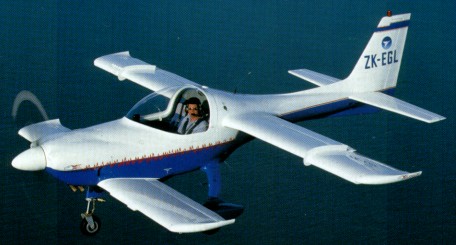
The original design came from an American, John Roncz, who had worked with Burt Rutan on numerous projects. The first flight of the Eagle 150A was in March 1988 using an Aeropower engine. The Eagle 150A was certified on 13 November 1996 and a total of fifteen were built with sales in Perth, Sydney and Asia. The 150B Model was certified in Australia on 11 November 1997, FAA certification followed on 11 February 1999, and its New Zealand Type Acceptance Certificate was issued on 5 May 1999. Apart from the limited use of fasteners, brackets and control system components, the 150B structure is made entirely of aerospace grade composites, such as kevlar, carbon fibre, nomex and fibreglass. Most of the structure is of a sandwich type construction with carbon fibre laminates separated by a nomex core. Kevlar is used around the cockpit area to improve the crashworthiness of the aircraft. The undercarriage “bow” is made of fibreglass as it is more flexible than carbon fibre. The basic fuselage consists of two sub-assemblies — the forward fuselage is the canard, cockpit area and the mainplane and the rear fuselage is the horizontal and vertical stabiliser. These are joined just be¬hind the fuel tank which is located behind the seat-back bulkhead — and are fastened by a ring of structural screws accessible from the outside. This allows the aircraft to be broken down in under half an hour to be placed on a trailer. Fuel from the tank feeds directly to the engine through an engine-driven mechanical pump. A two-stage pump is provided to supply both low pressure and emergency fuel flow. The canard and the mainplane are structurally integral with the forward fuselage and are bonded into place during assembly of the forward fuselage. Similarly, the vertical stabiliser is part of the rear fuselage and can not be subsequently removed.
150B
The flight controls are operated from a centrally located “jet fighter” style control column, which has trigger to talk, a button to change radio channels and a hat switch for the electric elevator trim. The 150B is comfortable to fly with a central padded arm rest to lean on when in control and good air vents are found on the edge of the instrument panel. The aircraft’s two sets of rudder pedals are individually adjustable through a switch on the cabin wall console that operates an electric actuator. Pitch control is achieved through a conventional elevator fitted to the horizontal stabiliser — no elevator is fitted to the canard. All surface controls are operated through pushrods and not pulleys and cables. A pitch trim indicator for the electrical elevator trim tab is found on the instrument panel. Like the pitch, control of yaw is through a conventional rudder fitted to the vertical stabiliser. The rudder control is combined with the brake system and is unconventional in that the brake action is not associated with a pedal rotation, that is, toe brakes. The aircraft is fitted with a fixed tricycle undercarriage with a free-castoring nose wheel. The first movement on the pedal (about 5 cm of travel) operates the rudder in the conventional way and further pressure begins the application of the main wheel brakes; when force is applied to both pedals simultaneously both wheel brakes act together. This is new to a lot of pilots and it is very important to feel the pedal forces. Ailerons are fitted to the outer section of the mainplanes and, as expected, these provide roll control. An aileron trim, found on the central console, uses a small torque tube to offset the centre position of the control column in the roll. The 150B has trailing-edge slotted flaps fitted to both the canard and the mainplane which are lowered or raised by a switch (duplicated on both sides of the instrument panel). All four flap segments are interconnected and are operated by a single electrical actuator driving a pushrod mechanism. The electric flaps are continuously variable and are rather different with coloured marks on the inboard face of the canard tips indicating their position. This will be changed to a light indicator on the panel (which will be retrofitted). The one-piece, front hinged canopy offers excellent visibility and requires most pilots to take a hat for protection from the sun. The canopy can be secured in a partly open position for taxiing during hot days and when the canopy is closed it is locked by a single lever behind the pilot’s head.
Approved maneuvers are normal flying, stalls and lazy eights, chandelles and step turns in which the angle of bank is not more than 60 degrees. With the flaps retracted, limits are ±3.8g and -l.9g, but there are plans for this be increased to +8.8g and -4.3g.The Eagle 150 had the MTOW increased from 640 kg to 650 kg by the Australian CASA. Manufacturing of the Eagle 150 moved to Malaysia.
Eagle 150B Engine: Teledyne Continental IO-240B, 125 hp. TBO: 2000 hrs Fuel type: 100/100LL Prop: McCauley fixed. Seats: 2. Height: 7 ft 7 in (2.32m). Main wingspan: 23 ft 6 in (7.16m). Wing area: 95 sq. ft Wing loading: 14.5 lb/sq.ft. Canard wingspan: 16 ft (4.88m). Pwr loading: 11.2 lb/hp. Overall length: 21 ft. 2 in. Height: 7 ft. 7 in. Wheel base: 4 ft. 7 in. Wheel track: 6 ft. 4 in. Seating capacity: 2 Cabin width (in.): 42 Cabin height (in.): 32 Baggage capacity (lbs.):80 Empty wt: 941 lbs (427 kg). MTOW: 1430 lbs (650kg). Useful load: 489 lbs (223kg). Payload with full fuel: 333 lbs (151 kg). Max ramp weight: 1430 lb Max landing weight: 1430 lb Ave fuel consump: 23 lt/hr. Fuel cap Total: 100lt (156 lbs, 71 kg), Useable fuel: 97lt / 153 lb / 69.5 kg / 26 US gal Endurance With res: 2.8 hr. Max range (w/ reserve) 75% power: 520 nm Baggage cap: 100 lbs (45 kg). Take-off dist (ground roll): 834 ft. Take-off dist (50-ft): 1145ft. ROC: 1051 fpm@ 77 kts. Max X-wind: 15 kt. Max level speed: 130 kts. Cruise speed @ 75% power: 120 kts @ 2000 ft. Ldg dist (ground roll): 513 ft. Ldg dist (50ft): 1198ft. Service ceiling: 15,000 ft Vx (best angle of climb): 74 KIAS. Vy (best rate of climb): 77 KIAS. Va (manceuvring): 106 KIAS. Vfe (max flaps): 89 KIAS. Flaps (0-20 degrees): 104 KIAS. Vno (max structural cruise): 129 KIAS. Vsi (stall clean): 55 kts. Vso (stall): 45 kts (full flaps). Vne: 165 knots Landing gear type: Tri/Fixed Price: $119,000