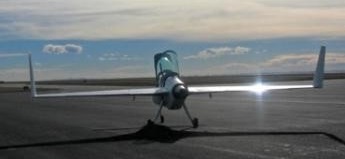
Outwardly reminiscent of the Long EZ, the new composite canard used the Burt Rutan design as a starting point. Added to the aerodynamic appeal is fully retractable landing gear, split canopies, a 205 hp engine and a longer, wider pre moulded fuselage. Named after the Berkut (Berkoot), a Russian Golden Eagle, by designer Dave Ronnenberg, the new craft uses a Lycoming 0 360 to provide a cruise of 208 knots indicated at 8000 feet on 2840rpm. Constructed of carbon fibre and fibreglass a balsa core sandwich with a safety epoxy matrix the canard pusher has an overall length of some 18 foot 6in. The cockpit features a sidearm controller/stick with HOTAS (Hands On Throttle and Stick Controls). Going through its test programme in 1991 with manufacturing company Experimental Aviation, the aircraft has a claimed range of 1,400 nm at 65 percent power. Other preliminary specifications include a 2000 fpm ROC, 54 knots minimum controllable airspeed gear down, an endur¬ance of 5.5 hours at 65 percent power, a ceiling of 35,000 feet, maximum useful load of 965 lbs and an empty weight of 1,035 lbs.
The prototype Berkut was designed and built by Dave H. Ronneberg and Kerry Beresford.
Like the Long EZ, the Berkut carries 2 people in tandem seats. The front seat occupant has access to all instrumentation and controls. The rear seat, normally holding the passenger, is equipped with a side stick and throttle, but no rudder pedals, brakes, or instruments.
Out of 57 kits sold by 1998, 7 were finished.
Builder Jerrold Jorritsma installed a General Electric T-58 jet engine in his Berkut.
It was destroyed following an engine failure in Loveland, CO, May 9, 2010.
Engine: Lycoming IO-360-B1A, 205 hp. HP range: 180-205. Height: 7.5 ft. Length: 18.5 ft. Wing span: 26.67 ft. Wing area: 110 sq.ft. Weight empty: 1035 lbs. Gross: 2000 lbs. Fuel cap: 58 USG. Speed max: 250 mph. Cruise: 209 mph. Range: 1228 sm. Stall: 62 mph. ROC: 2000 fpm. Take-off dist: 1000 ft. Landing dist: 1000 ft. Service ceiling: 29,500 ft. Seats: 2. Landing gear: retractable nose wheel.
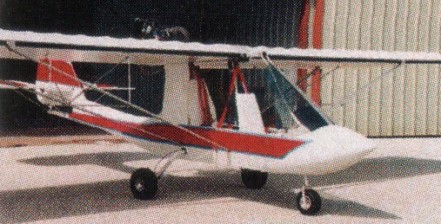
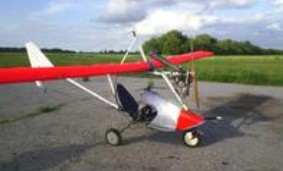
Four versions of this aircraft (LSA) were produced: the standard series and the wide body model, the stretch model and four stroke model. The kit for the Excalibur II features prebuilt tail surfaces, wings, ailerons end fuselage, and all the controls are already installed. Build time for the kit is estimated at 100 to 200 hours. Options include: 60-hp HKS 700E air-cooled 4-stroke or 4O-hp Rotax 447 air- cooled 2-stroke engine, instruments (ASI, altimeter, tach, dual CHT dual EGT, panel-mounted compass, ignition switch), standard or amphibious floats, fiberglass wheel pants, BRS ballstic emergency parachute, doors, strobe lights and paint materials. Construction is 6061-T6 and 2024-T3 aluminum tube airframe with chromoly steel weldments where needed, stainless steel pop rivets and AN or military spec hardware. Wings and surfaces are covered with Superflite fabric. No welding or machining is necessary and all the critical work is completed at the factory.
Standard Engine; Rotax 503 (52HP) Wingspan; 31 ft. 6 in. Chord; 60 in Length; 20 ft. 0 in. Height; 6 ft. 0 in. Wing area; 185 sq.ft. Empty weight; 450 lbs. Useful load; 500 lbs. MTOW; 900 lb Ultimate load factor; +6 -4 Build time; 100-200 hours Field assembly time; 20 min. VNE; 100 mph Top level speed; 90mph Cruise speed; 50-90 mph Stall speed; 30-35 mph Climb rate; 1200 fpm solo, 700 ft. dual Take off roll; 96 ft.solo, 196 ft. dual Glide ratio; 11:1 solo, 9:1 dual Service ceiling; 14,000 solo, 12,500 dual Range; 290 sm Fuel used at cruise; 2.3 gph to 4 gph Fuel capacity; 10 gal. (U.S.) Cockpit width Standard Body; 26 inches Seats: 2 Tandem Undercarriage; nose wheel LSA
Excalibur Wide Body Engine: Rotax 503, 52 hp HP range: 52-65 Cruise: 80 mph Stall: 33 mph Range: 290 sm Rate of climb: 1200 fpm Takeoff dist: 100 ft Landing dist: 300 ft Fuel capacity: 20 USG Empty weight: 450 lb Gross weight: 950 lb Length: 20 ft Wing span: 32 ft Wing area: 183 sq.ft Cockpit width: 31 in Seats: 2 Landing gear: nose wheel LSA
Excalibur Four Stroke Engine: Rotax 582, 65 hp Cruise: 80 mph Stall: 33 mph Range: 290 sm Rate of climb: 1200 fpm Takeoff dist: 96 ft Landing dist: 300 ft Fuel capacity: 20 USG Empty weight: 470 lb Gross weight: 950 lb Length: 20 ft Wing span: 31.5 ft Wing area: 183 sq.ft Cockpit width: 26 in Seats: 2 Landing gear: nose wheel LSA
Very simple REAL Ultralight Aircraft for flyweight pilots. Delivered as kit package or ready to fly planes by Evgenij Kovalenko with several engine choices. 2009 Price: 6200 EURO
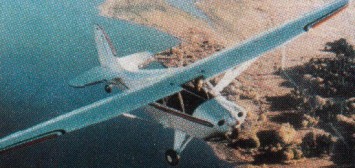
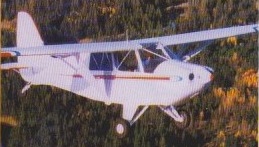
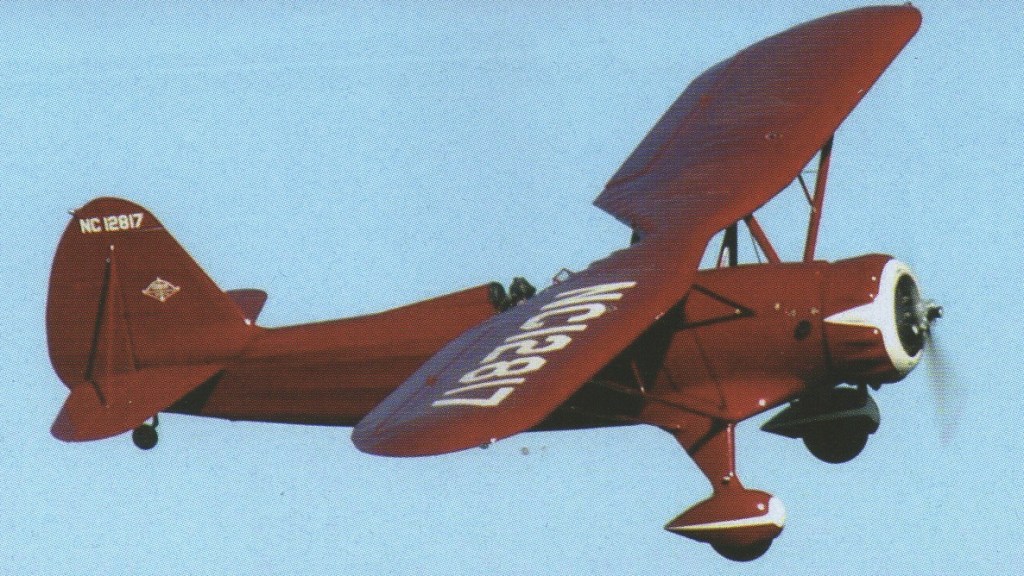
Using a Stinson SR5A Reliant as a donor, Evergreen Aviation Services began on the wings. The flap hardware was removed and each wing was shortened by 24 in by cutting off the tips, and the lift strut and jury strut mounts were moved inboard by 19in. The inboard ribs were redesigned for the removal of the flaps and to make provision for a new 10ft 6in aileron. They also had a change in profile to blend in with the centre section.
The 7ft wide centre section was built from scratch, considering only two photographs were available for reference. This section has an hour-glass shape and the middle of the trailing edge goes so far forward that it is actually 12in forward of the rear spar. It is made of 4130 steel tubes tubes with some flat steel used for reinforcements.
Based on a photograph of the bare fuselage structure and the undercarriage common with the Reliant, a drawing of the fuselage was computer generated, and then built.
Struts were created based on 20 odd photographs, and aileron cables, fuel lines, pitot and static lines, electrical and fuel vent lines all go through the struts.
The swivel only tailwheel was modified to lockable. The cowling is from a UC-78 Bobcat, turned 90 degrees, hinging the top so it would ‘clam-shell’. They added blisters for cylinder clearance.
Evergreen designed and built the throttle quadrant, and copied the elevator trim controls from photographs. All of the engine plumbing are copper lines with brass fittings.
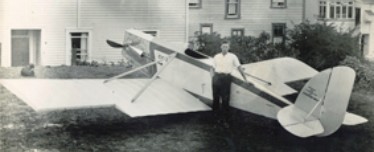
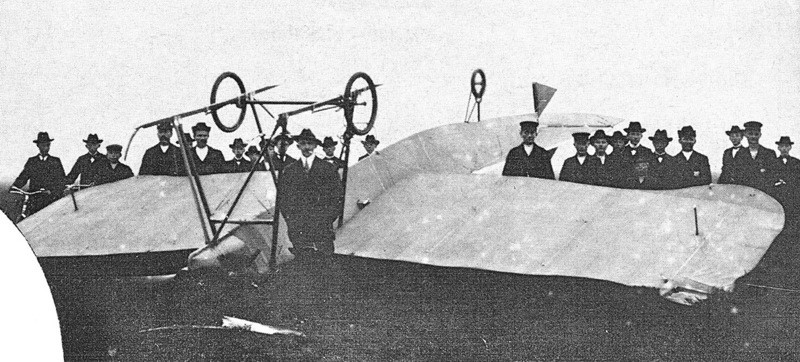
One of the earliest British tractor monoplanes, designed in 1908 by E. I. Everett and constructed by Everett Edgcumbe and Co. Ltd., of Colindale. The machine was powered by a four-cylinder 35 h.p. J. A.P. engine which drove a 6 ft. diameter propeller. The framework was of wood with fabric covering overall; the flying surfaces were double-covered. Warping was used for lateral control, and this was operated by turning the hand-wheel on the control column, the fore-and-aft movement of which actuated the elevators. The engine was water-cooled, its radiator being carried at an angle under the nose of the fuselage.
Tests were carried out in a field at Colindale which was to become part of the London Aerodrome at Hendon. The plane was nicknamed “The Grasshopper”, as it failed to fly properly and succeeded only in making hops from the ground during trials made on 6th and 7th December, 1910, by Bernard Clutterbuck and again during January, 1911, by E. I. Everett. [The machine has been incorrectly identified as the Prosper monoplane (Canada, 1909)]
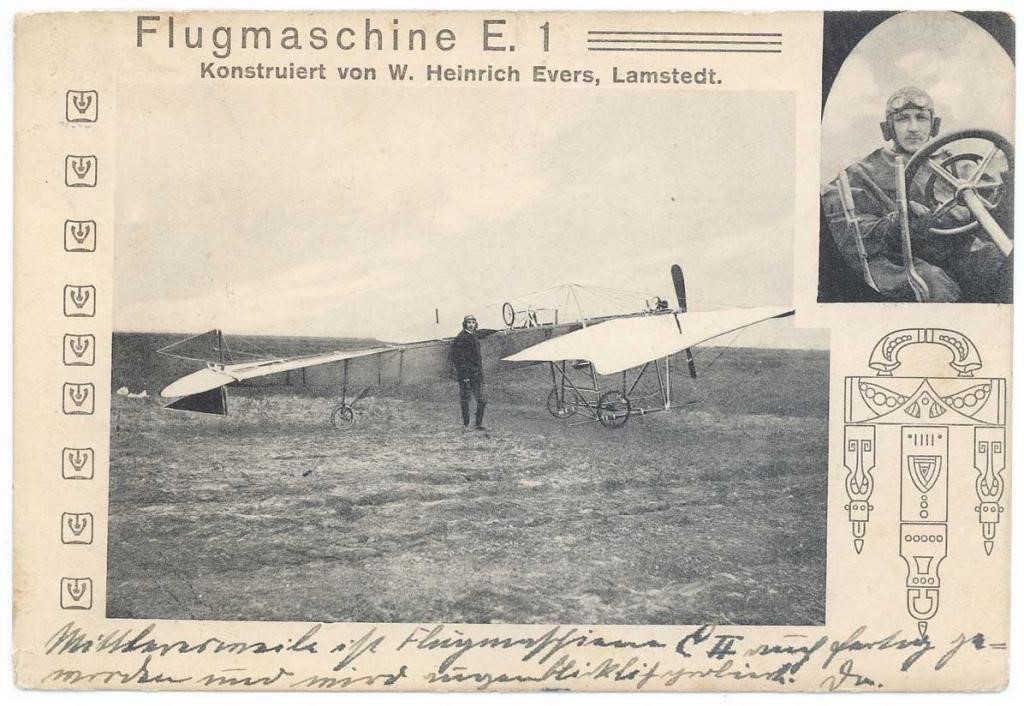
A tractor monoplane, designed and built by W. Heinrich Evers of Lamstedt, Germany, and powered by a three-cylinder Hilz engine. It was tested in December 1910 at the Winzer Heide near Lamstedt. It crashed, but was later repaired.
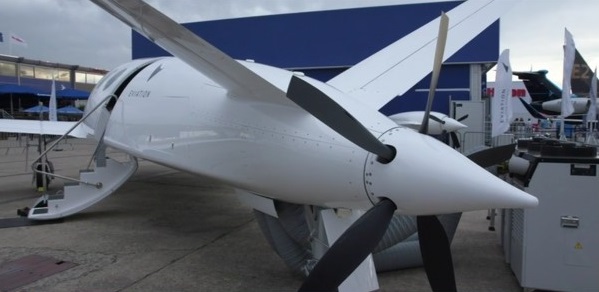
In June 2019 Eviation Aircraft was preparing to start flight testing Alice, its new all-electric regional airliner, in the U.S. En route to its U.S. base in Prescott, Arizona, the Israeli start-up company brought its full-scale prototype of the nine-seat, all-composite design to the Paris Air Show in June 2019 and announced a “double-digit” launch order for the $4 million aircraft from U.S. operator Cape Air.
In June 2019 Eviation Aircraft was preparing to start flight testing Alice, its new all-electric regional airliner, in the U.S. En route to its U.S. base in Prescott, Arizona, the Israeli start-up company brought its full-scale prototype of the nine-seat, all-composite design to the Paris Air Show in June and announced a “double-digit” launch order for the $4 million aircraft from U.S. operator Cape Air.
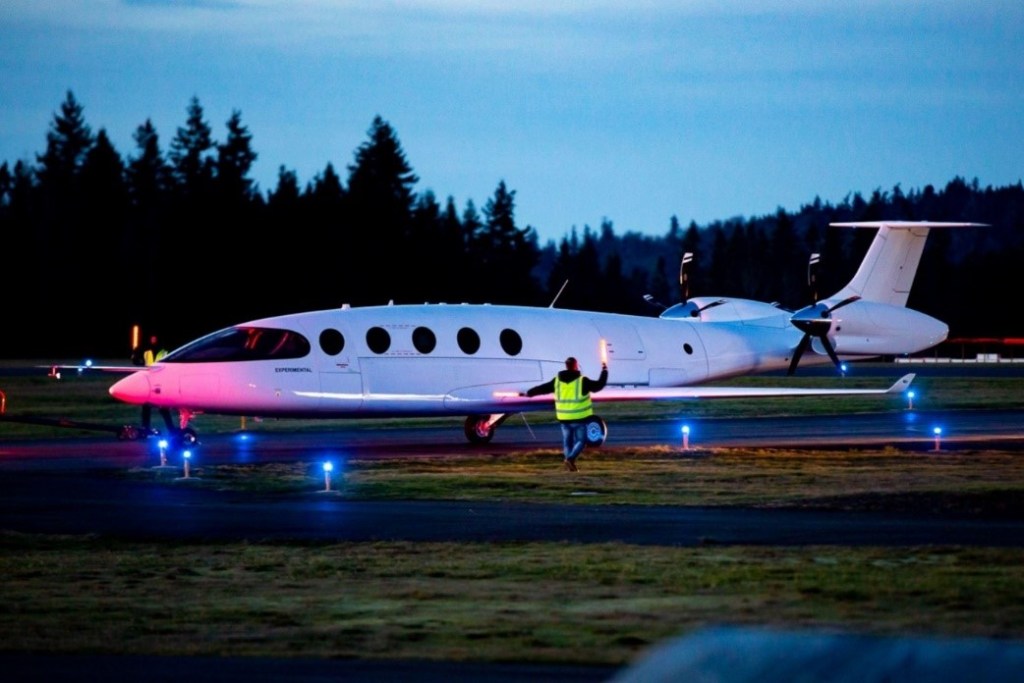
On 27 September 2022 the Alice first flew, from Grant County International Airport, Washington State, USA.
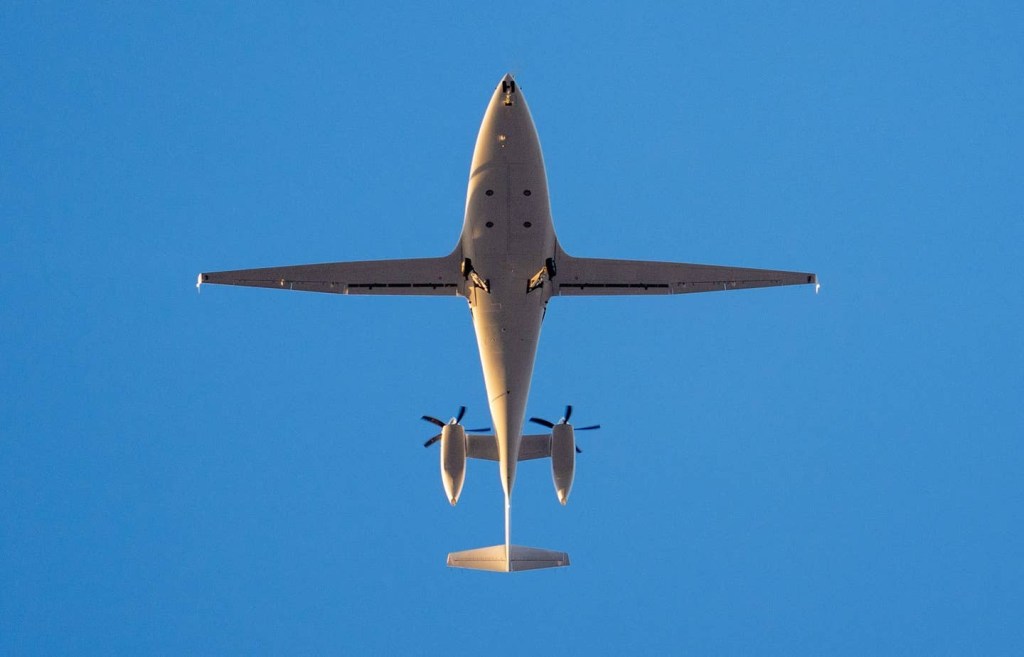
The world’s first flight was for eight-minutes. The successful maiden flight reached an altitude of 3,500 feet (1,067m) and the zero-emissions plane was powered by two 640-kilowatt electric motors.
Eviation expected the path to FAA Part 23 type certification to take between 24 to 30 months after the Alice achieves its first flight by the end of 2019, allowing for entry into service by the end of 2022. It was set to be the first Part 23 all-electric aircraft and the first with full fly-by-wire flight controls. The manufacturer claimed it was fully funded through to the start of series production.
The requirements for an all-electric plane are very different from those of conventional aircraft. The biggest challenge is weight, thanks to the fact that batteries provide considerably less mileage to the pound compared to energy-dense jet fuels.
That makes slashing the weight of other components a priority and the plane features lightweight composite materials “where no composite has gone before,”. Eviation has also done away with the bulky mechanical systems used to adjust control surfaces on the wings, and replaced them with a much lighter fly-by-wire system that uses electronic actuators controlled via electrical wires.
The company’s engineers have had to deal with a host of other complications too, from having to optimize the aerodynamics to the unique volume and weight requirements dictated by the batteries to integrating brakes designed for much heavier planes.
Eviation says the Alice will be comparable in price to similar sized turboprop aircraft like the Beechcraft King Air and cheaper than small business jets like the Embraer Phenom 300. And crucially the relative simplicity of electrical motors and actuators compared with mechanical control systems and turboprops or jets means maintenance costs will be markedly lower.
In Feb 2022 the first commercial all-electric passenger plane was just weeks away from its maiden flight, according to its maker Israeli startup Eviation. If successful, the nine-seater Alice aircraft would be the most compelling demonstration yet of the potential for battery-powered flight.
The Alice was undergoing high-speed taxi tests at Arlington Municipal Airport close to Seattle. This involved subjecting all of the plane’s key systems and fail-safe mechanisms to a variety of different scenarios to ensure they are operating as expected before its first flight. The company was five or six good weather days away from completing those tests, after which the plane should be cleared for takeoff.
The Alice should ultimately be capable of cruising speeds of 250 knots (463 kph) and a maximum range of 440 nautical miles (815 km).
The company has already received advance orders from logistics giant DHL and Massachusetts-based regional airline Cape Air.
Conceptual rendering of Eviation’s Alice, the first commercial all-electric passenger plane, in flight.
Even accounting for the need to replace batteries every 3,000 flight hours, Eviation expects Alice’s operating costs to be about half those of similar sized aircraft.
Eviation’s all-electric Alice makes its first and only test flight in 2022.
In 2025 Electric aviation’s prospects took a hit after a leading developer paused work on its prototype aircraft. Eviation laid off the majority of its staff and halted development of its all-electric Alice, designed for two crew and as many as nine passengers. The manufacturer struggles to secure funding to keep the project alive. Founded one decade ago, Eviation unveiled its first one-quarter-scale Alice prototype, “The Orca,” at the 2017 Paris Air Show. At the 2019 event, it revealed the first full-scale prototype of the regional commuter aircraft. Since then, though, the model has undergone more redesigns (two) than test flights.
Alice was conceived as a middle-mile aircraft, designed for short-hop, city-to-city flights spanning about 250 nm. Its two electric engines produce zero emissions. According to the company, they are cheaper, quieter, and require less maintenance than combustion engines. The aircraft can carry nine passengers or up to 2,500 pounds of cargo, with a top speed of 260 ktas.
Eviation has taken more than 600 orders for Alice, including from DHS Express, Air New Zealand, and GlobalX.
The program would not be fully shut down but did not elaborate further.
According to SMG Consulting’s Advanced Air Mobility (AAM) Reality Index, which tracks investments in manufacturers of electric and other AAM aircraft, Eviation has received $200 million in funding. Its last funding raise was in 2019.
Engines: 2 x Magni 650, 640 kW Wingspan: 62 ft 10 in / 19.15 m Length: 60 ft 9 in / 18.52 m Height: 14 ft / 4.28 m MTOW: 16,500 lb Payload (Commuter): 2,500 lb Typical Cruise Speed: 250 kts Max cruise speed: 250 kts Max Range: 440 NM Climb Rate: 2,000 ft/min Landing Distance: 2,040 ft Take-off Distance: 2,600 ft