The 1929 OW-4 high wing monoplane with a 3 place cabin was a modification of the Welch biplane design.
Engine: Curtiss OX-5, 90hp
Seats: 3
The 1929 OW-4 high wing monoplane with a 3 place cabin was a modification of the Welch biplane design.
Engine: Curtiss OX-5, 90hp
Seats: 3
The 1928 OW-3M / Parasol open cockpit, high wing monoplane was the first prototype of the popular Welch lightplanes.
Only the one OW-3M was built; N415 c/n 105.
Engine: Curtiss OX-5, 90hp
Wingspan: 33’0″
Length: 21’6″
Max speed: 93 mph
Stall: 4 mph
Seats: 3
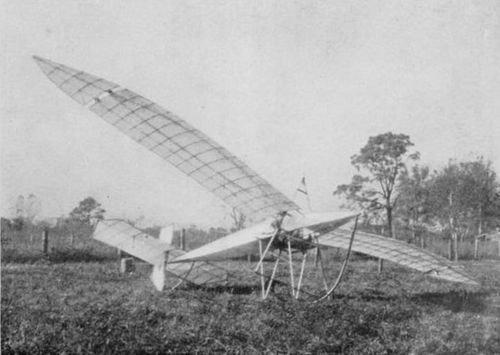
An aerodynamic design built by Daniel D. Wells of Jacksonville, Florida, during 1909/1910. Wells, an early inventor, patented the skid (US Patent 935075) and claimed to have made models with wing-warping already in 1897.
An aerodynamic design, designed and jointly built by a local mechanic, Daniel D. Wells, and a 21 year old machinist of the Seaboard Airline Railroad, Robert Kloeppel, who had just come to Jacksonville from Germany a few years earlier.
Unable to afford an aircraft engine at the time, they installed a Franklin automobile engine.
Kloeppel had received no flying instructions except those he read in a mechanics magazine, yet he shortly prepared the flimsy craft for takeoff. Flexing his piano wire controls he applied power and the plane moved rapidly about 75 feet and rose briefly four or five feet in the air, but when he sought to gain altitude by applying full power, the crankshaft suddenly broke and the plane settled down to earth, a complete wreck. Kloeppel was uninjured but never again built another plane or attempted to fly one.
In 1930 R C Lusk & R M Weller partially built the Model 1 monoplane with a 100hp Kinner engine. Apparently it was not completed but registration was applied for and issued as N334V c/n EX-1, but cancelled on 4 March 1930.
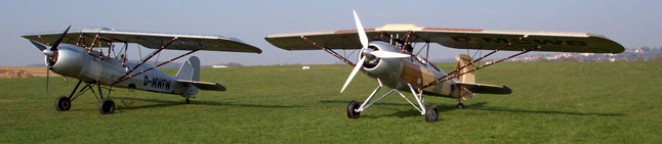
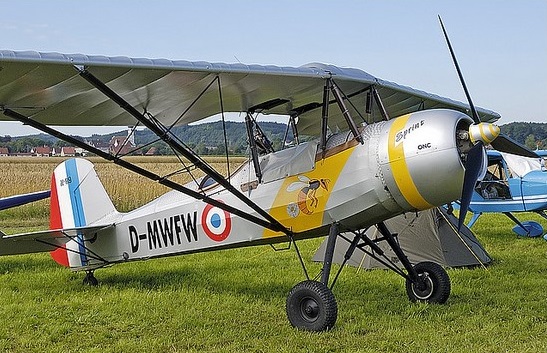
In production in 2012, the Weller UW-9 Sprint is a German ultralight aircraft designed and produced by Weller Flugzeugbau of Bibersfeld.
The UW-9 is intended as a nostalgic 1930s style design that would comply with the Fédération Aéronautique Internationale microlight rules. It features a strut-braced parasol wing, a two-seats-in-tandem open cockpit, fixed conventional landing gear and a single engine in tractor configuration.
The aircraft fuselage is made from welded steel tubing, with bolted-together aluminum tubing spar ladder-construction wings, all covered in doped aircraft fabric. Its wing has a cut-out in the centre trailing edge for rear cockpit access. The wing is supported by “V”-struts and jury struts. The tailplane is also supported by “V”-struts.
Standard engines available are the 70 hp (52 kW) Sauer UL 2100, the 75 hp (56 kW) Limbach L2000EA, the 100 hp (75 kW) Rotax 912ULS four-stroke powerplants, or the 85 hp (63 kW) Rotec R2800 radial engine. The Sprint is approved for aero-towing gliders and banner towing in Germany.
Specifications (version)
The aircraft is supplied as a kit for amateur construction or as a complete ready-to-fly-aircraft. The 2011 unit cost was €55,000.
Engine: 1 × Sauer UL2100 four cylinder, air-cooled, four stroke aircraft engine, 52 kW (70 hp)
Propellers: 3-bladed composite
Length: 5.7 m (18 ft 8 in)
Wingspan: 9.8 m (32 ft 2 in)
Height: 2.5 m (8 ft 2 in)
Wing area: 13.3 m2 (143 sq ft)
Empty weight: 290 kg (639 lb)
Gross weight: 472.5 kg (1,042 lb)
Fuel capacity: 87 litres (19 imp gal; 23 US gal)
Maximum speed: 170 km/h (106 mph; 92 kn)
Cruising speed: 130 km/h (81 mph; 70 kn)
Stall speed: 62 km/h (39 mph; 33 kn)
Range: 630 km (391 mi; 340 nmi)
Endurance: 7 hours
Maximum glide ratio: 10.5:1
Rate of climb: 6.8 m/s (1,340 ft/min)
Wing loading: 35.5 kg/sq.m (7.3 lb/sq ft)
Crew: one
Capacity: one passenger
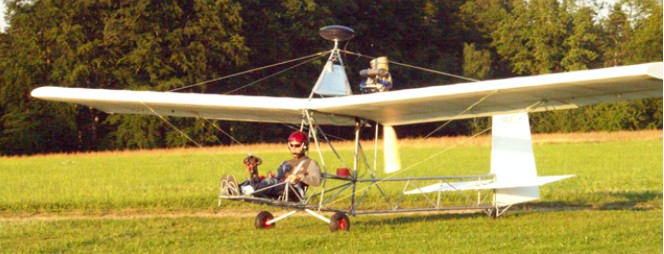
The Weller ULI NG (New Generation), sometimes called the Weller Uli NG, is a German ultralight aircraft, designed and produced by Weller Flugzeugbau of Bibersfeld. It was introduced at the Aero show held in Friedrichshafen in 2010. The aircraft is supplied as a complete ready-to-fly-aircraft.
Wingspan: 9,68 m
Wingarea: 12,78 sq.m
Length: 5,92 m
Empty weight: 116 kg
MTOW: 220 kg
Stall: 45 km/h
Max speed: 95 km/h
Climb rate: 2 m/s
Cruise: 65-85 km/h
Endurance: 2:30 Std.
Range: 150 km + Reserve
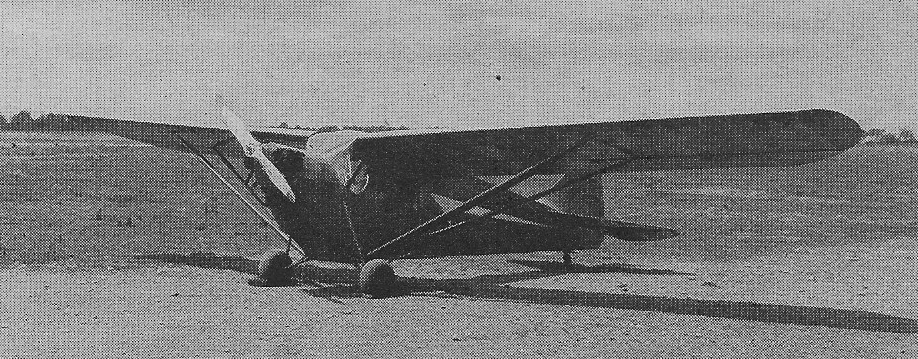
The 1938 Welch was designed for touring and for training.
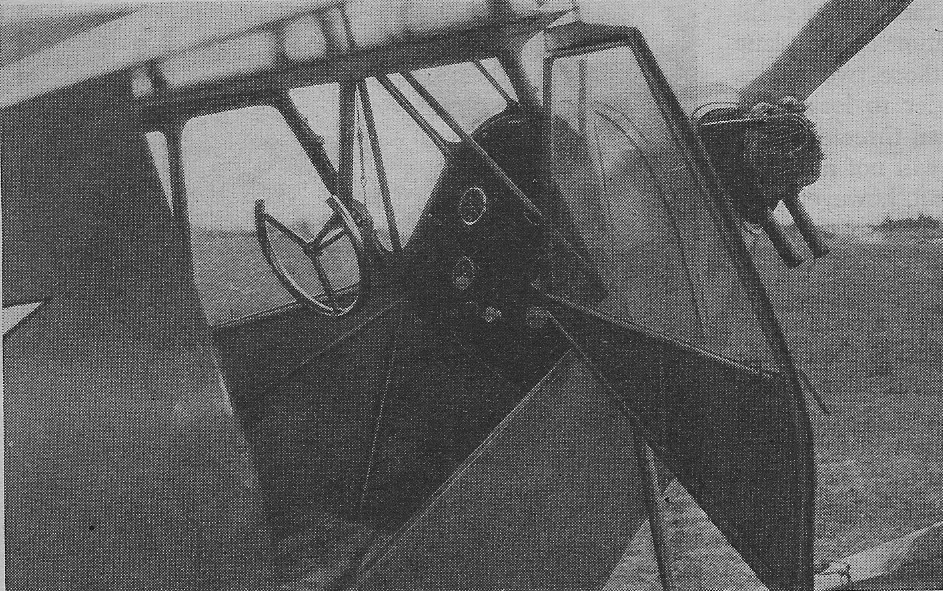
The overhead change-over wheel control gives uninterrupted leg room. Seating for two is side-by-side.
Wingspan: 34 ft 5 in
Empty weight: 515 lb
Payload: 368 lb
Top speed: 96 mph
Cruise: 85 mph
Stall: 29 mph
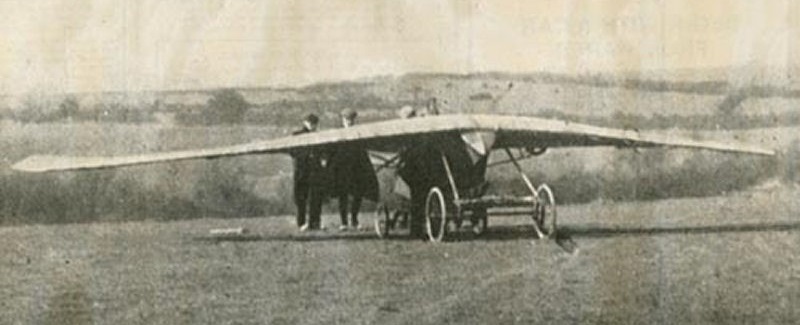
While working for Pemberton Billing, Eric Gordon England met José Weiss, who designed and built tailless gliders, and England became an assistant to Weiss. On 27 June 1909, Gordon England flew a Weiss glider (named Olive after one of Weiss’s five daughters), at Amberley Mount, Sussex, on a height-gaining flight that reached 100 feet. It is the first recorded soaring flight, and is considered to be the birth of the sport of Gliding.
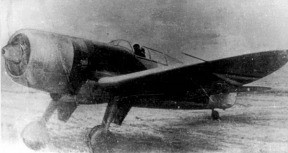
Fighter Protoype, Hungary, first flown September 1941
Engine: WM K 14B, 986 hp
Wingspan: 34.777 ft / 10.6 m
Wing area: 252.954 sqft / 23.5 sq.m
Length: 35.433 ft / 10.8 m
Height: 11.647 ft / 3.55 m
Max take off weight: 7254.5 lb / 3290.0 kg
Max speed: 286 kts / 530 km/h
Wing load: 28.7 lb/sq.ft / 140.0 kg/sq.m
Endurance: 2 h
Crew: 1
Armament: 2 x 7.62 mm Gebaur MG, 2 x 20 mm MG151

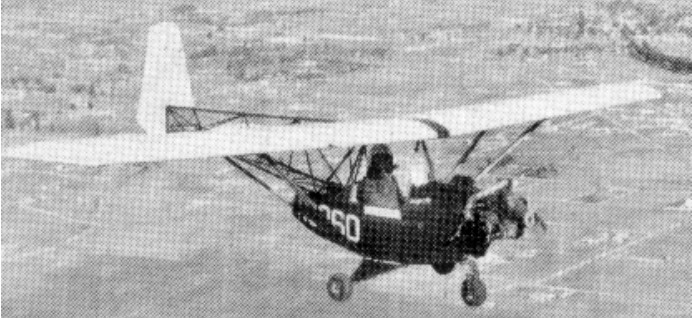
Draggin Fly was designed to be easy to build, inexpensive to fly and maintain, strong, safe, easy to fly with a stock 1600cc VW engine. Ron Weir recommends using only the 1600cc or 1700cc VW — “Smaller engine won’t fly it well, and a larger engine won‘t balance the plane well.”
Gross weight 688 lbs
Empty weight 470 lbs
Fuel capacity 8 Usgal
Wing¬span 24’5”
Length 17’5”
Engine VW1600cc-1700cc
Vmax 70+ mph
Cruise speed 65 mph
Climb rate 350 fpm
Takeoff run150’
Landing roll 200’
Range 170 sm
 All Aero