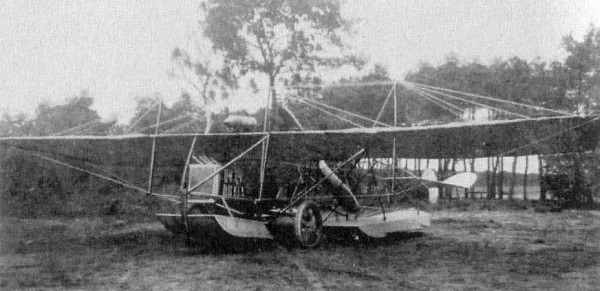
Westland Widgeon

The Widgeon was the first high-wing monoplane to be built by Westland. The design originated as the result of a discussion regarding the relative merits of a biplane or a monoplane, to be entered in the Air Ministry’s Light Aeroplane Competition of 1924, and as both types had promising points in their favour it was decided to build one of each.
Originally intended to be powered with a twin-cylinder Bristol Cherub engine, the Widgeon was eventually flight-tested with a three-cylinder Blackburne Thrush engine. At the Competition trials, held at Lympne in the autumn of 1924, the machine was flown by Captain Winstanley, but was unluckily wrecked by a down-current on its first circuit of the course.
Undismayed by this set-back the Westland design team, realising that the Widgeon was underpowered, had it rebuilt and fitted with the more powerful Armstrong Siddeley Genet engine, a five-cylinder radial of 70hp. The results of the competition proved that engines in the 30-40hp class were quite unsuitable for two-seat light aeroplanes.
With the new engine installation the machine became known as Mark II of the series, and was used by Westland for full-scale tests of various theories connected with monoplane design. In the late twenties the Widgeon Mark II took part in many sporting flying events, eventually becoming the property of Dr. Whitehead-Reid, of Canterbury.
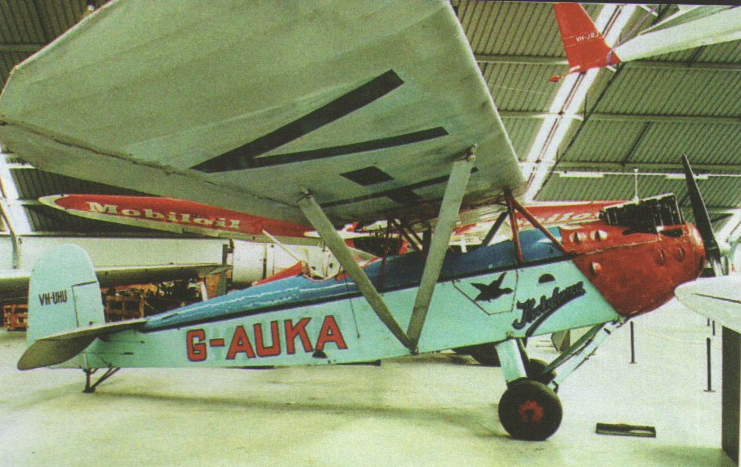
1928 Widgeon III VH-UHU – false G-AUKA markings are from ‘Kookaburra’ lost in Tanami Desert NT, Australia while searching for Charles Kingsford Smith

Widgeon Mk II
Engine: 1 x 70hp Armstrong Siddeley Genet
Max take-off weight: 370 kg / 816 lb
Empty weight: 215 kg / 474 lb
Wingspan: 9.3 m / 31 ft 6 in
Length: 6.2 m / 20 ft 4 in
Height: 2.2 m / 7 ft 3 in
Wing area: 12.47 sq.m / 134.23 sq ft
Max. speed: 116 km/h / 72 mph
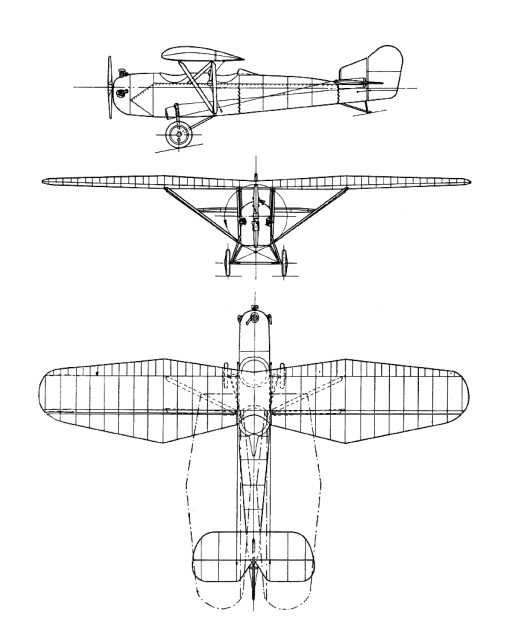
Westland Widgeon

Westland Dreadnought

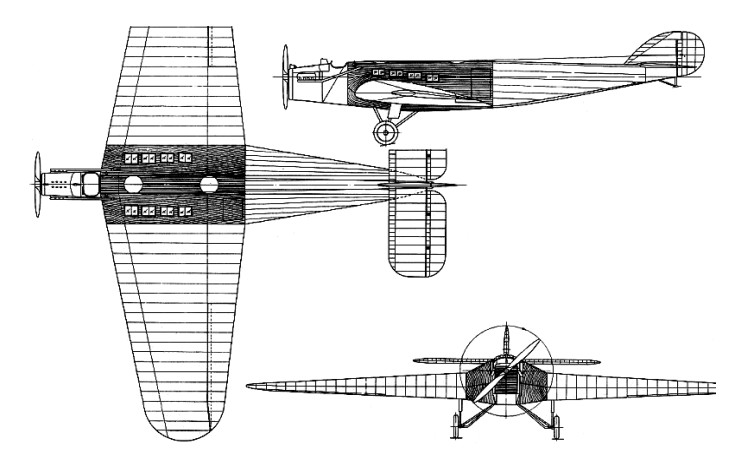
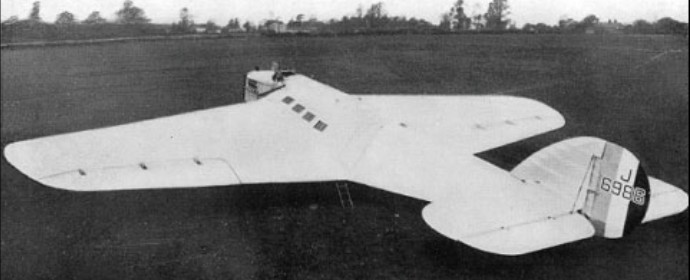
For some time the Air Ministry’s Directorate of Technical Development had been interested in the theories of a Russian inventor, M.Woyevodsky, whose idea of the perfect aeroplane was that the fuselage and wings should be in the form of a continuous aerofoil, with external wing bracing eliminated, rather like the modern conception of the “flying wing.”
Several Woyevodsky models were tested in wind-channels and, when the results seemed to confirm the inventor’s claims, the final model was handed over to the Westland design staff to be put into practical form. This rather idealistic model was of a twin-engined freight-carrying monoplane of 21.1m span and a length of 17.08m, with a wing area of 78.04sq.m. A retractable undercarriage was also a feature of the model design, and the single 450hp Napier Lion engine.
The original model design was translated into an all-metal monoplane and construction methods employed were also ahead of the times, use being made of drawn metal channelling and corrugated metal panels, much in the style of the modern “stressed skin” method of manufacture.

The Dreadnought was completed in the spring of 1923, and its taxying trials attracted considerable local interest. Captain Keep conducted these tests, often accompanied by Mr. Bruce, and had the machine satisfactorily airborne for a few yards in short hopping flights.
Everything pointed to the success of this unique design, but the initial test flight, which took place on an afternoon in early May, 1923, ended in disaster. After a seemingly smooth take-off the Dreadnought rose steadily towards the aerodrome boundary, but near the factory buildings it was apparent Captain Keep was having difficulty in controlling the machine. Shortly after this the Dreadnought stalled and crashed from a height of about one hundred feet, the engine and wings striking the ground squarely and the fuselage breaking off at the cockpit.
Captain Keep was seriously injured and had to have both his legs amputated, but this major personal misfortune did not lessen his interest or work in aviation, and he has since added many years of technical and advisory service to his career.
The Dreadnought design was abandoned from this point.

Wingspan: 21.1 m / 69 ft 3 in
Length: 17.08 m / 56 ft 0 in
Wing area: 78.04 sq.m / 840.01 sq ft

Westland Dreadnought

Westland Welkin

On 9 January 1941, Westland was authorised by the Ministry of Aircraft Production to proceed with two prototypes of its P.14 design for a twin-engined high-altitude fighter, in compliance with Specification F.4/40. Conceived as a two-seater with six 20-mm cannon armament, the P.14 went ahead as a four-cannon single-seater with a pressurized cockpit. Revised to conform to F.7/41, and thus competing with the Vickers Type 432, the P.14, to be named the Welkin, first flew on 1 November 1942. The wing was located in the mid position, and power was provided by two Rolls-Royce Merlin Mk 61s of 1,565 hp, these being succeeded by 1,650 hp Merlin 72/73 or Merlin 76/77 in the production Welkin I. Pressurization of the cockpit was achieved by means of a Rotol blower on the starboard engine. Production of the Welkin I was initiated in 1941, contracts for 100 and then 200 being placed, and the first series aircraft was under test at Boscombe Down by mid-September 1943. However, handling problems combined with reduced operational interest in high-altitude fighters led to cancellation of production after the completion of 75, plus 26 airframes without engines. The Welkin I saw no service use. Welkin NF Mk II During 1943, Westland studied a number of possible derivatives of the Welkin I in order to take advantage of the design work already completed. Of these possibilities, one for a two-seat night fighter variant received a go-ahead on 4 February 1943, subsequent development of this as the Welkin NF Mk II being in accordance with Specification F.9/43. Two prototypes were ordered, as conversions of Mk I airframes during production, and orders were given for 60 of the final production batch of Mk Is to be to this standard. As flown on 23 October 1944, the prototype Welkin NF Mk II introduced AI Mk VIII radar in a lengthened bulbous nose and a new one-piece canopy over a two-seat cockpit in which the observer faced aft behind the pilot. Production plans for the Welkin NF Mk II were cancelled during 1945, along with those for the F Mk I, and the second prototype was not completed.

Westland Welkin
Engine : 2 x Rolls Royce Merlin 76, 1233 hp
Length : 41.568 ft / 12.67 m
Height : 15.748 ft / 4.8 m
Wingspan : 70.013 ft / 21.34 m
Wing area : 459.946 sq.ft / 42.73 sq.m
Max take off weight : 17503.3 lb / 7938.0 kg
Weight empty : 12612.6 lb / 5720.0 kg
Max. speed : 336 kts / 623 km/h
Service ceiling : 43996 ft / 13410 m
Wing load : 38.13 lb/sq.ft / 186.0 kg/sq.m
Range : 1043 nm / 1931 km
Crew : 1
Armament : 4x 20mm MG

Welkin Mk 1
Max take-off weight:8970 kg / 19776 lb
Empty weight: 6520 kg / 14374 lb
Wingspan: 21.34 m / 70 ft 0 in
Length: 12.65 m / 42 ft 6 in
Height: 4.65 m / 15 ft 3 in
Wing area: 42.73 sq.m / 459.94 sq ft
Max. speed: 623 km/h / 387 mph
Ceiling: 13410 m / 44000 ft
Range: 2400 km / 1491 miles

Westland Welkin I

Western Aircraft Co West Air 204 / 214

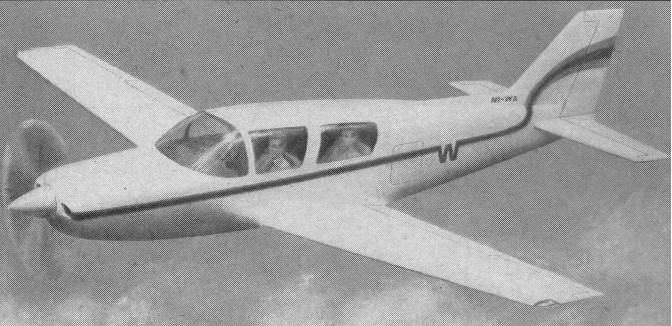
In 1984 Western Aircraft Company was manufacturing the newly designed West Air 214. The craft follows the successful flight testing and evaluation of the proof of concept aircraft, the West Air 204 N258, first flown in November 1982. The West Air 214’s changes include a bubble windshield, swept vertical stabilizer, additional wing area and a redesigned fuselage. The 214 will have a tri-cycle retractable gear. The West Air will still retain its all composite construction of epoxy, graphite and tri-directional glass and four place seating.

Engine: Lycoming IO-360 200-hp.
Wingspan: 31 feet
Length: 26.75 feet
Gross weight: 2690 lb
Empty weight: 1410 lb
Fuel capacity: 70 USgallons
Top speed: 245 mph
Cruise speed: 215 mph
Stall speed: 59 mph
Seats: 4

Engine: Lycoming TIO-360-A1B
Wingspan: 29’0″
Length: 23’8″
Useful load 1166 lb
Max speed: 240 mph
Cruise speed: 180 mph

Westbrook W-5 / W-5-B Sportster

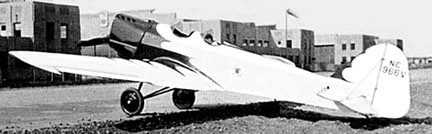
Westbrook W-5 NC966V

Designed by Neil Perdew, the 1931 Westbrook W-5 (ATC 2-444) was powered by a 90hp ACE Cirrus Mk III engine. The ATC were issued in 1933.

Westbrook Sportster

The W-5-B Sportster had an 85hp British Cirrus (2-455). Folding all-wood wings and selling for $2,650.

Westbrook Sportster

About five were built, and several partly constructed before the business failed in 1931.
NC9N c/n 501 destroyed in a 1931 crash
N853W c/n 502
NC966V c/n 503 lost in a 1938 accident
NC92V c/n 504
possibly c/n 505 unlicensed one

The design was planned for revival in 1939 as the Allied H-28 Sport Trainer, but apparently no planes were built.

W-5
Engine: 90hp ACE Cirrus Mk III
Wingspan: 32’0″
Length: 23’6″
Useful load: 500 lb
Max speed: 125 mph
Cruise speed: 100 mph
Stall: 40 mph
Range: 400 mi
Seats: 2

W-5-B Sportster
Engine: 85hp British Cirrus
Seats: 2