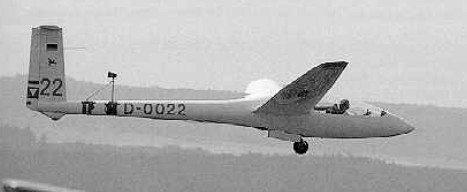
Wing span: 17.5m
Wing area: 17.8sq.m
Empty Weight: 376kg
L/DMax: 37 @ 95 kph
MinSink: 0.65 m/s @ 95 kph
Aspect ratio: 17.21
Airfoil: Eppler 603
No. of Seats: 2
No. Built: 1
Structure: GFRP
Wing span: 17.5m
Wing area: 17.8sq.m
Empty Weight: 376kg
L/DMax: 37 @ 95 kph
MinSink: 0.65 m/s @ 95 kph
Aspect ratio: 17.21
Airfoil: Eppler 603
No. of Seats: 2
No. Built: 1
Structure: GFRP

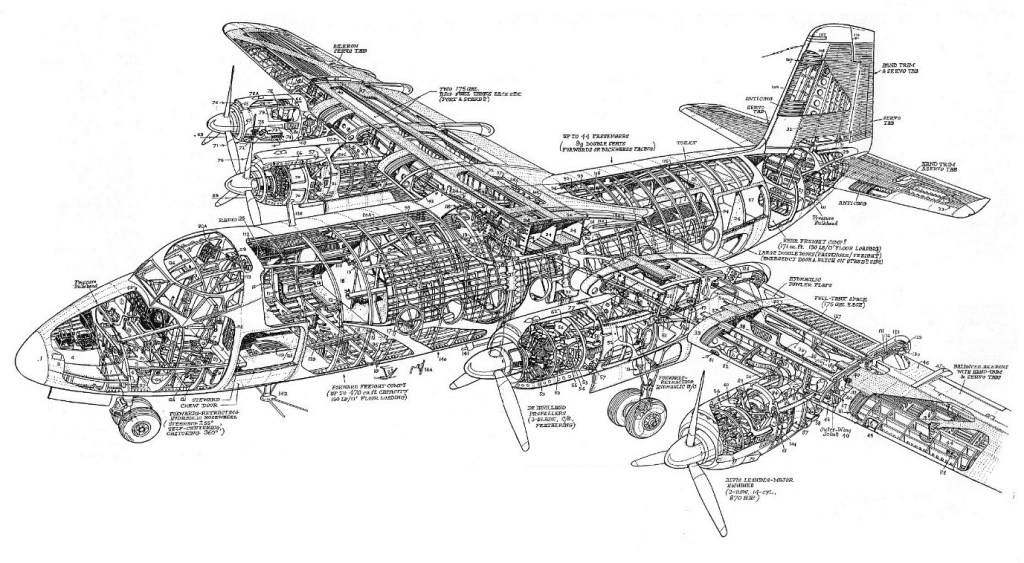
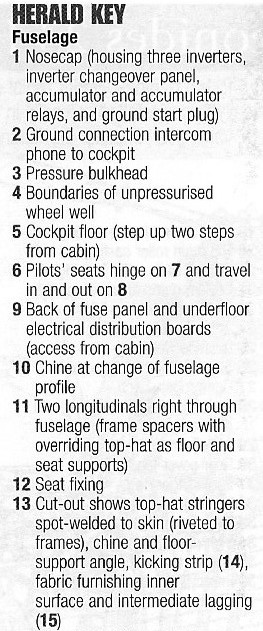
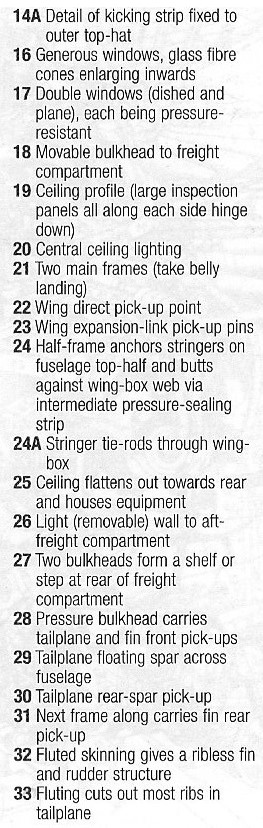
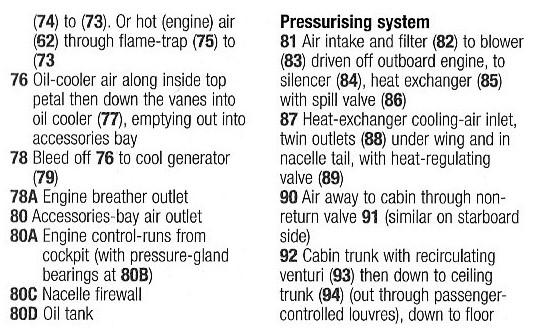
A medium sized transport designed to take the place of the DC 3, the Handley Page HPR 3 Herald design shows an essentially straight forward approach ¬with four piston engines, a high wing layout and a fuselage designed to carry 44 passengers, freight, or mixed loads. It is to be pressurized to a relatively low differential, and will carry a full payload of 10,705 lb. for a no reserve range of 350 st. miles, or 4,650 lb. for a full tank range of 2,050 miles.
Two prototypes were being built in 1954.
Handley Page (Reading) HPR-3 Herald / HPR-7 Herald Article
The first Herald, G-AODE, flew on 25 August 1955 from Radlett, powered by four Alvis Leonides piston engines. Airborne for 30 minutes, the pilot was H.G.Hazelden. It appeared at that years SBAC Display.

The first Handley Page Herald completed 125 hours flying in a year and received a Special Category of C of A in 1956.
By 1956 the Herald had been ordered by Queensland Airlines, Australian National Airways, Lloyd Aereo Colombiano and Air Kruise.
The prototype Dart-engined Herald made its first flight on 11 March 1958 and the first production Herald Series 100 flew on 30 October 1959. The Series 100 accommodated between 38 and 47 passengers. The Series 200 was the main production version with a forward fuselage 1.07m longer than that of the Series 100. Accommodation was provided for 50-56 passengers. Powered by two Rolls-Royce Dart 527 turboprops of 2,150 shaft hp, its maximum cruise speed is 274 mph.
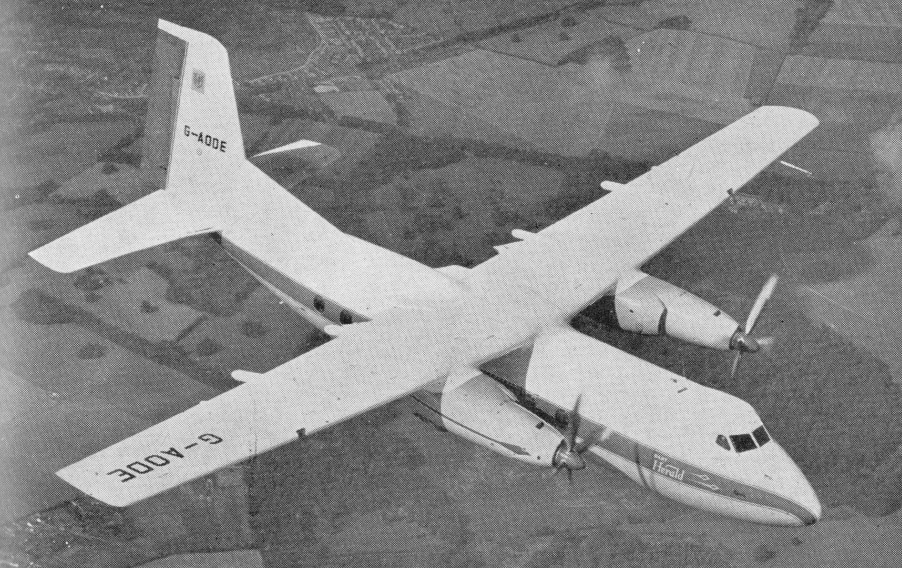
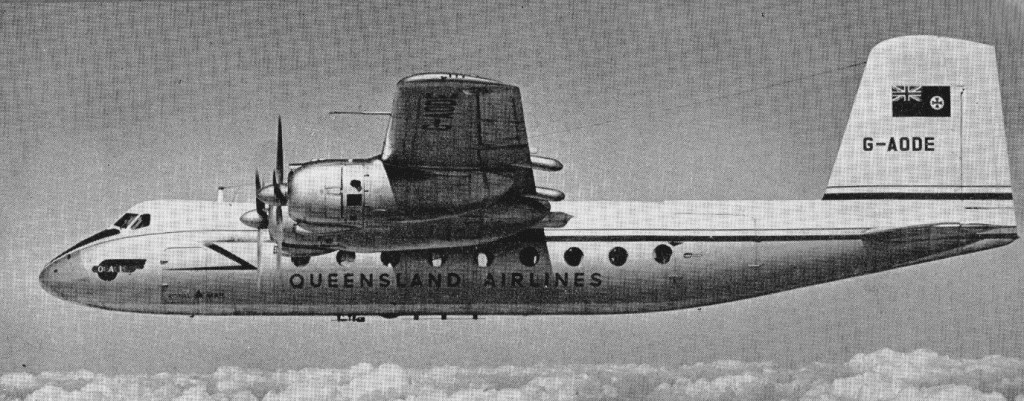
In 1960 Handley Page were offering both the Leonides Major and Dart powered versions.
The Series 300 (a modified Series 200 developed to meet US airworthiness requirements) was followed by the Series 400 military transport with a side loading door and accommodation for 50 troops, paratroops, 24 stretchers or freight, eight of which went to the Royal Malaysian Air Force. The projected Series 500 was followed by the Dart 532/9 turboprop-engined Series 600.
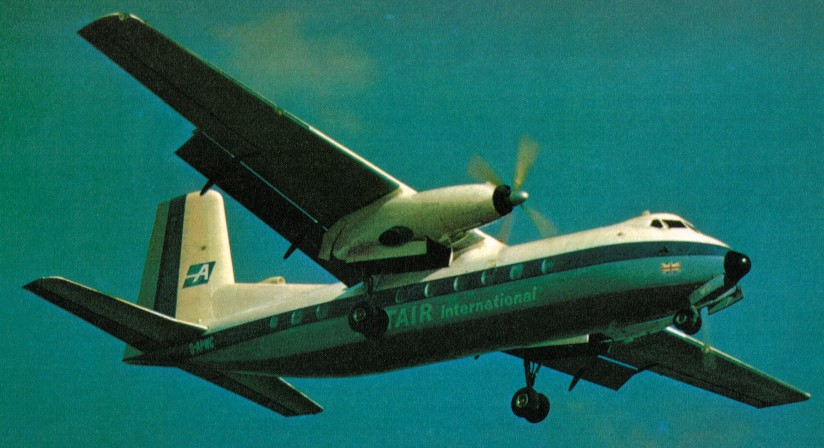
The final two versions were the Series 700 long-range version of the Series 600, accommodating up to 60 passengers or 52 passengers and baggage over 1,980km stages, and the Series 800 military version of the 700.
By 1958, when they offered an alternative version powered by Rolls-Royce Dart turboprops, the Fokker F 27 had cornered the market. Only 48 aircraft were produced.
HP(R) HP.3 Herald
Engines: 4 x Alvis Leonides Major, 850 bhp
Wingspan: 95 ft
Length: 70 ft 3 in
Mauw: 34,000 lb
Max speed: 263 mph
HP Herald Srs 200
Powerplant: two Rolls-Royce Dart RDa.7 M1k. 527 turboprops, 1570kW / 2105 ehp
Propellers: Rotol four-blade, fully feathering 12 ft 6 in diameter
Wingspan, 94 ft 9 in / 28.88 m
Length, 75 ft 6 in / 23.01 m
Height, 24 ft 1 in / 7.34 m
Gross wing area, 82.31 sq.m / 886 sq.ft
Max. usable floor area, 283 sq.ft
Max. usable volume, 1802 cu.ft
Max. cabin length, 54 ft 0 in
Max. width, 8 ft 8.25 in
Max. height, 6 ft 3.75 in
Accommodation: 50 passengers at 30.5 in pitch; 56 at 30 in pitch.
Basic operational 25,758 lb
Total fuel, 8640 1b
Max. take-off with 5 deg flap, 41000 lb
Max. landing, 39,500 lb
Max. payload, 11,242 lb
Max. zero fuel, 37,500 lb
Power loading (max. take-off weight), 10.2 lb/ehp
Wing loading (max. take-off weight), 48.5 lb/sq.ft
Wing loading (max. landing weight), 44.5 lb/sq.ft
Max level speed: 275 mph / 443 kph
High-speed cruise, 237 kt. at 15,000 ft
Long-range cruise, 230 kt. at 23,000 ft
Approach speed, 89 kt
Ceiling: 8500 m / 27900 ft
Take-off field length, ISA at sea level, 5000 ft
Landing field length, ISA at sea level, 3575 ft
Range, no reserves, ISA with max fuel, 8602 lb payload, 1 500 nm
Range w/max.payload: 1786 km / 1110 miles
Crew: 2
Passengers: 50-56




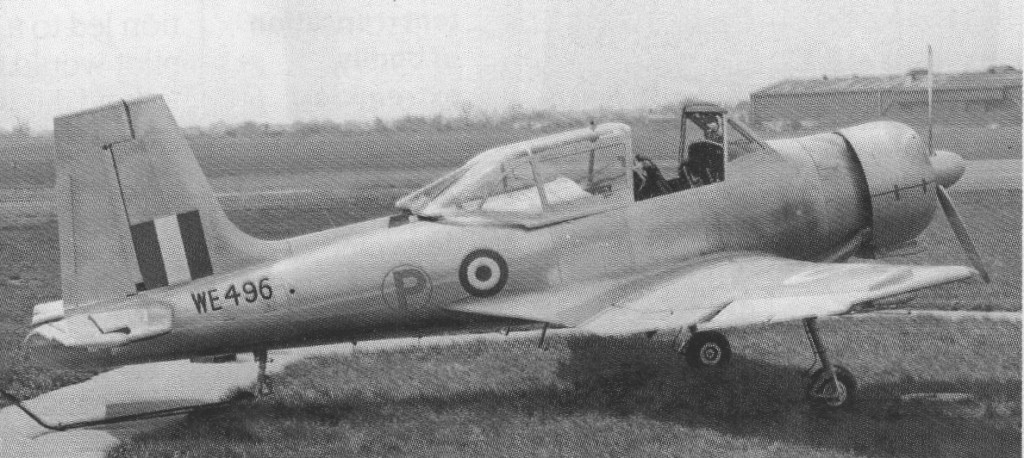
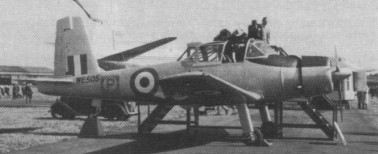
Competing with the Percival Provost for an RAF order circa 1950, two HPR-2 basic trainers were built. Seating two side by sice and powered by an Armstrong Siddeley Cheetah 17 radial, the original canopy generated too much turbulence and had to be replaced.

In 1966 feasibility and market studies revealed a definite market for a medium-sized turboprop mini-airliner for commuter and executive use. The H.P.137 Jetstrearn was launched, attracting nearly 200 orders and options in the first year. It even won the United States Air Force contest for the C- 10A transport. But it was a difficult aircraft for a firm used to large and expensive military designs, and development was prolonged. Its airworthiness category imposed a nominal limit in all-up weight which severely affected range/load performance. This was improved with the advent of higher-power engines and a change in category, which allowed take-off weight to rise to the level for which the Jetstream was designed.
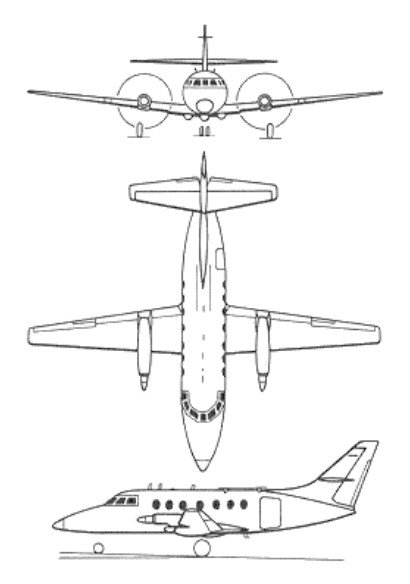
The Jetstream had accommodations for a crew of two plus flight attendant and 4-18 passengers. With a diameter of 6 feet, a length of 24 feet, and 613 cu. ft. of usable cabin space, the Jetstream has the largest interior in its class. There is stand-up headroom, ample walkaround space, and 14 windows.
The HP.137 Jetstream was a pressurized 12/18 seat low-wing monoplane with a retractable undercarriage, powered by a pair of 840 hp Turbomeca Astazou XIV turboprops. Before the drawings were complete, Riley placed an order for 20 for the United States feeder liner market.
Handley Page HP.137 Jetstream Article
The prototype H.P.137 (G-ATXH c/n 198) flew first on 18 August 1967 powered by the Astazou XII. The first four aircraft were powered by the French Astazou, the fifth aircraft was fitted with the US-built Garrett AiResearch TPE-331 instead to improve sales prospects in the US. This re-engining lead to an order by the US Air Force for 11 Jetstream 3M or C-10A as a mission support transport aircraft. Early 1969 however this order was cancelled on the grounds of late delivery.
The Jetstream 1 had entered production by this time; with the first production model Jetstream 1 flying on 6 December 1968. Over the next year 36 would be delivered. The Astazou XIV engines however proved to be generally underpowered for the design. Due to these engine problems the Jetstream 1 was re-designed as the Jetstream 2 with more powerful 1073 hp Astazou XIVCs, starting deliveries in late 1969. By this point the late delivery and engine problems had driven costs to £13 million and Handley Page ran into serious financial difficulties. Only three Jetstream 2’s would be completed before Handley Page went bankrupt, and the production line eventually shut down in 1970. Only 39 aircraft had been completed by the time of Handley Page’s collapse in 1970.
Although Handley Page was wound up as a company, the Jetstream lived on. Ten further aircraft were completed, five by Jetstream Aircraft and five by Scottish Aviation. In 1971 Scottish Jetstream Ltd was the name of a new company formed by Scottish Aviation and Jetstream Aircraft for the manufacture of the Jetstream twin turboprop transport. Scottish Aviation continued production of the Jetstream 2 although they referred to it as the Jetstream 200.

The Royal Air Force ordered twenty-six Jetstream 200’s as navigation and multi-engine trainers known as the Jetstream T.1. The Royal Navy later subsequently took over some of these as T.2’s. In 1977, Scottish Aviation was nationalized along with the British Aircraft Corp. and Hawker Siddeley Aviation to form British Aerospace.
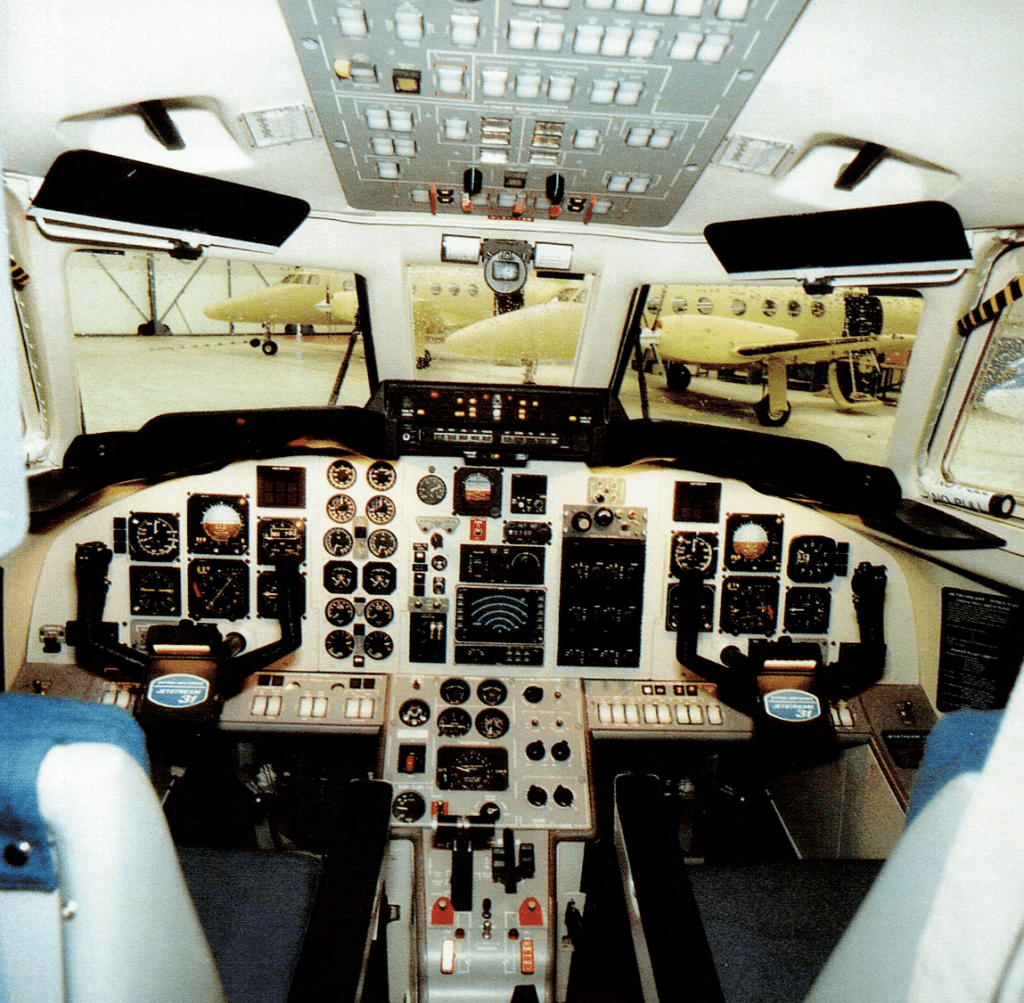
BAe decided the design was worth further development, and started work on a “Mark 3” Jetstream. The new version was re-engined with two 1020 hp Garrett TPE331-12UAR turboprops that offered significant advantages over the Turbomeca units. This allowed the aircraft the ability to operate at maximum load from a much greater range of airfields.
The prototype of the BAe Jetstream 31, converted from an original HP137 airframe to suit revised FAR requirements for 19-seat commuter aircraft, made its maiden flight on 28 March 1980 (G JSSD) from Prestwick Airport, Scotland and was airborne for 1hr 22min. Aboard on the flight were BAe test pilots Angus McVittie and J. L. S. ‘Len’ Houston, J. R. ‘Bob’ Baker from Garrett-AiResearch and BAe flight test engineer Andrew Eldred.
The new British Aerospace Jetstream 31 entered production 28 March 1980 and is powered by two Garrett AiResearch TPE331 IOU engines and also features advanced technology propellers and new electrical, air conditioning and cockpit systems.
By 1994 some 380 had been delivered, 320 of those to the USA.
The Royal Navy received four Jetstream 31 twin turboprops, designated T.3, which are used for observer training. These aircraft join 16 Astazou-powered T.2s which are used in similar roles. The T.3s differ not only in having Garrett TPE331 engines, but also in having an underfuselage Racal ASR360 search radar in place of the nose-mounted MEL E90 unit of the T.2. The RAF also used 11 Astazou powered Jetstream T.ls for multi-engine pilot training. Saudi Arabia has bought two Jetstream 31s for tornado crew training.
In 1985, development of a further upgrade started resulting in the Jetstream Super 31, also known as the Jetstream 32, with more powerful engines that flew in 1988.
The Jetstream 32EP (also known as Jetstream Super 31) was designed to increase the payload and range of the Jetstream 32 in extreme climatic conditions. It provides significant improvements in performance, derived from the use of two upgraded Garrett TPE331-12 turboprop engines flat-rated at 1,020 shp (760 k)XD and driving four-bladed advanced technology propellers.
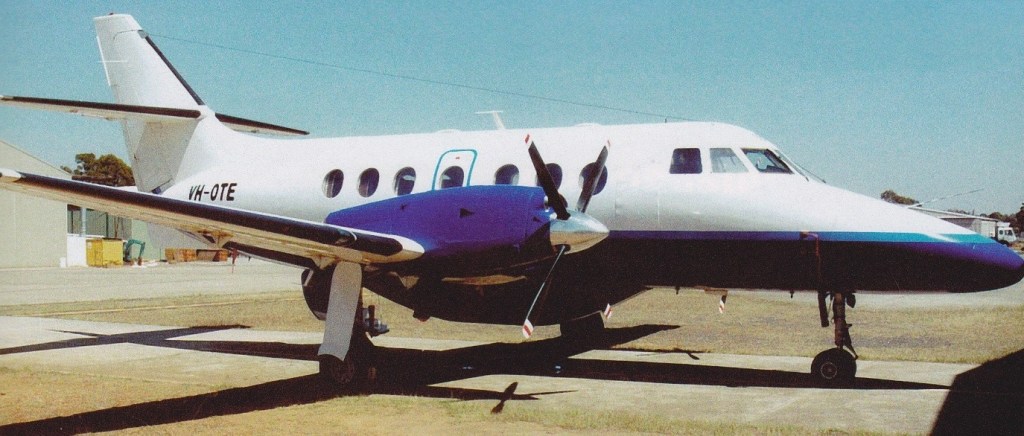
More than 310 Jetstream 31s and Super 31s had been ordered by 1987.
In 1991, the 29-seat Jetstream 41 was introduced. Production of the Jetstream 31/32 ended in 1993, while the production of the Jetstream 41 ended in 1997.
The Handley Page Jetstream came back for another round, as the newly certi¬ficated Century Jetstream III, with 904 shp Garrett AiResearch TPE 331 turboprops in place of the French Astazous.
Century Aircraft Corp. of Amarillo, Texas, Jetstream III is air-conditioned and pressurized at 6.5 psi. The conversion to Garrett engines allows a range of 1,920 miles out of a 426-gallon fuel capacity. The engine conversions were performed by Volpar, Inc. in Van Nuys, California.
Jetstreams built since the early start in 1965 until the production ended in 1997 are: 38 H.P.137 Jetstream by Handley Page Ltd; 5 H.P.137 Jetstream by Jetstream Aircraft Ltd; 5 H.P.137 Jetstream by Scottish Aviation Ltd; 26 Jetstream T.1 by Scottish Aviation; 220 Jetstream 31 by British Aerospace; 161 Jetstream Super 31 by British Aerospace; 100 Jetstream 41 by British Aerospace.
Variation:
Riley Jetstream
HP 137 Jetstream
Powerplant: two Turbomeca Astazou XIV, 850 shp / 625kW
Propellers: Hamilton Standard three-bladed 8 ft 3 in diameter
Wingspan: 15.9 m / 52 ft 2 in
Length: 14.7 m / 48 ft 3 in
Height: 5.1 m / 16 ft 9 in
Wing area: 25.1 sq.m / 270.17 sq ft
Max. usable floor area, 85.5 sq.ft
Max. usable cabin volume, 564 cu.ft
Max. cabin length, 24 ft 3 in
Max. width, 6 ft 1 in
Max. height, 5 ft 11 in
Accommodation: max. high density 18 passengers at 30 in pitch.
Basic operational (gross less usable fuel and payload), 8200 lb or 8530 lb / 3869 kg
Total fuel, 3120 lb / 456 USG
Max take-off weight: 5657 kg / 12472 lb
Max. landing, 12,250 lb
Max. payload (volume limited), 4000 lb
Power loading, 7.76 lb/shp
Wing loading (max. take-off weight), 45.4 lb/sq.ft
Wing loading (max. landing weight), 45.4 lb/sq.ft
Top speed 345 mph.
High-speed cruise, 265 kt at 15,000 ft
Long-range cruise, 217 kt. at 30,000 ft
Stall 84 mph.
Take-off field length to 50 ft, ISA at sea level, 2550 ft
Landing field length, ISA at sea level, 2130 ft
Range with allowances, max. fuel, 1000 lb payload at 217 kt. at 30,000 ft, 1910 nm
Range with allowances, max. payload 18 passengers, at 265 kt. at 15,000 ft, 220 nm
Initial climb rate 2,100 fpm.
Ceiling 30,000 ft.
Jetstream III
Engines two 902 shp Garrett AiResearch turboprops
Gross wt. 12,500 lb
Empty wt. 8,200 lb
Fuel capacity 426 USG
Cruise mph 300+
Range 1,920 miles
Takeoff distance (50′) 2,500 ft
Landing distance (50′) 1,000 ft
Seats 4-18.
British Aerospace Jetstream 31
Engine : 2 x Garrett TPE 331-10UG, 691 shp
Length : 47.146 ft / 14.37 m
Height: 17.388 ft / 5.3 m
Wingspan : 52.001 ft / 15.85 m
Wing area : 271.253 sq.ft / 25.2 sq.m
Max take off weight : 15324.8 lb / 6950.0 kg
Weight empty : 9613.8 lb / 4360.0 kg
Max. weight carried : 5711.0 lb / 2590.0 kg
Max. speed : 264 kts / 488 km/h
Landing speed : 86 kts / 159 km/h
Cruising speed : 230 kts / 426 km/h
Initial climb rate : 2066.93 ft/min / 10.50 m/s
Service ceiling : 25000 ft / 7620 m
Wing load : 56.58 lb/sq.ft / 276.0 kg/sq.m
Range : 675 nm / 1250 km
Crew : 2
Payload : 19PAX / 1805kg
BAe Jetstream 3100
First built: 1982.
Engines: 2 x Garrett TPE 331-10V-501H, 940 shp.
Props: Dowty-Rotol 4-blade, 106-in.
Seats: 9/18.
Length: 47.1 ft.
Height: 17.5 ft.
Wingspan: 52 ft.
Wing area: 271.3 sq.ft.
Wing aspect ratio: 10.
Maximum ramp weight: 14,660 lbs.
Maximum takeoff weight: 14,550 lbs.
Standard empty weight: 9046 lbs.
Maximum useful load: 5614 lbs.
Maximum landing weight: 14,550 lbs.
Wing loading: 53.6 lbs/sq.ft.
Power loading: 8.1 lbs/hp.
Maximum usable fuel: 3079 lbs.
Best rate of climb: 2200 fpm.
Service ceiling: 25,000 ft.
Max pressurisation differential: 5.5 psi.
8000 ft cabin alt @: 25,000 ft.
Maximum single-engine rate of climb: 520 fpm @ 109 kts.
Single-engine climb gradient: 286 ft/nm.
Single-engine ceiling: 15300 ft.
Maximum speed: 267 kts.
Normal cruise @ 25,000ft: 230 kts.
Fuel flow @ normal cruise: 460 pph.
Endurance at normal cruise: 6.1 hrs:
Stalling speed clean: 98 kts.
Stalling speed gear/flaps down: 86 kts.
Turbulent-air penetration speed: 180 kts.
HP Jetstream Mk.1 / Century Jetstream III
Engines: 2 x Garrett TPE 331-3U-303, 904 hp.
Seats: 10/20.
Wing loading: 47 lb/sq.ft.
Pwr loading: 6.9 lb/shp.
Max TO wt: 12,500 lb.
Empty wt: 8,600 lb.
Equipped useful load: 3600 lb.
Payload max fuel: 528 lb.
Max cruise: 489 kt.
ROC: 2000 fpm.
Min field length: 2310 ft.
Cabin press: 6.5 psi.
Fuel cap: 3072 lb.
Godfrey Lee supervised the H.P.130 (modified D.H.125).

First flown on August 17, 1961, the HP.115 was designed to study the low speed qualities of the ‘slim delta’ wing proposed for the Concorde, at low speeds.
It had a Viper 11 for some of the early testing that was borrowed from Huntings Jet Provost 3. The nosegear was from a Jet Provost 3 and the main gear from a Piston Provost. In the cockpit the parking brake lever came from the local Ford dealers for an Anglia car.

At nose, tail and wingtips there were some detachable steel weights for test, which came from the jig scrapyard and were made into aircraft material under duress from the AID.

H.P.115
Engine: 1 x Bristol Siddeley “Viper 9” turbojet, 860kg
Max take-off weight: 2290 kg / 5049 lb
Wingspan: 6.1 m / 20 ft 0 in
Length: 13.7 m / 44 ft 11 in
Wing area: 40.0 sq.m / 430.56 sq ft
Max. speed: 400 km/h / 249 mph
Range: 500 km / 311 miles
Crew: 1

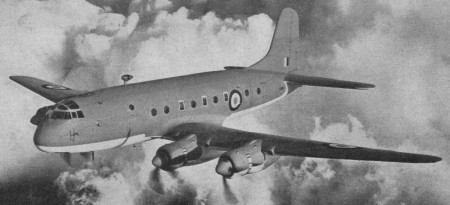
The Hastings was a general-purpose long-range transport flown by the RAF and RNZAF. Its roles included those of freighter, paratroop-transport, ambulance, troop-carrier, supply-dropper, jeep-carrier and glider-tug, first flown on May 7, 1946.
Handley Page HP.95 Hastings Article
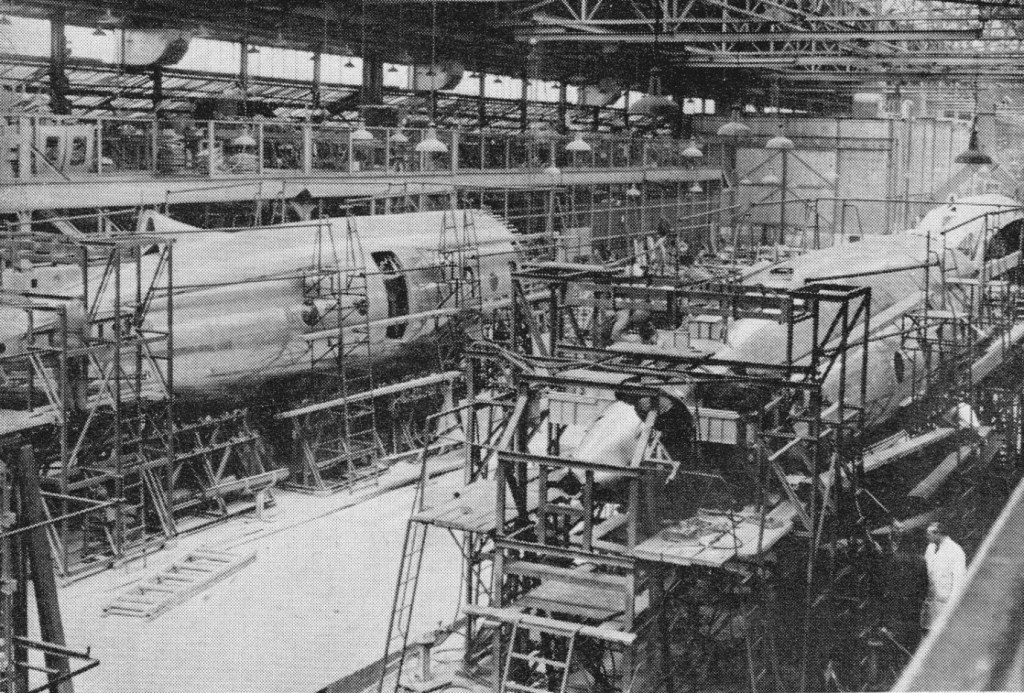
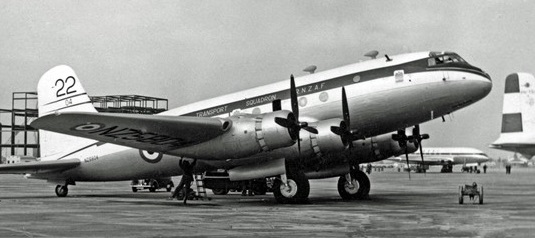
The initial production version was the C.1, first flown on 25 April 1947 and powered by four Bristol Hercules 101 engines. All C.1s were subsequently modified to Mk 2 standard and redesignated C.1As. The C.2 was powered by four Hercules 106 engines, had the tailplane lowered to the centreline of the fuselage and increased in area, extra fuel tanks, and the crew rest station replaced by an air-quartermaster post. The Hercules 737-powered C.3 was similar to the Mk 2 – and four were supplied to the RNZAF.
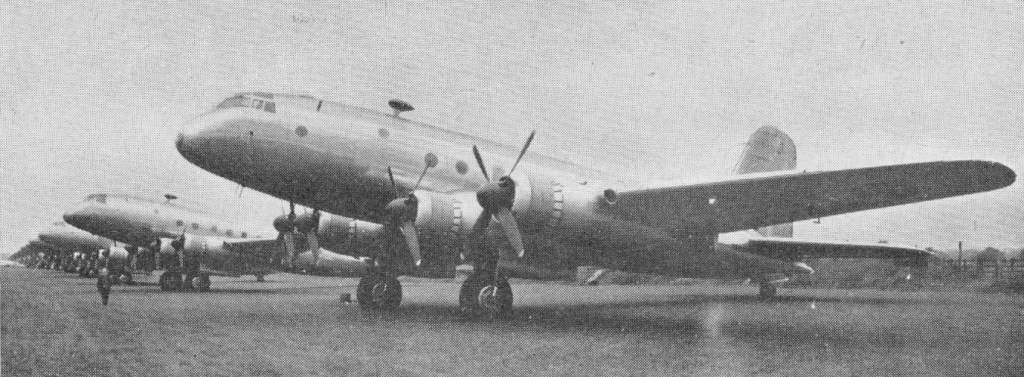
Two RAF squadrons of eight aircraft each went into service on the Berlin Airlift.
The final version was the C.4, a VIP version of the Mk 2 with accommodation for four VIPs and staff. Four were delivered to RAF Transport Command, bringing the total number of Hastings operated by the RAF up to 147. The last Hastings were withdrawn from service in 1968.
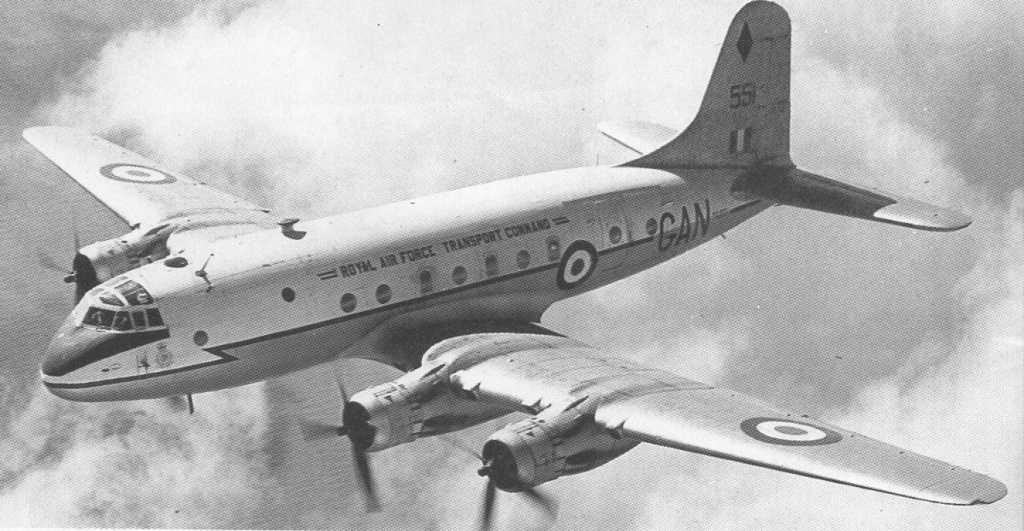
C.1
C.2
Hastings C.2
Engines: 4 x Bristol Hercules 106, 1249kW
Max take-off weight: 36280 kg / 79984 lb
Empty weight: 21960 kg / 48414 lb
Wingspan: 34.44 m / 112 ft 12 in
Length: 25.20 m / 82 ft 8 in
Height: 6.86 m / 22 ft 6 in
Wing area: 130.80 sq.m / 1407.92 sq ft
Max. speed: 560 km/h / 348 mph
Cruise speed: 486 km/h / 302 mph
Ceiling: 8075 m / 26500 ft
Range: 2720 km / 1690 miles
C.3
Engines: 4 x Bristol Hercules 737, 2040 hp.
MAUW: 83,000 lbs.
Max speed: 350 mph.
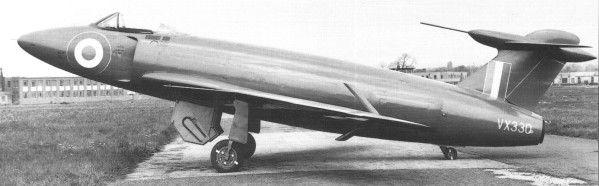
To assess the H.P.80 configuration, H.P. proposed a piloted flying scale model aerodynamic prototype based on a Supermarine Attacker fuselage with Swift wing roots, fuel system and instruments, to test the crescent wing and T-tail, together with side-mounted airbrakes. Given design number 88, it was designed by General Aircraft at Feitham, but following the company’s merger with Blackburn the H.P.88 was built, to Specification E.6/48 of March 12,1948, at Brough, North Yorkshire, where it was called the YB.2.
The wing was of an early planform, before the outer kink had been modified, and there was an all-moving tail on top of the swept fin. Serialled VX330, the H.P.88 made its first f light at Carnaby on June 21,1951, powered by a Rolls-Royce Nene turbojet. The pilot reported that it was very sensitive in pitch.
Late in the construction stage the RAE had insisted that, to limit the inadvertent application of g, a bob-weight be incorporated in the control system, to increase stick forces as extra G was pulled. This should have been located in the aircraft’s nose, near the control column, but it was too late to incorporate it on the H.P.88, so it was decided to change the control tube which passed up through the fin to the tail from light alloy to steel to have the same action. Unfortunately, fuselage flexibility was not taken into account. During a high-speed low-level test run at Stansted on August 26,1951, the rear fuselage motion coupled with the control rods and the aircraft developed a divergent oscillation in pitch which exceeded 12g before the H.P.88 broke up, killing Handley Page pilot Douglas Bloomfield. Very little was learned in the comparatively few flights it had made.
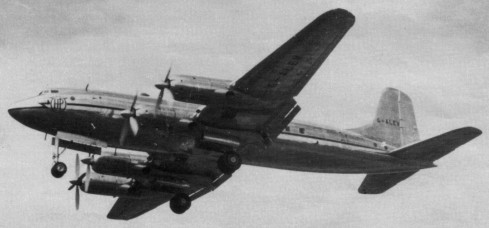
Designed during the Second World War for future peace time routes, the Hermes was dogged by misfortune and delays. The initial prototype of 1945 stalled and crashed, and it was not until August 1947 that the definitive Hermes 2 passenger version flew.
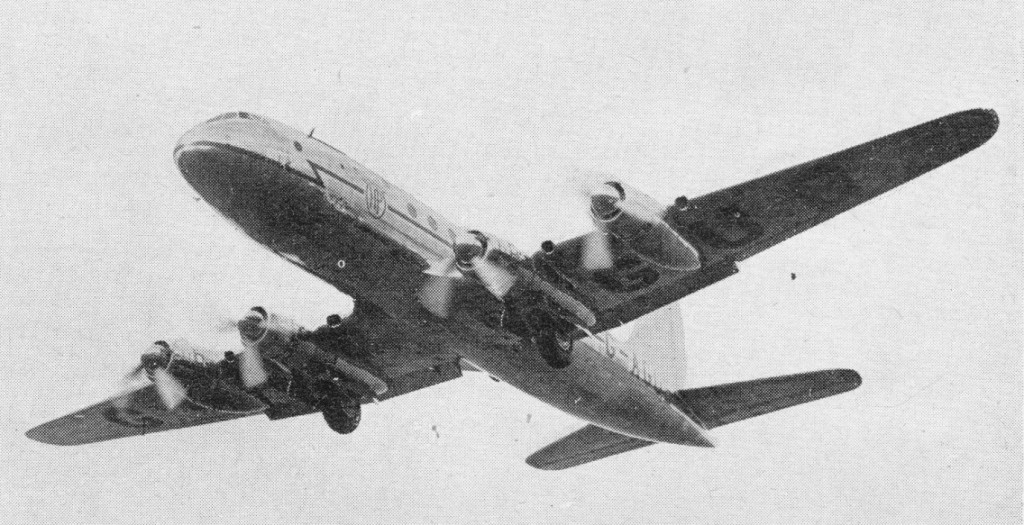
The Hermes 2 development aircraft had the tailwheel undercarriage of the Hastings but a lengthened fuselage.
On 19 March 1947 production was authorised for 25 pressurised HP.81 Hermes IVs for BOAC, with nose wheel.
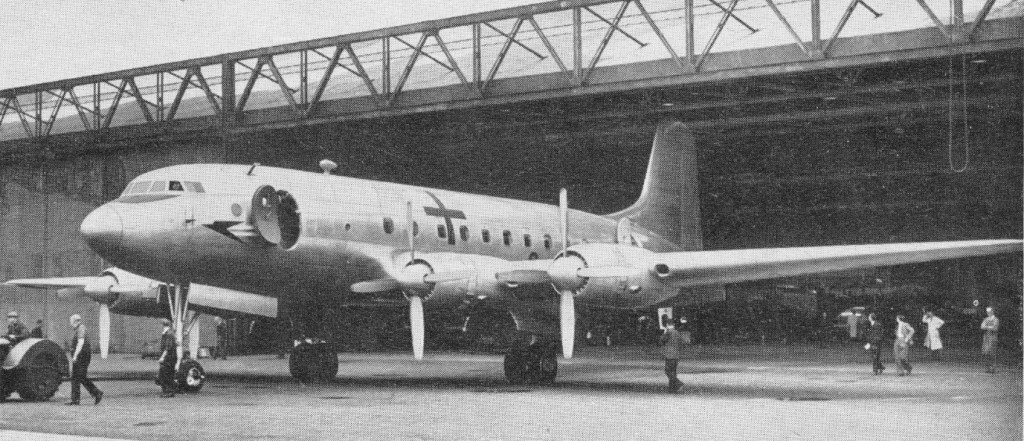
The Hermes IV was assembled in 73 days. Britain’s first large civil transport with a nosewheel, was pressurised, and held up to 63 passengers.
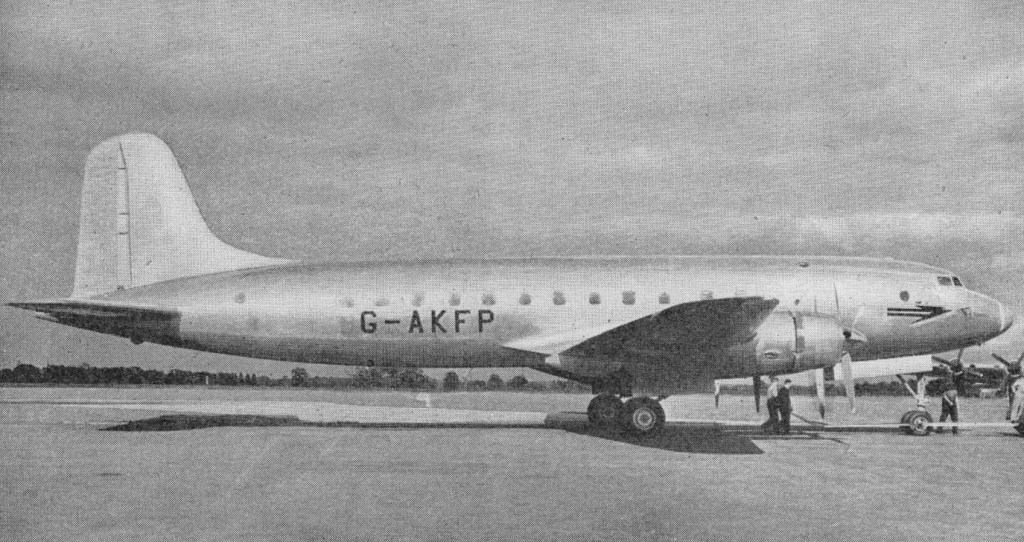
The Hermes IV made its first flight from Radlett on 5 September 1948 in the hands of H.G. Hazelden. The first flight was for 75 minutes. A second flight was of about 4 hours.
Loss of the prototype dented confidence but Farnborough 1950 saw the Mk.5 second prototype G ALEV featuring slotted flaps, increased all up weight and a fuselage very high above the ground which necessitated what for the period were very high steps.

The Hermes 4 was the first British post-war airliner built to modern standards to go into service; 25 were delivered to BOAC for use on its Commonwealth routes, services beginning in August 1950. Normal accommodation was for 40 passengers, but alternative seating arrangements provided for a maximum of 74. Originally powered by four 1,565kW Bristol Hercules 763 radial engines, all were subsequently re-engined with 1,583kW Hercules 773s and were then known as Hermes 4As.
It was replaced by Canadian C 4s in 1952.
Hermes IV
Engines: 4 x Bristol Hercules 763, 1566kW / 2,100 hp
Max take-off weight: 39000 kg / 85981 lb
Empty weight: 25100 kg / 55336 lb
Wingspan: 34.44 m / 113 ft 0 in
Length: 29.51 m / 96 ft 10 in
Height: 9.14 m / 29 ft 12 in
Wing area: 130.80 sq.m / 1407.92 sq ft
Max. speed: 563 km/h / 350 mph
Cruise speed: 435 km/h / 270 mph
Ceiling: 7470 m / 24500 ft
Range: 3200 km / 1988 miles with 14,000 lb (6,350 kg.) payload
Seats: 5 crew; 40 passengers
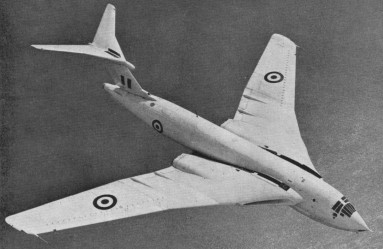
With the intention that the RAF should provide Britain’s strategic nuclear deterrent, design work began at Handley Page in 1947 on a long-range four-engined medium bomber that would be able to carry nuclear or conventional weapons internally. The Victor was the last of three V-bombers (named by Sir Winston Churchill) to enter RAF service, preceded by the Valiant and Vulcan.
Handley Page HP.80 Victor Article
Godfrey Lee presented his ideas to Sir Frederick Handley Page (FHP), who in 1945 had requested a study for a jet bomber to replace the Avro Lincoln. In February 1946 Lee came up with a futuristic design with a 45 degree swept wing of 122ft span, with wingtip fins and only a small trimming tailplane. Designed to carry a 10,000lb atomic bomb at 520kt over 5,000 miles, it had four axial-flow turbojets. A brochure was prepared and design number 80 allocated. The Air Ministry responded with Air Staff Operational Requirement OR.229, calling for a radius of action of 1,500 nautical miles (n.m.) with a 10,000 lb bomb, and a cruising speed of 500kt at heights from 35,000 to 50,000 ft. An amendment increased the range to 5,000 miles and minimum altitude to 50,000 ft.
This requirement became Specification B.35/46 of March 1947. Handley Page tendered the H.P.80, and was told at the end of July that an order would be placed, along with one for the Avro 698.
To keep the lift:drag ratio high to get good range, the span had to be fairly large, and the average chord fairly small. The aspect ratio came out at about 8:1, rather high, which suggested that the wing would be relatively heavy. The sweep at the wing root would have to be 50 degrees.
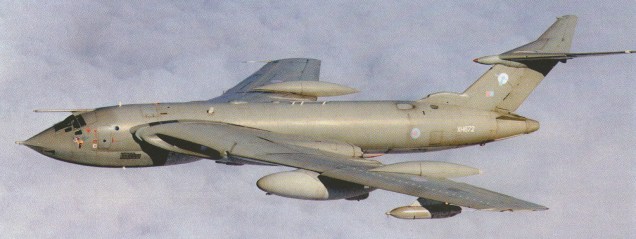
A model of the initial wing design was tested in a high-subsonic speed wind tunnel at the Royal Aircraft Establishment (RAE) at Farnborough. Disappointingly, the drag-rise Mach number was shown to be only about 0.8, mostly due to the outer parts of the wing. However, the modified wing was much better, mainly due to the effective thinning down of the outer panels owing to their extended chord. Additionally, the wingtips were given a special round shape, again to maintain high sweep of the isobars.
The Victor’s flying controls would have to be capable of operating at high Mach numbers and with large applied air loads. The decision was made to go to fully-powered electro-hydraulic operation. The only connection between the flying controls and the pilots’ controls in the cockpit was via an operating valve. When the pilot moved the column the valve allowed fluid at high pressure to enter a hydraulic actuating jack, moving the control surfaces. To cope with a failure, the control units were duplicated and independent of the aircraft’s hydraulic system.
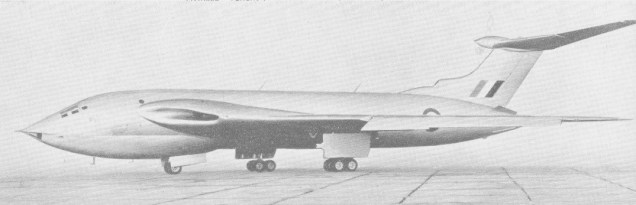
One innovation was the airbrake installation in the rear fuselage. This comprised a pair of large shaped plates, hinged to open out on either side of the fuselage at any angle up to about 60 degs. Actuated by a single hydraulic jack inside the rear fuselage, they gave a lot of drag either to slow the aircraft down or to adjust the approach angle when landing. They were found to work well.
The Victor’s wing structure was based on three mainspars which carried the major loads. Sandwich panels that took internal pressure and fuel loads had supporting local spars. There were relatively few ribs, but those at the root and kinks were massive, and were joined, flange to flange, by what were termed “pipejoints ‘. Thus the wing could be built in three portions per side, and was relatively easy to transport.
The wing was essentially a “multi-load-path” component, having sandwich panels and multiple webs. The webs, with spanwise corrugations, withstood spanwise endload due to bending, shear due to wing torsion and chordwise end loads due to tank pressure and air loads.
The panels consisted of an inner and outer skin separated by about an inch by corrugations, this core also making a contribution for end load and shear. Spot welding was used to attach the outer skin to the core, and the inner skin was attached by blind rivets.
The spars at the root were swept well forward to where the wing was at maximum thickness, enabling the engines to be mounted on sub-structure behind them. This made engine removal quite easy. Sandwich panels were used here as cover, but the corrugations ran chordwise so that they did not take up wing bending end loads, carried by the spars at this point. The lower surface mainly comprised engine and undercarriage doors.
The mid-set wings have compound sweepback, varying from 52.2 deg on the inner wings to 35.2 deg on the outer.
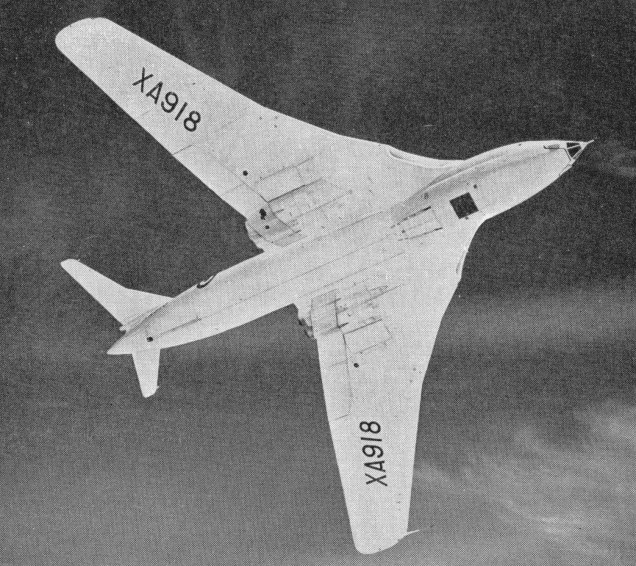
Five years would elapse from acceptance of the basic idea to the maiden flight of the first Victor prototype, W13771, on 24 December 1952 at the Aeroplane & Armament Experimental Establishment (A&AEE) at Boscombe Down with test pilot H.G.Hazelden, and another five years would be spent in development and flight testing before the RAF took delivery of its first production Victor.
The prototype H.P.80 remained at Boscombe Down until runway lengthening at Radlett had been completed, although Handley Page employees at Radlett and Cricklewood were given their first glimpse of the aircraft in the air when it flew over during one lunchtime, the staff having been advised of the event earlier in the day.
The first official public appearance of the Victor was in the flypast at the Queen’s Coronation Review at Odiham onjuly 15, 1953, and in September that year it appeared at the SBAC Exhibition at Farnborough in a rather sinister black, red and silver colour scheme. Disaster struck on July 14, 1954, however, when WB771 suffered a fatal flutter incident at Cranfield, resulting in the loss of test pilot “Taffy” Ecclestone and all the crew. By then the second prototype, W13775, was ready to continue flight development.
The production Specification, B128P, had appeared in August 1952, but it was not until February 1, 1956, that XA917, the first production aircraft made its first flight from Radlett, followed by the second, XA918, some seven weeks later. Retained by Handley Page for development flying, XA917 was never used in RAF squadron service. It had the distinction of reaching supersonic speed for the first time, in a dive, on June 1, 1957, the largest aircraft to have done so in the UK. It ended its flying career in 1960, after nearly 500hr flight time on 222 test flights.
The fifth production aircraft, XA921, was finished in an all-white scheme that was to become standard for Victors for several years. It was exhibited on the ground at Marham for the Queen’s Review of Bomber Command on July 23,1957.
Groundschool for Victor personnel in the RAF started when “A” Flight of No 232 Operational Conversion Unit (OCU) was disbanded in December 1956 for the unit to attend at Radlett. This lasted nearly a year, the Flight re-forming and receiving its first Victor at the end of November 1957, about two years after the desired date for entry stated in operational requirernent OR.229.
The first squadron to operate the Victor BI was No.10 Sqn at Cottesmore, re-formed on April 1, 1958; the 40th anniversary of the formation of the RAF. TheVictor, in its several marks, was to stay in RAF service for almost as long again. Next came 15 Sqn, in September, followed by 57 Sqn on New Year’s Day 1959.
Note worthy was one flight from Farnborough to Lucia, Malta, a distance of 1,310 miles, covered in 2hr (October 14, 1958), and another from Goose Bay, Canada, to Marham, 2,020 miles, in 3hr 8min (October 20,1958).
The B.I remained in service as a part of Britain’s nuclear deterrent into the early-to-mid-1960s, being replaced by the B.2, but midway through 1964 the in-flight-refuelling tanker version of the Valiant, the first of the V-bombers, was found to be suffering from fatigue cracking of major structure, necessitating its rapid withdrawal.
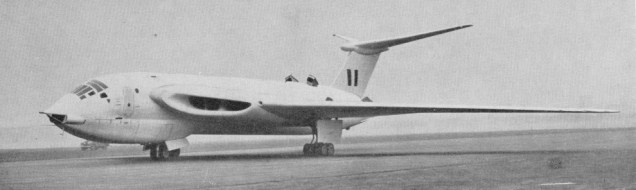
To fill the gap in capability created, designs were urgently prepared for the conversion of some of the Victor Mk 1 s to take over the task. Six were returned to Radlett to have underwing refuelling pods fitted. This was an interim solution; the pods were suitable for fighters, but larger aircraft needed a bigger unit which was to be fitted into the bomb bay just aft of the wing root trailing edge, along with extra fuel tanks. The “two-point tankers” retained the ability to revert to bombing at fairly short notice, and became operational at Marham in May 1965. They were followed by the “three-point tankers” starting in November 1965, 57 Sqn becoming operational with them in June, 1966, followed by Nos 216 and 55 Sqns.
When the Victor Mk2 was designed, the span was increased by adding an 18in-wide strip of wing at the root, and by moving the wingtips out 42in, giving a 10ft increase in span. By then research had shown that, if the nose of the outer wing sections could be extended forwards by a relatively small amount and given a carefully designed downwards camber, they gave acceptable behaviour at high lift and improved turning characteristics at high speed. The modification was retrospectively applied to the Mk 1 when it was converted as an inflight refuelling tanker, making it the Mk 1A. The accumulator and its associated equipment were dispensed with; a significant weight saving.
A single large weapon bay was provided, and could carry 35 bombs of 454 kg (1,000 lb).
Strength tests of complete airframes, carried out in the test rig at Park Street Test House at Radlett airfield, confirmed that the aircraft’s strength met all the structural requirements of the specification. Even when necessities during the Mk 2’s Service life meant it had to be operated at low altitude, an environment for which it was not designed, it was found to be able to perform that duty adequately, though the structure became “fatigued” more quickly. This had a big influence when it came to the conversion of the Victor B.2 to take over tanker duties from the Mk 1, and special measures had to be taken to ensure that the “fatigue life” usage was kept to a minimum and spread throughout the fleet.
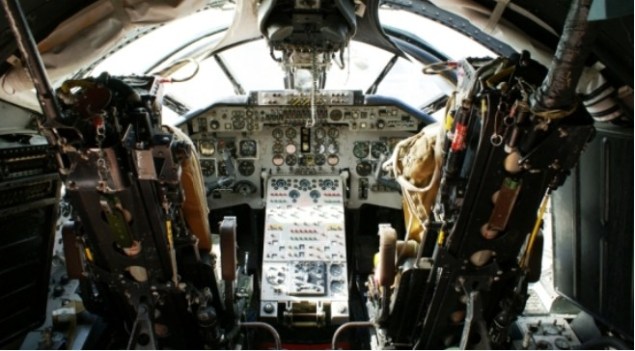
The air intake ducts were fed between the top and bottom booms of the spars. The carrythrough box across the fuselage was very large, taking out the wing root bending and torsion.
The flaps and ailerons were carried on sub-spars with large flap tracks for the large Fowler type area-increasing flaps. These first moved backward with little rotation to give a relatively low-drag, high-incremental-lift position for take-off, and then moved further still and rotated to give the higher lift, higher drag for approach and landing.
Early Victors had hinged nose flaps at the outerwing leading edges, but these were superseded by fixed, drooped leading edges also carrying “turbulators” which helped to stabilise the flow round the leading edges.
The main fuselage was of fairly conventional skin, stringer and frame construction, but the 32ft-long bomb bay occupied most of the fuselage aft of the main wing carry-through box. The top consisted of D-section frames, between which were mounted bag-type fuel tanks, three of the frames being strengthened to carry bomb loads and hoisting points, and ending at a bulkhead taking the front spar of the fin. Strong longerons ran along the bottom of each sideJust above the sliding bomb-bay doors. The tailcone housed a large hydraulic jack that operated the large fully-variable air brakes on each side of the rear fuselage. On top, behind the rudder, was the container for the 45ft ring-slot braking parachute.
Each eight-wheel main undercarriage bogie, housed between two heavy ribs outboard of the engines, folded forwards as it retracted. It had anti-skid brakes. The twin nosewheels were steerable but unbraked.
The crew was housed in a pressure cabin designed to a pressure differential of 9 lb/sq.in and having a sloping windscreen. The pilots had dual controls and Mk 3 ejection seats, and sat ahead of and slightly higher than the rear crew, who sat on three swivelling seats in a row. Adjacent to them, on the port side, was the crew entry door. In an emergency this opened outwards, and had a shield to protect emerging crew members. A periscope was fitted for inspecting the wing undersurface and checking if telltale vapour trails were being formed. In the tankers it was used to study the behaviour of receiver aircraft.
Production aircraft had a refuelling probe above the windscreen, in good view of the pilots. Underneath the floor
of the cabin was the main radome.
The first prototype made its maiden flight on 24 December 1952. The first production Victor flew for the first time on 1 February 1956. The first production B.1, each with four 48.93kN (11,000 lb) thrust Armstrong Siddeley Sapphire 201 turbojets began to enter RAF service with No 232 Operational Conversion Unit in November 1957. The first Victor squadron (No 10) became fully operational at Cottesmore in the spring of 1958. Formation of the planned total of four Victor B.1 squadrons was completed early in 1960. B.1A aircraft had ECM and other equipment changes.
The Mk 1 had four Armstrong Siddeley (later Bristol Siddeley) straight axial-flowjet engines at Sa7 rating, each giving 11,0001b static thrust at sea level. They were mounted in pairs, sharinga common air intake in the wing leading edge, individual ducts leading to each engine. The orifices at the wing trailing edge were canted slightly outwards. While the Sapphires were perfectly adequate for take-off at normal operating weights, they were marginal in overload cases. Removable underwing de Havilland Spectre rocket assistance units gave a spectacular improvement, but were rather impractical. There is no record of their use in service. The Mk 1 s had to be carefully operated in “hot and high” conditions, at some risk when heavily loaded.
Many hours of research were needed to achieve an efficient engine intake. The Mk 1’s Armstrong Siddeley Sapphire engines had a design of axial compressor which was unaffected by the flow distortion that was inevitable given the intake type, but the Rolls-Royce Conways of the Mk 2 were much fussier, and drastic changes had to be made to the intakes, involving a duct of greater cross-section and flow-governing internal vanes.
The fin was a conventional two-spar structure with corrugated skins, but the dihedral tailplane, carried atop the fin, was very nearly “all-moving”, with just a stub tailplane housing the elevator powered flying control units. Its construction was similar to that of the wing.
The flying controls, elevators, ailerons and rudder had operating jacks driven by duplicated hydraulic motors, each being powered by its own electric motors and signalled by slide valves connected to the pilot’s controls. They were irreversible, and there was no manual reversion in the event of failure.
On the Mk 1 four engine-driven alternators provided 73 KVA electrical power, transformed to 112 and 24V DC with four 24V batteries. inverters were used to supply AC to various equipments.
Two hydraulic pumps, powered by 11 5V DC electric motors, supplied 4,000 lb/sq.in to work the undercarriage, flaps, airbrakes and bomb doors, and the fuselage Mk 17 hose drum unit (HIDU) on the tanker version.
The span was increased by 10ft for the Mk 2. Streamlined half-bodies on the rear top surface of the wing at about mid-semi-span, called “Whitcomb Bodies” or “Kuchemann Carrots”, housed containers of Window anti-radar strips. Inspired by research by Richard T. Whitcomb of NASA in the USA and Dietrich Kuchemann at RAE Farnborough, they increased the drag-rise Mach number at the cost of a little skin-friction drag.
The Sapphires were replaced by Rolls-Royce Conway bypass engines, initially Mk 10301s at Co.11 rating (17,5001b static sea level thrust), then by Co.17s, Mk 20101s of 20,000 lb-thrust. The higher thrust allowed a significant increase in all-up-weight.
Although the Conway’s sea-level thrust was approximately double that of the Mk I’s Sapphire, it fell off more rapidly at high altitudes, despite fuel consumption per pound of thrust being better. The Conway required a much greater throughput of air, however, and the intakes had to be considerably enlarged and fitted with flow straightening vanes before the engine ran properly.
A Bristol Siddeley Artouste auxiliary power unit was installed in the Mk 2’s starboard wing root, driving a 40KVA alternator. It could be used in flight up to 25,000ft and, because it could be started on the aircraft batteries, made the aircraft independent of ground services.
The electrical system now relied on four 40KVA (later 50KVA) 200V alternators at 400Hz, with transformers to provide 11 5V AC and rectifiers for 24V DC. Two ram-air turbines in the upper rear fuselage, with intakes that opened automatically at low airspeeds, provided 15KVA AC each for the powered flying control units in the event of electrical failure.
The first Victor B.2, XH668, initially with lower-power Conway 11s, made its first flight on February 20, 1959, but disaster struck once again when it disappeared over the Irish Sea on August 20 with its A&AEE and H.P. crew. As the Victor was so important to Britain’s nuclear deterrent, huge efforts were made to recover as much wreckage as possible to determine what went wrong. About 75 per cent of XH668 had been dredged up by the end of 1960. After a searching investigation by RAE Farnborough the problem was attributed to the loss of a wingtip pitot-static tube, which then caused a nose-down runaway of the Mach-trimmer system. Although this was the official verdict, many people did not think it was the right one. The company’s test pilots had made tests in which the trimmer was deliberately made to run away, and had reported that this could very easily be compensated for. Many years later a senior RAF officer stated that he knew the real answer, but was not permitted to disclose it.
Whatever the cause, the second aircraft, XH669, which had made its maiden flight a few days before the accident, then undertook the burden of Mk 2 development flying. It appeared at the SBAC Display in September 1960, and was joined by XH670,’67l,’672 and’673 in tests of new equipment. On December 5, 1960, XH673 was engaged in highaltitude tests of the hydraulic system when the system failed. Although the flying controls still worked, the bomb doors were partly open, and the flaps, airbrakes and wheels could not be extended.john Allam, H.P.’s chief test pilot and captain of the aircraft, diverted to RAF Waddington, calling the fire service there to lay a foam runway for a wheels-up landing. This was a speciality of the station, which had done it for an in-service B.1 two years earlier.
Allam made a perfect touchdown after a flapless approach, but ran out of foam before the aircraft came to rest. The friction caused a small fire, which was quickly extinguished. No-one was hurt, and the aircraft was repaired and used for trials at Boscombe Down in April 1961.
The B.2 entered service with the No 139 Squadron RAF on February 1, 1962, when 139 (Jamaica) Sqn at Wittering received XL231. These had more powerful engines, increased wing span, enlarged air intakes, and introduced a “Window'”dispenser pod on the trailing edge of each wing. In late 1962 the process of returning B.2s to Radlett began under a retrofit programme to install more sophisticated equipment and the fully-rated Conway 17 engines.
Some aircraft were also equipped for carriage of the Blue Steel air-launched rocket-powered stand-off missile with a nuclear warhead, which was released short of its intended target, well clear of any heavily defended area, and made its own way to the target at supersonic speed. These Victors were designated B.2R.
No 139 Squadron was the first to become operational with the Blue Steel nuclear stand-off bomb in February 1964. Victor squadrons were subsequently specified for low-altitude in addition to high-altitude attack.
Such was the pace of technical improvements in defence capability that the airborne delivery of nuclear weapons was becoming too uncertain of success by the late 1960s.In its place the launch of intercontinental ballistic missiles from hardened shelters or submarines was chosen. Thus the B.2Rs were phased out as bombers, starting in 1968, and flown back to be stored at Radlett.
There were strategic reconnaissance Victor SR.2s in service, equipped with a battery of high-resolution cameras in the bomb bay, flanked by long-range tanks. Victor B(SR).2 strategic-reconnaissance aircraft entered service with No 543 Squadron at RAF Wyton in the autumn of 1965. These aircraft had the capability to radar map an area of up to 1,942,490sq.km during a six-hour period.
The Vickers Valiant tanker fleet was withdrawn at the end of 1964, leaving the RAF without support for its English Electric Lightnings and Gloster Javelins. However, a three-point tanker version of the Victor B.1 had been agreed earlier. The choice of the Victor had been in the balance in 1962, since it was said that it would not be possible to formate two Lightnings behind it. Handley Page’s RAF liaison officer, Gp Capt “Rosie” Leigh Houlbrook, arranged for a couple of Lightnings to demonstrate that they could do so with no problem.
Thus in 1964 some aircraft were already being stripped down at Radlett, and it was decided as a matter of urgency to convert six B.1As (XH615,’620,’667,’646,’647, andm’648) to a two-point configuration (underwing Mk 20 HDUs only, on standard RAE pylons). The first two were delivered in April 1965, the other four soon after, and they carried the burden well until the three-point K.1 and K.1A versions (fuselage HDU added) started arriving in 1967.
It was decided to convert ten aircraft from the XA serial range and 14 from the XH range to K.1A standard (fixed leading-edge droop in place of noseflaps). Considerable work was required: bomb-doors were removed, bomb-bay tanks were installed and the retractable Mk 17 HDU was installed in the rear of the bomb bay. The Sapphire 201s were replaced by 207s with engine-mounted alternators.
Hawker Siddeley Aviation was awarded the Victor B.2 tanker conversion contract after H.P. ceased trading in 1970, and the 21 B.2s on the airfield at Radlett had to be refurbished to a flyable state. They were then flown to Woodford, near Manchester, for conversion. Some were in poor condition; at least one had to be flown to Woodford at low speed with its undercarriage down. The wing and fuselage HDUs and associated fuel systems were installed, in a very similar fashion to the K.1, and the large underwing tanks were made nonjettisonable. Each aircraft had to be stripped completely to remedy corrosion that had started during long storage in the open, and had to be brought up to the latest modification standard. The outer wings were strengthened and the extended tips of the B.2 were replaced by the original B.1 tips. The ailerons were set up by a small amount, and modifications were made to the flying controls. The avionics fit was revised.
With the aircraft reduced to its main components, refurbishment was carried out at several locations – Chadderton, Bitteswell and others. What was effectively a rebuilt aircraft was finally assembled at Woodford and flight-tested. The process took between two and three years.
The first K.2, XL231, first flew from Woodford on March 1, 1972, although it was not fully modified structurally. Reducing the span by cropping the wingtips, to reduce the bending stresses, and setting the aileron trailing edge up on both sides certainly moved the centre of lift inboard, but the wing was swept, so the change also moved it forwards, closer to the c.g., rendering the aircraft less stable. Changing the stick-gearing to the elevators partly compensated but, when he flew the K.2 many years later John Allam remarked that he thought it unduly sensitive, and, had he been in charge, would not have asked the A&AEE to accept it.
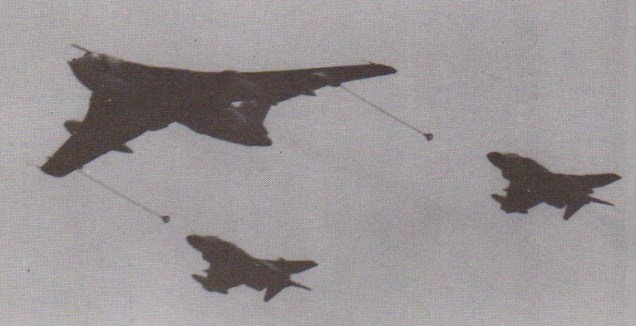
It had a crew of five, and was powered by four Rolls-Royce Conway turbofans of 20,600 lb thrust each. It had a maximum speed of 640 mph (Mach 0.92) at 40,000 feet, a ceiling of 59,000 feet and a range of 3,500 miles.
The changes also reduced the lift:drag ratio, giving a poorer cruise performance. But the RAF was desperate for the tanker, and it was accepted in that state. The first was delivered to the RAF on 8 May 1974. The first aircraft to enter service was XL233, and 23 others were eventually converted. They at once embarked on a regular routine of support for fighters sent out over the North Sea to investigate prowling Soviet aircraft, and also to accompany aircraft out to places such as Cyprus for regular exercises.
As a tanker, the Victor is equipped with 32 separate fuel tanks carrying 55 tons of fuel, and three refuelling hoses, two on outer wing pods capable of delivering 682 lt/min, and a hose drum unit under the fuselage able to deliver 2273 lt/min.
All this showed the value to the RAF of the Victor tanker, particularly when Argentina invaded the Falkland Islands on April 2,1982. In just over two weeks six aircraft were detached to Ascension Island, from where they could meet incoming supply aircraft. They also carried out a wide radar reconnaissance of South Georgia before its recapture.
Victor Mk 2s were finally withdrawn from service in 1993, some three decades after they were introduced, and nearly four after the Mk 1 entered the RAF inventory – a massive achievement and tribute to the H.P. team behind the Victor’s design and development.
Production
Built as Victor B.1
50 aircraft
XA917-XA941
25 aircraft first flown between January 1956 and August 1958
XH587-XH594, XH613-XH621, XH645-XH651, XH667
25 aircraft first flown between October 1958 and March 1960
Victor B.1A conversions
24 aircraft
All of second batch above except XH617 (crashed July 20,1960)
Victor K.1A conversions
10 aircraft
From first B.1 batch to K.1 standard:
XA918, XA926-XA928, XA932, XA936-939, XA941
6 aircraft
From the second B.1 batch to B.1A, then to tanker standard:
XH615, XH620, XH646-XH648, XH667
14 aircraft
From second B.1 batch to K.1A standard:
XH 587-591, XH614, XH616, XH618, XH619, XH621, XH645, XH1649-XH651
Built as Victor B.2
34 aircraft
8 aircraft first flown between February 1959 and September 1960
XH668-XH675
26 aircraft first flown between October 1960 and April 1963
XL158-XL165, XL188-XL193, XL230-XL233, XL511-XL513, XM714-XM718
Victor SR.2 conversions
8 aircraft
XH674, XL161, XL165, XL193, XL230, XM715, XM716 plus partial conversion of XM718
Victor K.2 conversions
24 aircraft
XH669, XH671-XH673, XH675, XL158, XL160-XL164, XL188-XL192, XL231-XL233, XL511-XL513, XM715, XM717
Victor B.2 losses
XH668
Crashed into Irish Sea during trials, 20 August 1959
XL159
Crashed at Stubton near Newark, Notta, in superstall, 23 March 1962
XM714
Stalled after takeoff at Barnack, near Stamford, Linc, 20 March 1963
XM716
Crashed at Warboys, Cambs, after being overstressed in press demonstration, 29 June 1966
Victor B.2s cancelled
28 aircraft
XL250-XL255, XM745-XM756, XM785-XM794
Specifications
HP.80
Wingspan: 110 ft
Lengrh: 98 ft 2 in
Wing area: 2406 sq.ft
Wheel track: 30 ft 2 in
Max takeoff weight: 120,000 lb
Max speed: 594 mph at 36,000 ft
Range: 6000 miles
Aspect ratio: 8:1
Sweep at the wing root: 50 degrees
Cabin pressure: 9 lb/sq.in
B.1
Engines: 4 x 48.93kN (11,000 lb) thrust Armstrong Siddeley Sapphire 201 turbojets
Wingspan: 110 ft
Lengrh: 102 ft 5 in
Wing area: 2406 sq.ft
Wheel track: 30 ft 2 in
Basic weight: 89,030-90,100 lb
Operating weight: 92,228-94,048 lb
Max takeoff weight: 170,000-185,000 lb
Max speed: 627 mph at 36,000 ft
Service ceiling: 55,000 ft
Range: 6000 miles
B.1A
Engines: 4 x 48.93kN (11,000 lb) thrust Armstrong Siddeley Sapphire 201 turbojets
Wingspan: 110 ft
Lengrh: 102 ft 5 in
Wing area: 2406 sq.ft
Wheel track: 30 ft 2 in
Basic weight: 89,030-90,100 lb
Operating weight: 92,228-94,048 lb
Max takeoff weight: 170,000-185,000 lb
Service ceiling: 55,000 ft
Range: 6000 miles
B.2
Engines: 4 x Rolls-Royce Conways Mk 10301, Co.11 rating 17,5001b static sea level thrust
later Co.17s, Mk 20101, 20,000 lb/9,344 kg -thrust.
Wingspan: 120 ft / 36.6 m
Length 114.9 ft / 35 m
Height: 30 ft 1.5 in / 9.18 m
Wing area: 2597 sq.ft
Wheel track: 33 ft 2 in
Empty weight: 41270 kg / 90985 lb
Basic weight: 107,950 lb
Max takeoff weight: 187,000 lb
Max speed: 647 mph at 36,000 ft
Normal cruise Mach 0.92
Max cruise alt: 55,000 ft / 16,750 m
Service ceiling: 60,000 ft
Range: 6000 miles
Combat radius: 2,300 miles / 3,700 km
Max. bomb load: 35,000 lb / 15,875 kg
Crew: 5
B.2R
Engines: 4 x Rolls-Royce Conways Mk 10301, Co.11 rating 17,5001b static sea level thrust
later Co.17s, Mk 20101, 20,000 lb/9,344 kg -thrust.
Wingspan: 120 ft / 36.6 m
Length 114.9 ft / 35 m
Height: 30 ft 1.5 in / 9.18 m
Wing area: 2597 sq.ft
Wheel track: 33 ft 2 in
Max. bomb load: 35,000 lb / 15,875 kg / 1x Blue Steel (nuke)
Crew: 5
SR.2
Engines: 4 x Rolls-Royce Conways Mk 10301, Co.11 rating 17,5001b static sea level thrust
later Co.17s, Mk 20101, 20,000 lb/9,344 kg -thrust.
Wingspan: 120 ft / 36.6 m
Length 114.9 ft / 35 m
Height: 30 ft 1.5 in / 9.18 m
Wing area: 2597 sq.ft
Wheel track: 33 ft 2 in
K.1A
Engines: 4 x Rolls-Royce Sapphire 207
K.2
Engines: 4 x Rolls-Royce Conways Mk 10301, 20,600 1b static sea level thrust
later Co.17s, Mk 20101, 20,000 lb-thrust.
Wingspan: 117 ft
Wing area: 2580 sq.ft
Wheel track: 33 ft 2 in
Basic weight: 115,400 lb
Operating weight: 224,500 lb
Max takeoff weight: 223,000 lb
Max speed: 640 mph / M0.92 at 40,000 ft
Ceiling: 59,000 ft
Range: 3500 miles
Fel capacity: 55 ton
Aerial refueling stns: 3
Refueling flow; 2 at 682 lt/min / 1 at 2273 lt/min
Crew: 5

 All Aero