Haufe Hawk

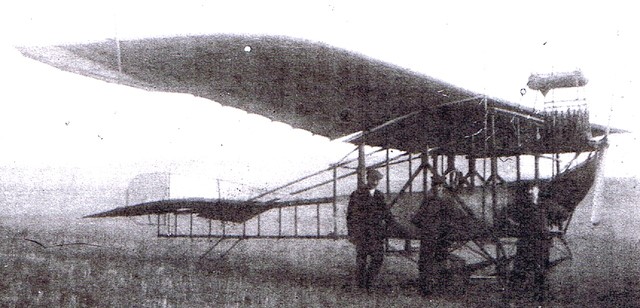
Designed and built by Walter Haufe, of Neenah, Wisconsin, this single-seater high wing motor glider is powered by a 40hp Nelson H-59 four-cylinder horizontally-opposed engine mounted in the nose. The engine, when stopped for soaring flight, swings back through 80° inside its cowling so that the two-blade fixed-pitch propeller, also designed and built by Mr Haufe, is stopped in the vertical position and lies flat along the top of the cowling to minimise drag. The cooling air intakes for the cylinders are open when the engine is running but are closed when the engine is stopped. The cantilever wooden wing is of semi-elliptical planform with upturned tips, the fuselage is a fabric covered steel tube structure and the tail unit is wooden with fabric covering. Landing gear consists of a fixed monowheel and a tailskid, plus an unusual skid with small balancer wheel just behind the engine cowling to prevent the prop from touching the ground. The pilot sits under a removable cockpit canopy set into the wing leading edge. The Hawk prototype, N1051Z, made its first flight in 1962.

Span: 40 ft 6 in
Length: 22 ft 6 in
Empty weight: 462 lb
Max speed: 40 mph
Min sinking speed: 3.0 ft/sec
Rate of climb: 500 ft/min

Hatfield Man-Powered Aircraft Club MPA / Puffin

Built specially to compete for the Kremer prize of £5,000 for man-powered flight. A single seat, fixed wing monoplane with the propellor driven by pedalling. Employees of the de Havilland Aircraft Company’s Puffin flew in November 1961 from Hatfield aerodrome. Puffin was with transparent Melinex covering and extreme dihedral on its 25.6 m (84 ft) wings. Its pilot, Jim Phillips, by the end of the year had flown the craft up to 686 m (750 ft) and made turns through 8o degrees. On 4 May 1962 Hatfield Man Powered Aircraft Club chairman John Wimpenny flew the Puffin 908 m (993 yards). He was awarded a £50 prize for his record 805 m (880 yard) flight.

Construction was metal tube with balsa for the non-load carrying areas with Mellinex covering. A single main wheel undercarriage with a jockey wheel at the tail were fitted.

It crashed after ninety flights at Hatfield in April 1964 and was rebuilt as the Puffin II.

The Puffin II was an entirely new design wing of greater span and having a different Airfoil section. It flew for about another ninety flights at Hatfield until it collided with some ground equipment there in 1969 and was wrecked.

Liverpool University MPAG bought the remains and they were used in their ‘Liverpuffin’.

Puffin I
Wingspan: 84.00 ft
Wing area: 380 sq.ft
Aspect ratio: 21:1
Empty weight: 140 lb

Puffin II
Wingspan: 93.00 ft
Wing area: 390 sq.ft
Aspect ratio: 22:1
Empty weight: 140 lb

Hartill Mono-plane

Towards the end of March 1910 the townsfolk of Wolverhampton had a chance to see a flying machine at close quarters when the Hartill mono-plane was displayed in the furniture showrooms of Robert H. Davies in Darlington Street. It drew a great deal of interest and its designer Mr Hartill, was on hand to explain all about it.

He explained to the enthralled gathering of onlookers that before starting work on the project he went over to the Rheims Flying Meeting, the worlds first, and to the Paris Aero Show of 1909. Where he made close examination of the machines present.

His machine was designed and constructed by Mr A.E.Hartill. a plumbing and gas engineer with premises at the top end of Cleveland Street, on the corner of Snow Hill, (as noted by his 1910 advert).

It was made to the order of a Doctor Hands, who is noted in Kelly’s 1905 directory as Surgeon and Medical Officer of Health.to the Wednesfield District Council and also medical officer and public vaccinator for for Wolverhampton Union Cottage Homes 138 Wednesfield Road.

On his return to Wolverhampton Mr Hartill began construction of the mono-plane for Doctor Hands and though it was the good doctor who was to foot the bills, the machine was to be known by the name of its designer and was to be flown by him or is son on its trials.

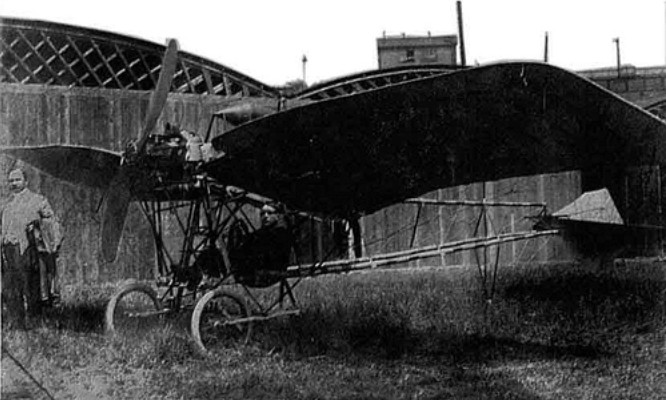
When completed the Hartill flying machine was seen to be very similar in layout to the Demoiselle, of very light construction, with pilot seated close to the ground under the wing and motor. The Wolverhampton machine was however considerably larger, having a wing span of 26ft against the Demoiselle’s 18. there was also differences in the control system, for whilst wing warping was used ( a common idea of the period), the Hartill was known for having fluted wings with tips that could be drawn up, supposedly to improve stability when landing or in difficult wind conditions.

However, since since the machine did not fly, it is not possible to say if the idea would have worked .

Construction was of steel and bamboo, wing covering was rubberized aero fabric, an Alveston horizontally opposed twin cylinder engine of 20h.p. was fitted and all weight was around 4cwt.
As would be expected, both Wolverhampton flying machines, the Hartill and the Star were entered for the Dunstall Flying Week held over the period June 27- July 2nd 1910, as this meeting was devised to encourage British Aviation.

One of the numerous bothers that beset the Hartill mono-plane was late delivery of the Alveston motor and a suitable airscrew.

The Doctor Hands/Hartill team tried manfully to get airborne and suffered a few frights, the mono-plane nosing over a couple of times when taxiing. It is not known what happened to this flying machine, but it seems certain it was destined not to fly.
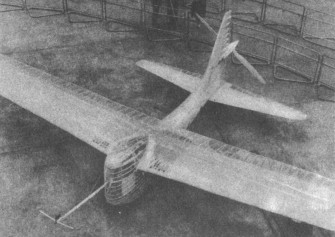
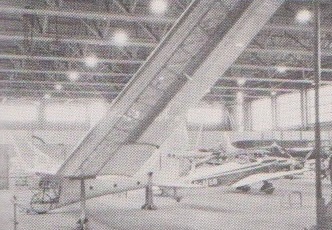
Hart Aero Aero Sport

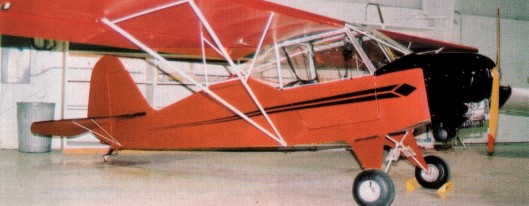
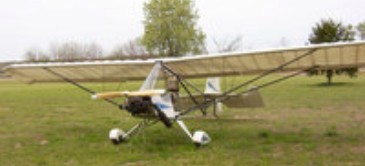
The Hart Aero Sport is our answer to the cry for an FAA legal, safe, three axis, back to basics aircraft that fits the Ultralight category using a Rotax 447 or the new Light Sport Aircraft and Sport Pilot rules using a Rotax 447 or Rotax 503. With three axis controls and dual controls, it handles just like a “real” airplane. The Hart Aero Sport is a full three axis aircraft with a center mount stick & is covered with the certified poly fiber or ceconite process. This kit comes ready to assemble with all machining & required welding pre-done. Assembly time is normally around 100/200 man hours depending on experience. Price 2009: 4999 US$

Stall: 22 kt / 25 mph / 41 kmh
Cruise: 70 kt / 81 mph / 130 kmh
VNE: 100 kt / 115 mph / 185 kmh
Empty Weight: 125 kg / 275 lbs
MTOW Weight: 261 kg / 575 lbs
Climb Ratio: 1000 ft/min / 5 m/s
Glide Ratio: 16:1
Take-off distance (50ft obstacle): 250 ft / 76 m
Landing distance (50ft obstacle): 250 ft / 76 m

Hart Aero Lite Flyer Biplane

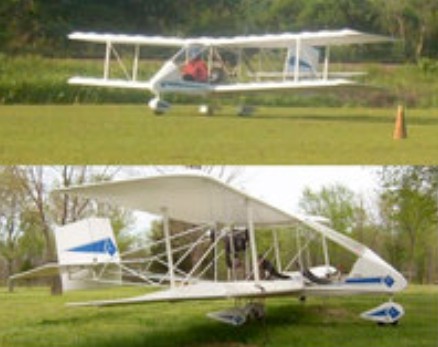
The Lite Flyer Biplane is Hart Aero’s FAA legal, three axis dual control, back to basics aircraft that fits the new Light Sport Aircraft and Sport Pilot rules. With three axis controls and dual controls, it handles just like a “real” airplane, the Lite Flyer has a center mount stick & is covered with the certified poly fiber process. This kit comes ready to assemble with all machining & required welding pre-done. Assembly time is normally around 100/200 man hours depending on experience. Price 2009: 6499 US$

Stall: 24 kt / 28 mph / 44 kmh
Cruise: 60 kt / 69 mph / 111 kmh
VNE: 100 kt / 115 mph / 185 kmh
Empty Weight: 142 kg / 312 lbs
MTOW Weight: 357 kg / 787 lbs
Climb Ratio: 750 ft/min / 4 m/s
Glide Ratio: 12:1
Take-off distance (50ft obstacle): 300 ft / 91 m
Landing distance (50ft obstacle): 300 ft / 91 m

Hart Aero Turkey Buzzard Sailplane

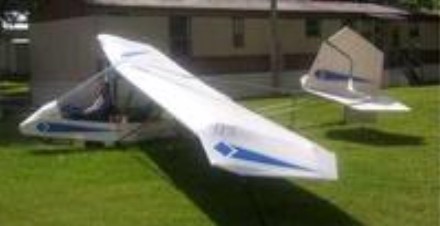
The Hart Aero Turkey Buzzard Sailplane is an FAA legal, three axis, back to basics sailplane. With three axis controls and dual controls with a center mount stick & is covered with the certified poly fiber or ceconite process. This kit comes ready to assemble with all machining & required welding pre-done. Assembly time is normally around 100/200 man hours depending on experience. Price 2009: 4999 US$

Stall: 16 kt / 18 mph / 29 kmh
Cruise: 43 kt / 50 mph / 80 kmh
VNE: 87 kt / 100 mph / 161 kmh
Empty Weight: 93 kg / 205 lbs
MTOW Weight: 352 kg / 775 lbs
Glide Ratio: 25:1+
Landing distance (50ft obstacle): 350 ft / 107 m

Hart Aero Aero Trainer

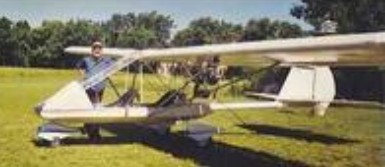
The Aero Trainer is Hart Aero’s FAA legal, three axis dual control, back to basics light sport training aircraft With three axis controls and dual controls, with a center mount stick & is covered with the certified poly fiber or ceconite process. This kit comes ready to assemble with all machining & required welding pre-done. Assembly time is normally around 100/200 man hours depending on experience. 2009 Price: 5999 US$

Stall: 25 kt / 29 mph / 46 kmh
Cruise: 65 kt / 75 mph / 120 kmh
VNE: 100 kt / 115 mph / 185 kmh
Empty Weight: 135 kg / 297 lbs
MTOW Weight: 352 kg / 775 lbs
Climb Ratio: 900 ft/min / 5 m/s
Glide Ratio: 14:1
Take-off distance (50ft obstacle): 250 ft / 76 m
Landing distance (50ft obstacle): 250 ft / 76 m