Williams Mk.4

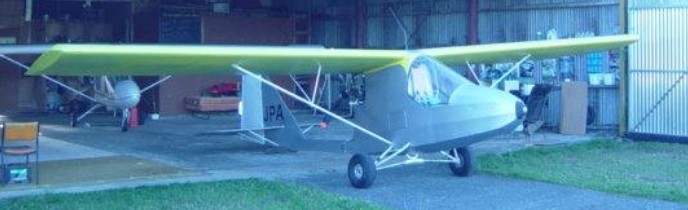
As the designation infers, the Williams Mk.4 is the fourth aircraft from the hands of the late Geoff Williams, a well-known Otago identity who did not like to conform to the rules. It was finished about 1990, first flew in 1991 and had logged over 160 illegally flown hours prior to its sale to Bob Gibson in June 2002. This aircraft was legally registered as ZK-JPA on 25 February 2003.
Geoff Williams never flew again after the third aeroplane, but resolved to build a fourth aircraft. This is the aircraft Bob Gibson bought. This plane was not difficult to fly he did have a few minor landing faults.
Geoff’s ambition was to fly his aeroplane around Fiordland coastline, landing at somewhere like Jackson’s Bay for refuelling and to this end he built a heated cabin and fuel capacity of over 100 litres and a locker where he could hold an additional 10- or 15-litre can. Sadly this was never to be realised as Geoff became ill March 2002 and died on 10 May 2002. It was Geoff’s wish that his plane be kept flying, and Bob seemed to be the person most interested.

Wingspan: 30 ft
Engine: Rotax 447
Prop: 3-blade Warp Drive
Cruise: 60 kts
Stall: 22 kts
Seats: 1
ROC: 500 fpm
Fuel burn: 12 lt/hr
Williams Third

After the Aeroplane Geoff Williams immediately commenced building a third aeroplane, a low wing monoplane also powered by a Volkswagen engine. This air­craft largely still existed in 2003 and was stored in Alex Armstrong’s hangar at Taieri in the form of the wings and fuselage. Also stoutly built, it was prone to be underpowered by the tired Volkswagen engine Geoff had two lucky escapes when it crashed due to lack of power. The first was while climbing up the Lindis Valley in Otago when he realised too late that the ground was climbing more rap­idly than his aeroplane, and he was unable to turn because of the proximity of hills ei­ther side. His last flight was at Tarras when the plane crashed on take off, again because of lack of power. He never flew again, but resolved to build a fourth aircraft.

Engine: VW

Williams 70s Aeroplane

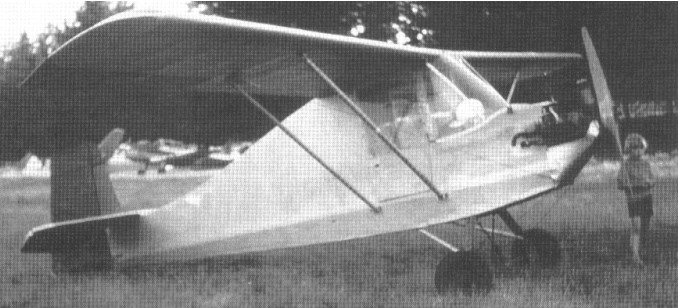
Based on a model and built in the 1970s without official blessing. The aircraft was kept at Wickcliffe Bay, Otago Peninsula, New Zealand, and flown by the builder/owner. By all accounts, the aircraft flew rather well. Built Geoff [or Jeff] Williams. To achieve the correct scale, the builder is said to have sat on a chair and scaled the plans around himself. This was flown from an old wartime emergency air¬strip situated on a farm owned by the Neil family on the Otago Peninsula. Both air¬craft are said to have been soundly con-structed, no doubt the builder’s occupa¬tion having some influence here, but the engine installation, undercarriage and other fittings left something to be desired. The fuel tank in the high wing craft was nothing more than a twenty litre can hung by its handle behind the pilot’s seat. The fuel line a flexible rubber hose pushed over a cooper tube protruding through the instrument panel. When the aircraft re-quired refuelling it was a simple task to remove the can and take it to the nearest service station.
As well as the Omarama incident, the little homebuilt was flown to Cromwell where it landed on the main road. On another occasion Williams turned up at Queenstown in the VW-powered aircraft where he attempted to purchase fuel from a local helicopter operator who refused to cooperate. Apparently he was less than impressed by the craft. I’m led to believe CAD finally caught up with the wayward flyer, confiscating the engine and thus bringing his illegal activities to a halt. For a number of years the aircraft re¬mained dismantled in a shed on the Neil farm until the property changed owner¬ship, when both airframes and the stor¬age shed were destroyed.
Geoff flew this aircraft successfully all over Otago while refusing to register it with CAA. They eventually threatened to pros¬ecute him unless he signed a declaration stating he would never fly it again. During this time he had about 65 hours of flying and many incidents.

Engine: VW

Williams Aircraft Design W-17 Stinger

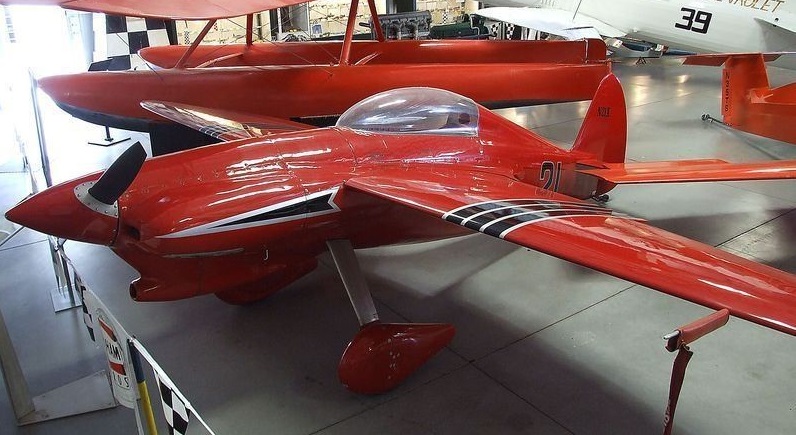
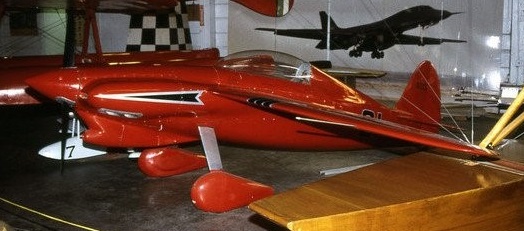
The Williams W-17 Stinger is an American homebuilt racing aircraft that was designed for Formula One Air Racing by Art Williams and produced by his company, Williams Aircraft Design of Northridge, California, introduced in 1971. The aircraft was at one time available in the form of plans for amateur construction, but only one was ever constructed.

The W-17 Stinger features a cantilever mid-wing, a single-seat enclosed cockpit under a bubble canopy, fixed conventional landing gear and a single engine in tractor configuration.

The aircraft fuselage is made from sheet aluminum in a monocoque structure. The wings are all-wood, with laminated spruce spars. Its 19.0 ft (5.8 m) span wing employs a NACA 64008 airfoil at the wing root, transitioning to a NACA 64010 at the wing tip. As the Formula One rules require, the engine is a 100 hp (75 kW) Continental O-200A powerplant.

The W-17 has an empty weight of 585 lb (265 kg) and a gross weight of 835 lb (379 kg), giving a useful load of 250 lb (110 kg). With full fuel of 8 U.S. gallons (30 L; 6.7 imp gal) the payload is 202 lb (92 kg).

Only one example of the W-17 Stinger was registered in the United States with the Federal Aviation Administration in 1971 (N21X). The sole example was raced at the Reno Air Races by pilot John P. Jones in 1973 and captured second place. It went on display at the Planes of Fame Air Museum.

W-17 Stinger
Engine: 1 × Continental O-200A, 100 hp (75 kW)
Length: 15 ft 10 in (4.83 m)
Wingspan: 19 ft 0 in (5.79 m)
Airfoil: Root: NACA 64008, wing tip: NACA 64010
Empty weight: 585 lb (265 kg)
Gross weight: 835 lb (379 kg)
Fuel capacity: 8 U.S. gallons (30 L; 6.7 imp gal)
Propellers: 2-bladed metal
Maximum speed: 260 mph (418 km/h; 226 kn)
Stall speed: 65 mph (56 kn; 105 km/h)
Crew: one