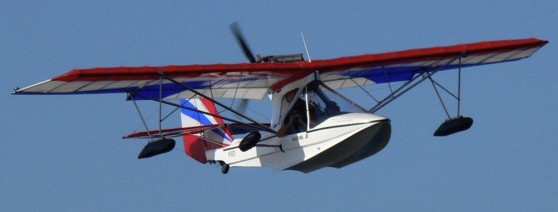
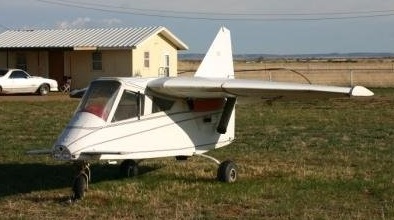
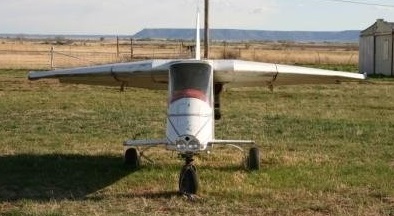
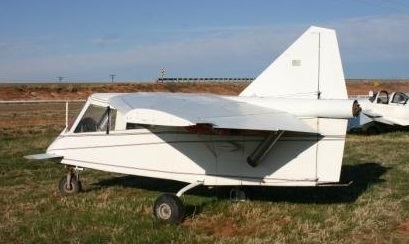
Receiving the “Best New Design” award at Oshkosh 1984 the Buccaneer was a conventional double-surface high-wing, three-axis control ultralight. Powered by a Rotax 277 single-cylinder, it came in three models — open framework, pod, and retractable amphibian. The landing gear was taildragger, or retractable/amphibian, using reinforced fiberglass hull & sponsons. Centre mounted joy stick, rudder pedals, tailwheel steerable through rudder pedals.
Later marketed by Keuthan Aviation as the Buccaneer SX and Buccaneer II, and by Arnet Pereyra Inc as the Aventura 1 HP/A and Aventura II A. A modified version, retrofitable to Buccaneers was marketed by Advanced Aeromarine as the Mallard. The Mallard was available as a conversion for existing Buccaneers or as a complete kit. First flown in 1993.
Although produced as an amphibious flying boat, the Buccaneer can be converted to a land plane by removing the boat hull and floats.
The Aero Adventure Aventura II Sport is a new model designed to minimize the expense and complexity of buying, building, and flying a two seat Aventura. With a strong 65 H.P. Rotax 582, the complete kit started at only $33,400. This is by far the most inexpensive two place amphibian on the market. Invest 250 hours of assembly time and this plane will be flying you and a friend anywhere.
The 100 H.P. 4-Stroke Rotax 912ULS with its 18 gallon fuel tank allows a solid 3 hours of flight with reserve. $44,900 for the complete kit.
The Aventura II XLR has a new engine cowling available, a new graphics package, an amazing new panel with AVMAP’s daylight readable GPS, a VSI, mode-C transponder, and more. Electric gear with indicator lights, differential hydraulic brakes, carpeting, headliner, 600-6 Soft Turf Tires, a 100 H.P. Rotax 912 ULS with an Air Box, a custom stainless steel exhaust, a warp drive 3-blade nickel edge prop and a spinner.
The Arnet Pereyra Buccaneer SX first flew in May 1986.
The Arnet Pereyra Buccaneer II first flew in March 1984.
The Arnet Pereyra Aventura UL and HP first flew in March 1995.
The Arnet Pereyra Aventura II first flew in June 1995.
Buccaneer (Land)
Empty wt: 228 lbs.
Empty weight (De Luxe) 250 lbs.
Wing span: 35 ft.
Wing area: 147 sq.ft.
Aspect ratio 8:1
Length: 17 ft 6 in
Fuel cap; 4.5 USG.
Construction: Aluminium, Dacron.
Engine: Rotax 277 (268cc) 28hp.
Max wt: 500 lbs.
Stall speed: 20 mph.
Max speed: 51 mph.
Vne: 75 mph.
Climb rate: 600 fpm @ 28 mph.
Design limit: +5, -3.5g.
Glide ratio: 8-1.
Wing loading: 3.4 lbs/sq.ft.
Power loading: 17.86 lbs/hp.
Pilot weight category 90-225 lbs all models.
Buccaneer (Amphibian)
Empty wt: 298 lbs.
Wing span: 35ft
Wing area: 147 sq.ft.
Length: 17 ft 6 in
Fuel cap; 4.5 USG
Construction: Aluminium, Dacron, Fibreglass
Engine: Rotax 277 (268cc) 28hp
Max wt: 550 lb
Stall speed: 23 mph
Max speed: 54 mph
Vne: 75 mph
Climb rate: 600 fpm @ 28 mph
Design limit: +5, -3.5g
Glide ratio: 8-1
Wing loading: 3.4 lbs/sq.ft
Power loading: 17.86 lbs/hp.
Buccaneer II
Empty wt.: 550 lbs
Max wt.: 1025 lbs
Wing span: 35ft 7in
Wing area: 171 sq.ft.
Wing loading: 5.99 lbs/sq.ft
Power loading: 15.77 lbs/hp
Engine: Rotax 532
Max speed: 78 mph
Cruise: 60 mph
Stall: 31 mph
Vne: 85 mph
Seats: 2
Arnet Pereyra Buccaneer II
Speed max: 90 mph.
Cruise: 70 mph.
Range: 150 sm.
Stall: 32 mph.
ROC: 500 fpm.
Take-off dist: 300 ft (400 ft water).
Landing dist: 300 ft.
Service ceiling: 13.500 ft.
Engine: Rotax 582, 65 hp.
HP range: 65-80.
Fuel cap: 12 USG.
Weight empty: 580 lbs.
Gross: 1200 lbs.
Height: 7 ft.
Length: 22.3 ft.
Wing span: 29.77 ft.
Wing area: 156 sq.ft.
Seats: 2.
Landing gear: retractable tail wheel.
Buccaneer XA/430
Empty wt.: 318 lbs
Max wt.: 600 lbs
Wing span: 33 ft 5in
Wing area: 162 sq.ft
Wing loading: 3.7 lbs/sq.ft
Power loading: 15 lbs/hp
Engine: Rotax 447
Max speed: 68 mph
Cruise: 60 mph
Stall: 25 mph
Vne: 75 mph
Advanced Aeromarine Mallard
Speed max: 100 mph.
Cruise: 80 mph.
Range: 320 sm.
Stall: 35 mph.
ROC: 750 fpm.
Take-off dist: 350 ft.
Landing dist: 400 ft.
Service ceiling: 14,000 ft.
Engine: Rotax 912, 80 hp.
HP range: 65-110.
Fuel cap: 18 USG.
Weight empty: 775 lbs.
Gross: 1250 lbs.
Height: 7 ft.
Length: 22.33 ft.
Wing span: 29.58 ft.
Wing area: 156 sq.ft.
Seats: 2.
Landing gear: retractable tail wheel.
Aventura I HP/A
Speed max: 90 mph.
Cruise: 75 mph.
Range: 170 sm.
Stall: 38 mph.
ROC: 1100 fpm.
Take-off dist: 150 ft.
Landing dist: 160 ft.
Service ceiling: 13,500 ft.
Engine: Rotax 582, 65 hp.
HP range: 52-65.
Fuel cap: 10 USG.
Weight empty: 375 lbs.
Gross: 850 lbs.
Height: 6 ft.
Length: 20.5 ft.
Wing span: 29.67 ft.
Wing area: 156 sq.ft.
Seats: 1.
Landing gear: retractable tail wheel.
Aero Adventure Aventura HP
Cruise: 75 mph.
Range: 240 sm.
Stall: 32 mph.
ROC: 1100 fpm.
Take-off dist: 150 ft.
Landing dist: 150 ft.
Engine: Rotax 503, 50 hp.
HP range: 50-80.
Fuel cap: 12 USG.
Weight empty: 390 lbs.
Gross: 750 lbs.
Length: 20.6 ft.
Wing span: 29.8 ft.
Wing area: 158 sq.ft.
Cockpit width: 24 in.
Seats: 1.
Landing gear: tail wheel/ retractable.
Arnet Pereyra Aventura HP
Speed max: 90 mph.
Cruise: 75 mph.
Range: 150 sm.
Stall: 32 mph.
ROC: 1100 fpm.
Take-off dist: 150 ft.
Landing dist: 150 ft.
Service ceiling: 13,500 ft.
Engine: Rotax 582, 65 hp.
HP range: 52-65.
Fuel cap: 12 USG.
Weight empty: 430 lbs.
Gross: 950 lbs.
Height: 6 ft.
Length: 20.5 ft.
Wing span: 29.7 ft.
Wing area: 156 sq.ft.
Seats: 1.
Landing gear: tail wheel.
Arnet Pereyra Aventura 1 HP/A
Top speed: 90 mph
Cruise: 75 mph
Stall: 38 mph
Range: 170 sm
Rate of climb: 1100 fpm
Takeoff dist: 150 ft
Landing dist: 160 ft
Service ceiling: 13,500 ft
Engine: Rotax 582, 65 hp
HP range: 52-65
Fuel capacity: 10 USG
Empty weight: 375 lb
Gross weight: 850 lb
Height: 6 ft
Length: 20.5 ft
Wing span: 29.7 ft
Wing area: 156 sq.ft
Seats: 1
Landing gear: tailwheel
Aventura 1 UL/L
Speed max: 65 mph.
Cruise: 55 mph.
Range: 100 sm.
Stall: 30 mph.
ROC: 800 fpm.
Take-off dist: 125 ft.
Landing dist: 125 ft.
Service ceiling: 13,500 ft.
Engine: Rotax 447, 40 hp.
HP range: 28-52.
Fuel cap: 5 USG.
Weight empty: 254 lbs.
Gross: 580 lbs.
Height: 6 ft.
Length: 20.5 ft.
Wing span: 27.62 ft.
Wing area: 143 sq.ft.
Seats: 1.
Landing gear: tail wheel.
Aero Adventure Aventura UL
Cruise: 55 mph.
Range: 120 sm.
Stall: 24 mph.
ROC: 500 fpm.
Take-off dist: 150 ft.
Landing dist: 150 ft.
Engine: Rotax 447, 48 hp.
Fuel cap: 5 USG.
Weight empty: 328 lbs.
Gross: 650 lbs.
Length: 20.5 ft.
Wing span: 21.6 ft.
Wing area: 156 sq.ft.
Cockpit width: 24 in.
Seats: 1.
Landing gear: tail wheel/ retractable.
Aero Adventure Aventura II
Stall: 31 kt / 36 mph / 58 kmh
Cruise: 65 kt / 75 mph / 121 kmh
VNE: 83 kt / 95 mph / 153 kmh
Empty Weight: 295 kg / 650 lb
MTOW Weight: 559 kg / 1232 lb
Climb Ratio: 1100 ft/min / 6 m/s
Take-off distance land (50ft obstacle): 150 ft / 46 m
Landing distance land (50ft obstacle): 150 ft / 46 m
Arnet Pereyra Aventura UL
Speed max: 63 mph.
Cruise: 55 mph.
Range: 100 sm.
Stall: 27 mph.
ROC: 500 fpm.
Take-off dist: 125 ft.
Landing dist: 125 ft.
Service ceiling: 13,500 ft.
Engine: Rotax 447, 40 hp.
HP range: 28-40.
Fuel cap: 6 USG.
Weight empty: 324 lbs.
Gross: 650 lbs.
Height: 6 ft.
Length: 20.5 ft.
Wing span: 27.7 ft.
Wing area: 156 sq.ft.
Seats: 1.
Landing gear: tail wheel.
Arnet Pereyra Aventura 1 UL/A
Top speed: 65 mph
Cruise: 55 mph
Stall: 30 mph
Range: 100 sm
Rate of climb: 800 fpm
Takeoff dist: 121 ft
Landing dist: 125 ft
Service ceiling: 13,500 ft
Engine: Rotax 447, 40 hp
HP range: 28-52
Fuel capacity: 5 USG
Empty weight: 254 lb
Gross weight: 580 lb
Height: 6 ft
Length: 20.5 ft
Wing span: 27.7 ft
Wing area: 143 sq.ft
Seats: 1
Landing gear: tailwheel
Aventura II A
Speed max: 90 mph.
Range: 200 sm.
Stall: 35 mph.
ROC: 900 fpm.
Take-off dist: 200 ft.
Landing dist: 200 ft.
Service ceiling: 13,500 ft.
Engine: Rotax 582, 65 hp.
HP range: 65-85.
Fuel cap: 12 USG.
Weight empty: 550 lbs.
Gross: 1100 lbs.
Height: 6 ft.
Length: 23.25 ft.
Wing span: 30.67 ft.
Wing area: 161.7 sq.ft.
Seats: 2.
Landing gear: retractable tail wheel.
Aero Adventure Aventura II
Cruise: 86 mph.
Range: 290 sm.
Stall: 30 mph.
ROC: 700 fpm.
Take-off dist: 250 ft.
Landing dist: 250 ft.
Engine: Rotax 912, 80 hp.
HP range: 65-130.
Fuel cap: 12 USG.
Weight empty: 850 lbs.
Gross: 1430 lbs.
Length: 23 ft.
Wing span: 30.7 ft.
Wing area: 161.7 sq.ft.
Cockpit width: 44 in.
Seats: 2.
Landing gear: tail wheel/ retractable.
Arnet Pereyra Aventura II
Speed max: 90 mph.
Cruise: 70 mph.
Range: 150 sm.
Stall: 32 mph.
ROC: 500 fpm.
Take-off dist: 300 ft.
Landing dist: 300 ft.
Service ceiling: 13,500 ft.
Engine: Rotax 582, 65 hp.
HP range: 65-80.
Fuel cap: 12 USG.
Weight empty: 640 lbs.
Gross: 1200 lbs.
Height: 7 ft.
Length: 23 ft.
Wing span: 30.7 ft.
Wing area: 161.7 sq.ft.
Seats: 2.
Landing gear: tail wheel.
Arnet Pereyra Aventura IIA
Top speed: 90 mph
Stall: 35 mph
Range: 200 sm
Rate of climb: 900 fpm
Takeoff dist: 200 ft
Landing dist: 200 ft
Service ceiling: 13,500 ft
Engine: Rotax 582, 65 hp
HP range: 65-85
Fuel capacity: 12 USG
Empty weight: 550 lb
Gross weight: 1100 lb
Height: 6 ft
Length: 23.3 ft
Wing span: 30.7 ft
Wing area: 161.7 sq.ft
Seats: 2
Landing gear: tailwheel
Keuthan Buccaneer SX
Speed max: 90 mph.
Cruise: 65 mph.
Range: 100 sm.
Stall: 29 mph.
ROC: 650 fpm.
Take-off dist: 175 ft (350 ft water).
Landing dist: 100 ft.
Service ceiling: 12,000 ft.
Engine: Rotax 447, 52 hp.
HP range: 52-65.
Fuel cap: 5 USG.
Weight empty: 303 lbs.
Gross: 810 lbs.
Height: 6 ft.
Length: 20.16 ft.
Wing span: 29.77 ft.
Wing area: 143 sq.ft.
Seats: 1.
Landing gear: retractable tail wheel.
Arnet Pereyra Buccaneer SX
Speed max: 90 mph.
Cruise: 70 mph.
Range: 150 sm.
Stall: 29 mph.
ROC: 600 fpm.
Take-off dist: 200 ft (350 ft water).
Landing dist: 200 ft.
Service ceiling: 11,000 ft.
Engine: Rotax 503, 52 hp.
HP range: 52-65.
Fuel cap: 12 USG.
Weight empty: 450 lbs.
Gross: 810 lbs.
Height: 6 ft.
Length: 20.16 ft.
Wing span: 29.77 ft.
Wing area: 143 sq.ft.
Seats: 1.
Landing gear: retractable tail wheel.
Keuthan Buccaneer II
Speed max: 90 mph.
Cruise: 75 mph.
Range: 2250 sm.
Stall: 33 mph.
ROC: 650 fpm.
Take-off dist: 275 ft (400 ft water).
Landing dist: 150 ft.
Service ceiling: 14,000 ft.
Engine: Rotax 582DCDI, 65 hp.
HP range: 65-80.
Fuel cap: 12 USG.
Weight empty: 580 lbs.
Gross: 1140 lbs.
Height: 7 ft.
Length: 22.33 ft.
Wing span: 29.67 ft.
Wing area: 156 sq.ft.
Seats: 2.
Landing gear: retractable tail wheel.

 All Aero