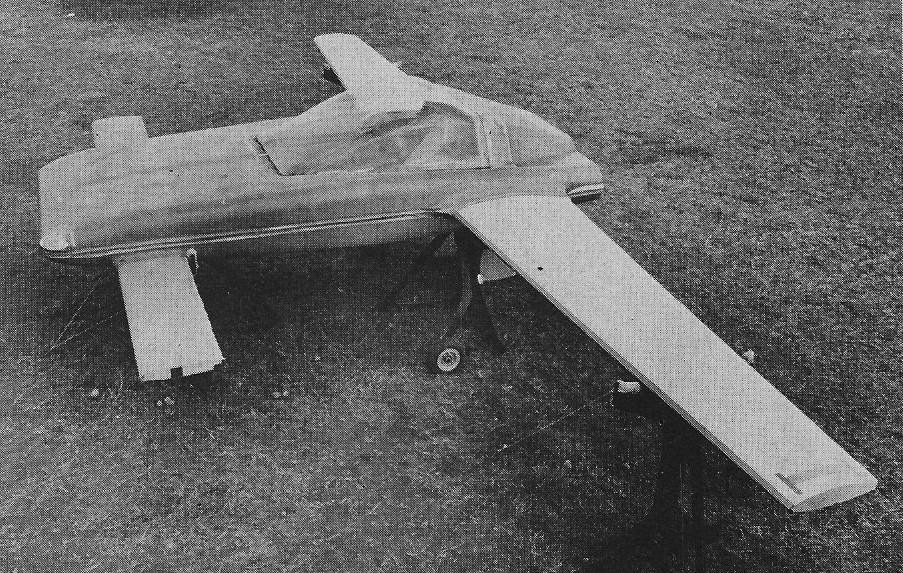
The two-seat Jonas Hummingbird canard featured a lifting body fuselage, moulded glass-fibre wings and fuselage, and graphite wing spars and landing gear struts. Power is a 78 hp Revmaster VW 2000cc engine.
The first flight of the Hummingbird was expected in October 1977.
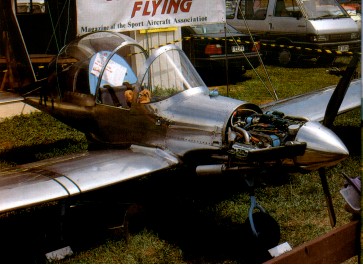
The design started out as the Windwagon from the US, was scaled up to produce the Hummelbird, then Cliff Johnston increased the size of the wings and fuselage to produce the Skybird, still incorporating folding wings.
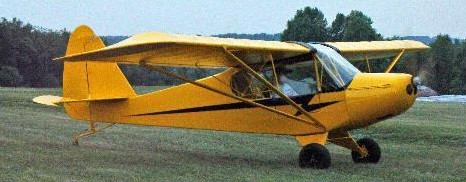
The LSA Tiger Cub Sport II has a wide enough cockpit to seat 2 full grown adults in comfort. Wide main gear and a large rudder aid ground handling and the ailerons have a 2.7 to 1 differential throw, this virtually eliminates adverse yaw. Control surfaces are large, giving good control response throughout the flight envelope. With a 912 Rotax or an O200 Contenental the Sport II needs only 300 ft of hard surface runway to get airborne, and will climb out at 800 ft per min. at gross weight. The landing roll is under 400 ft, It can be ordered as a Tri gear or tail dragger and there were 2 engine options available. The airframe is built of aluminum tubing with aluminum gussets and brackets at the joints, fastened together with bolts and rivets.
Engine: Continental O-200, 100 hp Empty weight: 840 lb MTOW: 1320 lb Wing span: 33′ Wing area: 165 sq. ft. Fuselage length (nose to tail): 22′ 6″ Folded width: 6′ 6″ (width of main gear) Stall full flap: 35 mph. Cruise: 105 mph. Climb: 800 fpm. Glide Ratio: 8 to 1 Take off Roll: 300′ Landing Roll: 400′ Wing Loading: 7.6 lbs. per sq. ft Power Loading: 12.5 lbs. per hp. Stress Loading: 5+ 3- G’s. Vne: 130 mph Cockpit width: 42 in
Engine: 912 Rotax, 100 hp Empty weight: 700 lb MTOW: 1320 lb Wing span: 33 ft Wing area: 165 sq. ft. Fuselage length (nose to tail): 22′ 6″ Folded width: 6′ 6″ (width of main gear) Stall full flap: 35 mph. Cruise: 105 mph. Climb: 800 fpm. Glide Ratio: 8 to 1 Take off Roll: 300′ Landing Roll: 400′ Wing Loading: 7.6 lbs. per sq. ft.@ gross. Power Loading: 12.5 lbs. per hp. @ gross. Stress Loading: 5+ 3- G’s. Vne: 130 mph. Cockpit width: 42 in
The LSA Tiger Cub UL has a wide enough cowl to keep the exhaust inside, (no unsightly two stroke exhaust hanging out) a folding wing and tail, fully enclosed cockpit (large enough to accommodate a 6’6″-250 lb. pilot in comfort) full three axis controls with flaperons and a steerable tail wheel, a wide speed range and rugged landing gear. The first Tiger Cub first flew on 1 April 1996.
The ailerons have a 2.7 to 1 differential throw ro virtually eliminate adverse yaw. With a 447 Rotax engine a 170 pound pilot needs about 150 ft. of hard surface runway to get airborne, and will climb out at 800 ft per min. Landing roll out is under 300 ft, even with out brakes.
The airframe is built of aluminum tubing with aluminum gussets and brackets at the joints, fastened together with bolts and rivets. A drill and pop rivet tool are all that is needed. The plans include a complete materials and vender list . The material list gives a list of the sizes and amounts of all the aluminum and chrome molly tube and sheet needed to build the airframe, a list of all the AN hardware sizes and quantities needed and a list of all the rest of the materials needed to complete the airplane, with descriptions and venders part numbers for hard to find or describe parts. The gusset prints are organized by thickness from .025 to .125 the patterns can be cut out and traced onto the aluminum sheet with a fine tipped marker. No scaling from the plans is required. Directions and tips for cutting out the gussets are included in part one of the assembly manual. Full size prints, of the chromemoly and machined parts, are included.
The panel prints have all the measurements needed to lay out the part on your work table, so you don’t have to scale your measurements from the prints, eliminating a common source of errors. ¼ scale prints (19″ by 30″ prints) of the wings, tail surfaces, fuselage and bulkhead panels. The plans also include an assembly manual (over 200 – 11″ by 17″ ) pages of pictures and text), that gives step by step directions and tips to guide you through assembly, rigging, covering, wiring, plumbing and finishing. Available since Jan. of 2000 over 300 sets of plans have been shipped (as of 1/2007). Est. build time for scratch built…650 hrs. Price for a complete set of plans was $250.00 in 2007.
The basic kit includes, a set of plans, all of the Parts Packages, listed on the previous page, and all of the additional materials needed to build a covered airframe (less engine prop instruments and paint.) The kit will also include the main bulkhead, rear cross tube and the flaperon mixer, already assembled. These three subassembly’s are the most critical and the most difficult to build. Having them built in drill guides and assembly jigs, assures a strong and square part, and reduces building problems considerably. The basic kit eliminates the hassle of having to order materials from six or seven different sources and tracking down all of the numerous small parts needed.
Tiger Cub UL Engine: 447 Rotax, 40 hp Gearbox (2.58 to 1) Empty weight: 275 lb MTOW: 600 lb Wing span: 29 ‘ 4″ Wing area: 130 sq. ft. Fuselage length: 19′ 11″ Folded length: 22′ 8″ Folded width: 6′ 6″ (width of main gear) Stall full flap: 25 mph. Cruise: 65 mph. Climb: 800 fpm. Glide Ratio: 8 to 1 Take off Roll: 150′ Landing Roll: 300′ Wing Loading: 4.6 lbs. per sq. ft.@ gross. Power Loading: 15 lbs. per hp. @ gross. Stress Loading: 6+ 4- G’s. Vne: 90 mph. Cockpit width: 27 in
Tiger Cub UL Engine: 503 Rotax, 52 hp Gearbox (2.58 to 1) Empty weight: 320 MTOW: 650 lb Wing span: 29 ‘ 4″ Wing area: 130 sq. ft. Fuselage length: 19′ 11″ Folded length: 22′ 8″ Folded width: 6′ 6″ (width of main gear) Stall full flap: 27 mph. Cruise: 48 kt / 55 mph / 89 kmh Climb: 1000 fpm. Glide Ratio: 8 to 1 Take off Roll: 75′ Landing Roll: 300′ Wing Loading: 5.0 lbs. per sq. ft.@ gross. Power Loading: 12.5 lbs. per hp. @ gross. Stress Loading: 6+ 4- G’s. Vne: 78 kt / 90 mph / 145 kmh
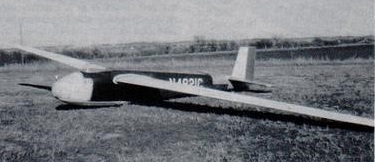
The Johnson RHJ-6 Adastra (English: Star) was conceived by Johnson as a mid-wing, two-place competition aircraft.
The aircraft was of mixed construction. The fuselage was built from wood and was a monocoque design. The wing had a wooden structure, with fiberglass leading edge. The tail surfaces were constructed of wood. The wings aft of the leading edge, the tail surfaces and all control surfaces were covered with doped aircraft fabric.
Originally the aircraft employed an Eppler 150 airfoil section, but Johnson later modified it by adding a 10% wing chord extension, turning the airfoil into an Eppler 151. Later new wings were built with an Eppler 414 airfoil to improve low-speed performance. The new wings used a foam-filled fiberglass leading edge. The tail was originally a “Y” tail, but this was later replaced with a conventional tail, with a low-mounted tailplane.
The individual cockpits were covered with independent bubble canopies, although the aircraft was most often flown solo, with a flat hatch replacing the rear canopy to reduce aerodynamic drag. In 1983 it was reported that a single canopy was being designed for the aircraft.
The Adastra was first flown on 3 April 1960 by Dick Johnson. Only one Adastra was built.
In its original configuration Johnson flew the Adastra in the 1960 World Gliding Championships in Cologne, West Germany and finished in 15th place. After extending the wing chord and altering the airfoil he flew it in the US Nationals to a seventh-place finish in 1961 and second place in 1962.
The aircraft was later owned by Jesse Womack of Graham, Texas. The Federal Aviation Administration registry records indicate that the aircraft was destroyed and was removed from the registry on 6 April 1992. The National Soaring Museum lists the aircraft as being part of their collection and in storage.
Adastra – later configuration Wingspan: 56 ft 4 in (17.17 m) Wing area: 178 sq ft (16.5 m2) Aspect ratio: 17:84 Airfoil: Eppler 414 Empty weight: 649 lb (294 kg) Gross weight: 1,040 lb (472 kg) when flown solo, 1,166 lb (529 kg) dual Stall speed: 36 mph (58 km/h, 31 kn) Never exceed speed: 140 mph (225 km/h, 121 kn) Rough air speed max: 120.5 mph (193.9 km/h; 104.7 kn) Aerotow speed: 120.5 mph (193.9 km/h; 104.7 kn) Winch launch speed: 80 mph (128.7 km/h; 69.5 kn) Terminal velocity: with full airbrakes 140 mph (225.3 km/h; 121.7 kn) Maximum glide ratio: 42.5:1 at 60.9 mph (98 km/h; 53 kn) Rate of sink: 120 ft/min (.61 m/s) at 57.2 mph (92 km/h; 50 kn) Wing loading: 5.8 lb/sq ft (28.5 kg/m2) when flown solo, 6.96 lb/sq ft (34 kg/m2) dual Crew: One Capacity: One passenger
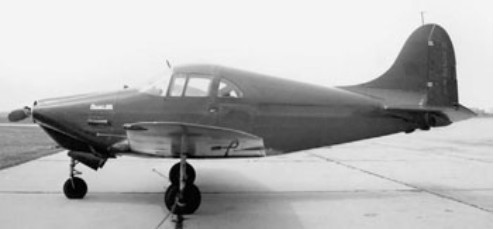
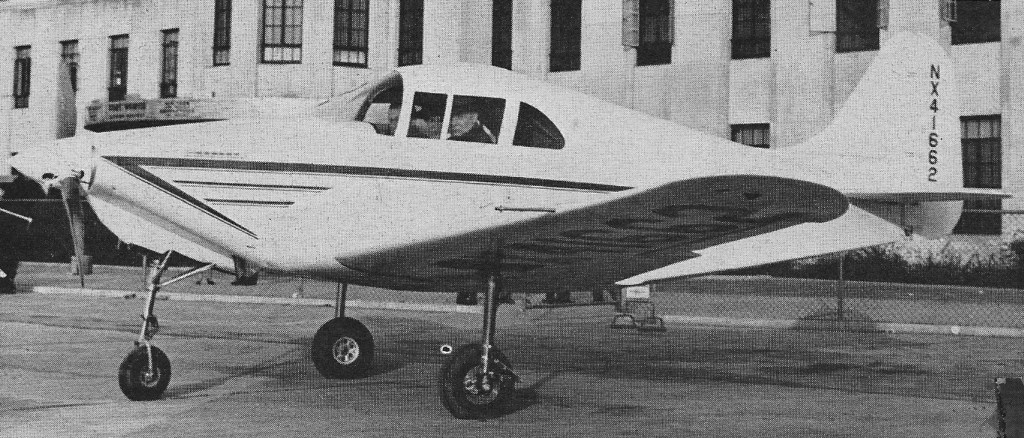
This high-performance, three-seat, cabin monoplane was first built in 1946 by Johnson Aircraft, Inc. and was ultimately manufactured in small numbers. The quick and light aircraft was built of all-metal construction with a fabric-covered fuselage. Two persons are seated side-by-side with full dual controls while the third is seated centrally just behind the front seats. In 1950, Aircraft Manufacturing Co. acquired the rights to produce a refined four-seat version of the Rocket, which it called the Texas Bullet.
The original Rocket was powered by a 185-hp four cylinder Lycoming engine; the Texas Bullet changed over to a Continental of the same rating. Also, the fabric covering of the Rocket was traded for an all-metal, flushriveted skin, and a redesigned tail was added. Overall, the new refinements added only 100 pounds to the empty weight, and 50 pounds were added to the fully loaded weight. Exhaust gasses from the engine of the Rocket and Bullet were led into a unique “jet assist” cylinder below the fuselage. It was claimed that the device converted engine exhaust into useful thrust at speeds faster than 40 mph. Also, both aircraft made use of a Hartzell hydro-selective two-blade variable-pitch propeller.
The Rocket 185 received its Approved Type Certificate in April 1946.
Owner Orval Fairbairn, Mountain View, CA. Lycoming O-435-1
Engine 185-hp Lycoming/185-hp Continental. Gross wt. 2,250 lb Empty wt. 1,550 lb Fuel capacity 55 gal Top speed 207 mph Cruise 185 mph Stall 50 mph Initial climb rate 900 fpm Ceiling 24,500 ft Takeoff run 600 ft Landing roll 400 ft Seats 4.
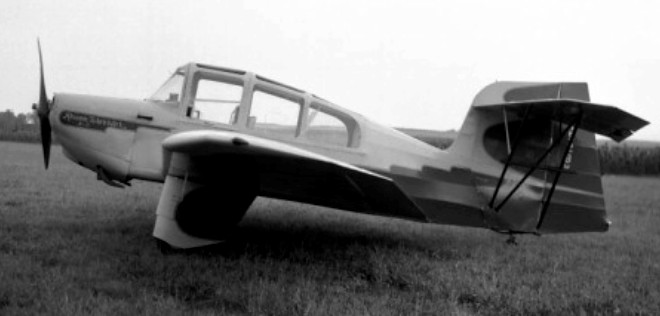
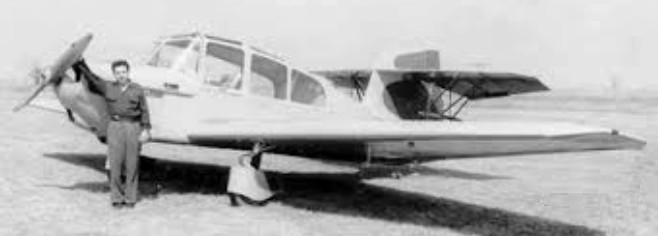
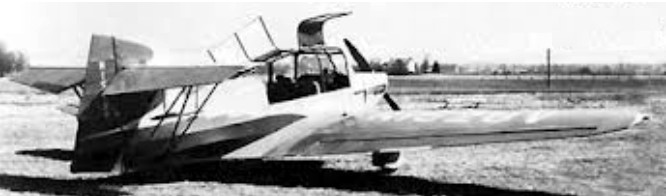
Alvis R. “Ray” Johns, of Chambersburg, Pennsylvania, USA, designed in 1947 the Rason Warrior, that was constructed in four years of part-time work, in collaboration with Paul L. Witmer, completed in 1952.
The five-seat aircraft was designed for short-field operations in remote areas and had a large wide-chord wing, fixed panted undercarriage and could easily be converted to a cargo-carrier loading through a pair of oversized gullwing cabin doors. Power came from an 185 hp Lycoming O-435-I six-cylinder horizontally-opposed air-cooled engine and can lift a 1,000 lb (454 kg) payload. The taildragger aircraft uses a large tapered low wing, with a large horizontal tail surface mounted close to the trailing edge of the wing. The fuselage is welded steel tube construction with fabric covering. The wings use wooden spars and ribs with fabric covering.
It received the EAA Award for Achievement in 1963 and was still registered in 2006 in Shippensburg, PA 17257, United States.
Construction Number (C/N): 3-1-J Registration Number: N1528V Engine: 1 × Lycoming O-435-1, 185 hp (138 kW) Wingspan: 38 ft 0 in (11.60 m) Length: 22 ft 3 in (6.78 m) Empty weight: 1,820 lb (826 kg) Gross weight: 3,450 lb (1,565 kg) Fuel capacity: 45 gal (170 litres) Maximum speed: 122 kn; 225 km/h (140 mph) Cruise speed: 103 kn; 190 km/h (118 mph) Stall speed: 36 kn; 68 km/h (42 mph) Rate of climb: 1,000 ft/min (5.1 m/s) Takeoff roll: 350 ft (107 m) Service ceiling: 9,842 ft (3,000 m) Capacity: 5
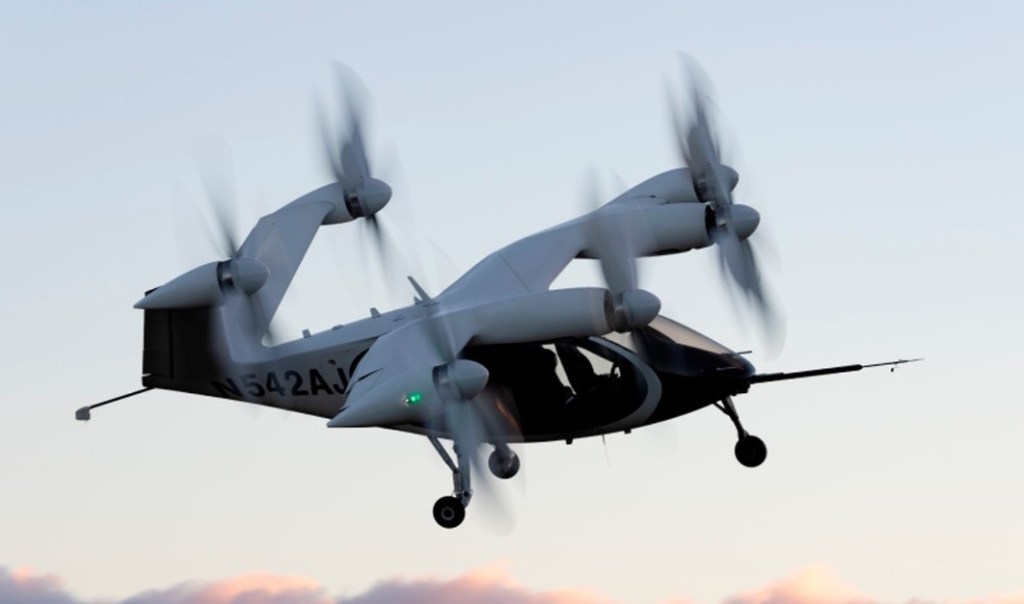
The Joby Aviation S4 air taxi 2.0 is a five seat eVTOL (one pilot and four passengers) vectored-thrust aircraft using six tilting propellers which are located on both the fixed wing and its V-tail. Four propellers tilt vertically including its entire motor nacelle, and two of the propellers tilt vertically with a linkage mechanism. The aircraft has large windows for spectacular views and has a tricycle-type retractable wheeled landing gear.
The company reports their aircraft is 100 times quieter than a helicopter during takeoff and landing with a near-silent flyover.
The Joby S4 four passenger eVTOL aircraft was revealed in January 2020 and the first to receive U.S. Air Force airworthiness approval in December 2020.
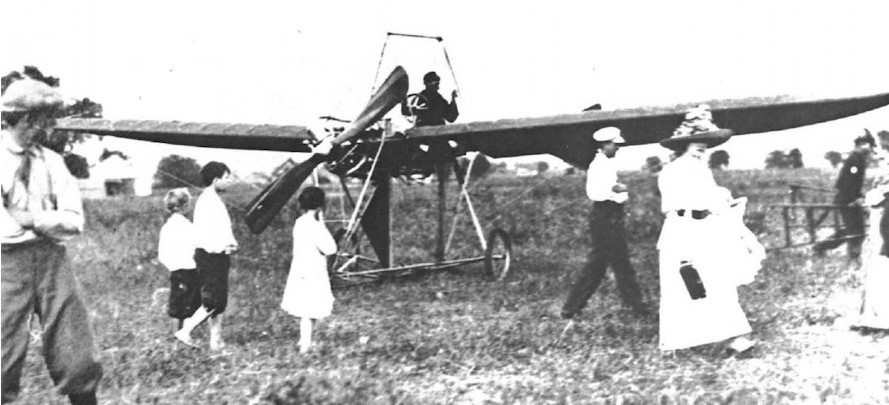
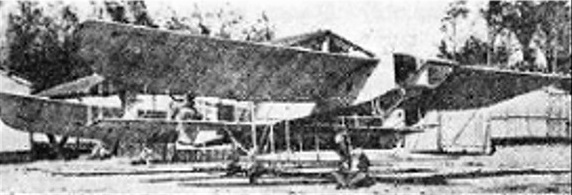
Polish engineer working in Berlin, Alfred Marceli Joachimczyk, at Deutsche Flugmaschinenbau-Gesselschaft built an experimental triplane with tandem wings but the design was apparently a complete failure.


 All Aero