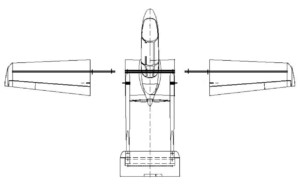
The Woodford MPAG man-powered aircraft has a tapered high-set wing, with a pusher propeller, pylon mounted, over the centre section. From the Puffin, it had a four-unit tail and a large enclosed canopy.
Construction was of metal tube and balsa, with Mellinex covering. It had a boom fuselage.
It was damaged by fire in June 1969 and not flown. The remains went to Halton where they emerged as ‘Jupiter’.
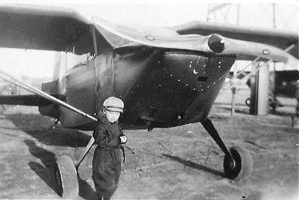
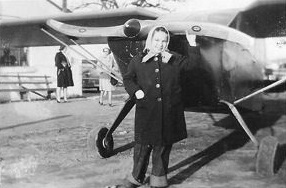
The 1955 CR-1 Little Monster built by Charles A Wood of Clay Center KS., N2752C, used some Piper J-3 parts used in construction. It was a high wing monoplane with a two place cabin.
Engine: Continental A-65, 65 hp Wingspan: 25’9″ Length: 19’0″ Max speed: 120 mph Cruise speed: 95 mph Stall: 40 mph Range: 400 mi Seats: 2
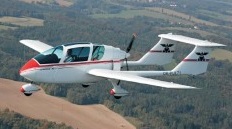
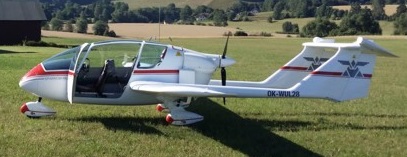
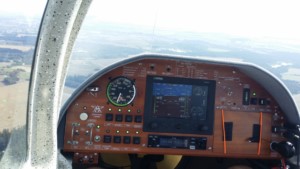
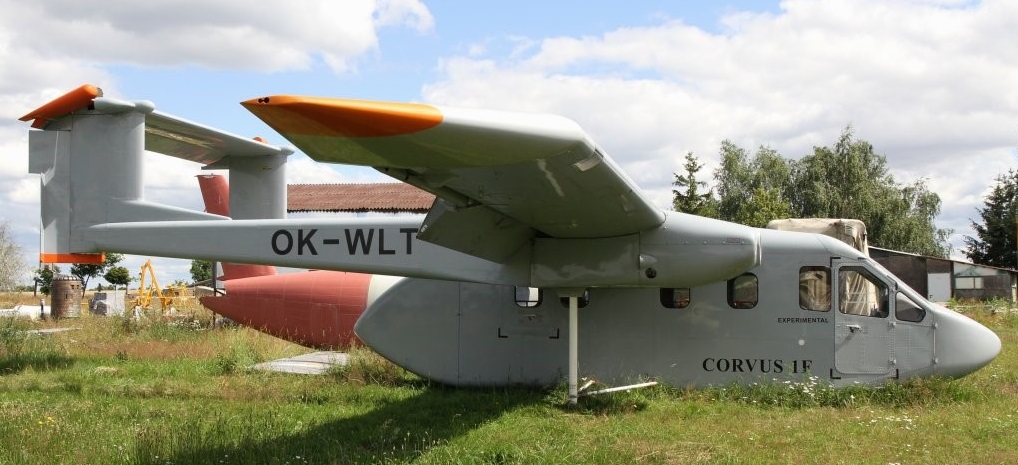
The Wolfsberg Letecka Tovrna Sparrow ML is a twin tail boom airplane with a pusher propeller. The design features large car-like doors that can be opened up to 90°. The pilot position in front of the wing brings excellent view.
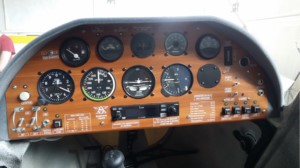
The Sparrow is equipped with the 80hp and 100 hp Rotax engines. The main undercarriage is equipped with oil dampers, the wheels of the main chassis are fitted with hydraulic disc brakes. The dashboard is designed for mounting both classic mechanical devices and state-of-the-art glass cockpit.
Sparrow ML was designed, calculated and tested to fulfill all requirements of Ultralight and LSA standards.
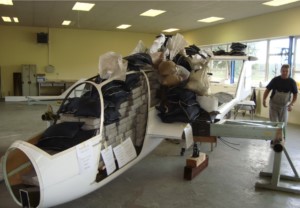
The airplane has modern light carbon fiber construction and conventional controls with control stick and pedals and electric flaps and trim control. Sparrow ML can have full dual controls or only pilot control on front seat.
The dashboard position allows convenient control of all devices and switches.
The aircraft is equipped with a proven ballistic rescue system.
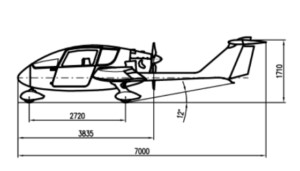
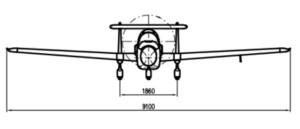
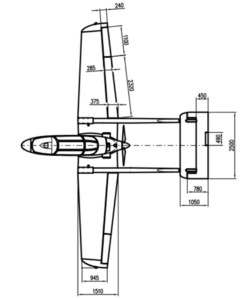
Engine: Rotax 912 ULS: 80-100 hp Wing span: 9.1m / 29.9 ft Wing area: 11.6 sq.m / 124.9 sq.ft Length: 7 m / 23.0 ft Height: 1.7 m / 5.6 ft Empty weight: 272 kg / 600 lb Gross weight: 600 kg / 1323 kg Fuel capacity: 60 lt / 15.9 gal Min pilot weight: 75 kg / 165 lb Max baggage weight: 8 kg / 17.6 lb Stall clean: 60 kph / 32.4 kt Stall ldg config: 57 kph / 30.8 kt Maneuvering speed: 160 kph / 86.4 kt Max speed ldg config: 115 kph / 62.1 kt Max cruise: 210 kph / 113.4 kt Vne: 234 kph / 126.4 kt
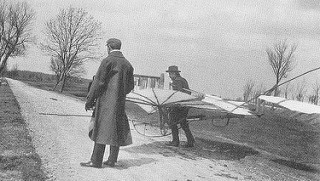
A glider of Lilienthal type but with a landing ski, built by Ingenieur Alois Wolfmüller from München, Germany, and datable to April 1908. It was a modification of a 1907 biplane glider, modified to monoplane configuration.
Built in 1936 by Albert Wolff of Denver CO., USA, the S-12 was a single place, open cockpit monoplane registered N16475. Power was from a 40hp Continental A-40.
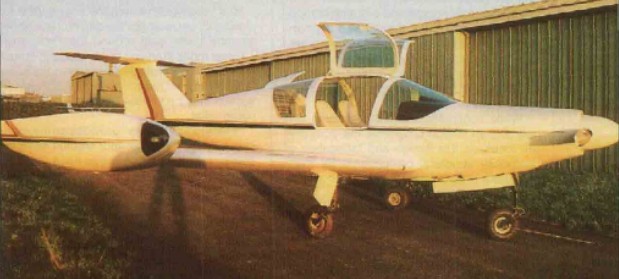
Paul Wolff’s 4 place, all composite Sky-Wolff was intended to make Oshkosh 1988, but was not flying in time, later, flying from Findel Airport in Luxembourg.
Aimed at a US25,000 kit price, The Sky-Wolff will have removeable wings, an electric/hydraulic retractable gear, and wet wing with additional tip tanks. The wing is equipped wih flaps and drooping ailerons.
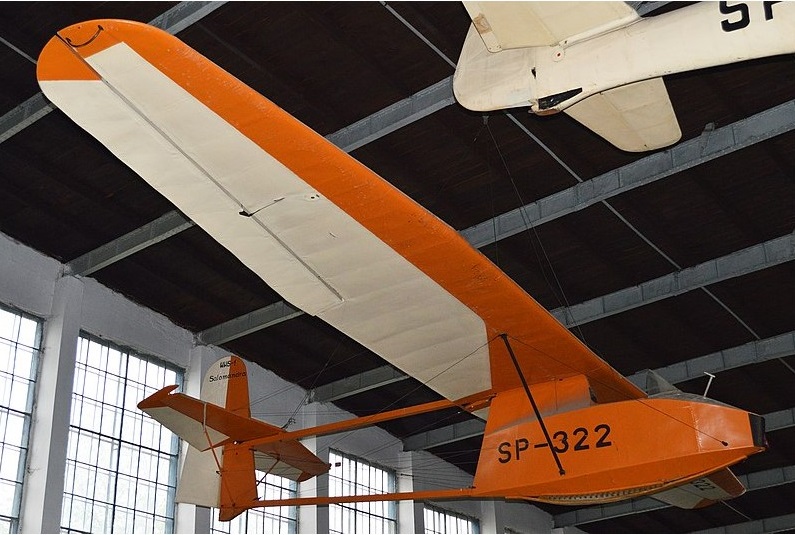
IS-A Salamandra in the Polish Aviation Museum in Kraków
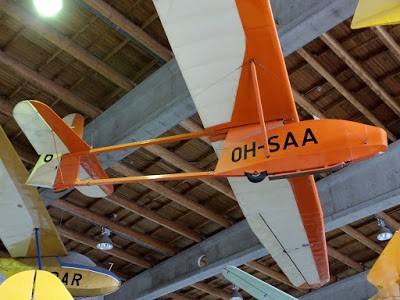
As the head of the W.W.S. (Wojskowe Warsztaty Szybowcowe – Military Glider Workshops), Wacław Czerwiński designed the W.W.S. 1 Salamandra single-seat training glider during the mid-1930s. Built in Poland from 1936, the excellent handling properties, ideal for the solo training methods then in use, led to mass production in various workshops throughout Poland.
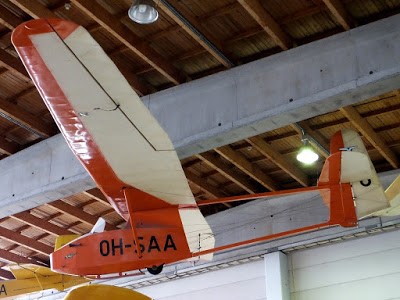
W.W.S.1 Salamandra in Finnish Aviation Museum
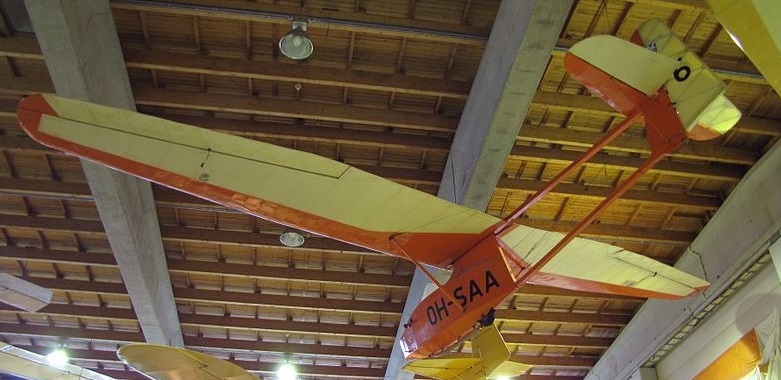
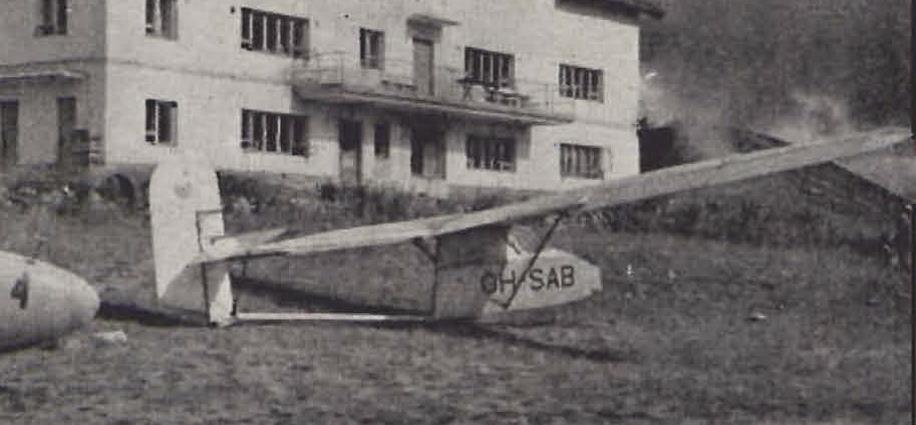
Construction of the Salamandra was entirely of wood with fabric covering on wings and tail unit. The fuselage consisted of a plywood covered nacelle for the single seat cockpit, with a wire-braced open strut rear fuselage supporting the cruciform style tail-unit. The high mounted wire braced wings were supported by struts from the bottom of the fuselage to approx 1/5 span. Wooden skids under the tail and fuselage nacelle comprised the undercarriage.
W.W.S.1 Salamandra in Finnish Aviation Museum
First flying in 1936, the most notable feat by a W.W.S. 1 Salamandra, in Poland, was an 11hr 15min flight by Buraka, between Brasław and Wilno, on 22 Aug 1938. Another marathon flight of 23 hours took place in Romania with a licence built version piloted by G. Braescu.
Before the war the WWS 1 was exported to Yugoslavia, Finland and Estonia.
During World War II, almost all Polish gliders and their technical documentation were destroyed or lost. After the war there was only one Salamandra left, kept hidden during the occupation, and it was decided to resume its production. Due to lack of blueprints, the design was reverse engineered in the IS (Instytut Szybownictwa – Gliding Institute). Five were built in March 1947 by the IS workshops as the first gliders in Poland after the war.
In 1948 a serial production resumed as IS-A Salamandra 48 in workshops in Jeżów. It was followed by improved variants Salamandra 49 and 53, produced also by other state-owned aviation factories throughout Poland, among others WSK Okęcie. After the war, 223 IS-A were built for Polish aero clubs, where they were used until 1962.
W.W.S.1 Salamandra OH-SAA
The later versions introduced airbrakes in the wings (Salamandra 49) and a windscreen (Salamandra 53). In Salamandra 53 there was introduced a bigger horizontal stabilizer, next retrofitted to earlier versions.
On 29 December 1956 there flew an export version Salamandra 53A – around 50 were exported to China, and a licence production started there. In China there was also developed a primary trainer two-seater variant, without a cockpit. In Yugoslavia there was built a similar glider Čavka, and in Finland – PIK-5. After migrating to Canada as a refugee, Czerwiński designed a modified Salamandra as the Czerwiński Sparrow, as well as an improved Sparrow designated Czerwiński Robin.
In 2017 one Salamandra was built in the Gliwice Aero Club, to original plans.
Variants:
W.W.S. 1 Salamandra Production aircraft from 1936. Wingspan: 12.48 m (40 ft 11 in) Wing area: 16.9 m2 (182 ft2) Wing profile: Göttingen-378 Aspect ratio: 9.2:1 Length: 6.48 m (21 ft 3 in) Height: 2.3 m (7 ft 6 in) Empty weight: 110 kg / 243 lb Gross weight: 190 kg / 418 lb Maximum speed: 150 km/h (93 mph) Maximum glide ratio: 15.2:1 @ 56 km/h (30 kts / 35 mph) Rate of sink: 0.81 m/s (159.5 ft/min)
IS-A Salamandra Reconstructed postwar version from 1947 5 built (SP-320 – SP-324). Empty weight: 140kg / 309lb Gross weight: 225kg / 496lb
IS-A Salamandra 48 1948 version 775 built (first – SP-580)
IS-A Salamandra 49 1949 version With strengthened construction, equipped with air brakes 93 built (first – SP-825)
IS-A Salamandra 53 1953 version With enlarged horizontal stabilizer, windscreen and other improvements 50 built. (first – SP-1224)
IS-A Salamandra 53A 1956 export version for China Around 50 built plus licence production.
On a cross-country fuel stop at Hagerstown, Maryland with Wittman’s design, the Buttercup, Fairchild engineers expressed an interest in the design and even entered in negotiations for possible production of the aircraft. With the onset of WWII, production plans were shelved, but Fairchild contacted Wittman and proposed that a four-seat version would be marketable. Wittman designed the four-place “Big X” soon afterward, which first flew on 6 January 1945.
The Big X was steel tube fuselage with fabric covering and all-wood wings. The original Big X featured a 130 hp Franklin 6AC engine, later upgraded to a 150 hp 6A4 in 1950.
Big X was used as a companion plane and baggage hauler during Wittman’s years as an air racer. When Fairchild did not follow up on production offers, Wittman was contacted by Cessna in Wichita, Kansas, to demonstrate the lightweight and strong spring steel landing gear of the Big X. Cessna bought the plane and its production rights in order to use the gear on its new Cessna 195 taildragger. The Big X was rebuilt in 1962 with variable-camber wing and full-span flaps. Wittman later produced an updated version in a two-place configuration called the Wittman Tailwind that became a popular homebuilt aircraft.
The original aircraft (the ony Big X built) was rebuilt by Forrest Lovley in 1980.
Wittman Big X Engine: 1 × Franklin 6A4-150-B3, 150 hp (110 kW) Length: 24 ft 10 in (7.57 m) Wingspan: 29 ft (8.8 m) Empty weight: 1,150 lb (522 kg) Gross weight: 2,200 lb (998 kg) Fuel capacity: 36 Cruise speed: 130 kn; 241 km/h (150 mph) Stall speed: 48 kn; 89 km/h (55 mph) Rate of climb: 900 ft/min (4.6 m/s) Capacity: 4
 All Aero