The 1909 Kaspar-Cihak monoplane was designed and built by Kaspar and Cihak in Czechia.
Monoplane
Kasper Bekas 1-A
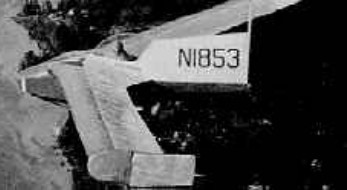
The Bekas, which first flew in 1968, was a development of an earlier, 1959, design of Stefan Brochocki, the BKB-1. The design of the Bekas 1-A had three main aims : a higher L/D (archieved by using a greater span and aspect ratio), easier ground handling and rigging and a flexible wing to study the effect of bending on stability and controllability. It has a fixed gear and trailing- edge control surfaces on the out-board portion of the wing which serve a dual role of elevator and aileron.
Construction was wood and plywood.
Wing span: 15m / 49.2ft
Wing area: 14.67sq.m / 158sq.ft
Empty Weight: 159kg / 350lb
Payload: 91kg / 200lb
Gross Weight: 159kg / 350lb
Wing Load: 17.04kg/sq.m / 3.48lb/sq.ft
Aspect ratio: 15.3
Airfoil: NACA 8-H-12
MinSink: 0.61 m/s / 2.0 fps / 1.18 kt
No. Built: 3
Karo Aviacijos Anbo 51
A two-seat monoplane trainer.
Karo Aviacijos Anbo 41
A two-seat day/night monoplane observation aircraft
Karo Aviacijos ANBO II
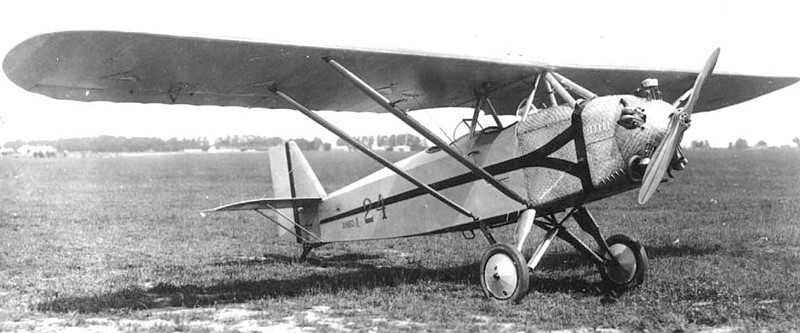
The ANBO II was a parasol-wing monoplane aircraft built by Karo Aviacijos Tiekimo Skyrius in Lithuania in 1927 as a pilot trainer for the Army. Designed by Antanas Gustaitis, it was the first Lithuanian trainer aircraft of own design.
Anbo stands for “Antanas nori būti ore”, which means “Antanas wants to be in the air”.
First flying on 27 November 1927, the plane was not produced in series, yet it served as a prototype for latter trainers Anbo-III and Anbo-V/51, developed by Antanas Gustaitis.
It was eventually reequipped with more powerful engine for the Aero Club of Lithuania in 1931 before being written off after a crash on 26 June 1934.
A full size flying replica was built in 2012-2016 by Rolandas Kalinauskas and Arvydas Šabrinskas. Due to difficulties in obtaining original Walter engine, a Russian-made Shvetsov M-11 engine, having similar parameters, was used. Test flight of the restored Anbo II took place on 18 October 2016. The plane is based in Pociūnai airfield, Lithuania and is mostly used for air shows with both constructors dressing in Lithuanian Air Force uniforms of 1920s-1930s.

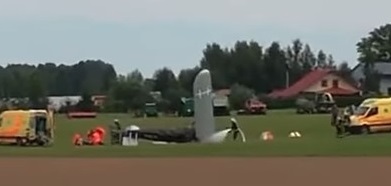
The Lithuanian plane had stopped at Priekuļi airfield, just outside Cēsis, Latvia, to refuel, en route to its destination in Biržai, northern Lithuania. After refueling, it attempted to take-off, but crashed following engine failure a little before 13:30, August 8, 2021. The engine failed during a climb at the altitude of 20-30 m resulting in a fatal crash for both the pilot Arvydas Šabrinskas, and the aircraft. The passenger is Valdas Černius, was taken to a hospital with serious injuries.
Powerplant: 1 × Walter NZ 60, 45 kW (60 hp)
Wingspan: 10.72 m (35 ft 2 in)
Wing area: 20 m2 (215 sq ft)
Length: 6.75 m (22 ft 2 in)
Empty weight: 280 kg (620 lb)
Gross weight: 550 kg (1,210 lb)
Maximum speed: 160 km/h (100 mph, 87 kn)
Service ceiling: 3,500 m (11,500 ft)
Rate of climb: 2.1 m/s (410 ft/min)
Crew: two, pilot and instructor
Karo Aviacijos ANBO I
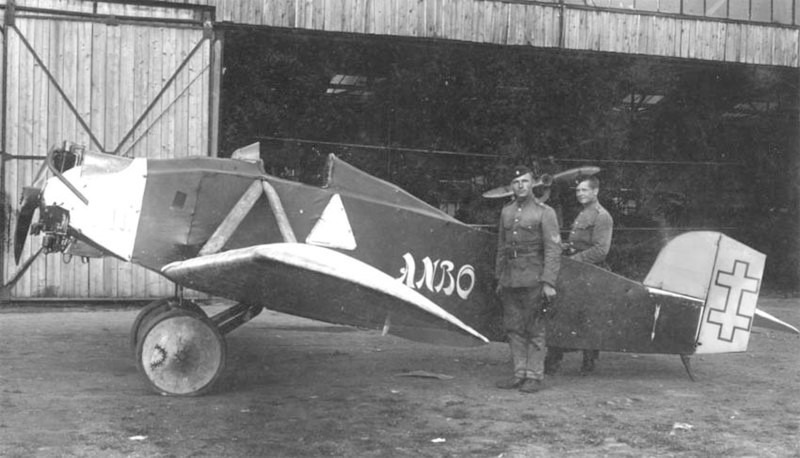
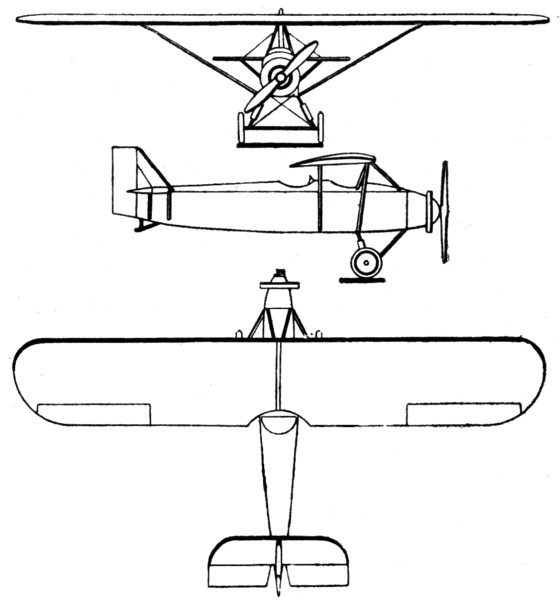
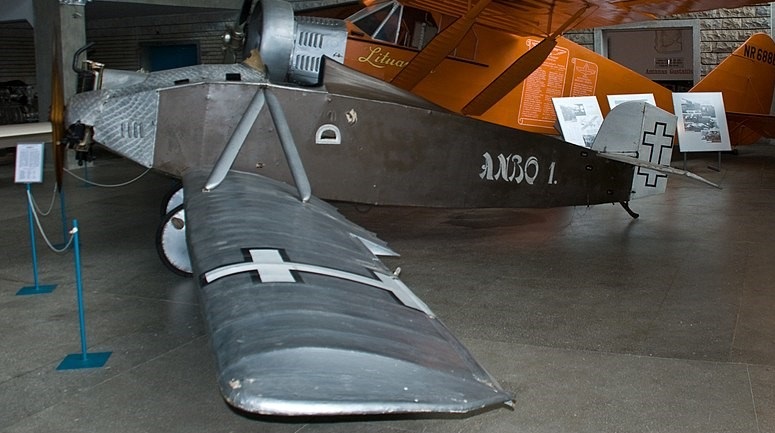
Designed by Antanas Gustaitis and built by Karo Aviacijos Tiekimo Skyrius, the ANBO I was a single-seat aircraft developed in Lithuania, proposed as a trainer for the Army It was a low-wing, braced monoplane of conventional tailwheel configuration. The fuselage structure was of fabric-covered welded steel tube, The wing had a wooden, two-spar structure and was fabric covered but the fuselage, also fabric covered, had a welded steel tube structure.
The first flight took place on 14 July 1925. Ten years later the aircraft was sold to Lithuanian Aviation Museum in Kaunas where it is exhibited today.
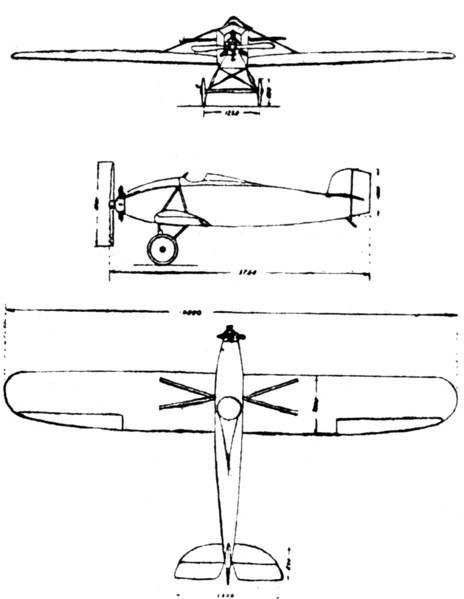
Powerplant: 1 × Anzani 3-cylinder radial, 30 kW (40 hp)
Propeller: 2-bladed Dorand, 1.90 m (6 ft 3 in) diameter
Wingspan: 10 m (32 ft 10 in)
Wing area: 11.40 m2 (122.7 sq ft)
Length: 5.75 m (18 ft 10 in)
Height: 1.95 m (6 ft 5 in)
Empty weight: 190 kg (419 lb) equipped
Gross weight: 300 kg (661 lb)
Fuel capacity: 35 kg (77 lb) fuel and oil
Maximum speed: 142 km/h (88 mph, 77 kn) at ground level
Endurance: 4 hr
Service ceiling: 4,200 m (13,800 ft)
Time to 1,000 m (3,300 ft): 7 min
Take-off distance: 30 m (98 ft)
Landing distance: 40 m (130 ft)
Crew: One
Kari-Keen 60 Sioux Coupe / 90
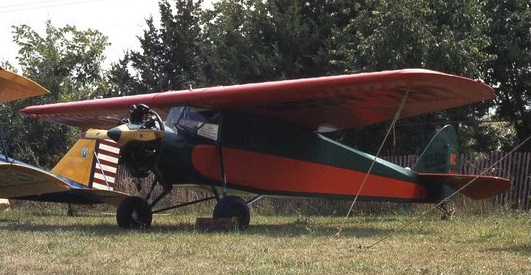
The Kari-Keen 90 Sioux coupe was designed by Swen Swanson and is a two-seat side by side high-wing monoplane with conventional landing gear. The wing is fully cantilevered, with skylights built in. The fuel tank sits above the pilot’s head and is part of the leading edge. Ole Fahlin built all the propellers and test flew the aircraft.
Production of the Sioux coupe began in 1929. The first model, the Kari-Keen 60 Sioux Coup, featured a 60 hp (45 kW) Veile M-5 engine. 22 aircraft were built without a type certificate.
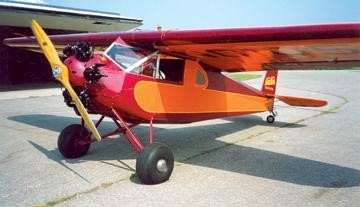
In 1930, six more model 90s were built with a type certificate. The price was US$3,365 in 1930.
In 1931, the Sioux Aircraft Corporation bought the company assets, changing the name of the Kari-Keen 90 into the Sioux Coupe 90.
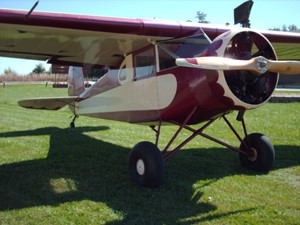
One 1930 Coupe 60 (ATC 2-81), powered by a 65hp Velie M-5 engine, was carried over from Kari-Keen inventory to Sioux Aircraft Corporation.
With the re-organization of Kari-Keen Aircraft Co, the 1931 Sioux Coupe 90 was a slight variation of the Kari-Keen 90. Designed by Swen Swanson and redesign by Gazley & LaSha, the one built, NC10544, sold for $3,355. Originally powered by a 90hp Brownback Tiger, it was later re-powered with a 110hp Warner Scarab.
The Sioux Coupe 90-B Junior (ATC 414) built in 1931, NC10721, sold for $3,500. Originally powered by a 90hp Warner engine, there are reports that a 90hp Lambert was also installed at one time.
The Sioux Coupe 90-C Senior (ATC 2-356) NC10735 was built in 1931.
Production of the Sioux coupe ended on 1 August 1933.
Variants:
Kari-Keen 60 Sioux coupe
First flight 1929. 22 built
Sioux Coupe 90
Lambert R-266 radial engine 90hp.
First flight 1930. 6 built
Sioux Coupe 90A
powered with a 90 hp Brownback Tiger
First flight 1933. 1 built
Sioux Coupe 90B Junior
powered with a 90 hp Warner Scarab Junior – One built
First flight 1931.
Sioux Coupe 90C Senior
powered with a 110 hp Warner Scarab – One built
First flight 1931.
Specifications:
Kari-Keen 90-C Sioux coupe
Engine: 1 × Warner Scarab Radial, 110 hp (82 kW)
Propeller: 2-bladed Ole Fahlin
Wing area: 150 sq ft (14 m2)
Airfoil: Eieffel 385
Gross weight: 1,580 lb (717 kg)
Fuel capacity: 25 US gallons (95 l; 21 imp gal)
Cruise speed: 66 kn; 122 km/h (76 mph)
Crew: one
Capacity: one passenger
Sioux Coupe 90
Engine: 90hp Brownback Tiger
Wingspan: 30’0″
Length: 23’0″
Useful load: 533 lb
Max speed: 115 mph
Cruise: 100 mph
Stall: 45 mph
Range: 400 mi
Seats: 2
Sioux Coupe 90-A
Engine: 90hp Brownback Tiger, later 110hp Warner Scarab
Wingspan: 30’0″
Length: 23’0″
Useful load: 533 lb
Max speed: 115 mph
Cruise: 100 mph
Stall: 45 mph
Range: 400 mi
Seats: 2
Sioux Coupe 90-B Junior
Engine: 90hp Warner
Wingspan: 30’0″
Length: 23’0″
Useful load: 530 lb
Max speed: 115 mph
Cruise: 98 mph
Stall: 45 mph
Range: 400 mi
Seats: 2
Sioux Coupe 90-C Senior
Engine: 110hp Warner Scarab
Wingspan: 30’0″
Length: 23’3″
Seats: 2
Karhumäki Bear
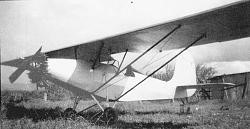
Niilo and Valto Karhumäki started in autumn 1924 the construction of an airplane at their home. The work also involved Emil Kankaanpää and Hope Hovinen. The machine was given the name Bear 1.
The brothers built in the 1920s of four aircraft: Bear 1 Bear 2 Bear 3 and Tern. Construction was initially something of a hobby, but soon expanded into a versatile aviation business.
Karhumäki Karhu 48B
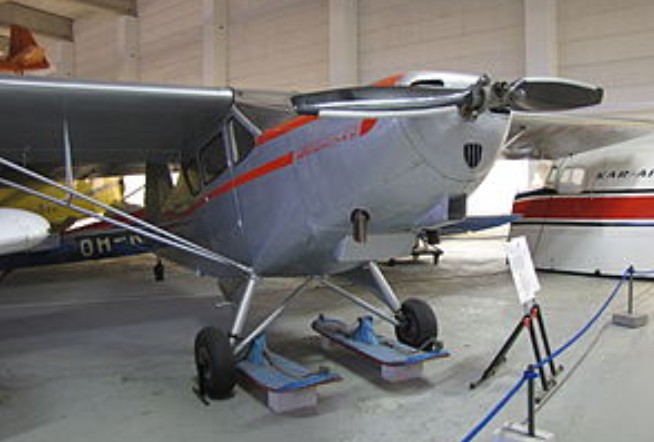
The Veljekset Karhumäki O/Y company had been formed in 1924 and concerned itself with licence manufacturing. During 1946-1947 the company designed and built the Karhu 48B a high-wing strut-braced four-seat monoplane in collaboration with Valtion. The development team included Uuno Karhumäki, Matti Hahka and August Puukko from Karhumäki and Torolf Eklund, Johannes Joensuu, Oiva Lounivuo, Toivo Mäntysalo, Karl Konrad Wessman, Paavo Paitula, Olavi Raitio and Aaretti Nieminen from Valtion, Nieminen being appointed team leader.
WINGS: High-wing rigidly braced monoplane. Wing braced by steel-tube V-struts. Two-spar wooden structure covered with fabric. Flaps and ailerons with welded steel-tube frames and fabric covering.
FUSELAGE: Welded steel-tube structure covered with fabric.
TAIL UNIT: Braced monoplane type. Welded steel-tube framework covered with fabric.
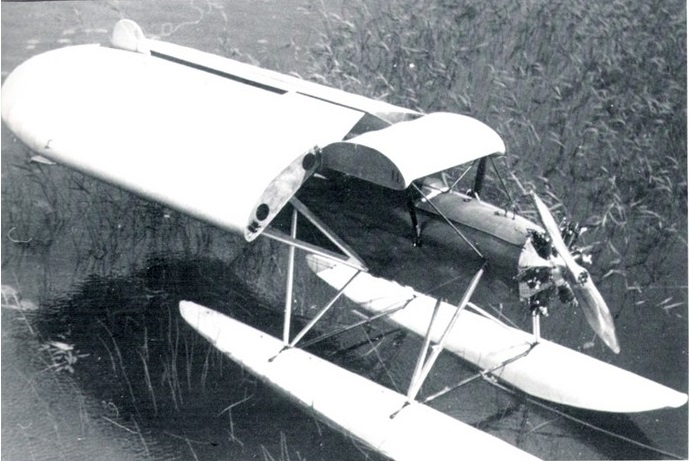
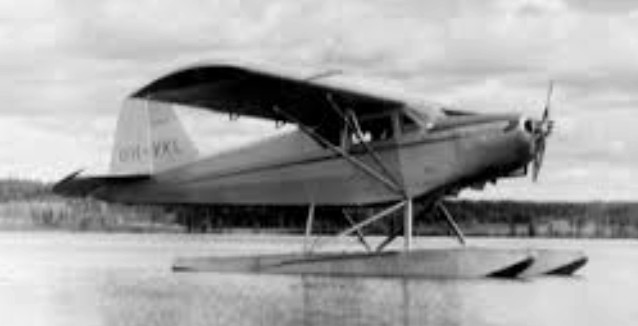
LANDING GEAR: Tail wheel type with interchangeable wheels and skis. Faired side vees, incorporating springing, and two half axles hinged at centreline of underside of fuselage. Steerable tail wheel. The landing gear could be replaced by twin all-metal single-step floats of Karhumäki design and construction, with a rudder on port float.
POWER PLANT: One 190 hp Lycoming O-435A six-cylinder horizontally-opposed air-cooled engine driving an Acromatic 220 variable-pitch airscrew.
ACCOMMODATION: Enclosed cabin seating four, two single seats in front with removable dual controls and a full-width seat aft. Entrance door on each side. Two baggage compartments. Cabin heating and ventilation. Radio fitted as standard.
Two prototypes were completed, the first, registered OH-VKK and named Nalle, was flown for the first time by Uuno Karhumäki (the youngest of the Karhumäki brothers) on July 20, 1948. The second, which flew later that year, was registered OH-VKL and named Tavi. Planned production did not materialize by the import of cheap military surplus aircraft, and subsequently both aircraft were used by Karhumäki.
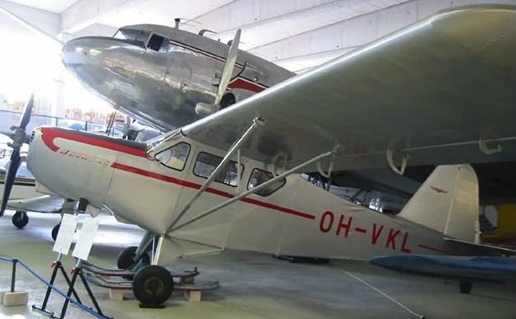
OH-VKL eventually had its wing modified and was redesignated Karhu 48B, it was reregistered OH-KUA in 1961 when it was sold to O. Marjamäki in Vilppula. After being deregistered in 1973, the aircraft eventually ended up at the Suomen Ilmailumuseo (Finnish Aviation Museum), restored by Karair in 1988 into the original livery and registration.
Specifications:
Landplane
Span: 37 ft 10 in (11.54 m)
Length: 25 ft 9 in (7.85 m)
Wing area: 186.25 sq.ft (17.31 sq.m)
Weight empty: 1,789 lb (813 kg)
Weight loaded: 2,882 lb (1,310 kg)
Max speed: 142 mph (229 kmh)
Cruising speed: 116 mph (186 kmh)
Landing speed: 48 mph (78 kmh)
Service ceiling: 15,745 ft (4,800 m)
Cruising range: 435 mls (700 km)
Seaplane
Span: 37 ft 10 in (11.54 m)
Length: 26 ft 6.5 in (8.10 m)
Wing area: 186.25 sq.ft (17.31 sq.m)
Weight empty: 1,991 lb (905 kg)
Weight loaded: 3,080 lb (1,400 kg)
Max speed: 126 mph (203 kmh)
Cruising speed: 109 mph (176 kmh)
Alighting speed: 52 mph (83 kmh)
Service ceiling: 13,780 ft (4,200 m)
Cruising range: 404 mls (650 km).
Karhu 48B
Engine: 1 × Avco Lycoming O-435A 6-cyl. air-cooled horizontally-opposed piston engine, 140 kW (190 hp)
Propeller: 2-bladed Aeromatic 220 variable-pitch
Length: 7.85 m (25 ft 9 in) (landplane)
Wingspan: 11.54 m (37 ft 10 in)
Wing area: 17.31 sq.m (186.3 sq ft)
Max takeoff weight: 1,310 kg (2,888 lb)
Maximum speed: 229 km/h (142 mph; 124 kn)
Cruising speed: 186 km/h (116 mph; 100 kn)
Range: 700 km (435 mi; 378 nmi)
Service ceiling: 4,800 m (15,748 ft)
Crew: 1
Capacity: 3 passengers
Karhumäki Viri
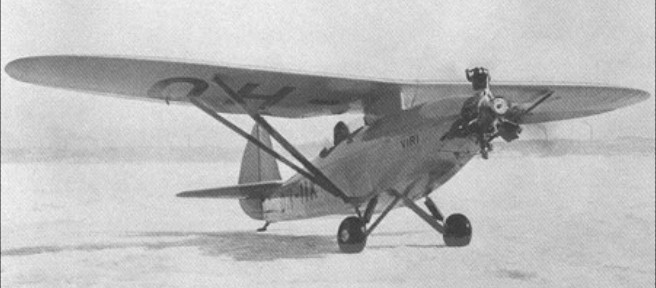
In the 1930s the single-seat light monoplane Viri single-seat light monoplane was built, design by Finnish Club of Aeronautical Engineers.
 All Aero