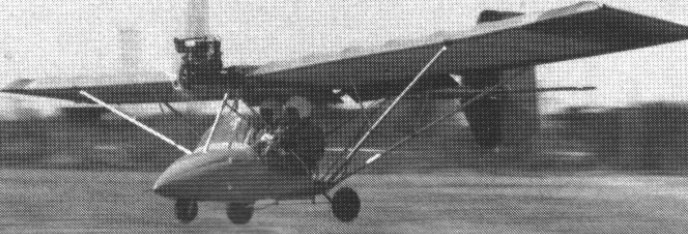
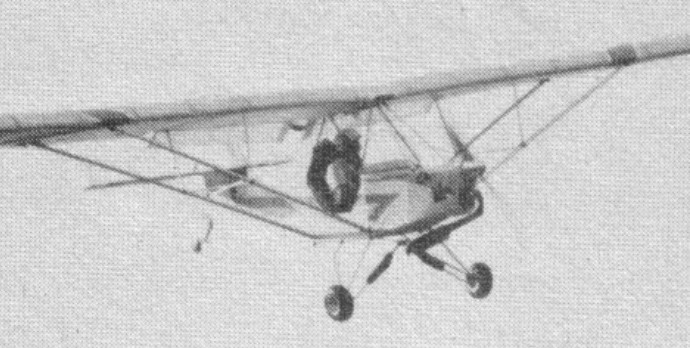
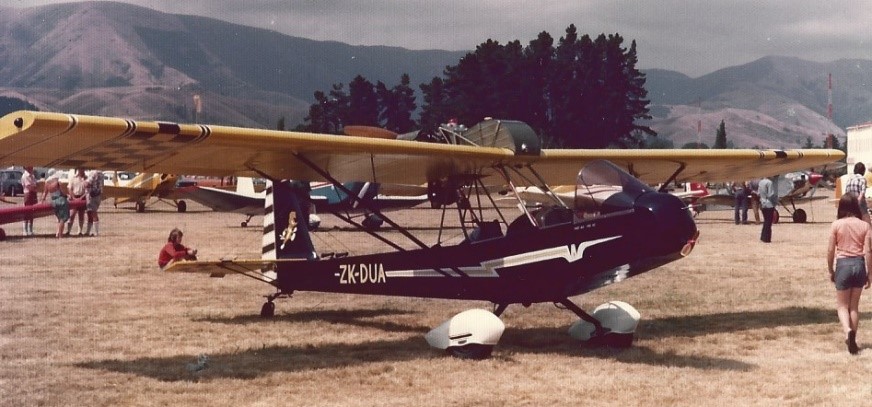
The Spitfire has a centre mounted joy stick, rudder pedals, tail wheel steerable through rudder pedals. The Spitfire II is a side-by-side two place version.
Spitfire Engine: Kawasaki 440A Wing span: 30’ Wing area: 154 sq.ft Max wt: 550 lbs Empty wt: 250 lbs Stall: 19 mph Cruise: 60 mph Vmax: 63 mph Climb rate: 850 fpm TO run: 100 ft Ldg roll: 100 ft
Spitfire II Engine: Rotax 503, 53 hp Prop: 6-foot wood Worldwide Landing gear: Tricycle Wingspan 30’ Wing area: 154 sq.ft Empty to 330 lb Gross weight 720 lbs Cruise speed 60 mph Stall speed 25 mph Vrnax 63 mph Climb 500 fpm Takeoff run 150 ft Landing roll: 150 ft
World Aircraft of Paris (Tennessee, that is), offers the Vision and Spirit S-LSA (also in kit form), now with new Garmin radios and “value pricing.” The Vision is a STOL bird with outsized doors, full elevator control at steep angles of attack, and it climbs out with full flaps, sports a beefy landing gear and routinely demonstrates 100-foot takeoff rolls! Price range: $85,000 to $125,000.
The World Aircraft Spirit is a Colombian/American amateur-built aircraft, designed by Max Tedesco and produced by World Aircraft Company. The aircraft was publicly introduced at AirVenture in 2011 and production was expected to commence in 2014. It is supplied as a kit for amateur construction or as a complete ready-to-fly aircraft.
The Spirit features a strut-braced high-wing, a two-seats-in-side-by-side configuration enclosed cockpit that is 48 in (122 cm) wide, fixed tricycle landing gear and a single engine in tractor configuration.
The aircraft is made from aluminum sheet. Its 32.9 ft (10.0 m) span wing has an area of 132 sq ft (12.3 m2) and mounts flaps. The wing is supported by “V” struts and jury struts. The aircraft’s recommended engine power range is 100 to 130 hp (75 to 97 kW) and standard engines used include the 100 hp (75 kW) Rotax 912ULS, 100 hp (75 kW) Continental O-200 and the 100 hp (75 kW) Lycoming IO-233 four-stroke powerplants.
The aircraft has a design maximum gross weight of 1,653 lb (750 kg), but is restricted to 1,320 lb (599 kg) if flown in the US light-sport aircraft category.
The Spirit airframe is constructed in Colombia and then shipped to World Aircraft’s facility at Henry County Airport in Paris, Tennessee for final assembly and paint. Kits shipped are fully assembled and then disassembled for customer delivery and may be shipped painted as well. Construction time from the supplied kit is estimated as 110 hours.
By December 2011 55 examples had been completed and flown. As of October 2012, the design appears on the Federal Aviation Administration’s list of approved special light-sport aircraft.
The price in 2014 was US$129,500 (assembled, Spirit Grand Edition model). World Aircraft Company announced Vision kits were to start shipping in the first quarter of 2015. The regular price was to be US$26,995.00, but with an introductory price for the first twelve kits of US$24,700.00.
Variants: World Aircraft Vision
Spirit Engine: 1 × Rotax 912ULS, 100 hp (75 kW) Propeller: 3-bladed composite Length: 22 ft 3 in (6.78 m) Wingspan: 32 ft 10 in (10.01 m) Wing area: 132 sq ft (12.3 m2) Empty weight: 728 lb (330 kg) Gross weight: 1,320 lb (599 kg) light-sport aircraft version, 1,653 lb (750 kg) other versions Fuel capacity: 24 U.S. gallons (91 L; 20 imp gal) Cruise speed: 115 mph (100 kn; 185 km/h) Stall speed: 35 mph (30 kn; 56 km/h) flaps down Never exceed speed: 143 mph (124 kn; 230 km/h) Range: 600 mi (521 nmi; 966 km) Endurance: 4.5 hr Maximum glide ratio: 10.5:1 Rate of climb: 950 ft/min (4.8 m/s) Service ceiling: 14,000 ft Wing loading: 10.0 lb/sq ft (49 kg/m2) Takeoff dist: 175 ft Landing dist: 260 ft Load factor: +6 / -3G Crew: one Capacity: one passenger Cabin width: 48.3 in Glide ratio: 10.5:1
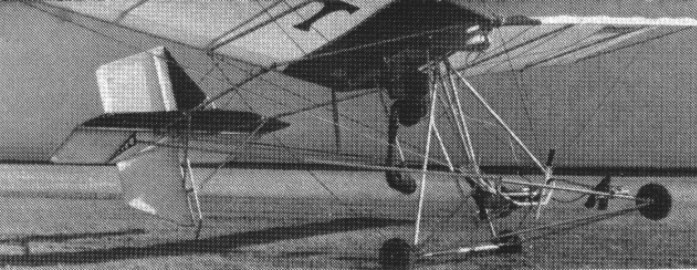
The Woody’s Pusher was designed by H.L. Woods, a former engineer at Bensen Aircraft Corp. The Woody’s Pusher is a tandem two-seater with a parasol-mounted wing. The engine, which may range in power from 65 to 85 hp, is carried on top of the wing in a pusher fashion and turns a wooden, fixed-blade prop. Originally the Pusher was designed with a fuselage of wood covered with plywood and fabric. Later models of the light open-cockpit feature a steel-tube, fabric-covered fuselage and metal leading edges on its wood and fabric wing assemblies. Later versions utilised a wooden framed fuselage with fibreglass covered wood panelling. The landing gear is the nonretractable tailwheel type.
The 1973 SL-1 Formula V racer built by Stanley Wood was a single place cabin, mid-wing monoplane. First flying on 23 June 1973, the registration was N31549.
Four-Runner is an original design based on the squarish but fast Wittman Tailwind and Thorp T-18. A four-place cabin, high-wing monoplane, the fuselage and tail are 4130 steel tubing, fabric-covered. Wings, flaps and ailerons are pop-riveted aluminum. Gear legs are from a Cessna 170B.
Built in 1974, the registration is N73CW.
Engine: IO-360 AlA, 180-hp Wingspan: 25’3” Gross Wt: 2250 lb Empty Wt: 1250 lb Fuel capacity: 50 USG Top speed: 175 mph Cruise: 155 mph Stall (clean) 56 mph Climb rate 1100 fpm Range 1000 sm




 All Aero