Yakolev Yak-25 / Yak-120 / Yak-125

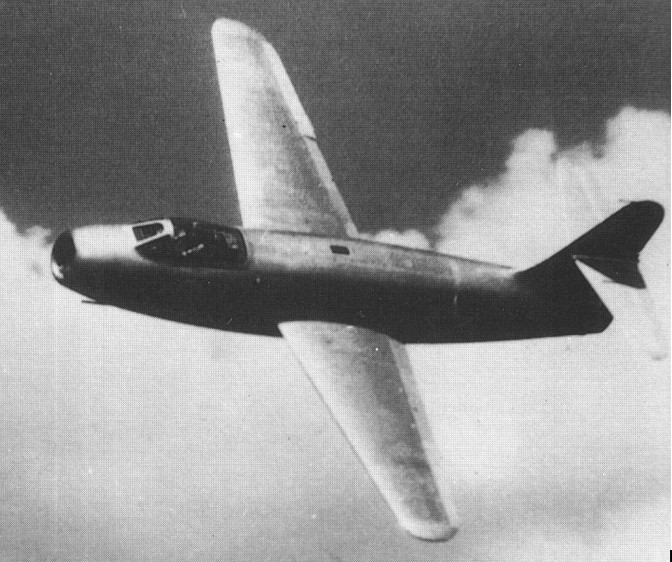
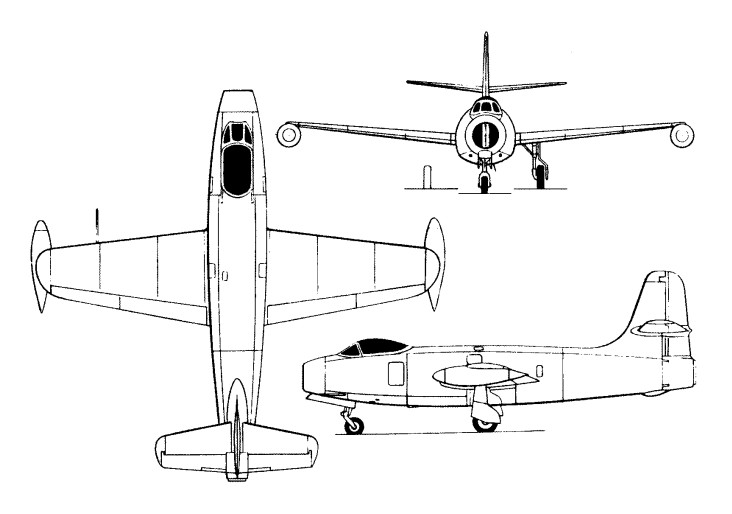
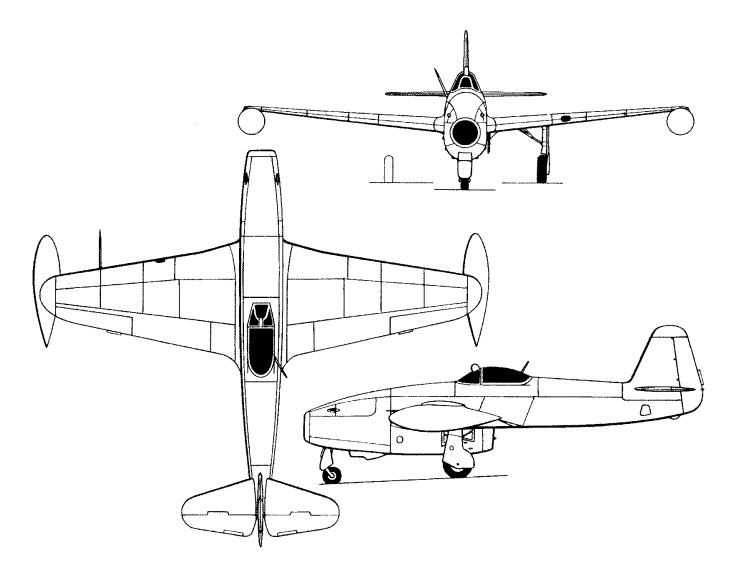
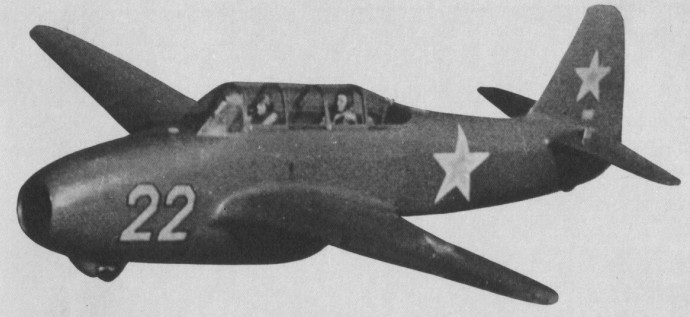
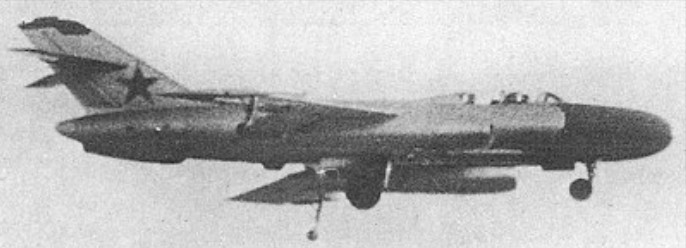
In the summer of 1951, the NKAP issued a requirement for an all-weather interceptor fighter possessing sufficient internal fuel capacity to mount standing patrols of up to 2.5 hours duration and capable of accommodating a large, new radar. This supplanted an earlier requirement to which the Mikoyan-Gurevich I-320 and Lavochkin La-200 had been evolved. The new radar, known as the Sokol (Falcon), had a 80cm diameter dish, three different scan modes and an installed mass weight of almost 500kg. To meet this new requirement, the Lavochkin and Yakolev OKBs respectively developed the La-200B and Yak-120. The latter, an all-metal stressed-skin tandem two-seater, was powered by a pair of small-diameter Mikulin AM-5A turbojets each rated at 2200kg / 4850-lb and hung beneath a wing swept back 45 degrees at quarter chord and carrying some 3 degrees of anhedral, and mounted in full-mid position. The undercarriage was of zero-track type, with wingtip-housed outrigger stabilisers, and armament comprised two 37mm N-37L cannon with their barrels accommodated in external fairings beneath the fuselage.
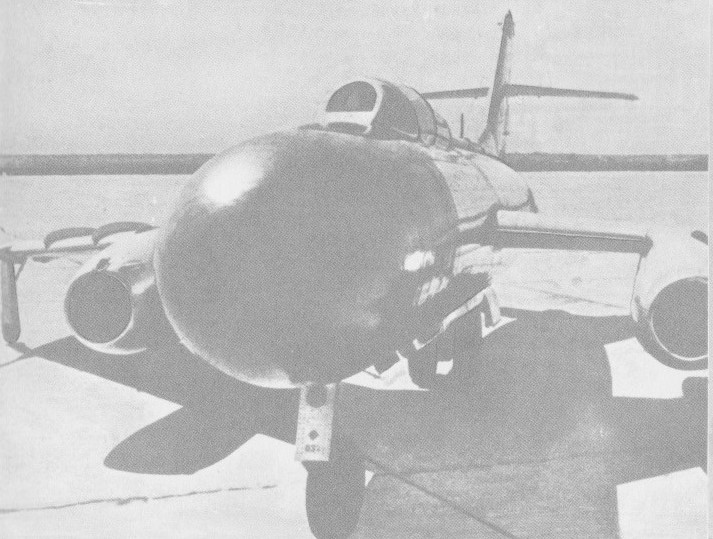
Yakolev Yak-25 Article

From 1957 the Mikulin AM 5 turbojets were replaced in the definitive Yak 25F by Tumansky RD 9s of 2600 kg (5730 lb) thrust, increasing the maximum speed.

The first of three Yak-120 prototypes was flown on 19 June 1952, State acceptance testing paralleling construction of a pre-series of 20 aircraft for avionics development and, commencing late 1953, service evaluation. With ballast equivalent in weight to the Sokol radar – which did not attain service status until late 1955 – the Yak-120 had a loaded weight of 9220kg, series production commencing late 1953 as the Yak-25 with RD-9 turbojets each rated at 2630kg. Confusing repetition of the “Yak-25” designation resulted from its initial use as an OKB appellation and subsequent use by the NKAP as an official and sequential designation, the previous Yakolev service fighter having been the Yak-23. The Yak-25 was assigned primarily to defence sectors in the Far North of the USSR, production being completed in 1958 after the delivery of 480 aircraft and service phase-out taking place in the mid ‘sixties.

The production programme took the type right through toward the end of the 1960s in role-differentiated models designated Yak-25, Yak-26 and Yak-27 with swept wings and on the Yak-25RD high-altitude reconnaisance version with straight wings.

The intercepter was codenamed Flashlight-A by NATO’s Air Standards Coordinating Committee, Flashlight B being a reconnaissance variant developed concurrently for service with the Soviet air force’s frontal aviation or tactical air arm.

A tactical reconnaissance derivative with the navigator accommodated in a glazed nose was built in 1953 as the Yak-125, but was not produced in series owing to prior adoption of the IL-28R. Other derivatives of the basic design were the Yak-25L ejection-seat test bed with individual cockpits, and the Yak-25RV long-range high-altitude strategic reconnaissance aircraft.

The Yak 25R carried the second crew member in a pointed glazed nose instead of behind the pilot, and armament was reduced from the intercepter’s pair of 37 mm (1.46 in) NR 37 cannon to a single 23 mm (0.90 in) weapon in the right-hand side of the forward fuselage.

Engines: 2 x Klimov VK-5, 8820 lb thrust
Max take-off weight: 10900 kg / 24031 lb
Wingspan: 11.00 m / 36 ft 1 in
Length: 15.67 m / 51 ft 5 in
Height: 4.32 m / 14 ft 2 in
Wing area: 28.94 sq.m / 311.51 sq ft
Max speed: 1090 km/h / 677 mph
Cruise speed: 820 km/h / 510 mph
Ceiling: 13900 m / 45600 ft
Range: 2730 km / 1696 miles
Armament: 2 x 37m cannon
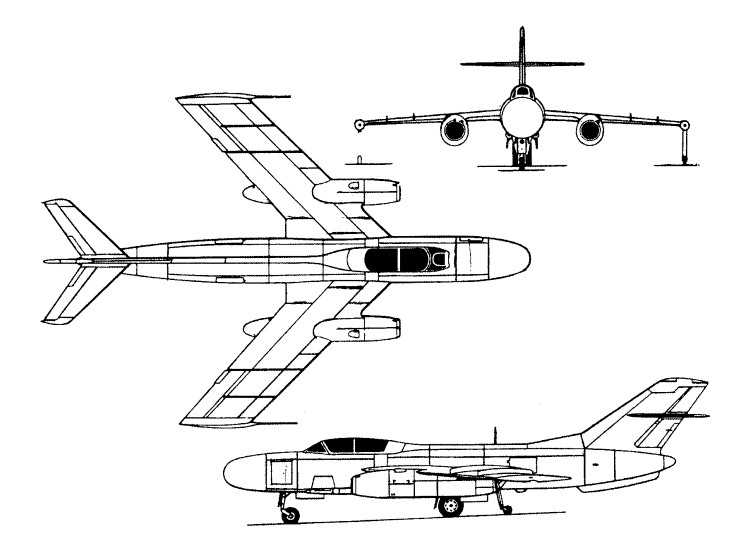
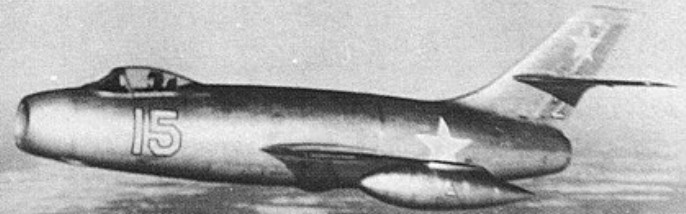
Yakolev Yak-25

Yakolev Yak-25 (I)

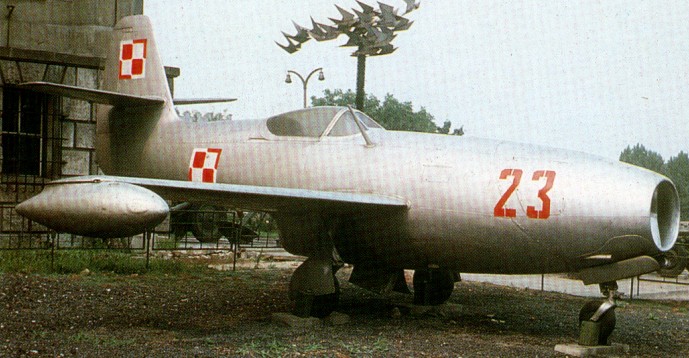
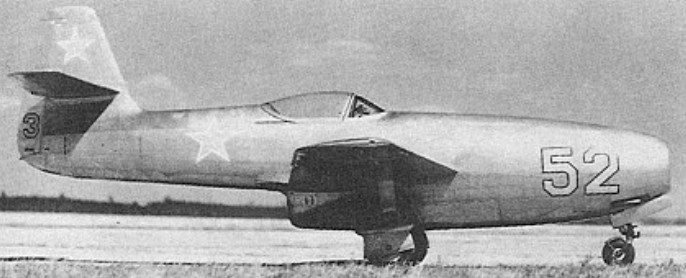
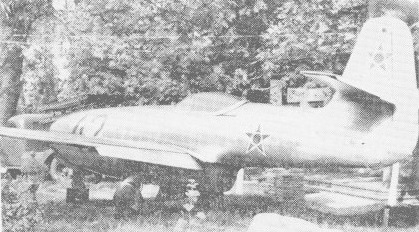
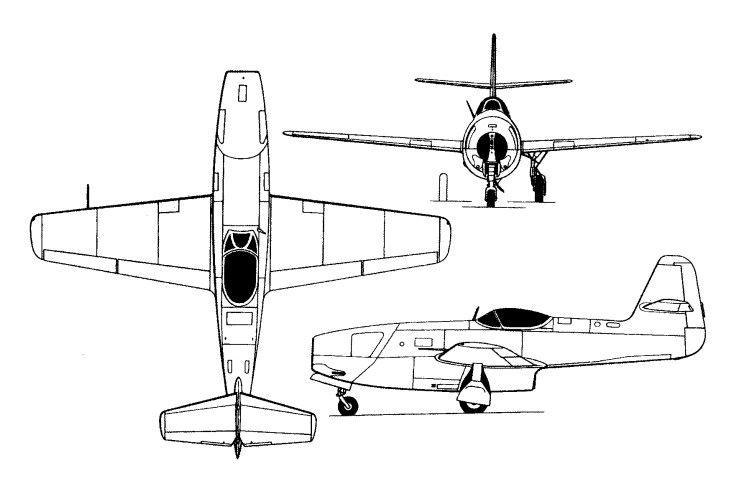
Developed in parallel with the Yak-23, the similarly-powered Yak-25 was conceptually more advanced and derived from the Yak-19. By comparison with the earlier fighter, the Yak-25 employed the higher-speed TsAGI S-9S-9 laminar section at the wing root translating to a KV-4-9 section at the tip with a constant thickness of 9% throughout. Despite the greater diameter of the 1625kg RD-500 (Rolls-Royce Derwent) – similar to that installed in the Yak-23 prototypes – than the RD-10F of the Yak-19, the diameter of the fuselage of the Yak-25 was unchanged. Sweptback horizontal tail surfaces were adopted, provision was made for two 200-litre drop tanks under the wing tips and armament comprised three 23mm NR-23 cannon. The first of two prototypes was flown on 31 October 1947, but, although the subsequent flight test programme was allegedly successful, no production contract was issued for the Yak-25. One of the prototypes was utilised during 1948 for (fixed) tandem-wheel undercarriage trials as part of the Yak-50 development programme.

Max take-off weight: 3235 kg / 7132 lb
Empty weight: 2285 kg / 5038 lb
Wingspan: 8.88 m / 29 ft 2 in
Length: 8.65 m / 28 ft 5 in
Wing area: 14.00 sq.m / 150.69 sq ft
Max. speed: 972 km/h / 604 mph
Range: 1445 km / 898 miles

Yakolev Yak-25 (I)

Yakolev Yak-23

This type resulted from an October 1946 requirement, and as one of the bureau’s first all-metal stressed-skin designs was based on a “stepped” fuselage with the RD-500 engine (in essence a British unit, the Rolls-Royce Derwent V centrifugal-flow turbojet, built in the USSR) located in the forward fuselage and ex¬hausting below the fuselage in line with the cockpit and trailing edges of the unswept wing. This kept the engine installation as short as possible, and so avoided the efficiency losses associated with a long jetpipe. The Yak-23 possessed wing and horizontal tail surfaces similar to those of the Yak-19, and was intended to fulfil a requirement for a lightweight day interceptor capable of operating from existing fields.
The first of three prototypes of the Yak-23, which were of all-metal stressed-skin construction and powered by imported Rolls-Royce Derwent turbojets, was flown on 17 June 1947. Seen as something of a back-up for the very much more advanced Nene-engined fighters with wing sweep-back then under development, the Yak-23 proved itself an outstandingly agile warplane. NATO code name Flora.
Manufacturer’s trials were completed on 12 September 1947. State Acceptance testing had been successfully completed before the year’s end and series production began in the late spring of 1948.
The series Yak-23 was powered by a Soviet copy of the Derwent known as the RD-500 – a designation derived from GAZ-500, the factory in which the engine was produced – and rated at 1590kg. Its armament consisted of two 23mm NS-23 (later NR-23) cannon.
Deliveries to the V-VS began early in 1949, by which time the first production examples of the MiG-15 had already flown. In consequence, only two V-VS regiments reportedly re-equipped (from the Yak-17) with the Yak-23, which was quickly released for export. Twelve were delivered to Czechoslovakia during 1950 (and there assigned the designation S101) and the supply of some 95 to Poland began late that year, while, in 1951, 12 each were delivered to Romania and Bulgaria. Both Czechoslovakia and Poland were to have licence-built the Yak-23 but, in the event, manufactured the MiG-15, and Soviet production of the Yakolev type terminated in 1950 with 310 built.

One example was converted by the OKB as a tandem two-seat conversion trainer (Yak-23UTI), this first being flown in the spring of 1949. One Yak-23 was rebuilt as a tandem two-seater in Romania, but the type had given place to the MiG-15 in all Warsaw Pact air forces by the mid ’50s.

Bulgarian Yak-23

Principal versions – Yak-23 (basic fighter model) and Yak-23UTI (two seat conversion trainer whose production is unconfirmed). Principal users – Czechoslovakia, Poland, Romania, USSR, and possibly other Warsaw Pact countries.

Engine: one 3,505-lb (1,590-kg) thrust RD-500 turbojet
Wing span 28 ft 7.75 in (8.37 m)
Length 26 ft 7.75 in (8.12 m)
Wing area 145.32 sq ft (13.50 sq.m)
Height: 10.827 ft / 3.31 m
Empty weight 4,409 lb (2,000 kg)
Maximum take-off weight 7,460 lb (3,384 kg)
Maximum speed 606 mph (975 kph)
Initial climb rate 9,252 ft (2,820 m) per minute
Service ceiling 48,555 ft (14,800 m)
Range 746 miles (1,200 km)
Armament: two 23-mm cannon
Bombload two 132-lb (60-kg)
Crew: 1

Yakolev Yak-23

Yakolev Yak-19

Virtually simultaneously with redesign of the Yak-15 to produce the Yak-17, the Yakolev OKB embarked upon the design of a more advanced single-seat fighter, the Yak-19. Utilising a straight-through airflow arrangement, the Yak-19 employed a 12% thickness straight wing. The Yak-19 accommodated all fuel within the fuselage. Of all-metal stressed-skin construction with a semi-monocoque fuselage, the Yak-19 had a laminar-flow wing of TsAGI S-l-12 section, and armament of two 23mm cannon. Equipped with an ejection seat, it was the first Soviet fighter to be fitted with an afterburner, this boosting the thrust of its RD-10F turbojet to 1100kg. The design was tailored round the 2425-lb (1100-kg) afterburning thrust RD-10F located in a straight-through design with a nose inlet and tail exhaust.
Two prototypes were built, the first of these entering flight test in January 1947. The second prototype differed in having revised vertical tail surfaces, several degrees of anhedral applied to the horizontal tail and provision for a 200-litre drop tank beneath each wingtip. Difficulties were experienced with the afterburner, and as more powerful turbojets (eg, the RD-500) were by now available, the Yak-19 test programme was terminated on 21 August 1947.

Yak-19
Max take-off weight: 3050 kg / 6724 lb
Empty weight: 2200 kg / 4850 lb
Wingspan: 8.7 m / 29 ft 7 in
Length: 8.36 m / 27 ft 5 in
Wing area: 13.5 sq.m / 145.31 sq ft
Max. speed: 904 km/h / 562 mph
Ceiling: 15000 m / 49200 ft
Range: 550 km / 342 miles

Yakolev Yak-19

Yakolev Yak-18

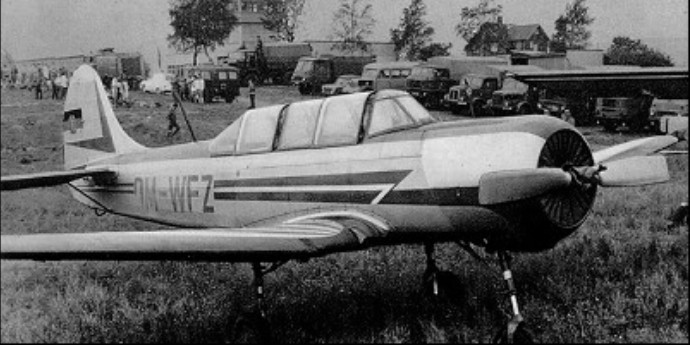
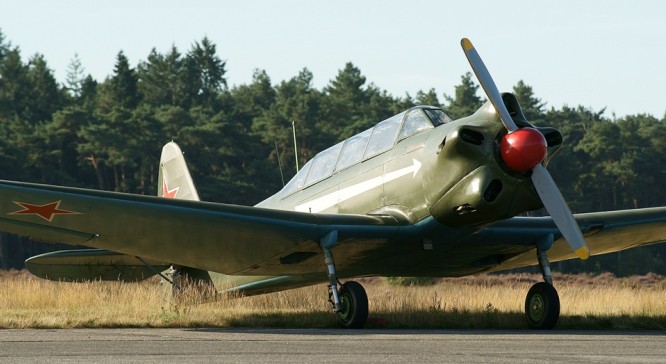
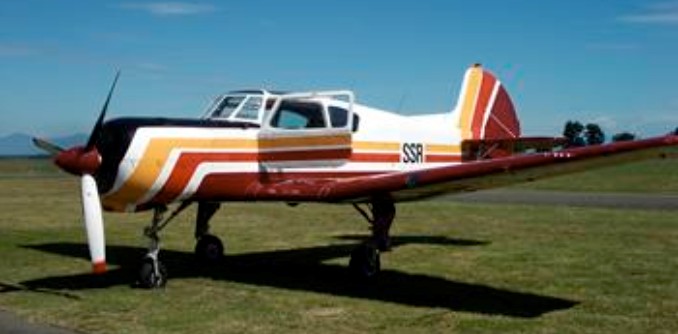
Development of the Yakolev Yak-18 by Aleksandr Sergei Yakolev started during the Second World War. During the closing stages of the War, the Yak-18 tandem two-seat primary trainer appeared, entering service with Soviet training elements in 1946. Since the Yak-18 has been progressively developed and has remained in continuous production for over forty years.

Yakolev Yak-18 Article

Yakovlev 18

The initial Yak-18 tandem two-seat version was powered by the 160 hp M-11 engine in a “helmeted” cowling and tailwheel landing gear.

The Yak-18U featured a tricycle landing gear (the main units which retracted forward) and a lengthened front fuselage.

The Yak-18A was a development of the Yak-18U with a 260 hp AI-14R (later 300 hp AI-14RF) engine, NACA-type cowling, enlarged canopy, and dorsal fin extension.

The Yak-18P single seat development of the -18A was built in two versions. One with the cockpit aft of the wing and forward retracting main wheels. The other with the cockpit over the wing and inward retracting main wheels. There was a fuel system for 5 minutes of inverted flight and longer span ailerons.

The Yak-18PM single seat aerobatic version was produced for the 1966 World Aerobatic Championships was powered by an AI-14RF engine and featured reduced dihedral, and the cockpit further aft than the -18P.

Yak-18PM

The Yak-18PS was similar to the -18PM but with tailwheel landing gear.

Evolved from Yak-18, the Yak-18T has an extensively redesigned cabin, a new fuselage centre section, and a new wing centre section and an increased wing span. The aircraft was designed by the Yakolev Design Bureauas as a multi-role light transport aircraft. The Yak-18T was noticed first in 1967 and over 200 aircraft were built. Production initially ceased in 1989, but was resumed by the Smolensk Aircraft Factory in 1993. While primarily used for training Aeroflot pilots, the Yak-18T was widely used for more generalised flight training, air ambulance and light transport. The Yak-18T is equipped with a 269kW / 300 hp Ivchenko Vedeneyev AI-14RF nine cylinder, air-cooled engine. The 400 hp Vedeneyev M-14P 9-cylinder air-cooled radial engine can also be fitted.

Yak-18T

NATO code name ‘Max’, both the 18PM and 18PC had 300 hp Ivchenko AI14RF engines. The Yakolev Yak-18T is aerobatic-capable, with an inward retractable tricycle landing gear.

Gallery

Yak-18
Engine: M-11FR, 160 hp / 118kW
Max take-off weight: 1112 kg / 2452 lb
Empty weight: 810 kg / 1786 lb
Wingspan: 10.6 m / 35 ft 9 in
Length: 8.0 m / 26 ft 3 in
Height: 2.2 m / 7 ft 3 in
Wing area: 17.0 sq.m / 182.99 sq ft
Max. speed: 248 km/h / 154 mph
Ceiling: 4000 m / 13100 ft
Range: 1015 km / 631 miles
Crew: 2

Yak-18U
Seats: 2

Yak-18A
Engine: 260 hp AI-14R
Seats: 2

Yak-18A
Engine: 300 hp AI-14RF
Seats: 2

Yak-18P
Seats: 1

Yak-18PM
Engine: Ivchenko AI-14RF, 300 hp
Wingspan: 34 ft 9.25 in / 10.60 m
Length: 27 ft 4.75 in / 8.35 m
MTOW: 2425 lb / 1100 kg
Max level speed: 173 kt / 199 mph / 320 kph
ROC SL: 970 fpm / 600 m/min
Range max fuel: 217 nm / 250 mi / 400 km
Seats: 1

Yak-18T
Engine: 300 hp AI-14RF
Seats: 4

Yak-18T
Engine: 400 hp Vedeneyev M-14P
Seats: 4

Yakolev Yak-18

Yakolev Yak-17

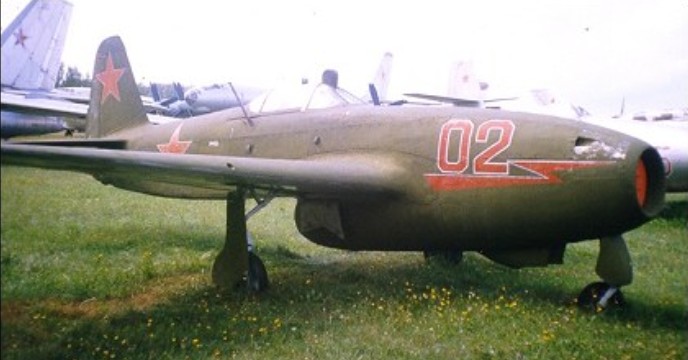
During the autumn of 1946, the Yakolev OKB initiated a relatively modest redesign of the Yak-15 which was initially referred to as the Yak-15U – Uluchshennyi (improved).
The prototype, flown early in 1947, differed essentially in having a nosewheel rather than tailwheel undercarriage. Owing to the position of the engine, it was physically impossible to retract the nosewheel completely, and this was therefore partly enclosed by a fixed fairing. Introduction of a nosewheel demanded transfer of the main undercarriage members from the forward to the rear wing spar and dictated considerable structural redesign and a reduction in wing tankage. To compensate, a jettisonable 300-litre tank was added beneath each wing tip. Redesignated Yak-17, this fighter was restressed throughout and, in series form, was fitted with a redesigned vertical tail and an RD-10A engine rated at 1000kg. Armament remained two 23mm NS-23 cannon.

The Yak 17 was powered by the uprated RD 10A rated at 1000 kg (2205 lb) of thrust. The NATO code named Feather was slightly faster and lighter than its competitor, the La 150, and was substantially superior in range; rough field performance of the Yak 17 was very much better than that of the Lavochkin design, which had a heavy narrow track undercarriage. The La 150 was abandoned in April 1947 and the Yak 17 was ordered into production.
A second cockpit was added in front of the existing position and a long sliding canopy was fitted; an enlarged fin was also adopted for both the Magnet and Feather. The Yak-17UTI entered flight test in April 1948, and about 150 were eventually built, 20 of these being exported to Poland and several to China.

Yak-17U

One Yak-17 fighter was delivered to Czechoslovakia for evaluation, where it received the designation S 100, and three were supplied to Poland. Poland acquired manufacturing licences in 1950 for both the Yak-17 and its RD-10A turbojet, which were to be built at Mielec and Rzeszow respectively. The Polish programme was terminated in the winter of 1950-51 before any aircraft had been built as the Yak-17 had been overtaken by better fighters, but 30 RD-10 A engines were completed at Rzeszow.

The Yak-17 and Yak-17UTI were phased out by the V-VS in 1951 and 1953 respectively, and the latter from the Polish air arm by 1955.

Production of the Yak-17 from late 1947 to August 1949 and totalled 430, including a proportion of tandem two-seat Yak-17UTI conversion trainers. The Yak 17UTI was the Soviet air force’s first specialist jet trainer and remained in service until replaced by the MiG-15UTI.

Gallery

Engine: RD 10 A, 9810 N / 1000 kp
Max take-off weight: 3323 kg / 7326 lb
Empty weight: 2430 kg / 5357 lb
Wingspan: 9.20 m / 30 ft 2 in
Length: 8.78 m / 28 ft 10 in
Wing area: 14.85 sq.m / 159.84 sq ft
Height: 9.514 ft / 2.9 m
Max. speed: 750 km/h / 466 mph
Cruise speed: 600 km/h / 373 mph
Range: 717 km / 446 miles
Service ceiling: 42651 ft / 13000 m
Armament: 2x MK 23mm
Crew: 1-2

Yakolev Yak-16

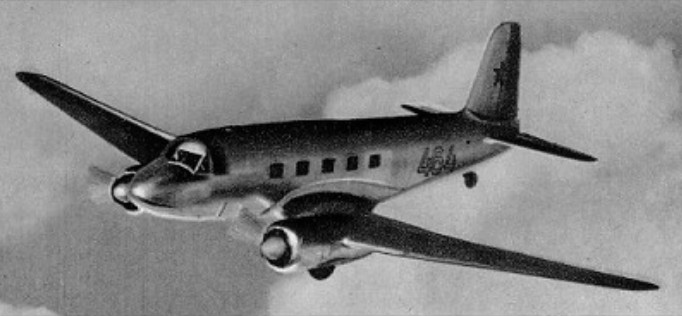
A 1949 ten-passenger transport aircraft powered by two 559kW ASh-21 radial engines.

Engines: 2 x Ash-21, 515kW
Max take-off weight: 6400 kg / 14110 lb
Empty weight: 5200 kg / 11464 lb
Wingspan: 20.0 m / 66 ft 7 in
Length: 14.5 m / 48 ft 7 in
Max. speed: 370 km/h / 230 mph
Cruise speed: 300 km/h / 186 mph
Ceiling: 5000 m / 16400 ft
Range: 1000 km / 621 miles
Crew: 2
Passengers: 10

Yakolev Yak-16

Yakolev Yak-15

Yak-15UTI

In 1945 the Soviet authorities instructed four bureaux to design fighters Mikoyan/Gurevich and Sukhoi were allocated respon¬sibility for twin engined types, with Lavoch¬kin and Yakolev concentrating on single jet aircraft. The powerplant was to be the Kolesov RD 10, an adaptation of the Junkers Jumo 004B developing 850 kg (1874 lb) of thrust. Primarily the responsibility of Yevgenii Adler and Leon Shekhter, development of the Yak-15 began in May 1945 around the captured German jet engines which were becoming available. The all-metal second-generation Yak-3 airframe was used as a basis and enabling the first of three prototypes to be completed in the following October. Taxying trials and short “hops” were performed, but flight testing was delayed while the possibility of the jet efflux attaching to the fuselage at high incidences was explored in the TsAGI T-101 full-scale wind tunnel. The Yak-15 retained most of the wing, rear fuselage, tail and undercarriage of the Yak-3, a new fuselage nose housing a Junkers Jumo 004B turbojet being introduced, and the main-spar being arched over the jetpipe.
Main longerons were strengthened to take the increased load. A stainless steel sheet was attached beneath the rear fuselage to protect it from the hot exhaust gases, and a roller replaced the tail wheel, with protection against the jet blast being given by a shield.
The first prototype was ready in October 1945, but the first flight was delayed to 24 April 1946, just three hours after the Mikoyan-Gurevich OKB’s I-300 (MiG-9).
The Yak-15 was demonstrated over Tushino during Aviation Day on 18 August 1946, and two days later, on 20 August, the NKAP (People’s Commissariat for the Aircraft Industry) issued a directive that 12 additional aircraft be built to participate in the October Revolution Parade to be held on the following 7 November, 80 days later. Produced by hand, the first of these flew on 5 October and the last in time to participate in the Parade, which, in the event, was cancelled because of inclement weather.
State Acceptance testing was completed in May 1947, and, despite being structurally limited to Mach=0.68 below 3200m, 280 were ordered into production at GAZ 153 as an interim type single-¬seat jet conversion trainers. Flutter problems with an airframe which had been designed to accept a piston engine resulted in the Yak 15’s top speed being limited to Mach 0.68, thus preventing full power being used below 3200 m (10500 ft).
One of the pre-series Yak-15s had meanwhile been adapted as a tandem two-seat conversion trainer under the designation Yak-21.
The initial pro¬duction batch used the tailwheel undercar¬riage, but this proved unsatisfactory and the type was redesigned as the Yak 15U (Usover shenstvovanny, or improved) with a tricycle layout. The nose wheel could not retract fully, since it was mounted beneath the air intake, so it was housed in a bulged fairing when in the up position. The change to a nose wheel layout altered the Yak 15’s balance, so the main undercarriage was mod¬ified to retract between the main spars instead of in front of the forward member.
The series Yak-15 carried an armament of two 23mm NS-23 cannon and was powered by a Jumo 004B turbojet which had been adapted by I F Koliesov of the Lyulka bureau for manufacture at Kazan as the RD-10 with a rating of 892kg. Production gave place late in 1947 to the Yak-17 after completion of 280 Yak-15s.

The Yak-15 was to achieve the distinction of being one of only two service jet fighters in aviation’s annals to have been derived from a piston-engined service fighter (the other being the Swedish Saab 21R).

Span, 30 ft 2.25in (9,20m)
Length, 28 ft 6.5 in (8,70 m)
Height, 7 ft 5.5 in (2,27m)
Wing area, 159.85 (14,85sq.m)
Max speed, 435 mph (700km/h) at 8,200 ft (2 500 m), 500 mph (805km/h) at 16,405 ft (5 000 m)
Time to 16,405 ft (5000 m), 4.8 min
Max range, 317mls (510 km)
Empty weight, 5,1811b (2350 kg)
Loaded weight, 6,0291b (2735kg)

Yakolev Yak-12 / Shanghai Dragon Volant – 1

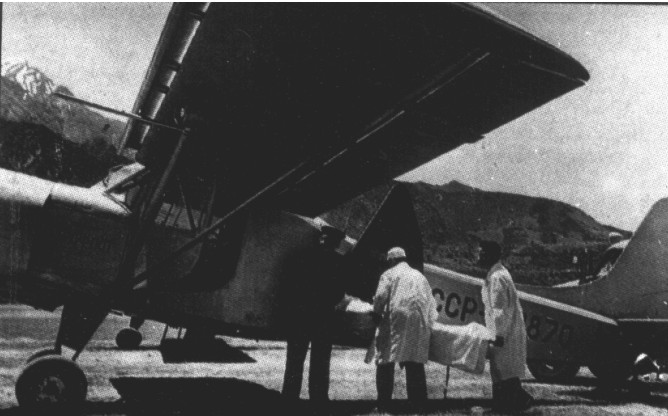
A high-winged, single-engined monoplane used by Aeroflot as a utility aircraft and air ambulance. NATO code name ‘Creek’.

Yakolev Yak-12 Article

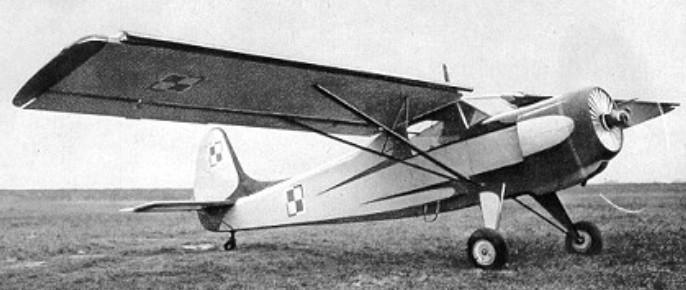
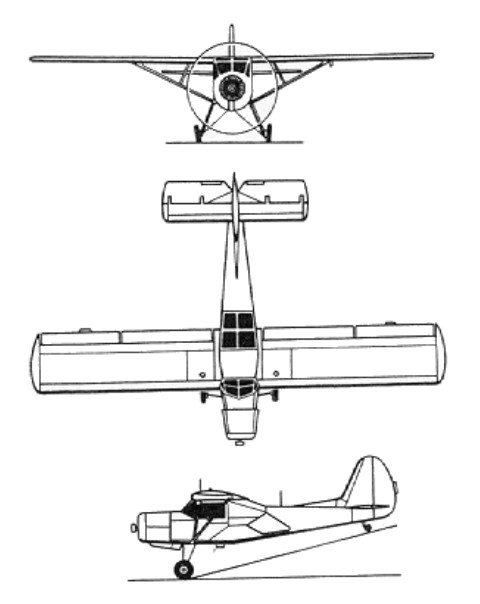
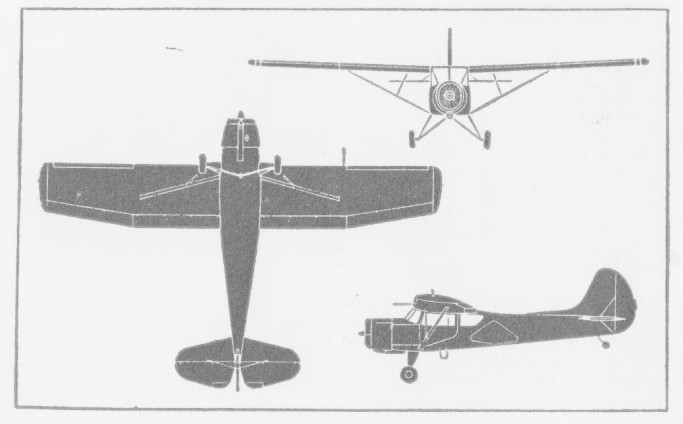
The Yak-12 was a single 179kW AI-14R-engined high-wing light general-purpose aircraft built in several versions from the late 1940s. It was known to NATO as Creek.

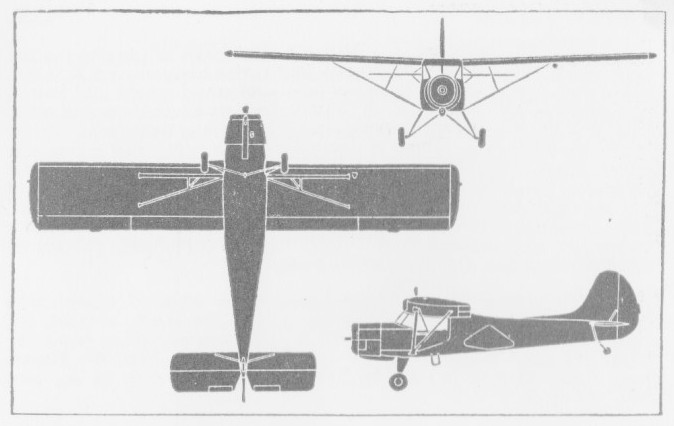
The Yak-12A four-seater presented a complete re-design of the basic aircraft, providing greater payload and range. Apart from additional windows, the fuselage remained unchanged, but entirely new wings of reduced area with taper on the trailing edges of the outboard panels was introduced. Single bracing struts replaced the earlier Vee-type struts, along with re-designed tail surfaces. Fuel capacity was substantially increased. Appearing in 1957, Yak-12A manufacturing was sold to Poland, the first Polish production model flying in August 1959 and production continuing until 1961.

In 1952 the Yak-12R (Creek-B) appeared. This retained the mixed construction of the original but introduced the 240 hp Ivchenko AI-14R radial.

The Yak-12R was superseded in production by the Yak-12M (Creek-C) which employed an all metal structure with fabric covering. In 1955 a manufacturing licence for the Yak-12M was acquired by Poland, the type entering production at Okecie in 1955

The Shanghai Dragon Volant – 1 version was built in Shanghai, China.

Shanghai Dragon Volant – 1
Chan Yang 1

The Chinese Chan Yang 1 version of the Yak-12 featured a 220 hp engine.

Yak-12
Engine: 1 x AI-14R, 190kW
Max take-off weight: 1435 kg / 3164 lb
Empty weight: 1014 kg / 2235 lb
Wingspan: 12.6 m / 41 ft 4 in
Length: 9.0 m / 30 ft 6 in
Height: 3.1 m / 10 ft 2 in
Wing area: 2.9 sq.m / 31.22 sq ft
Max. speed: 220 km/h / 137 mph
Cruise speed: 160 km/h / 99 mph
Ceiling: 4600 m / 15100 ft
Range w/max.fuel: 760 km / 472 miles
Crew: 1
Passengers: 1

Yak-12A
Engine: 240 hp Ivchenko AI-14R
Wingspan: 31 ft 4 in
Length: 29 ft 6 in
Height: 10 ft 3 in
Wing area: 233.264 sq.ft
Empty weight: 2330 lb
Loaded weight: 3494 lb
Max speed: 133 mph
Max cruise: 112 mph
Econ cruise: 96 mph
ROC: 709 fpm
Service ceiling: 15,090 ft
Range: 688 mi

Yak-12M
Engine: 240 hp Ivchenko AI-14R
Wingspan: 41 ft 4 in
Length: 29 ft 6 in
Height: 10 ft 3 in
Wing area: 233.264 sq.ft
Empty weight: 2263 lb
Loaded weight: 3197 lb
Max speed: 112 mph
Max cruise: 102 mph
Econ cruise: 79 mph
ROC: 805 fpm
Service ceiling: 13,650 ft
Range: 475 mi

Yak-12R
Engine: 240 hp Ivchenko AI-14R
Wingspan: 41 ft 4 in
Length: 29 ft 6 in
Height: 10 ft 3 in
Wing area: 233.264 sq.ft
Empty weight: 2204 lb
Loaded weight: 3494 lb
Max speed: 114 mph
Max cruise: 99 mph
Econ cruise: 80 mph
Service ceiling: 13,120 ft
Range: 310 mi

Yakolev Yak-12
Yak-12A
Yak-12M