Micro-Aviation Two-seat Trainer

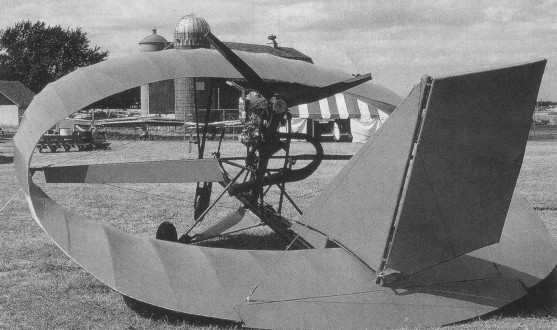
Side by side two seat single engined high-wing monoplane with conventional three axis control. Wing has swept back leading and trailing edges, and tapering chord; no tail. Pitch/roll control by stabilators; yaw control by tip rudders; control inputs through stick for pitch/roll and pedals for yaw. Cantilever wing; wing profile NACA 23015; double-surface. Undercarriage has three wheels in tricycle formation; suspension on all wheels. Push right go right nosewheel steering connected to yaw control. Brake on nosewheel. Aluminium tube/wood/steel tube framework, partially enclosed. Engine mounted below wing driving pusher propeller.
Seeing the need for training aircraft, Micro Aviation decided at the end of 1981 to launch some two seater microlights. To this end, the firm asked Don Mitchell to give it the benefit of his experience in this matter and a prototype called the Two Seat Trainer was duly shown at Oshkosh in August 1982.
By 1983 it has not gone into serious production. The aircraft shown was a direct development of the B10 Mitchell Wing, enlarged and strengthened. It was intended that the two-seater should use a Konig SD570 four cylinder two stroke engine.

Engine: Konig SD570, 28 bhp at 4200 rpm.
Power per unit area 0.16hp/sq.ft, 1.7 hp/sq.m.
Wing span 38.0 ft, 11.58 m.
Mean chord 4.8 ft, 1.45 m.
Total wing area 181 sq.ft, 16.8 sq.m.
Wing aspect ratio 8.0/1.
Empty weight 240 lb, 109kg.
Max take off weight 640 lb, 290 kg.
Payload 400 lb, 181 kg.
Max wing loading 3.55 lb/sq.ft, 17.3 kg/sq.m.
Max power loading 22.9 lb/hp, 10.4kg/hp.
Load factors +6.0, 6.0 design.
Stalling speed 24 mph, 38 kph.
Max climb rate at sea level 400ft/min, 2.0m/s.
Take off distance 350ft, 107m.
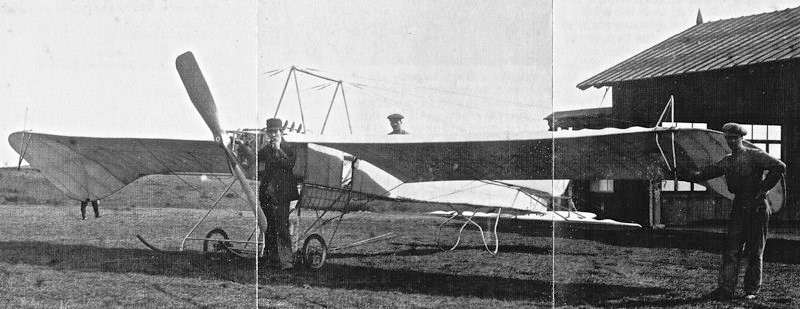
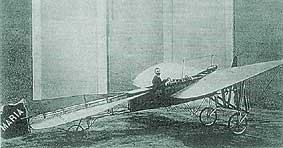
Mickl Marineapparat I

Joseph Mickl designed many flying boats during the first World War for the k.u.k. navy, and after the war for Yugoslavia. The machine is seen here in its initial monoplane form in summer 1911. It was first flown at the Pola Aerodrom at Valtursko Polje, Austria-Hungary, on 29 July 1911, probably by the Graz born Viktor Klobucar. Later that year it was converted to a biplane with floats as the first aircraft of the k.u.k. Navy.

Micco SP26

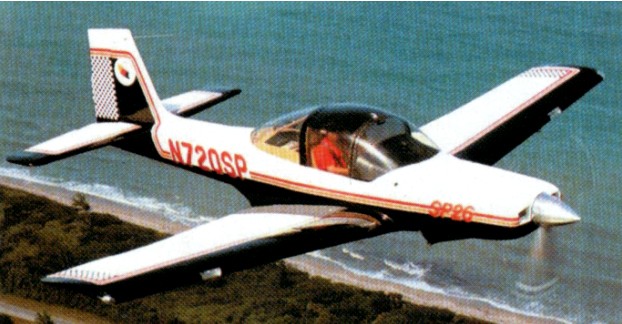
Micco has gotten FAA approval for its SP26 two-seat taildragger, a re-engined version of the company’s SP20. Both airplanes are modern versions of the Meyers 145, designed in the 1940s.
The price in 1999 was US$199,500. The SP-26A sold for $329,000

Micco SP26
Engine: Lycoming IO-540-T4B5, 260 hp@2700@SL
TBO: 2000 hr
Fuel type: 100/100LL
Propeller: Hartzell CS/78 in
Landing gear type: Conv./Retr.
Max ramp weight: 2850 lb
Gross weight: 2850 lb
Landing weight: 2680 lb
Empty weight, std: 2040 lb
Useful load, std: 810 lb
Payload, full std. fuel: 402 lb
Usable fuel, std: 68 USG
Oil capacity: 8 qts
Wingspan: 30 ft. 4 in
Overall length: 24 ft. 1 in
Height: 6 ft. 6in
Wing area:156.6 sq. ft
Wing loading: 18.2 lbs./sq. ft
Power loading: 10.9 lbs./hp
Wheel base: 10 ft. 4 in.
Wheel size: 6.00 x 6 in
Seating capacity: 2
Cabin width: 43 in
Cabin height: 39 in
Baggage capacity: 100 lb /14 cu.ft
G-limits: +6/-3
Cruise speed 75% power @ 6,500 ft.: 155 kt
Max range (w/ reserve) 75% power: 800 nm
Max range (w/ reserve) 55% power: 1040 nm
Stall speed (gear, flaps up): 55 kt
Stall speed (gear, flaps down): 49 kt
Best rate of climb (SL): 1500 fpm
Service ceiling: 18,000 ft
Takeoff ground roll: 800 ft
Takeoff over 50-ft. obstacle: 1100 ft
Landing ground roll: 700 ft
Landing over 50-ft. obstacle: 2000 ft

Micco SP26A
Engine: Lycoming IO-540-T4B5, 260 hp@2700rpm@SL
TBO: 2000 hr
Fuel type: 100/100LL
Propeller type: Hartzell 3-blade, 78 in
Landing gear type: Conv./Retr
Max ramp weight: 2850 lb
Gross weight: 2850 lb
Landing weight: 2850 lb
Empty weight, std: 2040 lb
Useful load: 810 lb
Useful fuel: 96 USG
Payload: 402 lb
Oil capacity: 12 qts
Wingspan: 30 ft. 4 in
Overall length: 24 ft. 1 in
Height: 6 ft. 6 in
Wing area: 156 sq. ft
Wing Loading: 15.6 lbs./sq.ft
Power loading: 10.9 lbs./hp
Seating capacity: 2
Cabin width: 43 in
Cabin height: 39 in
Baggage capacity: 100 lb
Cruise speed 75% power: 155 kt
Fuel consumption 75% power: 14.3 USG/hr
Fuel consumption 65% power:12.4 USG/hr
Max range 75% power: 800 nm
Max range 55% power: 1040 nm
Vso: 49 kt
Best rate of climb, SL: 1500 fpm
Service ceiling: 14,000 ft
Takeoff ground roll: 800 ft
Takeoff over 50 ft. obstacle: 1100 ft
Landing ground roll: 700 ft
Landing over 50 ft. obstacle: 1600 ft

Micco SP20

A modern versions of the Meyers 145, designed in the 1940s.

1999 SP20
Engine: Lycoming IO-360-C1E6, 200 hp
TBO: 2000 hr
Propeller: Const. spd.
Landing gear type: Conv./Retr.
Gross weight: 2600 lb
Empty weight, std: 1800 lb
Useful load, std: 800 lb
Fuel capacity: 73 USG
Wingspan: 30 ft. 4 in
Overall length: 24 ft. 1 in
Height: 6 ft. 6 in
Wing area:156.6 sq. ft
Seating capacity: 2
Cabin width: 43 in
Cabin height: 39 in
Baggage capacity: 100 lb
Cruise speed 75% power: 140 kt
Cruise speed 65% power: 133 kt
Max range (w/ reserve) 75% power: 800 nm
Max range (w/ reserve) 65% power: 920 nm
Fuel consumption 75% power: 10.5 USgph
Fuel consumption 65% power: 9.1 USgph
Stall speed (gear, flaps down): 43 kt
Best rate of climb: 950 fpm
Service ceiling: 12,000 ft
Takeoff ground roll: 600 ft
Landing ground roll: 700 ft

Miami Aircraft MM-200 Miami Maid / MM-201 Miami Maid

MM-200

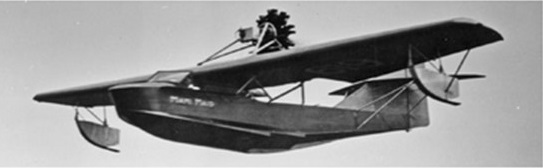
The five-seat amphibian monoplane MM-200 Miami Maid appeared in 1928 or 1929 with a 230 hp Menasco-Salmson B-2 radial engine pusher mounted on top of the wing, and registered NC619. The design combined an all-wood Fokker cantilevered wing with the wooden hull of a Curtiss F boat.

A second aircraft, the MM-201 registered NC178N, was modified in 1930 for installation of a 300 hp Wright R-975 Whirlwind engine.

MM-200
Engine: Menasco-Salmson B-2, 230 hp
Wingspan: 44 ft
Length: 33 ft
Useful load: 1250 lb
Top speed: 120 mph
Cruise speed: 100 mph
Range at cruise: 500 mi

Meyers Orbit Air

1990

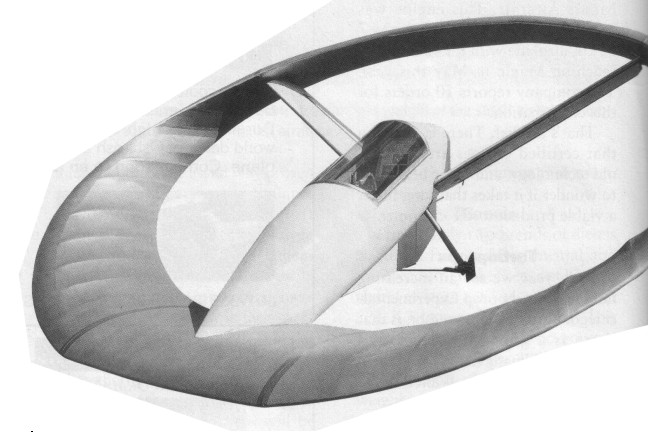
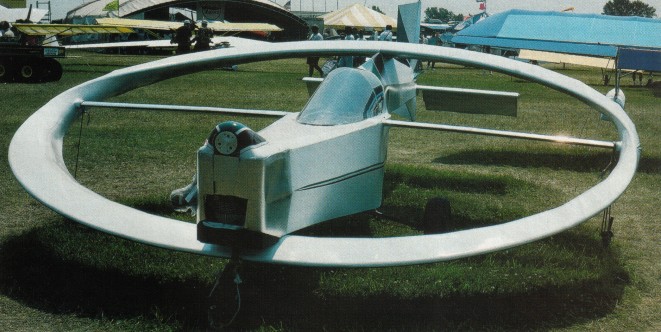
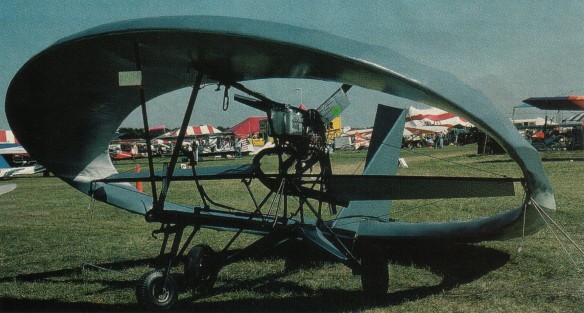
David Meyers began development of a single seat ring design called Orbit Air in 1988 and obtained a patent for it in 1991. Orbit Air began as an unpowered craft in 1990 as it was tested by being towed down the runway to evaluate the wing’s stability and lift. Various follow-on testing programs have resulted in five configuration changes.

Changes included fitting a 40 hp Kawasaki 440 engine with a three blade, 62 inch propeller in both tractor and pusher positions. The down angled ring wing has also been moved to an up-tilt position, the cockpit area was reworked, and the tail surfaces and landing gear were redesigned.

1994

The primary structure is a 6061-T6 aluminium structure, but the wing and control surfaces are Stits PolyFiber covered wood. The wing employs leading and trailing edge spars that are 1.125 inch in diameter with 30 built-up quarter inch fir and mahogany plywood ribs. It is canted upward 15 degrees with a 12 foot span and a maximum chord of four foot 5 inches (in the 1995 configuration). Wing area is 100 sq.ft. Ailerons of five foot span and 9 inch chord are fitted within the wing just forward of the propeller.

Version 5

An elevator is installed in the trailing edge of the wing under a 4.5 foot rudder. The seat is a weight shift type.

Version 5

Orbit Air is 21 feet long and 7 feet high. Flight tests were only short hops to 100 ft altitude down a 3100 ft runway. Meyers claims that the airplane will take-off at 40 mph, cruise at a maximum 55 mph, and stall at 30-35 mph. Development and testing were continuing.

Meyers MAC 125 / MAC 145

MAC 145

Postwar production included MAC 125 and MAC 145 two-seat cabin monoplanes with Continental engines.

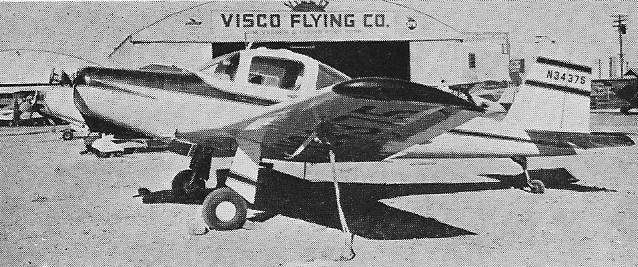
The MAC 145, introduced in 1948, is a higher-powered development of the MAC 125-C, the first post-war design of Meyers Aircraft Company. The MAC 145 differs in having a 145 hp Continental C145-2H engine.

Both were side-by-side two-seat cabin monoplane of all metal construction. A small series of MAC 145 were built.

The MAC 125 and MAC 145 developed into the Micco SP 20 and SP 26.

MAX 125
Engine: 125 hp Continental C125
Seats: 2

MAC 145
Engine: 145 hp Continental C145-2H
Wingspan: 30 ft
Wing area: 149 sq.ft
Length: 21 ft 4 in
Height: 8 ft 6 in
Empty weight: 1135 lb
Loaded weight: 1735 lb
Max speed: 166 mph
Cruise: 145 mph
ROC: 950 fpm
Service ceiling: 18,000 ft
Range: 600 mi
Seats: 2