Miles M.52

Designed to meet Specification E.24/43, which called for an aeroplane capable of flying more than twice as fast as any that had previously flown in level flight.

The Miles company began work on the M.52 in 1943, at a time when knowledge of high-speed aerodynamics was strictly limited. As the project was masked in secrecy, Miles set up its own foundry for the production of the necessary metal components and also built a high-speed wind tunnel. The Miles M.52 used ultra thin, bi convex wings, flight tested on the Miles ‘Gillette Falcon’, and other advanced features such as an annular air intake, all moving tailplane. A full-scale wooden mock-up of this unique high-speed wing design was built and tested on a Miles Falcon light aircraft in 1944.

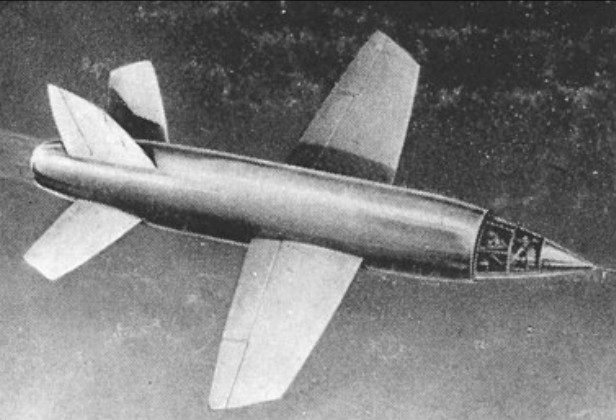
The design featured a bullet-like fuselage of circular section, 1.5m in diameter, constructed of high-tensile steel with an alloy covering. The powerplant, a Power Jets W.2/700, was centrally mounted and fed by an annular air intake, the cockpit forming a centre cone. The whole cockpit cone, in which the pilot sat semi-reclined, could be detached in an emergency by firing small cordite charges; the pilot would then bale out normally when the capsule reached a lower altitude. The M.52 was fitted with biconvex section wings, mounted at mid-point on the fuselage. As design work progressed, various refinements were incorporated. Split flaps were fitted, together with an all-moving tailplane. The addition of rudimentary afterburners in the form of combustion cans situated at the rear of the engine duct was calculated to produce much greater thrust at supersonic speed.

The very thin wing section meant that the undercarriage had to be positioned to retract into the fuselage.

Detailed design work on the M.52 was 90 per cent complete by the beginning of 1946, and the jigs were ready for the assembly of three planned prototypes. No snags were envisaged in construction, and it was expected that the first M.52 would fly within six to eight months. Then, in February 1946, quite without warning, F.G.Miles received word from the Director General of Scientific Research at the Ministry of Aircraft Production, Sir Ben Lockspeiser, that all work on the M.52 project was to cease at once.

Secrecy surrounded the cancellation of the M.52, just as it had surrounded its design, and it was not until September 1946 that the British public were made aware that their aircraft industry had been within sight of flying the world’s first supersonic aircraft. The stated reason behind the decision to cancel the M.52 was that it had already been decided, early in 1946, to carry out a supersonic research programme with the aid of unmanned models developed by Vickers Ltd, the department responsible was headed by Dr Barnes Wallis. Between May 1947 and October 1948 eight rocket-powered models were launched, only three of which were successful. In each failure (apart from the first attempted launch when the Mosquito launch aircraft got out of control in cloud and the model broke away) it was the rocket motor that failed, not the airframe.

Only a year after the M.52’s cancellation was made public, Major Charles Yeager, US Air Force, had made history’s first supersonic flight in the rocket-powered Bell X-1 research aircraft.

Engine: 1 x 2000 lb / 907kg Power Jets W.2/700 turbojet engine, with afterburning 4100 lb / 1860 kg st
Wingspan: 8.20 m / 26 ft 11 in
Length: 10.20 m / 33 ft 6 in
Design max take-off weight: 3715 kg / 8190 lb
Wing area: 143 sq.ft / 13.28 sq.m
Max design speed: 1,000 mph / 1,609 km/h) at 36,000 ft / 11,000 m
Ceiling: 15250 m / 50050 ft
Crew: 1
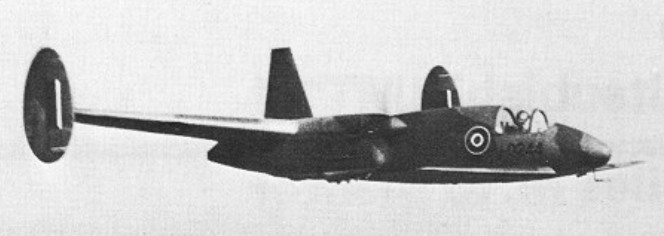
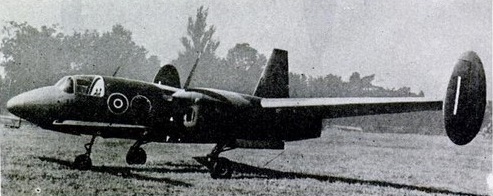
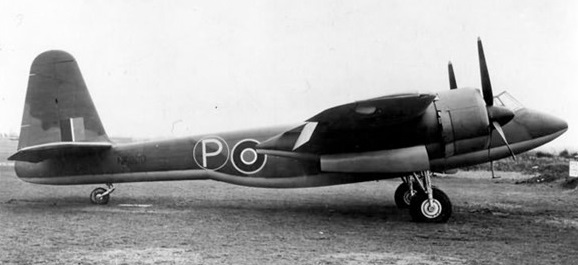
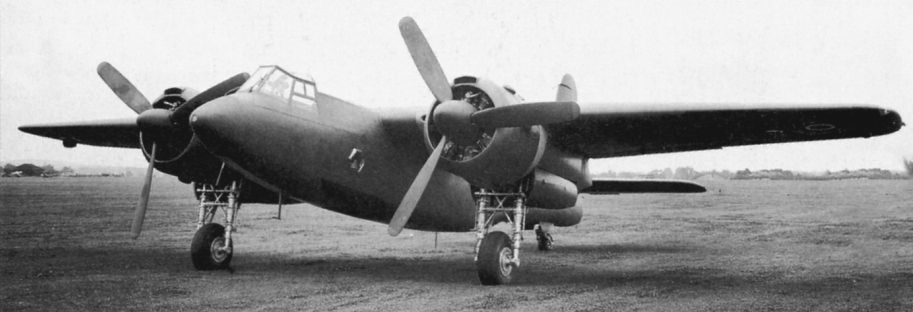
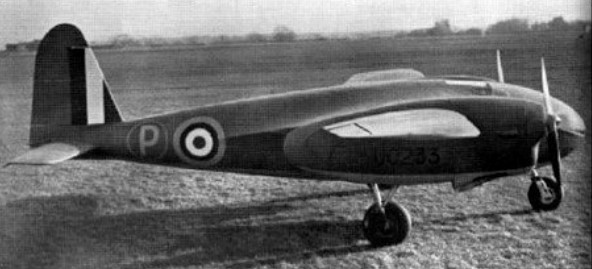
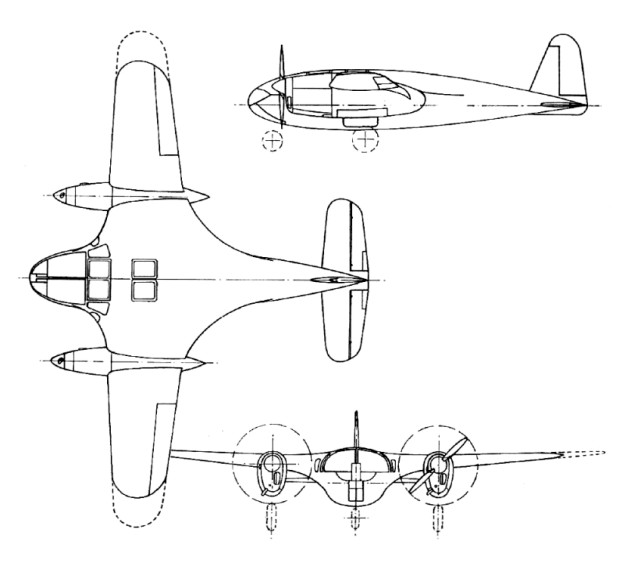
Miles M.39B Libellula

The M.35 was completed and flown in six weeks but proved to be unstable. Wind tunnel tests showed the problems to be curable and George Miles conceived a heavy bomber, the M.39, to be powered by three turbojet engines, or in its initial form with two high-altitude Rolls-Royce Merlin 60s or Bristol Hercules VIIIs.

A five-eighths scale model of the bomber was built and designated M.39B, flying for the first time on 22 July 1943 and proving to be aerodynamically stable. Flight trials were initially on a private basis, but in 1944 the M.39B went to the Royal Aircraft Establishment at Farnborough, where it suffered two accidents. After extensive repairs the work ended.

M.39B Libellula
Engines: 2 x de Havilland Gipsy Major 1C, 104kW
Wingspan: 11.43 m / 37 ft 6 in
Length: 6.76 m / 22 ft 2 in
Height: 2.82 m / 9 ft 3 in
Wing area: 23.15 sq.m / 249.18 sq ft
Max take-off weight: 1270 kg / 2800 lb
Empty weight: 1091 kg / 2405 lb
Max. speed: 264 km/h / 164 mph

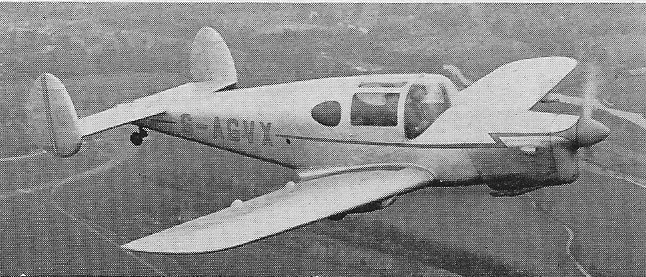
Miles M.38 Messenger

At the private request of certain army officers in June 1942, George Miles designed and built the prototype of an air observation post (AOP) aircraft. It was required to carry a crew of two, radio, armour protection and other military equipment, and to be able to operate out of and into small tree-surrounded fields in all weathers.
The resulting Miles M.38 prototype was a cantilever low-wing monoplane with fixed tailwheel landing gear, powered by a 104kW de Havilland Gipsy Major inline engine. The wing incorporated fixed aerofoil trailing-edge flaps and when flown on 12 September 1942 it was found that these provided the requisite STOL performance. Great enthusiasm for its capability was shown by an AOP squadron which Miles allowed to flight test the aircraft, but shocked by the design, construction and testing of a military aeroplane without its knowledge, the Ministry of Aircraft Production refused to order this prototype into production for the AOP role.

In late 1943 a small order was placed for the aircraft for use in a VIP transport role under the designation M.38 Messenger and eventually a total of 21 was built. Among VIP operators allocated personal Messengers were Field Marshal Sir Bernard Montgomery and Marshal of the RAF Lord Tedder.

An additional 71 were built post-war for civil use, some at Newtownards, Northern Ireland, bringing total production to 92. One aircraft was modified jn 1944 by introducing conventional trailing-edge flaps and installing a 112kW Blackburn Cirrus Major engine. When tested this machine, designated M.48 Messenger 3, was found to offer so little improvement in performance over the standard M.38 that no production followed. In its role as a VIP transport the 11.02m span Messenger had a maximum speed of 187km/h and range of 418km.

The M.38 Messenger IIA is certified in the UK to Manufacturer’s Type Record.

Gallery

M.38 Messenger
Engine: Blackburn Cirrus Major III, 150 hp
Range: 460 mi

M.38 Messenger
Engine: De Havilland Gipsy Major, 138 hp
Length: 24.016 ft / 7.32 m
Height: 9.514 ft / 2.9 m
Wingspan: 36.155 ft / 11.02 m
Wing area: 190.953 sq.ft / 17.74 sq.m
Max take off weight: 1900.7 lb / 862.0 kg
Weight empty: 1519.2 lb / 689.0 kg
Max. speed: 101 kts / 187 km/h
Cruising speed: 83 kts / 153 km/h
Service ceiling: 15174 ft / 4625 m
Wing loading: 10.05 lb/sq.ft / 49.0 kg/sq.m
Range: 226 nm / 418 km
Crew: 2
Payload: 2pax

M.38 IIA
T/O speed: 55-60 kt
ROC: 800-1050 fpm.

Miles M.38 Messenger

Miles M.35 Libellua

George Miles thought a tail first aircraft would give the pilot the best possible for¬ward view for landing on an aircraft carrier. With lift provided by two wings, span could be short and there would be no need for wing-folding.

In six weeks Miles had built a full size flying test bed of his concept, the Miles M.35 Libellula, but Miles’ chief test pilot refused to fly the peculiar aircraft, so George Miles made the first test himself in May 1942.

The Libellula proved catastrophically unstable in pitch; subsequently the aircraft was ballasted to improve its stability, but when the project was shown to ministry officials they told Miles: it will never fly.’ When he pointed out that the aircraft had flown, they reprimanded him for building it without permission, while their Lordships of the Admiralty reminded him that in wartime lives had to be sacrificed.

Another Libellula was built as a five-eighths scale model of a projected high-altitude, high speed bomber and proved perfectly stable over a wide range of centre of gravity positions, but the bomber was never ordered because de Havilland’s Mosquito was by then (1943) in full production.

Two were built and flown.

Miles M.33 Monitor

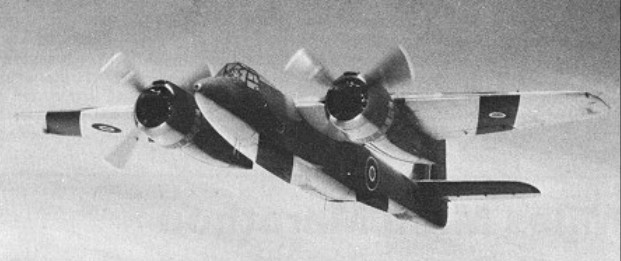
Designed to Air Ministry Specification Q.9/42 for a high-speed target tug, the Miles M.33 Monitor was a clean-looking cantilever high-wing monoplane with retractable landing gear and power provided by two wing-mounted engines.

The Miles proposal was at first rejected as it was considered there were no suitable engines available, but with agreement to use the 1268kW Wright Cyclone R-2600-31, Miles received a contract for 600 aircraft.

The prototype (NF900) was flown for the first time on 5 April 1944 and handled well, but the end of the war was approaching before development was completed and the contract was reduced first to 200 and then to 50, and was finally cancelled after 20 had been delivered.

Even these were not used by the RAF as intended, only 10 Monitors entering service with the Royal Navy for operation briefly as the Monitor TT.Mk II before replacement by de Havilland Mosquito TT.Mk 39s.

M.33 Monitor
Engines: 2 x Wright Caclone R 2600 31, 1677 hp
Length: 47.671 ft / 14.53 m
Height: 14.239 ft / 4.34 m
Wingspan: 56.299 ft / 17.16 m
Wing area: 501.172 sq.ft / 46.56 sq.m
Max take off weight: 21077.6 lb / 9559.0 kg
Weight empty: 15851.7 lb / 7189.0 kg
Max. speed: 287 kts / 531 km/h
Cruising speed: 230 kts / 426 km/h
Service ceiling: 29003 ft / 8840 m
Wing loading: 42.03 lb/sq.ft / 205.0 kg/sq.m
Range: 2390 nm / 4426 km
Crew: 2

Miles M.28 Mercury

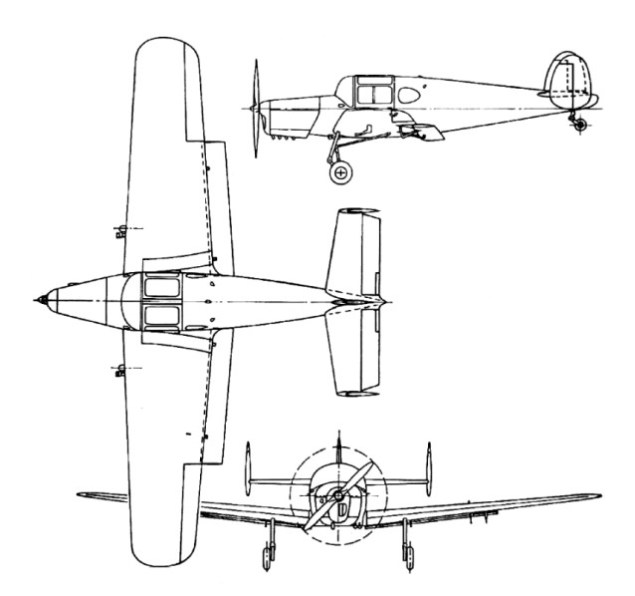
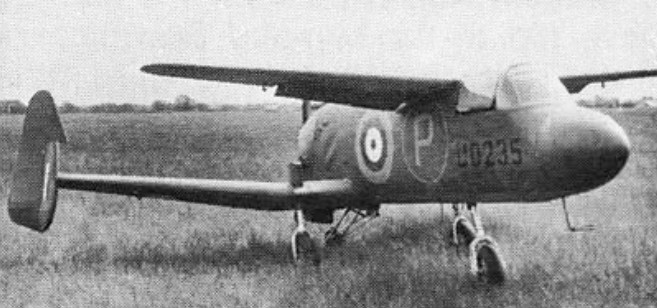
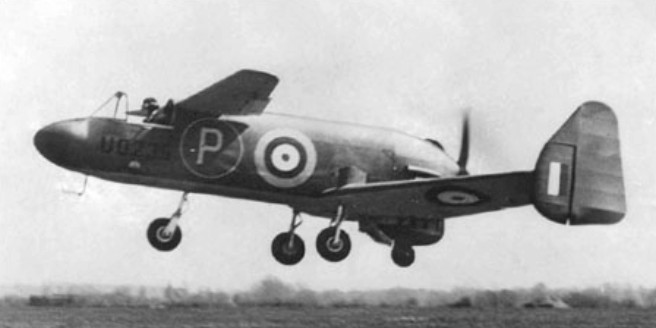
The Miles M28 was designed to fulfill two major functions, a two seater ab-initio/intermediate trainer and a three seat communications aircraft.

Construction of the prototype was suspended in 1939 but recommenced in 1941, the prototype flying on 11 July 1941. The prototype had an R.A.F. Service Number of U-0232.

It was designed to be powered by either a Cirrus Major 150 HP engine or a Gypsy Major IIA with fixed pitch propeller or a Gypsy Major III with a constant speed propeller. With Miles low drag flaps and drooping ailerons as well as a fuselage air brake, landing speeds were as low as 40 miles per hour.

Three prototypes were produced during the war: the Mk.1 two-seat dual-control trainer, the Mk.2 three-seater with hydraulic undercarriage retraction, and the Mk.3 triple-control trainer.

Three additional machines were produced after the war: one Mk.4 and two Mk.6.

M.28 Mercury Mk.1
two-seat dual-control trainer

M.28 Mercury Mk.2
three-seater

M.28 Mercury Mk.3
triple-control trainer

M.28 Mercury Mk.4
Engine: 145 hp Gipsy Major IIA

M.28 Mercury 6
Engine: 155 hp Blackburn Cirrus Major III
Wingspan: 30 ft 8 in
Length: 24 ft
Height: 8 ft 3 in
Empty weight: 1460 lb
Loaded weight: 2427 lb
Max speed: 157 mph
Cruise: 139 mph
ROC: 890 fpm
Range: 410 mi

Engine: Gypsy Major III
Top speed: 176 mph
Span: 30 ft 6 in
Length: 22 ft 1.5 in
Height: 8 ft 6 in
Wing area: 160 sq. ft

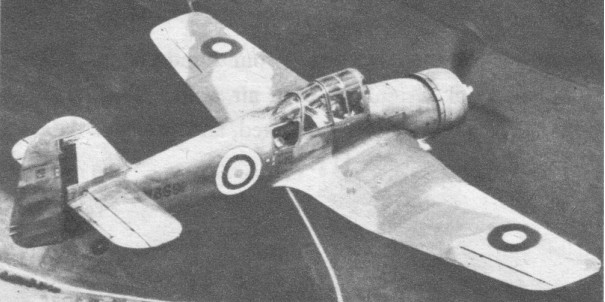
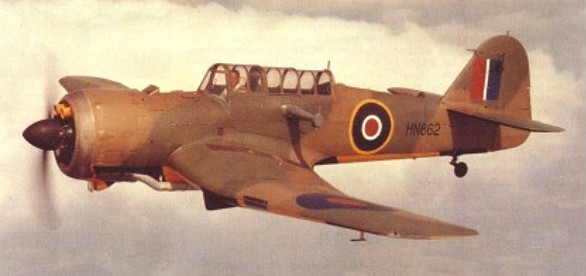
Miles M.25 Martinet / M.50 Queen Martinet / M.37 Martinet Trainer

Before the issue of Air Ministry Specification 12/41, it had been standard RAF practice to use out-dated aircraft, however unsuitable, for the task of target towing. The outbreak of World War II had highlighted this short-sighted policy, leading to the procurement of an aircraft designed specifically for such a role.

The Miles M.25 prototype (LR241) was flown for the first time on 24 April 1942, the aircraft being based on the Miles Master Mk II but with a lengthened nose to compensate for the weight of target-towing equipment. Incorporated within a modified cockpit was the drogue cable winch, which could be powered by an electric motor or wind-driven propeller, and there was comfortable space for the operator and stowage of the drogue targets.

The type entered service as the Miles Martinet and between 1942 and 1945 a total of 1,724 was built; the type was complemented in 1946 by the M.50 Queen Martinet which had been developed to Specification Q.10/43. This was a radio-controlled pilotless target version of the Martinet, 11 being built as new and the remaining 54 being conversions of M.25s. Planned variants included a glider-tug version of the Martinet, similar to the Master GT Mk II, and the M.37 two-seat trainer of which two prototypes were built. Six surplus Martinets received civil registrations after the war, four of them sold to Sweden and operated by the civil target-towing company Svensk Flygjarst.

M.25 Martinet
Engine: 1 x Bristol Mercury XX/XXX, 649kW / 858 hp
Wingspan: 11.89 m / 39 ft 0 in
Length: 9.42 m / 30 ft 11 in
Height: 3.53 m / 11 ft 7 in
Wing area: 22.48 sq.m / 241.97 sq ft
Max take-off weight: 3062 kg / 6751 lb
Empty weight: 2105 kg / 4641 lb
Wing loading: 27.88 lb/sq.ft / 136.0 kg/sq.m
Max. speed: 208 kts / 386 km/h / 240 mph
Range: 603 nm / 1117 km / 694 miles
Crew: 2

Miles M.24 Master

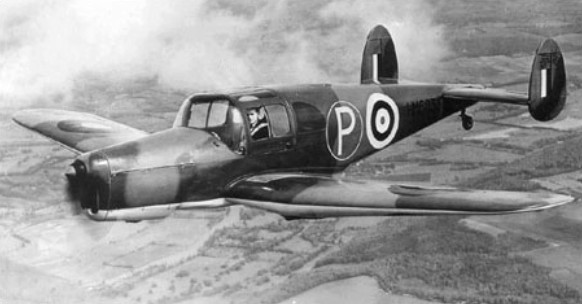
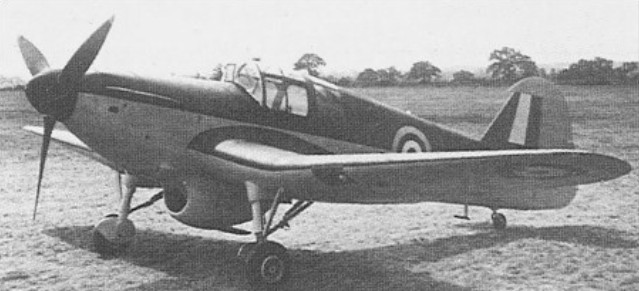
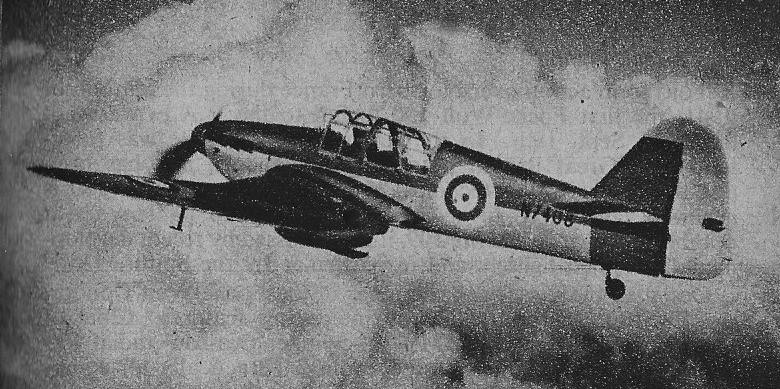
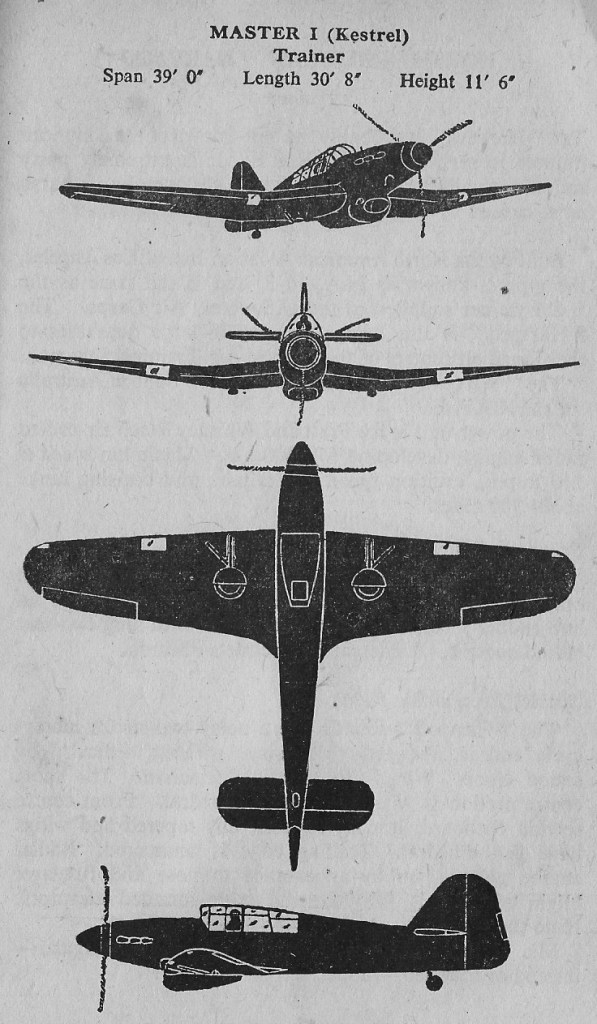
The possibility that the RAF would run short of fighters during the Battle of Britain prompted adaptation of the 750hp Rolls-Royce Kestrel 30-engined M.9 tandem two-seat advanced trainer as an emergency single-seat fighter. The rear seat was removed, together with part of the rear cockpit glazing, a gunsight was installed and six 7.7mm machine guns were mounted in the wings. Assigned the designation M.24 retrospectively, a total of 23 fighter conversions was produced, but, in the event, no need arose for their operational use.

Miles Master I

Engine: 750hp Rolls-Royce Kestrel 30
Wingspan: 11.89 m / 39 ft 0 in
Wingspan clipped: 35 ft 8 in
Length: 9.27 m / 30 ft 5 in
Height: 3.05 m / 10 ft 0 in
Wing area: 30.19 sq.m / 324.96 sq ft
Max take-off weight: 2563 kg / 5650 lb
Empty weight: 2142 kg / 4722 lb
Max. speed: 369 km/h / 229 mph
Range: 500 mi at 196 mph