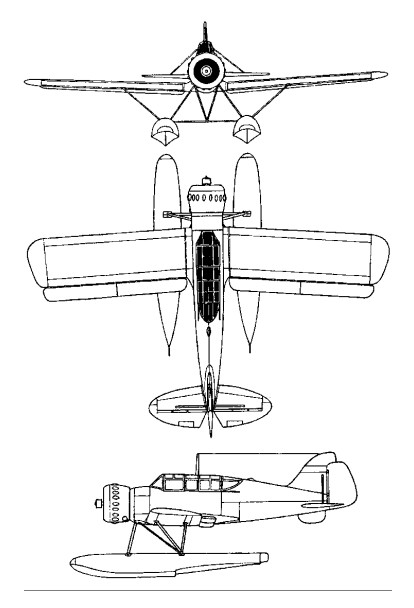
The Yokosuka E14Y1 was built to a total of 126 as the Navy Type 0 Small Reconnaissance Seaplane. Used aboard ocean-going submarines of the Japanese fleet, these aircraft made some notable flights: one from the submarine 1-7 made a post-attack assessment of damage at Pearl Harbor.
On 9 September 1942, launched from the Japanese submarine I-25 under Frigate Captain Meija Tagami, Naval pilot N.Fujita used a Yokosuka E14Y1 seaplane to bomb forests in Oregan, USA. The first raid on the United States of America. On 29 September a second raid was made at the same spot, 50 miles west of Cape Blanco. This was the last raid made on the USA.
E14Y1 Engine: 1 x Hitachi Tempu-12, 255kW Max take-off weight: 1450 kg / 3197 lb Empty weight: 1119 kg / 2467 lb Wingspan: 11.0 m / 36 ft 1 in Length: 8.54 m / 28 ft 0 in Height: 3.8 m / 12 ft 6 in Wing area: 19.0 sq.m / 204.51 sq ft Max. speed: 245 km/h / 152 mph Cruise speed: 165 km/h / 103 mph Ceiling: 5420 m / 17800 ft Range: 880 km / 547 miles Crew: 2 Armament: 7.7mm machine-guns, 60kg of bombs
Influenced by flight tests with a Heinkel He 118 in 1938, the Japanese navy decided that future carrier based aircraft should be much cleaner aerodynamically. A 13 Shi (1938) specification was issued to the Yokosuka naval air arsenal for a carrier-based dive bomber of exceptionally high performance. It had to operate from small carriers and carry a 250 kg (551 lb) bombload for 800 nautical miles (1481 km) and reach 280 knots (519 km/h).
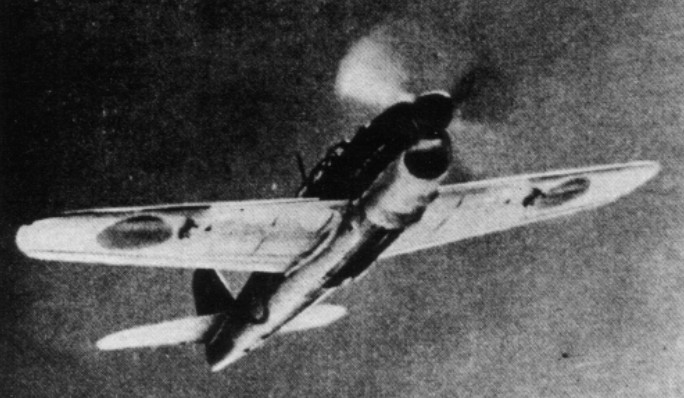
Designed as a fast carrier-based attack bomber and powered by an imported Daimler-Benz DB 600G engine, the D4Y1 was first flown in December 1941.
Achieving excellent performance despite having only a 960 hp DB 600G, the D4Y1-C reconnaissance aircraft were ordered into production at Aichi’s Nagoya plant, the first of 660 aircraft being completed in the late spring of 1942.
It was not until March 1942 that the first production D4Y1 Model 11 emerged from the Aichi factory at Nagoya (the Allies later thought this an Aichi design). Powered by the 1200 hp, Aichi AE1A Atsuta 12 inverted V 12 (licence built modified DB 601A) the aircraft had such speed and range it was ordered as the D4Y1 C reconnaissance aircraft, with rear fuselage camera(s) and underwing drop tanks, and the C model remained in use until Japan’s final surrender. Work continued to perfect the basic D4Y1 and eventually it entered service in March 1943. The first service aircraft were lost when the Soryu was sunk at Midway. The Model 21 was generally similiar. Many D4Y1s were completed as dive-bombers, and 174 Suiseis of the 1st, 2nd and 3rd Koku Sentais were embarked in nine carriers before the Battle of the Philippine Sea. However, they were intercepted by American carriers, and suffered heavy casualties without achieving any success.
Production amounted to 660 by Aichi, with the Japanese name Suisei (Comet) and the Allied code name ‘Judy’, but in the first big action at the Marianas ‘turkey shoot’ they suffered severe casualties at the hands of US Navy fighters and failed to sink any major warships. Their chief faults were complete absence of armour or self sealing tanks and the armament of two fixed 7.7 mm (0.303 in) Type 97 machine guns in the nose and a 7.92 nun (0.312 in) Type 1 aimed by the radio operator/navigator/gunner in the rear seat. Normal bombload was 310 kg (683 lb), but for short ranges 560 kg (1234 lb) could be accommodated.
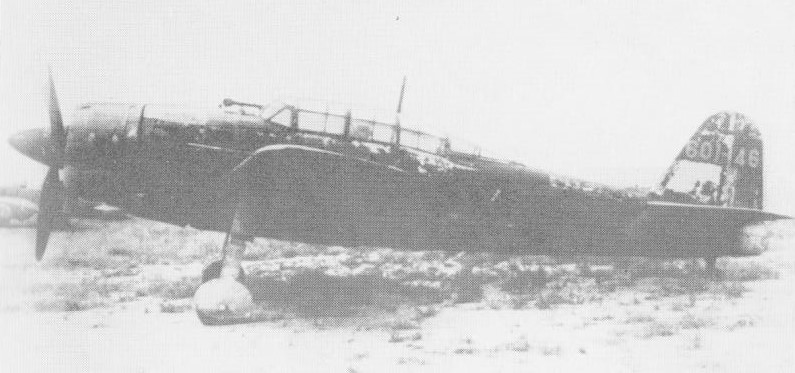
Like many of the best Japanese aircraft of the Second World War, the D4Y had the misfortune to enter service just as the era of Japanese superiority was coming abruptly to an end. The fleet carriers were fairly soon all sent to the bottom of the Pacific, and most of the total of 2038 of all versions of D4Y operated from escort carriers and shore bases, often in roles quite different from those for which the type was designed. The first new sub type, other than the C, was the D4Y2 (Model 22), which had the 1400 hp Atsuta 32 engine, and the fin and rudder were modified and increased in area, and, in the main D4Y2a variant, a 13mm (0.51 in) Type 2 gun in the rear cockpit. Entering service just in time for the Leyte Gulf and Philippines battles in October 1944, the new model was coolly received, because it still had neither armour nor tank protection. Aichi built 326, plus about 100 by Dai Juichi Kaigun Kokusho (Hiro Naval Air Arsenal), but they were shot out of the sky and soon appeared as kamikaze suicide attackers, usually with an 800 kg (1764 lb) bombload, carried externally.
D4Y3
From the start the liquid cooled engine had been unpopular, owing to its difficult main¬tenance and poor reliability. The general feeling about the trim Suisei had been that there was not much wrong with it that proper protection and a radial engine would not cure, and in the winter of 1943/4 the Aichi team schemed an installation for the 14 ¬cylinder two row Mitsubishi Mk8P Kinsei 62.
The D4Y3 prototype, flown in May 1944, showed acceptable handling qualities and almost identical performance to the earlier models, with marginally lower speed but longer range and improved takeoff and climb capability. Production was authorized at once, and both Aichi and Hiro arsenal deli¬vered a total of about 350 in all. These still did not have any protection for crew or fuel, and only the later D4Y3a had a 13 mm (0.51in) rear gun. Most had provision for catapulting but as there were virtually no carriers, the majority were also equipped to have three RATO rockets clipped below the rear fuselage to assist takeoff from island airstrips.
The last sub type was the D4Y4, a pur¬pose designed kamikaze aircraft. A single-¬seater, it carried an 800 kg (1764 lb) bomb or explosive charge (made from a mine or tor¬pedo) semi externally. 296 were deli¬vered by Aichi in 1945.
The proposed D4Y5, with 1825¬hp NK9C Homare engine and proper armour and protected tanks, did not fly. The D4Y2 was later converted to a night fighter.
A total of 2,319 D4Ys was completed. Aichi handled most of the payroll and 500 were completed by Hiro Arsenal.
In the first year of the war some types were given more than one code name due to inaccurate descriptions. ‘Dot’ was assigned to a carrier dive bomber, later also assigned the name ‘Judy’. ‘Dot’ was dropped in favour of the more accepted ‘Judy’.
D4Y2 Engine: 1 x Aichi AE1P Atsuta, 1050kW Max take-off weight: 3840 kg / 8466 lb Empty weight: 2640 kg / 5820 lb Wingspan: 11.5 m / 38 ft 9 in Length: 10.2 m / 33 ft 6 in Height: 3.75 m / 12 ft 4 in Wing area: 22.8 sq.m / 245.42 sq ft Max. speed: 575 km/h / 357 mph Cruise speed: 425 km/h / 264 mph Ceiling: 10700 m / 35100 ft Range: 3600 km / 2237 miles Crew: 2 Armament: 7.92 or 13mm machine-guns Bombload: 1 x 500-kg, 2 x 30-kg
D4Y3 Engine: Mitsubishi Kinsi 62, 1560 hp Span: 11.5 m (37ft 8.75in) Length: 10.22 m (33 ft 6.5 in) Height: 10 ft 9.5 in Empty weight: 5514 lb Gross weight. 4657 kg (10267 lb) Maximum speed: 575 km/h (357 mph) at 19,360 ft Service ceilig: 34,450 ft Max range: 944 miles Armament: 1 x 7.9mm mg, 2 x 7.7mm mg Bombload: 1650 lb Crew: 2
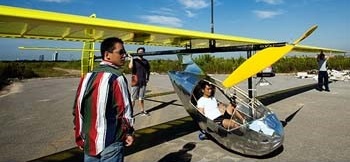
This superlight (84 pound) pedal-powered aircraft is built using techniques common to RC aircraft builders. It represents one of several projects taking to Chinese skies in a Do-It-Yourself movement.
A Chinese DIYer named Mao Yiqing has designed and built the human-powered aircraft, which he calls Mozi (after the 5th century inventor of the kite), using his skills running Oxai, a company that builds RC planes. Mozi was built using many of the same techniques and materials — balsa wood, styrofoam and carbon fiber — as his model planes.
Yiqing was preparing his plane, which weighs 84 pounds and has a wingspan of 81 feet, for a 4-mile flight across Dianshan Lake near Shanghai.
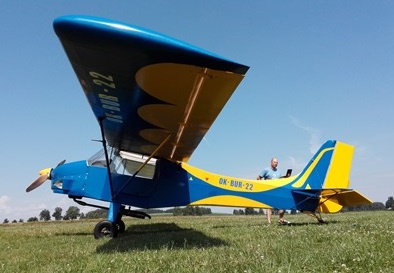
The Yetti J-03 was developed in the Czech Republic as a mass-produced fixed wing aircraft with a welded steel frame structures with metal duralumin wing spars and ribs covered with cloth or ceconite.
Dual controls are fitted. The original version was fitted with Skoda Favorit 136 B engines of 68 HP. With this engine it needed about 250m for take off. Climb rate was around 2.5 m / s.
Later examples had modified Skoda Favorit Sprint 70-75 hp engines with a noticeable increase in performance. Modification consisted of lowering the head to increase the compression ratio, and milling and polishing inlet and exhaust ports in the head. This was performed by Autospektrum 2000 sro from Marianske Lazne, with permission from the Ministry of Transport. With this motor the cruise was 90 to 140 km / h and climb solo around 3-4 m / s. The ideal propeller is the a two-blade in-flight adjustable composite propeller KAŠPAR KA 1-3 or the Woodcomp SR 30 wooden two-blade diameter 1800 mm. The aircraft climbs at 90 km / h 6 m / s solo and 4-5 m / s two up. The cruising speed ranges from 95 to 175 km / h. Climbing speed is from 95 to 100 km / h. Vne is 182 km / h. Recommended maximum speed in turbulence is 120- 140 km / h depending on the type and the type of engines and airframe.
Yetti was also powered by two-stroke water-cooled Rotax 65 hp. Now is fitted conversions automotive engine type 1600, 106HP Suzuki, Subaru 1800 output of 80 to 100 HP, VW-Skoda Fabia 1400ccm 16V 101-112HP, or a certified aircraft engine Rotax 912 S 74kW- 100 hp and three-blade ground adjustable propeller Woodcomp Varia 1700 or economical variant WOODCOMP propulsion, which gives it unprecedented performance. Seat pilot and copilot are height adjustable and side by side. The cabin width ranges from 115 to 120 cm.
A total of 18 were produced. 11 were flying in the Czech Republic.
The required length for landing is about 150-200 m from 15 m. The required length for takeoff to 15m is about 150-240 meters two up.
OK BUR 06 has a larger wing span and features more flap throughout the span of the wing. Furthermore, increased length and increased deflection of the elevator, enables shorten landing. Flaps are adjustable in three positions – 15, 20, and 40 degrees. Flaperons can be positioned at 0-18 degrees on OK BUR 22.
Zejda Skoda Fabia engine
The aircraft are equipped variometer, airspeed indicator, altimeter with heated Pitot static probe, transceiver, and bank indicator tachometer, motor clock, thermometer, cylinder heads, oil thermometer, oil pressure, voltmeter, signaling charging thermometer on the carburetor, outdoor thermometer, portable aviation GPS mapping Pilot III, intercom.
In winter, skis landing gear can be mounted, and a heated cabin from OAT minus 15 C to +20C in the cab.
Engine: Zejda Skoda Fabia 1.2 TSI CBZB, 144 hp Wing span: 9.8 m Empty weight: 320.5 kg MTOW: 472.5 kg Stall speed: 35 kts Cruise speed: 120-160 km / h Economical speed: 100 km / h VNE: 100 kt / 182 km / h Vs1: 56 km / h Climb: 5.5 m/sec Glide ratio: 10:1 Takeoff distance: 150 m
Roberto Bartini had designed and built the Stal-7 airliner whilst he was the chief designer at the ZOK NII GVF (Russian: Zavod Opytno Konstrooktorskoye Naoochno-Issledovatel’skiy Institoot Grazdahnskovo Vozdooshnovo Flota — “Factory for Special Construction at the Scientific Test Institute for the Civil Air Fleet”). The performance of the Stal-7 was extremely good, particularly in respect to its payload; at gross overload weight over 56% of the total weight was payload. During flight trials with maximum all-up weight the prototype crashed on take-off in early 1938, resulting in the arrest of Bartini and his imprisonment in a Siberian Gulag in February 1938. The Stal-7 lay unrepaired until Vladimir Yermolaev was appointed as chief designer at OKB-240 after Bartini’s arrest, with the task of transforming the Stal-7 design into a long-range bomber, a task made easier since Bartini had reserved space for a bomb bay in the fuselage. After repair the Stal-7 carried on with the flight-test programme, including a record-breaking non-stop flight on 28 August 1939 when it flew Moscow—Sverdlovsk—Sevastopol—Moscow; a distance of 5,086 km (3,160 mi) at an average speed of 405 km/h (252 mph).
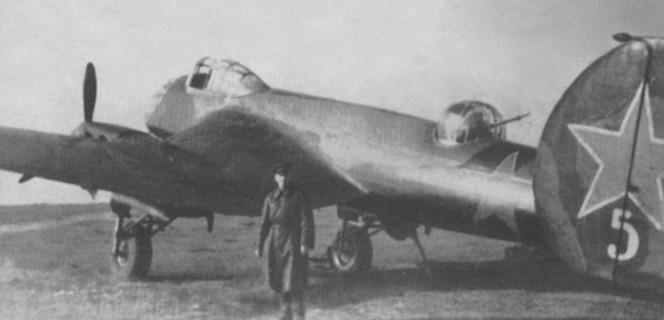
Preliminary design of the DB-240 (Russian: dahl’niy bombardirovschik—”long-range bomber”), as the bomber version was designated, was complete by the beginning of 1939 and the construction of two prototypes began the following July. The DB-240 retained little apart from the general layout of the Stal-7 as the structure was almost completely redesigned. An all-metal mid-wing monoplane of inverted gull-wing configuration and with a twin fin-and-rudder tail unit, the Yer-2 had tail-wheel landing gear, the main units retracting into the nacelles of its two M-105 engines; accommodation was provided for a crew of four. The pilot’s cockpit was offset to port to improve his downward view and the navigator/bomb aimer sat in the extensively glazed nose with a 7.62-millimeter (0.300 in) ShKAS machine gun, the radio operator sat below and to starboard of the pilot and the dorsal gunner in a partially retractable turret with one 12.7-millimeter (0.50 in) Berezin UBT machine gun. Another ShKAS was fitted in a ventral hatch. Up to 2,000 kg (4,409 lb) of bombs could be carried in the bomb bay and two 500-kilogram (1,102 lb) bombs could be carried externally. Up to 4,600 kg (10,141 lb) of fuel could be carried. The DB-240 had been designed to use the experimental Klimov M-106 V12 engines, but the less-powerful Klimov M-105 engine had to be substituted because the M-106 was not available.
The DB-240 prototype flew for the first time on 14 May 1940 and began its State acceptance tests on 27 September 1940. The weaker engines prevented the DB-240 from reaching its designed performance. It could only attain 445 km/h (277 mph) at 4,250 m (13,944 ft) instead of the expected 500 km/h (311 mph) at 6,000 meters (19,685 ft). Its defensive armament was deemed inadequate and other problems included an excessively long take-off run and engine defects. However, these did not offset its virtues of a heavy bomb load and long-range (4,100 kilometers (2,548 mi) carrying 1,000 kg (2,205 lb) of bombs). It was ordered into production at Factory No. 18, in Voronezh, as the Yermolayev Yer-2.
A second prototype followed in September, by which time preparations for mass production at Voronezh were in hand. Manufacture began in March 1941, with approximately 50 aircraft delivered by 22 June 1941. These aircraft were about 5–8 km/h (3.1–5.0 mph) slower than the prototype and their normal weight increased 1,220 kg (2,690 lb) to 12,520 kg (27,602 lb). Production was terminated in August to allow the factory to concentrate on the higher-priority Ilyushin Il-2 ground-attack aircraft. By July 1941, 128 examples of the DB-240 had been delivered under the designation Yermolayev Yer-2
A Yer-2 was modified with experimental Mikulin AM-37 engines, a reinforced undercarriage, armored seats for the navigator and gunner, and 12.7 mm UBT machine guns in place of its original ShKAS weapons. It first flew in July 1941 and was able to reach 505 km/h (314 mph) at 6,000 m (19,685 ft), but the range was reduced to (3,500 km (2,175 mi) carrying 1,000 kg (2,205 lb) of bombs. One significant problem with this version was the excessive take-off roll which hindered operations from grass airstrips. The engine was unreliable, however, and had cooling problems that the Mikulin OKB did not have the resources to resolve so it was cancelled in October when the factory was forced to evacuate from Moscow by the German advance.
The Charomskiy M-40F Diesel engine was also evaluated in a Yer-2 in 1941. This engine, like all Diesels, offered a greatly reduced fuel consumption compared to a standard gasoline-powered engine, but at a great penalty in weight. These engines increased the gross take-off weight to 13,500 kg (29,762 lb) which required the undercarriage to be reinforced and the wing area increased to keep the same wing loading. The M-40F-powered aircraft reached a maximum speed of 430 km/h (267 mph) at 6,050 m (19,849 ft). However, the M-40 was not yet ready for service use and the project was cancelled.
The cockpit was modified to accommodate two pilots side-by-side and the wing and tailplane areas were increased. The 12.7 mm UBT machine gun in the dorsal turret was replaced by a 20-millimeter (0.79 in) ShVAK cannon and the nose and ventral ShKAS machine guns were exchanged for 12.7 mm UBT machine guns. Up to 5,460 kg (12,037 lb) of fuel could be carried. The Yer-2/ACh-30B was placed into production at Factory No. 39 in Irkutsk at the end of 1943 and the first production aircraft was submitted to its State acceptance trials the following month. Some excess aircraft were converted as Yer-2ON VIP transports.
The Yer-2 was not in squadron service when Germany invaded on 22 June 1941, but the 420th and 421st Long-Range Bomber Regiments (Russian: Dahl’niy Bombardirovchnyy Aviapolk—DBAP) were formed shortly afterwards. However neither regiment flew any operational missions until later in the summer. On the evening of 10 August Yer-2s of the 420th DBAP, accompanied by Petlyakov Pe-8s of the 432nd DBAP, attempted to bomb Berlin from Pushkino Airfield near Leningrad. The airfield was too short to accommodate a fully loaded Yer-2, but three bombers did manage to take-off regardless. Two managed to bomb Berlin, or its outskirts, but only one successfully returned; the other was shot down by ‘friendly’ Polikarpov I-16s when it reentered Soviet airspace and the third aircraft went missing. Three crews from the 420th DBAP bombed Königsberg during the nights of 28–29 August and 30 August–1 September from Ramenskoye Airport, southeast of Moscow.
Yer-2 2M-105
On 1 October 1941 sixty-three Yer-2s were in service, but only thirty-four were operational. The 420th DBAP had flown 154 sorties by the beginning of November (6 in August, 81 in September, 67 in October) and had lost thirty of its forty aircraft. Over half of these (nineteen) were due to non-combat losses. Losses were extremely high over the autumn and winter as they were inappropriately committed against German tactical front-line targets during the Battle of Moscow at low altitudes and only twelve were in service on 18 March 1942. On 4 August 1942 the 747th DBAP had only ten Yer-2s on hand and it was briefly committed during the Battle of Stalingrad. The survivors were flown, in ever dwindling numbers, until August 1943 when the last few aircraft were transferred to schools by the 2nd Guards DBAP and the 747th DBAP.
The Yer-2 was placed back into production at the end of 1943, but none of the new bombers had been issued to combat units by 1 June 1944. However forty-two were in service on 1 January 1945 and one hundred and one on 10 May 1945 after the war ended. The first combat mission undertaken by Yer-2s after they returned to production was a raid on Königsberg on 7 April 1945 by the 327th and 329th Bomber Aviation Regiments (Russian: Bombardirovchnyy Aviatsionyy Polk). It remained in service with Long-Range Aviation units until replaced by four-engined bombers like the Tupolev Tu-4 in the late 1940s.
A Yer-20N special-purpose long-range transport version, which carried 18 passengers, was developed from the bomber.
DB-240 Two prototypes of the Yer-2 series with two 1,050 hp M-105 engines.
Yer-2 Production version with two M-105 engines, 128 built.
Yer-2/AM-37 One aircraft re-engined with two prototype 1,380 hp Mikulin AM-37 engines, the fastest of all Yer-2s.
Yer-2/M-40F The first diesel-powered Yer-2, with modified wings. One converted with two 1,500 hp Charomskiy M-40F diesel engines.
Yer-2/ACh-30B Production model of the diesel-engined version. Performance was excellent despite the poor reliability and rough running of the Charomskiy ACh-30B diesel engines. Range increased 1,500 km (930 mi) from the version with M-105 engines.
Yer-2ON (Russian: Osobogo Naznachyeniya–Special Assignment) Two aircraft from the Yer-2/ACh-30B production line were modified with a 12-seat VIP cabin, military equipment removed and long-range fuel tanks in the bomb-bay. A third aircraft was converted from a Yer-2 (1941 production) and used for shuttle flights between Irkutsk and Moscow.
Yer-2N (Russian: Nositel—Carrier) One aircraft was modified as an engine test-bed for captured Argus As 014 pulse jet engines.
Yer-2/MB-100 One production aircraft used as a test-bed for the 2,200 horsepower (1,600 kW) Dobrotvorskii MB-100 engine in 1945.
Yer-4 The final iteration of the Yer-2 series was a 1941 production aircraft re-engined with ACh-30BF engines and redesignated as the Yer-4. It had a slightly larger wingspan, increased take-off weight and improved armament. The prototype was tested in December 1943, but did not enter production.
Operators:
Soviet Union
VVS (Russian: Voyenno-Vozdooshnyye Seely—Soviet Air Forces)
ADD (Russian: Aviahtsiya Dahl’nevo Deystviya—Long Range Aviation) 420th Long-Range Bomber Aviation Regiment, later the 748th Long-Range Bomber Aviation
Regiment 421st Long-Range Bomber Aviation Regiment, later the 747th Long-Range Bomber Aviation
Yer-2 Engine: 2 x M-105, 770kW Max take-off weight: 11300-13700 kg / 24912 – 30203 lb Max. speed: 445 km/h / 277 mph Cruise speed: 380 km/h / 236 mph Ceiling: 7500 m / 24600 ft Range w/max.fuel: 3000-4500 km / 1864 – 2796 miles Armament: 1 x 20mm machine-guns, 2 x 12.7mm machine-guns Bombload: 1000-5000kg Crew: 4
Yer-2/ACh-30B Engines: 2 × Charomskiy ACh-30B V12 diesel engines, 1,118 kW (1,500 hp) each Wingspan: 23 m (75 ft 5.5 in) Wing area: 79 sq.m (850 sq.ft) Length: 16.42 m (53 ft 10½ in) Height: 4.82 m (15 ft 10 in) Empty weight: 10,455 kg (23,049 lb) Gross weight: 18,580 kg (40,961 lb) Maximum speed: 420 km/h (261 mph) Range: 5,500 km (3,418 miles) Service ceiling: 7,200 m (23,620 ft) Crew: 4 Armament: 1 x 12.7 mm UBT machine-gun in nose flexible mount. 1 x 12.7 mm UBT machine-gun in ventral flexible mount. 1 x 20 mm ShVAK cannon in a TUM-5 dorsal turret. Up to 5,000 kg (11,023 lb) of bombs in the internal bomb-bay.
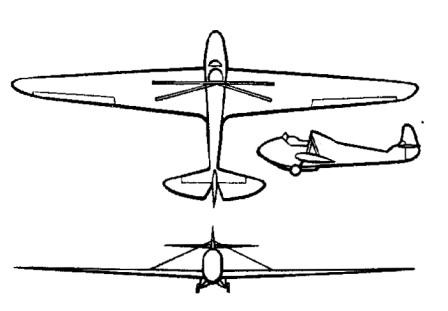
Designed by Pavel Yeyemeyev as a single-seater aerobatic trainer, the Yeremeyev Staliniets-3 (Russian: Еремеев “Сталинец-3”) was built between March and May 1935 by enthusiasts in Yeisk.
The Staliniets-3 was an all-wood single-seater glider, unlike its previous model, the “Staliniets-3” was conceived as a high-low-wing monoplane using inverted V-uprights. The wing design used the TsAGI R-II profile proposed by the engineer PP Krasilschikov and had a trapezoidal shape in the plane, with rounded ends.
The fuselage, with an oval section and covered in plywood, made the transition in the tail area towards a small keel to which the offset and elliptical rudder was attached. The stabilizers were located in the middle of the empennage, braced by uprights to the rear fuselage structure.
The pilot was located in an open cockpit in the forward region of the fuselage. The landing gear was of the conventional type and featured small wheels located on the sides of the fuselage.
Built in Yeisk by Yeremeyev in 1935, the Staliniets-3 glider was entered in the XI National Sailing Competitions held in Koktebel between September 6 and October 6, 1935. In these competitions its performance was good.
The pilots who flew it highlighted that it presented good control and was able to respond without problems to the controls during the execution of school piloting figures. Its landing speed was considered high, but the glider handled the manoeuvre meekly.
The only problem pointed out by the pilots was that the pedals in the cockpit were very close to each other, which brought confusion and fatigue on long flights.
Staliniets-3 Wingspan: 10.09 m Wing area: 9.25 m² Aspect ratio: 12.8 Length: 4.60 m Height: 1.20 m Empty weight: 131 kg Ailerons area: 0.90 m² Wing loading: 22.8 kg / m² Accommodation: 1
From a visit to the IX National Competition gliding in the town of Koktebel in Crimea between 12 August and 20 September of 1933, a group of students and instructors Pilot School Navales of the RKKA VVS named Stalin decided to develop self-built gliders to participate in these competitions. The apparatuses carried the denomination Staliniets (Сталинец), which can be translated as Staliniano, in relation to the name of the school.
Designed by Pavel Avkcientievich Yeremeyev, the Staliniets-1 (Russian: Еремеев “Сталинец-1”) was designed as an aerobatics training glider made entirely of wood and designed for towed flight.
Structurally, it was conceived as a monoplane with a high wing braced by V-uprights. The wing, with R-165 profile, had a single spar structure.
The fuselage, with an oval section and covered in plywood, made the transition in the tail area towards a small keel to which the offset rudder was fixed and elliptical in shape. The stabilizers were located in the middle of the empennage, braced by uprights to the rear fuselage structure.
The pilot was located in an open cockpit in the forward region of the fuselage. The landing gear was of the conventional type and featured small wheels located on the sides of the fuselage.
Built in 1934 in Yeisk, Staliniets-1 was registered to participate in the 10th edition of the national glider competitions, held from September 1 to October 6, 1934. The glider arrived at Koktebel towed by air from Yeisk. However, after evaluation, he was denied the possibility of participating in the competition.
Staliniets-1 Wingspan: 10.10 m Wing area: 12.20 m² Aspect ratio: 8.4 Length: 4.80 m Height: 1.60 m Empty weight: 130 kg Wing loading: 17.2 kg / m² Glide ratio: 12.3 Minimum descent speed: 0.95 m / s Surface of the horizontal planes: 1.52 m² Vertical plane surface: 0.76 m² Ailerons surface: 1.00 m² Accommodation: 1
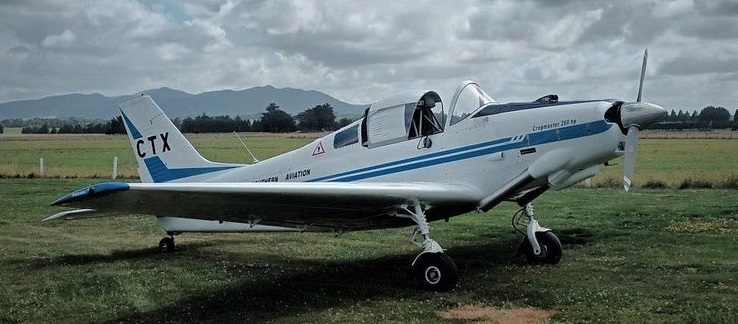
Australian designed and built, based on the CAC CA-6 Wackett trainer. A new wing, tail, and engine were fitted and twenty-one were built between 1959 and 1967. The first flying in February 1960.
Production versions were the KS.3 Cropmaster 250 and Fieldmaster 285.
Yeoman Cropmaster YA 1 250R
At least one was converted to three seats and, as a Yeoman Hanes 250, fitted with an extended glazed canopy to cover all seats.
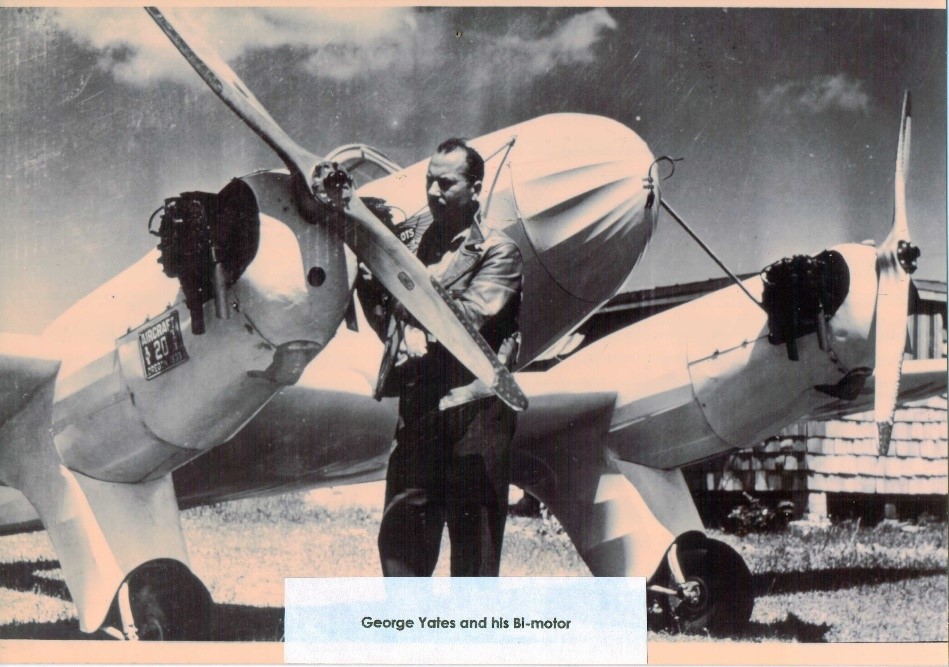
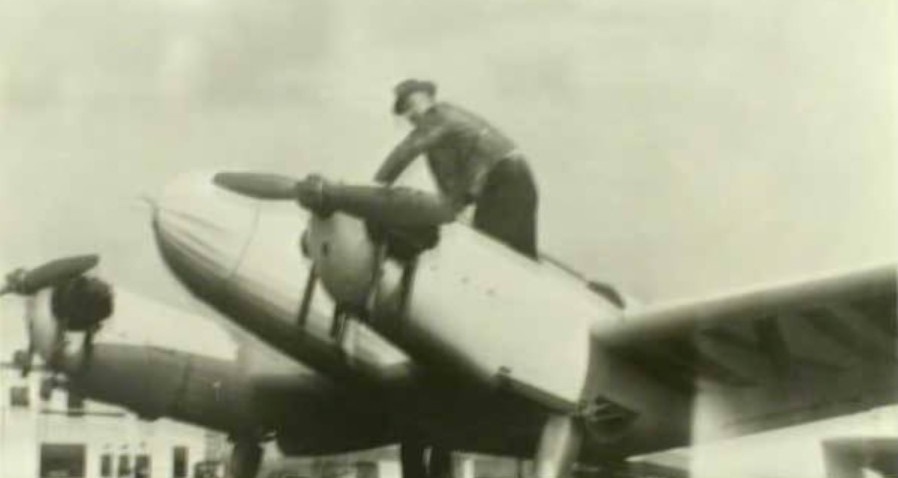
The George Yates of Beaverton, Oregon, Oregon O was developed into the 1935 twin-engined Greenwood-Yates Bi-Craft (NC15546) with 50 hp engines.
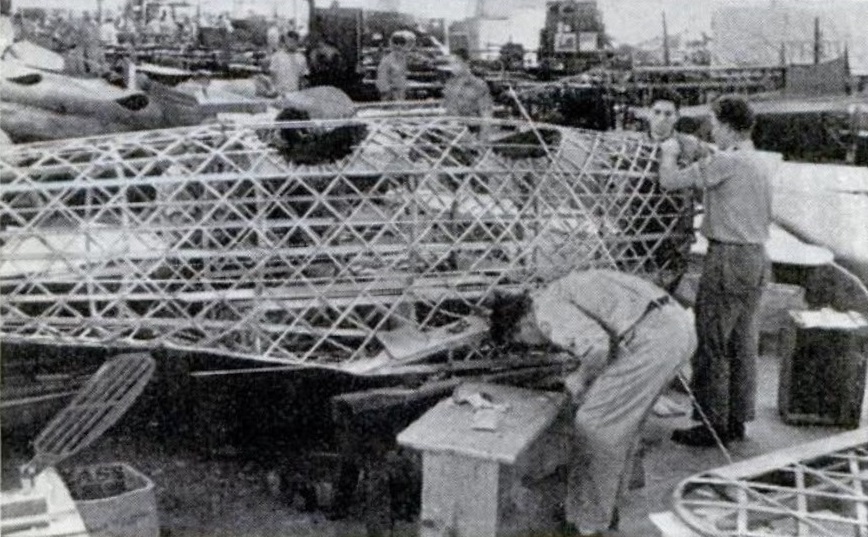
Yates and partner Allan D. Greenwood (a pilot and Oregon state aircraft inspector) formed the North Pacific Aircraft Corp. to market the Bi-Craft geodetic-construction light twin design.
In 1945, an updated Oregon O parasol was built. An open cockpit, midwing monoplane Oregon O was powered by a 125 hp Martin 4-333 inverted 4-cylinder, it had wooden geodetic basket-weave construction.









 All Aero