The Swales SD3-15 was developed from the Birmingham Guild BG 135 Gipsy, the 13.5m span version of the BG 100/12 designed by J. C.Gibson, K. Emslie and L. P. Moore of Sailplane Design Ltd. Manufacturing rights of the BG 135 were acquired by Yorkshire Sailplanes Ltd, who built a batch of seven as the YS 55 Consort. The BG 135 was itself developed from the earlier and very similar Birmingham Guild Gipsy 12/15 project which, like the BG 100/12, was intended to be a low cost lightweight Standard/Sports Class sailplane in which either a medium-performance 12m wing or a high performance 15m one could be fitted to a common fuselage and tail unit. This was to be achieved by special attention to structural efficiency resulting from efficient wing skin stabilisation, with rigid foam cores, and low cost was achieved by eliminating taper as well as twin-skin sandwich or ribbed forms of construction. The prototype BG 100/12, with a 12m (39ft 4in) span wing, first flew on 7 April 1970 and was a cantilever shoulder-wing monoplane of all-metal construction with a V-tail and a large hinged moulded cockpit canopy; a 13.5m span wing was later fitted.
Structurally, the SD3-15 is very similar to the BG 135 and BG 100/12.
Slingsby sold jigs and production rights of their T.53 upon Slingsby’s 1969 receivership to Yorkshire Sailplane which produced an improved version with both nose and centre of gravity tow hooks known as the YS 53 Sovereign.
Yorkshire Sailplanes only turned out three of these all-metal two-seaters, conceived as a T31 replacement for the Air Training Corps only to be rejected due to unpleasant spinning characteristics.
The 1954 June Bug built by Leon York was a home-built designed for “cow pasture operation.” An open cockpit, low wing monoplane, it first flew in November 1954.
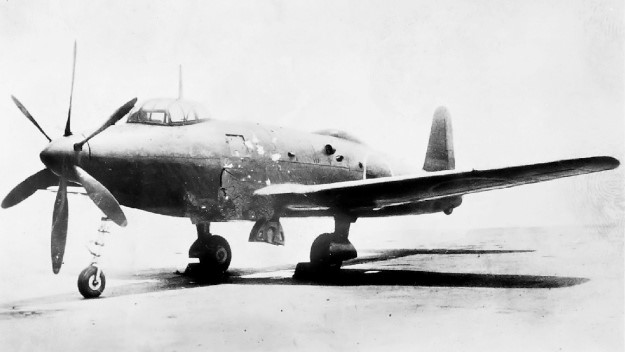
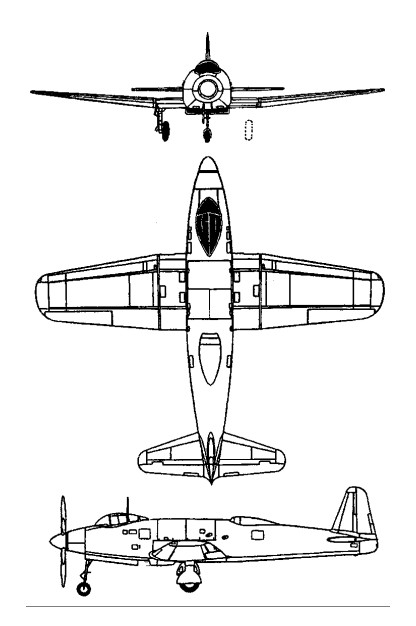
Inspired by the Heinkel He 119, Yokosuka began to design an aircraft of a similar layout, known as the Y-40, in 1943. Headed by Commander Shiro Otsuki, the aircraft project was a pressurized, two-seat, unarmed, high-speed, reconnaissance aircraft of all-metal construction that featured tricycle retractable gear. The Japanese Navy decided to take advantage of this work, and issued an 18-Shi specification built around the Y-40. The design was approved, and the Y-40 officially became known as the R2Y1 Keiun (Beautiful Cloud). The construction of two prototypes was ordered.
Commissioned for the Imperial Japanese Navy after the R1Y design was cancelled due to its disappointing performance estimates, the R2Y used coupled engines driving a single propeller and also featured a tricycle undercarriage. The Yokosuka R2Y Keiun (景雲 – “Cirrus Cloud”) was a prototype reconnaissance aircraft.
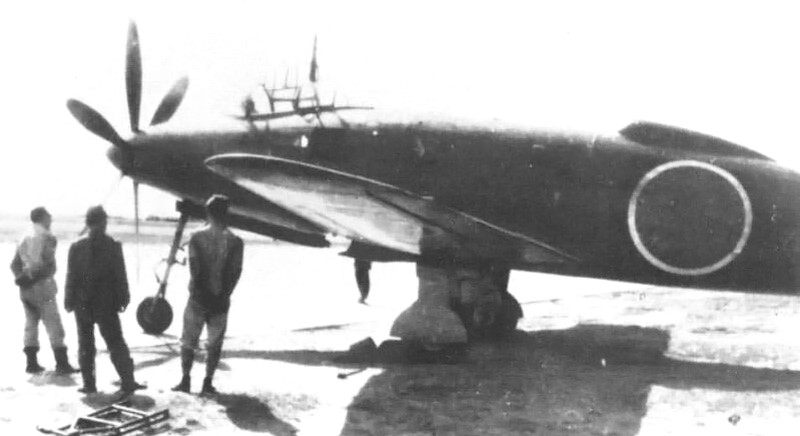
The Keiun was powered by two 60-degree, inverted V-12 Aichi Atsuta 30 series engines, licensed-built versions of the Daimler-Benz DB 601. The engines were coupled together by a common gear reduction in a similar fashion as the DB 606. The resulting 24-cylinder power unit was known as the Aichi [Ha-70]. With a 5.91 in (150 mm) bore and 6.30 in (160 mm) stroke, the engine displaced 4,141 cu in (67.8 L) and was installed behind the cockpit and above the wings. The Aichi [Ha-70] engine was to be turbocharged and rated at 3,400 hp (2,535 kW) for takeoff and 3,000 hp (2,237 kW) at 26,247 ft (8,000 m). Without the turbocharger, the engine was rated at 3,100 hp (2,312 kW) for takeoff and 3,060 hp (2,282 kW) at 9,843 ft (3,000 m). The engine drove a 12.47 ft (3.8 m), six-blade propeller via a 12.8 ft (3.9 m) long extension shaft that ran under the cockpit. Engine cooling was achieved by radiators under the fuselage and inlets for oil coolers in the wing roots. A ventral air scoop was located behind the engine to provide induction air for the turbocharger and air for the intercooler. Speculation suggests the first scoop on the side of the aircraft provided cooling air for the engine’s internal exhaust baffling, the second, larger scoop provided induction air for the normally aspirated Aichi [Ha-70] engine installed in the prototype, and the final two ports were for the engine’s exhaust.
The pilot sat under a raised bubble-style canopy that was toward the extreme front of the aircraft. The radio operator/navigator occupied an area in the fuselage just behind and a little below the pilot.
By the fall of 1944, the direction of the war had changed, and Japan no longer needed a high-speed reconnaissance aircraft. The R2Y1 Keiun was all but cancelled when the design team suggested the aircraft could easily be made into a fast attack bomber. In addition, the Aichi Ha-70 power plant would be discarded, and one 2,910 lb (1,320 kg) thrust Mitsubishi Ne 330 jet engine would be installed under each wing. A fuel tank would be installed in the space made available by the removal of the piston engine. The bomber version would carry a single 1,764lb bomb under the fuselage, and carry cannons in the nose. This jet-powered attack bomber had an estimated top speed of 495 mph (797 km/h). The Japanese Navy decided to accept the modified design. Yokosuka were given permission to produce one R2Y1 piston-engined prototype to test out the aerodynamics of the design, while also working on the jet-powered R2Y2 Keiun Kai. It did not enter construction before the end of the war.
The decision was made to finish the nearly completed R2Y1 airframe and use it as a flight demonstrator to assess the flying characteristics of the aircraft. With pressurization, the turbocharger, and the intercooler omitted, the R2Y1 prototype was completed in April 1945 and transferred to Kisarazu Air Field for tests. Ground tests revealed that the aircraft suffered from nose-wheel shimmy and engine overheating.
Adjustments were made to overcome the issues, and the Keiun took to the air on 29 May 1945 (date varies by source and is often cited as 8 May 1945), piloted by Lt. Commander Kitajima. The flight proved to be very short because the engine quickly overheated, and a fire broke out in the engine bay. Lt. Commander Kitajima quickly returned to the field, and the R2Y1 suffered surprisingly little damage.
On 31 May during a ground run to test revised cooling, the engine was mistakenly run at high power for too long and overheated. The engine was removed from the aircraft to repair the damage. The R2Y1 sat awaiting repair for some time before it was destroyed by Japanese Naval personnel to prevent its capture by American forces (some say it was destroyed in an Allied bombing raid).
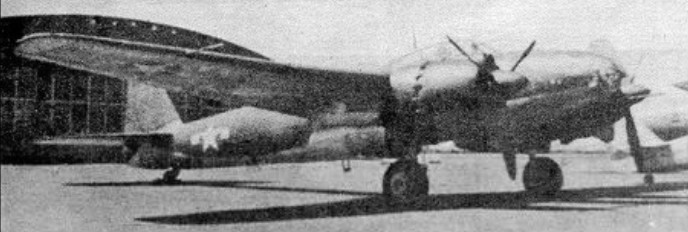
The R2Y1 Keiun undergoing taxi tests in May 1945.
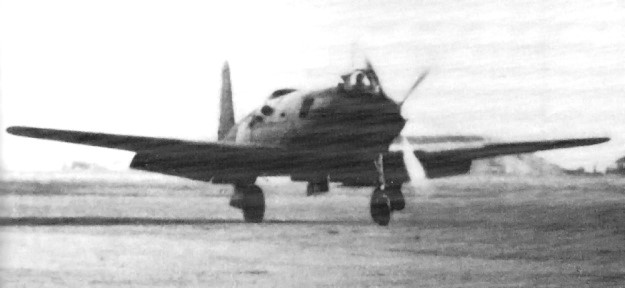
Because of the end of the War, the second R2Y1 prototype was never completed nor was the design work for the R2Y2.
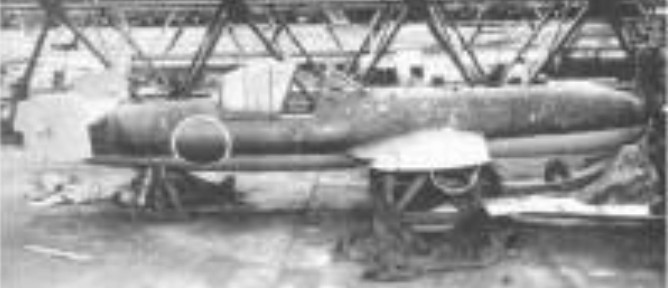
The unfinished second R2Y1 prototype as seen at the end of WWII.
Three were built, but only one was completed.
R2Y1 Engine: 2 x Aichi-10 Ha-70, 2550kW (3,400 hp / 3,100hp at 9,845ft) Propeller: 6-bladed constant-speed metal Wingspan: 14.0 m / 45 ft 11 in Length: 13.05 m / 43 ft 10 in Height: 4.24 m / 13 ft 11 in Wing area: 34.0 sq.m / 365.97 sq ft Max take-off weight: 8100-9400 kg / 17858 – 20724 lb Empty weight: 6015 kg / 13261 lb Fuel capacity: 1,555 l (411 US gal; 342 imp gal) Max. speed: 715 km/h / 444 mph at 10,000 m (32,808 ft) Cruise speed: 460 km/h / 286 mph at 4,000 m (13,123 ft) Landing speed: 166 km/h (103 mph; 90 kn) Ferry range: 3,611 km (2,244 mi, 1,950 nmi) Service ceiling: 11,700 m (38,400 ft) Time to altitude: 10,000 m (32,808 ft) in 21 minutes Crew: 2
R2Y2 Engine: Two Ne-330 axial-flow turbojets Power: 2,910lb thrust each Crew: 2 (pilot and radio operator/ navigator)Span: Armament: Forward firing cannon Bomb load: One 1,764lb bomb
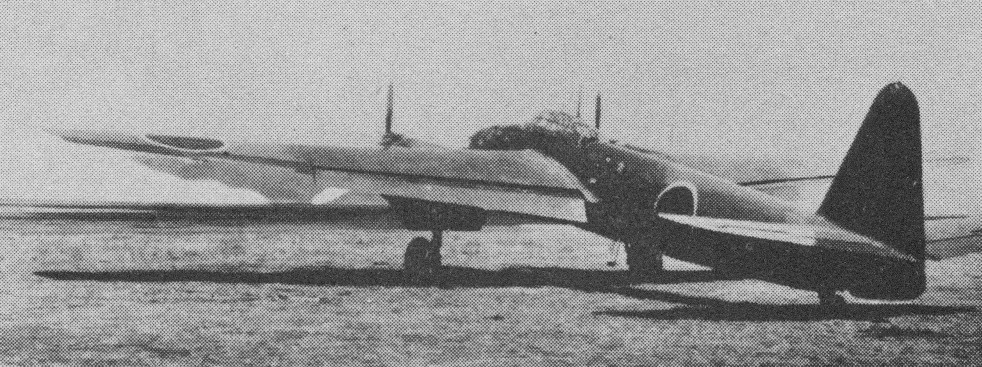
Requiring a fast medium bomber for dive-bombing, low-altitude bombing or torpedo attack, the Imperial Japanese Navy instructed the Yokosuka First Naval Air Technical Arsenal in 1940 to begin design of such an aircraft. The resulting Yokosuka P1Y prototype flown in August 1943 was a mid-wing, all-metal monoplane, powered by two Nakajima NK9B Homare 11 radial engines. Its performance was satisfactory, but the P1Y suffered from maintenance problems that plagued its service life.
The entry into service of the P1Y1 Navy Bomber Ginga Model 11 was in 1943.
As the war neared its end, Japan required defensive fighters and steps were taken to produce a night fighter version of the Ginga.
The contract for this was awarded to Kawanishi, who’s P1Y2-S Kyokko (Aurora) utilised the less troublesome 1850 hp Kasei 25 engines, was fitted with an AI radar ad three 30mm cannon. Only 97 P1Y2-S were completed before VJ day, although a few P1Y1-S conversions from Nakajima-built bombers saw limited operational service.
P1Y1-S
Production totalled 1098, built by Kawanishi (96) and Nakajima (1002), and if there had been adequate manpower to service these aircraft before each operational sortie they would have proved formidable adversaries. This was not possible and as a result the Ginga (Milky Way), allocated the Allied codename ‘Francis’, was tried unsuccessfully in a variety of alternative roles; its brief operational life of only six months was terminated by the end of the Pacific war.
P1Y1 Engines: 2 x Nakajima Homare-21, 1370kW Max take-off weight: 10500 kg / 23149 lb Empty weight: 7265 kg / 16017 lb Wingspan: 20.0 m / 66 ft 7 in Length: 15.0 m / 49 ft 3 in Height: 4.3 m / 14 ft 1 in Wing area: 55.0 sq.m / 592.01 sq ft Max. speed: 550 km/h / 342 mph Cruise speed: 380 km/h / 236 mph Ceiling: 9400 m / 30850 ft Range w/max.fuel: 4650 km / 2889 miles Range w/max.payload: 1900 km / 1181 miles Crew: 3 Armament: 2 x 20mm cannons Bombload: 1000kg
P1Y1 Engines: 2 x Nakajima Homare-11, 1820 hp Wingspan: 65 ft 7 in Length: 49 ft 3 in Height: 14 ft 1 in Empty weight: 14748 lb Loaded weight: 10500 kg / 23149 lb Max speed: 345 mph at 19,260 ft Service ceiling: 33,530 ft Max range: 1600 mi Armament: 1 x 20mm cannons / 1 x 13.2mm mg Bombload: 1760 lb or 1 x 1875 lb torpedo (externally Crew: 3
Japan’s naval officers, in the summer of 1944, were faced with the almost sure knowledge that their country’s defeat was simply a matter of time. Even before Vice Admiral Ohnishi ordered the creation of the Kamikaze Special Attack Force in October 1944, some naval officers were seeing suicide attacks as the only way to defeat the Allied fleets. One of these men was a transport pilot of the 405th Kokutai, Ensign Mitsuo Ohta. He conceived the idea of a rocket-propelled suicide attack plane, and with the aid of personnel from the University of Tokyo’s Aeronautical Research Institute, he drafted preliminary plans for his brainchild. In August 1944 he submitted his drawings to the Naval Air Technical Arsenal at Yokosuka. The Navy decided that Ensign Ohta’s idea had merit, and so the Arsenal was instructed to prepare a set of detailed blueprints – the engineers involved were Masao Yamana, Tadanao Mitsugi, and Rokuro Hattori. The Ohka (Cherry Blossom) was, in effect, a manned anti-shipping cruise missile of the Pacific War.
The MXY7, as the design was named, was intended as a coastal-defense or anti-invasion weapon, launched by a “parent” aircraft. Once released by its “mother” ship – usually a G4M twin-engined bomber – the MXY7 would glide downwards, and once the pilot had selected a target, the weapon would accelerate to attack speed using the power of three solid-fuel rockets mounted in the tail. These rockets could be fired one at a time or all three simultaneously. Theoretically, when it was at its terminal velocity, the MXY7 would be virtually impossible to stop, and only pilot error could cause it to miss. This small but lethal aircraft was to be built of wood and non-critical metal alloys, utilizing unskilled labor, and as it would be flown by pilots with only limited aerial experience, flight instruments were to be kept to a bare minimum and good maneuverability was required to achieve accuracy in flying and aiming the “manned missile”.
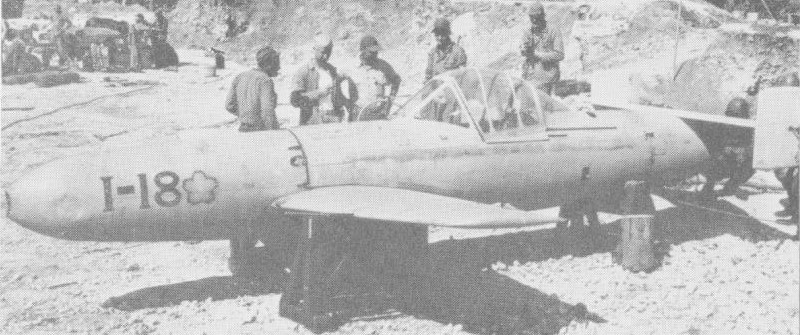
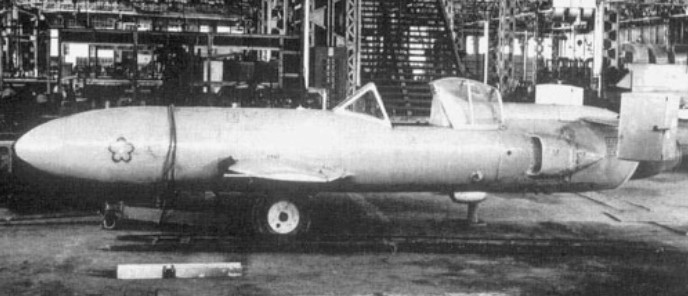
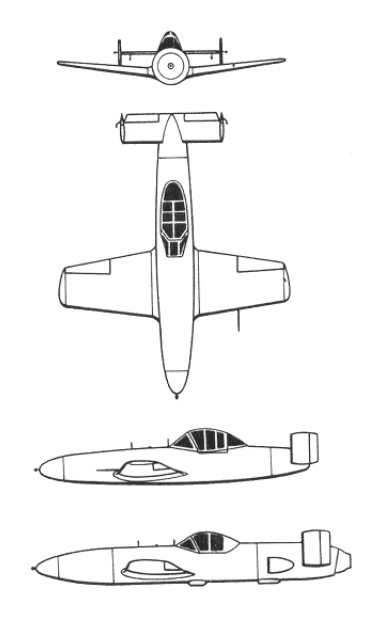
The actual aircraft itself looked like a torpedo to which wings and twin tail surfaces had been added. Barely 20 feet long, and with wings spanning just over 16½ feet, its sliding canopy was hump-backed. In front of the canopy was a ring sight, with a bead sight in front of that, for precise aiming when in the terminal dive on a target. The Ohka was built by unskilled workers using as much non-strategic material as possible. The fuselage was a standard aluminium structure, but the wings were made of moulded plywood covered in fabric. Cockpit instrumentation consisted of only four instruments: a compass, an airspeed indicator, an altimeter and an inclinometer for turn indication.
Ten MXY7s were completed by the end of September 1944. Unpowered flight trials began at Sagami the following month, and in November the first powered flight was made at Kashima. The MXY7 was accepted for Navy service under the name Navy Special Attacker Ohka Model 11. It was powered by a battery of three Type 4 Mark 1 Model 20 rockets, which produced 1,764 pounds of thrust, combined, for 8 to 10 seconds of powered flight. Performance measured during an unmanned flight at Kashima in January 1945 indicated that the Ohka could reach a top unpowered speed of 288 mph and a top powered speed of 403 mph, both speeds being attained at a height of 11,485 feet.
The Imperial Navy didn’t bother to wait for all test results to come in; production began with the first ten Ohka Model 11s in September 1944, and 755 were built by the end of March 1945, when production of this variant ceased. One hundred and fifty-five were built by the Naval Air Technical Arsenal at Yokosuka, and 600 more by the First Naval Air Arsenal at Kasumigaura; Nippon Aircraft Ltd. and Fuji Aircraft Ltd were subcontractors for the wings and tail units. But barely a hundred of them were actually used in operations.
Ohka Model 11
The Ohka’s debut was highly inauspicious. Sixteen G4M2e mother planes of the 721st Kokutai, each carrying a single MXY7, took off from Kanoya on March 21, 1945 to attack an American carrier task force 320 miles off the coast of Kyushu, the southernmost of the four main Japanese home islands. Two additional Bettys went along as navigation and radio planes. Their commander was Lt. Cdr. Goro Nonaka, a veteran torpedo bomber pilot. Nonaka’s last words, just before he entered his bomber for the mission, were “This is Minatogawa.” He was referring to the battle in the 14th Century Japanese civil war between the Northern and Southern imperial courts, where one of Japan’s greatest military heroes, the Southern commander, Masashige Kusunoki, killed himself after losing, saying, “Shikisei hokoku!” (I wish I had seven lives to give for my country!) The attack was a complete, humiliating fiasco. Fifty-five Zero fighters from the 201st Kokutai were assigned to fly escort, but mechanical failure caused by poor maintenance forced some fighters to abort without leaving the ground, and others had to abort when airborne. Only 30 Zeros actually accompanied the 18 Bettys to the combat area, where fifty F6F Hellcats attacked them well before they reached optimal launching range. Ignoring the escort fighters, the American carrier fighters concentrated on the bombers and their strange under-belly cargo. All of the Ohkas were jettisoned (the pilots remained with the mother ships), but 15 of the Bettys were destroyed.
Three more, including Cdr. Nonaka’s, tried to take cover in a nearby bank of clouds, but they were soon found and shot down as well. Fifteen of the 30 escorting Zeros were also lost, with the remnant returning home in varying states of damage.
This episode pointed up the worst failings of the Ohka, or Baka (“stupid” in Japanese. Widely known as Gizmo before Baka was selected on the suggestion of a US Navy Petty Officer) as the Allies called it: the mother aircraft, when carrying it, was a fat, wallowing aerial whale, lacking speed and maneuverability, easy meat for defending interceptors. And the Ohka lacked range, even when gliding; it had to be launched from no more than 20 nautical miles (23 statute miles) away from its prospective target. Very few Ohkas actually struck their targets, as it was so difficult to launch and to maneuver under its pilot’s hands. But once released, and once the rockets were ignited, the Ohka was impossible to stop. Its first successes were scored the first day (April 1, 1945) of the American invasion of Okinawa, when the battleship West Virginia and three transports were hit, and on April 12, an Ohka scored its first sinking by sending the destroyer Mannert L. Abele to the bottom of the sea. The destroyer-minesweeper Shea was hit by an Ohka on May 4, and barely escaped total loss, as a fire started by the Ohka almost reached the ship’s magazines before the damage-control men brought it under control. Its last success came on June 16, when an Ohka and a bomb-carrying Zero almost simultaneously struck the destroyer Twiggs, which sank within a few minutes.
In all, the Okinawa campaign cost the US Navy 40 ships sunk or damaged beyond repair and 368 damaged to varying extents, often seriously. The US Navy lost more sailors dead and wounded than the Army and Marines lost in the ground combat, making Okinawa, next to the Guadalcanal campaign, the bloodiest and most difficult of the war for the Navy. The Japanese lost about 7,600 planes, more than half of which were suicide planes; the Americans lost 763 planes of their own. It is not known for sure exactly how many Ohkas scored hits and sinkings.
It might be well to mention here that a number of Ohkas were captured on Okinawa itself. Apparently, the Japanese shipped several Ohkas to that island before the campaign opened, probably meaning to use the airfield at Yontan as a refuelling and arming point. But American aerial supremacy never allowed the Japanese to base any aircraft there after about March 25, and the Americans took Yontan very quickly after the landings. And so, the MXY7s were never used, and quite a few “Baka bombs” were captured intact. Most of the surviving examples in museums came from this source.
Further development of the basic Ohka theme continued, but no other variants other than the Model 11 were used in combat.
K-1 Forty-five examples of the Ohka K-1, an unpowered trainer with water ballast replacing the powerplant and warhead, were produced by Yokosuka to provide pilots with limited experience in handling a simulation of the real thing in flight. Both water ballast tanks would be emptied during the practice terminal dive, slowing the landing speed to 138mph, and the glider would then land on retractable skids.
Ohka K-1 trainer
Ohka Type 22
Ohka 22
The Ohka Model 22 was intended as an improved version to be launched from the faster and more maneuverable P1Y3 variant of the Navy’s Ginga bomber. Because the Ginga could not carry the same payload as the G4M2e, and because of the limited space under the P1Y3 compared to the Betty mother plane, the Ohka 22 was to have shorter wings and a lighter explosive payload (1,323 lbs.). The Ohka 22 received a Tsu-11 turbojet – a Campini-type jet engine – with a 100-hp Hitachi HA11 four-cylinder inline engine driving a single-stage compressor as a gas generator. The engine was fuel injected but engineering analysis after the war suggests that this had limited effect and that in reality the unit was little more than an afterburning ducted fan engine as the majority of the thrust came from the compressor. The Ohka was adapted to accommodate the engine by lengthening the fuselage with intakes on the side. It was hoped that the Ohka would have greater range with this jet engine, and so the mother ships could more easily survive attack by releasing the Ohka 22 farther away from target.
Fifty Ohka 22s were built by Yokosuka, and an ambitious production scheme was planned, with Aichi doing most of the final assembly and with the smaller concerns of Murakami, Miguro, and Fuji serving as subcontractors. But due to the increasingly bad war situation, Aichi was unable to begin production, so the Imperial Navy planned to concentrate Ohka 22 production in underground factories managed by the Air Arsenal at Kasumigaura. The war ended before any of the underground factories could be completed. One Ohka 22 was test-flown in July 1945, launched by a Betty because the proposed P1Y3 Ginga was not yet built, but auxiliary rockets installed under the Ohka’s wings ignited prematurely just after release, and the Ohka 22 went into an unrecoverable stall, killing its pilot.
A single example of a Tsu-11 engine is preserved at the National Air and Space Museum in Washington DC. In 1997 it was installed in the museum’s Ohka 22 during its restoration.
Ohka Model 43 K-1 Kai Wakazakura (Young Cherry) The Ohka Model 33 was an enlarged Model 22 powered by a Ne-20 turbojet and fitted with a 1,764-lb. warhead. Its intended mother ship was the G8N1 Renzan four-engined bomber, but the low priority given the G8N program led to the Ohka 33’s cancellation before any examples could be completed. Also unbuilt was the Ohka 43A, a still larger variant with folding wings intended for launching from surfaced submarines. The Model 43B, a development of the 43A, was to have been a shore-launched manned missile, stored in and catapulted from caves. Once in the air, the Ohka 43B’s wingtips would’ve been jettisoned to increase the type’s speed, but no prototypes were built by the time of Japan’s capitulation. But three examples of a two-seat training version of the 43B, designated Ohka Model 43 K-1 Kai Wakazakura (Young Cherry), were produced before the surrender. These had retractable skids and flaps for landing, and the warhead was replaced by a second cockpit for the student. One Type 4 Model 1 Mark 20 rocket was mounted in the tail for limited powered-flight experience.
Ohka 43-K1-Kai
Other Ohka developments included a single example of the Model 11 experimentally fitted with wings fabricated by Nakajima out of thin steel; the Ohka Model 21, a hybrid consisting of the rocket powerplant of the Model 11 married to the airframe of the Model 22; and the Ohka Model 53, to be powered by a Ne-20 turbojet, and towed aloft like a glider and released over the target by its towplane. Total production of all Ohka variants was 852 examples.
Yokosuka MXY7 Ohka (Baka) Model 11 Type: Single-seat suicide attack plane Powerplant: 3 x Type 4 Model 1 Mark 20 solid-fuel rockets with a total thrust of 1,764 lb Wing span 5.12 m (16 ft 9.5 in) Length 6.07 m (19 ft 10.75 in) Height 1.16 m (3 ft 9.5 in) Wing area 6.02 sq.m (64.6 sq.ft) Empty weight 440 kg (970 lb) Max¬imum take off weight 2140 kg (4,718 lb). Max level speed: 650 km/h (403 mph) at 11,485 ft Terminal diving speed 927 km/h (576 mph) Range 37 km (23 miles) Warhead: 2,646 lb / 1200kg
Yokosuka MXY7 Ohka (Baka) Model 21 Type: Single-seat suicide attack plane Powerplant: 3 x Type 4 Model 1 Mark 20 solid-fuel rockets with a total thrust of 1,764 lb
Yokosuka MXY7 Ohka (Baka) Model 22 Type: Single-seat suicide attack plane Powerplant: 1 x 551-lb.-thrust Tsu-11 turbojet, with a Hitachi 100-hp four-cylinder inline gas generator Wingspan: 13 ft. 6 7/32 in Length: 22 ft. 6 7/8 in Height: 3 ft. 9 9/32 in Wing area: 43.055 sq. ft Empty weight: 1,202 lb Loaded weight: 3,197 lb Wing loading: 74.3 lb./sq. ft Maximum powered speed: 276 mph at 13,125 ft Range: 81 statute miles Warhead: 1,323 lb
Yokosuka MXY7 Ohka (Baka) Model 43B Type: Single-seat suicide attack plane Powerplant: 1 x 1,047-lb.-thrust Ne-20 axial-flow turbojet Wingspan: 29 ft. 6 11/32 in Length: 26 ft. 9 ¼ in Height: 3 ft. 9 9/32 in Wing area: 139.930 sq. ft Empty weight: 2,535 lb Loaded weight: 5,004 lb Wing loading: 35.8 lb./sq. ft Maximum powered speed: 345 mph at 13,125 ft Range: 173 statute miles Warhead: 1,764 lb
Yokosuka MXY7 Ohka (Baka) Model 53 Type: Single-seat suicide attack plane Powerplant: 1 x 1,047-lb.-thrust Ne-20 axial-flow turbojet
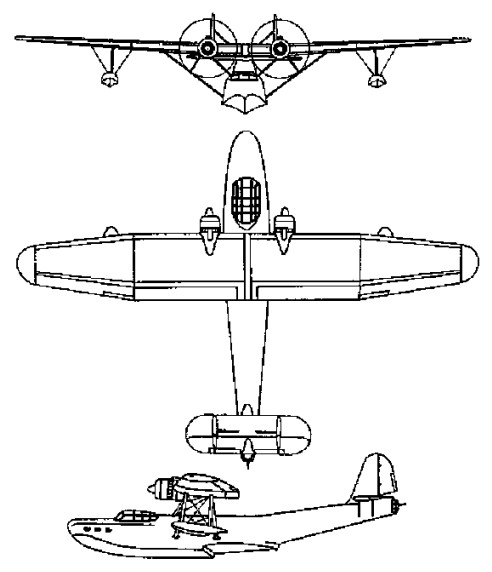
In 1934 the staff of the Yokosuka Navy Arsenal turned their hand to the design of a twin-engined flying-boat, the Yokosuka H5Y powered by two 895kW Mitsubishi Shinten 21 radial engines. Although built to a total of 20 during 1936-40 as the Navy Type 99 Flying-Boat, its performance was disappointing and, consequently, was deployed only on second-line duties.
Early in the war an unidentified twin-engined flying boat was spotted on non-combat duty around Japanese Naval bases. The allied code name ‘Cherry’ permitted identification before the manufacturer’s name and designation was discovered through prisoner interrogation over a year later.
H5Y1 Engine: 2 x Mitsubishi Shinten-21, 895kW Max take-off weight: 12500 kg / 27558 lb Wingspan: 31.57 m / 104 ft 7 in Length: 20.52 m / 67 ft 4 in Max. speed: 305 km/h / 190 mph Ceiling: 5200 m / 17050 ft Range: 4700 km / 2921 miles Crew: 6 Armament: 3 x 7.9mm machine-guns Bombload: 500kg














 All Aero