The Zodiac CH 640 Chris Heintz design is a four-place, low-wing, all-metal kit aircraft. The CH 640 is a conventional four-seater, with a 2 + 2 seating configuration. The prototype aircraft is powered by a 180-hp Lycoming O-360 engine. The design features a fixed tricycle landing gear, large dual gull-wing doors, a wing span of 31.5 feet and an overall length of 23 feet. The Zodiac CH 640 is designed to bridge the gap between utility designs and the fast and expensive composite designs – to make it a practical and useful aircraft for the “average” pilot/builder. The CH 640 has a useful load of 1,000 lbs., making it a true four-seater. Heintz used the Zenith CH 2000 as the basic platform for his new design since the aircraft already boasted a huge cabin area, and the type-certificated design could easily be stretched into a four seater. Starting with a basic CH 2000 fuselage assembly, the CH 640 started to take shape by stretching the cabin area and adding the rear seat. New wings and horizontal tail sections were also developed, and the firewall-forward side was borrowed from the Heintz’ STOL CH 801 design which utilizes the same engine. The new airframe took just three months to put together. The CH 640 has conventional all-metal construction adapted for quick and simple kit construction. Kit parts are supplied ready-for-assembly, using blind rivets extensively. Many of the kit parts are the same design as the production Zenith CH 2000, which is being produced under an FAA production certificate.
Engine: Lycoming O-360, 180 hp Prop: Sensenich 76-EM8-0-63 Max. Engine Wt: 440 lbs/200 kg Power: 150 – 240 hp MTOW: 2,200 lbs/1000 kg Design Ult.Load: + 5.7, – 2.9 G Max. Wing Loading: 14.6 psf/71.4 kg/sq.m Max. Flap Speed: 115 mph/185 km/h Max. Cruise Speed – Vc: 160 mph/256 km/h Vne: 175 mph/280 km/h Empty weight: 1,200 lbs. LSA: yes Cockpit width: 46 in Performance @ 1718 lbs Max Level Speed: 167 mph/267 km/h Cruise (75% 7,000 Ft.): 154 mph/246 km/h Stall Speed (Flaps Down): 40 mph/65 km/h Stall Speed (Flaps Up): 50 mph/81 km/h Rate Of Climb: 1,400 fpm/7.0 m/s Service Ceiling: 16,000+ ft./4880+ m. Endurance (Standard): 3 Hrs. 45 min Range (Standard): 525 sm/845 km. Take-Off Roll: 950 ft./260 m Landing Roll: 800 ft./244 m. Performance @ 2200 lbs Max Level Speed: 157 mph/251 km/h Cruise (75% 7,000 Ft.): 150 mph/240 km/h Stall Speed (Flaps Down): 47 mph/76 km/h Stall Speed (Flaps Up): 58 mph/93 km/h Rate Of Climb: 950 fpm/4.8 m/s Service Ceiling: 12,800 ft./3,900 m. Endurance (Standard): 3 Hrs. 45 min Range (Standard): 510 sm/820 km. Take-Off Roll: 990 ft./300 m Landing Roll: 1,150 ft./350 m
The original Zodiac CH 600 was designed by Chris Heintz as a low-cost primary trainer aircraft. The 1984 Zodiac CH 601 HD is the updated model. New improvements to this model include a wider 44-inch cabin and a larger rear baggage compartment. Standard equipment includes wing baggage lockers, hydraulic disk brakes, electric trim tab, and tinted canopy. Designed to meet the requirements of the sport pilot, the aircraft offers great performance and capabilities, and is easy-to-fly with pilot-friendly characteristics, including a low landing (stall) speed. The aircraft has excellent cross-country flying capability as well as short-field performance of well under a thousand feet. The HD (Heavy duty) version is stressed for + or -6G. The S-series speedwing option features a four foot shorter span and a thinner, tapered aerofoil in the outboard section, with a scarfed tip for enhanced dihedral effect. Other options included wing fuel tanks.
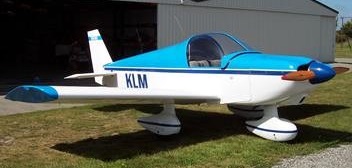
A lightened version of the Zodiac CH 601 HD, the basic CH 601 Zodiac model was developed in 1984 specifically for the Advanced Ultralight (AULA) category in Canada and other European countries, where the CH 601 can be used as a trainer and personal aircraft.
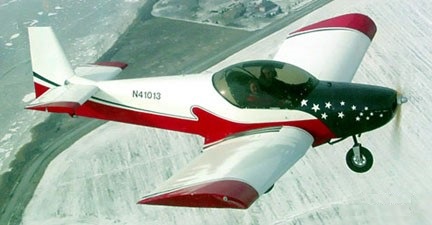
Zenith CH-601 NC41013
With a reduced gross weight, this model’s specifications are very similar to those of the CH 601 HD model. With a lighter gross weight (useful load), a lower empty weight is achieved using lighter materials in selected areas. Registered as an advanced ultralight, the basic CH 601 makes an ideal low-cost trainer and personal aircraft. Bubble canopy was standard, but was available with an open cockpit, taildragger, trigear, or twin-float options. As a certified design, factory pre-assembled aircraft were available direct from the manufacturer. As of Oct 1998, 275 kits were sold and 200 built from plans.
The basic airframe kit for the HD cost $12,620, the HDS Super Zodiac basic airframe kit $13,640, and XL Super Zodiac basic airframe kit $15,890, all in 1998.
CH 601 Super Zodiac
Based on the Zodiac CH 601 HD, the Super Zodiac 601HDS features tapered and shortened ‘speed wings’ to achieve a higher cruise speed. The wing span is reduced to 23 feet, and the wing area is lowered to 98 sq. feet, with the airfoil tapering to a 34 inch chord at the wing tips. The speed wings have full-length ailerons for very responsive controls. The Super Zodiac has the same fuselage and tail sections as the CH 601 HD model; the only difference being the outboard wing panels. The outboard wings of the Super Zodiac and the Zodiac CH 601 HD can be interchanged.
CH601XL
Grossing 100 lb heavier than the CH 601, the CH601XL was designed to accommodate larger engines such as the Continental O-200, Lycoming O-235 and Rotax 912s, all in the 100 hp range. The 601XLhas an entirely new wing, 27 ft span, and has the same dihedral from the root to tip because the aluminium spring maingear legs are attached to the fuselage structure. Construction is of 6061-T6 aluminium with pulled rivets. The new wing also has electrically operated flaps, which reduce the span of the ailerons. The XL canopy is forward tipping with gas spring assist, and behind the seats is a 40 lb baggage area. The cabin area is three inches longer than the 601. The flight controls are cable operated. 2009 Price: 64000 EURO With the new wing flaps, stall speed has been kept low for recreational pilots. The XL design is the product of extensive research and development, and the result of professional engineering by Chris Heintz, a leading designer of light aircraft. The modern design makes use of advanced technologies, while using proven design concepts and simple systems for easy assembly and maintenance. A professional design, the structure has undergone a complete and rigorous flight test and design stress analysis, as well as load testing of critical components. The XL has been configured to take full advantage of its increased useful load: New and larger wing tanks offer a larger fuel capacity resulting in superior range and endurance, and the baggage area behind the seat has also been increased. Also with optional wing storage lockers the baggage capacity of this aircraft is quite exceptional. The XL features a new spring main landing gear system. The standard tricycle gear provides effective ground handling and allows for excellent forward visibility while taxiing. This heavy-duty tricycle gear system was chosen as the standard gear configuration as it provides better stability and control on the ground. The Rotax 912ULS 100HP engine offers great performance and is highly recommended for this aircraft as it provides great reliability, and is very efficient and smooth-running. The Zodiac XL prototype model is powered by the six cylinder Jabiru 3300. Lycoming O-235 (116-hp) and Rotax 912S (100-hp) engines have also been installed and flown in the prototype. The XL has been developed with the FAA’s proposed Sport Pilot / Light-Sport Aircraft category in mind, and offers maximum performance and capability possible under the new FAA category.
CH 601 Engine: Lycoming O-235, 116 hp TBO: 2400 hr Prop: Sensenich Composite sheathed wood, 2 blade fixed pitch Wingspan; 27 ft Wing area: 132 sq.ft Length: 19 ft Height: 6.5 ft Undercarriage: fixed nosewheel Main tires: 5.00 x 5 Nose tire: 5.00 x 5 Seats: 2 Max speed: 148 mph Cruise 75%: 138 mph Range 75% no res; 600 sm Stall with flaps: 44 mph ROC: 930 fpm Takeoff roll: 500 ft Landing roll: 500 ft
CH 601 Engine: Jabiru 3300 Wingspan: 27 ft Wing area: 132 sq.ft Length: 19 ft Height: 6.5 ft Undercarriage: fixed nosewheel Main tires: 5.00 x 5 Nose tire: 5.00 x 5 Seats: 2 Empty weight: 660 lb Useful load: 640 lb Wing loading: 9.85 lb/sq.ft Power loading: 11.2 lb/hp Fuel capacity: 25 USG Baggage capacity: 40 lb Aspect ratio: 5.46-1
CH601UL Engine: Rotax 912, 80 hp Engine range: 65 -100 hp, up to 225 lbs. Wing Span: 27 Ft Wing Area: 130 sq.ft. Length: 19 Ft Empty Weight: 550 Lb. Useful Load: 508 Lb Gross Weight: 1,058 Lb. Wing Loading: 8.0 lb.sq.ft Power Loading: 13.2 Lb./Hp Design Load: +/- 6 “G” Cabin Width: 44 Inches Fuel Capacity (Std): 16 USGallons Fuel Cap Option: 30 USGallons Seats: 2 Landing gear: nose or tail. Performance @ 800 Lb Top Speed: 135 mph Cruise: 120 mph Vne: 150 mph Stall Speed: 39 mph Rate Of Climb: 1,400 fpm Take-Off Roll: 360 ft Landing Distance: 450 ft Service Ceiling: 12,000+ ft Range (Std): 480 sm Range (With option): 820 sm Load Factor: +/- 7.9 G Performance @ 1050 Lb Top Speed: 135 mph Cruise: 120 mph Vne: 150 mph Stall Speed: 44 mph Rate of Climb: 1,200 fpm Take-Off Roll: 430 ft Landing Distance: 550 ft Service Ceiling: 12,000+ ft Range (Std): 480 sm Range (With option): 820 sm Load Factor: +/- 6.0 G
CH 601 HD Engine: Rotax 912, 80 hp Engine Limitations: 65 – 115 hp, up to 265 lbs. Wing Span: 27 ft./8.2 m Wing Area: 130 sq.ft./12 m.sq. Wing Airfoil: NACA 65018 Mod Wing Chord: 4ft 1in/124.5 cm. Wing Aspect Ratio: 5.58 Horiz. Tail Span: 7ft 6in/228 cm. Rudder Tip Height (Tri): 6ft 10in/208 cm Cabin Top Height: 5ft 6in/168 cm. Length: 19 ft./580 cm Empty Weight: 590 lb./267 kg. Useful Load: 610 lb./277 kg Gross Weight: 1,200 lb./544 kg. Wing Loading: 9.2 psf/45 kg/m.sq Power Loading: 15 lb./hp / 6.8 kg./hp Design Load Factor: +/- 6 “G” Cabin Width: 44 Inches/112 cm. Fuel Cap (Std): 16 Gallons (US)/ 60.5 lt With Option Wing Tanks: 30 Gallons (US)/113 lt. Seats: 2 Landing gear: nose or tail. Performance @ 800 lb/362 kg Top Speed: 135 mph/217 km/h Cruise: 120 mph/193 km/h Vne: 150 mph/240 km/h Stall Speed: 40 mph/64 km/h Rate Of Climb: 1,400 fpm/7.1 m/s Take-Off Roll: 360 ft/110 m Landing Distance: 450 ft/137 m Service Ceiling: 12,000+ ft/3,600+ m Range (Std.): 480 s.m./772 km Range (optional tanks): 800 s.m./1285 km Design load (Ultimate): +/- 6.8 G Performance @1,050 lb/476 kg Top Speed: 135 mph/217 km/h Cruise: 120 mph/193 km/h Vne: 150 mph/240 km/h Stall Speed: 44 mph/70 km/h Rate Of Climb: 1,200 fpm/6 m/s Take-Off Roll: 430 ft/131 m. Landing Distance: 550 ft/168 m Service Ceiling: 12,000+ ft/3,600+ m Range (Std.): 480 s.m./772 km Range (With option tanks): 800 s.m./1285 km Load Factor (Ultimate): +/- 6.8 G
CH 601 HDS Engine: Rotax 912, 80 hp Engine Limitations: 65 – 115 hp, up to 265 lbs. Wing Span: 23 ft Wing Area: 98 sq.ft. Length: 19 ft Empty Weight: 590 lb. Useful Load: 610 lb Gross Weight: 1,200 lb. Wing Loading: 12.2 psf Power Loading: 15 lb./hp Design Load (Ultimate): +/- 6 “G” Cabin Width: 44 Inches Fuel Capacity (Std.): 16 Gallons (US) Fuel Capacity (Optional): 30 Gallons (US) Performance @ 800 lb. Top Speed: 150 mph Cruise: 135 mph Vne: 160 mph Stall Speed: 48 mph Rate Of Climb: 1,300 fpm Take-Off Roll: 450 ft Landing Distance: 550 ft Service Ceiling: 12,000+ ft Range (Std): 540 sm Performance @ 1,050 lb. Top Speed: 150 mph Cruise: 135 mph Vne: 160 mph Stall Speed: 54 mph Rate Of Climb: 1,100 fpm Take-Off Roll: 550 ft Landing Distance: 550 ft Service Ceiling: 12,000+ ft Range (Std.): 540 sm
CH 601 HDS Engine: Divers Wing span: 7 m Wing area: 9 sq.m MAUW: 544 kg Empty weight: 263 kg Fuel capacity: 60 lt Max speed: 241 kph Cruise speed: 217 kph Minimum speed: 100 kph Climb rate: 5 m/s Seats: 2 Kit price (1998): £10,600 Fast build kit price (1998): £14,300
CH 601 XL Wing span: 8.23m Length: 5.8 m Wing area: 12.3 sq.m Wing loading: 48 kg/sq.m Empty weight: 300 kg Gross weight: 544 kg Cabin width: 1.1 m Fuel capacity: 2 x 45 lt Useful load: 244 kg Takeoff roll: 152 m Landing dist: 152 m Rate of climb: 1000 fpm Stall with flap: 30 kt Stall no flap: 35 kt Cruise 75%: 110 kt Range: 484-550 nm Endurance 5000 rpm – 100 kt 16 lt/hr: 5.5 hr Endurance 5300 rpm – 110 kt 20 lt/hr: 4.4 hr
Zodiac XL Cruise: 134 mph Stall: 44 mph Range: 760 sm Rate of climb: 980 fpm Takeoff dist: 490 ft Landing dist: 500 ft Engine: Jabiru 3300, 105 hp HP range: 80-125 Fuel capacity: 24 USG Empty weight: 690 lb Gross weight: 1320 lb Length: 20 ft Wing span: 27 ft Wing area: 132 sq.ft Seats: 2 Cockpit width: 44 in Landing gear: nose or tail LSA: yes
Roland Aircraft Zodiac Z-602 XL Stall: 34 kt / 39 mph / 63 kmh Cruise: 127 kt / 146 mph / 235 kmh VNE: 131 kt / 151 mph / 243 kmh Empty Weight: 297 kg / 655 lbs MTOW Weight: 472 kg / 1041 lbs Climb Ratio: 1000 ft/min / 5 m/s Glide Ratio: 10 Take-off distance (50ft obstacle): 820 ft / 250 m Landing distance (50ft obstacle): 980 ft / 300 m
CH 601 Super Zodiac Engine: Rotax 912, 80 hp Wing span: 8.20 m Wing area: 12 sq.m MAUW: 450 kg Empty weight: 248 kg Fuel capacity: 60 lt Max speed: 240 kph Cruise speed: 195 kph Minimum speed: 65 kph Climb rate: 5 m/s Certification: VZ A-UL, PFA Seats: 2 Fuel consumption: 13 lt/hr Kit price (1998): £10,600
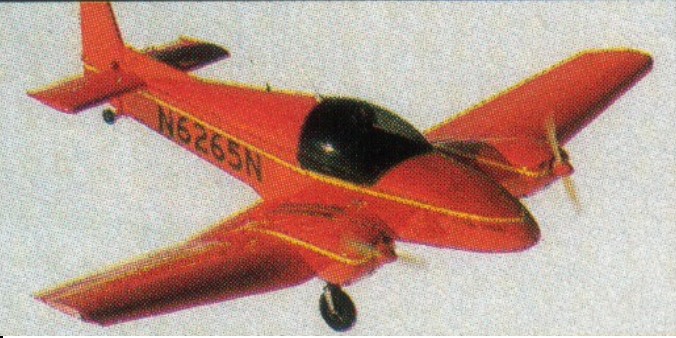
Designed primarily to satisfy the need for a good cross-country per¬former that falls into the sport plane category, the three passenger Tri-Z can be fitted with medium power engines in the 125-to 180-hp category. With only two persons in the front seats, the rear bench can be covered with 210 pounds of baggage. The Tri-Z easily adapts to floats or taildrag¬ger options and is easy to fly. It has docile handling characteristics.
A CH-300 Tri-Z set a new 3,000-mile non-stop record in July 1978.
April 1980
CH-300 Tri-Z Engine: Lycoming, 180 hp Speed max: 170 mph. Cruise: 153 mph Range: 480 sm. Stall: 54 mph ROC: 1400 fpm. Take-off dist: 650 ft Landing dist: 650 ft. Service ceiling: 12,000 ft HP range: 125-180. Fuel cap: 34 USG Weight empty: 1140 lbs. Gross: 1850 lbs Height: 6.67 ft. Length: 22.5 ft Wing span: 26.5 ft. Wing area: 130 sq.ft Seats: 3/4. Landing gear: nose or tail.
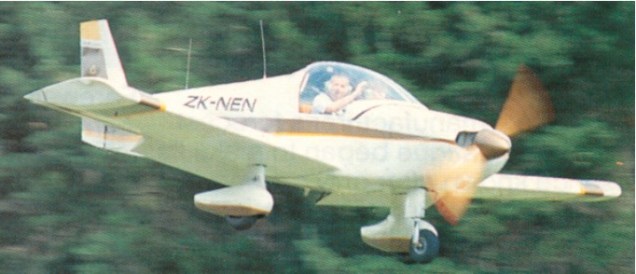
With 100 hp the CH-200 will cruise for four hours at 130 mph carrying two passengers and baggage, while 150 hp and an aerobatic option turns the Zenith into a powerful per¬former. (The Zenith is stressed for engines from 85 to 160 hp). First designed and built in 1974. Two ¬place seating is under a sliding canopy in a fuselage formed by four longerons with stiffened skins, blind riveted to longerons. Five bulkheads carry the top skin. The constant-chord wings have a single cantilevered spar with three sections and electronically-operated flaps. One-piece, all-moving, horizontal and vertical control surfaces constitute the tail.
Price 1982: $8,500 (excludes engine, instruments and paint). Units delivered to June 1981: 450.
Engine: 125-hp Gross Weight: 1500 lbs. Empty Weight: 930 lbs Fuel Capacity: 24 USG. Wingspan: 23 ft Length: 20ft 6in. Wing area: 105 sq.ft Top speed: 151 mph. Cruise speed: 141 mph Stall speed: 54 mph. Climb rate: 1100 fpm Takeoff run (to 50ft): 1400 ft. Landing run (from 50ft): 1400 ft Range: 450 sm. Seats: 2 Design load: +9g.
Engine: Lycoming, 150 hp Max speed: 167 mph. Cruise speed: 152 mph Range: 400 sm. Stall speed: 53 mph ROC: 1700 fpm. Take-off dist: 600 ft Landing dist: 600 ft. Service ceiling: 12,000 ft Fuel cap: 24 USG. Empty wt: 970 lbs Gross wt: 1500 lbs. Height: 6.75 ft Length: 20.5 ft. Wing span: 23 ft Wing area: 105 sq.ft. Seats: 2
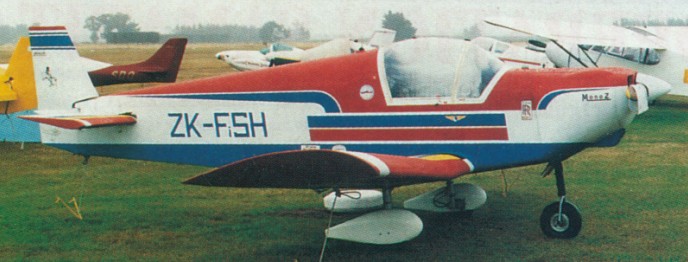
The Mono-Z is a single-place, scaled-down version of the original Zenith first built in 1974. It offers maximum operating economy with VW power at a three gph cruise. Detachable wings leave an 8-foot-wide section for easy road towing, requiring only 20 minutes to install both wings. It is stressed for 9G’s and with 100-hp becomes a powerful aerobatic performer. Engine range from the VW 1600 to 100-hp Continental.
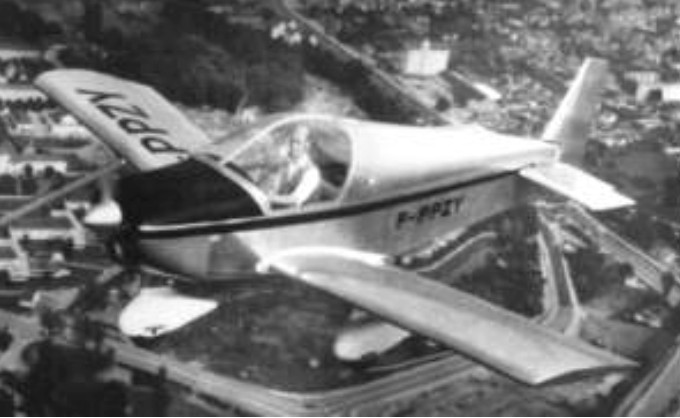
In his spare time, Heintz began to design and build his own aircraft, which he named the Zenith, anagram of Heintz. After a little more than a year’s work, the two-place low-wing Zenith was rolled out and successfully flown on 22 March 1970 as F-WPZY.
Soon after, detailed blueprints and construction manuals of the aircraft were drawn up and offered to the growing number of interested builders and flyers.
Zee Aero (now Wisk), originally under the leadership of Professor Ilan Kroo of Stanford University, developed a proof of concept vehicle with a series of high, vertically-mounted mounted electric propellers. The proof of concept made its first unmanned hover in December 2011, and in February 2014, completed its first transition from hover to forward flight.









 All Aero