The students of Nihon University, under the leadership of Dr Hidemasa Kimura, have designed and built two light aircraft. The second is a high-wing four-seat light-plane known as the N-58 Cygnet.
Although the Cygnet bears a close resemblance to the Piper Tri-Pacer, it is a new design utilizing existing Tri-Pacer components only in its undercarriage, engine mounting and control systems. Construction is all-metal, with fabric covering, and it is powered by a 140 hp Lycoming O-290-D2 engine.
Span: 35 ft 2 in Length: 22 ft 11 in Height: 8 ft 9 in Wing area: 185 sq.ft Gross weight: l,950 lb Empty weight: l,256 lb Max speed: 117 mph Econ cruising speed: 93 mph at 6,600 ft Stalling speed: 42 mph Service ceiling: 14,800 ft TO to 50ft: 1,250 ft Landing from 50ft: 1,440 ft Max range 10% res: 445 miles
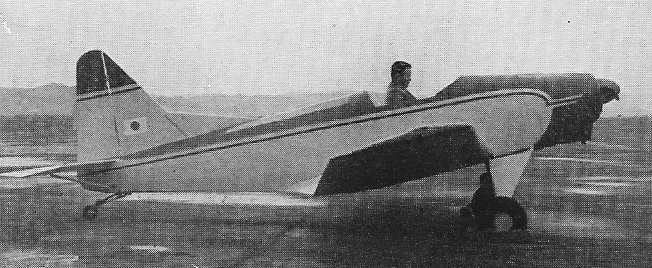
The students of Nihon University, under the leadership of Dr Hidemasa Kimura, have designed and built two light aircraft. The first was the Okamura N-52 low-wing monoplane, which flew on April 7, 1953.
Designed by Professor H. Kimura, the N-52 was powered by a 65 hp Continental C65. The N-52 is of mixed construction with fabric covering.
Engine: 65 hp Continental C65 Wingspan: 28 ft 2.5 in Wing area: 129 sq.ft Length: 19 ft 8 in Height: 8 ft 6 in Empty weight: 660 lb Loaded weight: 1100 lb Max speed: 108 mph at SL Cruise: 101 mph ROC: 550 fpm Range: 305 mi
Under JASDF contract, Japan Aircraft Manufacturing Co carried out a lengthy high-lift research programme with a much-modified Saab-91B Safir. With the designation Z1G3, this aircraft has a 260 h.p. Continental IO-470-D engine, reduced span of 31ft 6in, blown flaps, large trailing-edge fillets, slotted tailplane and other changes to give it STOL performance.
Between 1919 and 1921 in the young Soviet state the glider began to develop as a type of sport. In the winter of 1921, a group with KK Artseulov founded the first circle of Soviet planners known as “Thermal Flight” (Парящий полет). This group was originally made up of four military pilots, nineteen cadets, and students from the Air Fleet Academy and the Moscow Higher Technical School. Eight of its members: KK Artseulov, VP Nievdachin, VS Pyshnov, SV Ilyushin, SN Lyushin, BI Cheranovski, MK Tijonrarov and IP Tolstix would become the builders of the first Soviet gliders.
The record-breaking single-seater glider “Buriviestnik”, built by the military pilot VP Nievdachin, was calculated to achieve high flight speeds and was originally designed for the participation of one of the best Soviet pilots in international competitions to be held in the French Rhône.
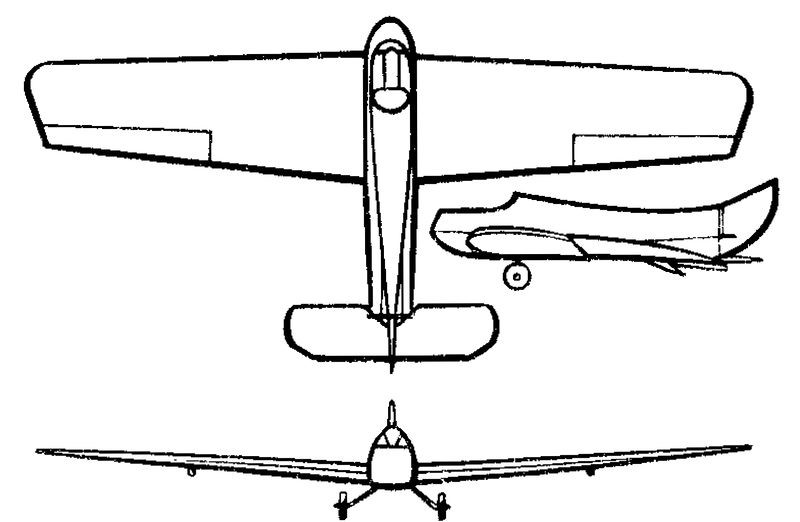
The Buriviestnik or P-5 (Russian: Невдачин “Буревестник” (П-5)) was designed as a cantilever low-wing monoplane with an airplane layout and clean lines. The constructive base of the fuselage was made up of the force knot called by its author the central cell, on which the pilot’s seat was located and to which the wings, landing gear and tail were fixed.
Built at Factory “Promvozdux” of Tversk in 1923, the entire construction was made of wood and covered with calico. The wings, of double spar, could be separated from the fuselage to facilitate the transport. The wing spar was covered with grid-shaped ribs. The wing leading edge consisted of a 2 mm thick curved sheet of plywood attached to a thin frame located in the open part of the cockpit. The wing trailing edge also ended in a frame attached to the exit of the wing nerves. The wing profile used was a variation of Pr-426.
The entire surface of the glider was covered with a layer of enamel and then two layers of enamel with aluminum powder. During the tensioning of the fabric, an unconventional system was used whereby the fabric was “sewn” to each of the ribs of the wing without passing the tension cord through the wing.
The cockpit cover was installed in front of the central cell and the fuselage armor was installed behind it. The tail section consisted of three stringers made up of 20 x 20 mm pieces of wood joined together by pieces of plywood. The cross section of the fuselage in this area was reminiscent of a 5-pointed pyramid with the upper vertex drifting towards the keel. The weight of the fuselage without the rudders and landing gear was only 18 kg.
The landing gear was made up of a bent ash shaft at the end of which and by means of metal fixings, the axles made of steel tubes were supported. The wheels were made of wood with the edges covered in leather. They weighed 5 kg.
In the rear section of the fuselage, offset rudders were located for direction and depth. The control of the glider was carried out as in a conventional airplane. The elevator was linked to the lever by means of a square section wooden bar. For the control of the wing ailerons, a combined system made up of metal turnbuckles and ropes was used. The pedals were used to control the rudder, to which they were linked by ropes.
The “Buriviestnik” glider was built using an unstable scheme. The center of gravity of the empty glider was behind the center of pressure. Because the pilot’s seat was located in front of the center of gravity, the stability of the aircraft was neutral during flight. This was probably the main cause of the accident of the pilot Yungmeister during the competitions in Crimea, which resulted in the destruction of the landing gear and the subsequent overturning of the glider on the back.
The “Buriviestnik” was ready in time to participate in the First National Sailing Competitions, promoted by the ODVF and held between November 1 and 18, 1923 in the mountains. Uzun-Sirt, in the Crimea. Ten gliders appeared in this contest. During the glider construction process, two endurance tests were carried out. After the final assembly of the wings, support points were located at the midpoint of their wingspan and three people were located in the cabin.
On October 28, the planeristas’ camp was set up on the slopes of the Uzun-Sirt mountain, in the region of the Sultanovska village, and the Technical Committee began its work under the direction of Professor VP Vietchinkin of TsAGI. Static resistance tests were carried out between November 1 and 7 and 8 of the models presented were authorized to fly. On the 15th, the flight of the ninth of the aircraft would be authorized.
During the first flight tests the “Buriviestnik” glider achieved the second longest time in the air, reaching 49 seconds, preceded by the Tijonrarov AVF-1 Arap, which flew for 1 minute and 5 seconds.
The first competition flight took place on November 3 with pilot LA Yungmeister at the controls. After taking off from the top of the mountain with a 6.7 m / s wind, the rope used to give the tension in the launch did not come off and throughout the flight it kept dragging on the ground. The second flight of the “Buriviestnik” lasted 2 minutes and 2 seconds, but during the landing, probably due to centering problems, the glider climbed abruptly and ended up hitting the ground and breaking one of the wheels.
The “Buriviestnik” performed brilliantly in the competitions and took second place. Its builder was awarded.
The 26 of February of 1924 at the premises of the Council of the ODVF in Krasnopresnienskaya street in Moscow exhibition opened gliders participants in competitions in Crimea. This exhibition was organized by the circle “Flight in Thermal” under the direction of IN Vinogradov and in it the gliders A-5, Buriviestnik, “Korshun”, “Makaka” and “Maori” were exhibited.
In 1924 in Smolensk the glider “Smoleniets” was built, which basically repeated the scheme of the “Buriviestnik” and in Krasnodar the design was also repeated in the “Berkut”.
The “Buriviestnik” glider scheme was so effective that its author decided to motorize it into a light aircraft, which would serve as the basis for a whole family of airplanes of this type.
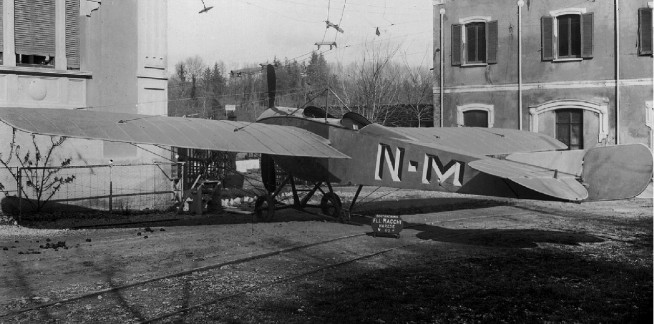
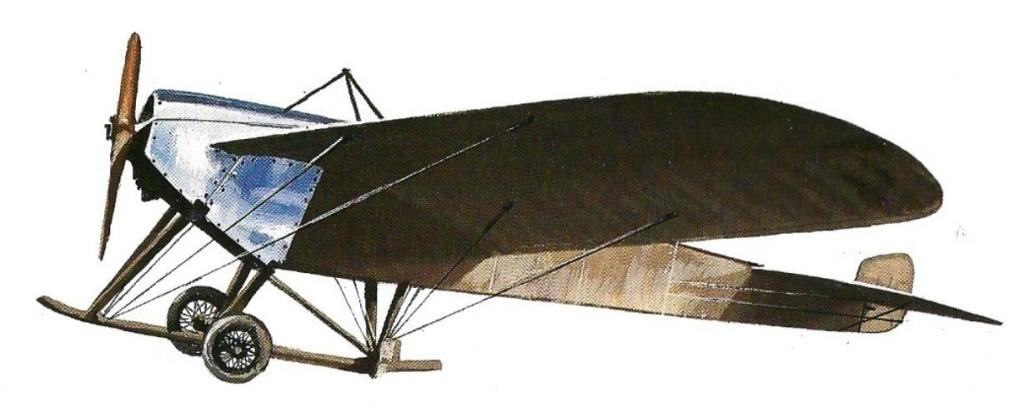
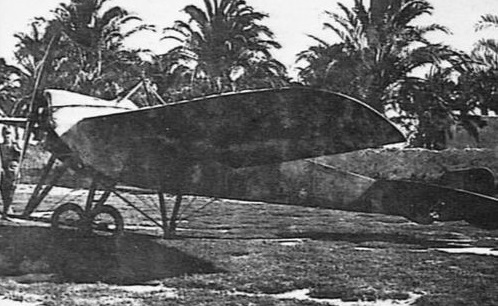
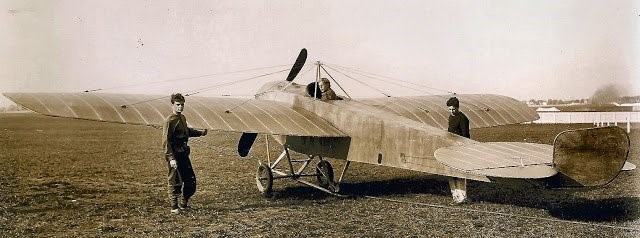
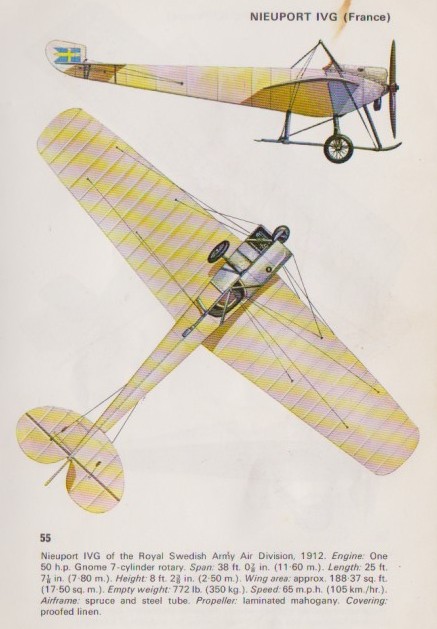
Nieuport VI, the first aircraft built by the new Limited Company F.lli Macchi from Varese in 1913
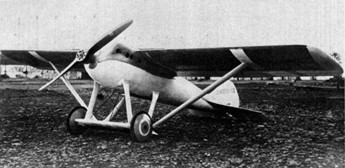
The Nieuport 6M was a 1914 Reconnaissance aircraft.
6M
1913 Nieuport VI Tandem sea-monoplane
Nieuport 6M Engine: Gnome, 80 hp Wingspan: 36 ft / 10.97 m Length: 26 ft / 7.92 m Height: 8 ft 6 in / 2.59 m Weight: 1080 lb / 490 kg Max speed: 70 mph / 112 kph Endurance: 3 hr Seats: 1
1913 Nieuport VI Tandem sea-monoplane Length: 22’4″ Wing area: 14.8 sq.yard
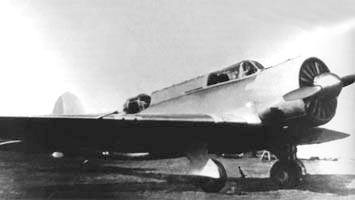
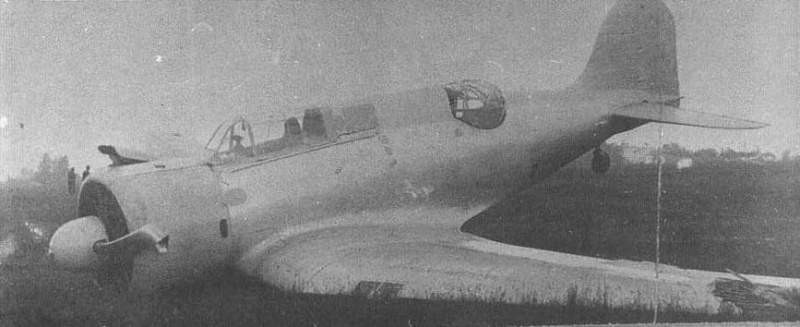
The idea of converting the Nieman R-10 into an attack aircraft led to the development by the Nieman collective of a new model airplane with the M-62 powerplant. The attack aircraft development process was divided into two stages. First, an experimental specimen called JAI-51 was developed in which the new systems and construction elements would be developed and tested. This copy was also to be used to polish all flight problems. The second stage would be called the Nieman JAI-52 (Russian: Неман ХАИ-52) and would be the final product, intended to serve as the basis for series production as a follow-up to the Nieman R-10.
Nieman assigned his best specialists to the attack aircraft project. The project was led by main builder LD Arson until his departure to prepare for production of the Nieman R-10 at the Saratov factory in January 1938, and he was succeeded by IP Zhiganov. At the beginning of 1937, of the 60 specialists in construction and calculations of the OKO-137, 37 were working on the new project and by November of that year practically all of them had joined.
Still without finishing the project, in August 1937, the construction of three copies began in the TsOM workshops, one JAI-51 and two JAI-52. The last plans for the JAI-51 were delivered to the factory in December 1937. The second example of the JAI-52 (known as JAI-521) was built with a new pine plywood, instead of birch.
The delivery of the JAI-52 to the tests could have allowed Nieman victory, but in December 1938 he was arrested.
The new general builder of the OKO-135, AA Dubrovin, did his best to continue modernization work on the Nieman R-10, with an emphasis on the JAI-52. Not having time to prepare the plans for the JAI-52, it was decided to build it using the plans for the JAI-51 with the direct introduction of the modifications.
At this time, on March 20, 1938, the VVS released new technical specifications for the JAI-52 in which a new top speed of 450 – 470 km/h was set instead of the original 390 – 400 km/h. This required significant modifications to the project, which resulted in new delays in the delivery of the model to the tests.
The JAI-52 attack aircraft were designed to use the 930 hp M-63 engine with a BISh-28 propeller. Maintaining the structure of the JAI-51, a duplicate flight control system was installed in the gunner’s cabin and the armament was reinforced. In addition to the four ShKAS machine guns on the wings, two new synchronized ShKAS were installed. Under the wings were installed mounts Der-31.
In this configuration and without having passed the tests yet, in January 1939 by decision of the NKAP, series production of the model was launched at Factory No.135. The Kharkov factory “Hammer and Sickle” also participated in the production of the first series of 10 copies, where wooden parts and components were prepared. The delivery of the first series copies was planned between August and September 1939. Preparation of the JAI-52 prototype was completed on March 15, 1939 (the commitment date had been December 1938). The M-63 engine was still not ready, so an M-62 with a BISh-26 propeller was installed.
On April 6, 1939 at 8:30 am, the factory test pilot, Colonel Darski, raised the JAI-52 on its first flight, which lasted 30 minutes. The behavior of the aircraft in the air was excellent, which allowed it to carry out a second, longer flight in the second part of the day. Engineer Semionov, the NKAP representative at the tests wrote: “Despite a large number of construction defects, this M-63-powered aircraft is truly modern and if a turbocharger is installed, the VVS will be able to have in service by 1940 a machine superior to that of our potential enemies.”
In spite of this, the direction of the Commissariat received an unexpected letter at the end of April where it was established to take the plane of the Nieman saboteur out of production and to begin production of the Sukhoi BB-1 model, which on April 6, 1939 had successfully completed the state tests. The M-87 engine fitted to the Sukhoi BB-1 did not fail the builders and the aircraft performed better than the JAI-52.
AA Dubrovin refused to continue the development of the JAI-52 and went to Moscow. The continuation of work on the JHA-52 was carried out by IP Zhiganov. The OKO-135 collective still had hopes of saving the JAI-52 and proving that it was superior to Sukhoi’s aircraft.
In May 1939, the JAI-52, during factory tests and with a weight of 3,220 kg, showed a maximum speed at sea level of 374 km/h and at 4,500 meters of 410 km/h. Ascent time to 5,000 meters was 16 minutes. These results allowed the model to be accepted for state tests, so the plane was prepared for its trip to Moscow.
On May 18, the JAI-52, flown by Major Indyushkin, during a familiarization flight with the plane, lost speed at a very low altitude, dived over the wing and fell to the ground. The damaged plane was returned to the TsOM where, together with the repairs, they introduced new modifications. First of all, a freshly received M-63 engine from the Perm factory and a BISh-28 propeller were installed, which resulted in the redesign of a new cowl and propeller hub. To improve stability, the wingspan and wing area were increased.
In these modifications, two months of precious time were gone. Only on August 5, 1939, joint factory and state tests of the JAI-52 attack aircraft began. These tests were executed by the NII VVS test pilot AK Dolgov.
As a result, it was found that the new model was superior to the Nieman R-10 in terms of stability and had better visibility from the cockpit. As a negative point, the displacement of the center of weight forwards was highlighted. Airborne tests showed that not all of the problems had been fixed. With a takeoff weight of 3,376 kg, a speed at ground level of 356 km/h and at 4,500 meters of 410 km/h was reached.
The M-63 engine presented problems so that only 5 test flights could be carried out. The tests were interrupted and with this the history of the developments of the Nieman R-10 ended.
JHA-52 Powerplant: 1 x 930 hp M-63 Propeller: BISh-28 Wingspan: 9.60 m Wing area: 25.60 m² Length: 12,208 m Height: 3.80m Takeoff weight: 3376 kg Maximum speed sea level: 356 km/h Maximum speed 4500m: 470 km/h Armament: six 7.62 mm ShKAS machine guns with 500 shots each (4 in the wings and another two synchronous in the fuselage). A 600 round ShKAS 7.62mm machine gun in an MV-5 turret. 400 kg of bombs.


 All Aero