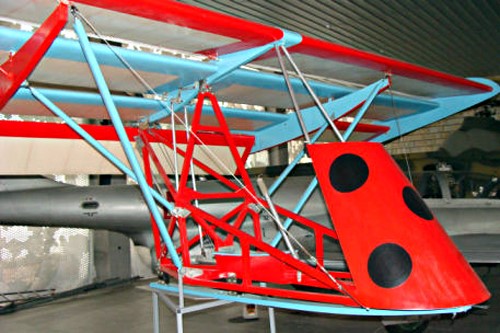
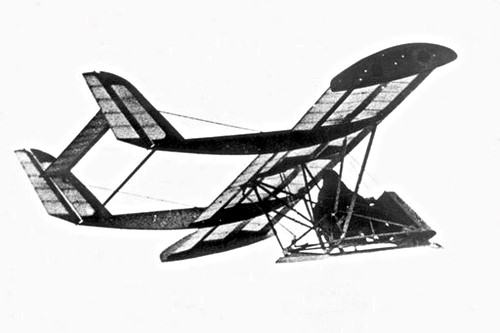
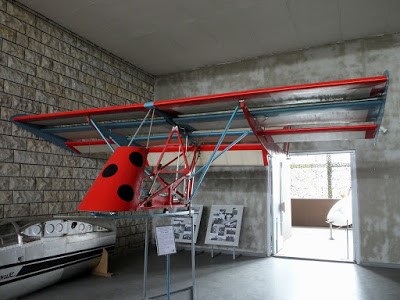
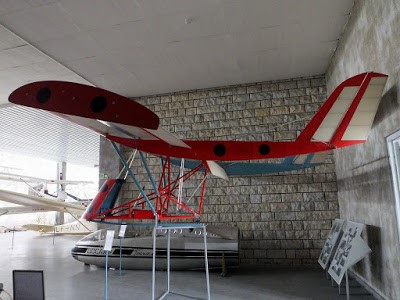
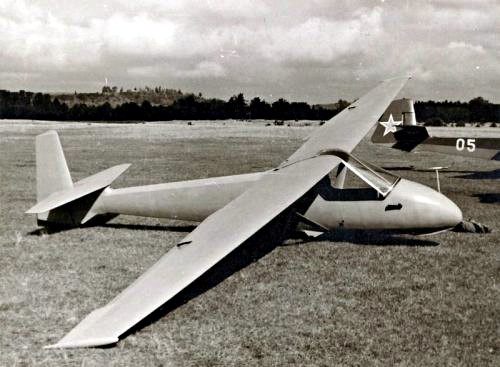
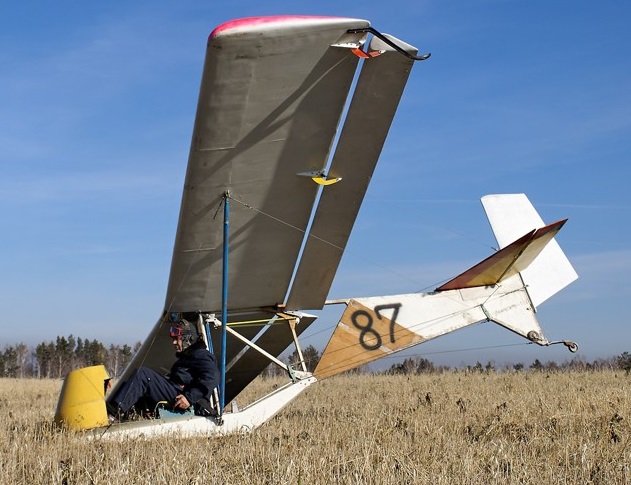
The Oškinis BrO-18 Boružė mini glider was easy to manufacture and easy to handle. With its short wings, Boružė cannot reach high speeds and heights, so it is perfect for training children from 12 years of age. The glider takes off at a speed of 35-40 km / h (3-4 people are enough to take off).
Boružė is an experimental device and probably the smallest glider in the world (wing span – 4.9 m).
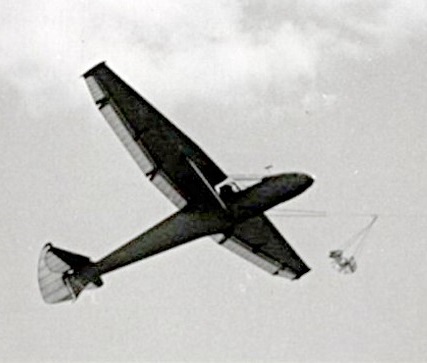
According to Bronius Oškinis, this glider is designed to be launched with a puller and to be able to reach the thermal. The glider had to be inexpensive, suitable for mass production, so that every gliding club could buy it. Oškinis applied an unprecedented innovation to gliders – hanging flaps and ailerons, which greatly increase the lifting capacity of the wings.
At that time, the Soviet Union’s air construction bureaus focused on the construction of military aircraft, while Lithuanian designers designed gliders because they did not have the opportunity to construct aircraft during the Soviet occupation.
The wings were covered with 1.0-1.5 mm thick plywood, varnished and polished.
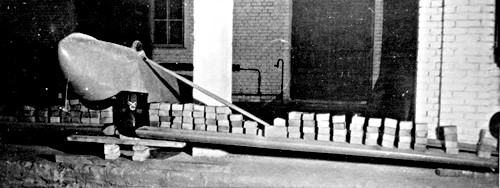
Static tests
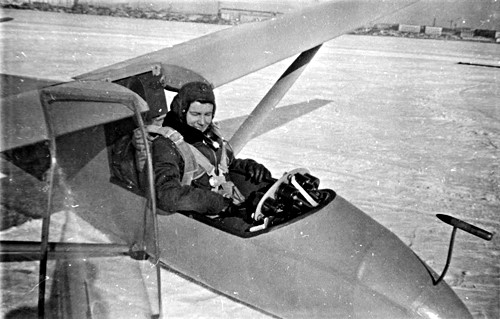
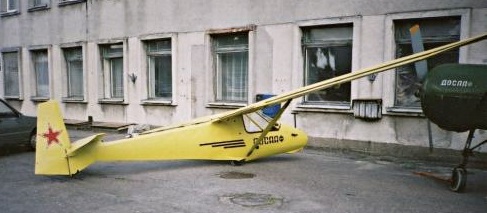
In order for novice pilots to clearly see the fluctuations in the direction of flight, the glass of the BrO-12 cockpit covered the glider only from the front – the deviation from the straight flight was immediately felt by the pilot blowing in the wind through the open sides. The seat is suitable for flying with a parachute ПНЛ-45.
The BrO-12 prototype was built in 1957. In the workshops of Kaunas Gliding Station. Pulled by a winch, it rose to 400-500 m, and even higher in the event of stronger winds. No other glider was able to take off so much then. In Moscow it was decided to produce BrO-12 series.
The BrO-12 was produced at the Simferopol Aviation Workshop, where during 1959–1961 about 120 units were produced.
In 1959-61, a total of about 20 gliders of this type flew in Lithuania.
In 1959-61, a total of about 20 gliders of this type flew in Lithuania. After the Soviet Union decided to produce metal-gliders, the BrO-12 soon competed with the Czech two-seater Blanik.
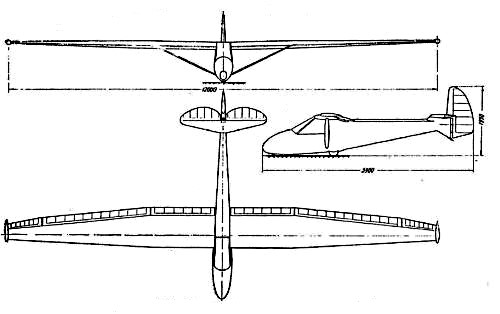
Wingspan: 12 m Wing area: 11.3 m² Length: 5.9 m Height: 1.50 m Empty weight: 160 kg Takeoff weight: 245 kg Wing loading: 21.7 kg / m² Landing speed: 45 km / h Cruising speed: 60 km / h Glide ratio: 20 Seats: 1
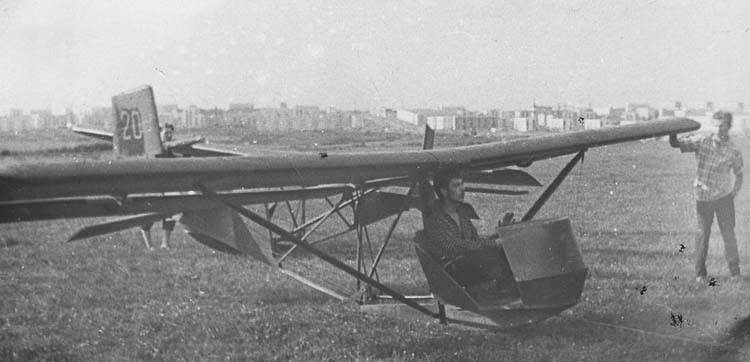
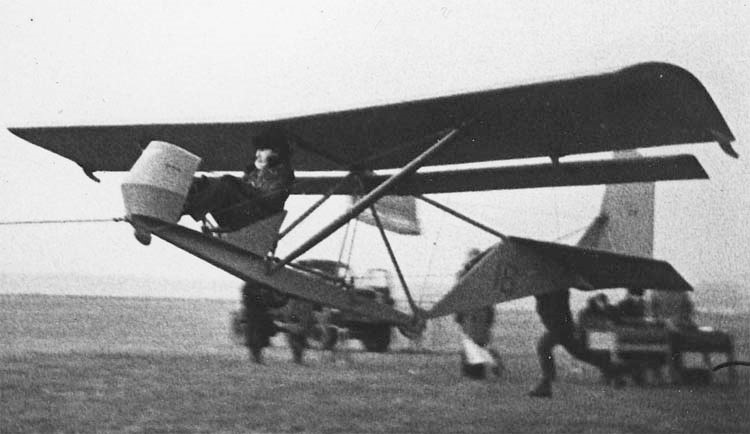
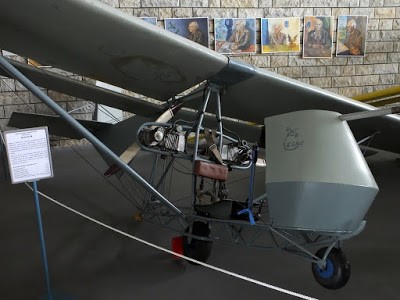
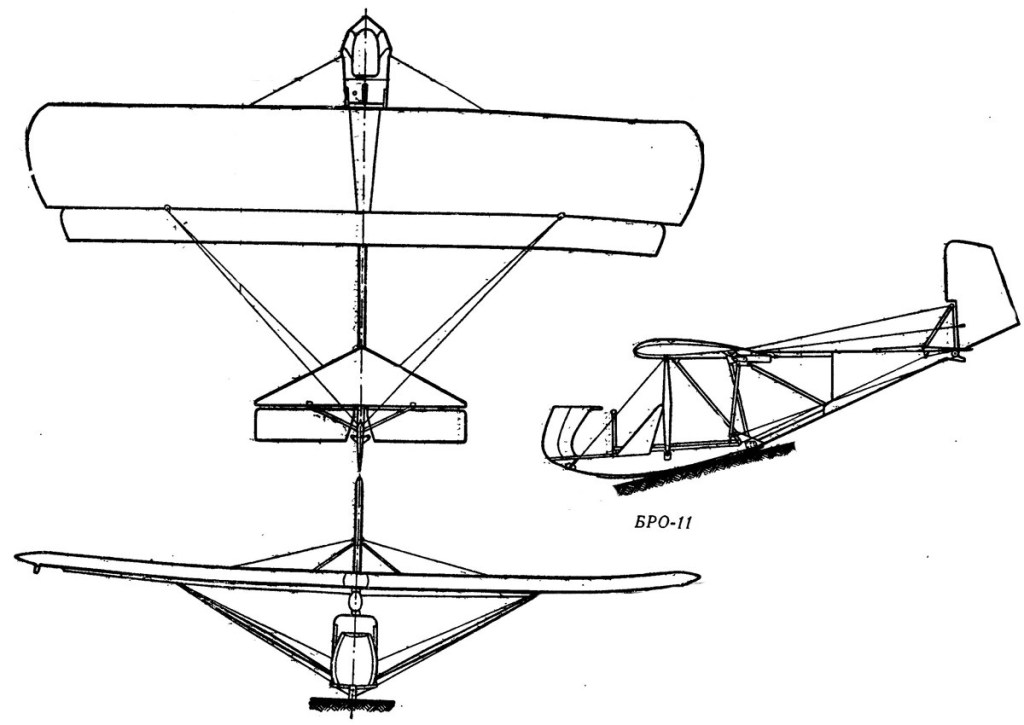
The Oškinis BrO-11 was a simple, single-seat primary glider designed in the USSR by Bronis Oškinis in the open girder style exemplified by the pre-war SG 38 Schulgleiter. It was more refined, with slotted ailerons and somewhat better-protected seating.
Its high wing, mounted on top of the fuselage girder, was rectangular in plan and built around a single, wooden spar with plywood skin ahead of it, forming a torsion-resistant D-box, and fabric covering behind. The wing was braced to the bottom fuselage beam with a single strut on each side, assisted by drag wires from the nose. Narrow and very high aspect ratio ailerons were hung behind and below the whole trailing edge, leaving a slot between wing and aileron.
The wing of the original production model, named Pionier, Lithuanian for Pioneer (or Pionerius, the plural) had a span of 7.58 m (24 ft 10 in) and an area of 10.5 m2 (113 sq ft). The later Zylė (Tit), alternatively known as the LAK-2, had a slightly larger wing with a span of 7.80 m (25 ft 7 in) and an area of 11.8 m2 (127 sq ft), improving the glide ratio a little.
The forward part of the fuselage was a wooden beam which extended aft to end under the wing trailing edge. At the nose there was a simple, semi-circular enclosure formed from two single-curvature surfaces. This gave the pilot, seated just under the leading edge, some protection from the wind, though not for his upper body or sides. The same beam was attached to the wing with an N-form cross-member and also carried the forward end of the horizontal upper fuselage member. The rear lower member ran upwards to meet the upper one at the tail. In addition, they were interconnected at mid-fuselage by a pair of vertical and diagonal struts. Immediately ahead of the tail the fuselage was fabric covered, though not elsewhere.
Both variants had triangular tailplanes mounted on the upper frame with elevators which were rectangular in plan apart from a cut-out for rudder movement. Their little, triangular fins carried rather angular, quadrilateral rudders.
The fuselages of the Pionier and Zylė differed only in their landing gear. The Pionier landed on the underside of the forward beam but the Zylė had a monowheel semi-recessed into its beam below the forward wing and a short nose skid.
The BrO-11 Pionier first flew in 1954 and was very widely used across the DOSAAF; some 2000 were built between about 1955 and 1960. The date of the first flight of the Zile is not known exactly but was about 1968. Production began by Lietuviškos Aviacinės Konstrukcijos (Lithuanian Aero-Construction, LAK) in mid-1969 and ended in 1979. Production numbers for this variant are not known.
BrO-11M Zylė Wingspan: 7.80 m (25 ft 7 in) Wing area: 11.80 m2 (127.0 sq ft) Aspect ratio: 5.05 Height: 2.50 m (8 ft 2 in) Length: 5.16 m (16 ft 11 in) Empty weight: 65 kg (143 lb) Max takeoff weight: 125 kg (276 lb) Stall speed: 31 km/h (19 mph, 17 kn) Maximum glide ratio: 12 Rate of sink: 1.0 m/s (200 ft/min) minimum Crew: One
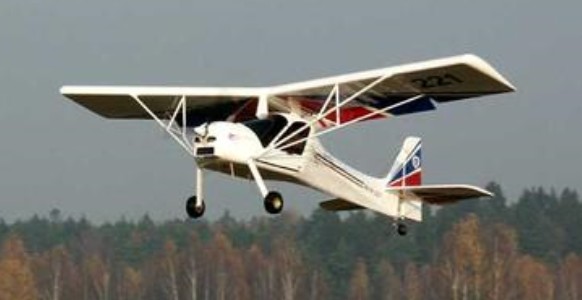
MAI-223 is a single-engine two seater semicantilever monoplane-parasol with non-retractable landing gear. Perfect controllability in all channels and an excellent pilot view from the cockpit make the plane extremely safe and pleasant for piloting. High thrust-to-weight ratio, high-lift device and landing gear with tail wheel allow to use airplane from short, unprepared runways. Floats and ski landing gear are enabled. Due to the folding wing airplane is very convenient for storage and transportation. 2009 Price: 27150 EURO
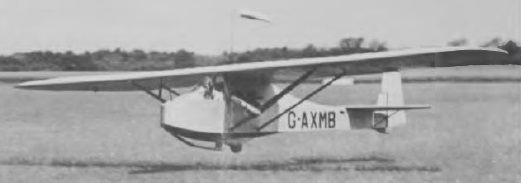
This powered converison of a T8 Tutor was made by E. W. Osbourn at Cranfield, Bedfordshire, in 1969 and was known as the Twin Cadet Mk 1. It was fitted with two 197cc Villiers 9E single-cylinder two-stroke engines mounted on the wing bracing struts and driving two small propellers just behind the pilot’s head. The prototype, G-AXMB (ex-VM590 and BGA 805) first flew with power on 20 September 1969. and received its Authorisation to Fly on 2 July 1970. It was later re-engined with a single 500cc Triumph T100 motorcycle engine mounted in the nose and first flew in this form as the Cadet Mk 2 at Cranfield on 22 January 1972, receiving its Authorisation to Fly on 6 June that year.
Twin Cadet Mk 1 Span: 38 ft 6 in Length: 20 ft 10.5 in Tare weight: 455 lb All-up weight: 657 lb Max speed: 60 mph (power on) Cruising speed: 40 mph (power on) Range: 100 miles
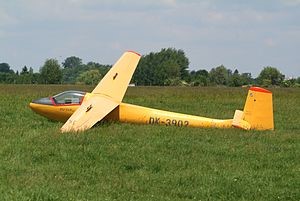
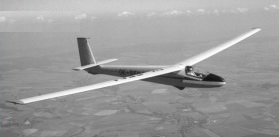
The VT-16 Orlik was designed by Jiri Matejček and is a high-wing monoplane of all-wood construction, except that the skin is stabilized with Umakol high-smoothness polystyrene foam. Its wing has a single spar structure with a forward torsion box; the whole wing is plywood skinned and foam filled, allowing the ribs to be comparatively widely spaced. In plan it is straight-tapered with blunt tips; there are 3° of dihedral. It has conventional plain ailerons and spoilers at mid-chord, which extend both above and below the wing.
The pilot sits under a detachable one-piece canopy, with oxygen and radio equipment as optional. The landing gear consists of a non-retractable monowheel and a tailskid. The wooden fin and rudder are both fabric-covered and the all-moving tailplane has a leading edge structurally similar to the wing, with fabric covering aft of the spar, and an anti-servo tab fitted.
The VT-16 Orlik prototype was built by some of the design staff of the Czech Republic Orlican National Works. At the time of its first flight in August 1959 it was a Standard Class glider with a 15 m (49 ft 3 in) span. Later aircraft had 16 m (52 ft 6 in) and 18 m (59 ft 1 in) spans but it was the 16 m version that went into series production at the Orlican National Works at Chocen.
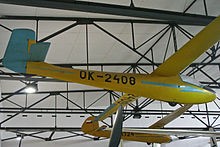
Orlik I on display at the Prague Aviation Museum, Kbely
25 VT-16 Orliks were produced in the first series production run, going to Czech gliding clubs. The Orlik also set several new Czech national gliding records during 1962.
15 VT-16s and 48 VT-116s remain on the Czech civil aircraft register in 2010, though some are disassembled.
VT-16 Span: 52 ft 6 in / 16 m Length: 24 ft 3 in / 7.40 m Height: 4 ft 7 in Wing area: 137.8 sq.ft / 12.80 m2 Aspect ratio: 20.0 Airfoil: NACA 64-818 Empty weight: 474 lb / 215 kg Max weight: 705 lb / 320 kg Wing loading: 25.0 kg/m2 (5.1 lb/sq ft) Max speed: 140 mph / 220 km/h / 120 kn (in smooth air) Stall speed: 61 km/h / 38 mph / 33 kn Min sinking speed: 0.56 m/s / 110 ft/min at 63 km/h / 39 mph / 34 kn Best glide ratio: 32.6:1 at 44 mph / 71 km/h / 38 kn Seats: 1 about 85 built
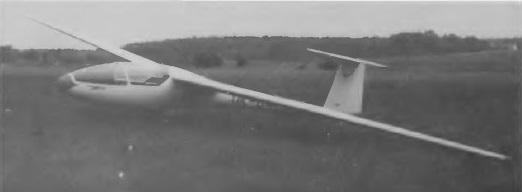
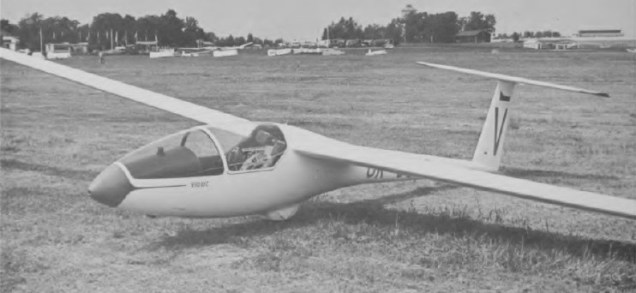
This Czech high performance single-seater was created by the Vyvojova Skupina Orlican – VSO group, whose chief designer is Dipl-lng Jan Janovec and which was formed by members of the former VSB (the Aircraft Faculty of Brno Military Academy) and some of the design staff of the Orlican National Works, which had built the VT-16 Orlik; VSB had produced the VSB-66-S Orlice V-tailed single-seat Standard Class design which first flew on 17 September 1970.
The VSO 10 is the VSO group’s first design and is of mixed construction, employing wood, glassfibre and metal. Design work began in March 1972 and construction of three prototypes, one a static test airframe, began in 1975.
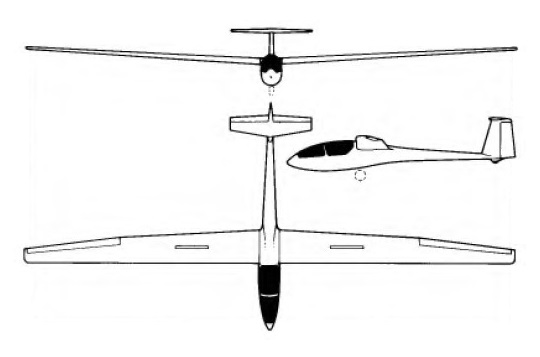
The cantilever single-spar shoulder wings have slight forward sweep and are all-wood structures with a sandwich skin; the slotted ailerons are also of wood and there are metal DFS air brakes in the upper surfaces. The front and centre fuselage sections are glassfibre monocoque structures, the centre portion being reinforced by a steel tube frame on which the wings are mounted. The rear fuselage is a monocoque made of aluminium alloy sheet. The metal T-tail has a fixed-incidence tailplane and fabric-covered rudder and elevators. There is a retractable rubber-sprung monowheel with a drum brake, and a semi-recessed unsprung tailwheel. The pilot sits under a detachable canopy.
The first flight took place on 26 October 1976 and series production began in December 1978.
The VSO-10G took first and second places at the first International Club Class competition held in Sweden in the summer of 1979. To comply with Club Class rules the retractable monowheel was locked down and covered with a glassfibre fairing, this variant being known as the VSO-10C.
VSO 10 Span: 15.0 m / 49 ft 2.5 in Length: 7.0 m / 22 ft 11.75 in Height: 1.20 m / 3 ft 11.25 in Wing area: 12.0 sq.m / 129.2 sq.ft Aspect ratio: 18.75 Wing section: Wortmann FX-61-163/FX-60-126 Empty weight: 234.4 kg / 516.75 lb Max weight: 380 kg / 837 lb Water ballast: None Max wing loading: 31.67 kg/sq.m / 6.49 lb/sq ft Max speed: 161 mph / 140 kt / 260 km/h (in smooth air) Max aero-tow / rough air speed: 99 mph / 88 kt / 163 km/h Stalling speed: 37 kt / 68 km/h Min sinking speed: 2.07 ft/sec / 0.63 m/sec at 45 mph / 39 kt / 72 km/h Best glide ratio: 36.2:1 at 58.5 mph / 51 kt / 94 km/h
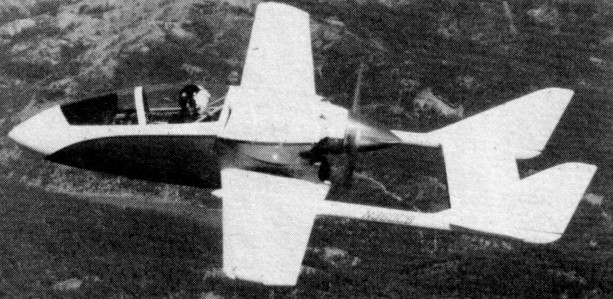
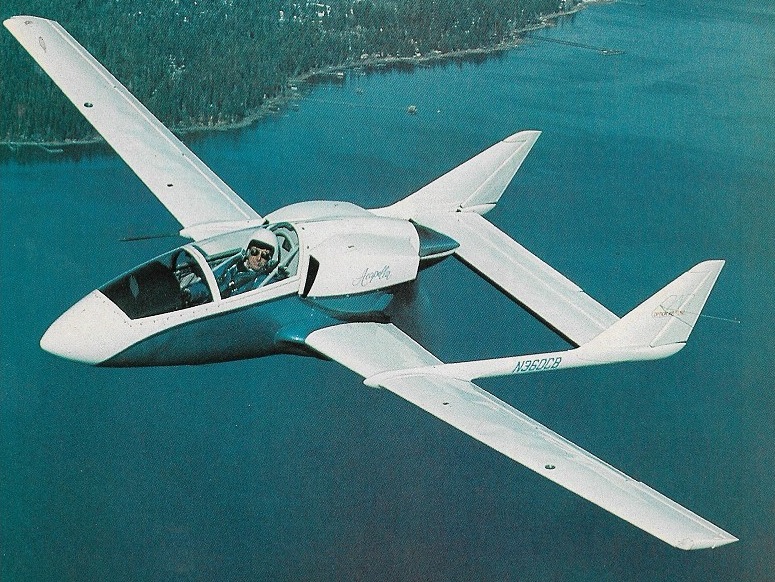
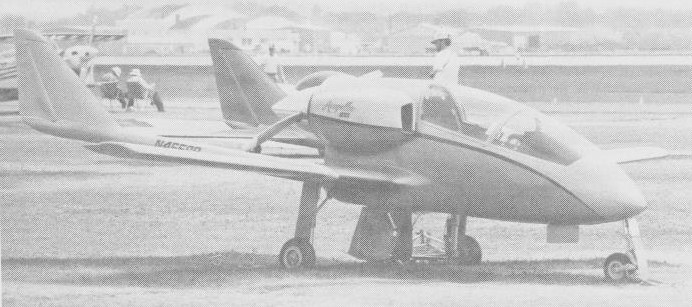
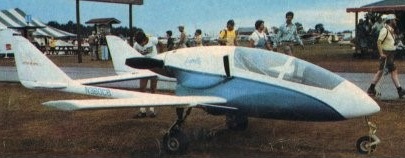
The Acapella is the creation of Carl O. Barlow, president of Option Air Reno, and sprung from his idea in 1977 to “re-do” the no longer available BD-5 design utilizing about 65 percent of the BD-5 hard¬ware including the fuselage from the firewall forward, the nosewheel, canopy and the short wings.
Design of the Acapella began in January 1978 and prototype construction started in June the same year. Registered N360CB, it achieved its first flight on June 6, 1980. After flying the prototype Acapella with both the short and long Bede wings, Barlow recommends using the long wings on the Acapella.
Production of kits began in June 1981, they include an engine mount, glass fiber cowling, new 8 ft (2.44 m) wing center section, tail booms, tail plane, elevator, main landing gear, many smaller components, and all necessary plans for the conversion. The prototype Acapella was powered originally by a 200 hp Avco Lycoming IO-360-A1B engine driving a Hartzell Q-Tip constant-speed pusher propeller, and in this form was known as Model 200-S.
It was re-engined subsequently with an 118 hp Avco Lycoming O-235 and fitted with longer-span wings to become the Model 100-L, with increased fuel capacity. The 200 series aircraft were not being made available to amateur constructors to build from plans or kits. This is because the majority of builders expressed interest in the smaller-engined Acapella 100-L, for which plans, kits and glass fiber components were available.
Work on a second prototype to carry a 118-hp Lycoming and a fixed-pitch propeller with a gross of about 1000 pounds was to be completed.
The Option Air Acapella N360CB crashed on July 28, 1982.
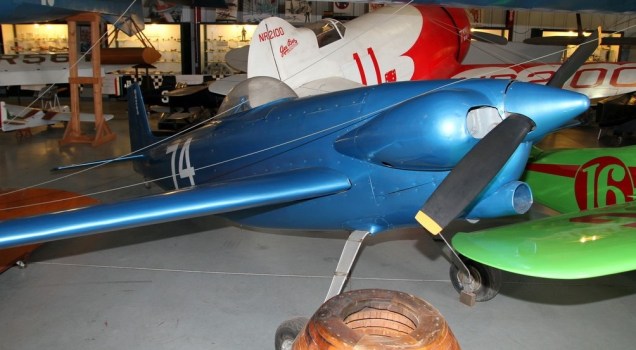
Option Air Acapella 100L N360CB
Only two aircraft were finished, the second one was registered N455CB on February 24, 1989, and it was this aircraft which was eventually donated to the EAA AirVenture Museum.
Gross Wt. 1350 lb Engine 200-hp Lycoming IO-360 Top speed 245 mph Cruise 214 mph Stall 81 mph Climb rate 1800 fpm Takeoff run 1000 ft Ceiling 26,500 ft
Single seat single engined high wing monoplane: no tall, canard wing. Pitch control by fully flying canard; yaw control by tip rudders. Wing braced from above by kingpost and cables, from below by cables. Undercarriage has three wheels in tricycle formation; bungee suspension on nosewheel and glass-fibre suspension on main wheels. Nosewheel steering. Optional brakes. Aluminium tube framework, without pod. Engine mounted below wing driving pusher propeller.
This machine was shown in prototype form in 1982 but since that time very little has been heard of its maker’s activities.
Engine: Cuyuna 430, 30 hp Propeller diameter and pitch 52 x 27 inch, 1.32 x 0.69 m Belt reduction, ratio 2.0/1 Nosewheel diameter overall 20 inch, 51 cm Main wheels diameter overall 20 inch, 51 cm


 All Aero