Zivko Aeronautics Edge 540

Carbon fibre is the material of choice for Zivko Aeronautics. The cowl, the fairings, the instrument panel and even the wheel pants are all carbon fibre, as is the canopy frame which has the perspex moulded into it. Traditional tubular steel is used for the fuselage, engine mount and empennage. The Edge 540 has balancing spades on its large ailerons, which run almost three-quarters the length of the wing. These essentially take the load of the ailerons (off the stick) so it doesn’t matter what speed you’re flying, you can get full aileron with relative ease. The generous ailerons give the aircraft a roll-rate of about 420 deg a second. Weights and performance vary from aeroplane to aeroplane.

First flying in 1996, eight had been sold by the end of 1997 at $177,407.

Two versions were available, the Edge 540 (single place) and Edge 540-T (two place).

Gallery

Engine: Lycoming 350 hp
Prop: Hartzell
Loading: +10
Empty wt: 1200 lbs
ROC: 3700 fpm
Zimmerman Flying Pancake

Wind tunnel testing (NACA)

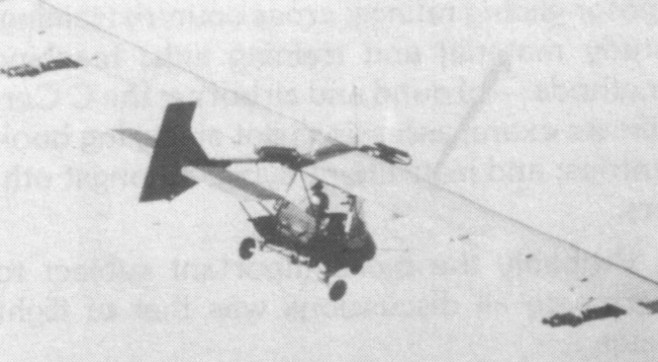
The 1935 single place low-aspect-ratio “flying pancake” developed in off-times by C H Zimmerman, John McKellar, and Richard Noyes, then with NACA, for design competition with Ercoupe and Stearman- Hammond. US patent #2,108,093 was issued to Zimmerman in 1938. Although rejected by NACA at too radical, despite its potential as a stall-proof airplane, elements of the design surfaced later in Vought V-173 and Vought-Sikorsky XF5U-1.

Unable to synchronize the motors, rather than risk an accident the project was abandoned and it never flew.

Engines: 2 x 25hp Cleone
Wingspan: 7’0″
Seats: 1

Zeppelin-Staaken E.4/20

Designed in 1917 by Adolf Rohrbach, the Staaken E-4 was a stressed metal monocoque fuselage canatlevered monoplane four-engined passenger aircraft with galley, w.c., baggage stowage and full communications. The most advanced aircraft of its time, the E.4/20 flew successfully in 1920. Completed after the armisitice and extensively tested by the Allies who ordered it destroyed because of its potential as a bomber – it was faster than any Allied fighter of the day. It was dismantled in 1922.

E-4/20
Engines: 4 x Maybach IVa, 190kW
Max take-off weight: 8500 kg / 18739 lb
Wingspan: 31.0 m / 102 ft 8 in
Length: 16.6 m / 54 ft 6 in
Wing area: 106.0 sq.m / 1140.97 sq ft
Max. speed: 230 km/h / 143 mph
Cruise speed: 211 km/h / 131 mph
Range w/max.fuel: 1200 km / 746 miles
Crew: 3
Passengers: 12-18

Zeppelin-Staaken E-4/20

Zeppelin-Staaken Rs III

The giant seaplane Rs III was a high-wing monoplane of all-metal design with fabric covering of the wing and empennage.
The intrinsically stable hull was a monocoque design made of duraluminium with traverse and longitudinal steps. The hull housed the gun station, the flight deck for two pilots, the engineer’s station and the fuel system.
The four Maybach engines were arranged in tandem in two nacelles and installed between the hull and the wing. The tail boom was mounted on the wing and had a box-type horizontal tail assembly with split elevator without compensating surfaces; the rudders and tail fins were divided into halves by the fuselage.
First flight took place on November 4, 1917. On 19 February 1918, a 7-hour non stop flight was made from Friedrichshafen to Norderney for further testing by the Seaplane Test Command Warnemonde.

Rs III
Engine: 4 x Maybach HS, 180kW
Take-off weight: 10670 kg / 23523 lb
Empty weight: 7865 kg / 17339 lb
Wingspan: 37 m / 121 ft 5 in
Length: 22.70 m / 74 ft 6 in
Height: 8.10 m / 26 ft 7 in
Wing area: 238 sq.m / 2561.81 sq ft
Max. speed: 136 km/h / 85 mph
Ceiling: 2700 m / 8850 ft
Range: 1380 km / 858 miles