In 1957 Sim Paine built a single place, closed cockpit, high wing monoplane, registered N2747A.
Engine: 65hp Continental A-65-8
Wingspan: 24’0″
Length: 17’9″
Useful load: 158 lb
Max speed: 115 mph
Cruise speed: 95 mph
Stall speed: 50 mph
In 1957 Sim Paine built a single place, closed cockpit, high wing monoplane, registered N2747A.
Engine: 65hp Continental A-65-8
Wingspan: 24’0″
Length: 17’9″
Useful load: 158 lb
Max speed: 115 mph
Cruise speed: 95 mph
Stall speed: 50 mph
Built in 1959, the single place, low wing monoplane midget racer ‘Grey Ghost’, alias ‘Little A-Go-Go’, alias ‘Little Bit’, registered N211P, raced from 1959 to 1969. The fastest race speed achieved was 188 mph.
Engine: 85hp Continental C-85
Wingspan: 13’0″
Length: 16’0″
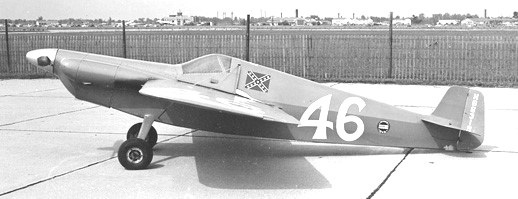
Built in 1950, the midget racer ‘Stars & Bars’ aka ‘Johnny Reb’ was piloted by Joe Magnano and Al Bennyworth. Registered N66319 it was damaged in mid-air collision during a 1950 race and rebuilt.
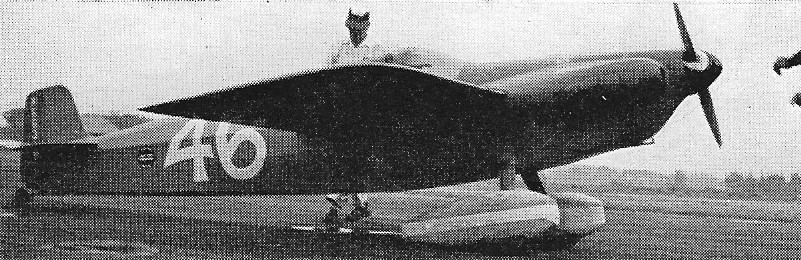
Engine: Continental C-85, 85hp
Wingspan: 14’8″
Length: 17’0″
Cruise speed: 175 mph
Seats: 1
Built in 1948, the single place, low wing monoplane midget racer ‘Li’l Rebel’ N66317 achieved a race average of 191 mph piloted by Jimmy Wilson.
Rebuilt as ‘Wilson Li’l Rebel’ after being damaged.
Engine: 85hp Continental C-85
Wingspan: 16’0″
Length: 16’10”
Built in 1948 as midget racer ‘Rebel Raider’ N97M the craft was destroyed on a test flight. Pilot Garland Pack was uninjured. The model B was a single place low wing monoplane.
Engine: Continental C-85, 85hp
Wing span: 13’0″
Length: 16’0”
Garland & Associates built the model A in 1948 as midget racer ‘Miss Nashville’. A single place low wing monoplane, registered NX66311 and piloted by Al Bennyworth, the fastest race was at 139.53 mph in 1948. Power was from an 85hp Continental C-85.
The craft was dismantled circa 1949 and parts were used in subsequent racers.
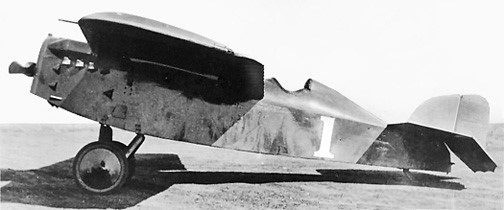
Designed by Otto Timm of the Pacific Airplane & Supply Co, the Model C-1 single-seat racing monoplane in 1921, was built by (John W) Rogers Aircraft Co with a 90 hp Curtiss OX-5 engine. Unrecognizable as being modified from a Standard J-1, it was flown by Emory Rogers until a fatal crash on 11/27/22. It did win the 1921 Curtiss Cup race.
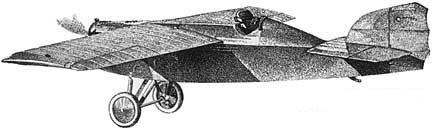
Pacific-Standard C-1 / Rogers C-1
Engine: 90hp Curtiss OX-5
Wingspan: 23’3″
Length: 19’6″
Cruise speed: 137 mph
Stall speed: 41 mph
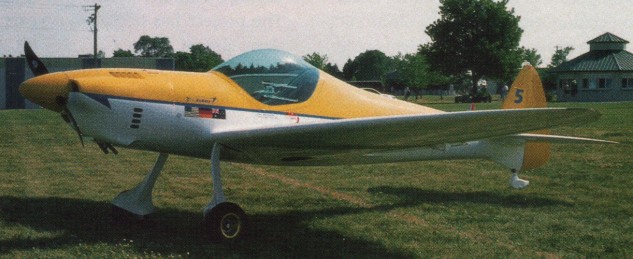
Engine: Jabiru 2200, 80 hp
HP range: 80-85
Length: 20.27 ft
Wing span: 24.6 ft
Wing area: 93.8 sq.ft
Empty weight: 560 lb
Gross weight: 880 lb
Fuel capacity: 19 USG
Cruise: 146 mph
Stall: 47 mph
Range: 810 sm
Rate of climb: 1275 fpm
Takeoff dist: 350 ft
Landing dist: 400 ft
Cockpit width: 27 in
Landing gear: tailwheel
Seats: 1
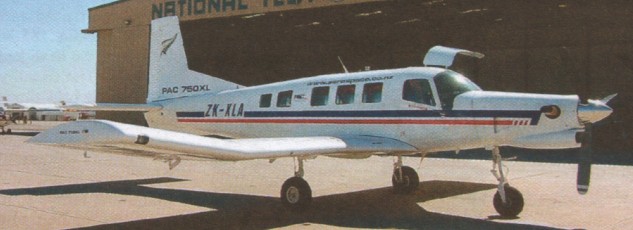
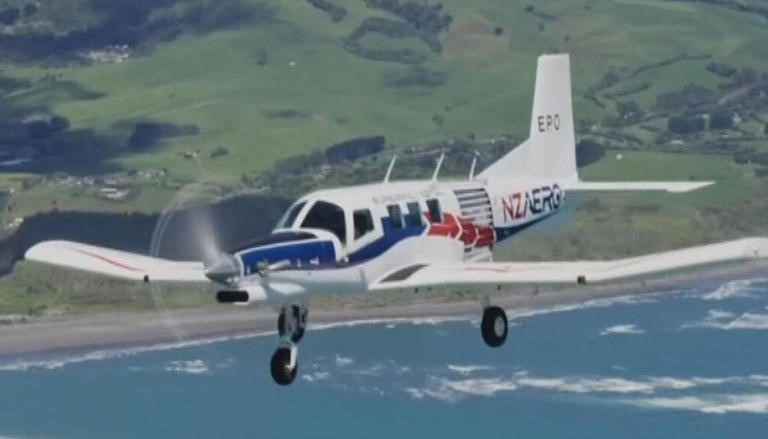
In 1999, representatives of the US skydiving market approached Pacific Aerospace wanting an enlarged version of the Cresco aircraft. This aircraft stemmed from a remark that it was a pity that the Cresco couldn’t be used for sky-diving. With the Cresco as a starting point the 750 XL resulted. After the development programme, little of the original Cresco remained. Wings, ailerons, flaps, fuel system, etc. have been either replaced or modified.
First flown on 5 September 2001, the ten seater utility received New Zealand type certification (NZ TC A-14) on 23 July 2003.
On March 10th, 2004, the US Federal Aviation Administration certified the PAC 750XL (since renamed the P-750 XSTOL) under the very latest revisions of Part 23. Taking the aircraft from initial drawings to FAA certification took about 52 months. The P-750 is Single Pilot IFR Certified (FAA) and in 2012 gained certification against ICAO Annex 6 for Single Engine IFR Passenger Transport Operations.
While initially developed for the skydiving market, the attributes of the P-750 XSTOL also made it ideal for other market segments for which it is in wide use around the world particularly freight, passenger and aerial survey work.
The P-750 XSTOL can take off and landing in less than 800 ft (244m), even when it is hot and high. Operate off semi-prepared airstrips in all types of terrain. Carry a load of more than 4,000 lb even in hot and high conditions. The rugged construction has a low 150-hour airframe/engine inspection interval and 39,000 hours before any scheduled airframe maintenance requirement.
The P-750 XSTOL Utility has a 240 cu ft cabin complemented by an optional 70 cu ft cargo pod and 18 cu ft rear storage compartment. It has the ability to carry passengers on one leg then in 30 minutes have the seats removed and stored in the rear compartment making the full cabin and cargo pod available for carrying freight on the return leg. The large single compartment cargo pod with 1,000 lb (454 kg) capacity has no impact on aircraft cruise speed and loading access is via three side doors and one large rear ramp.
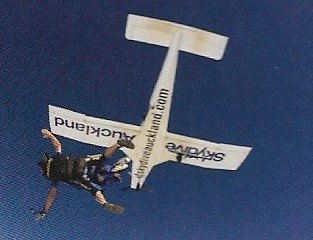
For skydiving the P-750 XSTOL has the ability to climb rapidly to jump height (e.g. sea level to 12,000 ft in ten minutes) and then be back at the air strip ready for another load before the jumpers land, enabling the aircraft to average four loads per hour. Able to carry seventeen skydivers or six tandem teams, the wide centre of gravity range making it a very stable jump platform. Able to carry 17 skydivers to altitude and return to the point of departure in approximately 15 to 16 minutes. The climb and descent profile is about half the horizontal airspace of most other jump planes, assisting operation in noise-sensitive areas. Factory installed skydiving modification that can be operated by the pilot ensuring no open-door speed restrictions on descent.
For aerial survey factory-approved modifications support easy installation of camera holes in the floor of the aircraft and side wall mounted track for the attachment of equipment. The P-750 XSTOL is an electrically quiet aircraft with minimal electro-magnetic interference (EMI) and all major control systems mechanical rather than electric. The aircraft structure serves as an effective faraday cage blocking out external static electric fields and can be readily customer-modified for geophysical survey work.
For Crop Dusting, Spraying or Fire Fighting the P-750 XSTOL Agriculture is able to carry a 4,888lb (2,272 kg) hopper load. Operators commonly complete up to 17 cycles (load, take-off, dispense, land) per hour. The hopper can be removed without affecting the airframe, allowing versatility in the roles of the aircraft. The aircraft can be converted to another factory-approved configuration maximising its useful life and resale value.
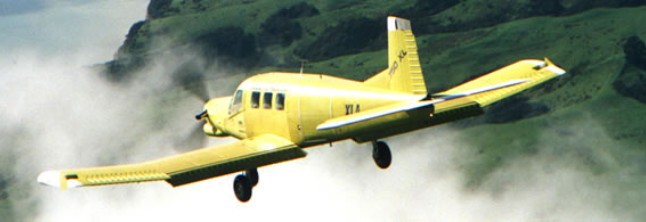
750XL / XLSTOL 750
Engine: Pratt & Whitney PT6-34 turboprop, 750 hp
Gross Wing Area: 305.00 sq. ft / 28.34 sq.m
Nett Wing Area: 267.80 sq.ft / 24.88 sq.m
Basic empty weight (Standard IFR): 3,300 lb / 1,497 kg
Max. Ramp Weight: 7,540 lb / 3,420 kg
Max. Take-Off Weight: 7,500 lb / 3,402 kg
Max. Landing Weight: 7,125 lb / 3,232 kg
Max. Useful Load: 4,200 lb / 1,905 kg
C of G range: 102.8 to 124.6 inches aft of datum
Never Exceed Speed (Vne): 170 Knots / 315 KPH
Design Cruising Speed (Vc): 140 Knots / 259 KPH
Max. Manoeuvring Speed (Va): 131 Knots / 243 KPH
Max. Flap Extended Speed (Vfe): 120 Knots / 222 KPH
Stall Speed (Idle Power) With Flaps Down (Vs): 58 Knots / 107 KPH
Max. Range At Opt Speed, 45 min Res 16,000 ft: 1,179 nm / 2,183 KM
Endurance At Opt Speed, 45 min Res: 8 HRS
Average Fuel Consumption: 50 US GAL/H / 192 lt/hr
Fuel Capacity, Useable: 331.8 US GAL / 1,256 lt
Take-Off Ground Roll SL, ISA: 721 ft / 220 m
Take-Off Distance To 15 M (50 FT) ISA: 1,196 ft / 364 m
Landing Ground Roll At Sea Level: 543 ft / 166 m
Landing Distance From 15 M (50 FT): 950 ft / 289 m
Max. Rate Of Climb SL MAUW: 1,067 fpm / 325 m/min
Max. Rate Of Climb at 8,000 ft MAUW: 951 fpm / 290 m/min
Climb To 12,000 ft From Brakes Release: 12 min
Max. Operating Altitude: 20,000 ft / 6,096 m
Service Ceiling (At Max. Weight): 20,000 ft / 6,096 m
Max. Positive G: +3.5 G
Max. Negative G: -1.4 G
Wing Loading: 120.07 kg/sq.m / 24.59 lb/sq.ft
Power Loading: 10.0 lb/shp / 4.5 kg/shp
Flap area: 31.74 sq.ft / 2.95 sq.m
Aileron area: 21.94 sq.ft / 2.04 sq.m
Tailplane area: 33.64 sq.ft / 3.13 sq.m
Elevator area: 27.92 sq.ft / 2.59 sq.m
Fin area: 19.40 sq.ft / 1.80 sq.m
Rudder area: 11.70 sq.ft / 1.09 sq.m
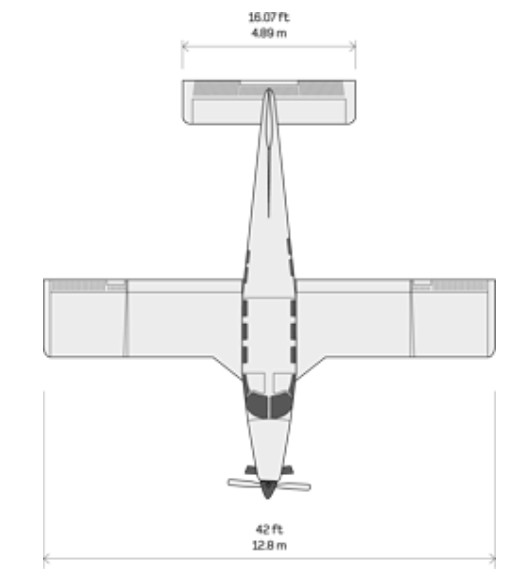
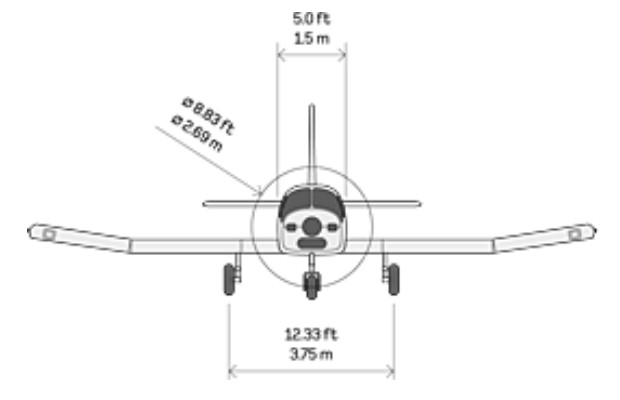
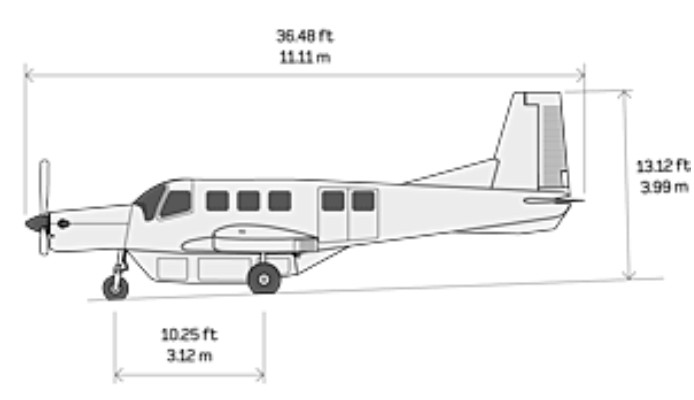
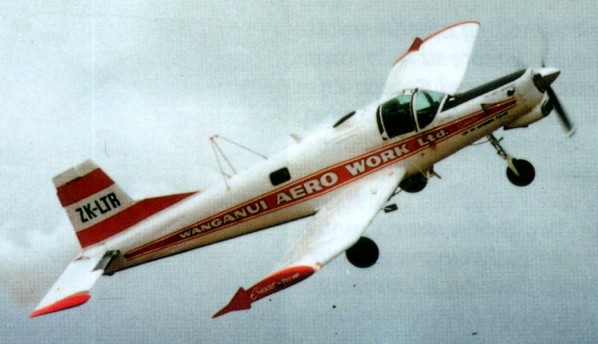
Design beginning in the mid 1970s to FAA FAR Part 23 the first Cresco, (Latin for “I grow”) flown, ZK-LTP, became airborne in February 1979. During development, feedback from operators of the Fletcher aircraft regarding areas in which the Fletcher was lacking was taken into account, however the strength of the original design was retained.
The new aircraft featured a longer fuselage, a massive hopper, enlarged fin and rudder, revised wing with integral fuel tanks (wet wing) and a 600 hp, Lycoming LTP 101 turbine. The Cresco retained all the good features of the Fletcher.
Although appearing very similar to the FU 24 Fletcher at first glance, the Cresco was actually a much bigger machine and improved in many ways. With its tricycle landing gear and rear mounted hopper the Cresco is unique in agricultural aircraft and, through this configuration, allows for safe operations off these sloping hill strips. The Cresco has the advantage of forward visibility and wind gust capabilities lacking in tail dragger aircraft with forward mounted hoppers.
All metal semi monocoque construction, comprising of frames and longerons covered by pre-formed aluminium alloy skins. Wing single spar cantilever construction with sheetmetal ribs covered by pre-formed aluminium alloy skins with the centre wing having no dihedral and outer with 8 degree dihedral. Dual side by side controls. Fixed tricycle landing gear with a wide track and long stroke oleos designed for rough fields and providing a soft ride. Rear mounted hopper independent of the fuselage. Three-blade Hartzell fully reversible prop. Superb visibility with the cockpit forward of the wing and hopper to the rear rather than in front. No handling vices. Cockpit environmental structure stressed to 25g.
After several years of design and construction ZK-LTP, the prototype 08-600 Cresco took to the air on the 28th February 1979 powered by a 600 shp Lycoming LTP101-600A-1A turbine engine. This was the first flight in the world of an aircraft designed from the outset as a turbine powered agricultural aircraft.
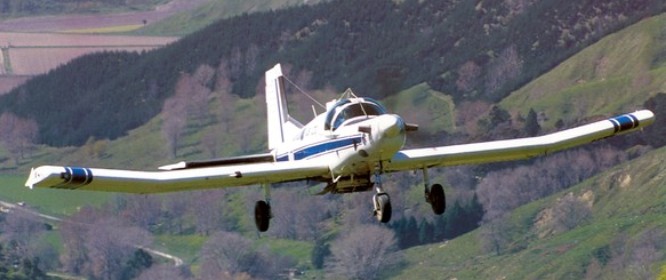
Configured as a dual control aircraft with a 62.5 cu. ft. hopper it differed from future examples by having a full flying tail-plane (much like the FU-24) and no dorsal fin.
After a bright start to the certification process trouble stuck on the 10th December 1979 when, after difficulties during a test flight, the pilot elected to parachute to safety and consequently ZK-LTP was completely destroyed as it impacted the ground.
It was June 1980 before the second prototype ZK-LTQ s/n 002 took to the air for the first time and the certification process continued. Significantly ZK-LTQ unlike s/n 001, sported a new fixed tail-plane and a dorsal fin.
By January 1981 the certification process was complete, NZ Certificate of Type Approval NZ CTA A-11 was granted as the 08-600 Cresco, and production had commenced with s/n 003 ZK-LTR first flying on the 19th January 1981.
In the steep New Zealand hill country, “operating” means operating from an unimproved landing strip; often on the side of a hill with a flat spot at the top to load. With GPS to help make accurate dispersal runs, the aircraft will often be back for another load in less than 4 minutes. From brakes on to brakes off, the loading operation is completed in around 7 seconds and power is applied for the takeoff run. One unforeseen problem arose with the introduction of the Cresco: the aircraft was dispersing material faster than the trucks could deliver it to the aircraft.
Production had no sooner commenced when it was slowed considerably over the next decade due to a downturn in the farming sector. Only six further examples were produced between 1982 and 1992.
S/n 004 ZK- JAD the first 700 hp and single control variant was produced in January 1983 followed by s/n 005 ZK-LTS in September 1987. There was some relief in 1990 when three examples were produced for the Department of Plant Protection in Bangladesh. Next off the line was s/n 009 the last LTP101 powered variant (ironically like the prototype also ZK-LTP) which first flew in October 1992.
In 1992 the customer for s/n 010 requested replacement of the Lycoming LTP101 Engine with a Pratt & Whitney Canada PT6A-34AG engine of 750 shp. First flown in November 1992 the modification was an outstanding success and the PWC powered Cresco became the standard aircraft that PAC produced as the Cresco 750.

When PAL changed ownership in late 1995 the first continuous Cresco 750 production commenced with s/n 012 ZK-TMO first flying on the 15th February 1996, and by the time the year was out four aircraft had been completed. A further five examples were completed in 1997 including several milestone aircraft:
S/n 019 the first aircraft with the “big” hopper mouth and gatebox, s/n 020 the first aircraft with the new extruded spar caps and s/n 021 the first utility version produced.
The next significant milestone was the production of the first utility parachuting variant s/n 024 in September 1999, which contributed to the subsequent development of the new P-750 XSTOL.
It is able to take a pilot and twelve skydivers to 14,000 ft (4,267m) in 12 minutes.
Modifications for the skydiving role include factory installed special steps, external jump door, grab rails and a large air scoop cowling to allow the engine to obtain full power at altitude.
Production continued through the early 2000s and in 2002, the highest production year to-date, seven examples were produced cumulating in s/n 036 ZK-TTS.
Of the last 10 airframes produced five have been agricultural variants and five utility parachuting variants.
PAL has upgraded four of the early Lycoming LTP101 powered aircraft to PWC PT6A-34AG 750 shp status.
This unique and special aircraft is no longer in production.
08-600
Engine: AVCO-Lycoming LTP 101/600A-1A turboprop, 599 shp
Prop: Hartzell HCB3TN-3D/T1028H, 8.5 ft
Hopper cap: 62.5 cu.ft (1770 lt), 4100 lb (1860 kg)
Range (no res): 460nm
Ceiling MAUW: 15,500 ft
ROC 6450 lb: 880 fpm
ROC 7000 lb: 745 fpm
Stall: 54 kt
Max speed: 145 kt
Cruise 75%: 127 kt
Empty wt: 2560 lb
MTOW, Norm; 6450 kg
MTOW, Ag; 7000 lb
T/O dist 7000 lb: 1317 ft
T/O dist 6450 lb: 1058 ft
Length: 36.33 ft (11.08m)
Height: 11.9 ft (3.63m)
Wing span: 42 ft (12.8m)
Wing area: 294 sq.ft (27.33sq.m)
08-600 Cresco
Engine: TPE331-1-101L, 665 shp
MTOW std: 5800 lb
MTOW ag: 6500 lb
Vne: 181 kt
Va: 122 kt
Type certificate: NZCAA A-9
Certificate issued: 10 Jun 71
Cresco 750
Engine: Pratt & Whitney PT6A-34AG, 750 hp
Propeller: Hartzell 3 Bladed fully feathering and reversible
Wing Span: 42 ft / 12.8 m
Fuselage Overall Length: 36.2 ft / 10.9 m
Fuselage Maximum Width: 48 in / 1.22 m
Fuselage Maximum Height: 60 in / 1.52 m
Wing Aspect Ratio: 6.0
Basic empty weight: 2,950 lb / 1,338 kg
Max. Take-Off Weight (Standard): 6,450 lb / 2,925 kg
Max. Take-Off Weight (Agricultural): 8,250 lb / 3,742 kg
Max. Landing Weight: 6,450 lb / 2,925 kg
Max. Useful Load (Standard Category – 1 crew, 2.5 hrs fuel): 2,450 lb / 1,111 kg
Max. Useful Load (Agricultural Category – 1 crew, 1 hrs fuel): 4,750 lb / 2,154 kg
Max. Structural Hopper Load: 4,100 lb / 1,859 kg
Disposable load: 5,400 lbs / 2,449 kg
Working speed: 136 kts / 240 kph
Hopper capacity: 500 USG / 1900 litres
Hopper outlet size: 41″ / 1340 mm wide
Firebombing discharge rate: up to 900 lt/sec
Never Exceed Speed (VNE): 176 Knots / 325 kph
Design Cruising Speed (VC): 140 Knots / 259 kph
Max. Manoeuvring Speed (VA): 126 Knots / 233 kph
Max. Flap Retracted Speed: 85 – 90 Knots / 157 – 166 kph
Stall Speed (Idle Power) At Max. Weight: 57 Knots / 105 kph
Range – Normal: 420 Miles / 675 km
Endurance – Normal Configuration: 2.7 hr
Average Fuel Consumption Per Hour: 48 US/Gal / 180 lt
Take-Off Distance To 15 M (50 FT) ISA: 1,065 ft / 325 m
Landing Distance From 15 M (50 FT): 1,398 ft / 426 m
Max. Rate Of Climb At Sea Level: 1,560 fpm
Max. Rate Of Climb at 8,000 ft: 1,060 fpm
Max. Rate Of Climb at 14,000 ft: 680 fpm
Max. Operating Altitude: 25,000 ft
Service Ceiling (At Max. Weight): 25,000 ft
Max. G: +3.56 / -1.42
Wing Loading: 104 kg/sq.m / 21.9 lb/sq.ft
Power Loading: 0.25 shp/kg / 0.11 shp/lb
Ailerons: Plain 25 deg up travel, 10 deg down travel
Vertical Tail Surface: Fixed fin, horn balance rudder
Rudder Deflection: ± 30 deg
Horizontal Tail Surface: Fixed plane with elevator
Elevator Deflection: 30 deg up, 8.5 deg down
Landing Gear Track: 12.2 ft / 3.71 m
Wheel and Tyre Size: 8.50 x 6 nose 8.50 x 10 main
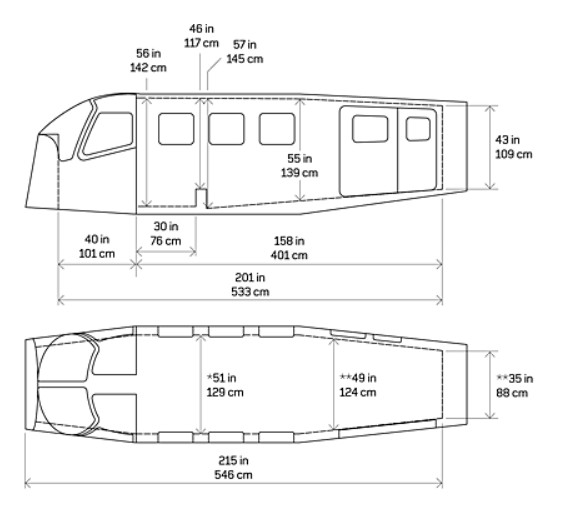
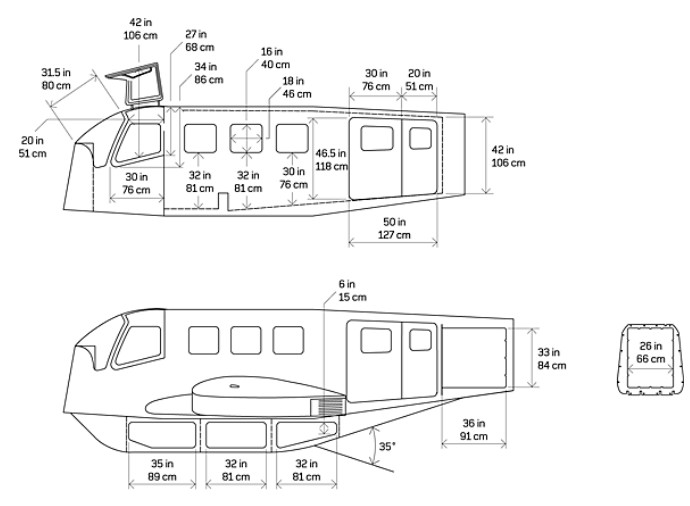
Cargo Payload: 3,136 lb / 1,435 kg
Large Door Size: 39” x 37” / 0.99 m x 0.94 m
Maximum Cabin Height: 4.21 ft / 1.28 m
Maximum Width: 3.5 ft / 1.06 m
Floor Length: 10.25 ft / 3.12 m
Total Compartment Length: 11.83 ft / 3.61 m
Total Compartment Volume: 133 cu.ft / 3.79 cu.m
Application rate typically 30 tonnes per hour
Swarth width: 88 ft / 27m
Aircraft Inspection Cycle: 100 hours inspections
Wing spar life: 16,000 hours
Wing strap life: 8,000 hours
08-600 Sky dive
Engine: PT6A-34
Ceiling: 24,000 ft
Crew: 1
Pax: 11
Time to 20,000 ft: 12 min
 All Aero