Built in 1962, the two place cabin, mid-wing monoplane Tin Wind had all components made from flat alumninum stock. Cost for prototype, N348L, was about $500, less motor.
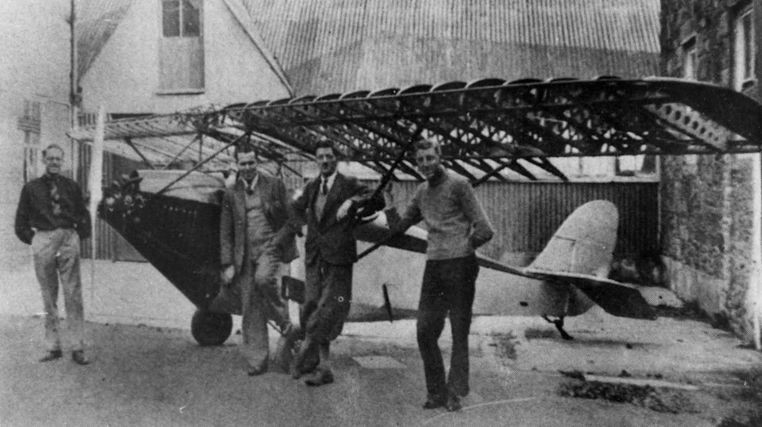
Aeronca C-2 G-ABHE c/n A100 was converted to a glider by H.J. Parham in 1937, at Farham, UK, after an inflight engine failure and forced landing.
The nose was faired in after the removal of the engine. It first flew as a glider at Bordon, Hampshire, on 15 May 1937, retaining the original registration of G-ABHE c/n A100.
It went to the Dorset Glider Club but was destroyed at Maiden Newton in the club hanger during a storm in November 1938.
Wingspan: 10.97 m / 36 ft 0 in Wing area: 13.94 sq.m / 150 sq.ft Aspect ratio: 8.4 Wing section: Clark Y Empty weight: 122.47 kg / 270 lb Seats: 1
A Hanriot-inspired monoplane, built by one or both of brothers François (1876-1949) and Hippolyte Parent (1885-1974). Both were born in the outskirts of Lyon to the same father, who had a mechanical workshop at Villefranche.
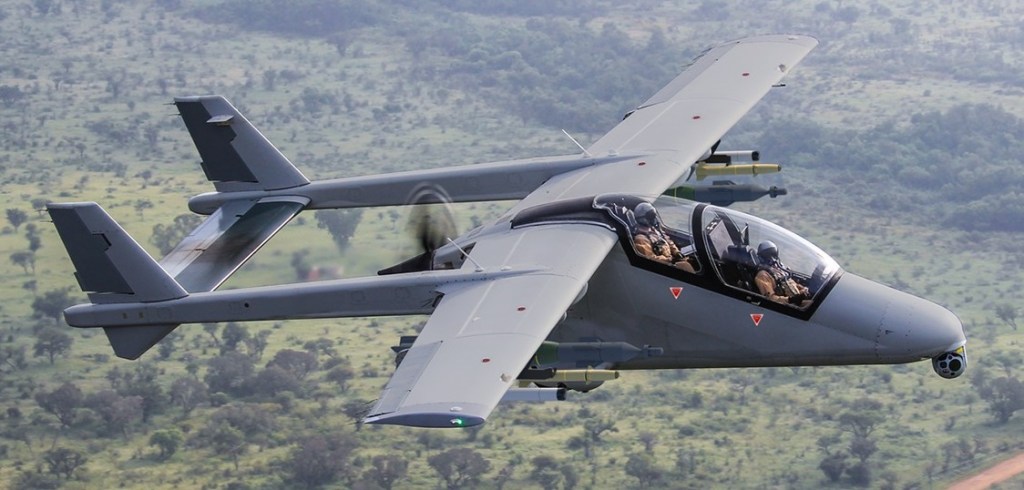
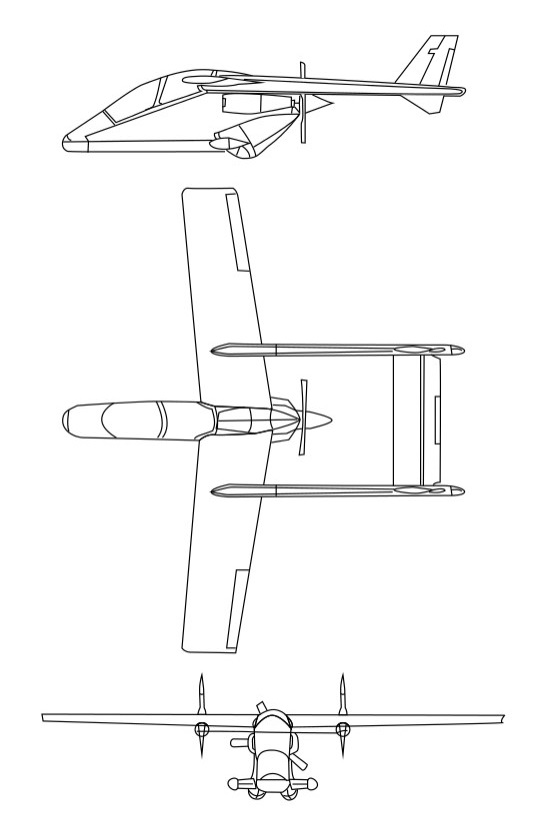
The AHRLAC (Advanced High Performance Reconnaissance Light Aircraft) is a South African light reconnaissance and counter-insurgency aircraft developed by AHRLAC Holdings, a joint venture between the Paramount Group and Aerosud. It is designed to perform as an inexpensive, more versatile substitute for unmanned aerial vehicles (UAVs) and modern light attack aircraft.
In 2009, Paramount Group began working on a new light turboprop-powered counter-insurgency aircraft. The design study examined a fixed-wing aircraft as an affordable platform for both civilian and military applications as an alternative to unmanned aerial vehicles (UAVs). The design of the proposed aircraft drew on the company’s prior experience producing helicopters, and several design elements, such as the steep tandem canopy adopted, have been attributed to this source of inspiration; the aircraft is intended to act as a viable alternative for helicopters. It had been conceived as an affordable intelligence, surveillance, and reconnaissance (ISR) and light-strike platform with a strong emphasis on low-cost operations was established early on.
In September 2011, design work on the AHRLAC project was formally initiated. In 2011, the manufacturer stated that the price of the aircraft was projected at being under US$10 million per aircraft.
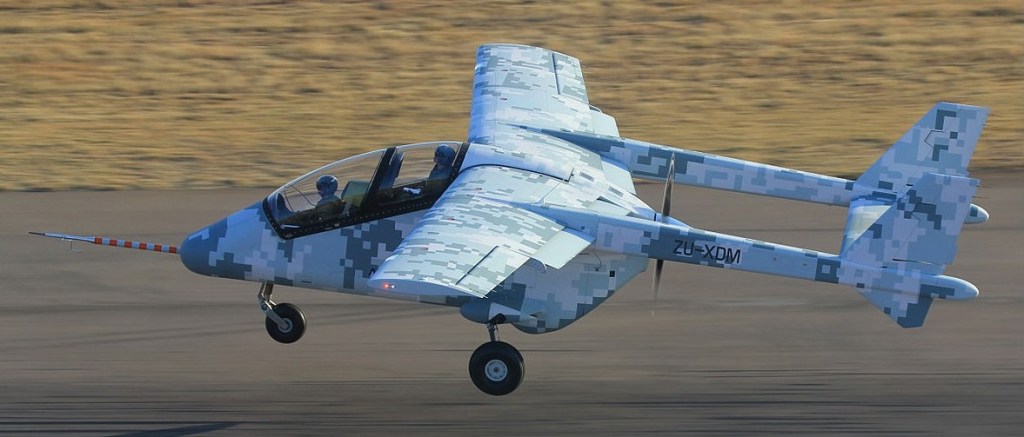
In 2011, a full-scale mockup of the AHRLAC was constructed, alongside a quarter-scale flight-capable model that was later used for a total of 80 test flights. The first full-scale prototype, designated as the Experimental Demonstrator (XDM), was completed using design for manufacture technology, which allowed for jigless construction to be performed, thus producing both time and cost savings. Of the aircraft’s 6,000 components, 98 per cent had been designed using CATIA software and were domestically manufactured.
The AHRLAC features a twin-boom, single-pusher-engine, high-mounted forward-swept wing configuration providing for excellent external visibility. It is powered by a single Pratt & Whitney Canada PT6A turboprop engine; it has a top speed of 310 mph along with a flight endurance of seven hours. It is flown by a crew of two, seated in tandem configuration, both being provided with Martin-Baker ejection seats and HOTAS (hands on stick-and-throttle) control functionality. The narrow airframe is composed of a combination of metal and composite construction and is designed to provide maximum crew visibility. The AHRLAC has been designed to be capable of operating from austere runways and rough fields; it also possesses STOL (Short Take Off/Landing) and rapid deployment capabilities.
It features a reconfigurable nose, a large mission bay for avionics beneath the two-person cockpit, and the lower fuselage consists of a variety of interchangeable conformal modular units. These modules allow the aircraft to be outfitted with a variety of sensor systems such as infrared and optical cameras, synthetic aperture radar, electronic intelligence gathering and various electronic warfare packages. Additionally, electro-optical turrets can be installed both on the nose and belly of the aircraft.
first prototype
On 26 July 2014, the first AHRLAC prototype conducted its maiden flight from Wonderboom. It was initially deployed on a 20-hour flight test program to contrast computer simulations against data from the prototype’s real-world flight performance; during each of these flights, telemetry data was gathered inflight by a specially-equipped Pilatus PC-12 chase plane. The initial prototype is to be used to prove the flight characteristics and performance of the aircraft, while the second prototype, designated as the Advanced Demonstrator (ADM), shall be for testing armaments and mission systems.
On 13 August 2014, the aircraft performed its first public flight display at Wonderboom Airport.
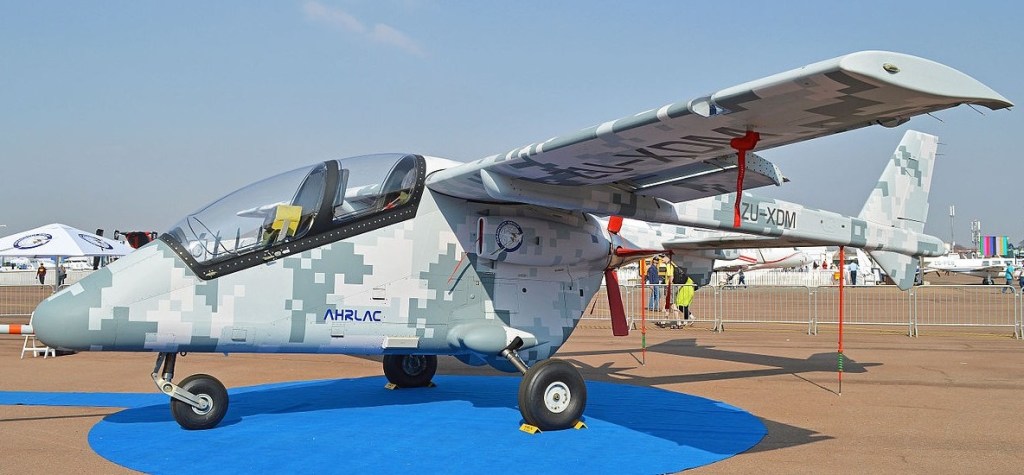
Waterkloof AFB during 2014 African Aerospace & Defence airshow
By February 2015, the first prototype had completed 65 hours of incident-free flying; as a result, the test program proceeded to the next phase, under which the flight envelope was progressively expanded to explore and evaluate its handling, center of gravity, flight performance, airframe qualities, and rough field capabilities. According to Paramount, several prospective customers had shown interest in the aircraft, particularly from the Middle East; the construction of the second prototype was also underway.
In March 2016 Boeing announced a partnership with Paramount Group to cooperate on an advanced mission system for the armed variant of the AHRLAC known as “MWARI”.
In May 2014, the flight test program commenced at Wonderboom Airport near Pretoria, the first prototype having been moved there from Aerosud’s facility in Centurion, Gauteng. In July 2014, the ground test phase was reportedly completed.
Mwari is a two-crew C4ISR, F3EAD and precision strike aircraft, capable of carrying a wide range of weapons, sensors and systems in extended airborne mission operations. It uses a pusher propeller and has an open system architecture allowing for the rapid incorporation of current and emerging systems, setting a new standard for mission flexibility and adaptability. The aircraft features open architecture, plug and play systems and carries an interchangeable multi-mission pod system, allowing a single platform to perform multiple missions.
Mwari
The armed Mwari version is designed to carry a single 20 mm or 30 mm cannon, which is internally mounted into the portside nose section. Additionally, it is fitted with either four or six hardpoints for carrying weapons mounted under the wings. Armour for the aircraft is also modular and can be added or removed entirely dependent on the mission requirements. It has an interchangeable pod that allows reconnaissance and other equipment to be swapped out within two hours so that the aircraft can be used for different purposes.
Conformal fuel tanks carried underneath the tail booms have also been offered as an option for the type; when equipped with external fuel tanks, the AHRLAC is capable of a 2,000 nm ferry range.
By September 2016, the prototype had accumulated 250 flying hours during tests, as well as a total of four deployments to the South African border and to neighbouring Botswana for the purpose of operationally representative trials. An improvised trial flight had also been conducted during an outbreak of civil unrest in South Africa.
By September 2016, the developers were in the process of building a new assembly line at Wonderboom, this facility is expected to produce the initial two production aircraft in 2017. The Wonderboom factory is to be capable of producing up to two aircraft per month; it is reportedly readily expandable to double its current size, dependent on customer demand.
In 2014, the developers revealed that, in addition to the previously-announced crewed model of the AHRLAC, they were also in the process of developing an unmanned variant as well. According to Janes, the unmanned model of the AHRLAC had its origins in the quarter-scale model that had been produced for flight testing purposes, which had revealed favourable tendencies towards such use. By September 2014, a pair of prototype unmanned vehicles, which had received the name “Mwari”, had been produced. The Mwari UAV is considerably smaller than the manned AHRLAC counterpart, possessing a reduced flight endurance of only 4 hours along with a sensor turret in the nose. The UAV was renamed “Mwewe”, as the Mwari name is used for an armed version of the full scale manned AHRLAC.
In March 2016, American aerospace firm Boeing announced that it had entered into a development partnership with Paramount with the aim of producing a militarized version of the Ahrlac. Under this agreement, Boeing shall develop an integrated mission system that will provide the Ahrlac with intelligence, surveillance and reconnaissance (ISR) and weapons system capabilities; this equipment is presented as being optional, and some customers may prefer to opt for simpler systems instead. The militarized version of the Ahrlac shall be marketed under the name “Mwari”.
In February 2018, an announcement was made that the improved AHRLAC design will be marketed in the USA under the name “Bronco II”. In May 2020, BRONCO II, Paramount Group’s Americanized variant of the AHRLAC, in partnership with Leidos and Vertex Aerospace, offered the light attack and surveillance aircraft to U.S. Special Operations Command, or SOCOM, for its Armed Overwatch program.
Paramount announced that it had sold a total of 9 aircraft to two unnamed countries and that the first would be delivered immediately, the announcement was made at Africa Aerospace and Defence show on 21 September 2022. This marks the first sale of the aircraft and South Africa’s first sale of a fixed-wing aircraft in 20 years.
As of 28 February 2019, the AHRLAC program has been placed into business rescue with the Wonderboom factory being shut down and all 140 employees sent home. In August 2019, a business rescue plan was announced for AHRLAC, with Paramount taking full control of the Aerospace Development Corporation (ADC) and its subsidiaries, according to the proposition. In September 2020, ADC stated that production of the Ahrlac had restarted.
The company claims to have made multiple sales of 9 aircraft to two unnamed air forces. The first example was delivered on 23 September to an unnamed air force. A total of 9 Mwari aircraft were on order. Paramount Aerospace Industries claims that they can build three a year or five if demand requires more aircraft.
The Bronco II is designed for ultimate mission flexibility. The aircraft’s unique internal Interchangeable Multi-Mission System Bay (IMSB) allows for a single airframe to be easily and rapidly re-configured to perform multiple roles (e.g. ISR, SCAR, CAS, FACA) incorporating high-performance targeting sensors, network communication systems, precision weapons, an electronic self-protection suite, and mission planning systems.
The Bronco II is designed to “roll-on, roll-off” standards, it can be rapidly disassembled, transported and reassembled in the field by a small crew. Its modular mission systems enable rapid system changes, updates, additions, integration and removal. The Bronco II aircraft was to be manufactured in Crestview, Florida.
AHRLAC Powerplant: 1 × Pratt & Whitney Canada PT6A-66, 710 kW (950 shp) Wingspan: 11.9 m (39 ft 0 in) Length: 10.3 m (34 ft 0 in) Height: 4.0 m (13 ft 0 in) Empty weight: 2,000 kg (4,400 lb) Max takeoff weight: 3,800 kg (8,400 lb) Maximum speed: 504 km/h (313 mph, 272 kn) Range: 2,130 km (1,325 mi, 1,150 nmi) Endurance: 7–10 hrs Service ceiling: 9,450 m (31,000 ft) Take-off distance: 550 metres (1,800 ft) with full payload Guns: GI-2 20 mm cannon Hardpoints: 6
Mwari Wing span: 39.4 ft / 12.00 m Length: 34.4 ft / 10.50 m Height: 13.1 ft / 4.00 m MTOW: 8378 lb / 3800 kg Max speed: 311 mph / 500 kph / 270 kt Ceiling: 31,004 ft / 9450 m Max range: 1268 mi / 2040 km / 3778 nm Range: 960 km / 596 mi Endurance: 6.5 hr Armament: opt. 20 or 30mm cannon Hardpoints: 4 Bombload: 1700 lb Crew: two (pilot, copilot/observer)
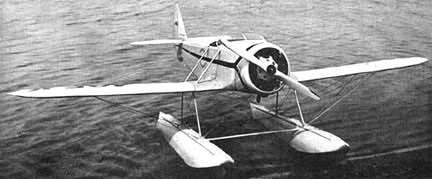
Designed by Ralph Johnson, the 1931 two place side-by-side cockpit Sportster sold for $4,985. Only one was built, N495K, first flying on 10 April 1931 piloted by Stanley Hammond. As a floatplane, it crashed on 16 May 1931, killing Behse and ending Paramount Corp.
Engine: Warner Scarab, 110hp Span: 29’0″ Length: 22’0” Seats: 2
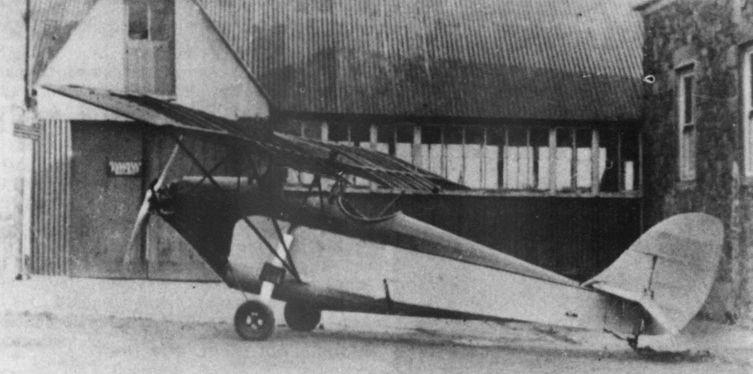
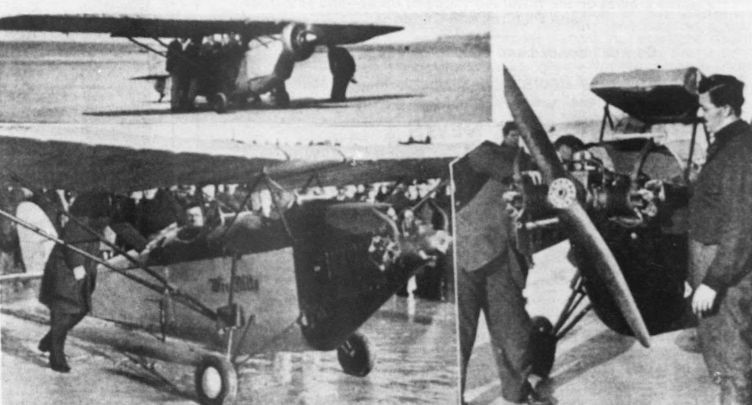
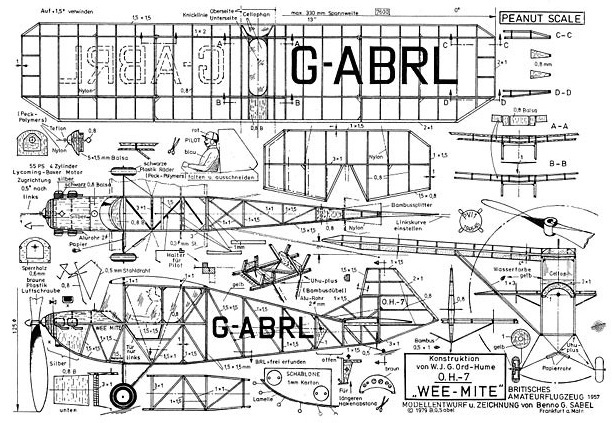
The Wee Mite was a parasol monoplane with a welded steel frame with wooden wings and a fixed landing gear with a tailwheel. Designed by Cecil Noel and built by him and Harold James Le Parmentier it was initial powered by a 30 hp (22 kW) ABC Scorpion engine.
A second-hand ABC Scorpion engine of 30-40 hp coming on the local market made the proposition feasible, and the necessary planning and designing began. Even with his past experience as a pilot-instructor, Mr Noel found that the limitations of the island with regard to take-off and landing made the theoretical side of the business a tricky undertaking, and it was nearly six months before the plans and blueprints were completed.
Early in the summer of 1932 the practical work was commenced, and in this the designer was joined by a small band of enthusiasts. The first job of the work was the creation of the propellor. This was of mahogany, two-bladed, 3ft 4 in pitch, and was manufactured entirely in Guernsey. When fitted to the engine it was tested out on the sandy foreshore mounted on a Ford chassis.
A high wing, semi-cantilever monoplane, V-strutted, a split ‘Oleo’ undercarriage was fitted and open cockpits.
The engine was put aside until the following winter while the fusealge was built to receive it. The engine in position and early one summer morning, Guernsey’s air pioneers smuggled the aircraft through the sleeping streets to the sandy stretch of Vazon Bay.
Here it was put through her speed, control and acceleration tests. As was to be expected, adjustments were necessary, but these were so slight that they served rather to flatter the skill of the designers and builders and the exactitude of their labours.
The calulation of the centre of gravity was found to be slightly at fault, having been estimated at from 1½ to 2 inches too far forward, necessitating an alteration of the wing position. This satisfactorily adjusted, the Wee Mite with Mr W C Noel at the controls essayed her first flight. First flown at Vazon Bay, Guernsey on 10 April 1933. Still slightly out of trim though she proved, her initial flutter of a few hundred yards was successful.
To improve her the engine was geared and she was fitted with a four-bladed metal prop of 6ft pitch, 5 ft 9 in in diameter. The metal prop burst and set up such a tremendous vibration that it crystallised the front part of the metal air-frame, practically ruining the front of the fuselage.
An A D Salmson of 40-50 hp, repairs having been completed, it was installed with a two-bladed wooden propellor and a lengthened fuselage by 18 in (46 cm). this proved ideal for vibration was noticeable less and with the experience gained further teat flights were successfully accomplished, until the ‘Wee Mite’ was ready to be re-christened the ‘We Can,’ to the confusion of all the local doubters.
It was successfully flown around Guernsey in a 50 minute flight on 15 September 1933.
It was registered as G-ACRL to Parmentier on 21 April 1934.
The aircraft crashed on 21 January 1935. Le Parmentier, at the controls, found himself unable to keep it aloft in inclement weather. Gusts of wind were buffeting the beach as he took off, one of which caught the underside of the aircraft and turned it upside down while in flight.
Fortunately, Wee Mite wasn’t very high when at the time, but its aerodynamic properties were completely thrown out and it fell to earth. The propeller and wings were destroyed and, although the engine remained intact, it was beyond practical or economical repair. Its registration was cancelled in spring of 1935.
It was dismantled and stored in March 1936.
In her occupation diaries, Ruth Ozanne recounts how, in March 1941, the owner of a garage in St Peter Port found what was apparently the remains of the plane stowed in the loft.
The Bailiff had no choice but to report the discovery to the German forces, who ordered its destruction so it couldn’t be used either against their own men or to escape the island. A post on the Priaulx Library website recounts the same story.
However, the online history of the Guernsey Aero Club tells a different tale. The club had been established by Wee Mite’s designer, Cecil Noel, and in 1935 it bought an Avro 594 Avian IV, which was damaged in a gale. What was left of it was stowed in the loft of a St Peter Port garage and, when discovered during the occupation, shipped off to Germany.
Powerplant: 1 × British Salmson AD.9, 40 hp (30 kW) Wingspan: 31 ft 0 in (9.45 m) Wing area: 148 sq ft Chord: 5 ft Length: 20 ft 0 in (6.10 m) Height: 6ft 1½ in Empty weight: 650 lb (295 kg) Gross weight: 970 lb (440 kg) Wing loading: 6.55 per sq ft Maximum speed: 92 mph (148 km/h, 80 kn) Cruise speed: 75 mph (121 km/h, 65 kn) Take-off speed: 38-40 mph Landing speed: 30-35 mph Take-off distance: 100-120 yards Landing distance, 100 yards Ceiling: 8,000 ft Tested height: 3,000 ft Initial rate of climb: 450 ft per min Crew: one Capacity: one passenger
The Paradise P-1 complies with all aspects of the Light Sport Aircraft (LSA) ASTM standards, that specify the design and performance requirements of the two types of LSA aircraft. Special Light Sport Aircraft (SLSA) and Experimental Light Sport Aircraft (ELSA). Easy to service and maintain and if registered as an E-LSA can have even the annual inspection made by the owner. 2009 Price: US$108300
The P-1 is constructed using 4130 steel tube frame welded and is covered with aviation grade aluminum. Powered by a 100 HP Rotax 912 ULS, it offers short field take off and landing performance, with excellent climbing rate and cruise speed. The cowling can be removed by one person making it easy to access every component for inspection and maintenance
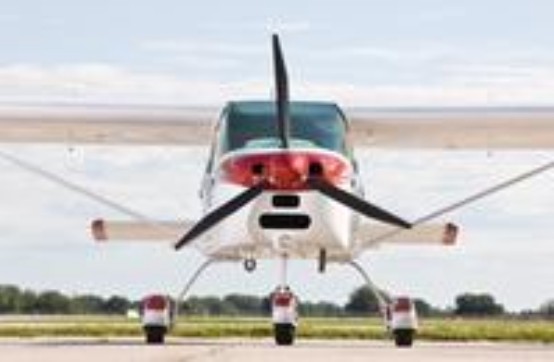
It is a high wing, two seat, side by side aircraft similar to a Cessna 150, but that is where the similarity ends. The combination of its wing design and large moving horizontal tail (stabilator) produces a very gentle yet stable aircraft with a good stall characteristic. This, coupled with the ruggedness of its landing gear, dual control system, and a wide range of optional, makes it an excellent trainer. Taxiing is easy with the pedal steered nose gear and large hydraulic brake system.
The large cabin width (43.3 inches), panel mounted yoke, unhindered floor space providing lots of leg room, with, the standard leather upholstery can accommodate two large occupants in plush comfort.
The behind the seat baggage space (largest of its category), with 75 lbs of load capacity and over 18 cubic ft of available space can carry a lot of luggage, including 2 golf bags plus a cooler or perhaps your fishing and camping gear. No hotel, remove the seat, place a sleeping bag for a 6 ft + person to sleep in comfort. The inherent “nose down” level flight characteristic, offers a superb ahead and all around visibility.
2009 Paradise P-1 Engine: Rotax 912 ULS, 100 hp Propeller: 3-blade Warp Drive Gross weight: 599 kg / 1320 lb Empty weight, std: 370 kg / 815 lb Useful load, std: 505 lb Usable fuel, std: 26 USG Vne: 125 kt Best rate of climb, SL, two passengers: 800 fpm / 4 m/s Best rate of climb, SL, one passenger: 1000 fpm Max cruise speed: 105 kt Stall: 35 kt / 40 mph / 64 kmh Range: 630 nm Takeoff ground roll, one passenger: 260 ft Landing over 50 ft. obstacle: 760 ft Glide Ratio: 13/1
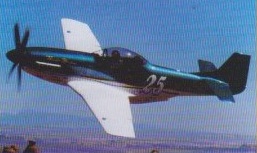
The Thunder Mustang was originally designed by Martin Hollmann for Dan Denny in 1988. Martin later finished the design and performed the flutter analysis for high performance aircraft.
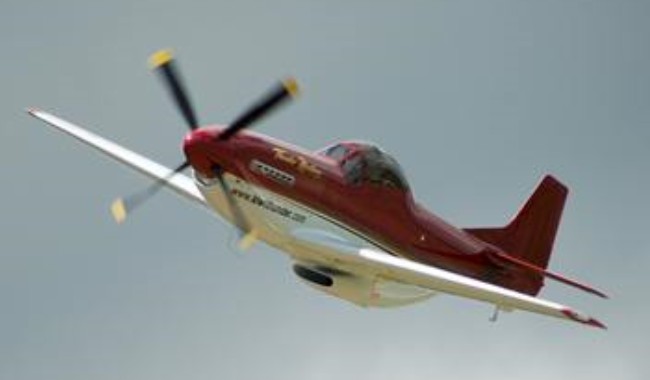
Papa 51 Inc has produced kits to build Thunder Mustang two-seat 75 percent-scale representation of P-51 fighter, first flown 1996. Papa51 Co. Ltd., the original manufacturer of the Thunder Mustang is no longer in business.
The Thunder Mustang was not in production. The Thunder Builders Group L.L.C. acquired the assets required to manufacture the Thunder Mustang through foreclosure on a loan. These assets were posted as for sale.
First flown in 1996, the two seat Thunder Mustang offers its owner a unique blend of speed, maneuverability and mystique. Given the power to weight ratio, it outperforms the original North American P-51D fighter at a fraction of the cost.
Thunder Mustang kits are complete, containing everything from the spinner, prop and engine to the tail wheel, less your choice of instruments, avionics, paint and upholstery. Extensive prefabrication helps reduce construction time and eliminate hassles. The complete use of carbon fiber in the structure produces incredible strength and light weight.
The 8 foot diameter, constant-speed 4-blade prop is manufactured by MT Propellers. The gear box ratio of 2.8:1 turns the prop at 1607 RPM for the optimum ratio for the best prop efficiency and high speed with the V-12 turning 4500 RPM. The 100 lb. propeller is of composite construction utilizing a wood core, which is self-dampening and non-fatiguing. This saves weight compared to metal propellers and reduces the gyroscopic effect of the prop on takeoff.
Walter-powered Thunder Mustang
Thunder Mustang Powerplant: Falconer V-12, 640hp Displacement: 601 cubic inches Propeller: MT 94″ 4-blade constant speed Length: 24.2 ft Frontal Area: 8.1 sq. ft Wing Span: 23.8 ft Wing Area: 104 sq. ft Height: 9.4 ft Maximum Level Speed @ Sea Level: 326 kts (375 mph, 603 kph) Cruise Speed: @ 75% Power: 300 kts (340 mph, 547 kph) Vne (never exceed): 439 kts Vsl (stall, clean): 77 kts Vso (stall, in landing config.): 68 kts Range: 1300 nautical miles Rate of Climb @ gross: 5200 ft/min Takeoff distance: 1000 ft Landing distance: 2500 ft Service Ceiling: 25,000 ft. Gross Weight: 3200 lb Empty Weight: 2200 lb Useful Load: 1000 lb Payload w/full Fuel: 400 lb Basic Fuel Capacity: 102 gallons (in wings) Baggage Capacity: 50 lb Wing Loading: 28.84 lbs/sq.ft Power Loading: 4.69 lbs/hp Design Limit Load Factor: +9g / -6g @ 2600 lb / +7.3 / -4.9 g @ 3200 lb Vx (best angle of climb): 87 kts Vy (best rate of climb): 156 kts Va (design maneuvering): 222 kts Vfe (max flaps extended): 165 kts Vle (max landing gear extended): 148 kts Best Glide: 153 kts Seats: 2
Engine: Falconer V-12, 640 hp Wing span: 7.25 m Wing area: 9.57 sq.m MAUW: 1361 kg Empty weight: 907 kg Fuel capacity: 401 lt Max speed: 603 kph Cruise speed: 555 kph Minimum speed: 109 kph Climb rate: 26 m/s Seats: 2 Kit price (1998): $195,000
Panek/Mattlener offers kits to construct PUL10 two-seat flying-wing monoplane, derived from Canadian Ultraflight Lazair and PUL 9 and formerly known as Nike Aerdelta PUL 10 in Italy.






 All Aero